
Modeling the Frog Cell Cycle Nancy Griffeth Goals



- Slides: 22
Modeling the Frog Cell Cycle Nancy Griffeth
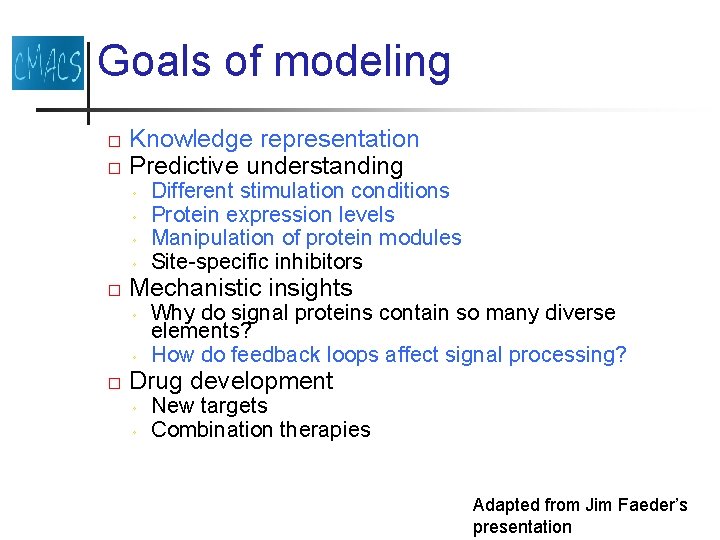
Goals of modeling Knowledge representation � Predictive understanding � ◦ ◦ � Mechanistic insights ◦ ◦ � Different stimulation conditions Protein expression levels Manipulation of protein modules Site-specific inhibitors Why do signal proteins contain so many diverse elements? How do feedback loops affect signal processing? Drug development ◦ ◦ New targets Combination therapies Adapted from Jim Faeder’s presentation
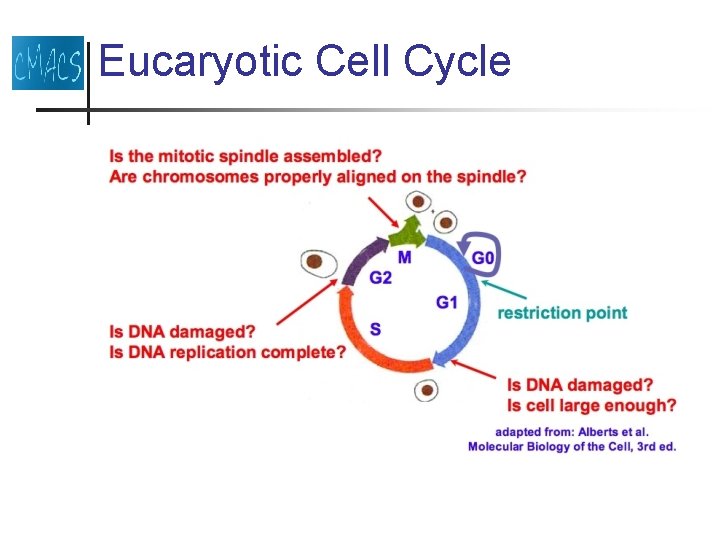
Eucaryotic Cell Cycle
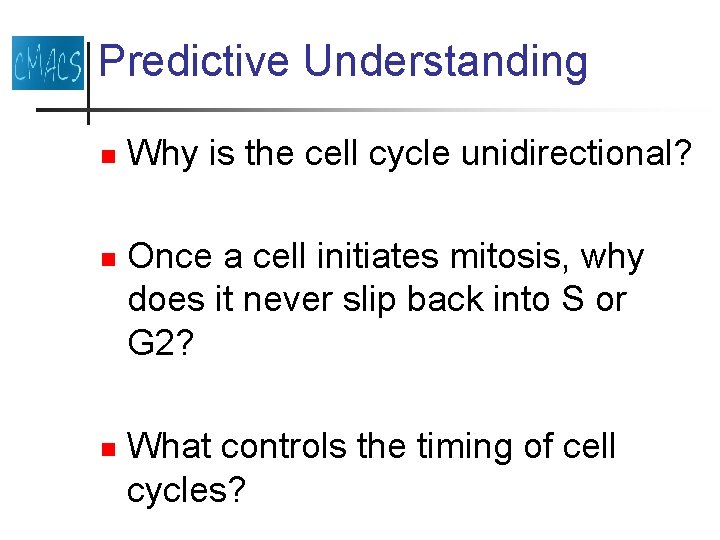
Predictive Understanding n n n Why is the cell cycle unidirectional? Once a cell initiates mitosis, why does it never slip back into S or G 2? What controls the timing of cell cycles?
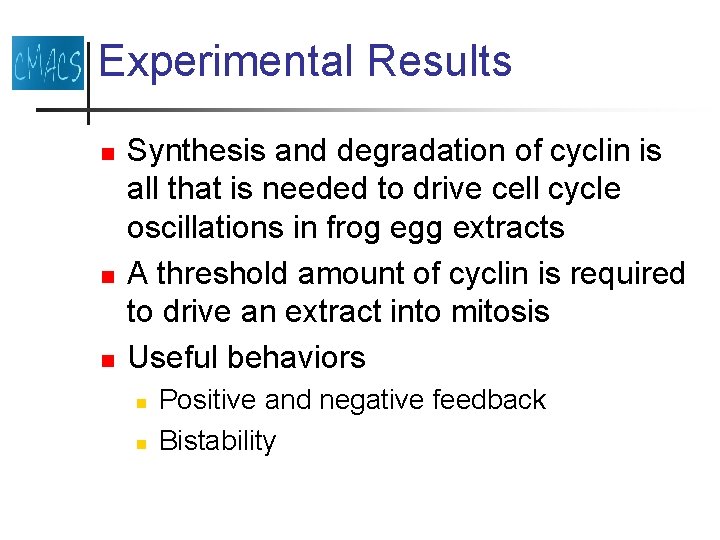
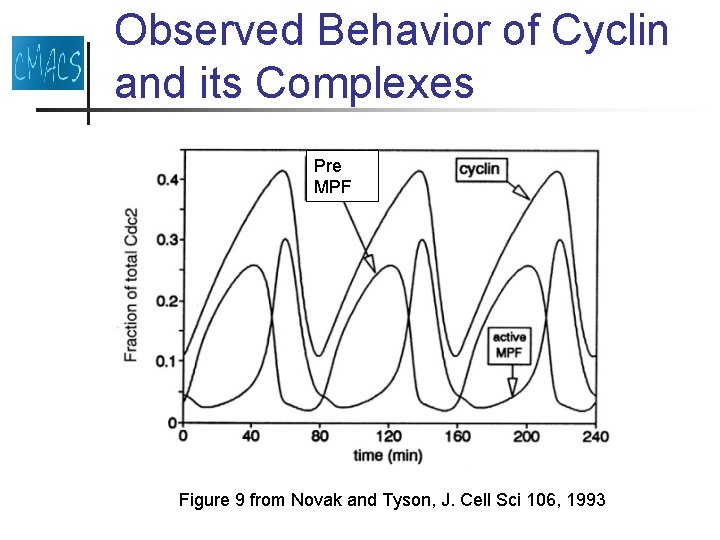
Experimental Results n n n Synthesis and degradation of cyclin is all that is needed to drive cell cycle oscillations in frog egg extracts A threshold amount of cyclin is required to drive an extract into mitosis Useful behaviors n n Positive and negative feedback Bistability
Observed Behavior of Cyclin and its Complexes Pre MPF Figure 9 from Novak and Tyson, J. Cell Sci 106, 1993
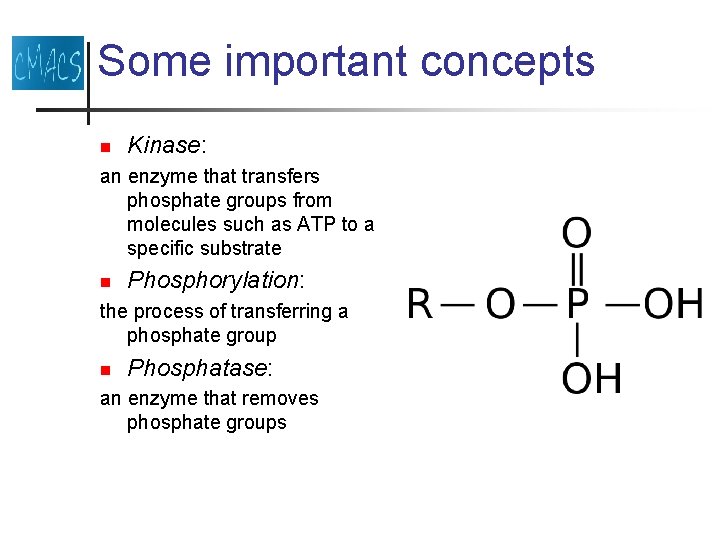
Some important concepts n Kinase: an enzyme that transfers phosphate groups from molecules such as ATP to a specific substrate n Phosphorylation: the process of transferring a phosphate group n Phosphatase: an enzyme that removes phosphate groups
Observed Behavior of Cyclin and its Complexes Pre MPF Figure 9 from Novak and Tyson, J. Cell Sci 106, 1993
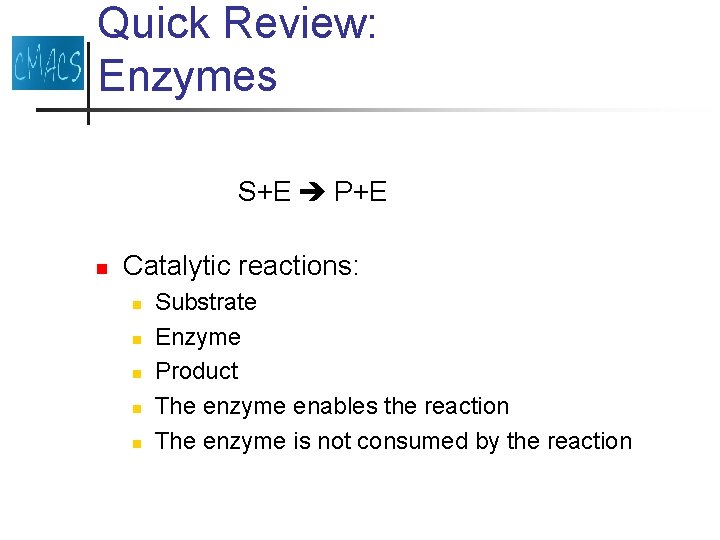
Quick Review: Enzymes S+E P+E n Catalytic reactions: n n n Substrate Enzyme Product The enzyme enables the reaction The enzyme is not consumed by the reaction
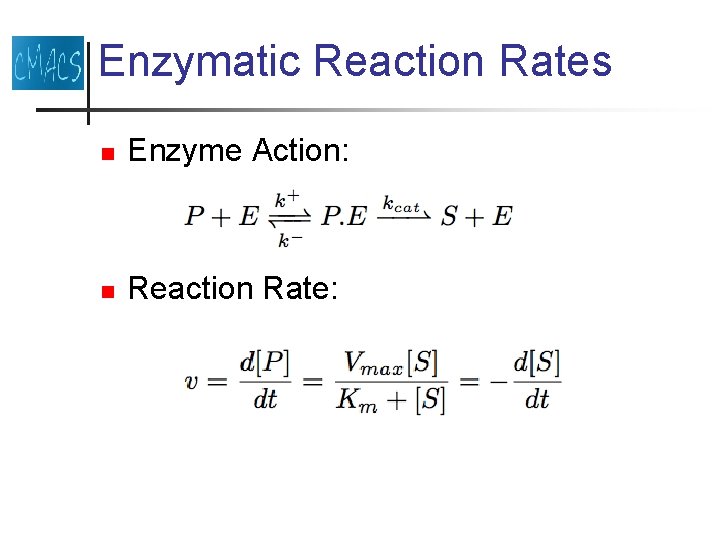
Enzymatic Reaction Rates n Enzyme Action: n Reaction Rate:
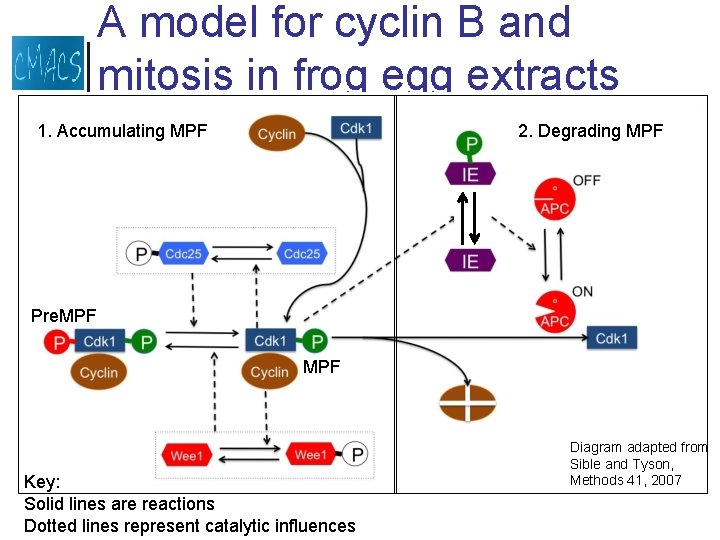
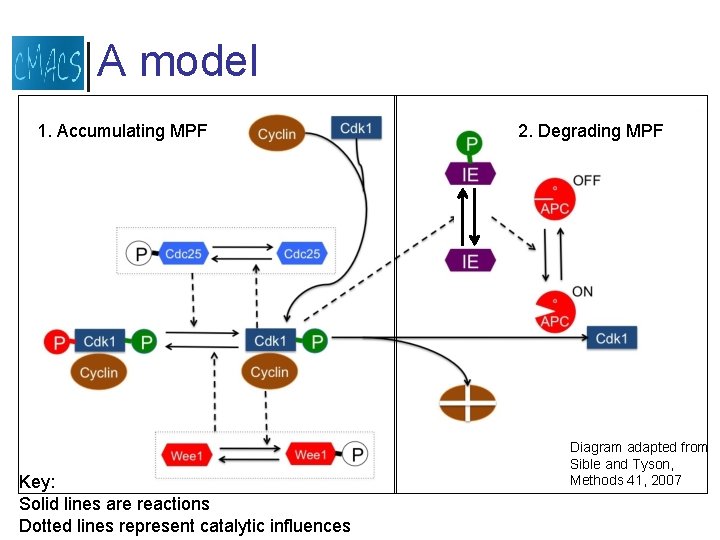
A model for cyclin B and mitosis in frog egg extracts 1. Accumulating MPF 2. Degrading MPF Pre. MPF Key: Solid lines are reactions Dotted lines represent catalytic influences Diagram adapted from Sible and Tyson, Methods 41, 2007
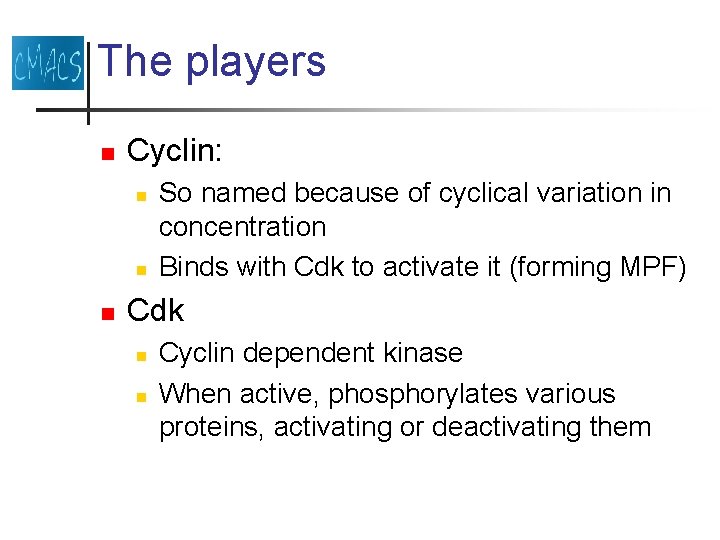
The players n Cyclin: n n n So named because of cyclical variation in concentration Binds with Cdk to activate it (forming MPF) Cdk n n Cyclin dependent kinase When active, phosphorylates various proteins, activating or deactivating them
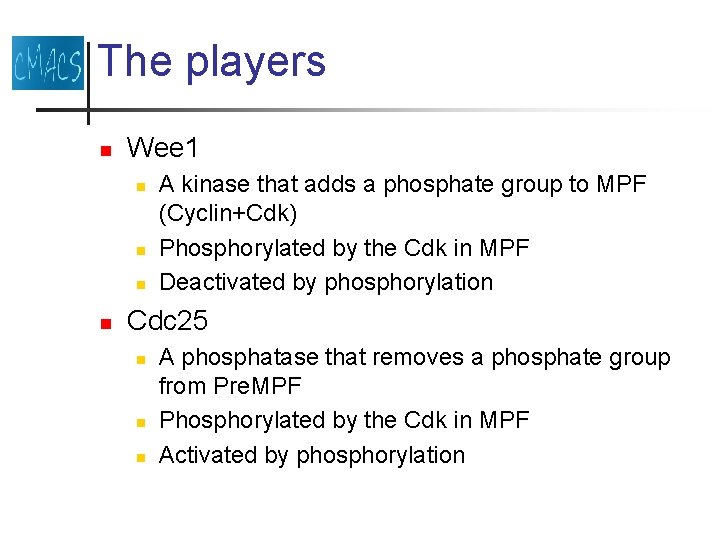
The players n Wee 1 n n A kinase that adds a phosphate group to MPF (Cyclin+Cdk) Phosphorylated by the Cdk in MPF Deactivated by phosphorylation Cdc 25 n n n A phosphatase that removes a phosphate group from Pre. MPF Phosphorylated by the Cdk in MPF Activated by phosphorylation
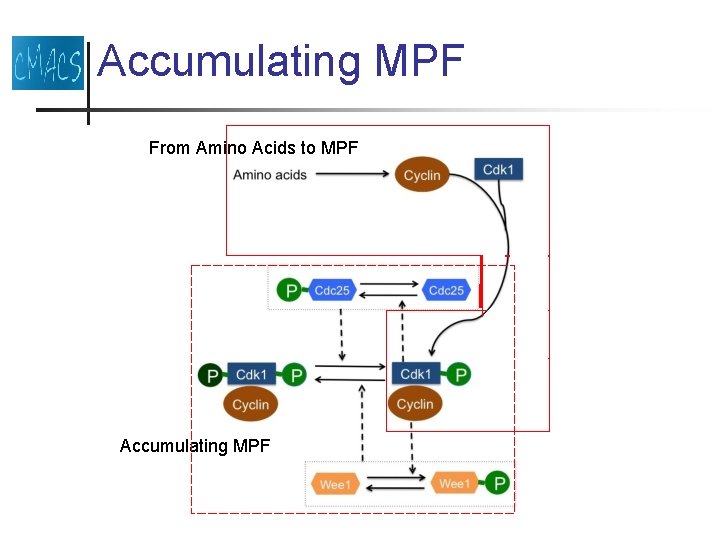
Accumulating MPF From Amino Acids to MPF Accumulating MPF
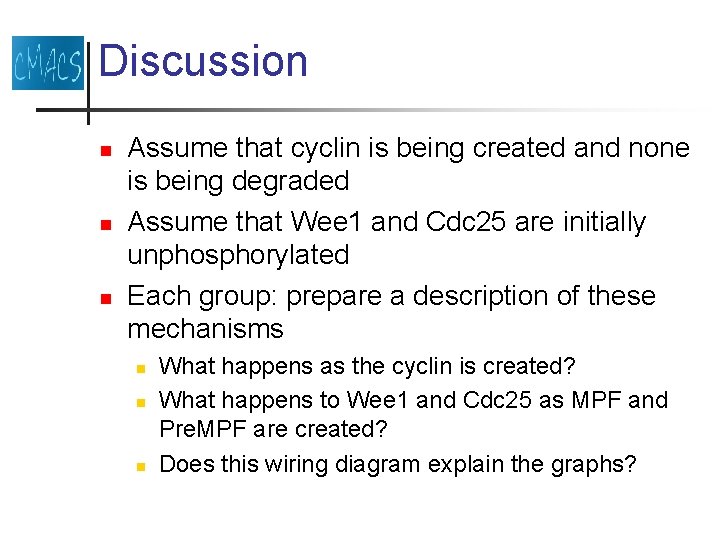
Discussion n Assume that cyclin is being created and none is being degraded Assume that Wee 1 and Cdc 25 are initially unphosphorylated Each group: prepare a description of these mechanisms n n n What happens as the cyclin is created? What happens to Wee 1 and Cdc 25 as MPF and Pre. MPF are created? Does this wiring diagram explain the graphs?
A model 1. Accumulating MPF Key: Solid lines are reactions Dotted lines represent catalytic influences 2. Degrading MPF Diagram adapted from Sible and Tyson, Methods 41, 2007
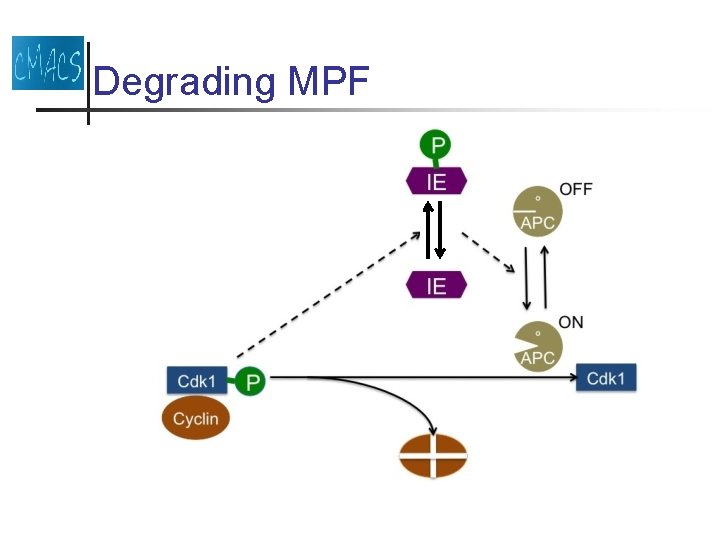
Degrading MPF
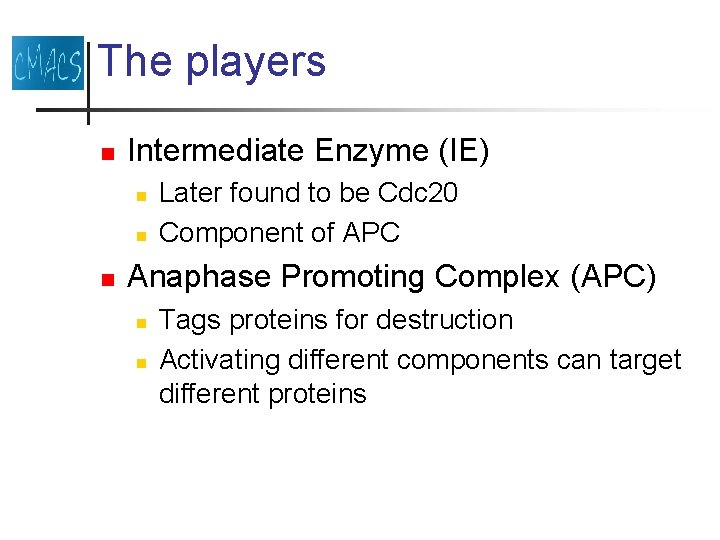
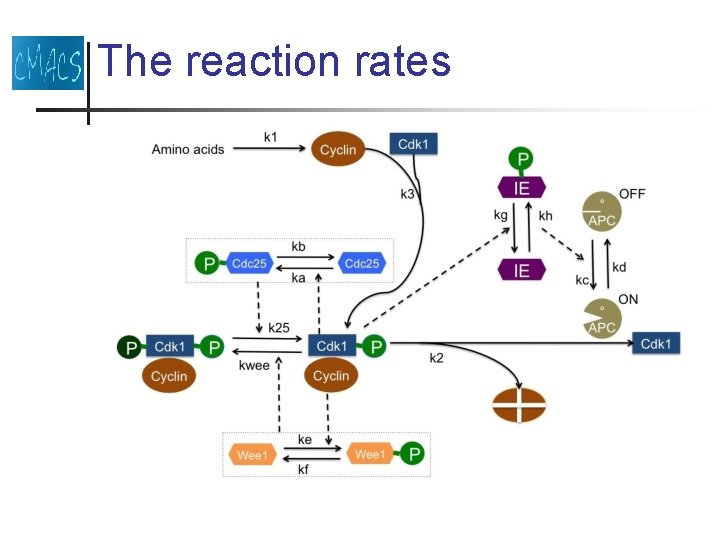
The players n Intermediate Enzyme (IE) n n n Later found to be Cdc 20 Component of APC Anaphase Promoting Complex (APC) n n Tags proteins for destruction Activating different components can target different proteins
Degrading MPF
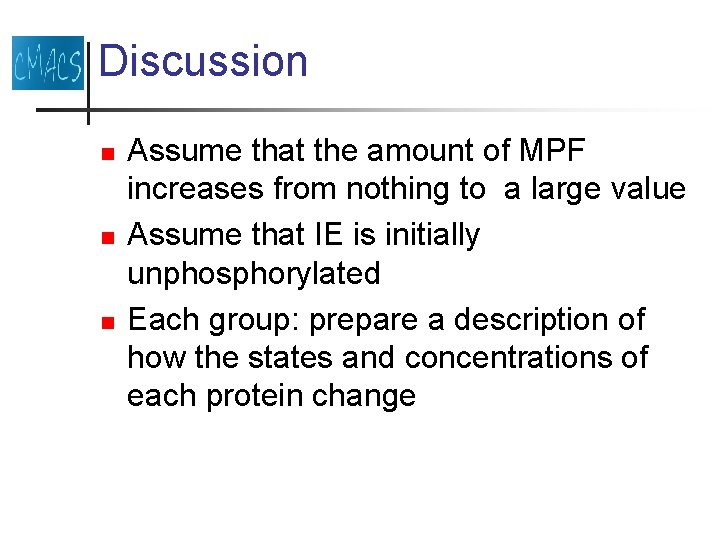
Discussion n Assume that the amount of MPF increases from nothing to a large value Assume that IE is initially unphosphorylated Each group: prepare a description of how the states and concentrations of each protein change
The reaction rates
Discussion n Can we say anything about the effects of the reaction rates?