
Modeling the Cell Cycle Engine of Eukaryotes John

- Slides: 26
Modeling the Cell Cycle Engine of Eukaryotes John J. Tyson & Bela Novak Virginia Polytechnic Institute & State Univ. Budapest Univ. Technology & Economics
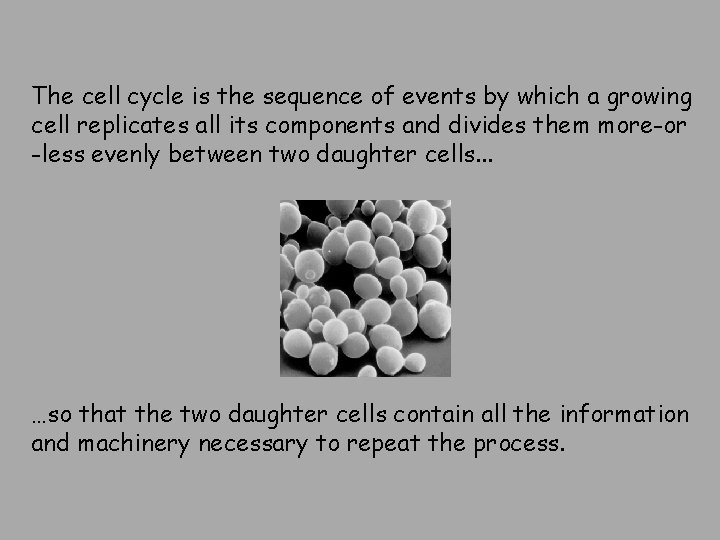
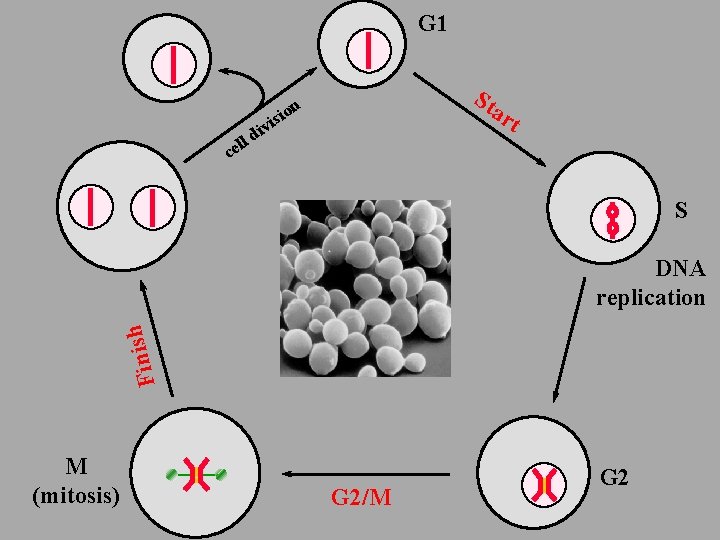
The cell cycle is the sequence of events by which a growing cell replicates all its components and divides them more-or -less evenly between two daughter cells. . . …so that the two daughter cells contain all the information and machinery necessary to repeat the process.
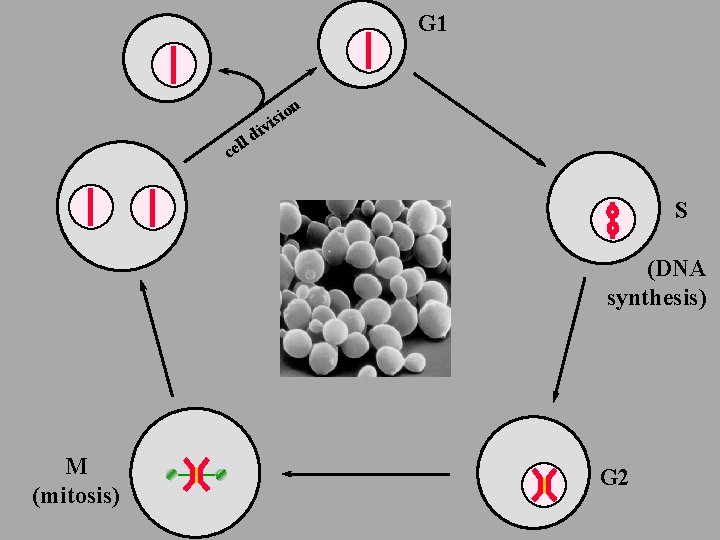
G 1 n io s i v i d ell c S (DNA synthesis) M (mitosis) G 2
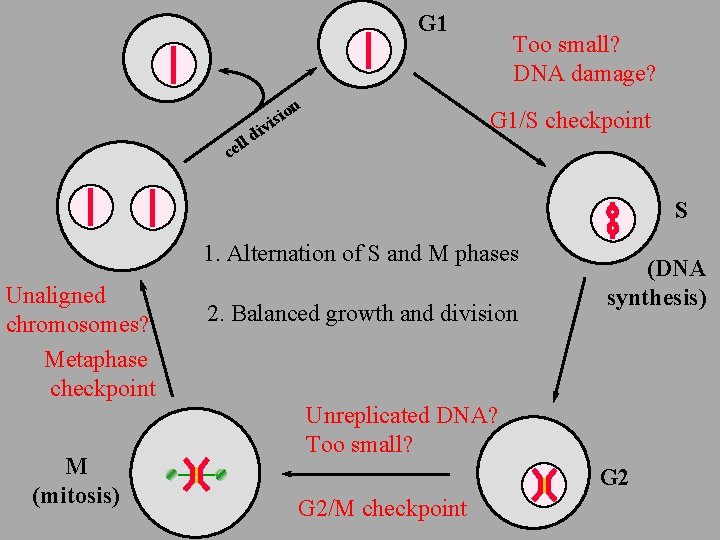
G 1 n io s i v Too small? DNA damage? G 1/S checkpoint i ll d ce S 1. Alternation of S and M phases Unaligned chromosomes? Metaphase checkpoint M (mitosis) 2. Balanced growth and division (DNA synthesis) Unreplicated DNA? Too small? G 2/M checkpoint
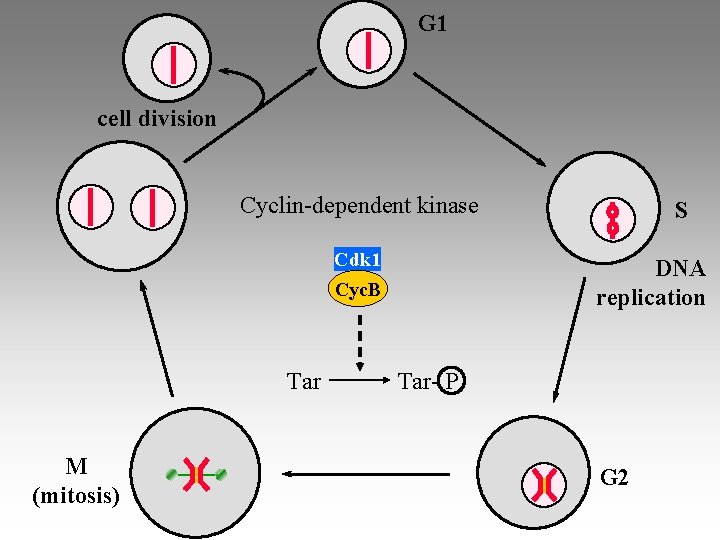
G 1 cell division Cyclin-dependent kinase Cdk 1 Cyc. B Tar M (mitosis) S DNA replication Tar- P G 2
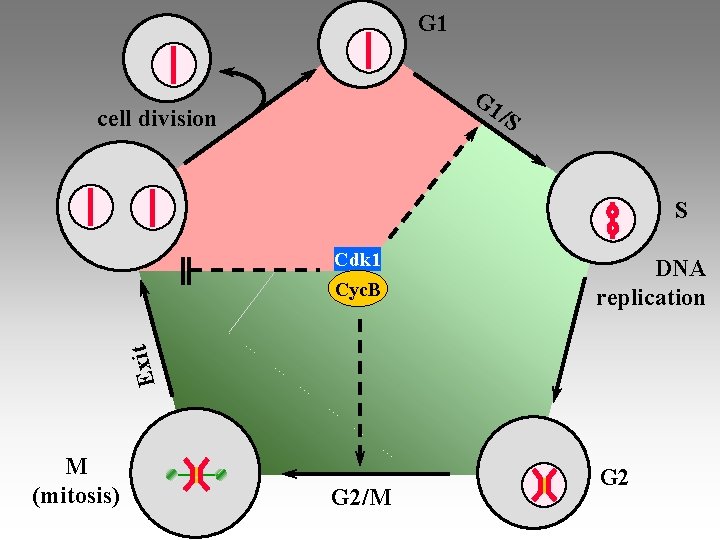
G 1 /S cell division S DNA replication Exit Cdk 1 Cyc. B M (mitosis) G 2/M G 2
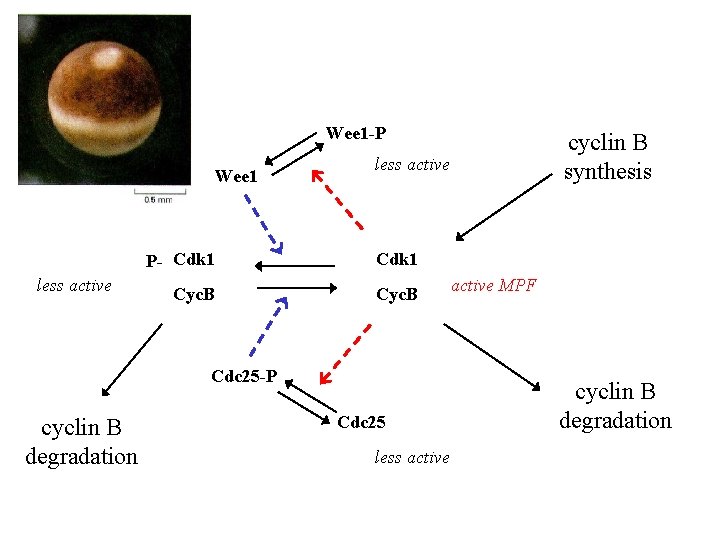
Wee 1 -P Wee 1 less active P- Cdk 1 Cyc. B Cdc 25 -P cyclin B degradation cyclin B synthesis Cdc 25 less active MPF cyclin B degradation
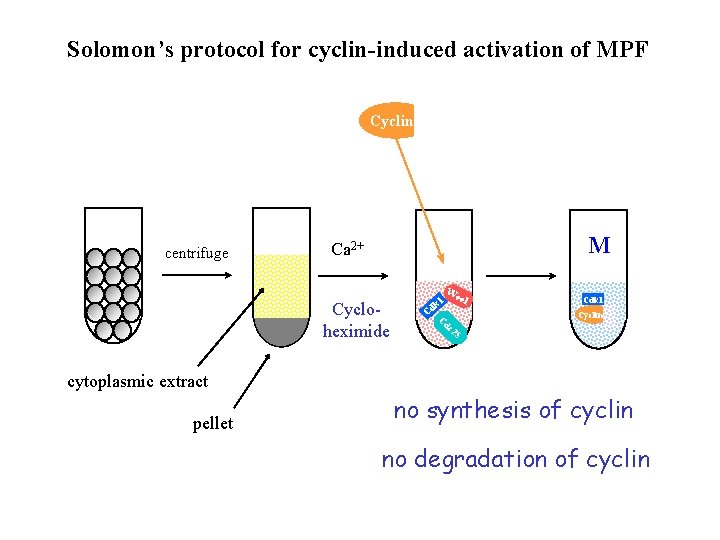
Solomon’s protocol for cyclin-induced activation of MPF Cyclin centrifuge M Ca 2+ Cycloheximide We 1 k Cd C dc 25 Cdk 1 Cyclin cytoplasmic extract pellet no synthesis of cyclin no degradation of cyclin
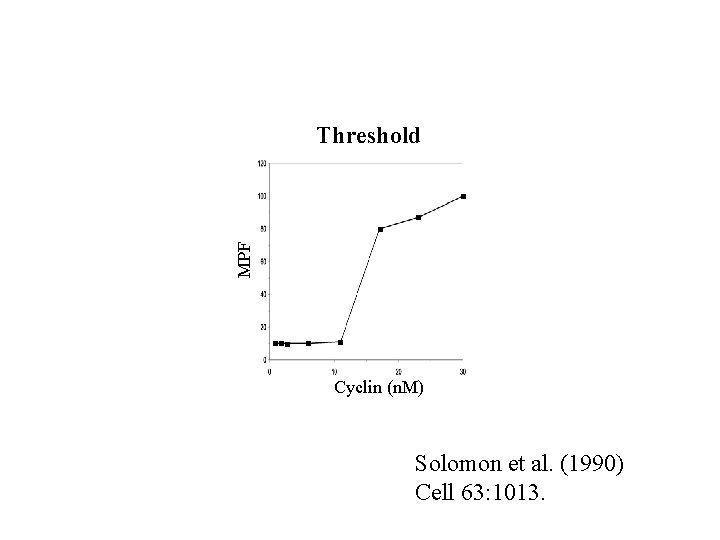
MPF Threshold Cyclin (n. M) Solomon et al. (1990) Cell 63: 1013.
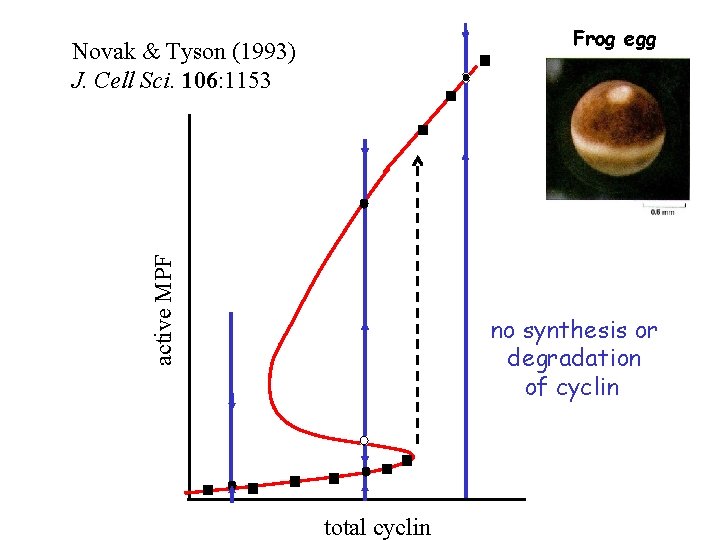
Frog egg active MPF Novak & Tyson (1993) J. Cell Sci. 106: 1153 no synthesis or degradation of cyclin total cyclin
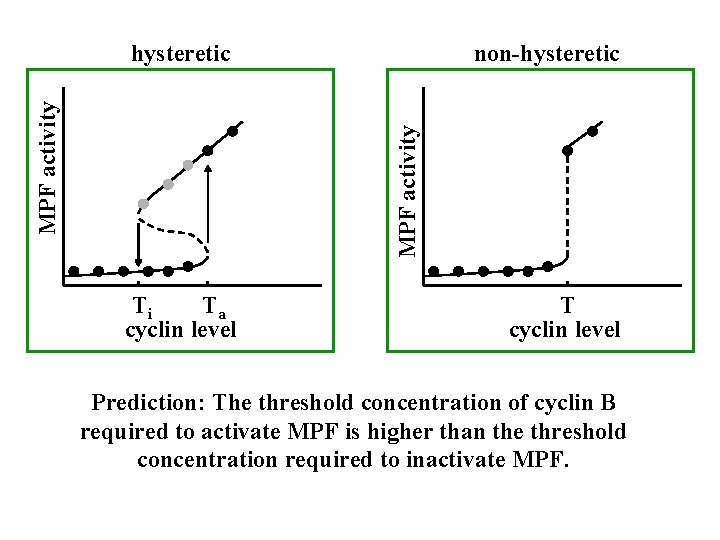
non-hysteretic MPF activity hysteretic Ti Ta cyclin level T cyclin level Prediction: The threshold concentration of cyclin B required to activate MPF is higher than the threshold concentration required to inactivate MPF.
Norel & Agur (1991). “A model for the adjustment of the mitotic clock by cyclin and MPF levels, ” Science 251: 1076 -1078. Tyson (1991). “Modeling the cell division cycle: cdc 2 and cyclin interactions, ” PNAS 88: 7328 -7332. Goldbeter (1991). “A minimal cascade model for the mitotic oscillator involving cyclin and cdc 2 kinase, ” PNAS 88: 9107 -9111. Novak & Tyson (1993). “Numerical analysis of a comprehensive model of M-phase control in Xenopus oocyte extracts and intact embryos, ” J. Cell Sci. 106: 1153 -1168. Thron (1996). “A model for a bistable biochemical trigger of mitosis, ” Biophys. Chem. 57: 239 -251. Thron (1997). “Bistable biochemical switching and the control of the events of the cell cycle, ” Oncogene 15: 317 -325.
G 1 St ar ion t s ll ce i div S Finis h DNA replication M (mitosis) G 2/M G 2
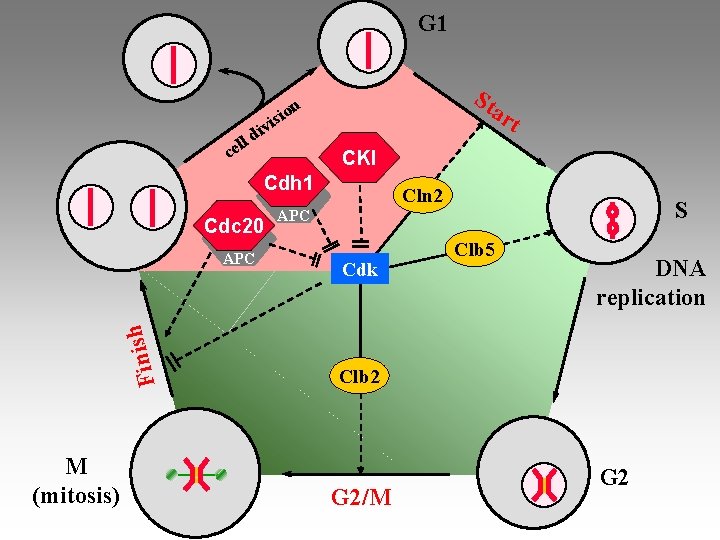
G 1 St ar ion t s ll ce i div CKI Cdh 1 Cdc 20 S APC Cdk Clb 5 DNA replication Finis h APC Cln 2 M (mitosis) Clb 2 G 2/M G 2
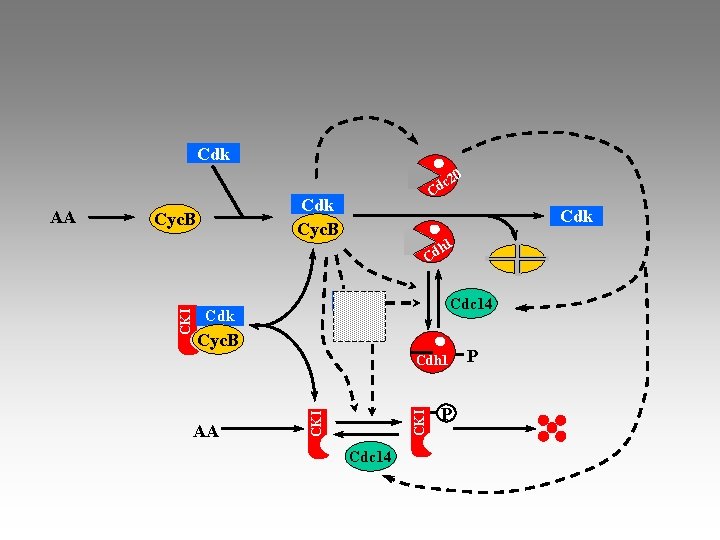
Cdk Cyc. B Cdk h 1 Cd Cdk Cln 2 Cdk Cyc. B Cdc 14 AA CKI Cdh 1 CKI AA 0 c 2 d C Cdc 14 P P
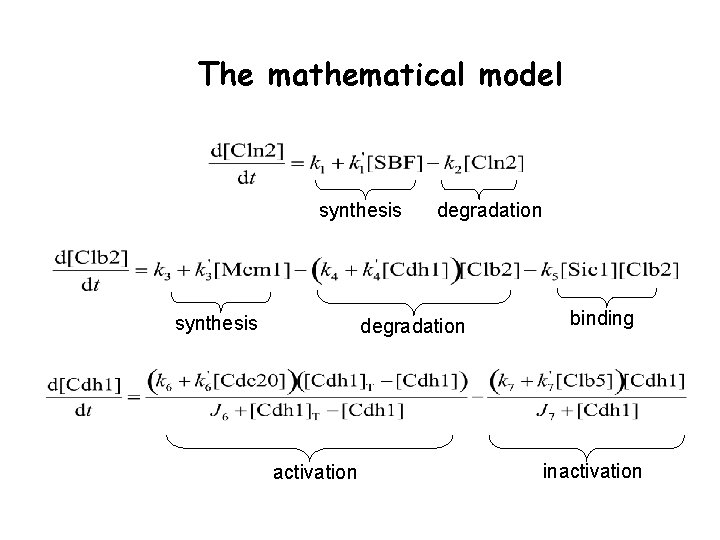
The mathematical model synthesis degradation activation binding inactivation
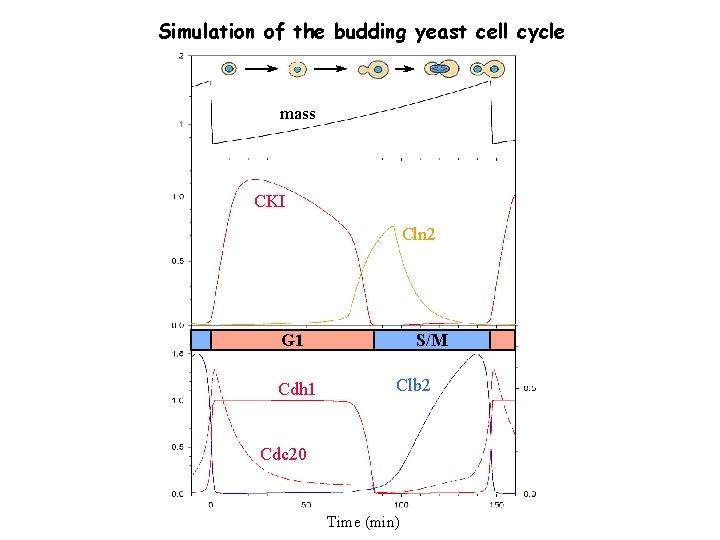
Simulation of the budding yeast cell cycle mass CKI Cln 2 G 1 Cdh 1 S/M Clb 2 Cdc 20 Time (min)
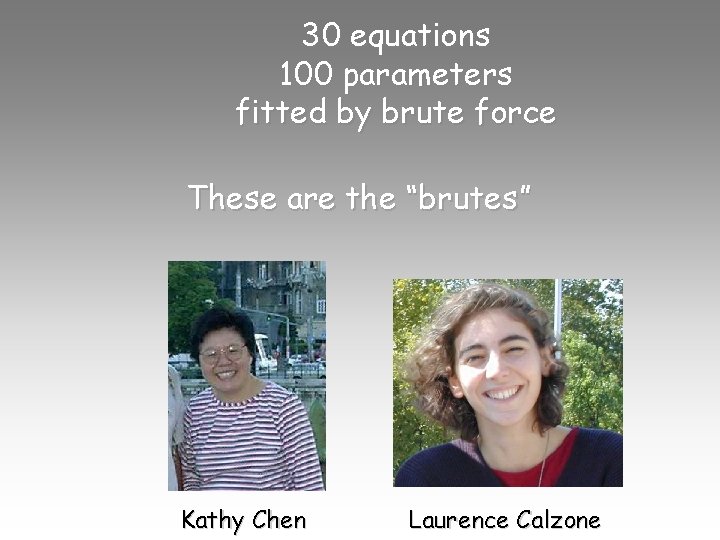
30 equations 100 parameters fitted by brute force These are the “brutes” Kathy Chen Laurence Calzone
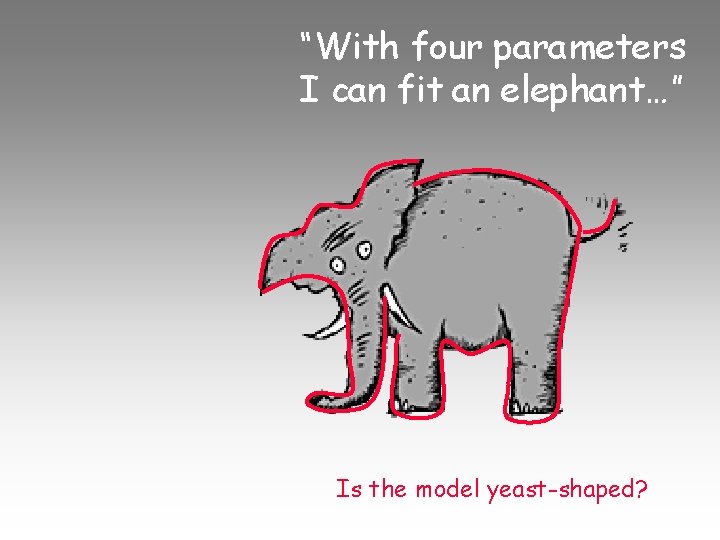
“With four parameters I can fit an elephant…” Is the model yeast-shaped?
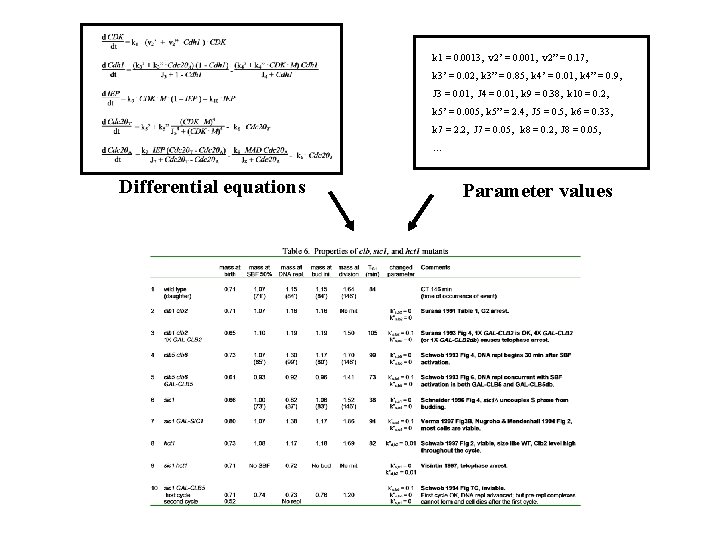
k 1 = 0. 0013, v 2’ = 0. 001, v 2” = 0. 17, k 3’ = 0. 02, k 3” = 0. 85, k 4’ = 0. 01, k 4” = 0. 9, J 3 = 0. 01, J 4 = 0. 01, k 9 = 0. 38, k 10 = 0. 2, k 5’ = 0. 005, k 5” = 2. 4, J 5 = 0. 5, k 6 = 0. 33, k 7 = 2. 2, J 7 = 0. 05, k 8 = 0. 2, J 8 = 0. 05, … Differential equations Parameter values
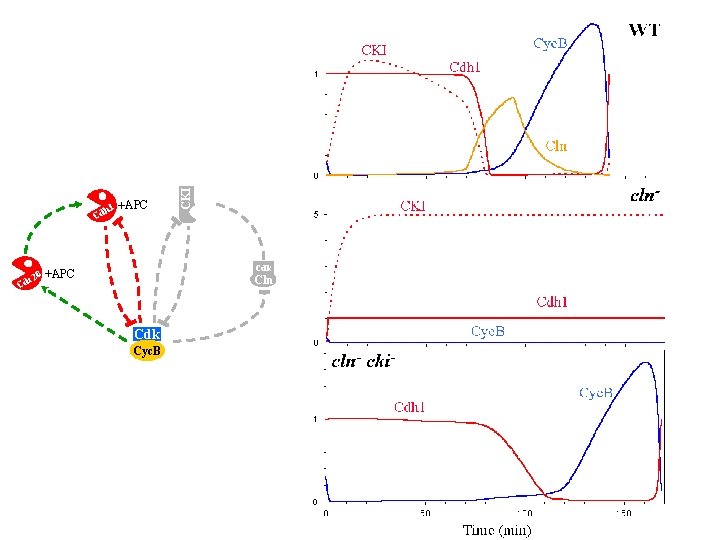
+APC CKI h 1 Cd Cdk 20 +APC dc Cln C Cdk Cyc. B
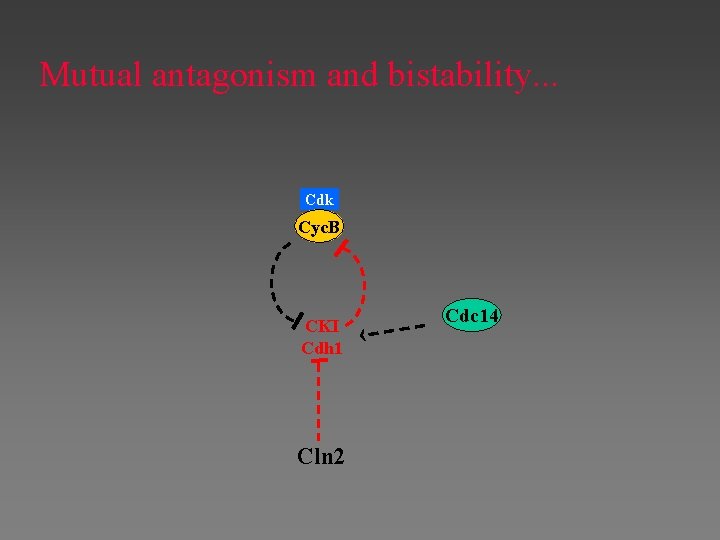
Mutual antagonism and bistability. . . Cdk Cyc. B CKI Cdh 1 Cln 2 Cdc 14
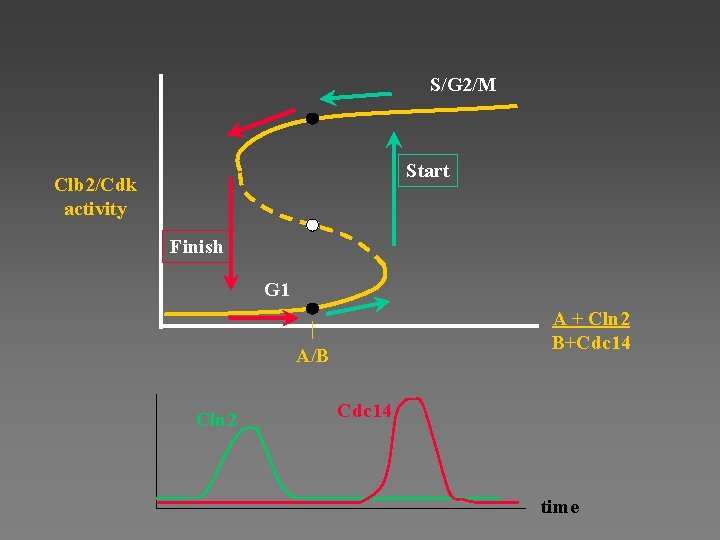
S/G 2/M Start Clb 2/Cdk activity Finish G 1 A + Cln 2 B+Cdc 14 A/B Cln 2 Cdc 14 time
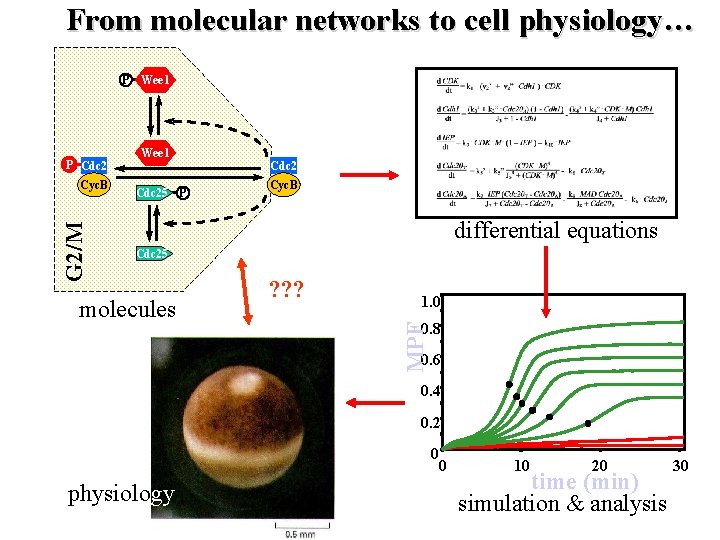
From molecular networks to cell physiology… P Wee 1 G 2/M Cyc. B Wee 1 Cdc 25 P Cdc 2 Cyc. B differential equations Cdc 25 molecules ? ? ? 1. 0 0. 8 MPF P Cdc 2 0. 6 0. 4 0. 2 0 physiology 0 10 20 time (min) simulation & analysis 30
Our thanks to. . . National Science Foundation (USA) National Science Foundation (Hungary) National Institutes of Health James S. Mc. Donnell Foundation Defense Advanced Research Project Agency