
Modeling Simulation of Dynamic Systems Lecture4 Mathematical Modeling
![System Equations or e(t)=K 1[ r(t) - c(t) ] E(S)=K 1 [ R(S) -](https://slidetodoc.com/presentation_image_h2/0a8ae71928400ba96456d67a1350bca4/image-40.jpg "System Equations or e(t)=K 1[ r(t) - c(t) ] E(S)=K 1 [ R(S) -")
- Slides: 48
Modeling & Simulation of Dynamic Systems Lecture-4 Mathematical Modeling of Real World Systems Dr. Imtiaz Hussain email: imtiaz. hussain@faculty. muet. edu. pk URL : http: //imtiazhussainkalwar. weebly. com/ 1
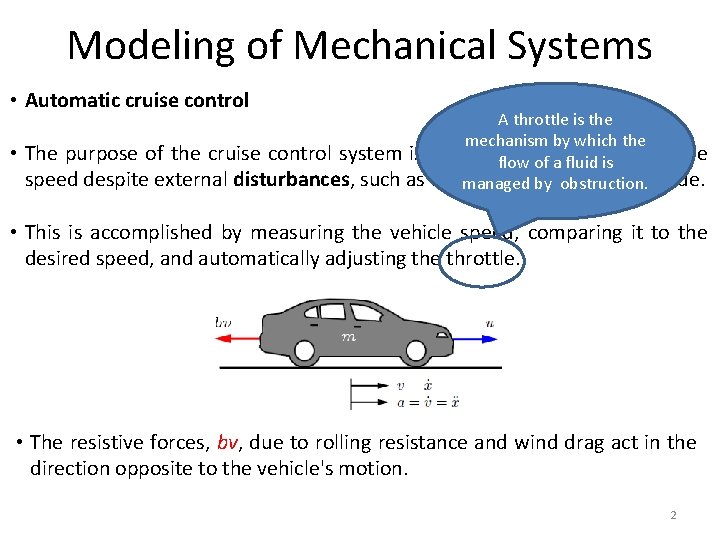
Modeling of Mechanical Systems • Automatic cruise control • A throttle is the mechanism by which the The purpose of the cruise control system is to maintain vehicle flow ofaaconstant fluid is speed despite external disturbances, such as changes in wind or road grade. managed by obstruction. • This is accomplished by measuring the vehicle speed, comparing it to the desired speed, and automatically adjusting the throttle. • The resistive forces, bv, due to rolling resistance and wind drag act in the direction opposite to the vehicle's motion. 2
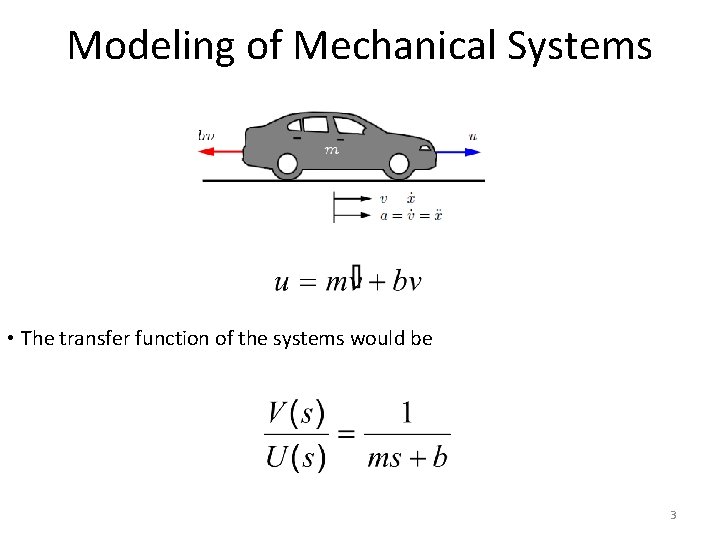
Modeling of Mechanical Systems • The transfer function of the systems would be 3
Electromechanical Systems • Electromechanics combines electrical and mechanical processes. • Devices which carry out electrical operations by using moving parts are known as electromechanical. – – – Relays Solenoids Electric Motors Electric Generators Switches and e. t. c 4
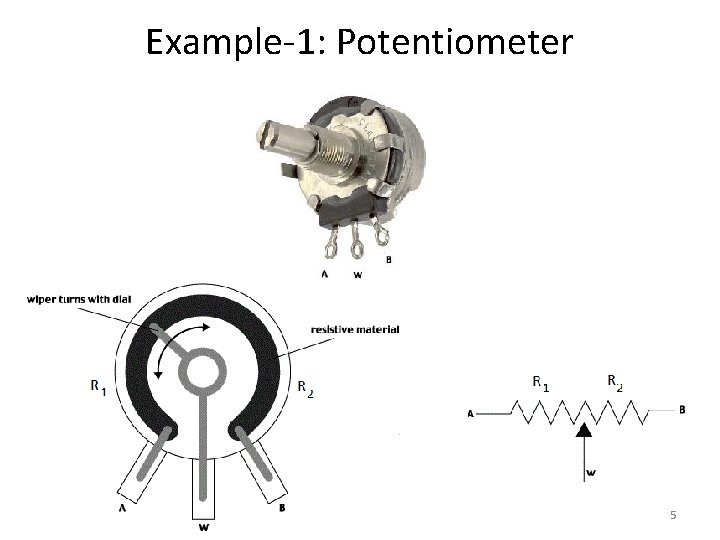
Example-1: Potentiometer 5
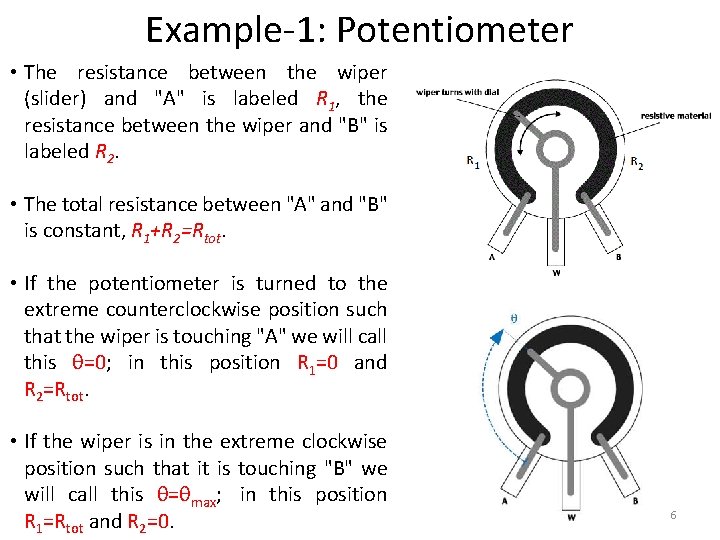
Example-1: Potentiometer • The resistance between the wiper (slider) and "A" is labeled R 1, the resistance between the wiper and "B" is labeled R 2. • The total resistance between "A" and "B" is constant, R 1+R 2=Rtot. • If the potentiometer is turned to the extreme counterclockwise position such that the wiper is touching "A" we will call this θ=0; in this position R 1=0 and R 2=Rtot. • If the wiper is in the extreme clockwise position such that it is touching "B" we will call this θ=θmax; in this position R 1=Rtot and R 2=0. 6
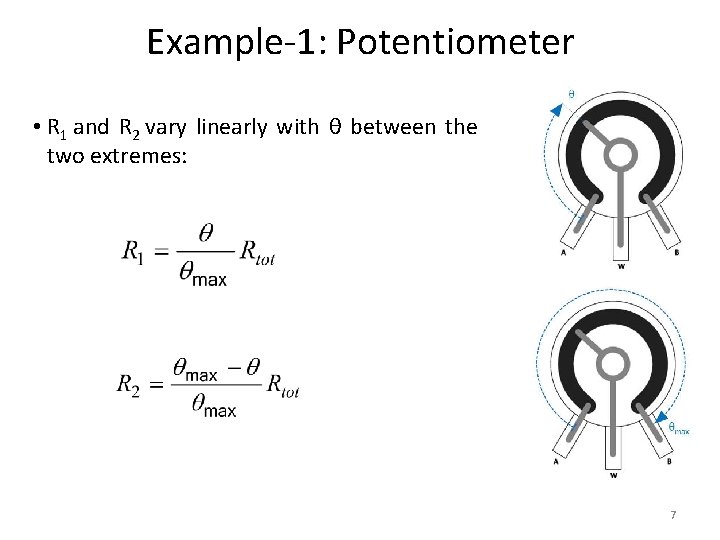
Example-1: Potentiometer • R 1 and R 2 vary linearly with θ between the two extremes: 7
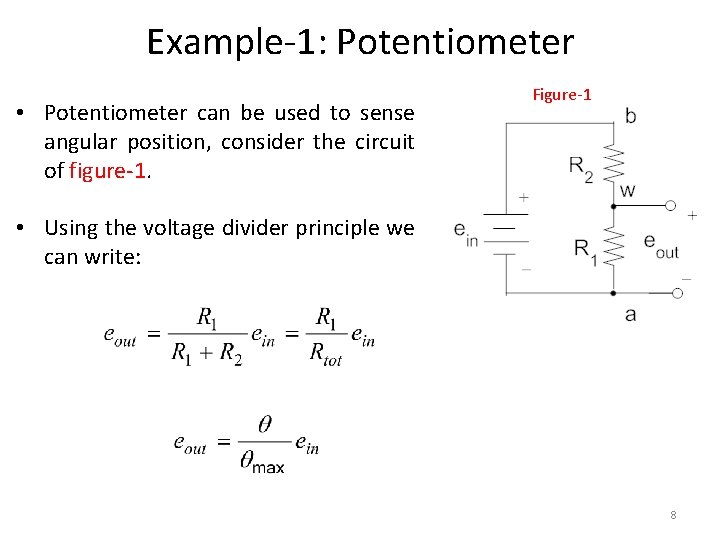
Example-1: Potentiometer • Potentiometer can be used to sense angular position, consider the circuit of figure-1. Figure-1 • Using the voltage divider principle we can write: 8
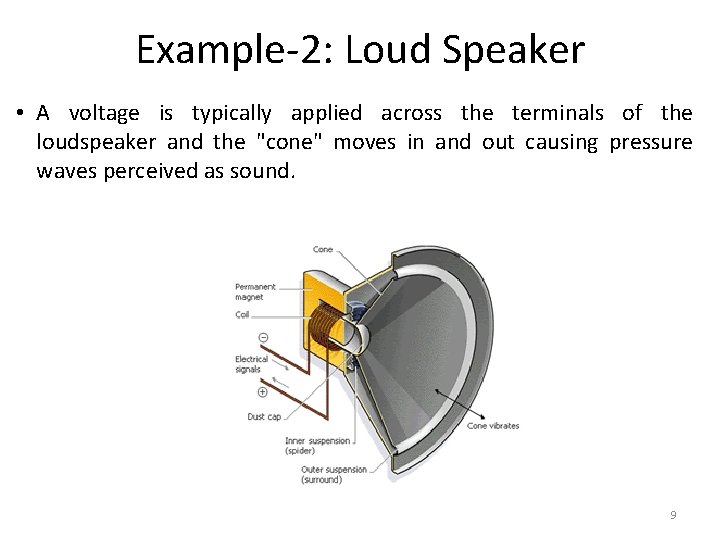
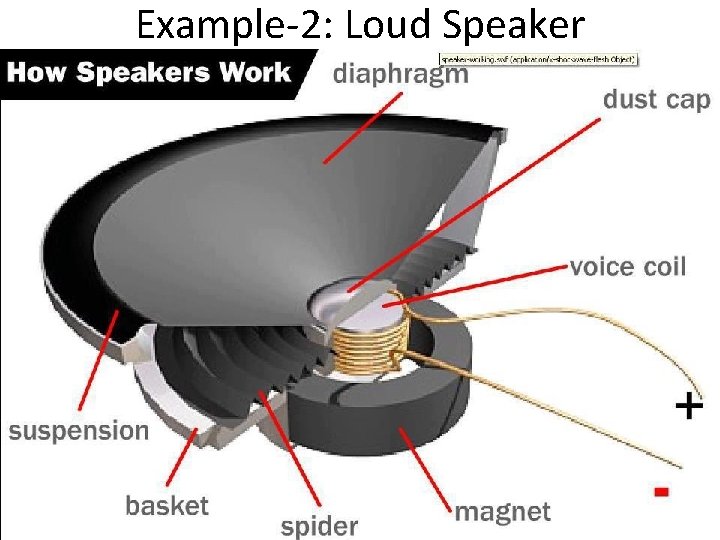
Example-2: Loud Speaker • A voltage is typically applied across the terminals of the loudspeaker and the "cone" moves in and out causing pressure waves perceived as sound. 9
Example-2: Loud Speaker 10
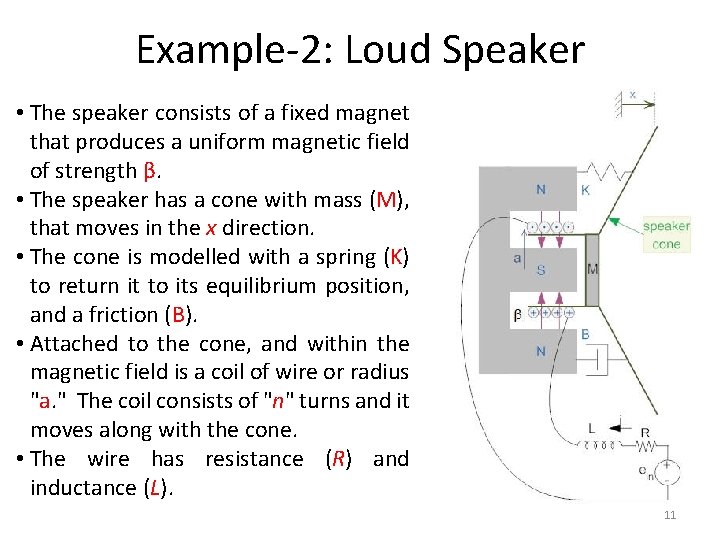
Example-2: Loud Speaker • The speaker consists of a fixed magnet that produces a uniform magnetic field of strength β. • The speaker has a cone with mass (M), that moves in the x direction. • The cone is modelled with a spring (K) to return it to its equilibrium position, and a friction (B). • Attached to the cone, and within the magnetic field is a coil of wire or radius "a. " The coil consists of "n" turns and it moves along with the cone. • The wire has resistance (R) and inductance (L). 11
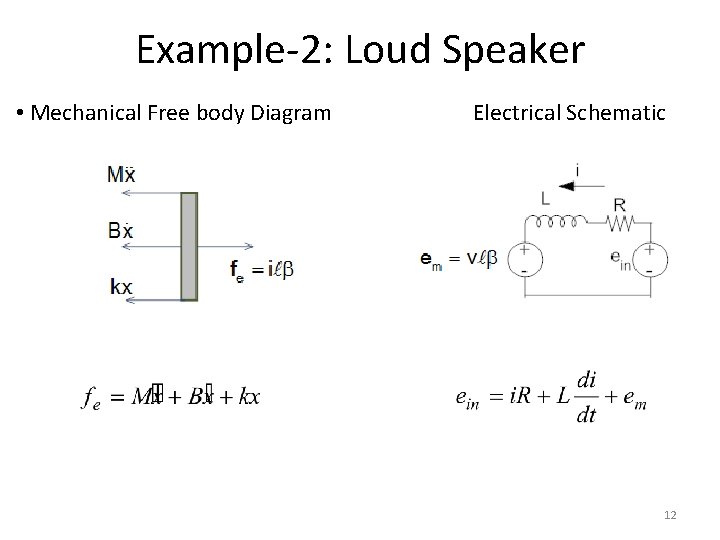
Example-2: Loud Speaker • Mechanical Free body Diagram Electrical Schematic 12
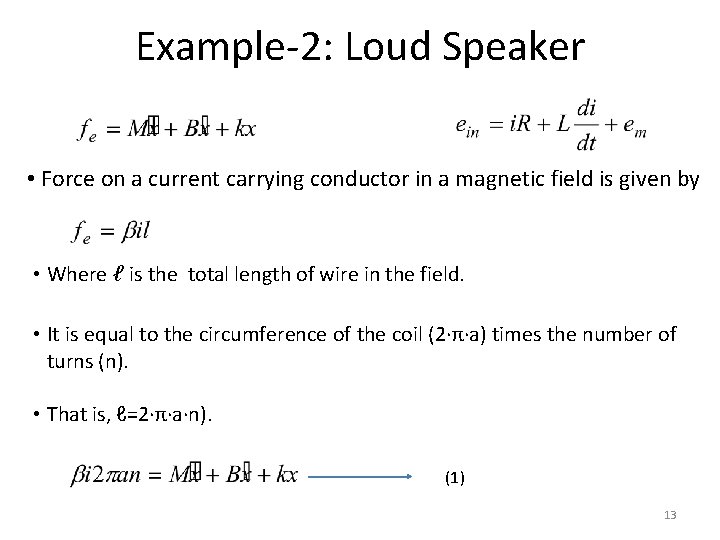
Example-2: Loud Speaker • Force on a current carrying conductor in a magnetic field is given by • Where ℓ is the total length of wire in the field. • It is equal to the circumference of the coil (2·π·a) times the number of turns (n). • That is, ℓ=2·π·a·n). (1) 13
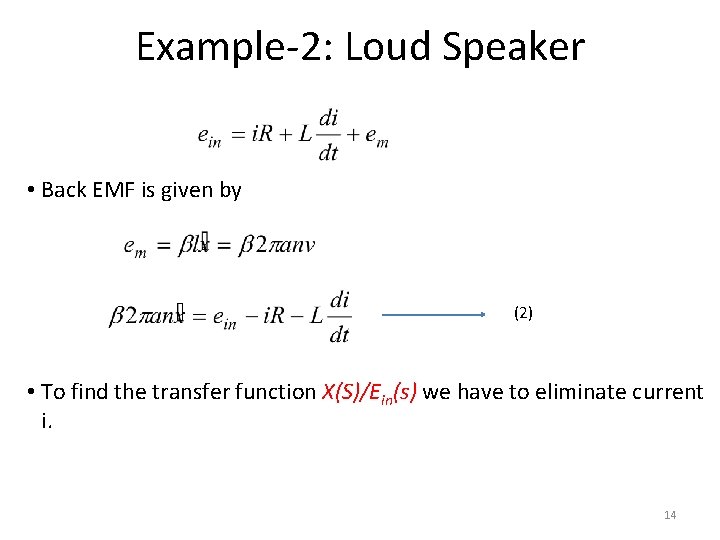
Example-2: Loud Speaker • Back EMF is given by (2) • To find the transfer function X(S)/Ein(s) we have to eliminate current i. 14
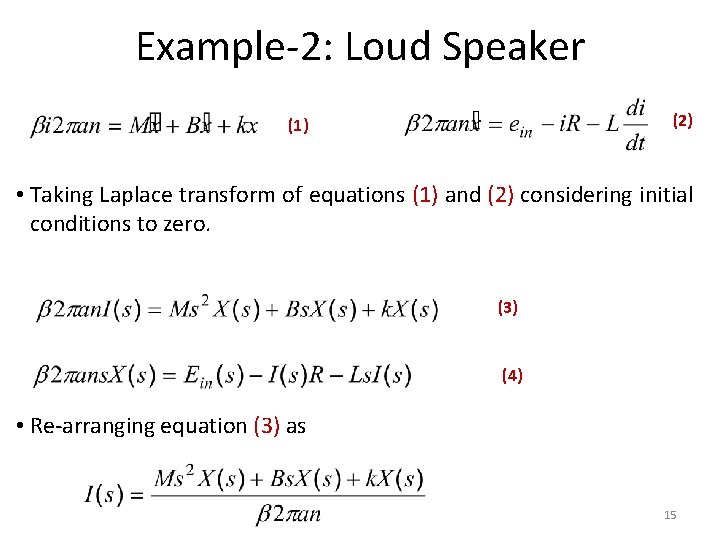
Example-2: Loud Speaker (2) (1) • Taking Laplace transform of equations (1) and (2) considering initial conditions to zero. (3) (4) • Re-arranging equation (3) as 15
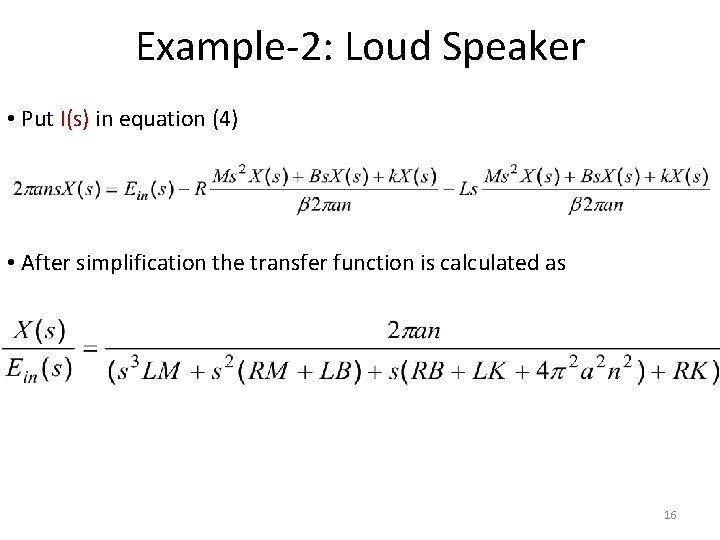
Example-2: Loud Speaker • Put I(s) in equation (4) • After simplification the transfer function is calculated as 16
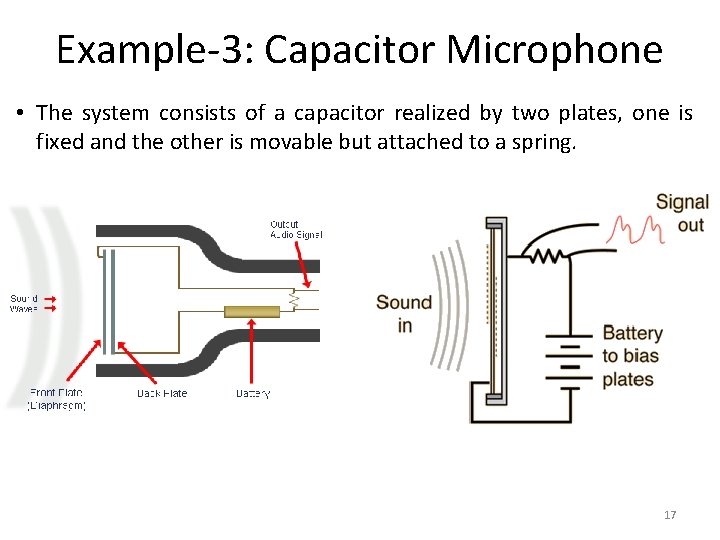
Example-3: Capacitor Microphone • The system consists of a capacitor realized by two plates, one is fixed and the other is movable but attached to a spring. 17
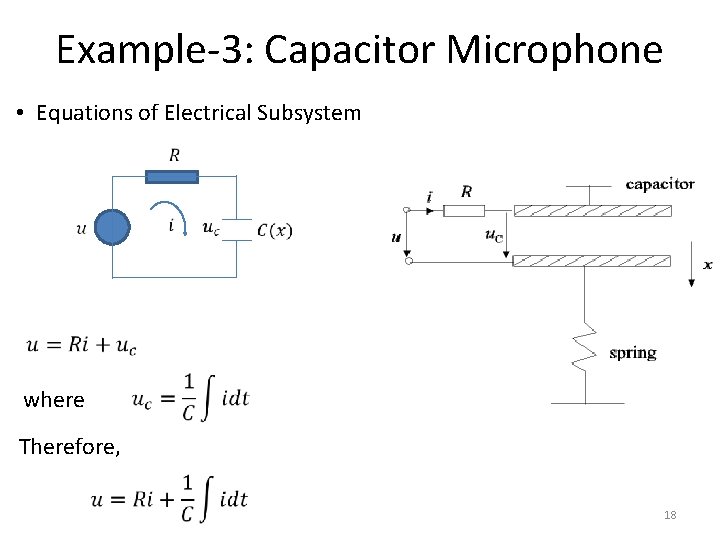
Example-3: Capacitor Microphone • Equations of Electrical Subsystem where Therefore, 18
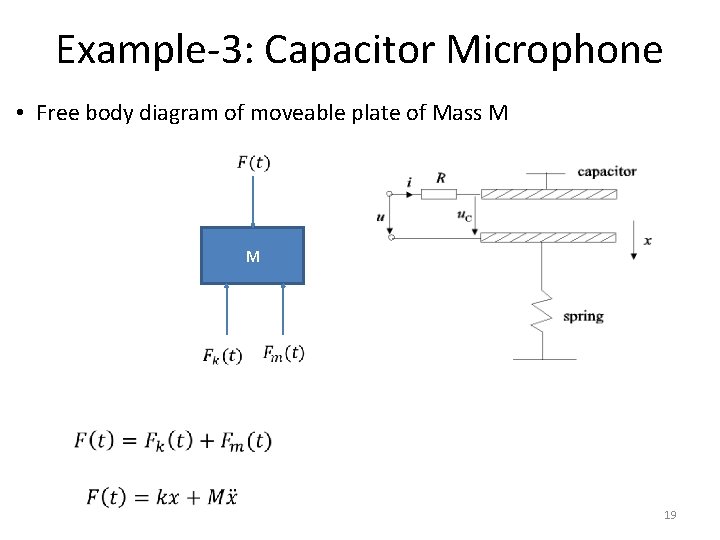
Example-3: Capacitor Microphone • Free body diagram of moveable plate of Mass M M 19
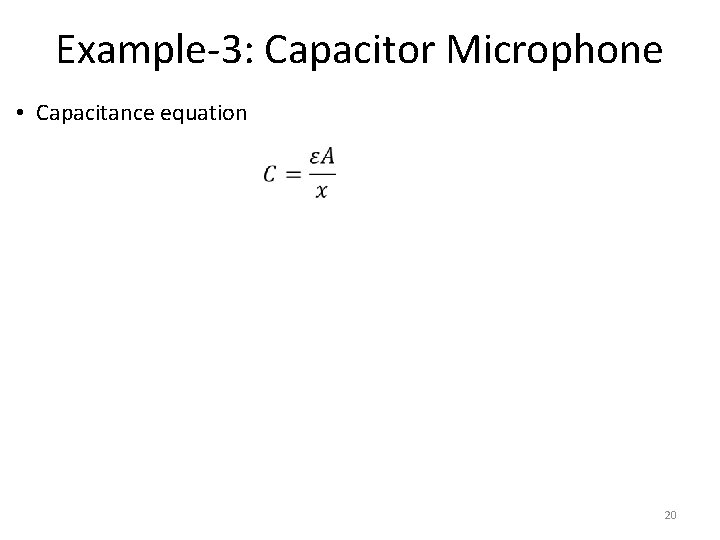
Example-3: Capacitor Microphone • Capacitance equation 20
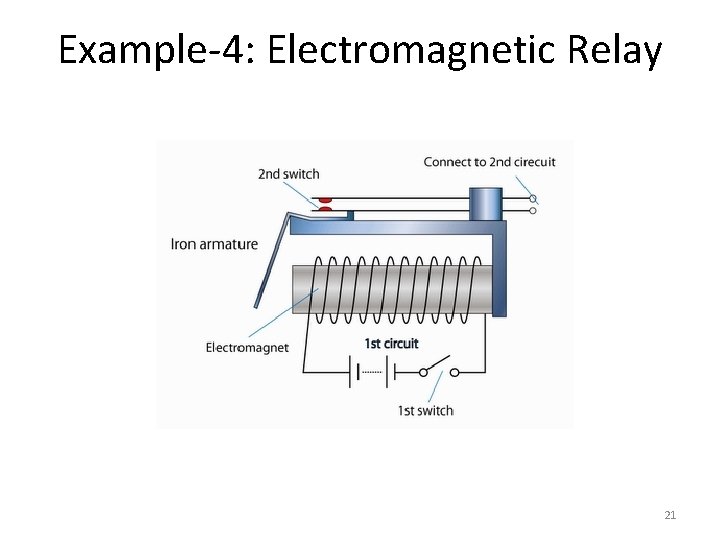
Example-4: Electromagnetic Relay 21
Example-5: Push Button 22
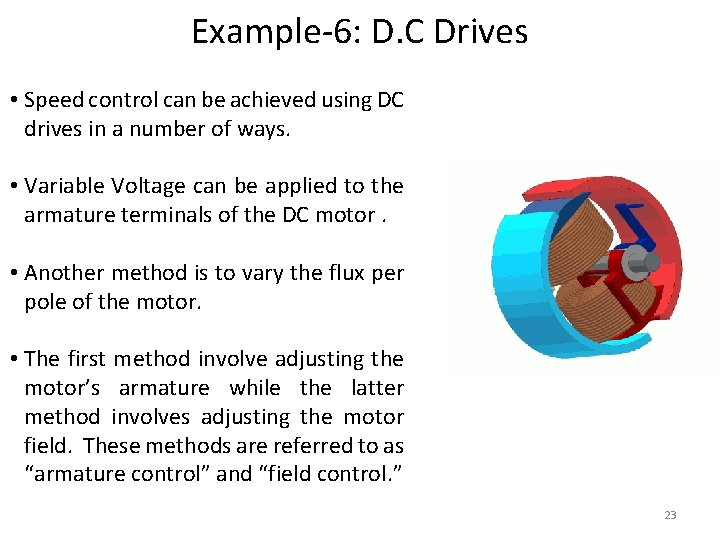
Example-6: D. C Drives • Speed control can be achieved using DC drives in a number of ways. • Variable Voltage can be applied to the armature terminals of the DC motor. • Another method is to vary the flux per pole of the motor. • The first method involve adjusting the motor’s armature while the latter method involves adjusting the motor field. These methods are referred to as “armature control” and “field control. ” 23
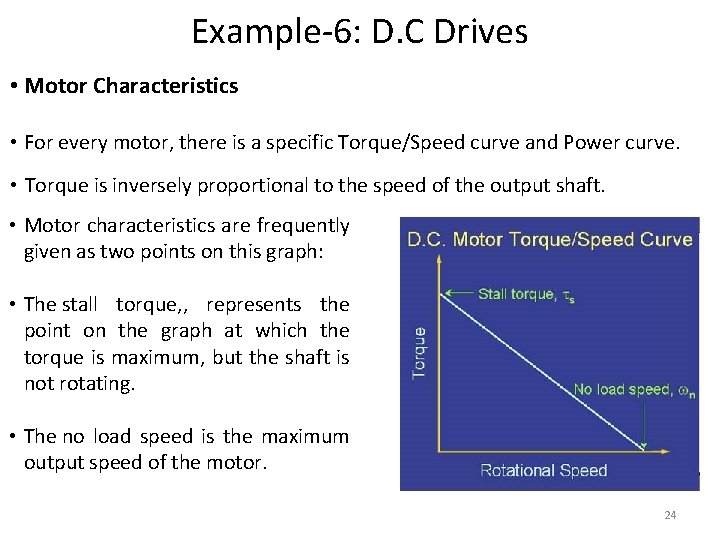
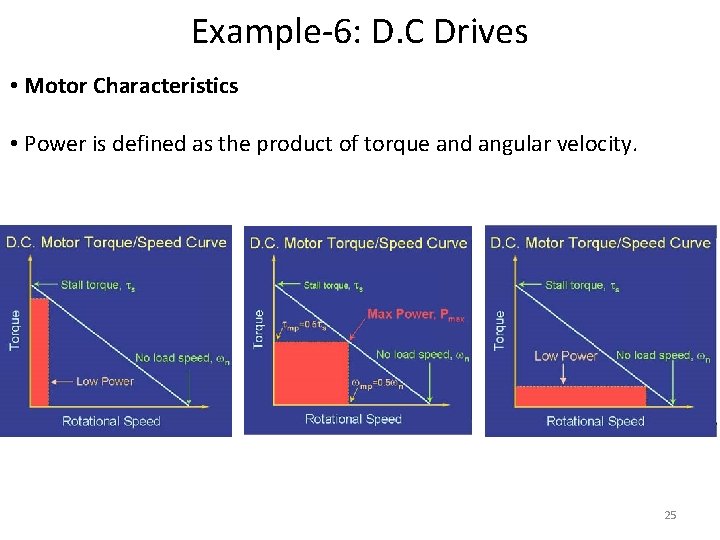
Example-6: D. C Drives • Motor Characteristics • For every motor, there is a specific Torque/Speed curve and Power curve. • Torque is inversely proportional to the speed of the output shaft. • Motor characteristics are frequently given as two points on this graph: • The stall torque, , represents the point on the graph at which the torque is maximum, but the shaft is not rotating. • The no load speed is the maximum output speed of the motor. 24
Example-6: D. C Drives • Motor Characteristics • Power is defined as the product of torque and angular velocity. 25
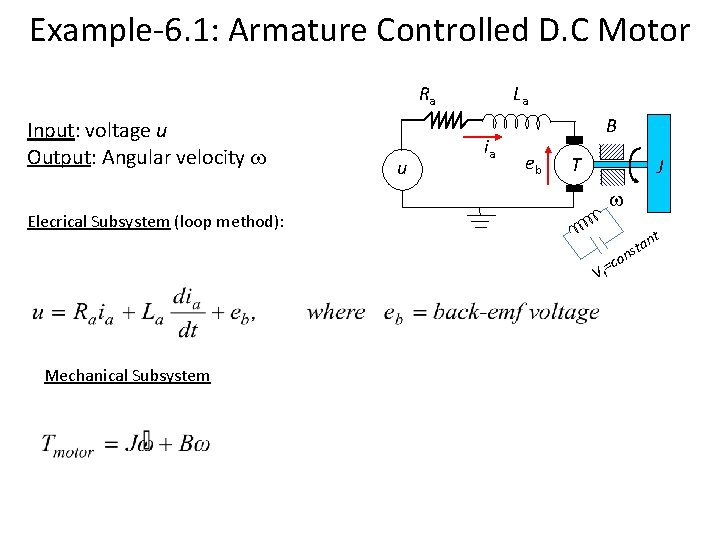
Example-6. 1: Armature Controlled D. C Motor Ra Input: voltage u Output: Angular velocity u La ia B eb T J Elecrical Subsystem (loop method): nt sta n =co Vf Mechanical Subsystem
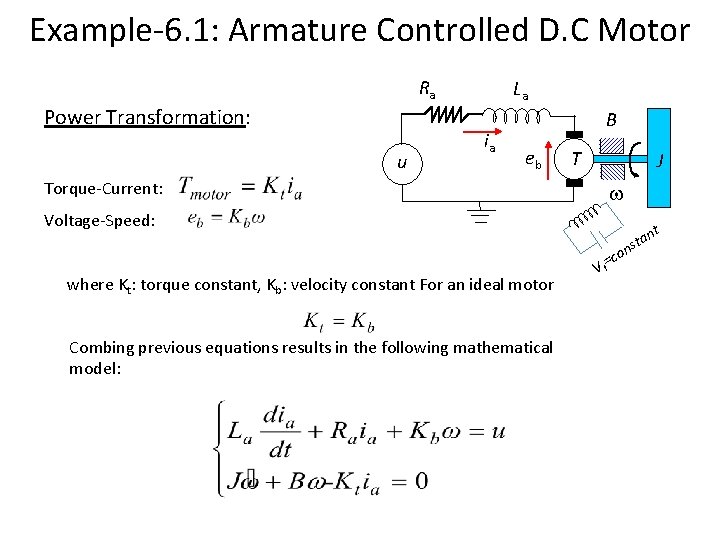
Example-6. 1: Armature Controlled D. C Motor Ra Power Transformation: u La ia B eb T J Torque-Current: Voltage-Speed: where Kt: torque constant, Kb: velocity constant For an ideal motor Combing previous equations results in the following mathematical model: t an t s n =co Vf
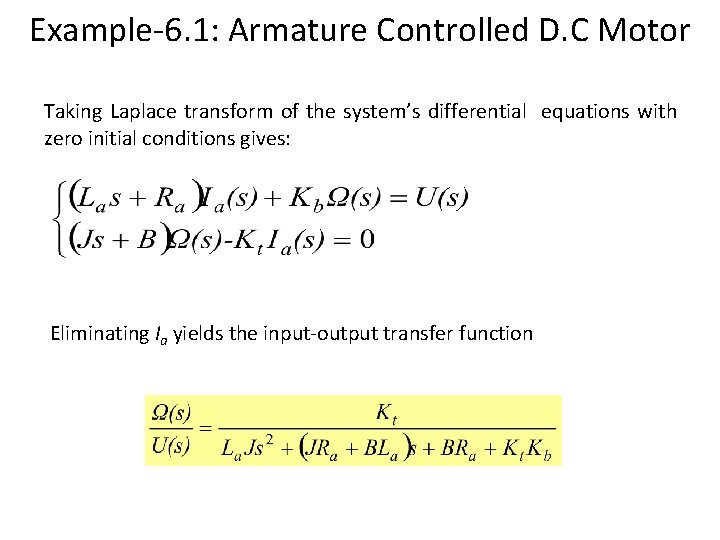
Example-6. 1: Armature Controlled D. C Motor Taking Laplace transform of the system’s differential equations with zero initial conditions gives: Eliminating Ia yields the input-output transfer function
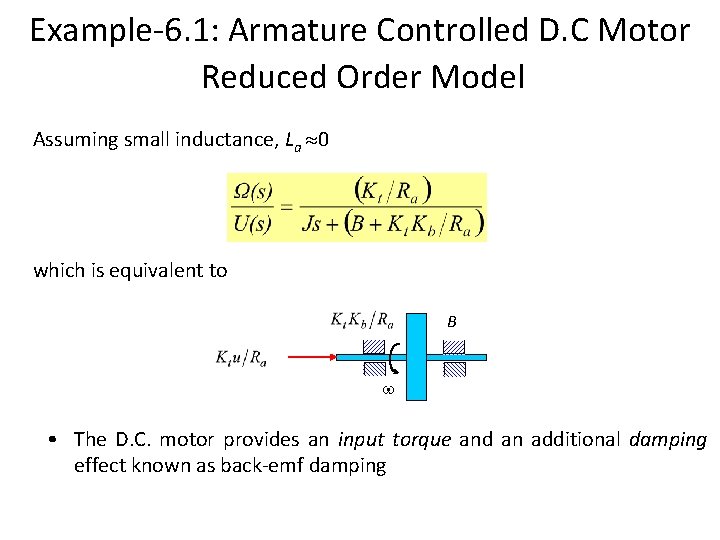
Example-6. 1: Armature Controlled D. C Motor Reduced Order Model Assuming small inductance, La 0 which is equivalent to B • The D. C. motor provides an input torque and an additional damping effect known as back-emf damping
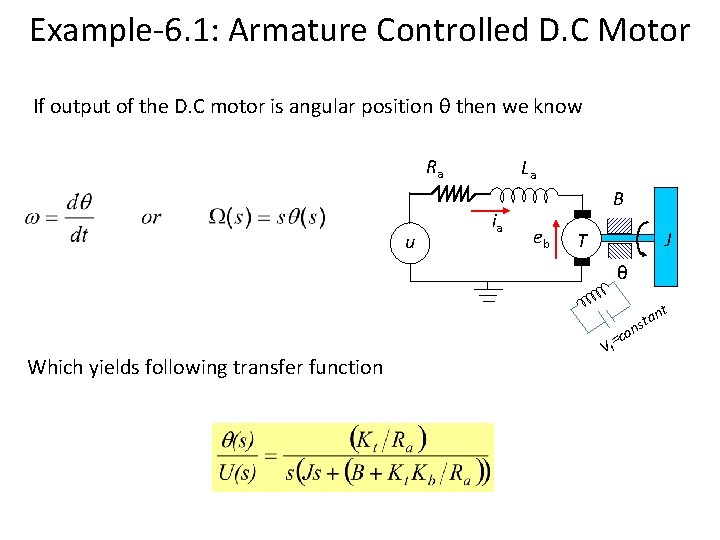
Example-6. 1: Armature Controlled D. C Motor If output of the D. C motor is angular position θ then we know Ra u La ia B eb J T θ t an t s n =co Which yields following transfer function Vf
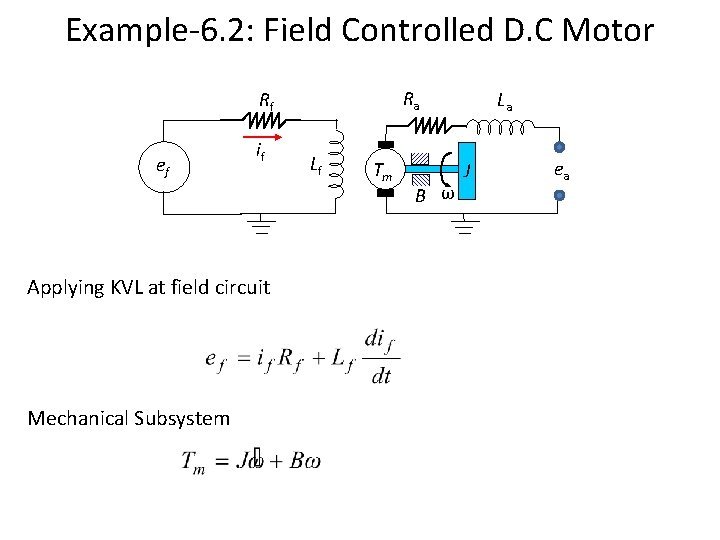
Example-6. 2: Field Controlled D. C Motor Ra Rf ef if Applying KVL at field circuit Mechanical Subsystem Lf Tm B ω La J ea
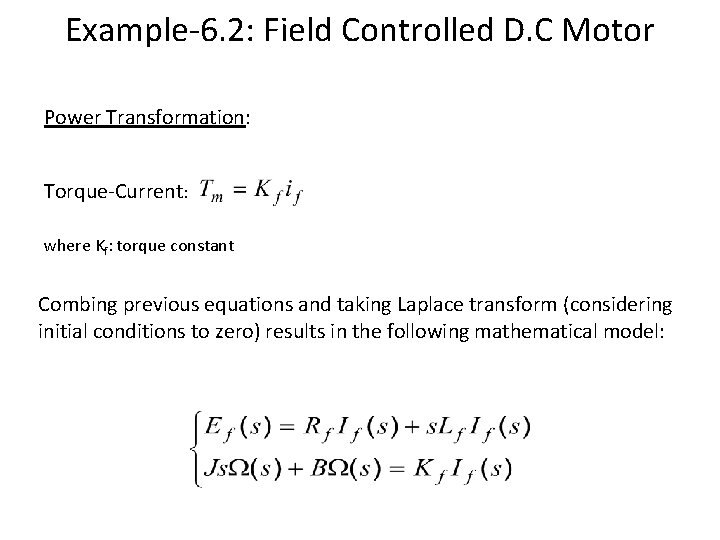
Example-6. 2: Field Controlled D. C Motor Power Transformation: Torque-Current: where Kf: torque constant Combing previous equations and taking Laplace transform (considering initial conditions to zero) results in the following mathematical model:
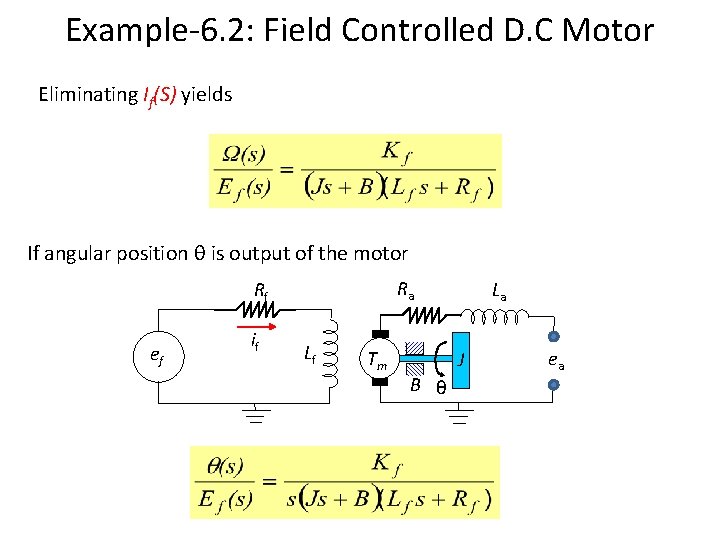
Example-6. 2: Field Controlled D. C Motor Eliminating If(S) yields If angular position θ is output of the motor Ra Rf ef if Lf Tm La J B θ ea
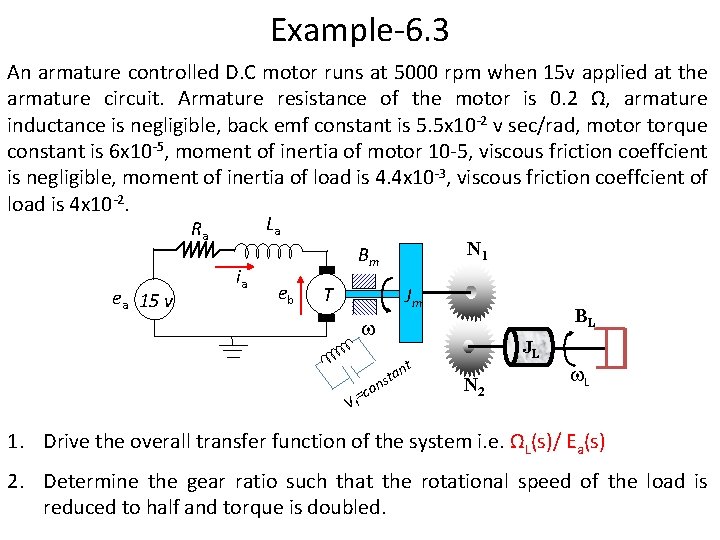
Example-6. 3 An armature controlled D. C motor runs at 5000 rpm when 15 v applied at the armature circuit. Armature resistance of the motor is 0. 2 Ω, armature inductance is negligible, back emf constant is 5. 5 x 10 -2 v sec/rad, motor torque constant is 6 x 10 -5, moment of inertia of motor 10 -5, viscous friction coeffcient is negligible, moment of inertia of load is 4. 4 x 10 -3, viscous friction coeffcient of load is 4 x 10 -2. La Ra ea 15 v ia N 1 Bm eb T Jm BL t =co an t s n Vf JL N 2 L 1. Drive the overall transfer function of the system i. e. ΩL(s)/ Ea(s) 2. Determine the gear ratio such that the rotational speed of the load is reduced to half and torque is doubled.
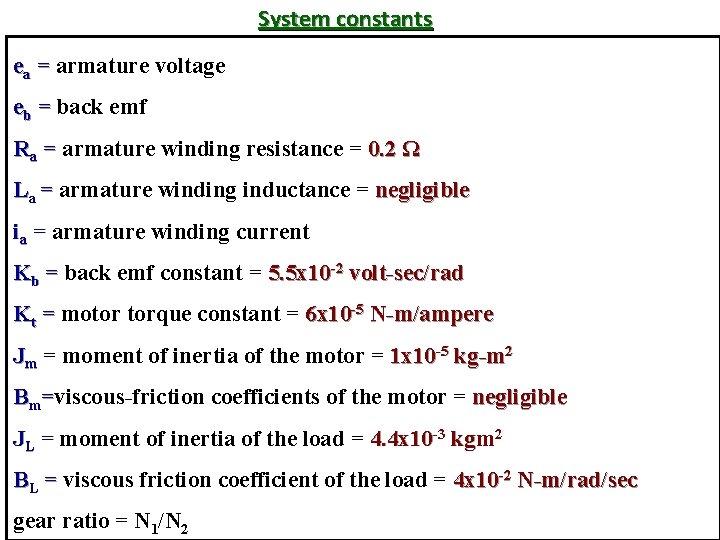
System constants ea = armature voltage eb = back emf Ra = armature winding resistance = 0. 2 Ω La = armature winding inductance = negligible ia = armature winding current Kb = back emf constant = 5. 5 x 10 -2 volt-sec/rad Kt = motor torque constant = 6 x 10 -5 N-m/ampere Jm = moment of inertia of the motor = 1 x 10 -5 kg-m 2 Bm=viscous-friction coefficients of the motor = negligible JL = moment of inertia of the load = 4. 4 x 10 -3 kgm 2 BL = viscous friction coefficient of the load = 4 x 10 -2 N-m/rad/sec gear ratio = N 1/N 2
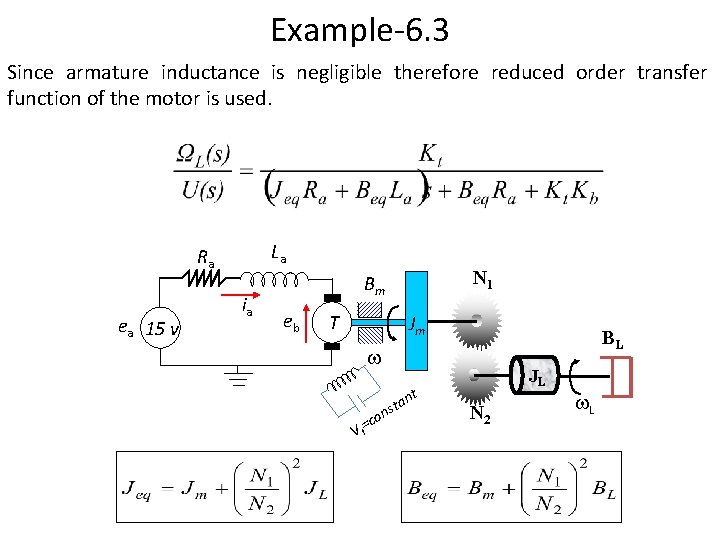
Example-6. 3 Since armature inductance is negligible therefore reduced order transfer function of the motor is used. La Ra ea 15 v ia N 1 Bm eb T Jm BL t =co an t s n Vf JL N 2 L
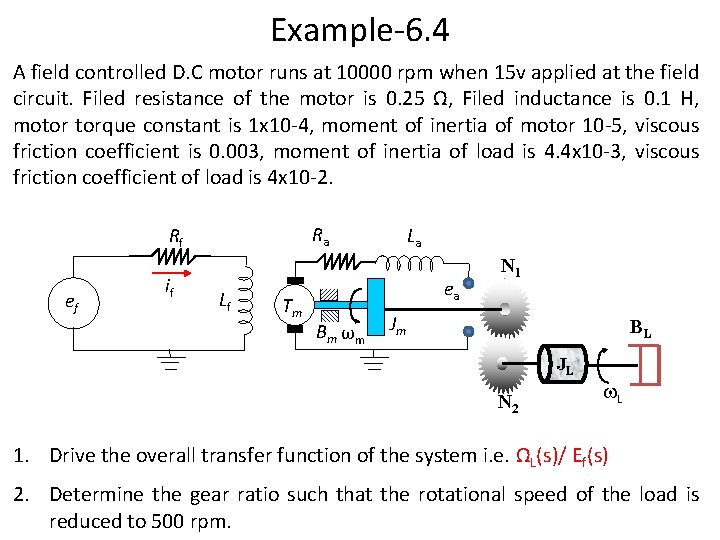
Example-6. 4 A field controlled D. C motor runs at 10000 rpm when 15 v applied at the field circuit. Filed resistance of the motor is 0. 25 Ω, Filed inductance is 0. 1 H, motor torque constant is 1 x 10 -4, moment of inertia of motor 10 -5, viscous friction coefficient is 0. 003, moment of inertia of load is 4. 4 x 10 -3, viscous friction coefficient of load is 4 x 10 -2. Ra Rf ef if Lf Tm La ea B m ωm N 1 Jm BL JL N 2 L 1. Drive the overall transfer function of the system i. e. ΩL(s)/ Ef(s) 2. Determine the gear ratio such that the rotational speed of the load is reduced to 500 rpm.
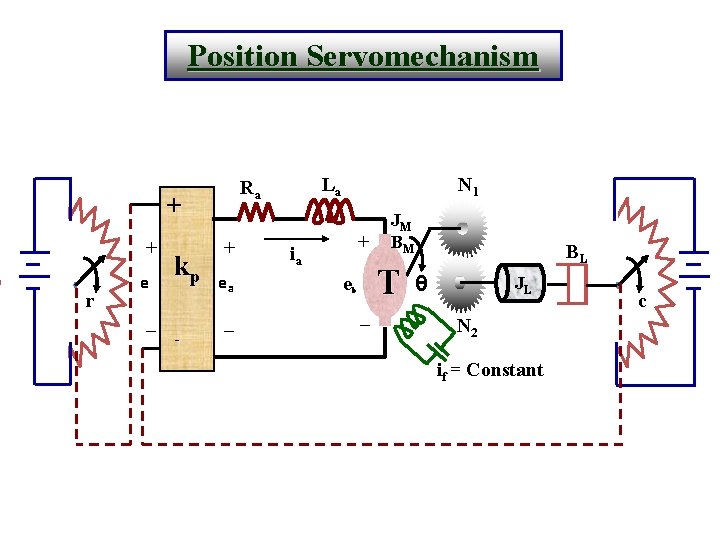
Position Servomechanism + + r e _ kp - La Ra + ea _ N 1 + ia JM BM T e b _ BL θ JL N 2 if = Constant c
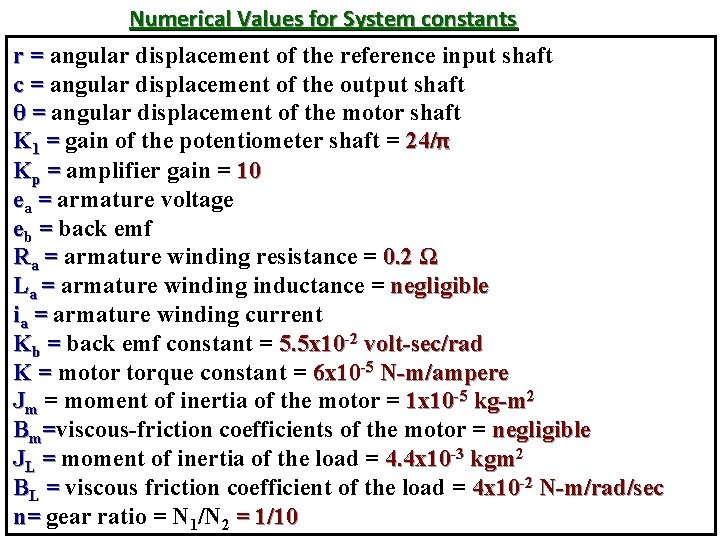
Numerical Values for System constants r = angular displacement of the reference input shaft c = angular displacement of the output shaft θ = angular displacement of the motor shaft K 1 = gain of the potentiometer shaft = 24/π Kp = amplifier gain = 10 ea = armature voltage eb = back emf Ra = armature winding resistance = 0. 2 Ω La = armature winding inductance = negligible ia = armature winding current Kb = back emf constant = 5. 5 x 10 -2 volt-sec/rad K = motor torque constant = 6 x 10 -5 N-m/ampere Jm = moment of inertia of the motor = 1 x 10 -5 kg-m 2 Bm=viscous-friction coefficients of the motor = negligible JL = moment of inertia of the load = 4. 4 x 10 -3 kgm 2 BL = viscous friction coefficient of the load = 4 x 10 -2 N-m/rad/sec n= gear ratio = N 1/N 2 = 1/10
System Equations or e(t)=K 1[ r(t) - c(t) ] E(S)=K 1 [ R(S) - C(S) ] (1) Ea(s)=Kp E(S) (2) Transfer function of the armature controlled D. C motor Is given by Km = Ea(S) S(Tm. S+1) θ(S)
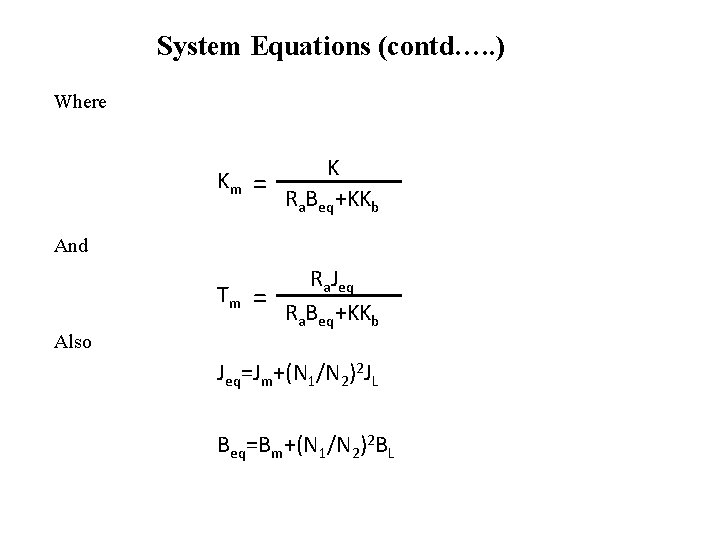
System Equations (contd…. . ) Where K Km = Ra. Beq+KKb And Tm Also Ra. Jeq = Ra. Beq+KKb Jeq=Jm+(N 1/N 2)2 JL Beq=Bm+(N 1/N 2)2 BL
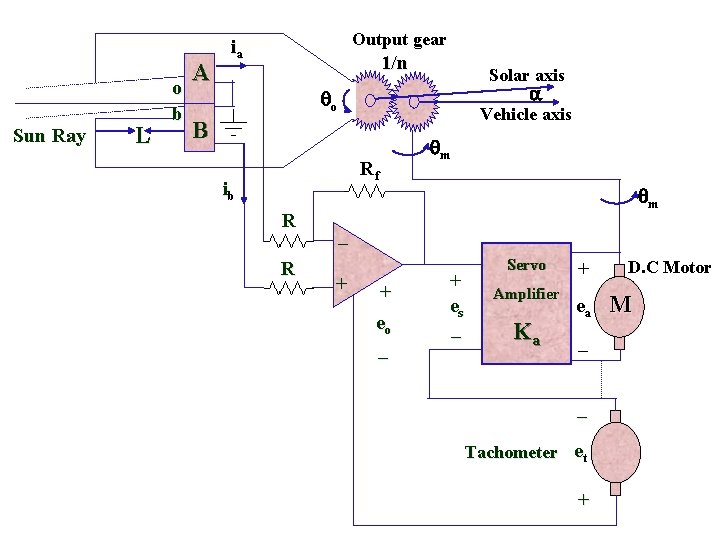
Sun Ray L o b A Output gear ia 1/n Solar axis o Vehicle axis B m Rf ib R R m _ + + eo _ + es _ Servo Amplifier Ka + ea _ _ Tachometer et + D. C Motor M
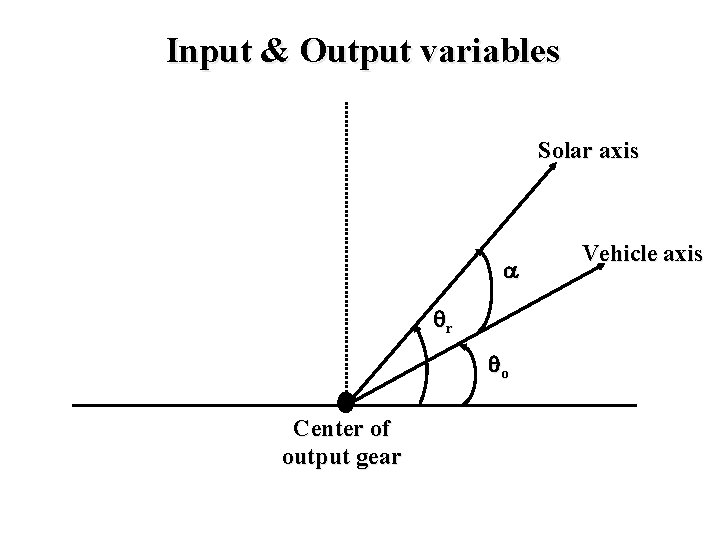
Input & Output variables Solar axis r o Center of output gear Vehicle axis
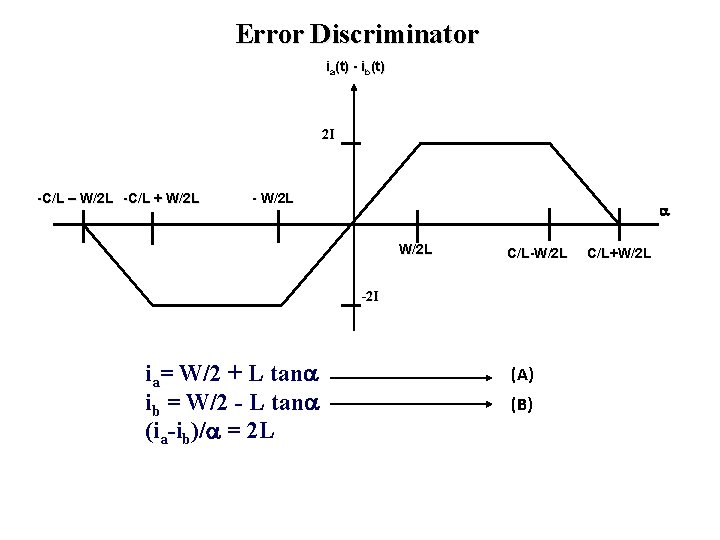
Error Discriminator ia(t) - ib(t) 2 I -C/L – W/2 L -C/L + W/2 L - W/2 L C/L-W/2 L -2 I ia= W/2 + L tan ib = W/2 - L tan (ia-ib)/ = 2 L (A) (B) C/L+W/2 L
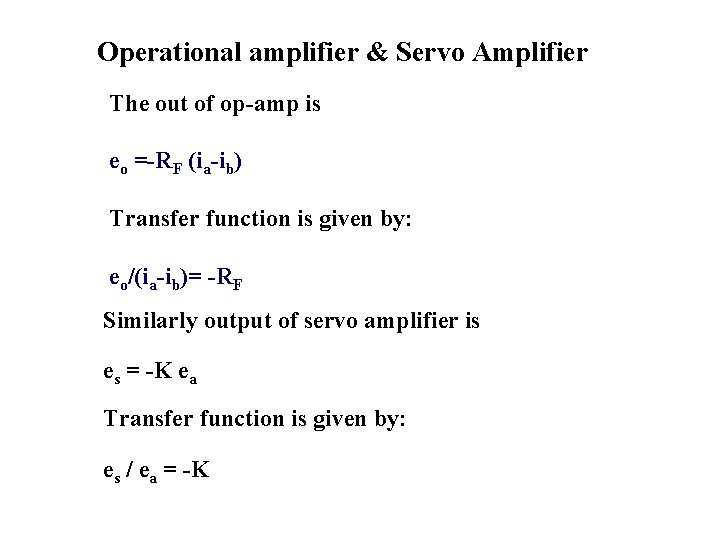
Operational amplifier & Servo Amplifier The out of op-amp is eo =-RF (ia-ib) Transfer function is given by: eo/(ia-ib)= -RF Similarly output of servo amplifier is es = -K ea Transfer function is given by: es / ea = -K
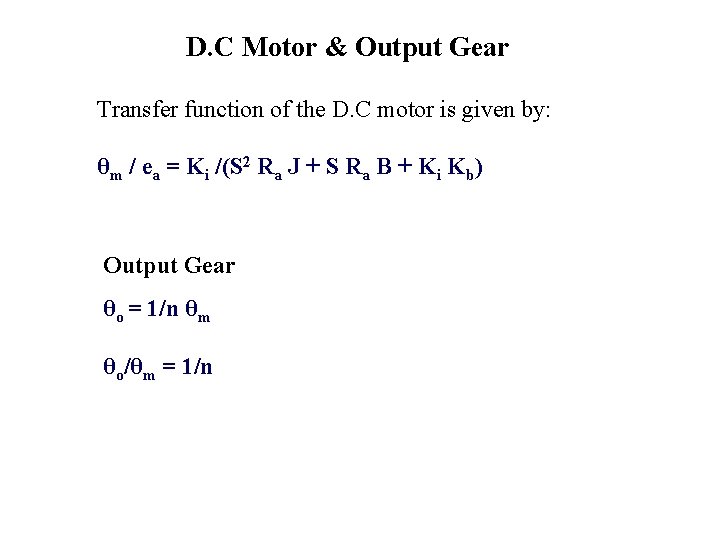
D. C Motor & Output Gear Transfer function of the D. C motor is given by: θm / ea = Ki /(S 2 Ra J + S Ra B + Ki Kb) Output Gear θo = 1/n θm θo/θm = 1/n
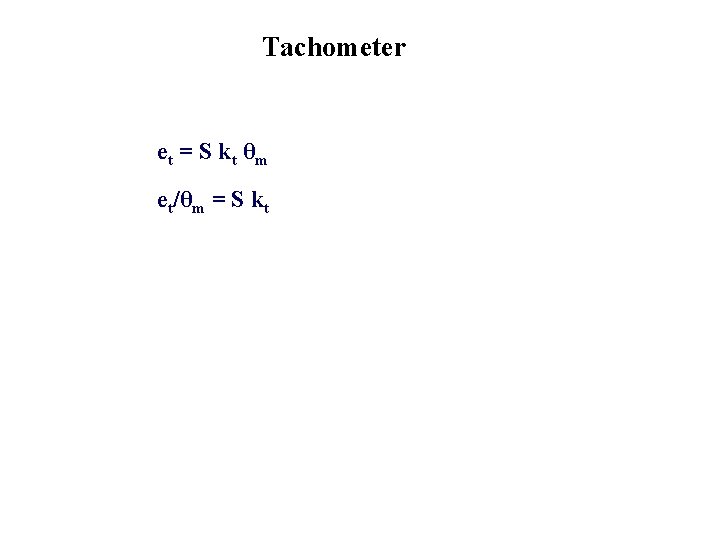
Tachometer et = S k t θm et/θm = S kt
To download this lecture visit http: //imtiazhussainkalwar. weebly. com/ END OF LECTURES-4 48