
Modeling Prior Shape and Appearance Knowledge in Watershed


- Slides: 20
Modeling Prior Shape and Appearance Knowledge in Watershed Segmentation Xiaoxing Li & Ghassan Hamarneh School of Computing Science Simon Fraser University 1
Outline • • • Motivation Watershed segmentation Shape histogram & appearance descriptors Algorithm Results Conclusion & future work 2
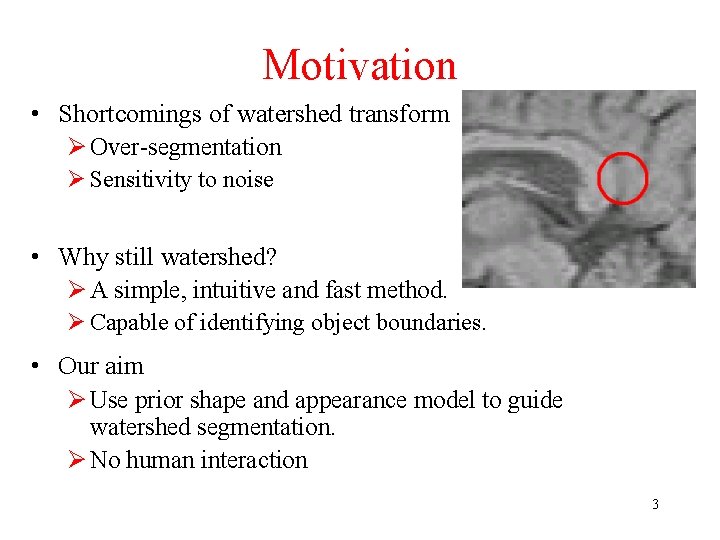
Motivation • Shortcomings of watershed transform Ø Over-segmentation Ø Sensitivity to noise • Why still watershed? Ø A simple, intuitive and fast method. Ø Capable of identifying object boundaries. • Our aim Ø Use prior shape and appearance model to guide watershed segmentation. Ø No human interaction 3
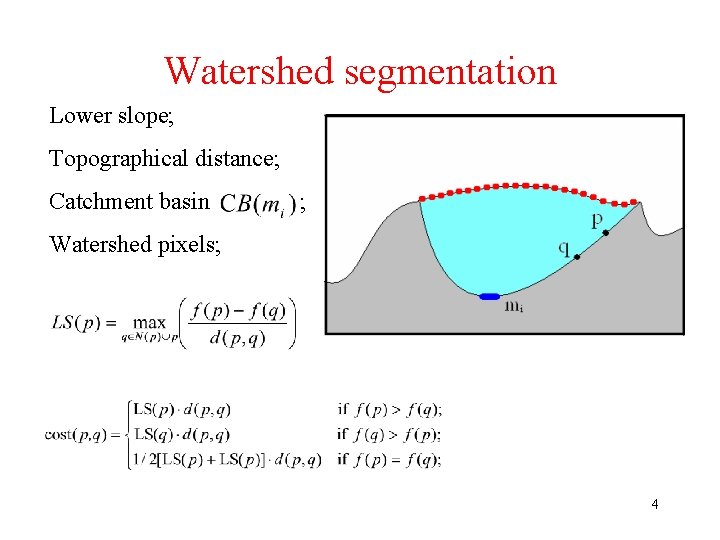
Watershed segmentation Lower slope; Topographical distance; Catchment basin ; Watershed pixels; 4
Outline • • • Motivation Watershed segmentation Shape histogram & appearance descriptors Algorithm Results Conclusion & future work 5
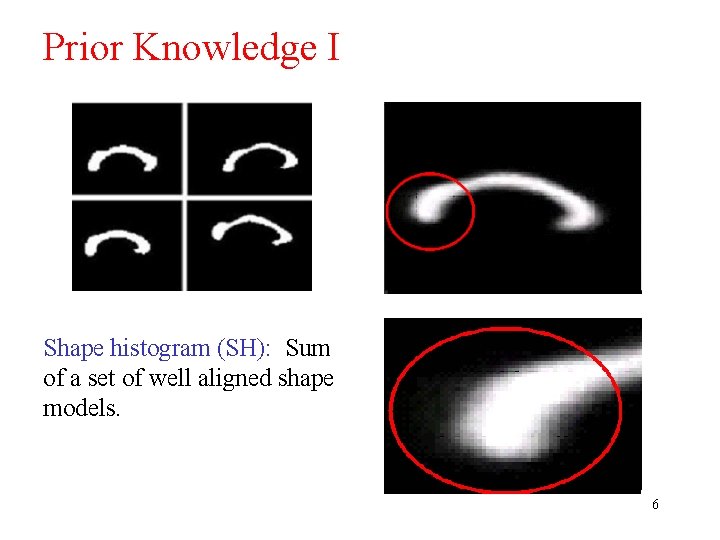
Prior Knowledge I Shape histogram (SH): Sum of a set of well aligned shape models. 6
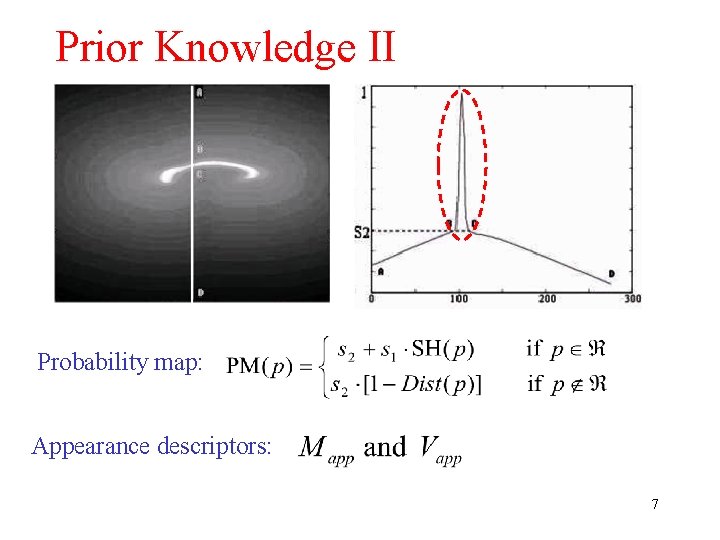
Prior Knowledge II Probability map: Appearance descriptors: 7
Outline • • • Motivation Watershed segmentation Shape histogram & appearance descriptors Algorithm Results Conclusion & future work 8
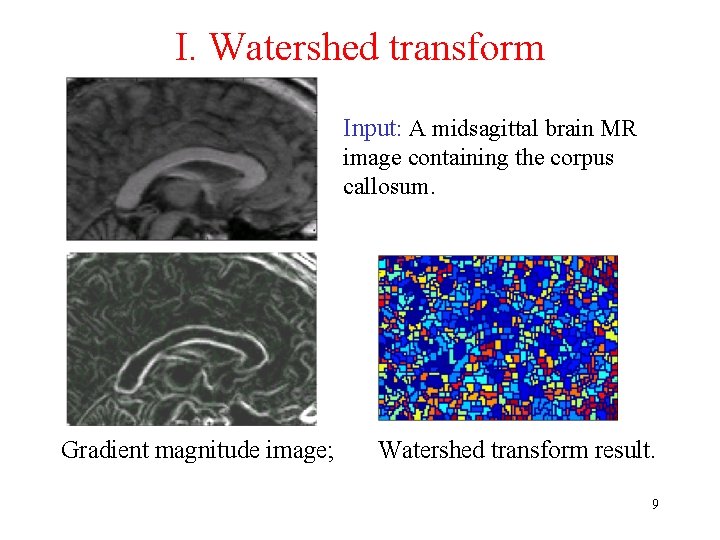
I. Watershed transform Input: A midsagittal brain MR image containing the corpus callosum. Gradient magnitude image; Watershed transform result. 9
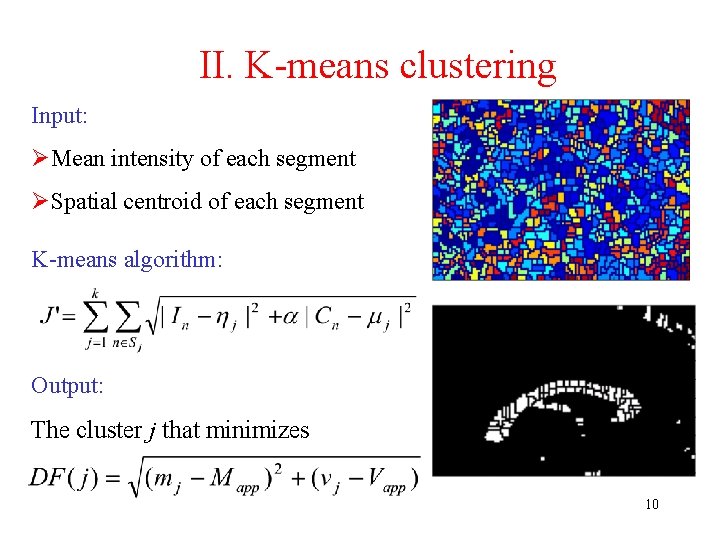
II. K-means clustering Input: ØMean intensity of each segment ØSpatial centroid of each segment K-means algorithm: Output: The cluster j that minimizes 10
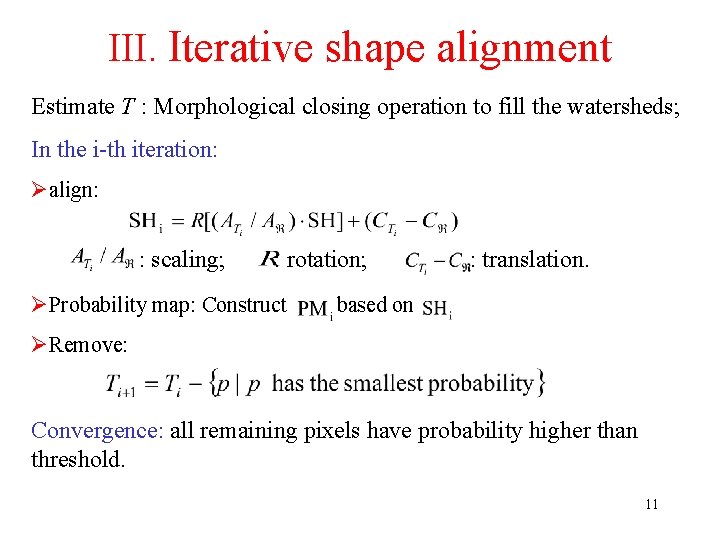
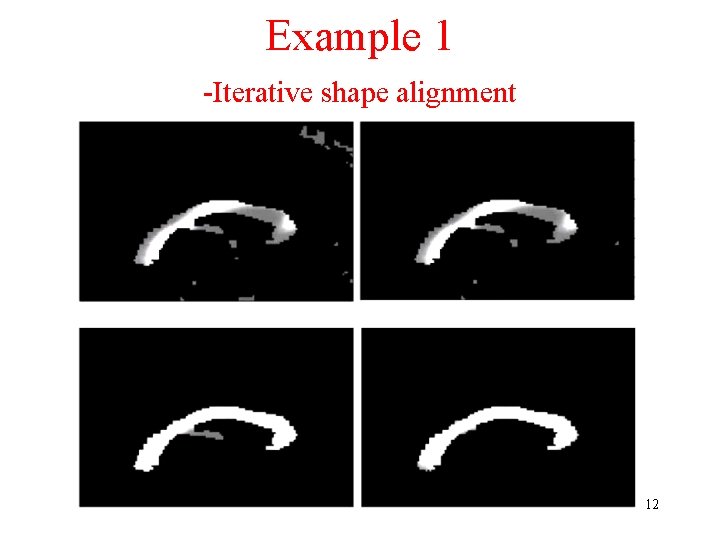
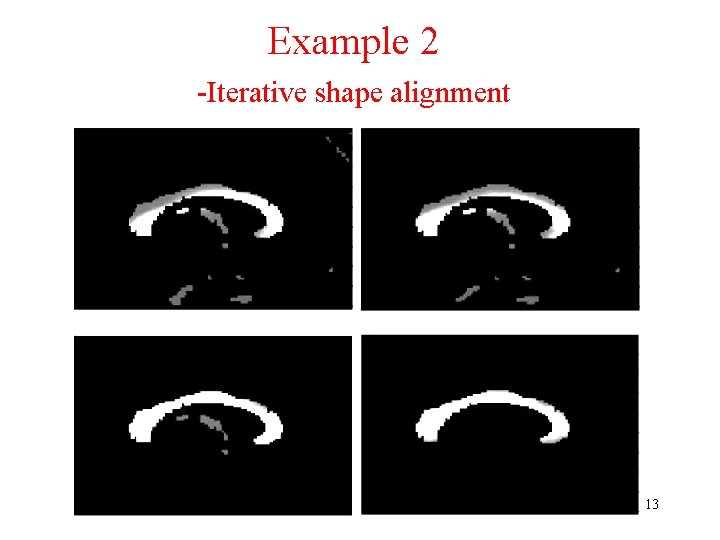
III. Iterative shape alignment Estimate T : Morphological closing operation to fill the watersheds; In the i-th iteration: Øalign: : scaling; : rotation; ØProbability map: Construct : translation. based on ØRemove: Convergence: all remaining pixels have probability higher than threshold. 11
Example 1 -Iterative shape alignment 12
Example 2 -Iterative shape alignment 13
Outline • • • Motivation Watershed segmentation Shape histogram & appearance descriptors Algorithm Results Conclusion & future work 14
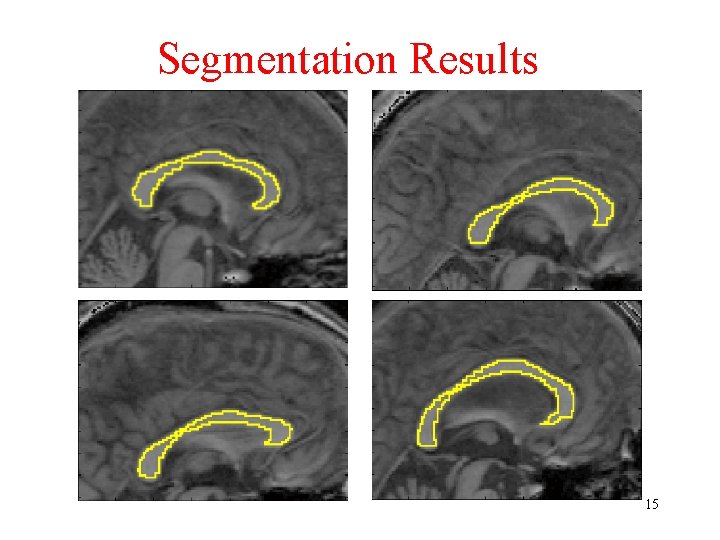
Segmentation Results 15
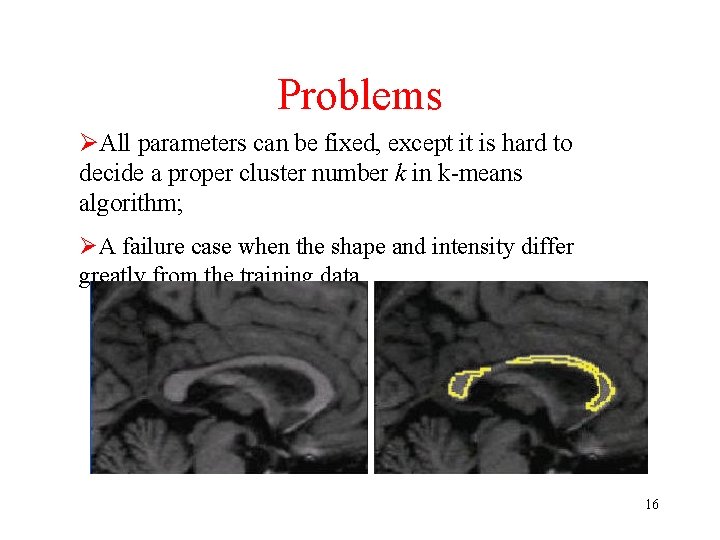
Problems ØAll parameters can be fixed, except it is hard to decide a proper cluster number k in k-means algorithm; ØA failure case when the shape and intensity differ greatly from the training data. 16
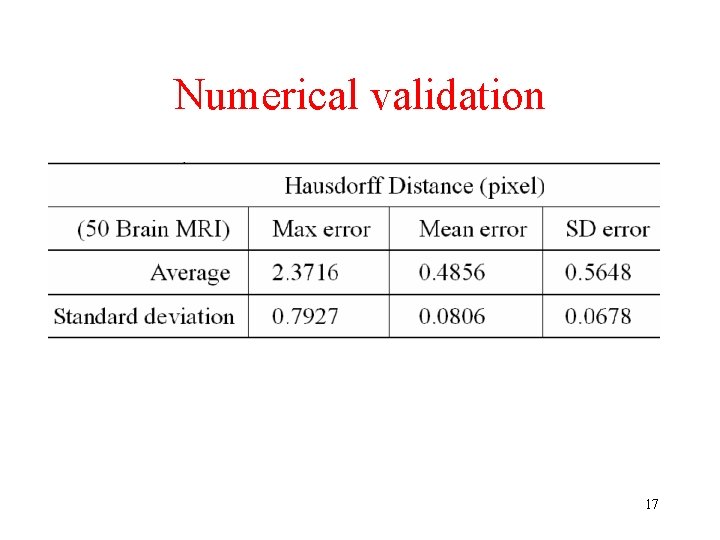
Numerical validation 17
Outline • • • Motivation Watershed segmentation Shape histogram & appearance descriptors Algorithm Results Conclusion & future work 18
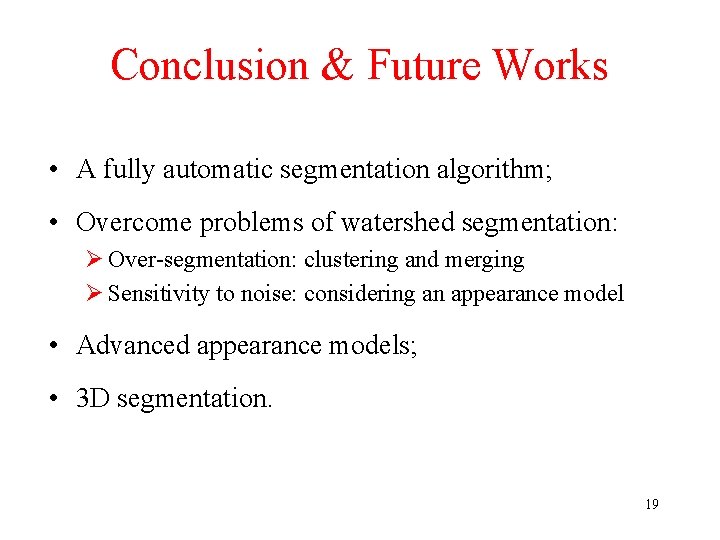
Conclusion & Future Works • A fully automatic segmentation algorithm; • Overcome problems of watershed segmentation: Ø Over-segmentation: clustering and merging Ø Sensitivity to noise: considering an appearance model • Advanced appearance models; • 3 D segmentation. 19
Q&A 20