
MODELING OF LIQUIDPROPELLANT ROCKET ENGINE DYNAMICS LAUNCH A
- Slides: 2
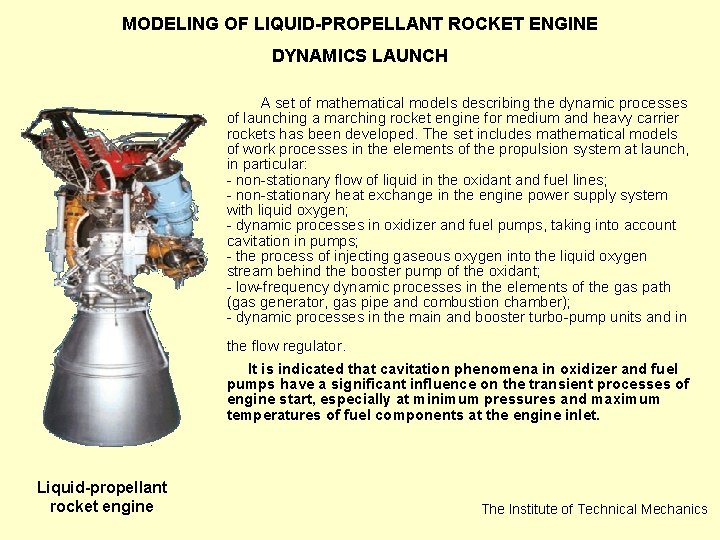
MODELING OF LIQUID-PROPELLANT ROCKET ENGINE DYNAMICS LAUNCH A set of mathematical models describing the dynamic processes of launching a marching rocket engine for medium and heavy carrier rockets has been developed. The set includes mathematical models of work processes in the elements of the propulsion system at launch, in particular: - non-stationary flow of liquid in the oxidant and fuel lines; - non-stationary heat exchange in the engine power supply system with liquid oxygen; - dynamic processes in oxidizer and fuel pumps, taking into account cavitation in pumps; - the process of injecting gaseous oxygen into the liquid oxygen stream behind the booster pump of the oxidant; - low-frequency dynamic processes in the elements of the gas path (gas generator, gas pipe and combustion chamber); - dynamic processes in the main and booster turbo-pump units and in the flow regulator. It is indicated that cavitation phenomena in oxidizer and fuel pumps have a significant influence on the transient processes of engine start, especially at minimum pressures and maximum temperatures of fuel components at the engine inlet. Liquid-propellant rocket engine The Institute of Technical Mechanics
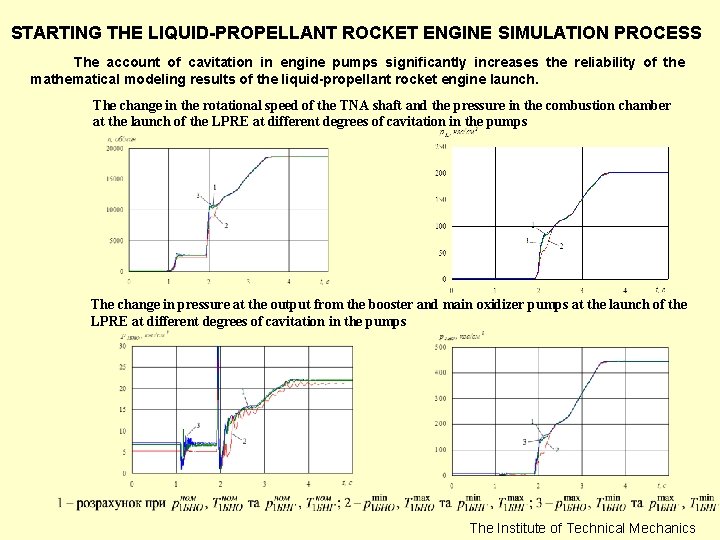
STARTING THE LIQUID-PROPELLANT ROCKET ENGINE SIMULATION PROCESS The account of cavitation in engine pumps significantly increases the reliability of the mathematical modeling results of the liquid-propellant rocket engine launch. The change in the rotational speed of the TNA shaft and the pressure in the combustion chamber at the launch of the LPRE at different degrees of cavitation in the pumps The change in pressure at the output from the booster and main oxidizer pumps at the launch of the LPRE at different degrees of cavitation in the pumps The Institute of Technical Mechanics