
Modeling of Fossil Fuel Formation P M V
- Slides: 19
Modeling of Fossil Fuel Formation P M V Subbarao Professor Mechanical Engineering Department Study of Natural Resources for Better Design….
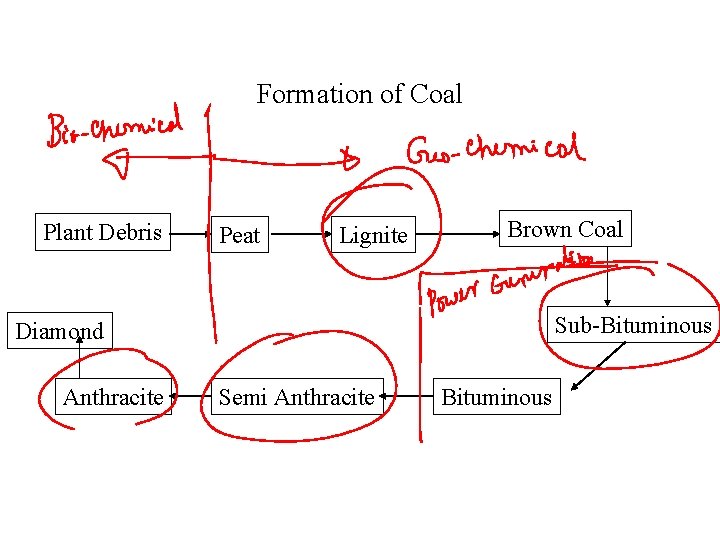
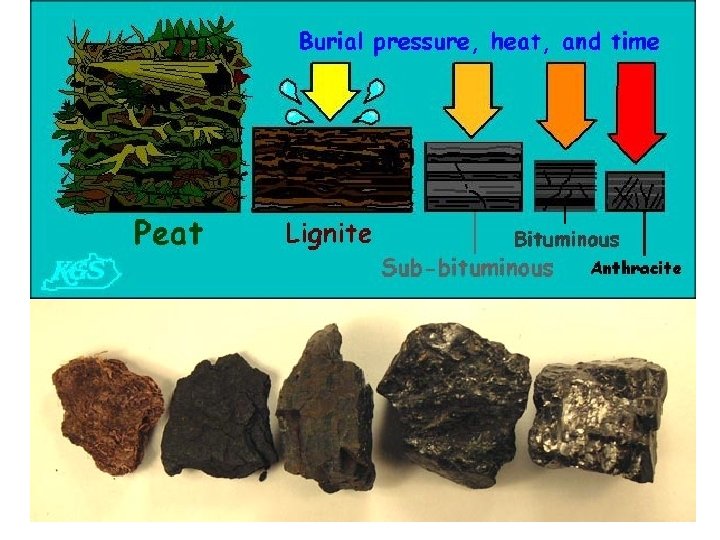
Formation of Coal Plant Debris Peat Lignite Brown Coal Sub-Bituminous Diamond Anthracite Semi Anthracite Bituminous
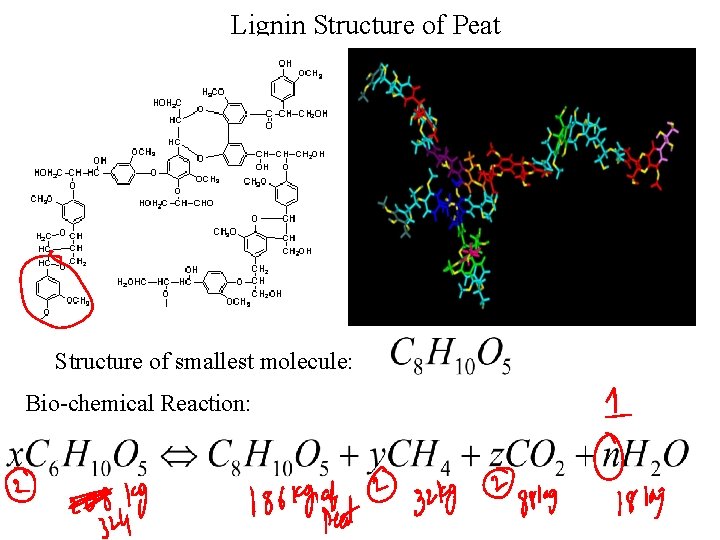
Lignin Structure of Peat Structure of smallest molecule: Bio-chemical Reaction:
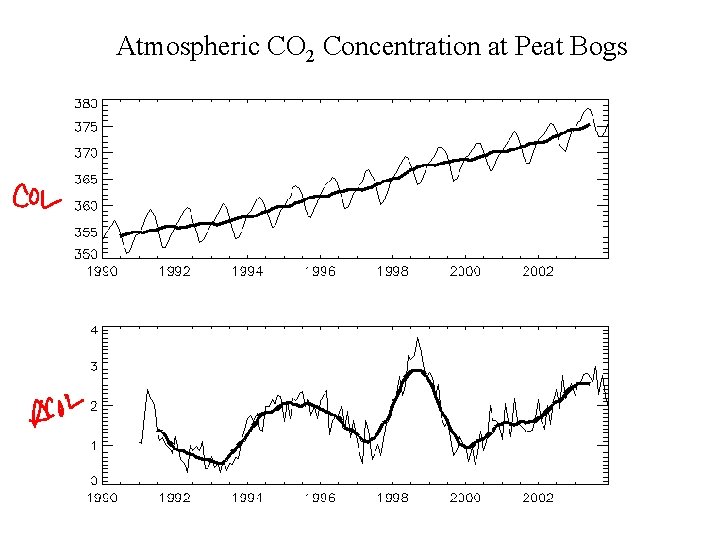
Atmospheric CO 2 Concentration at Peat Bogs
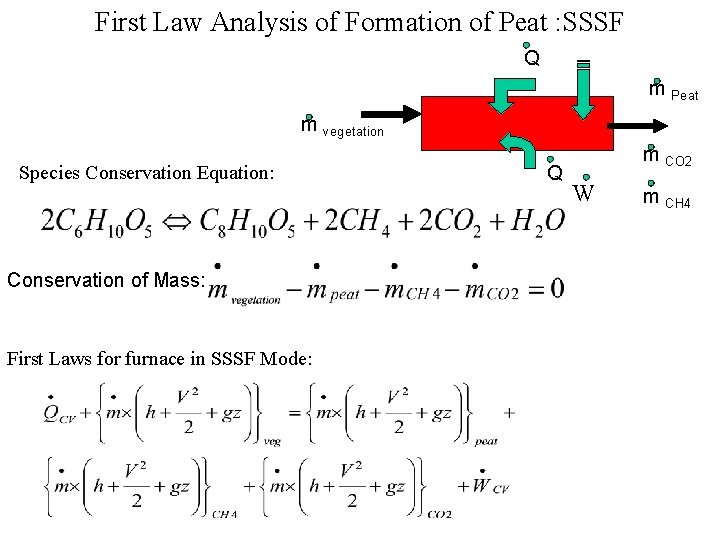
First Law Analysis of Formation of Peat : SSSF Q m Peat m vegetation Species Conservation Equation: Conservation of Mass: First Laws for furnace in SSSF Mode: Q m CO 2 W m CH 4
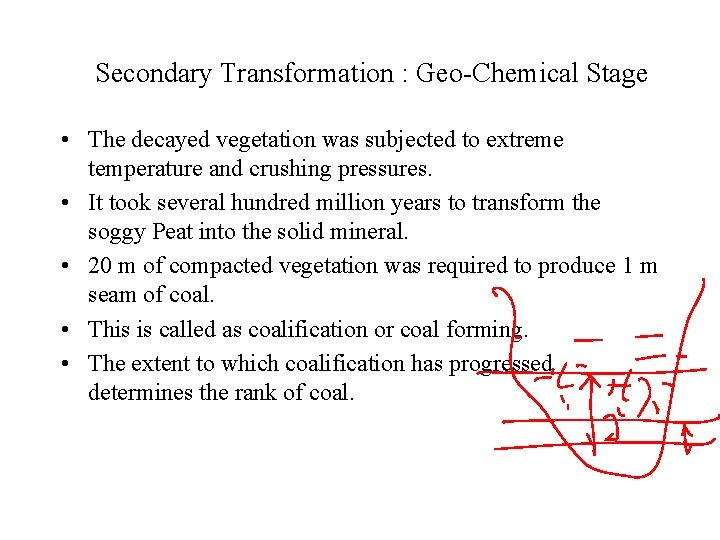
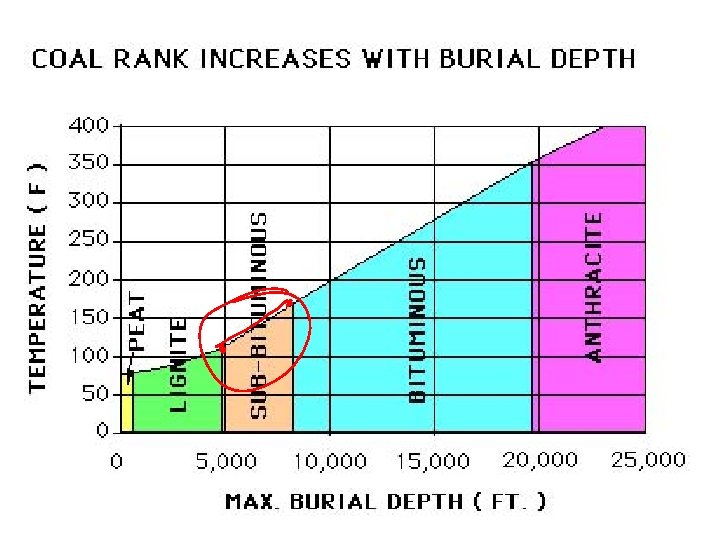
Secondary Transformation : Geo-Chemical Stage • The decayed vegetation was subjected to extreme temperature and crushing pressures. • It took several hundred million years to transform the soggy Peat into the solid mineral. • 20 m of compacted vegetation was required to produce 1 m seam of coal. • This is called as coalification or coal forming. • The extent to which coalification has progressed determines the rank of coal.
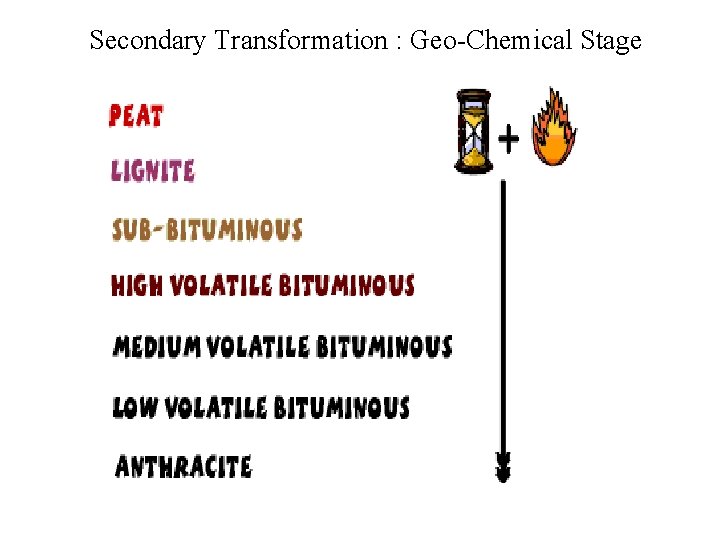
Secondary Transformation : Geo-Chemical Stage
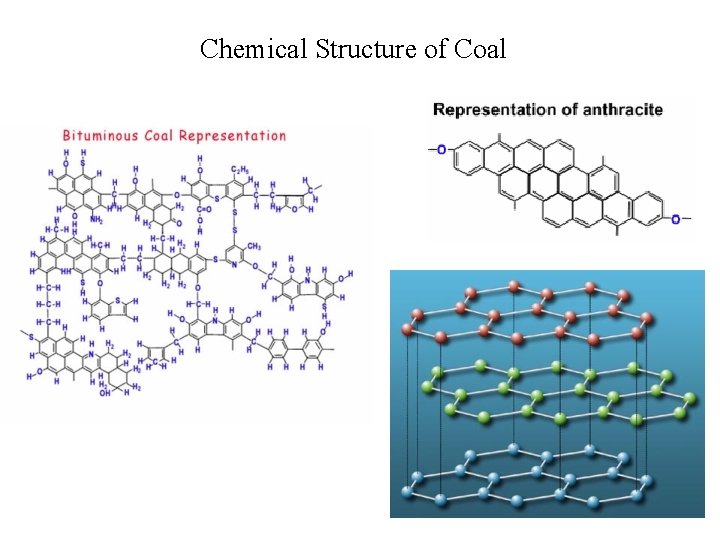
Chemical Structure of Coal
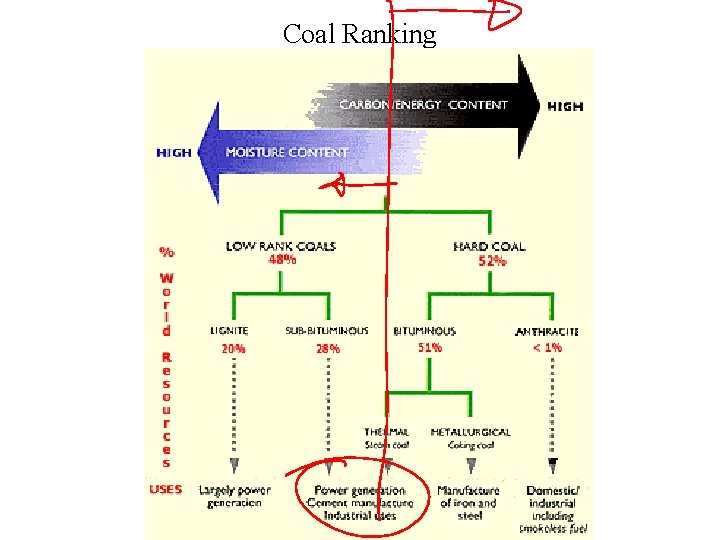
Coal Ranking
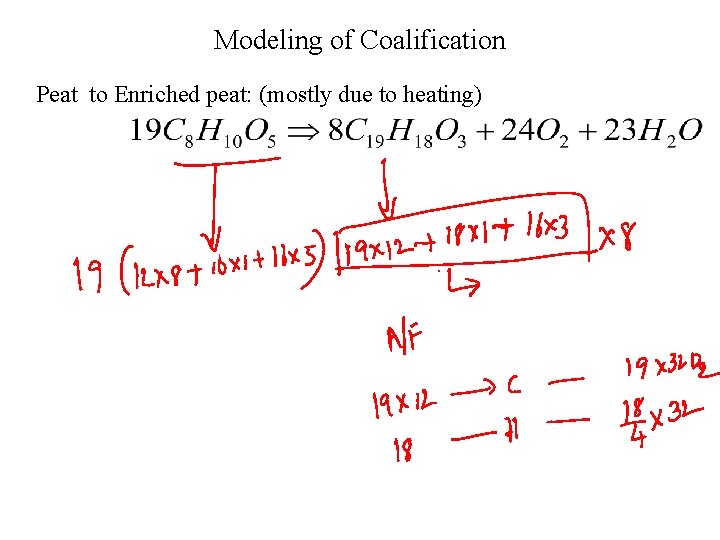
Modeling of Coalification Peat to Enriched peat: (mostly due to heating)
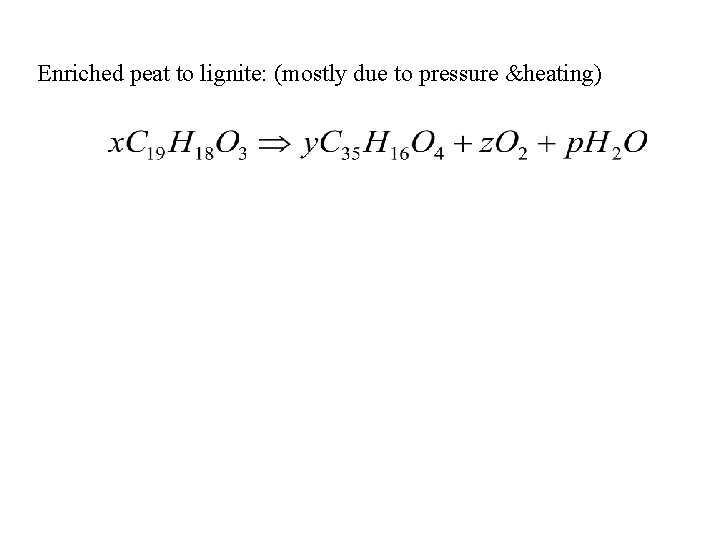
Enriched peat to lignite: (mostly due to pressure &heating)
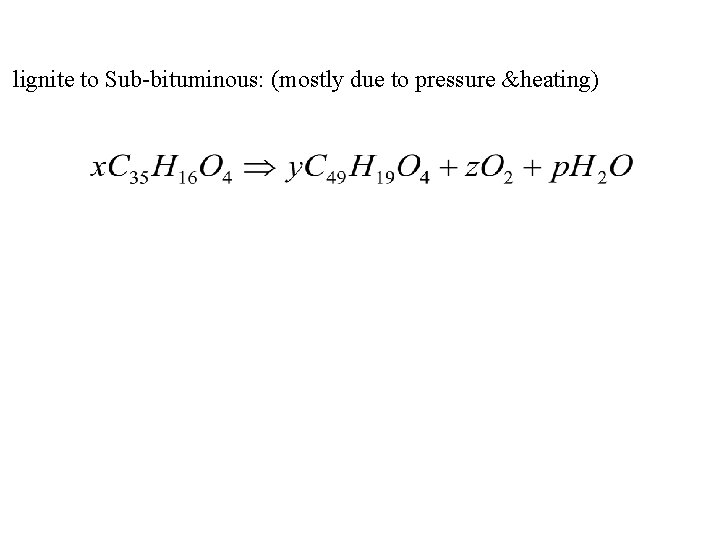
lignite to Sub-bituminous: (mostly due to pressure &heating)
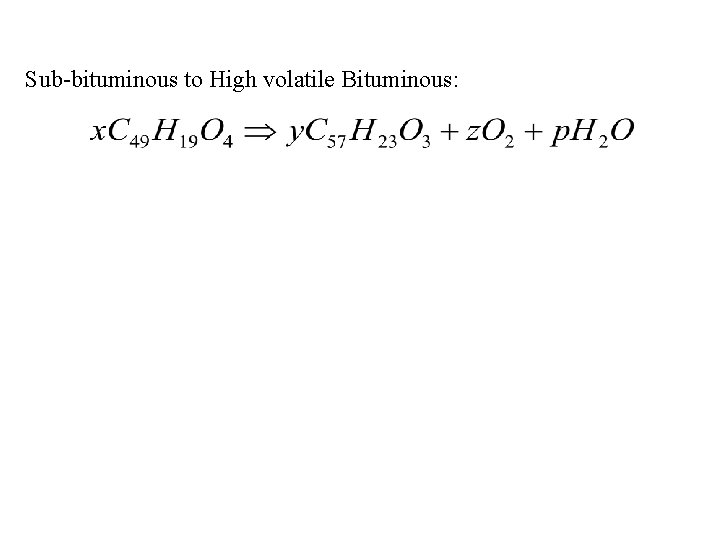
Sub-bituminous to High volatile Bituminous:
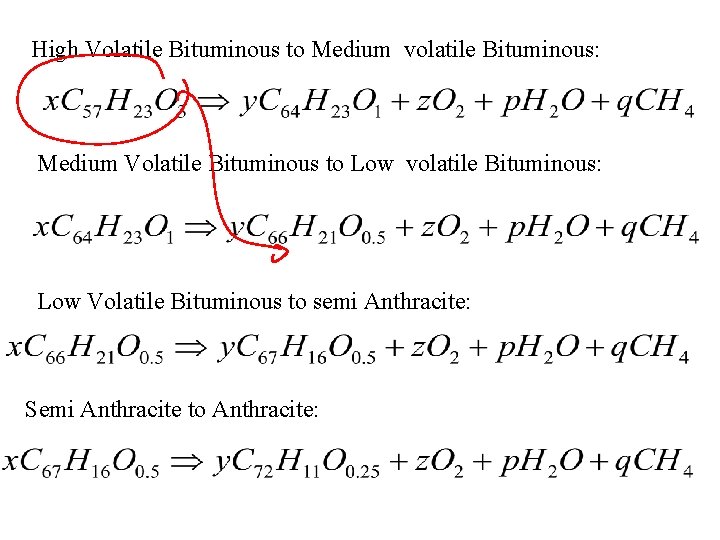
High Volatile Bituminous to Medium volatile Bituminous: Medium Volatile Bituminous to Low volatile Bituminous: Low Volatile Bituminous to semi Anthracite: Semi Anthracite to Anthracite:
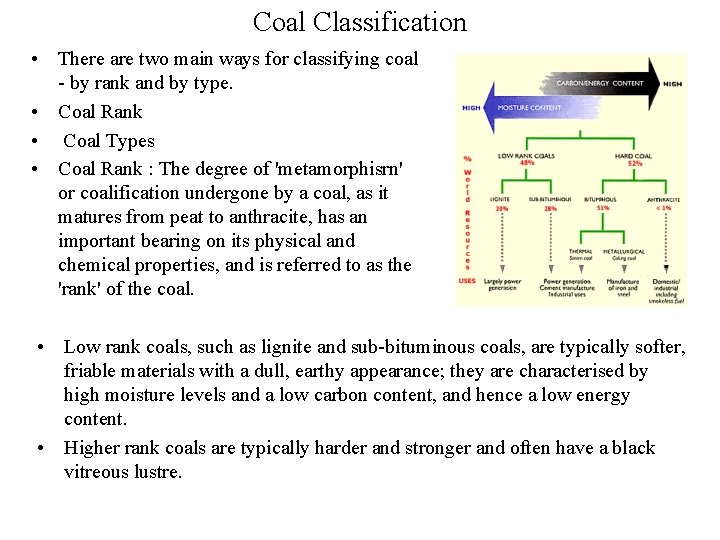
Coal Classification • There are two main ways for classifying coal - by rank and by type. • Coal Rank • Coal Types • Coal Rank : The degree of 'metamorphisrn' or coalification undergone by a coal, as it matures from peat to anthracite, has an important bearing on its physical and chemical properties, and is referred to as the 'rank' of the coal. • Low rank coals, such as lignite and sub-bituminous coals, are typically softer, friable materials with a dull, earthy appearance; they are characterised by high moisture levels and a low carbon content, and hence a low energy content. • Higher rank coals are typically harder and stronger and often have a black vitreous lustre.
Composition of Coals • The natural constituents of coal can be divided into two groups: • (i) the organic fraction, which can be further subdivided into microscopically identifiable macerals; and • (ii) the inorganic fraction, which is commonly identified as ash subsequent to combustion, but which may be isolated in the form of mineral matter by low-temperature ashing (LTA). • The organic fraction can be further subdivided on the basis of its rank or maturity.