
Modeling Light 15 463 Rendering and Image Processing

- Slides: 49
Modeling Light 15 -463: Rendering and Image Processing Alexei Efros
On Simulating the Visual Experience Just feed the eyes the right data • No one will know the difference! Philosophy: • Ancient question: “Does the world really exist? ” Science fiction: • Many, many books on the subject • Latest take: The Matrix Physics: • Slowglass might be possible? Computer Science: • Virtual Reality To simulate we need to know: How and what does a person see?
Today How do we see the world? • Geometry of Image Formation What do we see? • The Plenoptic Function How do we recreate visual reality? • Sampling the Plenoptic Function • Ray Reuse • The “Theatre Workshop” metaphor
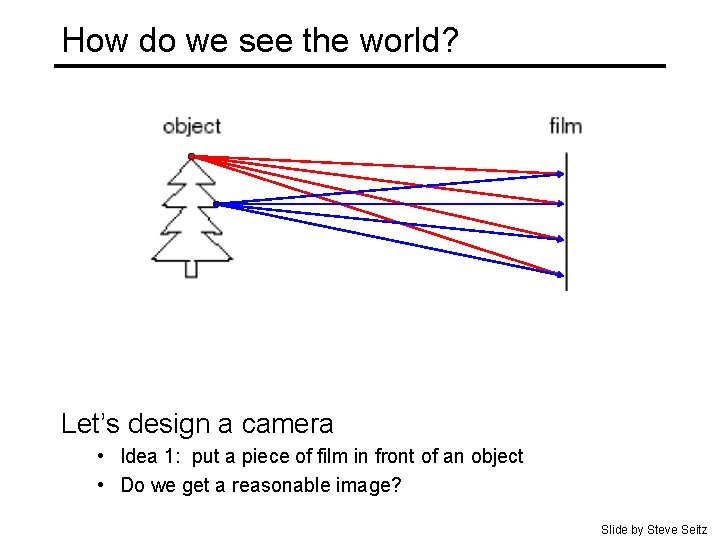
How do we see the world? Let’s design a camera • Idea 1: put a piece of film in front of an object • Do we get a reasonable image? Slide by Steve Seitz
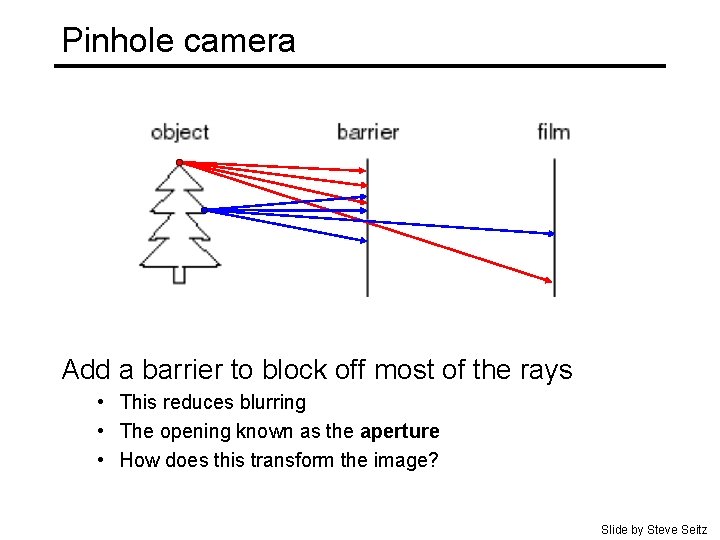
Pinhole camera Add a barrier to block off most of the rays • This reduces blurring • The opening known as the aperture • How does this transform the image? Slide by Steve Seitz
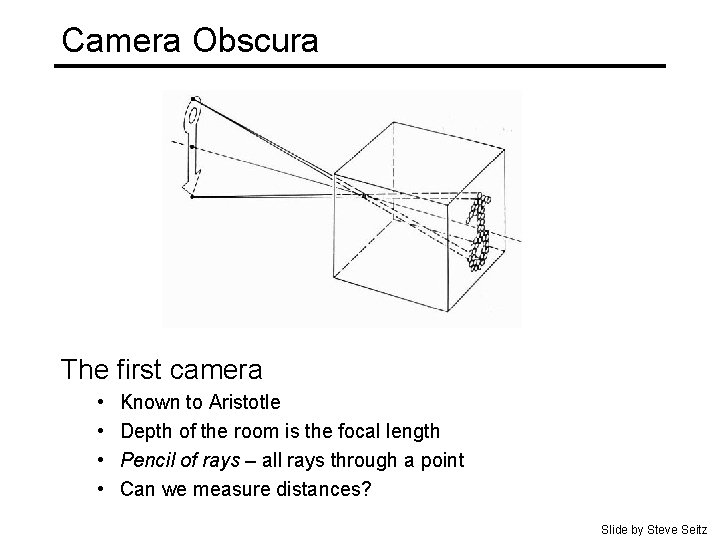
Camera Obscura The first camera • • Known to Aristotle Depth of the room is the focal length Pencil of rays – all rays through a point Can we measure distances? Slide by Steve Seitz
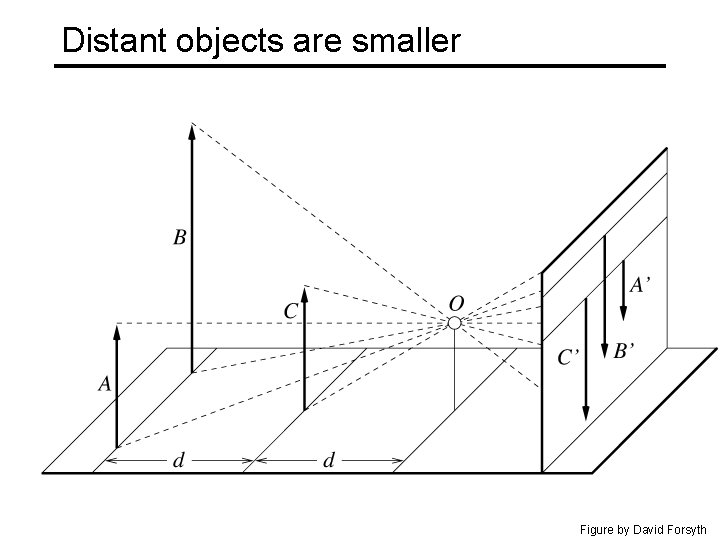
Distant objects are smaller Figure by David Forsyth
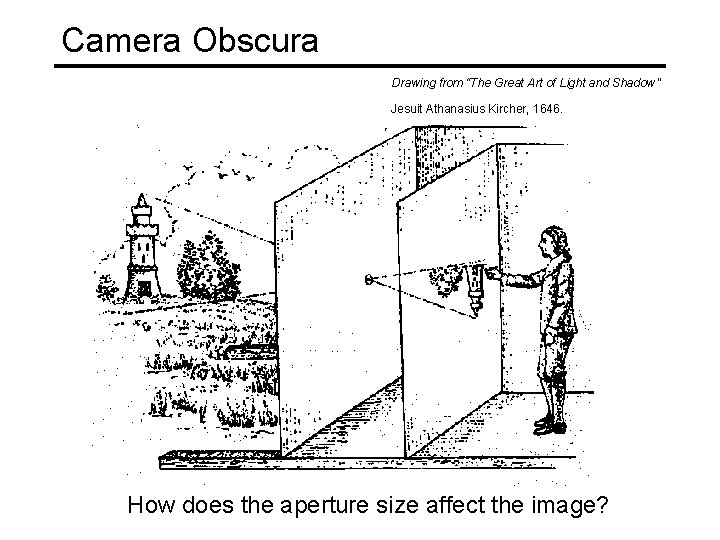
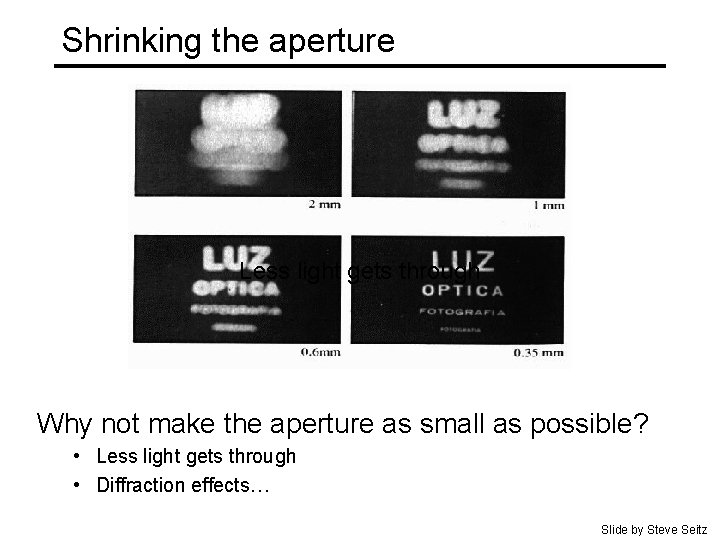
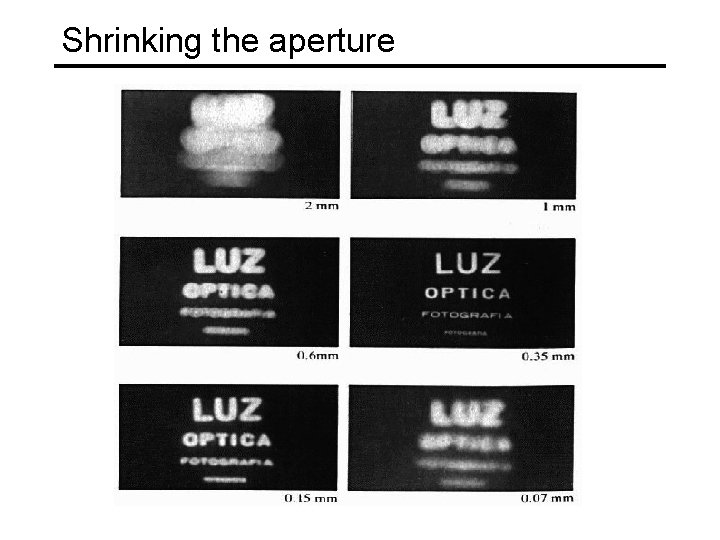
Camera Obscura Drawing from “The Great Art of Light and Shadow “ Jesuit Athanasius Kircher, 1646. How does the aperture size affect the image?
Shrinking the aperture Less light gets through Why not make the aperture as small as possible? • Less light gets through • Diffraction effects… Slide by Steve Seitz
Shrinking the aperture
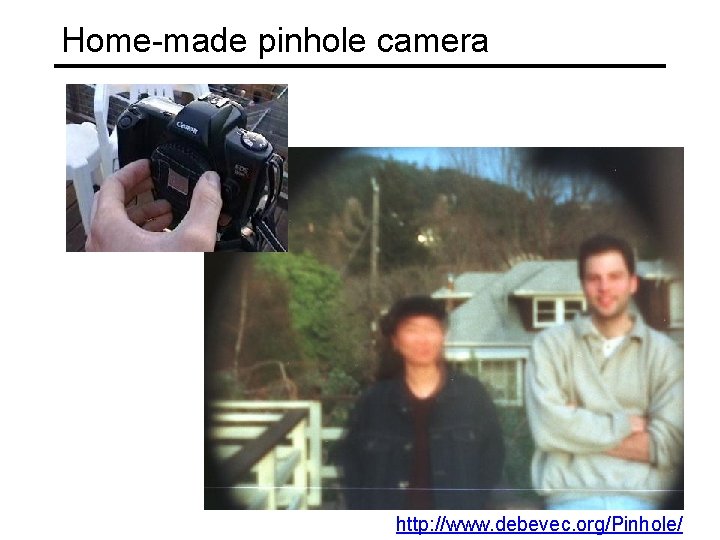
Home-made pinhole camera http: //www. debevec. org/Pinhole/
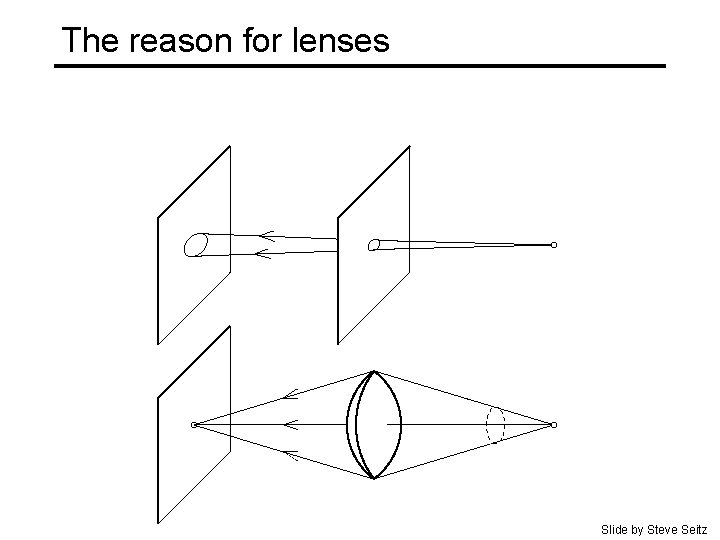
The reason for lenses Slide by Steve Seitz
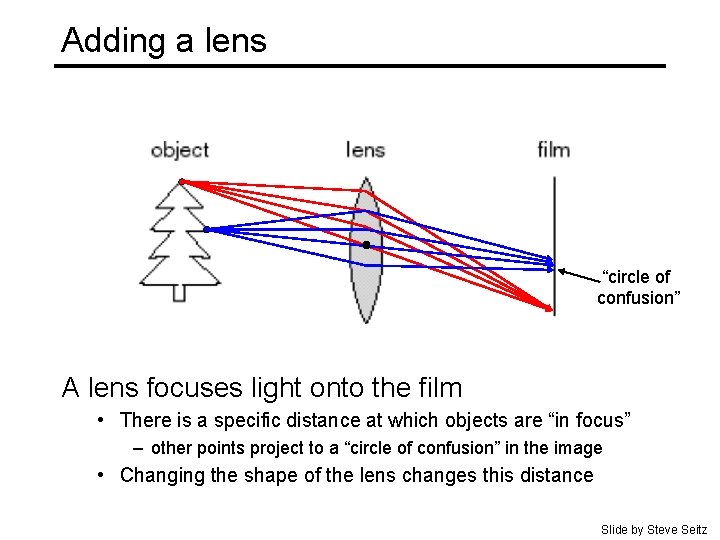
Adding a lens “circle of confusion” A lens focuses light onto the film • There is a specific distance at which objects are “in focus” – other points project to a “circle of confusion” in the image • Changing the shape of the lens changes this distance Slide by Steve Seitz
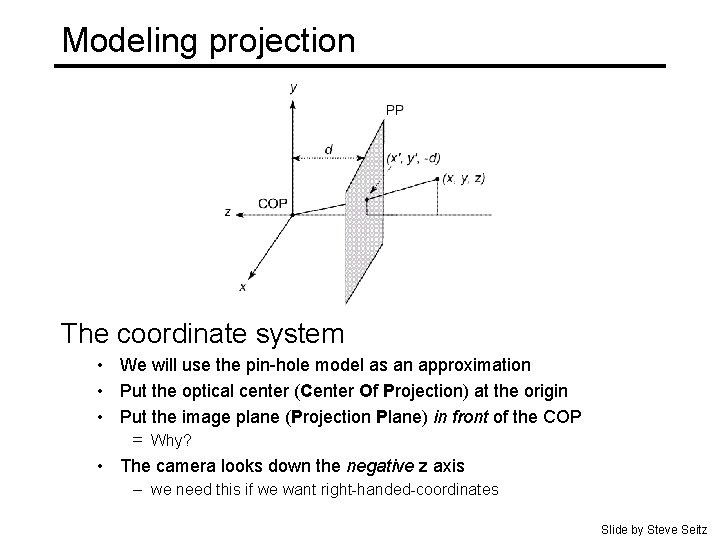
Modeling projection The coordinate system • We will use the pin-hole model as an approximation • Put the optical center (Center Of Projection) at the origin • Put the image plane (Projection Plane) in front of the COP – – Why? • The camera looks down the negative z axis – we need this if we want right-handed-coordinates Slide by Steve Seitz
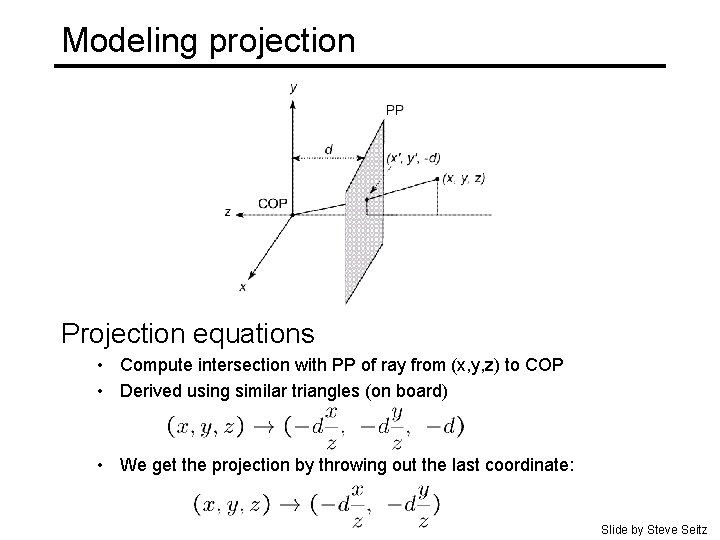
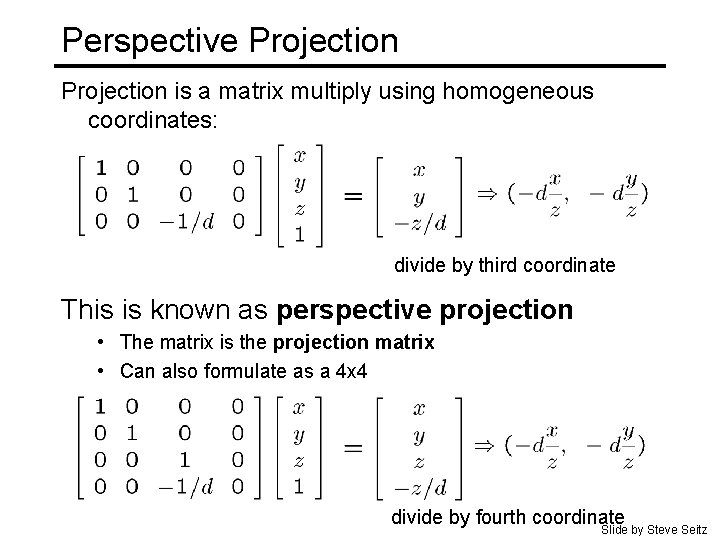
Modeling projection Projection equations • Compute intersection with PP of ray from (x, y, z) to COP • Derived using similar triangles (on board) • We get the projection by throwing out the last coordinate: Slide by Steve Seitz
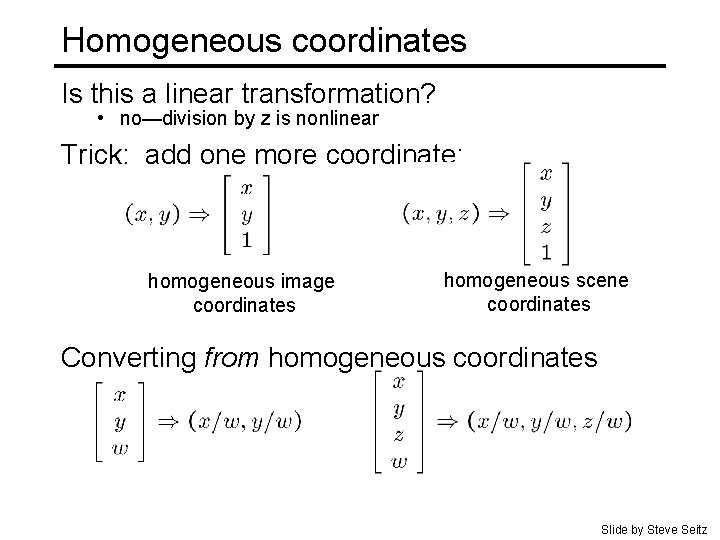
Homogeneous coordinates Is this a linear transformation? • no—division by z is nonlinear Trick: add one more coordinate: homogeneous image coordinates homogeneous scene coordinates Converting from homogeneous coordinates Slide by Steve Seitz
Perspective Projection is a matrix multiply using homogeneous coordinates: divide by third coordinate This is known as perspective projection • The matrix is the projection matrix • Can also formulate as a 4 x 4 divide by fourth coordinate Slide by Steve Seitz
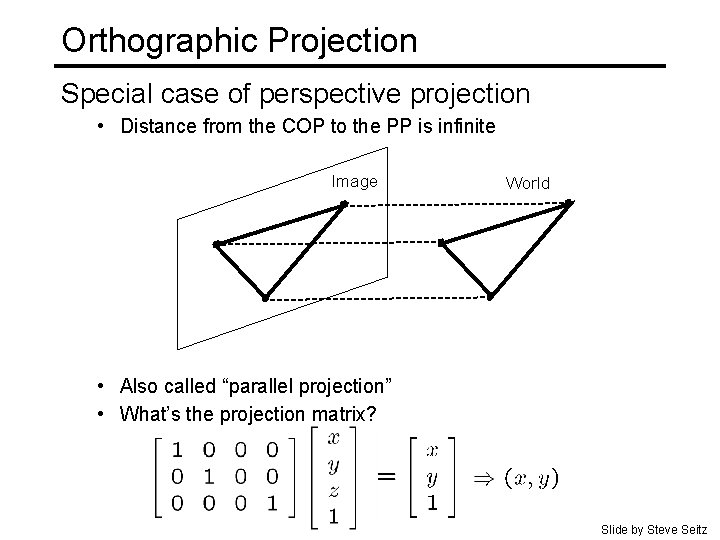
Orthographic Projection Special case of perspective projection • Distance from the COP to the PP is infinite Image World • Also called “parallel projection” • What’s the projection matrix? Slide by Steve Seitz
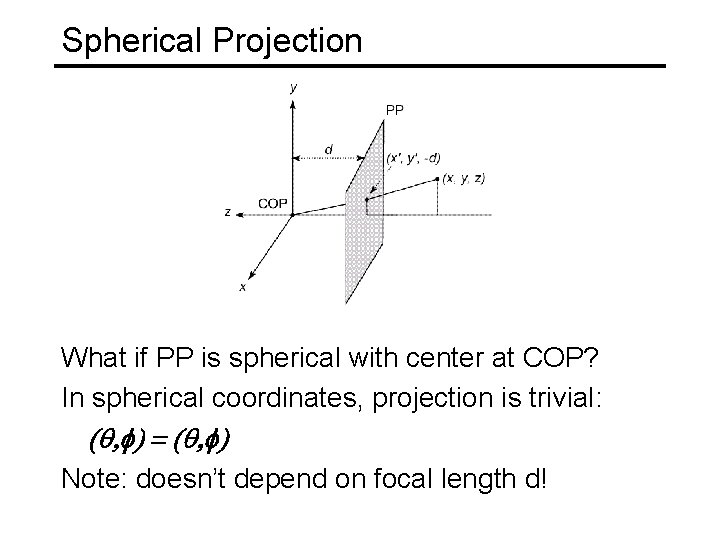
Spherical Projection What if PP is spherical with center at COP? In spherical coordinates, projection is trivial: (q, f) = (q, f) Note: doesn’t depend on focal length d!
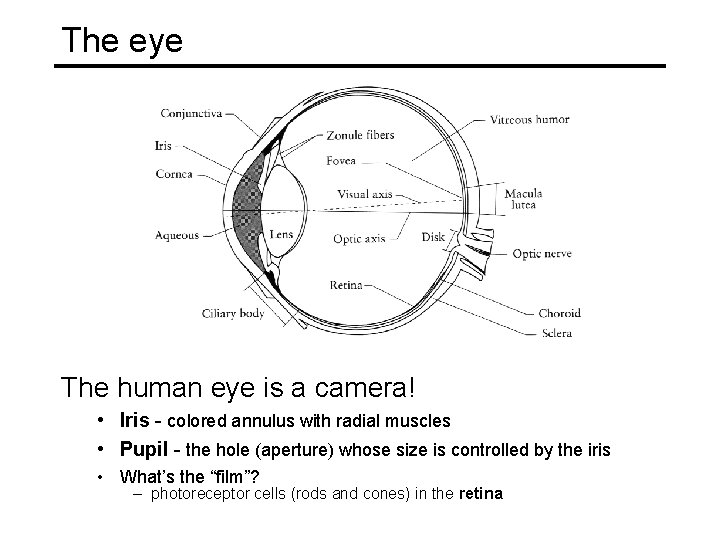
The eye The human eye is a camera! • Iris - colored annulus with radial muscles • Pupil - the hole (aperture) whose size is controlled by the iris • What’s the “film”? – photoreceptor cells (rods and cones) in the retina
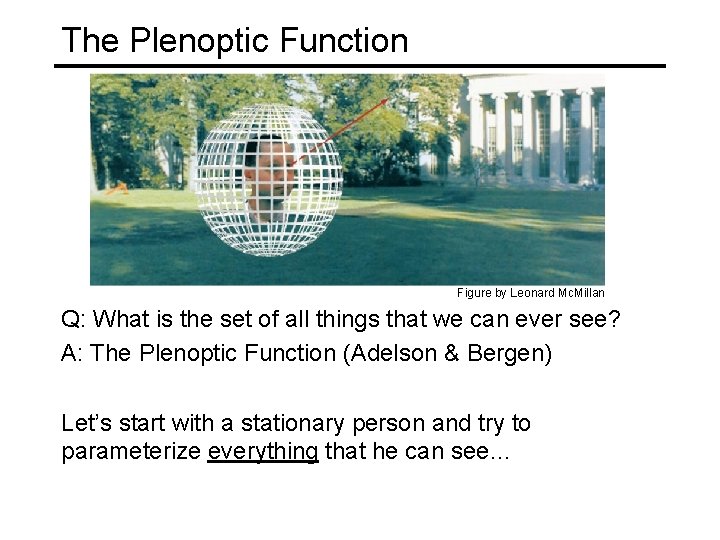
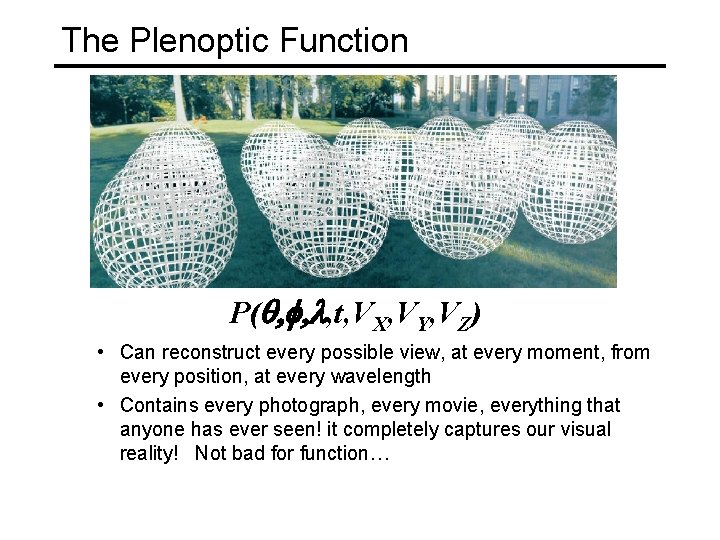
The Plenoptic Function Figure by Leonard Mc. Millan Q: What is the set of all things that we can ever see? A: The Plenoptic Function (Adelson & Bergen) Let’s start with a stationary person and try to parameterize everything that he can see…
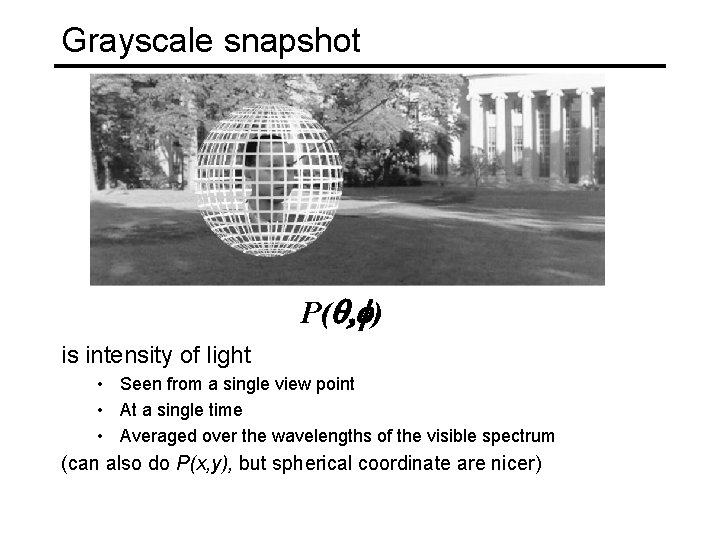
Grayscale snapshot P(q, f) is intensity of light • Seen from a single view point • At a single time • Averaged over the wavelengths of the visible spectrum (can also do P(x, y), but spherical coordinate are nicer)
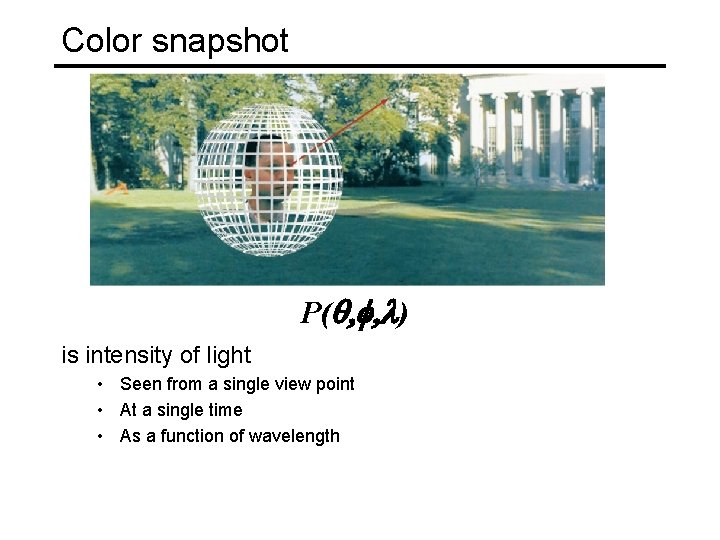
Color snapshot P(q, f, l) is intensity of light • Seen from a single view point • At a single time • As a function of wavelength
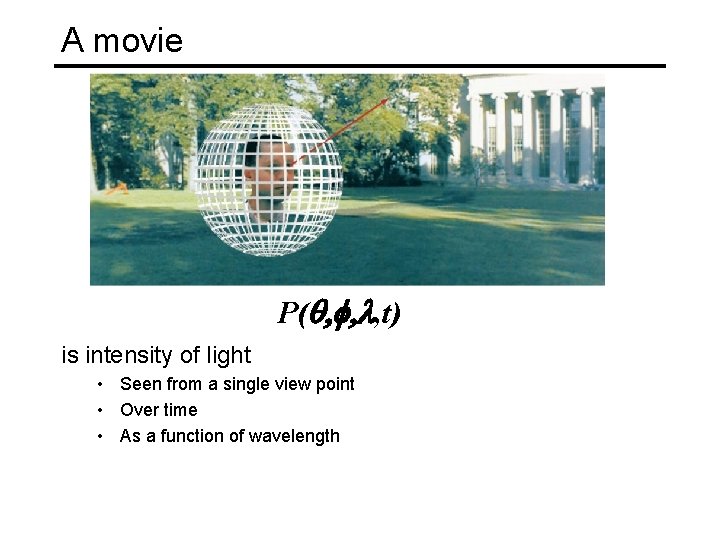
A movie P(q, f, l, t) is intensity of light • Seen from a single view point • Over time • As a function of wavelength
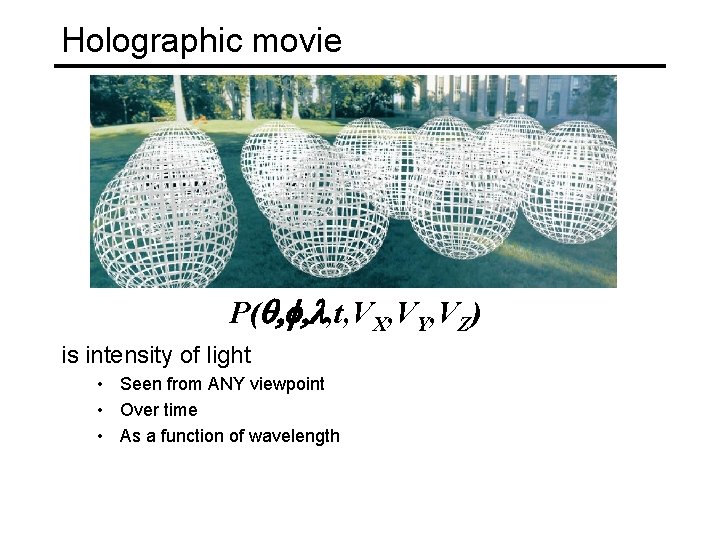
Holographic movie P(q, f, l, t, VX, VY, VZ) is intensity of light • Seen from ANY viewpoint • Over time • As a function of wavelength
The Plenoptic Function P(q, f, l, t, VX, VY, VZ) • Can reconstruct every possible view, at every moment, from every position, at every wavelength • Contains every photograph, every movie, everything that anyone has ever seen! it completely captures our visual reality! Not bad for function…
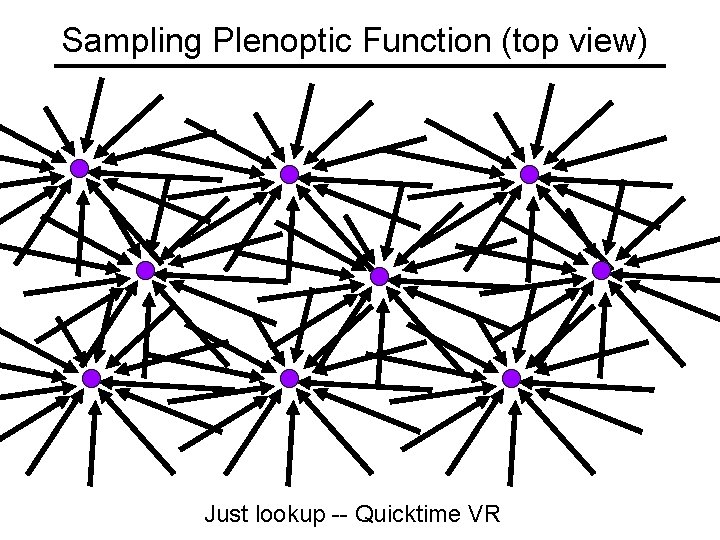
Sampling Plenoptic Function (top view) Just lookup -- Quicktime VR
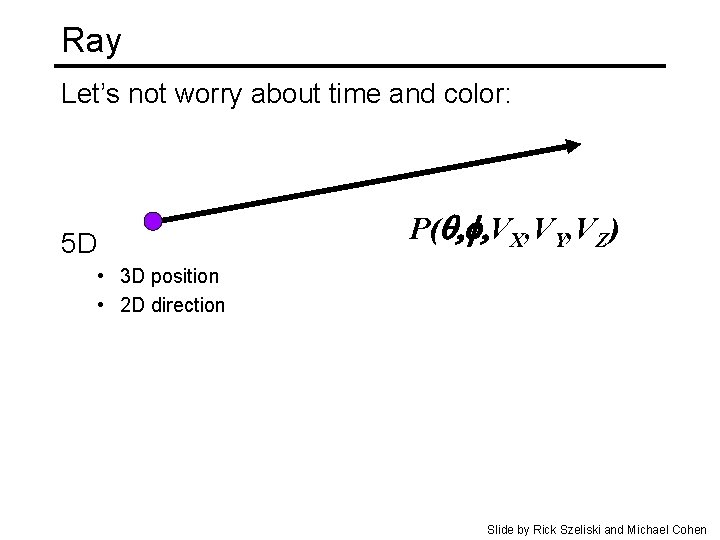
Ray Let’s not worry about time and color: P(q, f, VX, VY, VZ) 5 D • 3 D position • 2 D direction Slide by Rick Szeliski and Michael Cohen
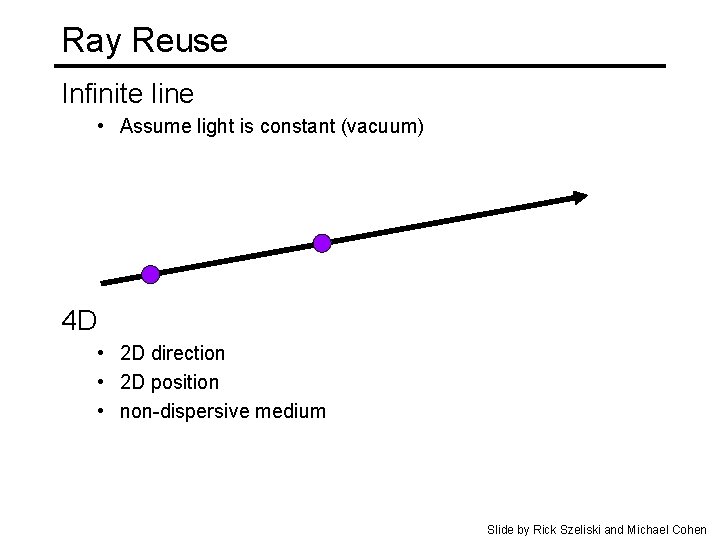
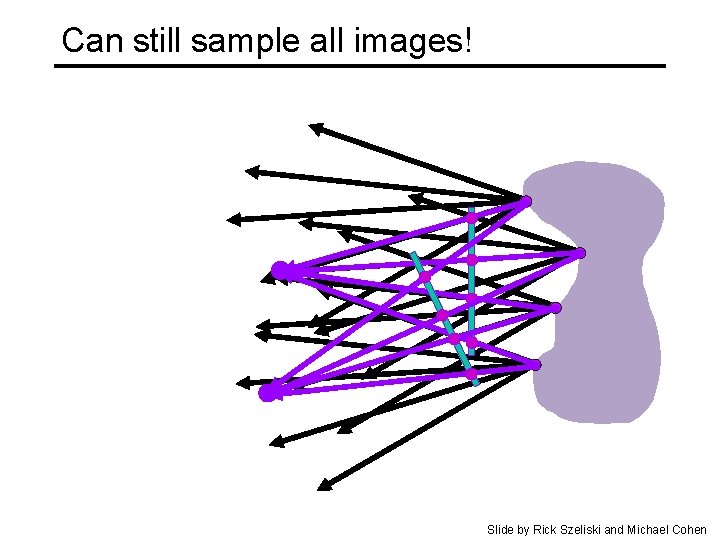
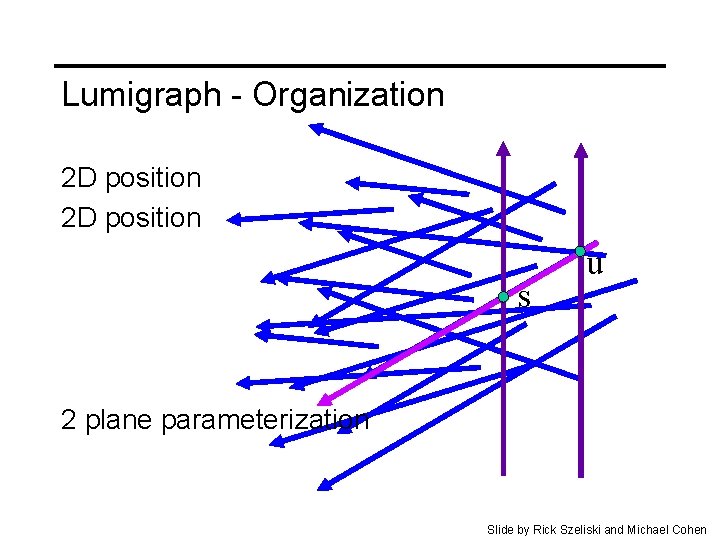
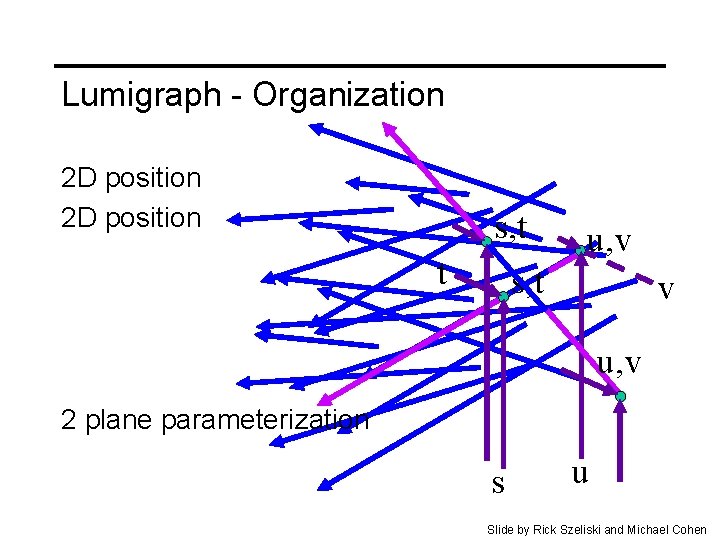
Ray Reuse Infinite line • Assume light is constant (vacuum) 4 D • 2 D direction • 2 D position • non-dispersive medium Slide by Rick Szeliski and Michael Cohen
Can still sample all images! Slide by Rick Szeliski and Michael Cohen
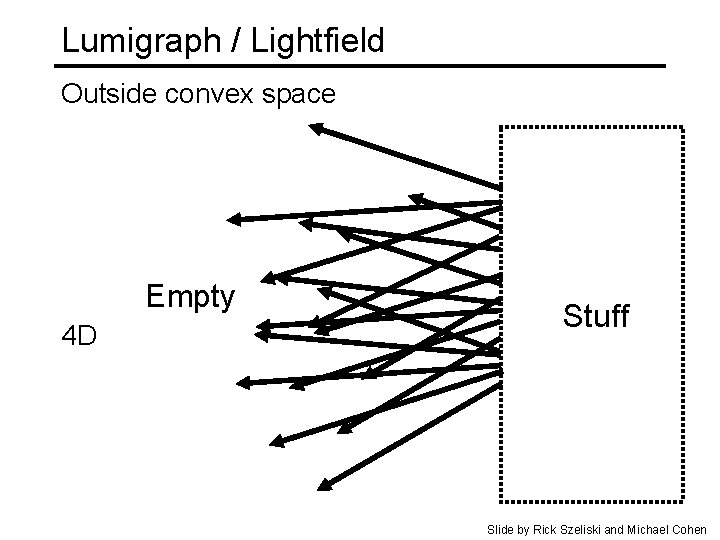
Lumigraph / Lightfield Outside convex space Empty 4 D Stuff Slide by Rick Szeliski and Michael Cohen
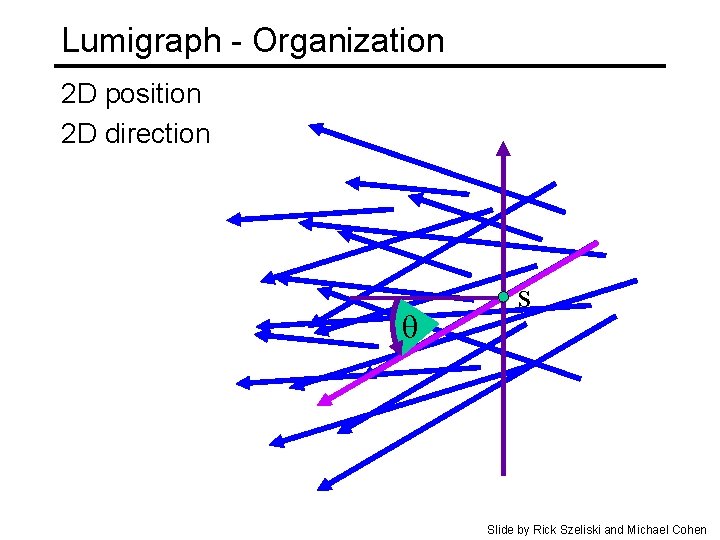
Lumigraph - Organization 2 D position 2 D direction q s Slide by Rick Szeliski and Michael Cohen
Lumigraph - Organization 2 D position s u 2 plane parameterization Slide by Rick Szeliski and Michael Cohen
Lumigraph - Organization 2 D position s, t t u, v s, t v u, v 2 plane parameterization s u Slide by Rick Szeliski and Michael Cohen
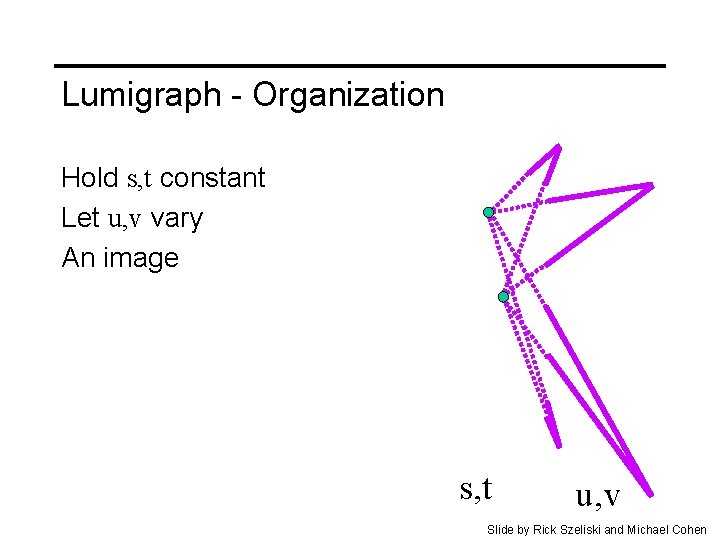
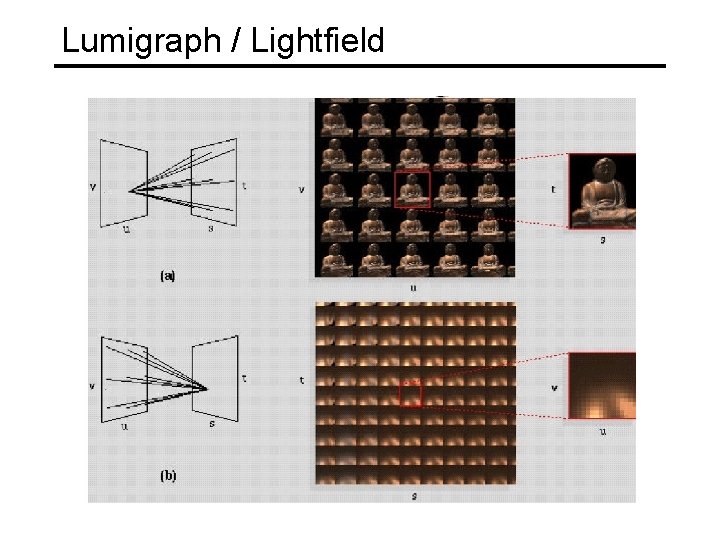
Lumigraph - Organization Hold s, t constant Let u, v vary An image s, t u, v Slide by Rick Szeliski and Michael Cohen
Lumigraph / Lightfield
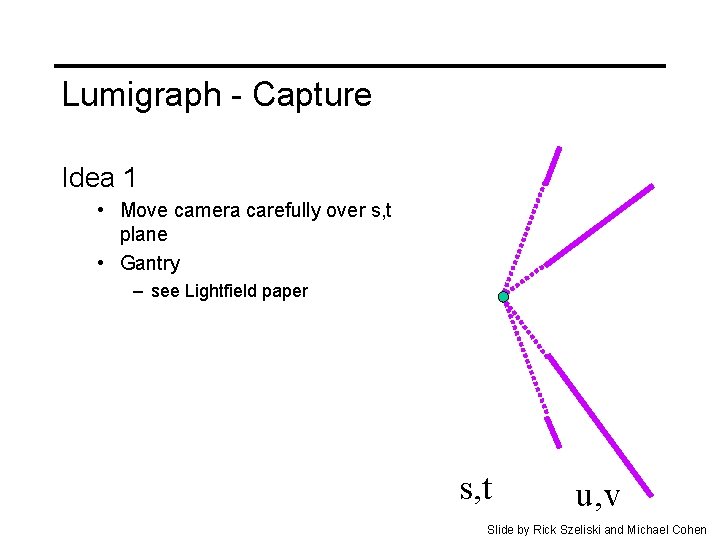
Lumigraph - Capture Idea 1 • Move camera carefully over s, t plane • Gantry – see Lightfield paper s, t u, v Slide by Rick Szeliski and Michael Cohen
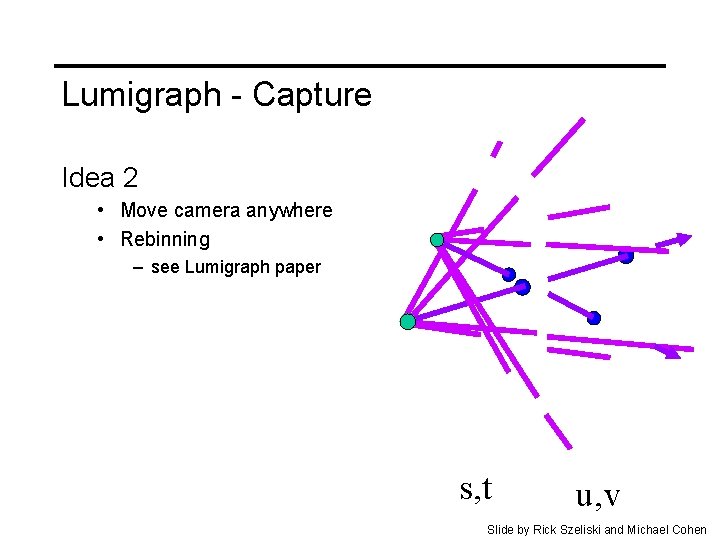
Lumigraph - Capture Idea 2 • Move camera anywhere • Rebinning – see Lumigraph paper s, t u, v Slide by Rick Szeliski and Michael Cohen
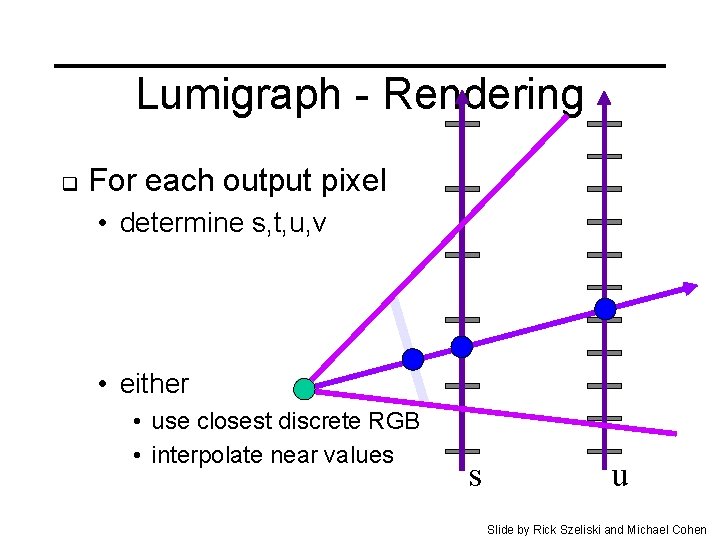
Lumigraph - Rendering q For each output pixel • determine s, t, u, v • either • use closest discrete RGB • interpolate near values s u Slide by Rick Szeliski and Michael Cohen
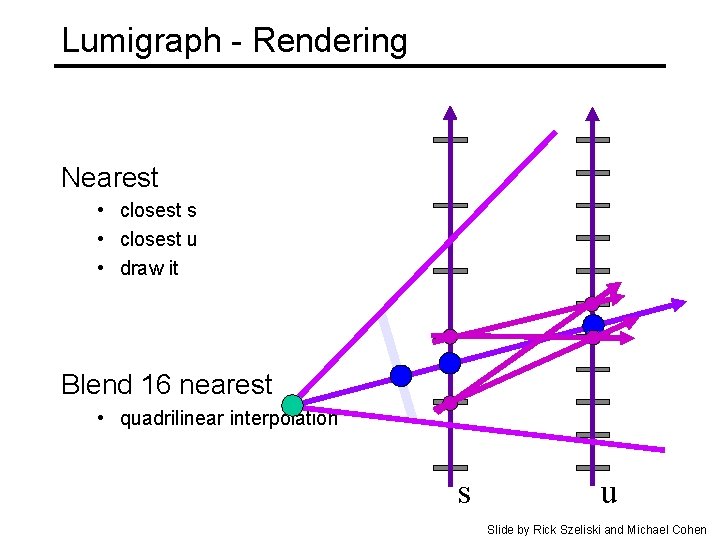
Lumigraph - Rendering Nearest • closest s • closest u • draw it Blend 16 nearest • quadrilinear interpolation s u Slide by Rick Szeliski and Michael Cohen
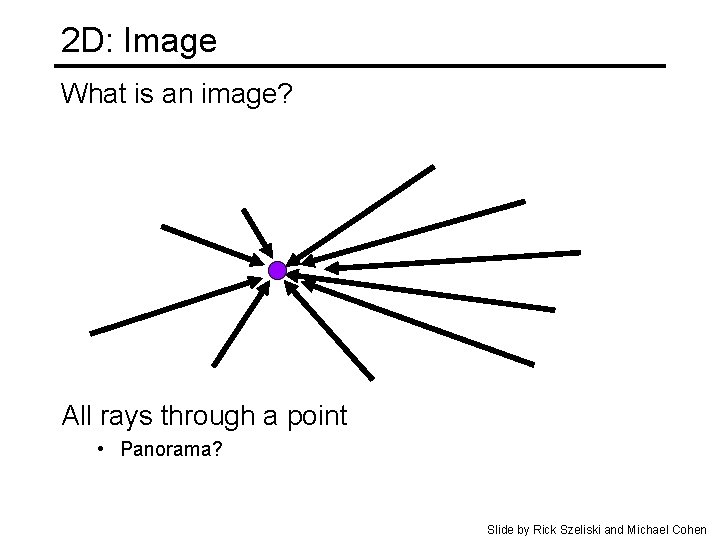
2 D: Image What is an image? All rays through a point • Panorama? Slide by Rick Szeliski and Michael Cohen
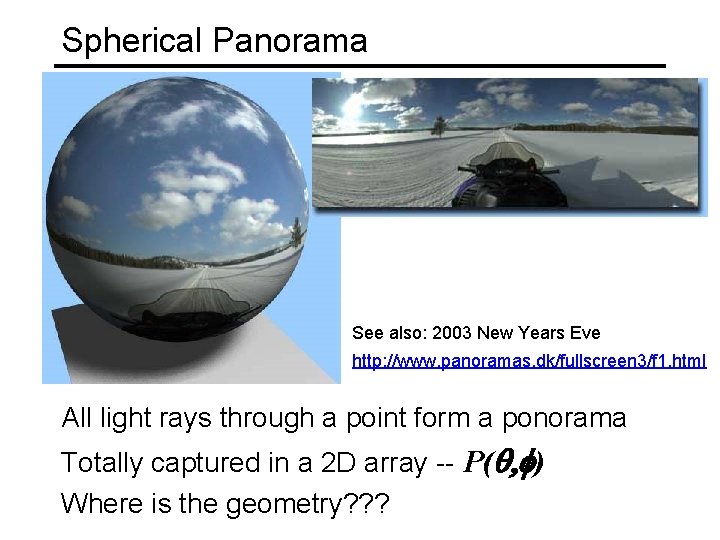
Spherical Panorama See also: 2003 New Years Eve http: //www. panoramas. dk/fullscreen 3/f 1. html All light rays through a point form a ponorama Totally captured in a 2 D array -- P(q, f) Where is the geometry? ? ?
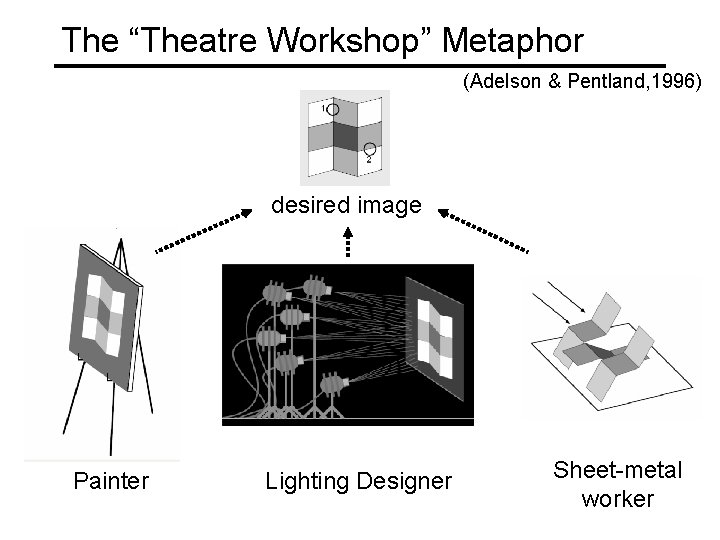
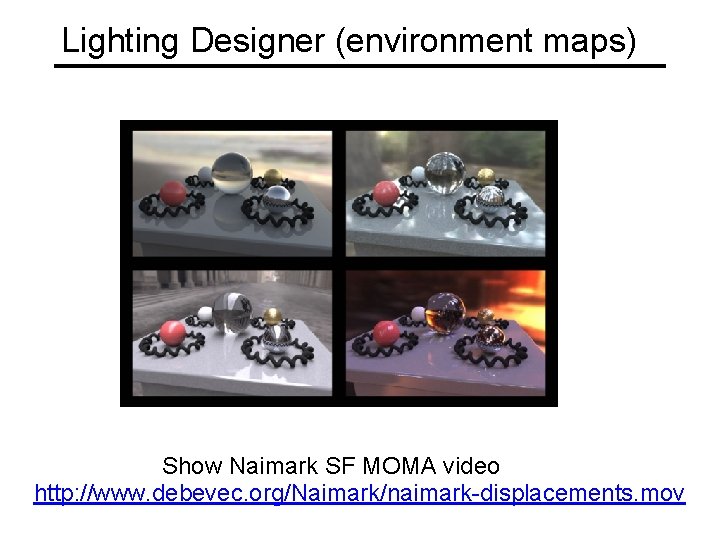
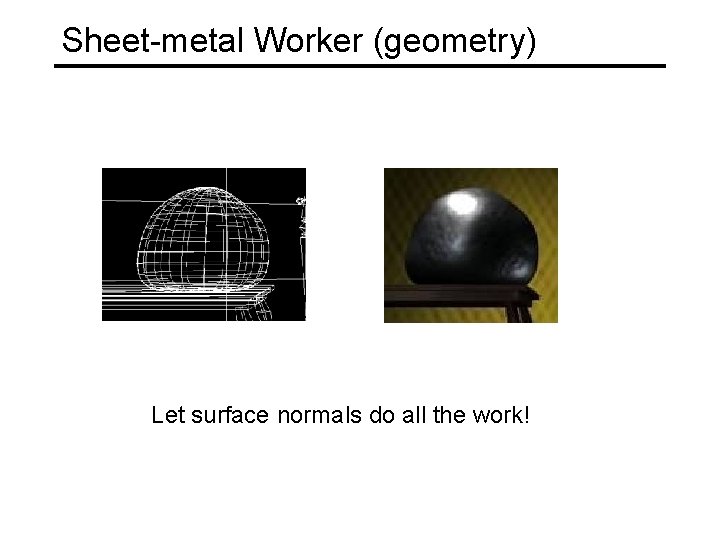
The “Theatre Workshop” Metaphor (Adelson & Pentland, 1996) desired image Painter Lighting Designer Sheet-metal worker
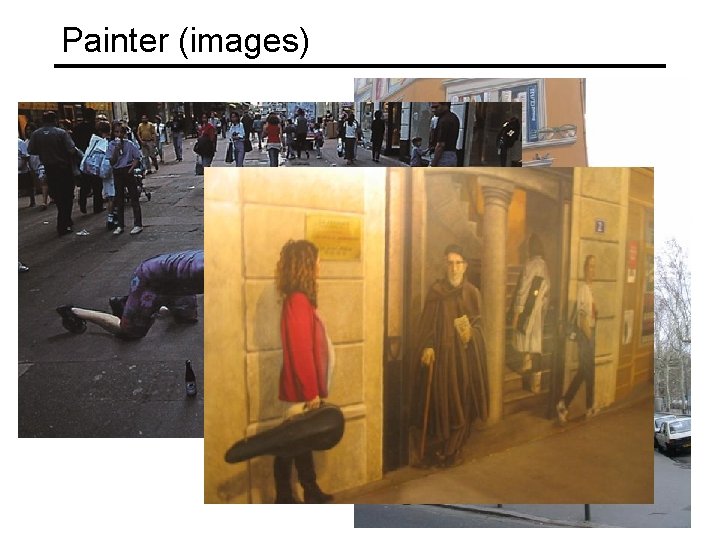
Painter (images)
Lighting Designer (environment maps) Show Naimark SF MOMA video http: //www. debevec. org/Naimark/naimark-displacements. mov
Sheet-metal Worker (geometry) Let surface normals do all the work!
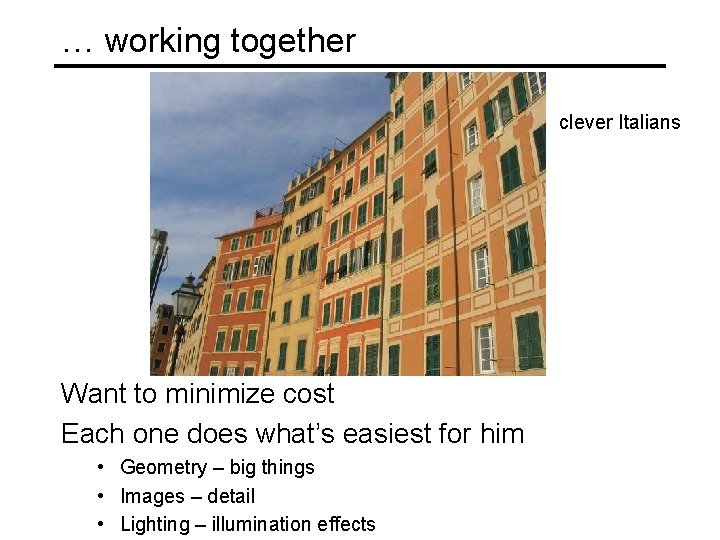
… working together clever Italians Want to minimize cost Each one does what’s easiest for him • Geometry – big things • Images – detail • Lighting – illumination effects
Façade demo Campanile Movie http: //www. debevec. org/Campanile/
Next Time Start Small: Image Processing Assignment 1: Out by Monday (check the web)