
Modeling Green Infrastructure Components in a Combined Sewer

Modeling Green Infrastructure Components in a Combined Sewer Area Robert Pitt, Ph. D. , P. E. , D. WRE, BCEE Department of Civil, Construction, and Environmental Engineering University of Alabama Tuscaloosa, AL, USA 35487 John Voorhees, P. E. , P. H. AECOM, Inc. Madison, WI
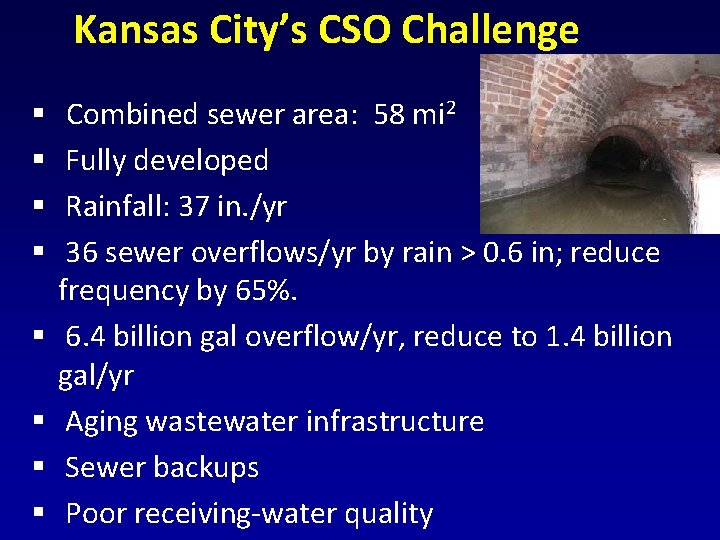
Kansas City’s CSO Challenge § § § § Combined sewer area: 58 mi 2 Fully developed Rainfall: 37 in. /yr 36 sewer overflows/yr by rain > 0. 6 in; reduce frequency by 65%. 6. 4 billion gal overflow/yr, reduce to 1. 4 billion gal/yr Aging wastewater infrastructure Sewer backups Poor receiving-water quality
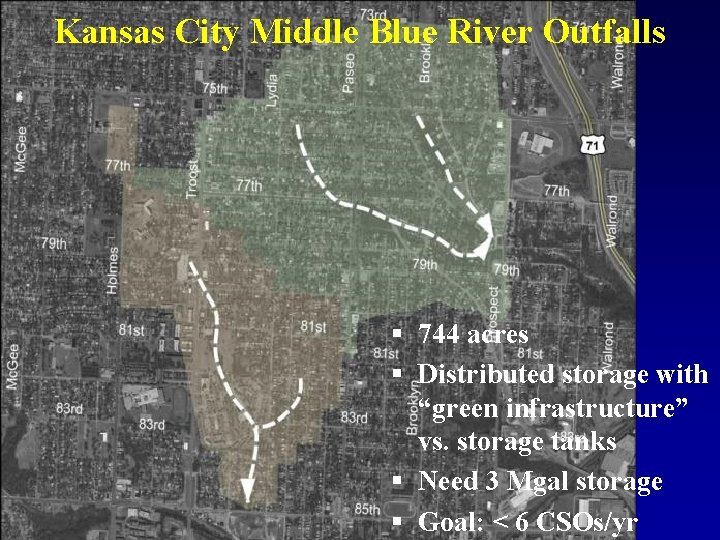
Kansas City Middle Blue River Outfalls 3 § 744 acres § Distributed storage with “green infrastructure” vs. storage tanks § Need 3 Mgal storage § Goal: < 6 CSOs/yr
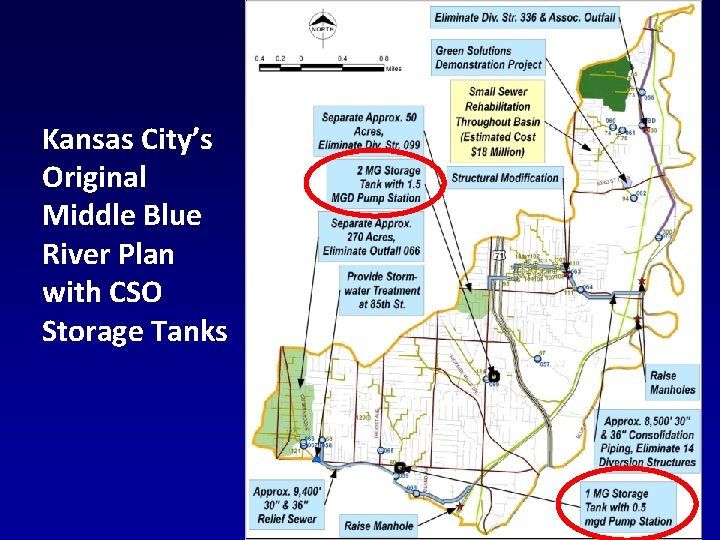
Kansas City’s Original Middle Blue River Plan with CSO Storage Tanks 1/26/2009
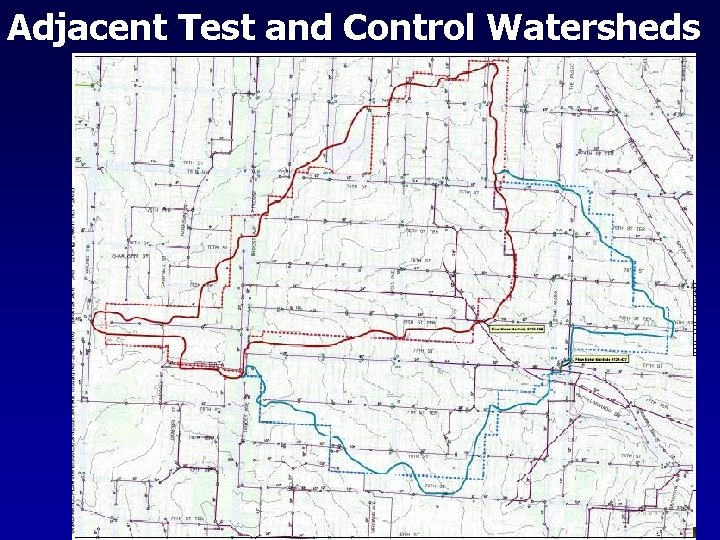
Adjacent Test and Control Watersheds
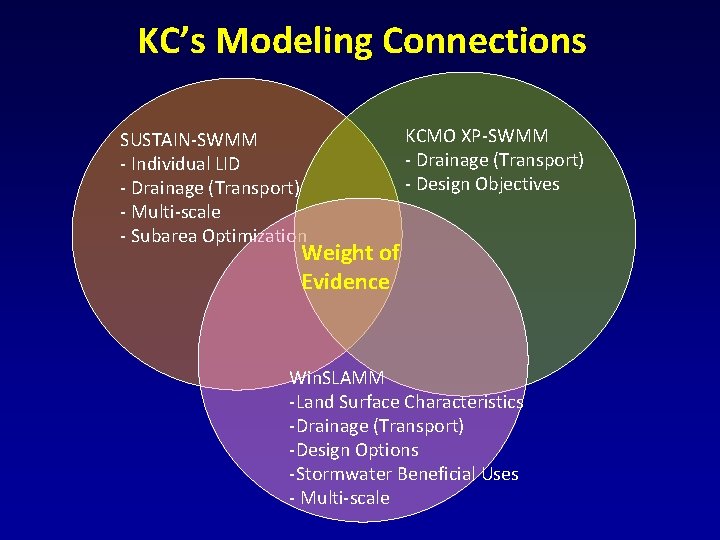
KC’s Modeling Connections SUSTAIN-SWMM - Individual LID - Drainage (Transport) - Multi-scale - Subarea Optimization KCMO XP-SWMM - Drainage (Transport) - Design Objectives Weight of Evidence Win. SLAMM -Land Surface Characteristics -Drainage (Transport) -Design Options -Stormwater Beneficial Uses - Multi-scale
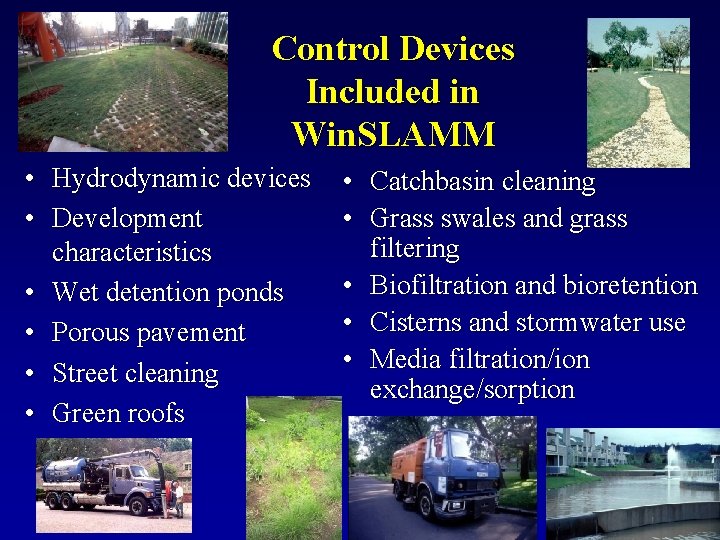
Control Devices Included in Win. SLAMM • Hydrodynamic devices • Development characteristics • Wet detention ponds • Porous pavement • Street cleaning • Green roofs • Catchbasin cleaning • Grass swales and grass filtering • Biofiltration and bioretention • Cisterns and stormwater use • Media filtration/ion exchange/sorption
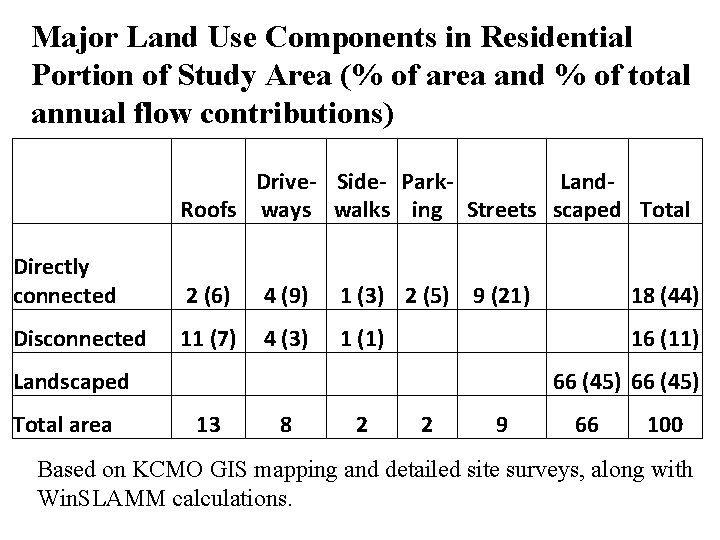
Major Land Use Components in Residential Portion of Study Area (% of area and % of total annual flow contributions) Drive- Side- Park. Land. Roofs ways walks ing Streets scaped Total Directly connected 2 (6) 4 (9) 1 (3) 2 (5) 9 (21) 18 (44) Disconnected 11 (7) 4 (3) 1 (1) 16 (11) Landscaped Total area 66 (45) 13 8 2 2 9 66 100 Based on KCMO GIS mapping and detailed site surveys, along with Win. SLAMM calculations.
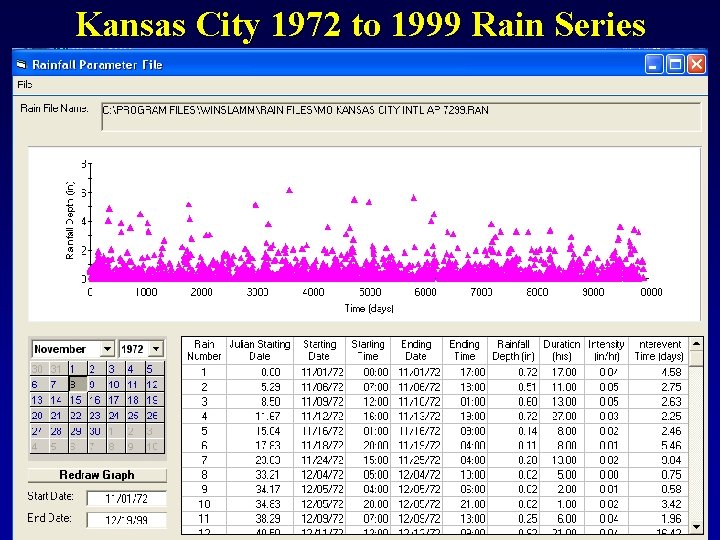
Kansas City 1972 to 1999 Rain Series
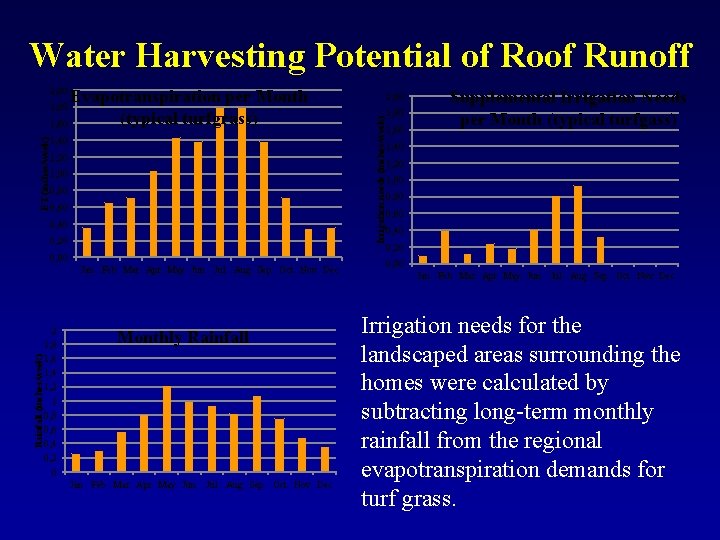
Water Harvesting Potential of Roof Runoff 2, 00 Evapotranspiration per Month (typical turfgrass) 1, 60 2, 00 1, 40 1, 20 1, 00 0, 80 0, 60 0, 40 0, 20 0, 00 Rainfall (inches/week) Jan Feb Mar Apr May Jun Jul Aug Sep Oct Nov Dec 2 1, 8 1, 6 1, 4 1, 2 1 0, 8 0, 6 0, 4 0, 2 0 Monthly Rainfall Jan Feb Mar Apr May Jun Jul Aug Sep Oct Nov Dec Irrigation needs (inches/week) ET (inches/week) 1, 80 1, 60 Supplemental Irrigation Needs per Month (typical turfgass) 1, 40 1, 20 1, 00 0, 80 0, 60 0, 40 0, 20 0, 00 Jan Feb Mar Apr May Jun Jul Aug Sep Oct Nov Dec Irrigation needs for the landscaped areas surrounding the homes were calculated by subtracting long-term monthly rainfall from the regional evapotranspiration demands for turf grass.
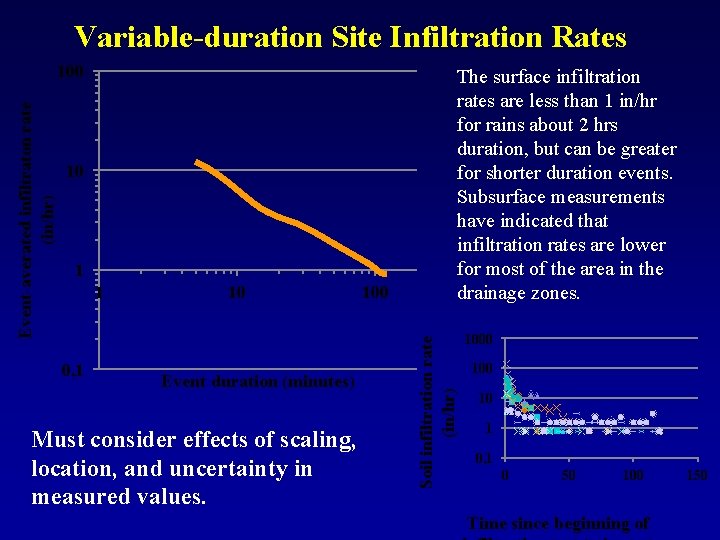
Variable-duration Site Infiltration Rates 10 1 1 0, 1 10 Event duration (minutes) Must consider effects of scaling, location, and uncertainty in measured values. 100 The surface infiltration rates are less than 1 in/hr for rains about 2 hrs duration, but can be greater for shorter duration events. Subsurface measurements have indicated that infiltration rates are lower for most of the area in the drainage zones. Soil infiltration rate (in/hr) Event-averated infiltraton rate (in/hr) 1000 10 1 0, 1 0 50 100 Time since beginning of 150
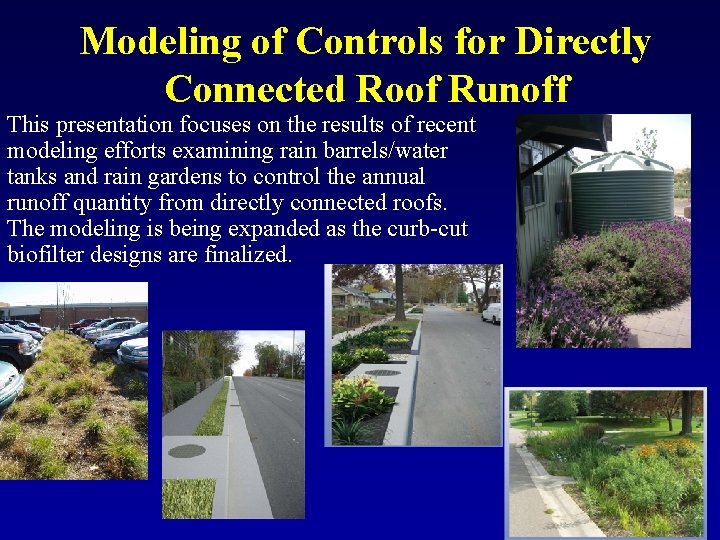
Modeling of Controls for Directly Connected Roof Runoff This presentation focuses on the results of recent modeling efforts examining rain barrels/water tanks and rain gardens to control the annual runoff quantity from directly connected roofs. The modeling is being expanded as the curb-cut biofilter designs are finalized.
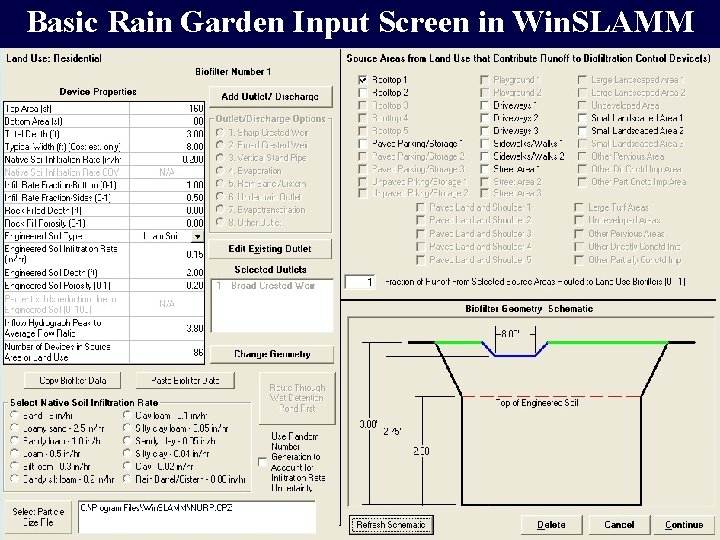
Basic Rain Garden Input Screen in Win. SLAMM
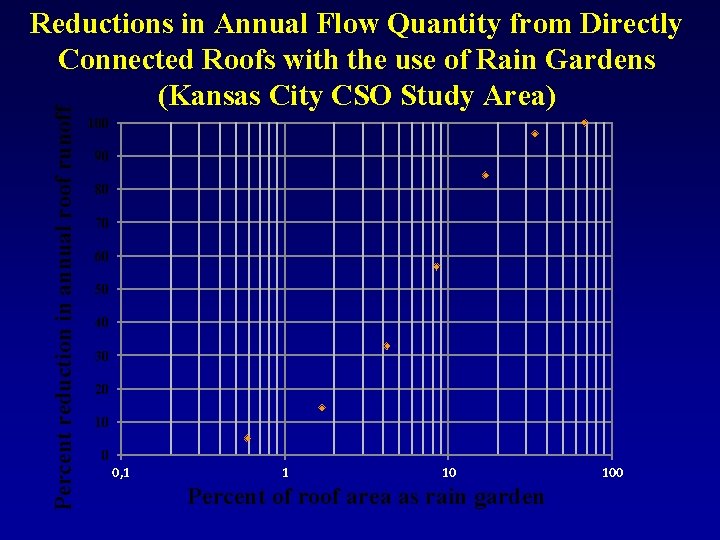
Percent reduction in annual roof runoff Reductions in Annual Flow Quantity from Directly Connected Roofs with the use of Rain Gardens (Kansas City CSO Study Area) 100 90 80 70 60 50 40 30 20 10 0 0, 1 1 10 Percent of roof area as rain garden 100
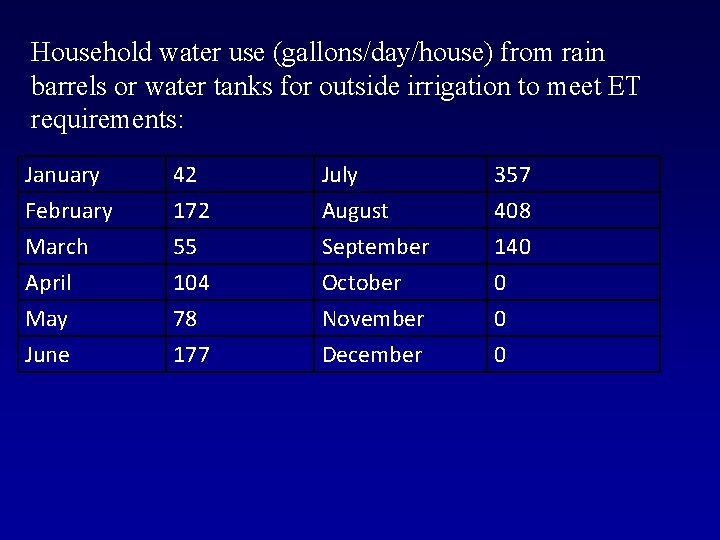
Household water use (gallons/day/house) from rain barrels or water tanks for outside irrigation to meet ET requirements: January February March April 42 172 55 104 July August September October 357 408 140 0 May June 78 177 November December 0 0
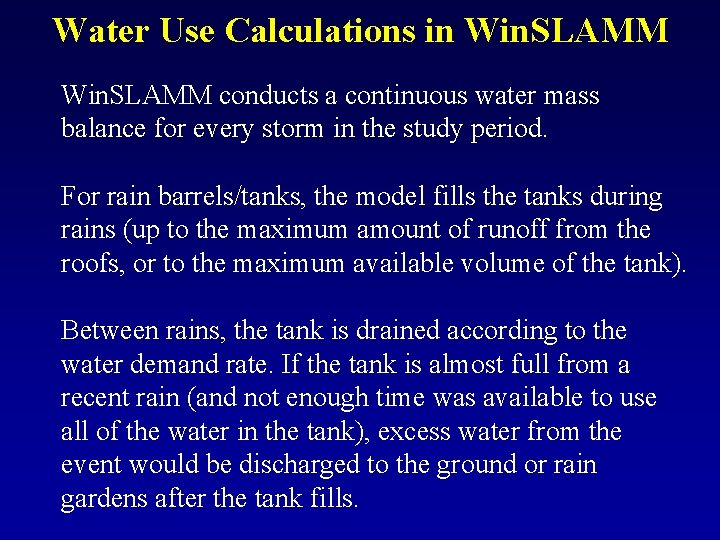
Water Use Calculations in Win. SLAMM conducts a continuous water mass balance for every storm in the study period. For rain barrels/tanks, the model fills the tanks during rains (up to the maximum amount of runoff from the roofs, or to the maximum available volume of the tank). Between rains, the tank is drained according to the water demand rate. If the tank is almost full from a recent rain (and not enough time was available to use all of the water in the tank), excess water from the event would be discharged to the ground or rain gardens after the tank fills.
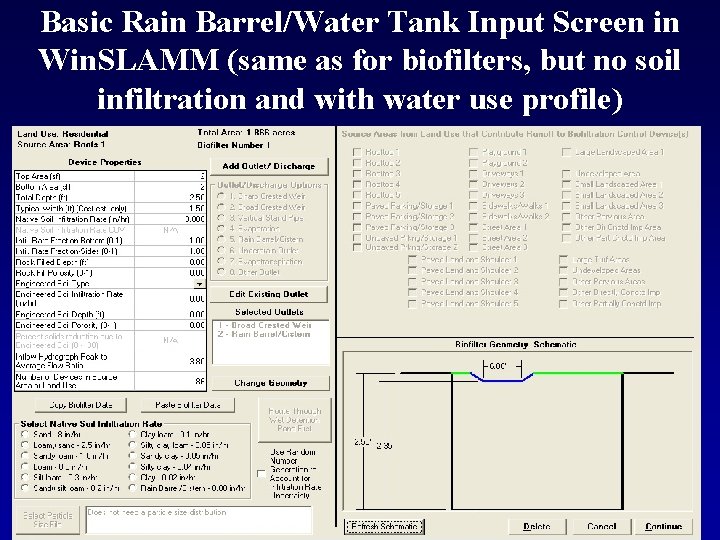
Basic Rain Barrel/Water Tank Input Screen in Win. SLAMM (same as for biofilters, but no soil infiltration and with water use profile)
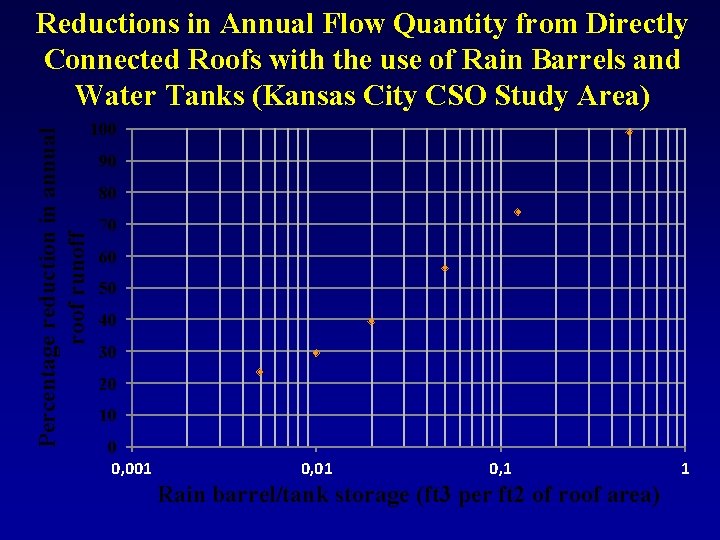
Percentage reduction in annual roof runoff Rain barrel/tank storage (ft 3 per ft 2 of roof area)
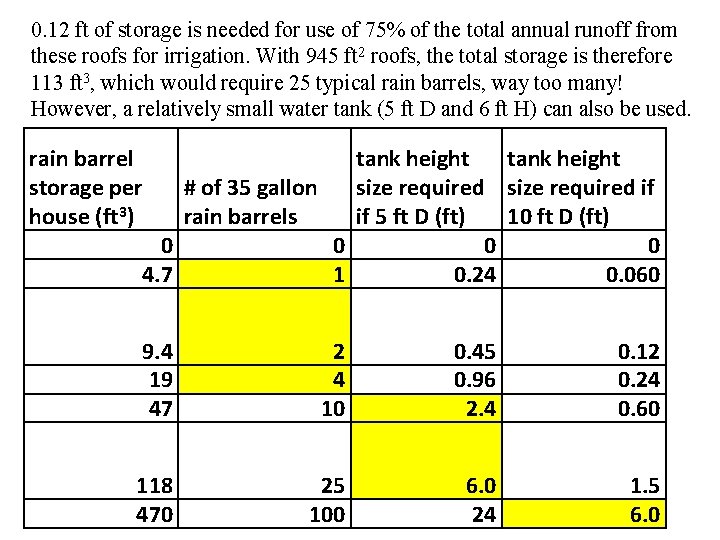
0. 12 ft of storage is needed for use of 75% of the total annual runoff from these roofs for irrigation. With 945 ft 2 roofs, the total storage is therefore 113 ft 3, which would require 25 typical rain barrels, way too many! However, a relatively small water tank (5 ft D and 6 ft H) can also be used. rain barrel storage per house (ft 3) tank height # of 35 gallon size required if rain barrels if 5 ft D (ft) 10 ft D (ft) 0 0 4. 7 1 0. 24 0. 060 9. 4 19 47 2 4 10 0. 45 0. 96 2. 4 0. 12 0. 24 0. 60 118 470 25 100 6. 0 24 1. 5 6. 0
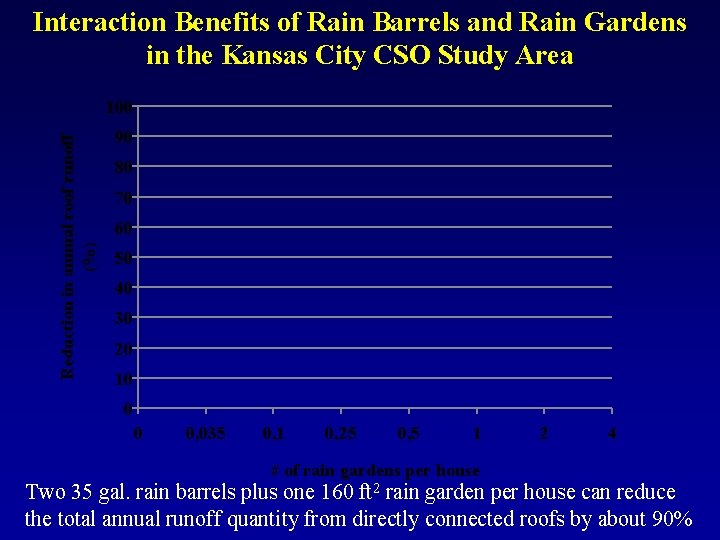
Interaction Benefits of Rain Barrels and Rain Gardens in the Kansas City CSO Study Area Reduction in annual roof runoff (%) 100 90 80 70 60 50 40 30 20 10 0 0 0, 035 0, 1 0, 25 0, 5 1 # of rain gardens per house 2 4 Two 35 gal. rain barrels plus one 160 ft 2 rain garden per house can reduce the total annual runoff quantity from directly connected roofs by about 90%
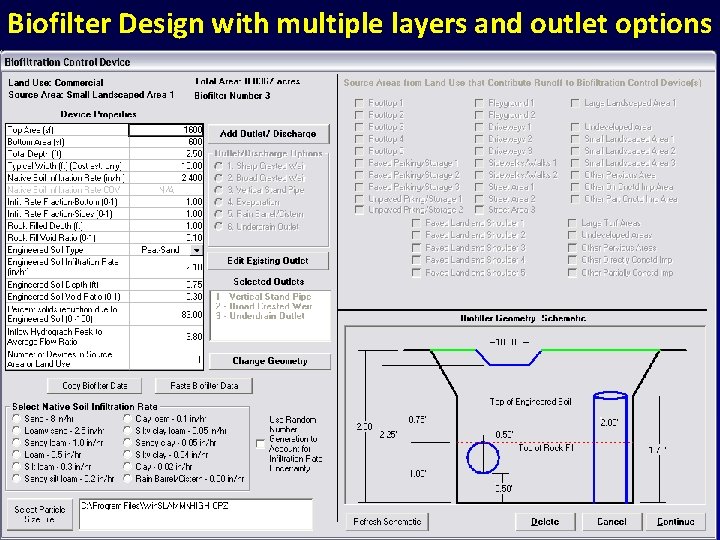
Biofilter Design with multiple layers and outlet options
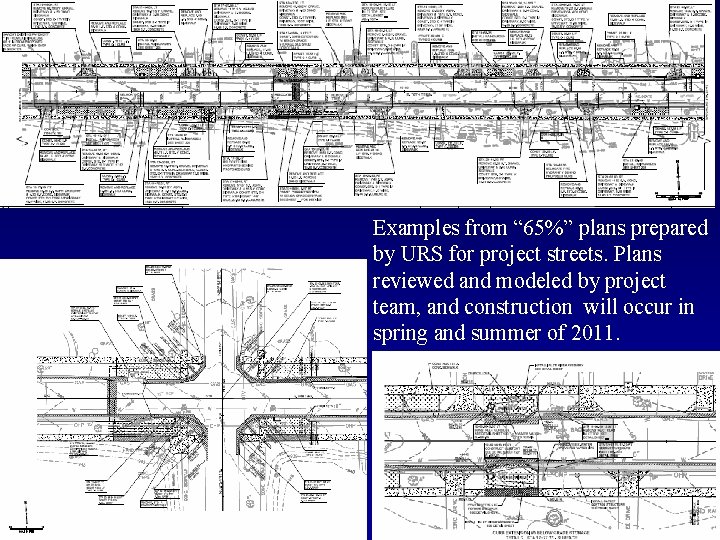
Examples from “ 65%” plans prepared by URS for project streets. Plans reviewed and modeled by project team, and construction will occur in spring and summer of 2011.
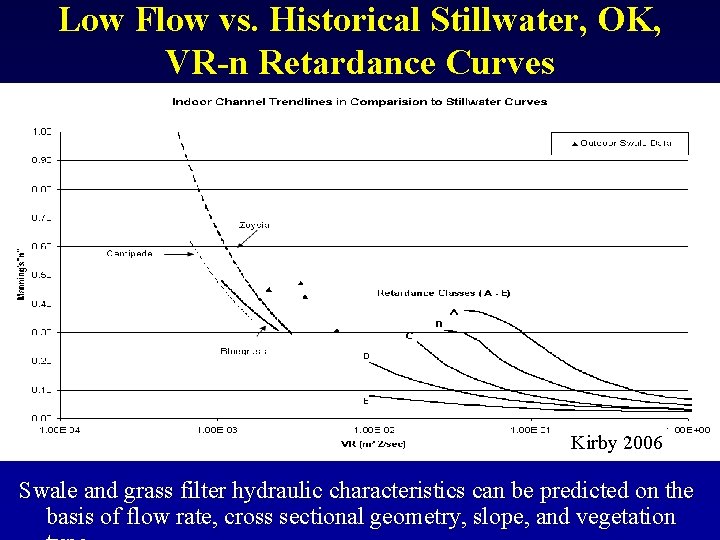
Low Flow vs. Historical Stillwater, OK, VR-n Retardance Curves Relatively short urban landscaping grasses (2 to 6 inches tall) Kirby 2006 Swale and grass filter hydraulic characteristics can be predicted on the basis of flow rate, cross sectional geometry, slope, and vegetation
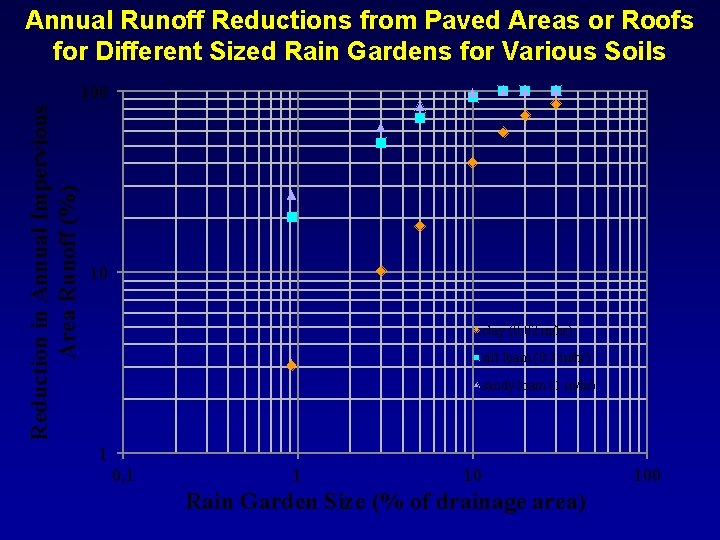
Annual Runoff Reductions from Paved Areas or Roofs for Different Sized Rain Gardens for Various Soils Reduction in Annual Impervious Area Runoff (%) 100 10 clay (0. 02 in/hr) silt loam (0. 3 in/hr) sandy loam (1 in/hr) 1 0, 1 1 10 Rain Garden Size (% of drainage area) 100
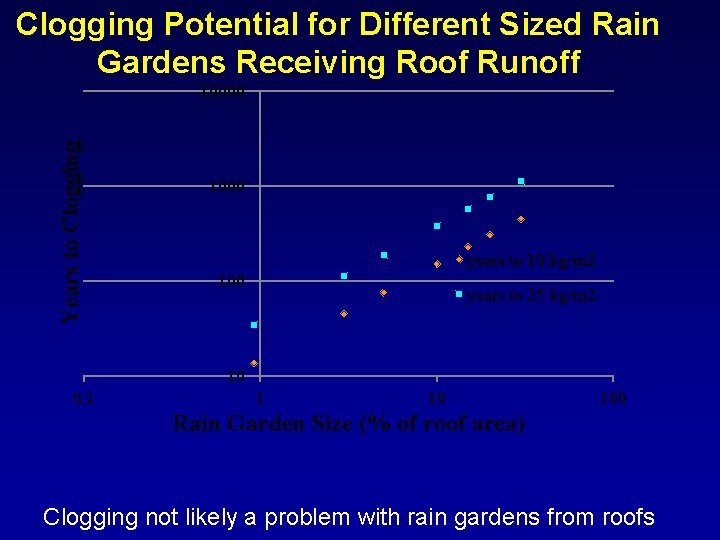
Clogging Potential for Different Sized Rain Gardens Receiving Roof Runoff Years to Clogging 10000 1000 years to 10 kg/m 2 100 years to 25 kg/m 2 10 0, 1 1 10 100 Rain Garden Size (% of roof area) Clogging not likely a problem with rain gardens from roofs
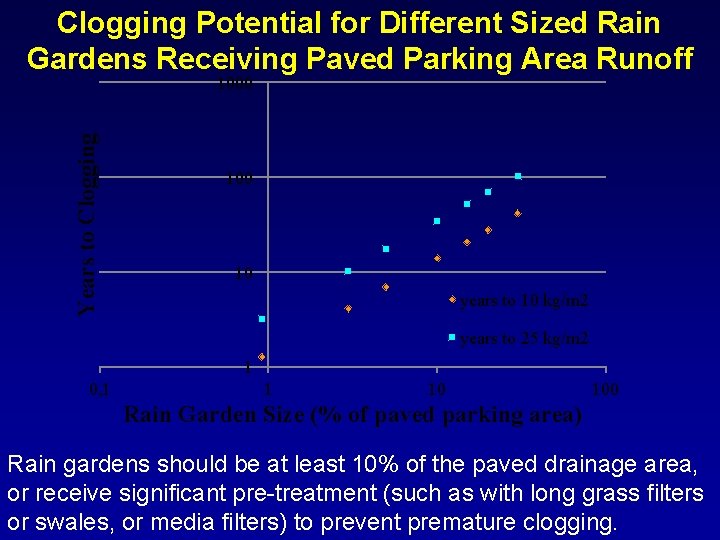
Clogging Potential for Different Sized Rain Gardens Receiving Paved Parking Area Runoff Years to Clogging 1000 10 years to 10 kg/m 2 years to 25 kg/m 2 1 0, 1 1 10 100 Rain Garden Size (% of paved parking area) Rain gardens should be at least 10% of the paved drainage area, or receive significant pre-treatment (such as with long grass filters or swales, or media filters) to prevent premature clogging.
Conclusions • Extensive use of biofilters and other practices is needed in order to provide significant benefits to the combined sewer system. • Placement and design of these controls is very critical. Roof runoff rain gardens located at disconnected roofs are less than 10% as effective compared to directly connected roofs. • Critical hydrologic and hydraulic processes for small flows and small areas are not the same compared to large events and large systems. • Detailed site surveys are needed to determine actual flow paths; remote sensing is limited for these details. • The weight-of-evidence provided by independent evaluations decreases the uncertainty of complex decisions.
- Slides: 27