
Modeling Chemotaxis Cell Adhesion and Cell Sorting Examples









- Slides: 41
Modeling Chemotaxis, Cell Adhesion and Cell Sorting. Examples with Dictyostelium Eirikur Pálsson Dept of Biology, Simon Fraser University
Examples of Processes Where Cell Movement Is Important: • Throughout gastrulation and embryogenesis. • In wound healing. • Carcinoma cell invasion. • Limb bud regeneration. • Cell movement in Dictyostelium discoideum.
Purpose of a Cell Movement model • Visualization of cell movements in 3 -D • Understand how simple cell-cell interactions, signaling and adhesion lead to complex cell movements • Simplification; Revealing the most important things • Gives constraints. Suggests what behavior is possible
Outline • Introduction • Design of Model • Results • Conclusions & Future Work
The Model. • The basic unit of the model is an ellipsoidal cell • Deformation of the cell depends on the history of the forces acting on it • The cell conserves volume with variable ellipsoidal semi-axes • The cell may adhere to other cells or to the substrate • When the cell moves it sends out a pseudopod, attaches it to either a neighbor or the surface • The cell responds to chemotactic signals
A Representation of the Deformability of Each Axis
di dj
Rotation
Forces (static)
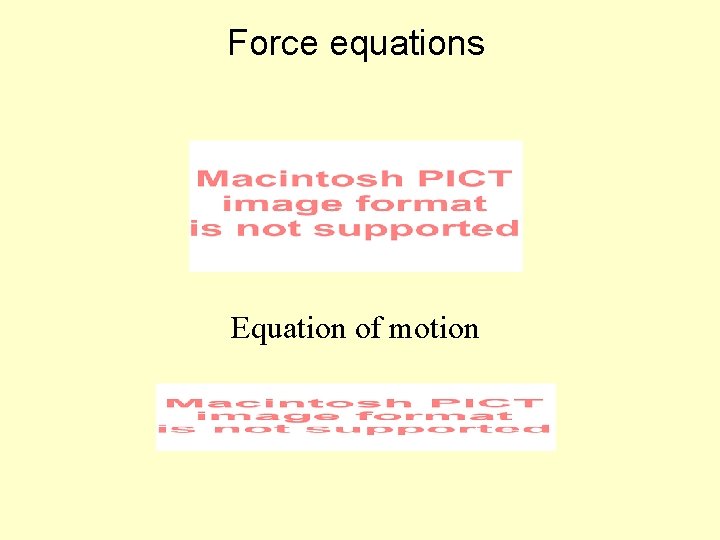
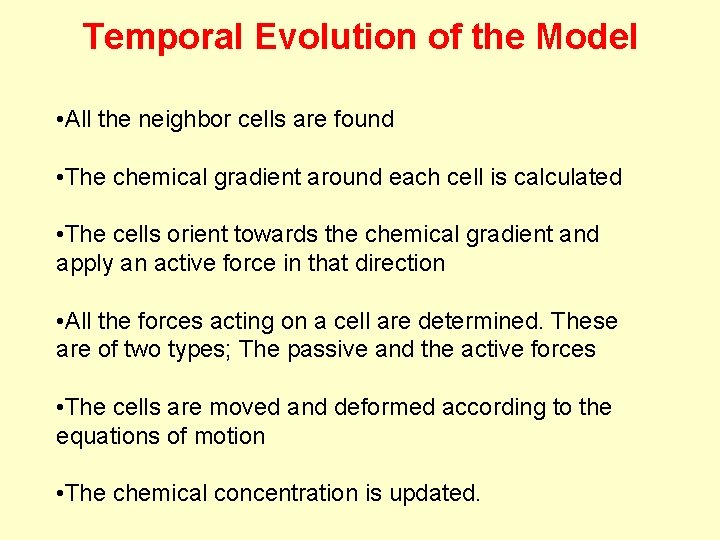
Force equations Equation of motion
Temporal Evolution of the Model • All the neighbor cells are found • The chemical gradient around each cell is calculated • The cells orient towards the chemical gradient and apply an active force in that direction • All the forces acting on a cell are determined. These are of two types; The passive and the active forces • The cells are moved and deformed according to the equations of motion • The chemical concentration is updated.
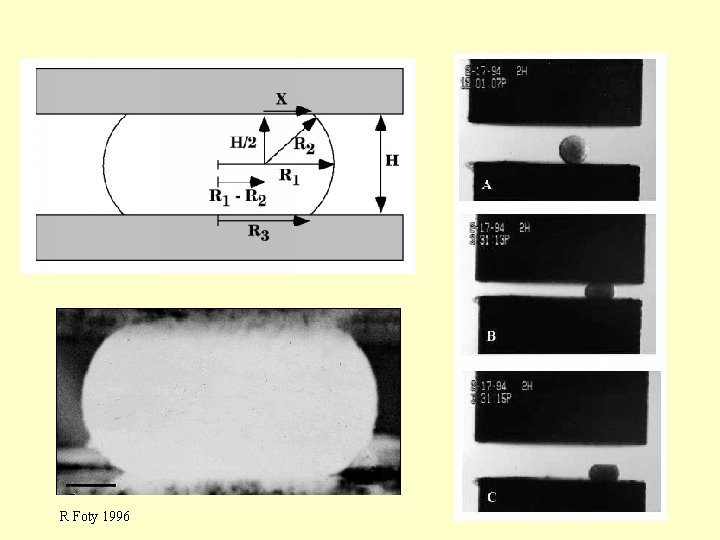
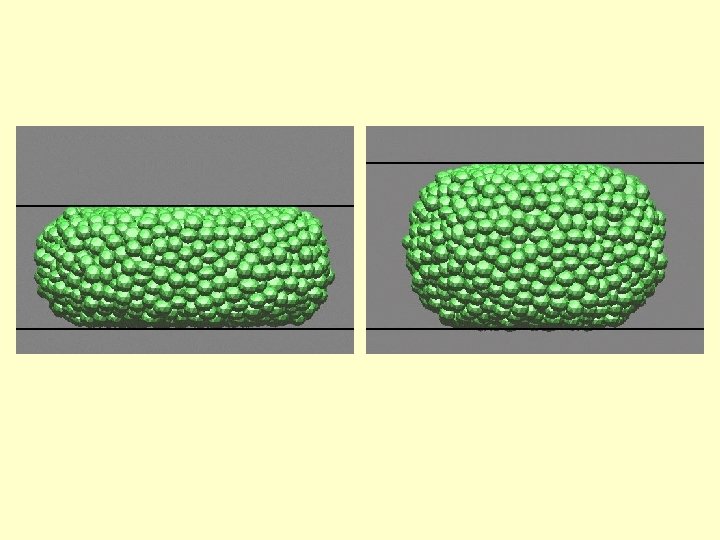
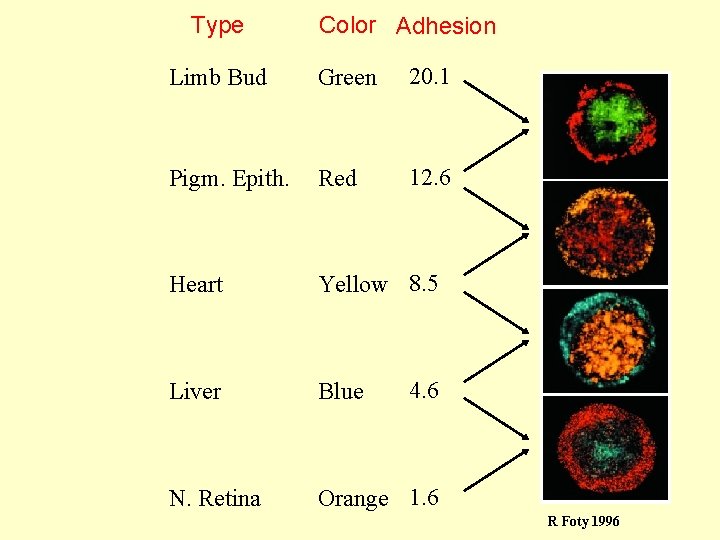
R Foty 1996
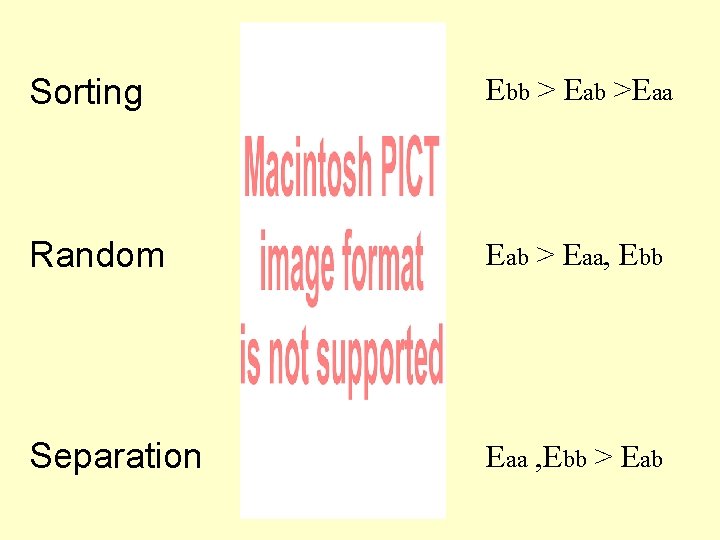
Sorting Ebb > Eab >Eaa Random Eab > Eaa, Ebb Separation Eaa , Ebb > Eab
Type Color Adhesion Limb Bud Green 20. 1 Pigm. Epith. Red 12. 6 Heart Yellow 8. 5 Liver Blue N. Retina Orange 1. 6 4. 6 R Foty 1996
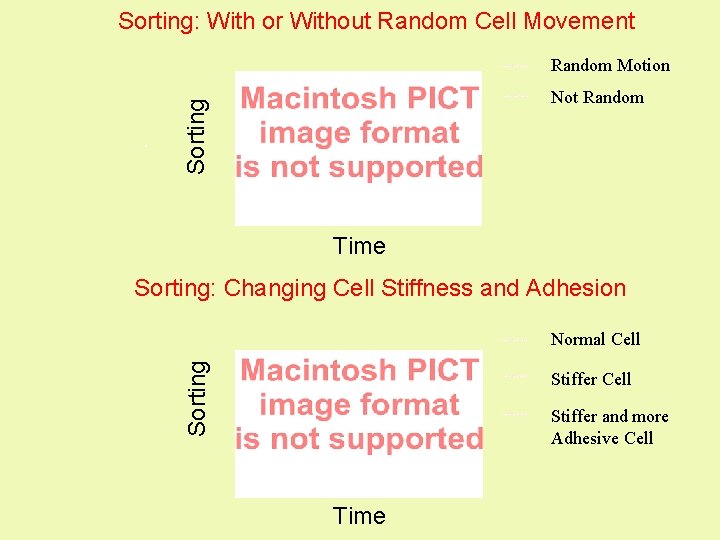
Sorting: With or Without Random Cell Movement Random Motion Sorting Not Random Time Sorting: Changing Cell Stiffness and Adhesion Sorting Normal Cell Stiffer and more Adhesive Cell Time
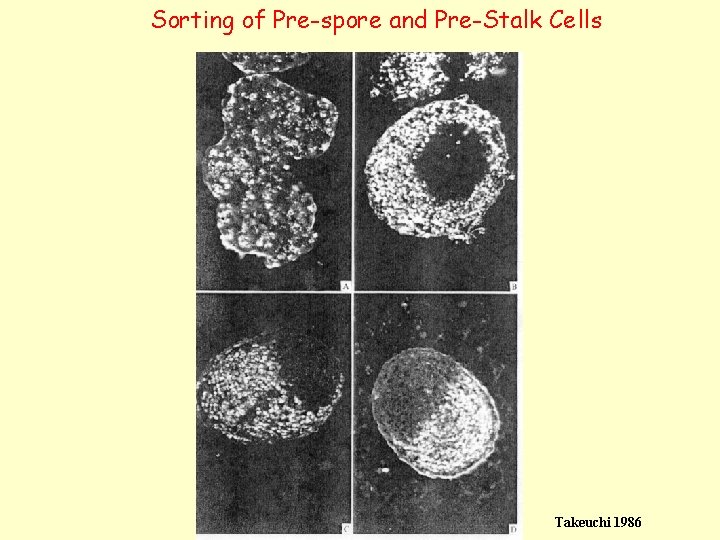
Sorting of Pre-spore and Pre-Stalk Cells Takeuchi 1986
Sorting due to specific Cell Adhesion
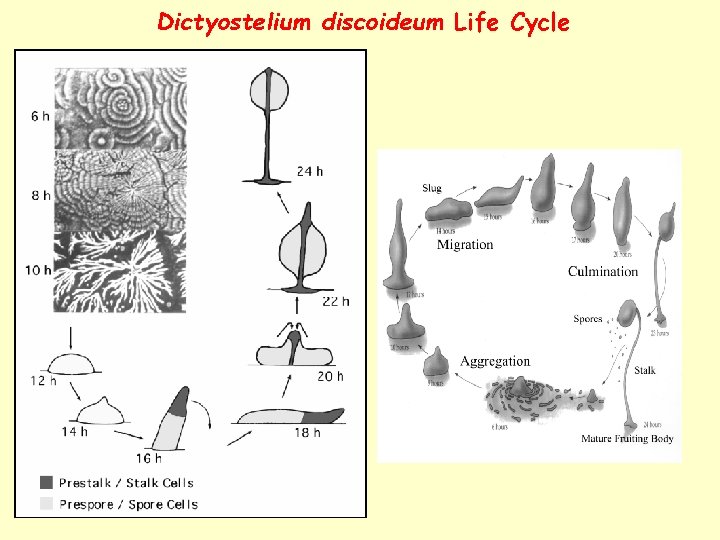
Dictyostelium discoideum Life Cycle
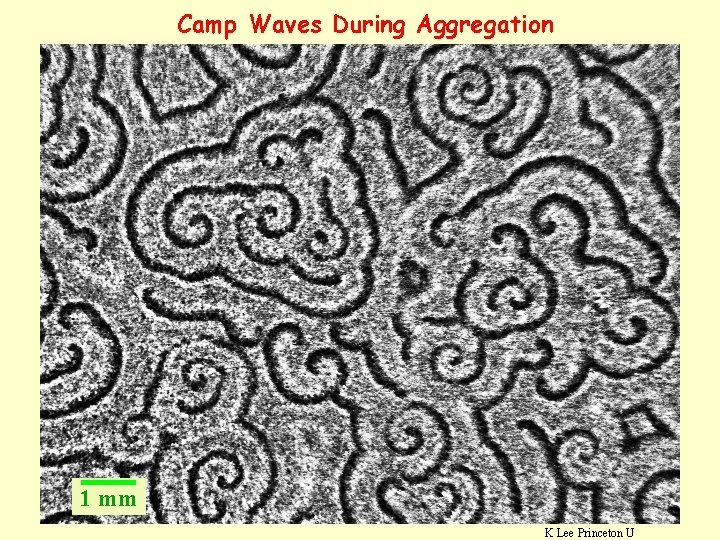
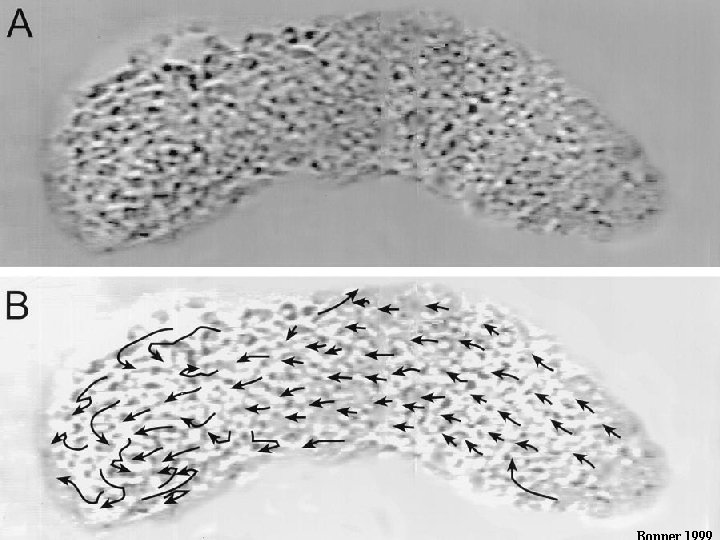
Camp Waves During Aggregation 1 mm K Lee Princeton U
Aggregation (Firtel)
Simulations of Dictyostelium discoideum Aggregation in Response to c. AMP signals.
Aggregation. Pacemaker Cells in Red
Aggregation. 1 to 1 Pacemaker Cells in Red
Aggregation, 1 -1. Reduced Diffusion
Simulations of 2 -D slugs The Red Cells in the front are c. AMP Pacemakers
Slug with c. AMP wave
Slug moving straight, Pacemaker graft
Cell Sorting. The Chemotactic force is 50 % Larger in the Grey Cells
Slug with 2 different Cell types, same adhesion
Slug with 2 different cell types, specific cell adhesion Grey cells more adhesive than green
Thicker Slug with 2 different cell types, specific cell adhesion Grey cells more adhesive than green
Thicker Slug with 2 different cell types, specific cell adhesion Grey cells more adhesive than green (Cross section)
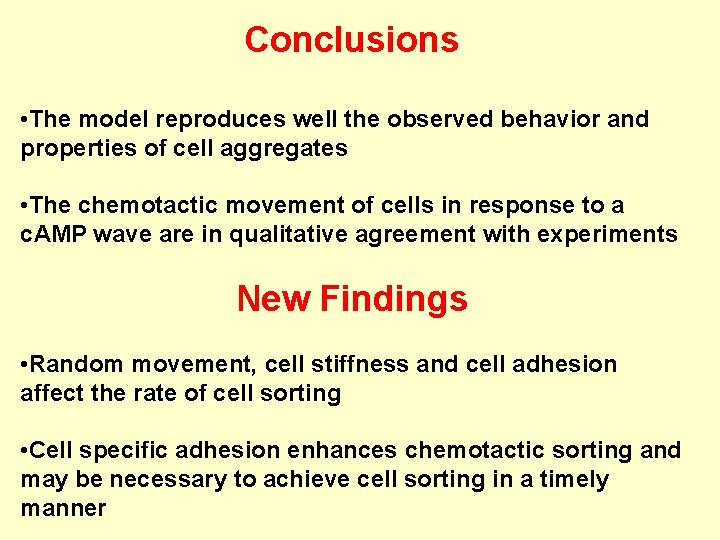
Conclusions • The model reproduces well the observed behavior and properties of cell aggregates • The chemotactic movement of cells in response to a c. AMP wave are in qualitative agreement with experiments New Findings • Random movement, cell stiffness and cell adhesion affect the rate of cell sorting • Cell specific adhesion enhances chemotactic sorting and may be necessary to achieve cell sorting in a timely manner