
Modeling Biomass Conversion to Transportation Fuels Jacob Miller
Modeling Biomass Conversion to Transportation Fuels Jacob Miller Advisor: Dr. Eric Larson
Outline �What is biomass? Why is it useful? �What is bioconversion? �What is biomass made of? �Manufacturing process �Model creation: Mass, energy, and carbon balances �Economic modeling, carbon and energy credits �Final cost estimates

What is biomass? Yes No Switchgrass Corn Soybeans Corn Stover Inedible plant matter
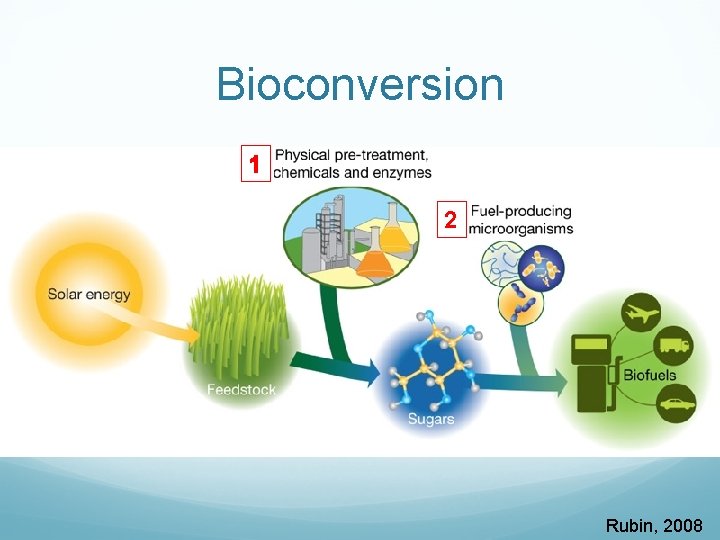
Bioconversion 1 2 Rubin, 2008
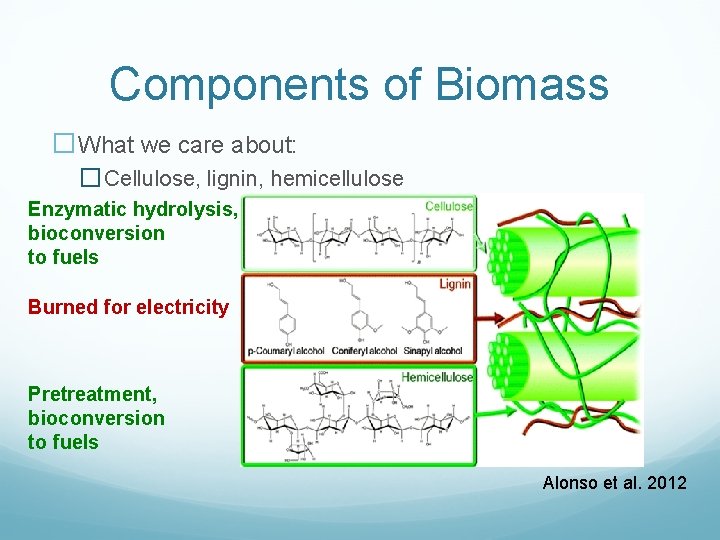
Components of Biomass �What we care about: � Cellulose, lignin, hemicellulose Enzymatic hydrolysis, bioconversion to fuels Burned for electricity Pretreatment, bioconversion to fuels Alonso et al. 2012
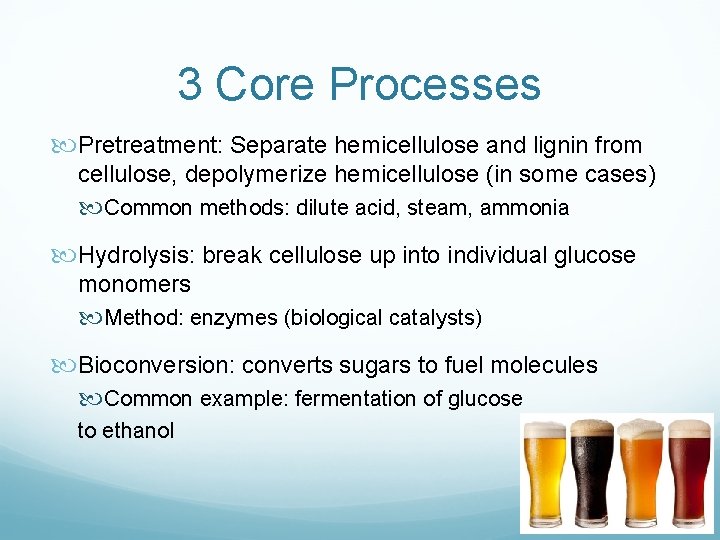
3 Core Processes Pretreatment: Separate hemicellulose and lignin from cellulose, depolymerize hemicellulose (in some cases) Common methods: dilute acid, steam, ammonia Hydrolysis: break cellulose up into individual glucose monomers Method: enzymes (biological catalysts) Bioconversion: converts sugars to fuel molecules Common example: fermentation of glucose to ethanol
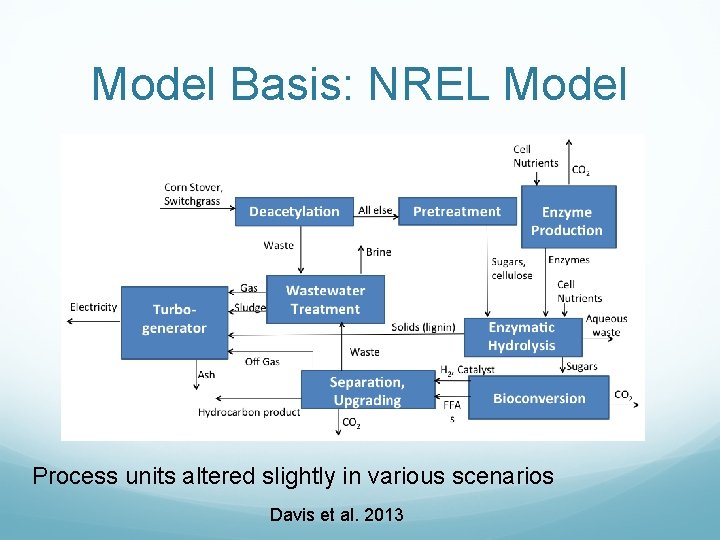
Model Basis: NREL Model Process units altered slightly in various scenarios Davis et al. 2013
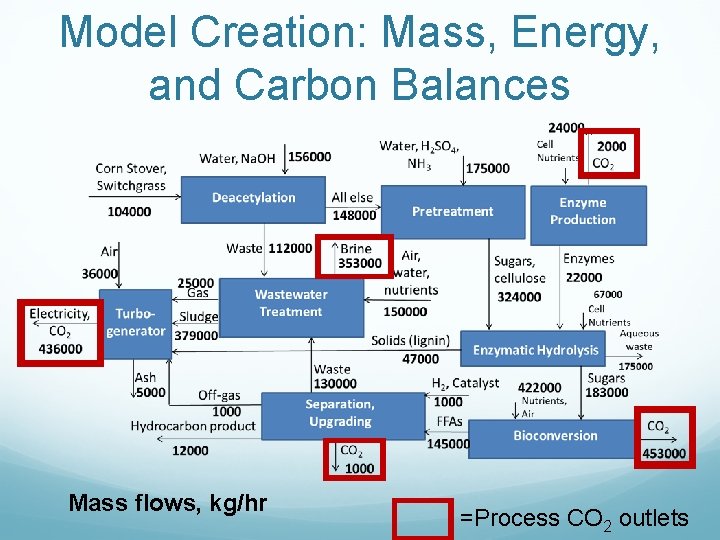
Model Creation: Mass, Energy, and Carbon Balances Mass flows, kg/hr =Process CO 2 outlets
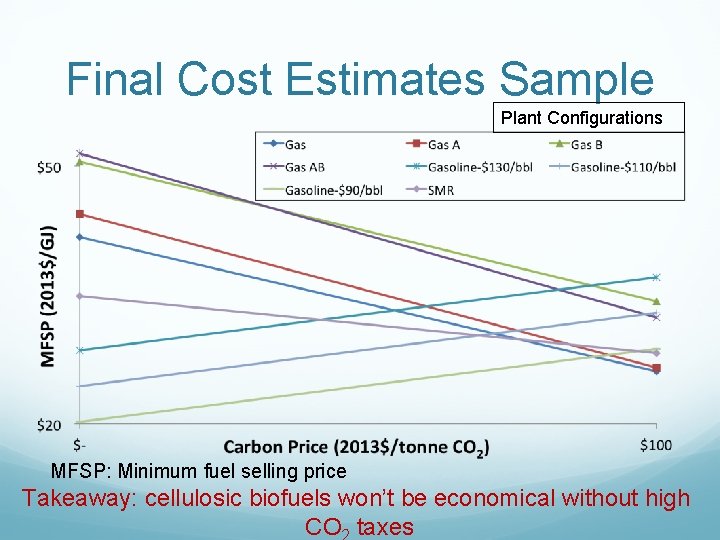
Final Cost Estimates Sample Plant Configurations MFSP: Minimum fuel selling price Takeaway: cellulosic biofuels won’t be economical without high CO taxes
Acknowledgements �Princeton Environmental Institute �Dr. Eric Larson, Dr. Thomas Kreutz, Dr. Robert Williams, Dr. Hans Meerman, Maurizio Spinelli

Questions?

Economic Modeling, Carbon and Energy Credits �Discounted Cash Flow Analysis �External power source/replacement: Natural gas combined cycle plant �CO 2 tax: $0 -$100/ton

Components of Biomass % Dry Mass Cellulose % Dry Mass Hemicellulose % Dry Mass Lignin Sugarcane bagasse 35. 2 24. 5 22. 2 18. 1 Switchgrass 35. 2 30. 5 7. 7 26. 6 Corn stover 34. 4 22. 8 18 24. 8 Plant % Dry Mass Other Rezende et al. 2011 Godin et al. 2013 Kumar et al. 2009

Carbon Capture Integration �Rectisol � Less expensive ($1 s million capital costs) � Can only capture CO 2 from pressurized sources �Amine Solvent � More expensive ($100 s million capital costs) � Can capture CO 2 from any emissions source (ex: biomass generator)
- Slides: 14