
Modeling and Simulation of TTEthernet Master Thesis By
Modeling and Simulation of TTEthernet Master Thesis By Alexander Zafirov Supervisor: Paul Pop
Overview ● Introduction ● TTEthernet ● Simulator ● Evaluation
Overview ● Thesis Objectives ● Introduction ● TTEthernet ● Simulator ● Evaluation
Introduction ● Hard-real systems ○ Distributed systems ○ Safety-critical demands ■ Event-Triggered approach - depend on particular event ■ Time-Triggered approach - predetermined ● Mixed-criticality systems
Thesis Objectives The goal of the master thesis project is to develop a fast and accurate simulator based on the TTEthernet protocol The requirements for the simulator: ● model the two simulation paradigms - action- and event-oriented ● model all the three integration policies ● determine the average end-to-end delays for all BE and RC messages ● determine the worst-case end-to-end communication delays for the RC messages ● compare and evaluate results from simulation to TTEthernet analysis ● simulator should be designed and implemented so that it can be used inside an optimization loop
Overview ● Description ● Introduction ● Architecture ● Virtual Links ● TTEthernet ● Traffic Classes ● Integration Policies ● Simulator ● Evaluation
TTEthernet ● deterministic ● synchronized ● congestion free ● based on ARINC 664 p 7 and Ethernet ● fault-tolerant
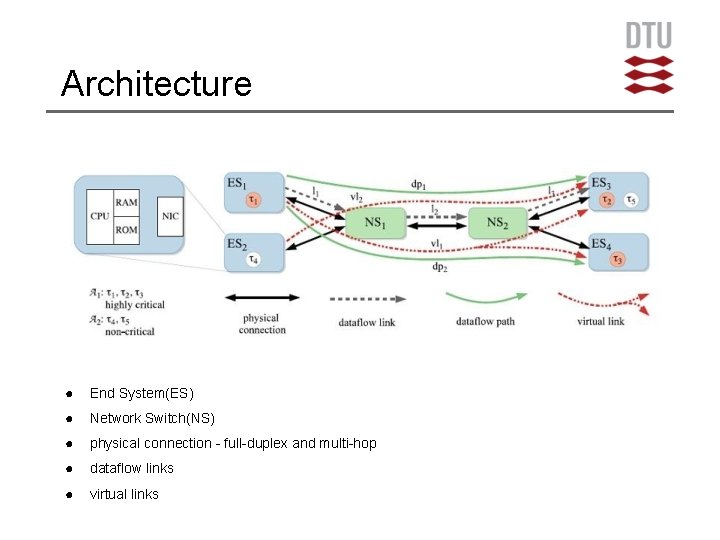
Architecture ● End System(ES) ● Network Switch(NS) ● physical connection - full-duplex and multi-hop ● dataflow links ● virtual links
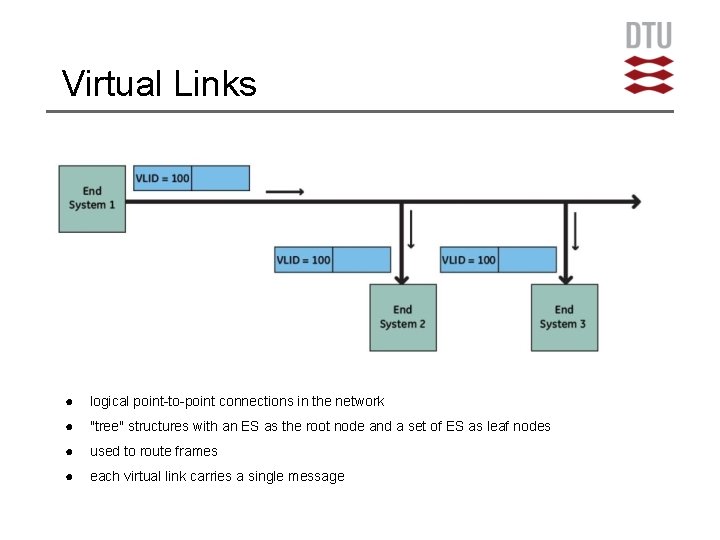
Virtual Links ● logical point-to-point connections in the network ● "tree" structures with an ES as the root node and a set of ES as leaf nodes ● used to route frames ● each virtual link carries a single message
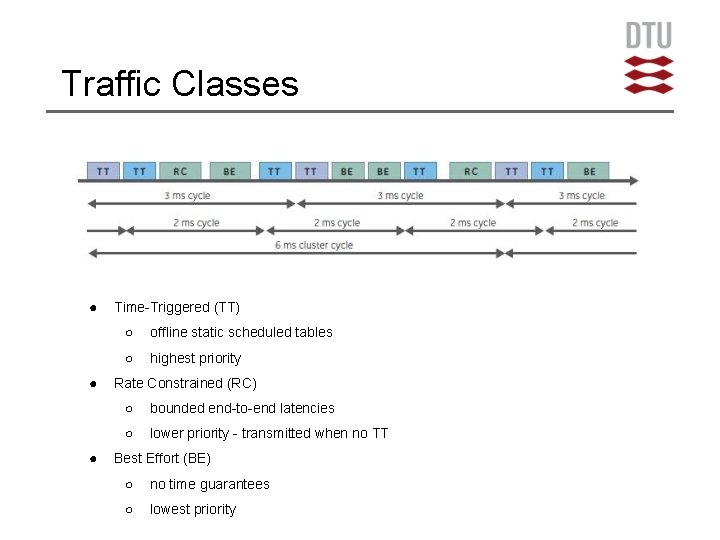
Traffic Classes ● ● ● Time-Triggered (TT) ○ offline static scheduled tables ○ highest priority Rate Constrained (RC) ○ bounded end-to-end latencies ○ lower priority - transmitted when no TT Best Effort (BE) ○ no time guarantees ○ lowest priority

Integration Policies 1) The relay process of the L is stopped; the switch establishes the minimum time of silence on the channel and relays the H message an a priori specified duration later. 2) The switch will not forward messages at those times when a TT message is expected 3) The H message is delayed until the relay process of the L message is finished
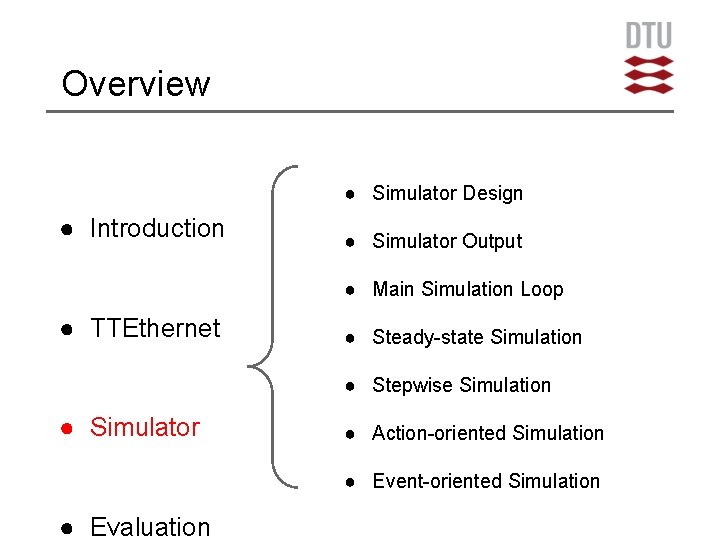
Overview ● Simulator Design ● Introduction ● Simulator Output ● Main Simulation Loop ● TTEthernet ● Steady-state Simulation ● Stepwise Simulation ● Simulator ● Action-oriented Simulation ● Event-oriented Simulation ● Evaluation
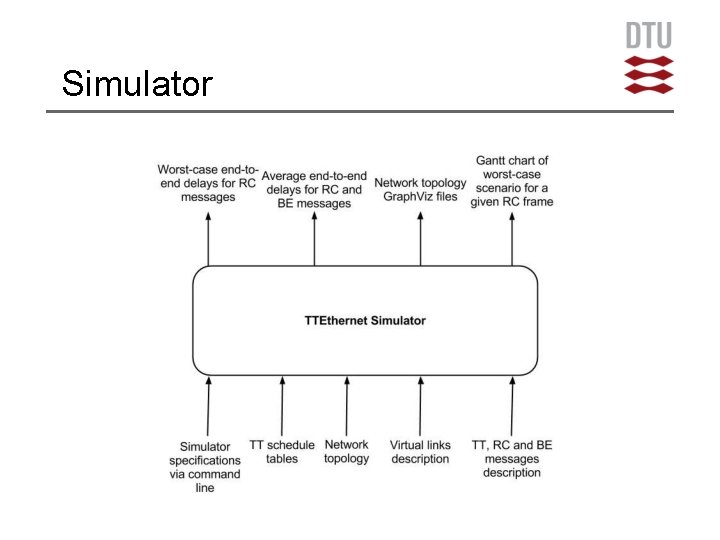
Simulator
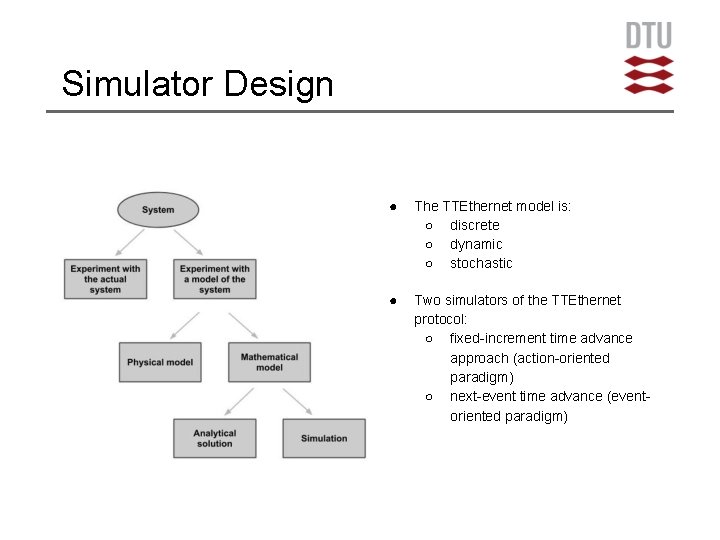
Simulator Design ● The TTEthernet model is: ○ discrete ○ dynamic ○ stochastic ● Two simulators of the TTEthernet protocol: ○ fixed-increment time advance approach (action-oriented paradigm) ○ next-event time advance (eventoriented paradigm)
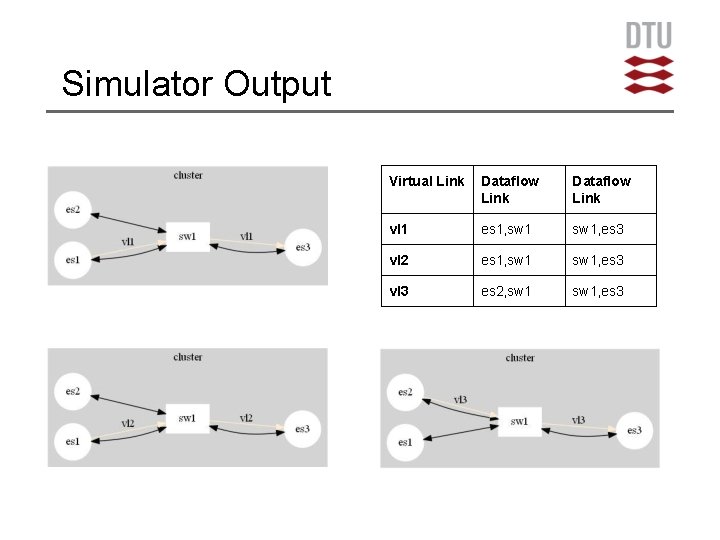
Simulator Output Virtual Link Dataflow Link vl 1 es 1, sw 1, es 3 vl 2 es 1, sw 1, es 3 vl 3 es 2, sw 1, es 3

Simulator Output
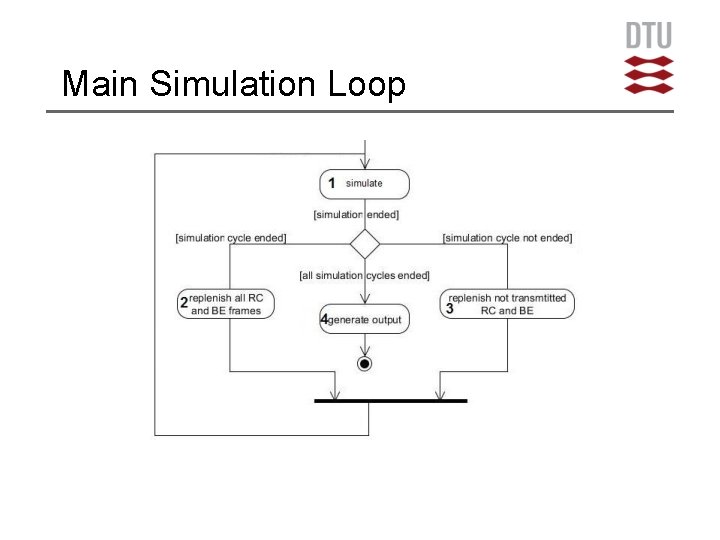
Main Simulation Loop
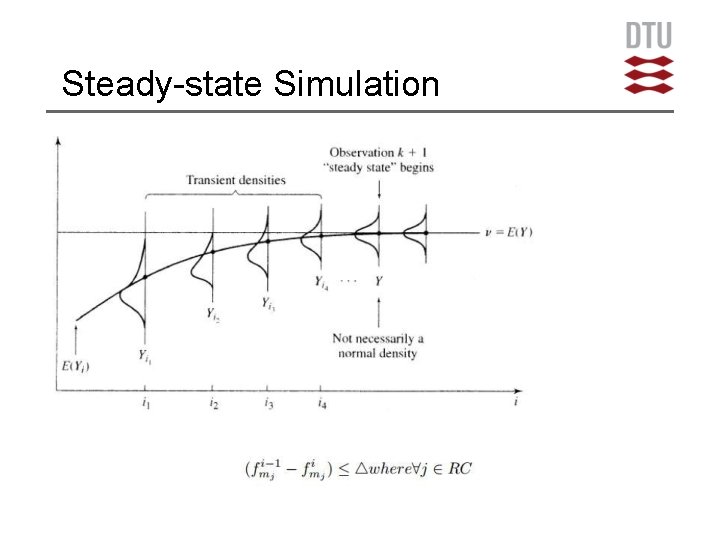
Steady-state Simulation
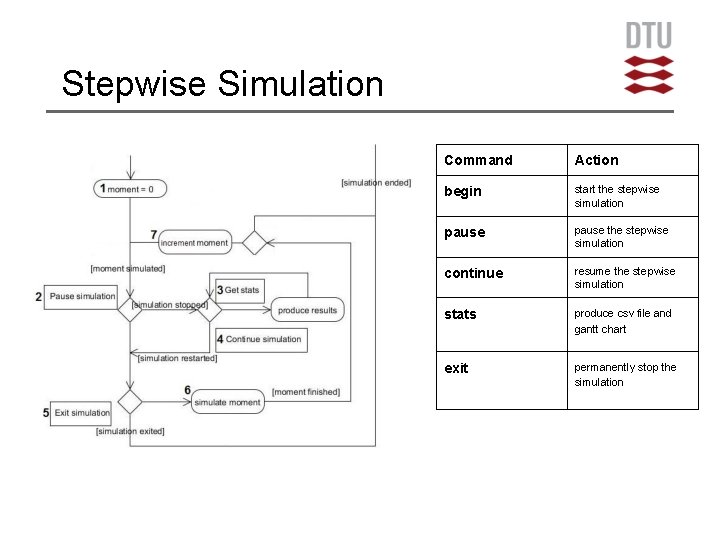
Stepwise Simulation Command Action begin start the stepwise simulation pause the stepwise simulation continue resume the stepwise simulation stats produce csv file and gantt chart exit permanently stop the simulation
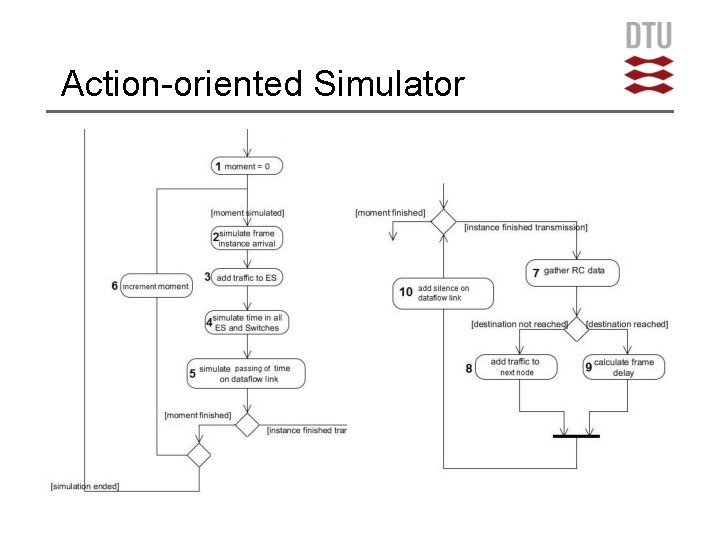
Action-oriented Simulator

Event-oriented Simulator Events: ● ARRIVAL_RC_BE ● RELEASE_TT ● FINISH_RC_BE ● SILENCE
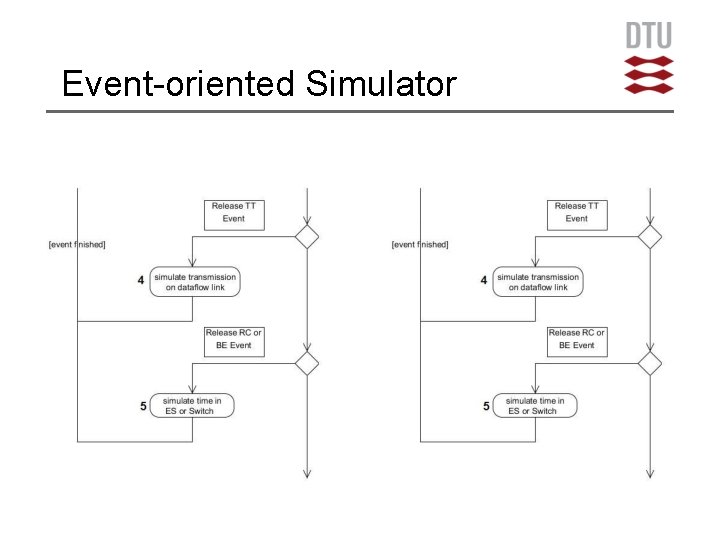
Event-oriented Simulator
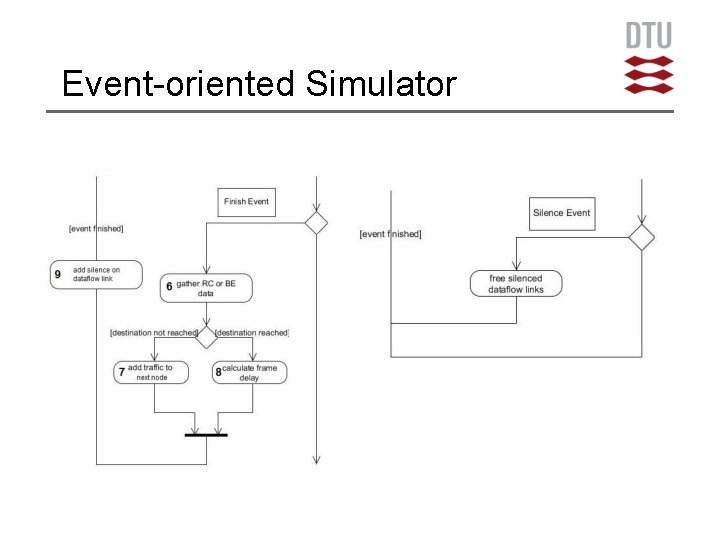
Event-oriented Simulator
Overview ● Introduction ● Integration Policy Comparison ● TTEthernet ● Action- vs Event-Driven Simulation ● Orion Topology Comparison ● Simulator ● Steady-state Simulation ● Analysis vs Simulation ● Evaluation
Evaluation ● all three traffic classes with all integration policies run for 10 simulation cycles of the action-oriented simulator ● two simulators run for 10, 100 and 1000 simulation cycles with the Timely Block integration policy with a single test case ● from 10 to 4000 simulation cycles of the action-oriented simulator with the Timely Block integration policy of a single test case ● action-based simulator run for 500 simulation cycles with two real world test cases based on the NASA's Orion Crew Exploration Vehicle ● TTEthernet analysis and 1000 simulation cycles of action-oriented simulator with 10 test cases
![Integration policy comparison Frame Timely Block [s] Shuffling [s] Preemption [s] tt 1. 0](http://slidetodoc.com/presentation_image_h2/d9288ba3ec0101deee691de9cec1ccf6/image-26.jpg "Integration policy comparison Frame Timely Block [s] Shuffling [s] Preemption [s] tt 1. 0")
Integration policy comparison Frame Timely Block [s] Shuffling [s] Preemption [s] tt 1. 0 118 300 150 tt 7. 0 113 261 160 tt 35. 0 118 192 140 rc 7. 0 1126 547 252481 rc 22. 0 149 252149 214 rc 28. 0 200 252137 261 be 11 769 289 300 be 13 885 446 467 be 20 965 292 252321
![Action- vs Event-Driven Simulation Simulator runs Activity-oriented [s] Event-oriented [s] 10 232 2 100](http://slidetodoc.com/presentation_image_h2/d9288ba3ec0101deee691de9cec1ccf6/image-27.jpg "Action- vs Event-Driven Simulation Simulator runs Activity-oriented [s] Event-oriented [s] 10 232 2 100")
Action- vs Event-Driven Simulation Simulator runs Activity-oriented [s] Event-oriented [s] 10 232 2 100 1887 18 1000 24189 180 Event-driven simulation advandates: ● TT frame's sending and receiving times are initially inserted sorted into the queue - saves time on inserting and sorting the queue for each TT instances ● local sorting - includes only the events that come before the event causing the sorting and the event itself
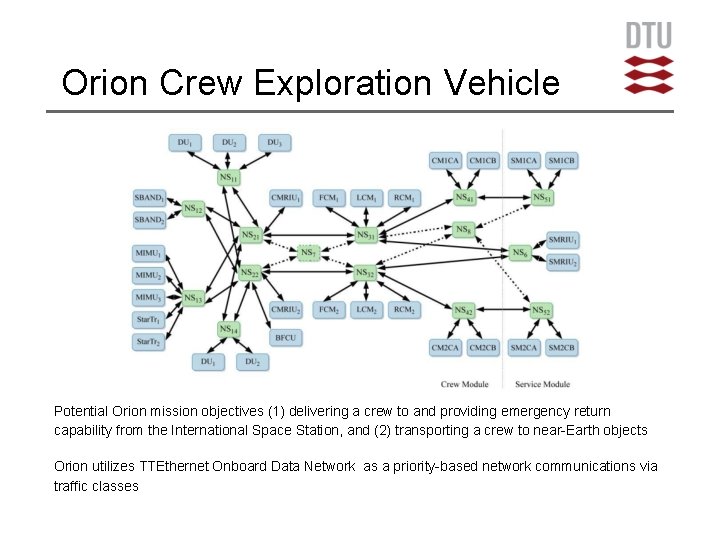
Orion Crew Exploration Vehicle Potential Orion mission objectives (1) delivering a crew to and providing emergency return capability from the International Space Station, and (2) transporting a crew to near-Earth objects Orion utilizes TTEthernet Onboard Data Network as a priority-based network communications via traffic classes
![Orion Topology Comparison Test case ES SW Frames Frame instances Average run-time[s] Total run-time[s]](http://slidetodoc.com/presentation_image_h2/d9288ba3ec0101deee691de9cec1ccf6/image-29.jpg "Orion Topology Comparison Test case ES SW Frames Frame instances Average run-time[s] Total run-time[s]")
Orion Topology Comparison Test case ES SW Frames Frame instances Average run-time[s] Total run-time[s] Orion 1 31 13 180 5438 501 250572 Orion 2 31 14 180 5438 602 301008
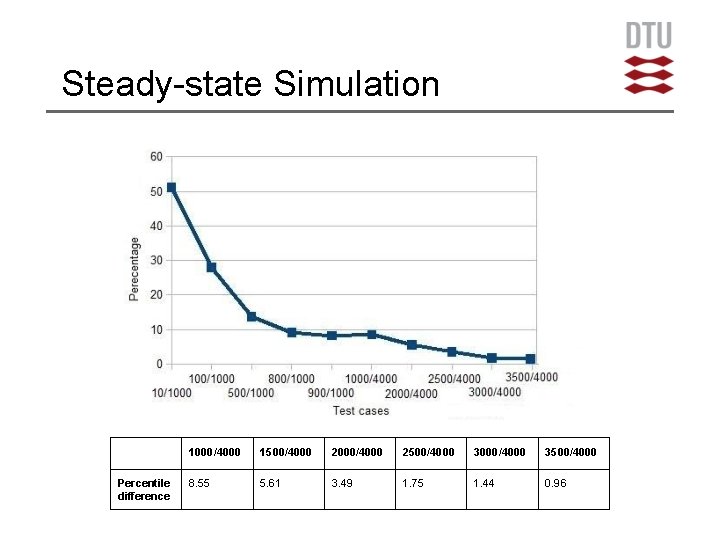
Steady-state Simulation Percentile difference 1000/4000 1500/4000 2000/4000 2500/4000 3000/4000 3500/4000 8. 55 5. 61 3. 49 1. 75 1. 44 0. 96
![Analysis vs Simulation Test case ▲delay[%] 1 21388. 23 2 22101. 10 3 40357.](http://slidetodoc.com/presentation_image_h2/d9288ba3ec0101deee691de9cec1ccf6/image-31.jpg "Analysis vs Simulation Test case ▲delay[%] 1 21388. 23 2 22101. 10 3 40357.")
Analysis vs Simulation Test case ▲delay[%] 1 21388. 23 2 22101. 10 3 40357. 05 4 66831. 41 5 50209. 40 6 109484. 76 7 156453. 61 8 24770. 09 9 167413. 91 10 116517. 49 ● analysis - very pessimistic WCD for RC frames due to the lack of execution time ● simulation - relatively optimistic due to small number of simulation cycles performed

Thank you for the attention
- Slides: 32