
Modeling and Analysis of Picking Warehouses Using Simio

- Slides: 21
Modeling and Analysis of Picking Warehouses Using Simio Jeff Smith Industrial and Systems Engineering Auburn University jsmith@auburn. edu
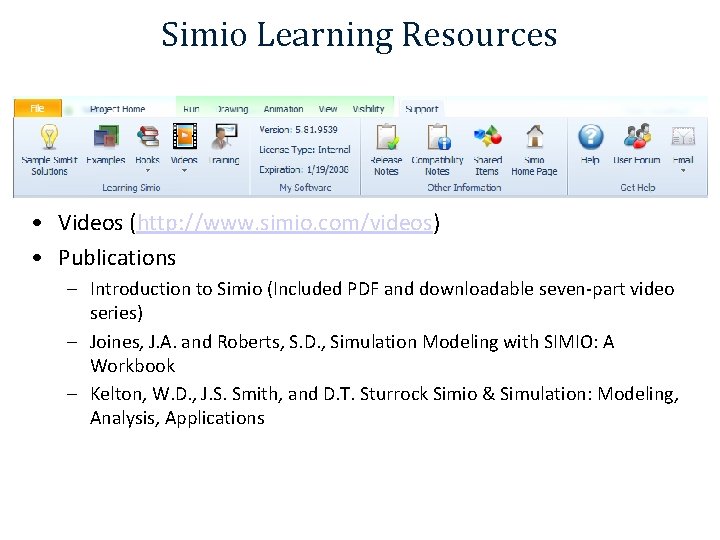
Simio Learning Resources • Videos (http: //www. simio. com/videos) • Publications – Introduction to Simio (Included PDF and downloadable seven-part video series) – Joines, J. A. and Roberts, S. D. , Simulation Modeling with SIMIO: A Workbook – Kelton, W. D. , J. S. Smith, and D. T. Sturrock Simio & Simulation: Modeling, Analysis, Applications
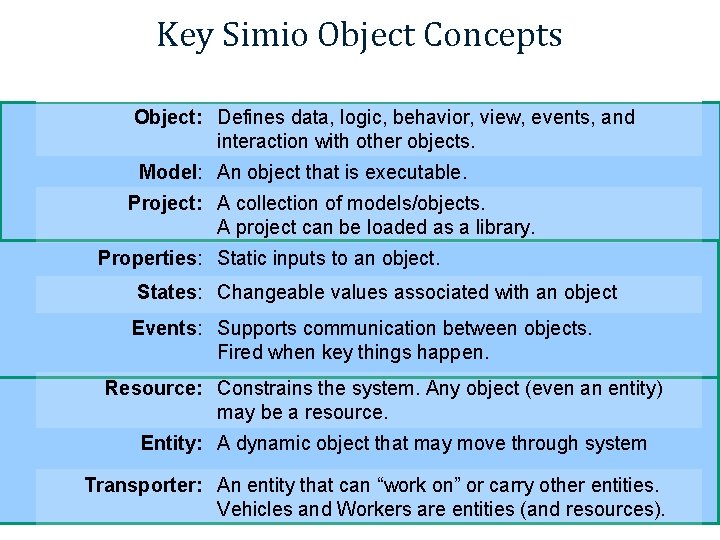
Key Simio Object Concepts Object: Defines data, logic, behavior, view, events, and interaction with other objects. Model: An object that is executable. Project: A collection of models/objects. A project can be loaded as a library. Properties: Static inputs to an object. States: Changeable values associated with an object Events: Supports communication between objects. Fired when key things happen. Resource: Constrains the system. Any object (even an entity) may be a resource. Entity: A dynamic object that may move through system Transporter: An entity that can “work on” or carry other entities. Vehicles and Workers are entities (and resources).
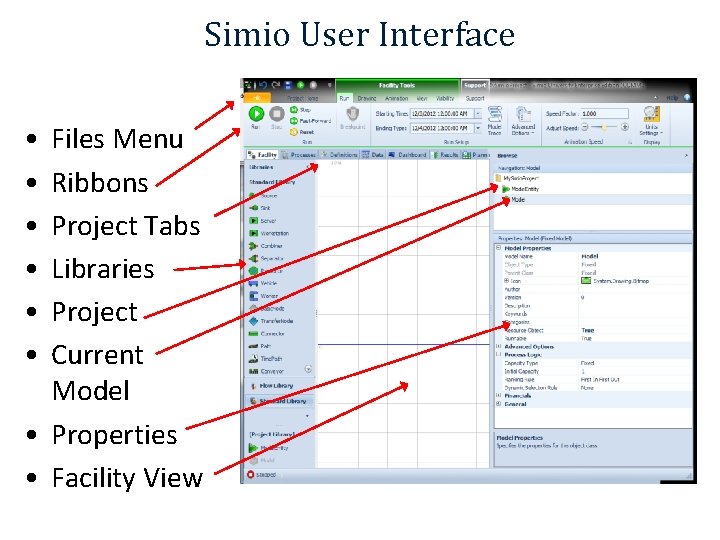
Simio User Interface • • • Files Menu Ribbons Project Tabs Libraries Project Current Model • Properties • Facility View
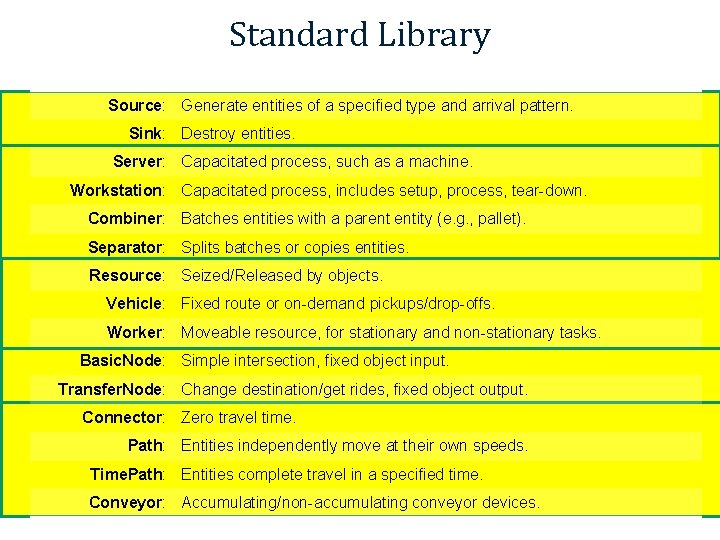
Standard Library Source: Generate entities of a specified type and arrival pattern. Sink: Destroy entities. Server: Capacitated process, such as a machine. Workstation: Capacitated process, includes setup, process, tear-down. Combiner: Batches entities with a parent entity (e. g. , pallet). Separator: Splits batches or copies entities. Resource: Seized/Released by objects. Vehicle: Fixed route or on-demand pickups/drop-offs. Worker: Moveable resource, for stationary and non-stationary tasks. Basic. Node: Simple intersection, fixed object input. Transfer. Node: Change destination/get rides, fixed object output. Connector: Zero travel time. Path: Entities independently move at their own speeds. Time. Path: Entities complete travel in a specified time. Conveyor: Accumulating/non-accumulating conveyor devices.
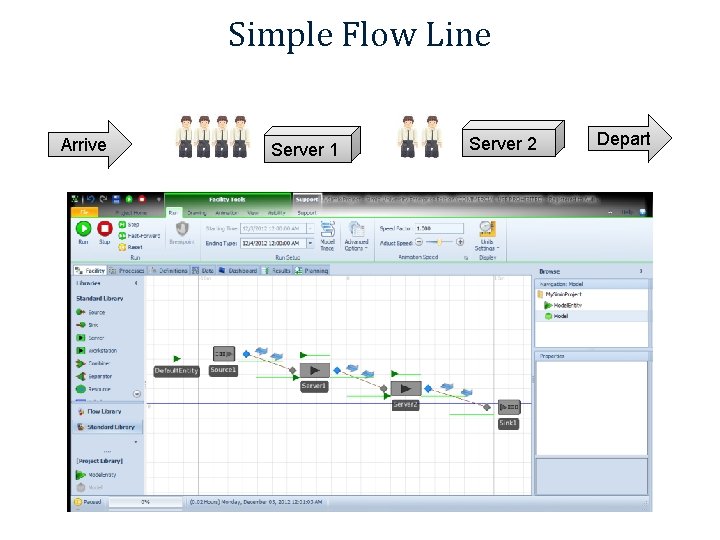
Simple Flow Line Arrive Server 1 Server 2 Depart
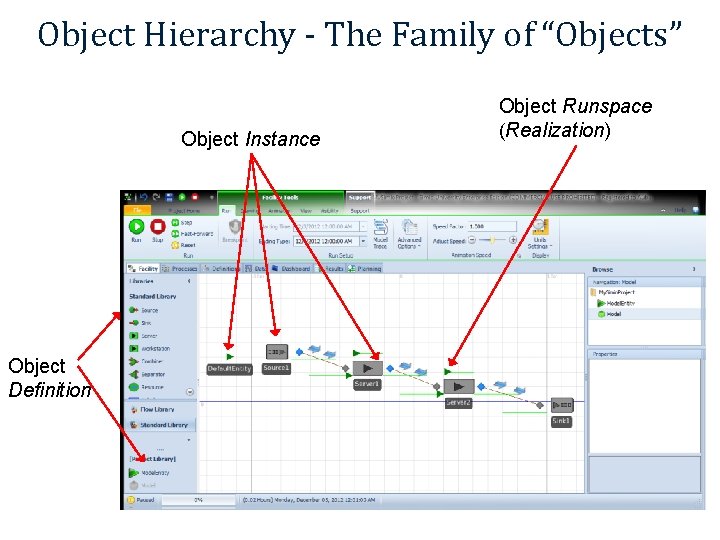
Object Hierarchy - The Family of “Objects” Object Instance Object Definition Object Runspace (Realization)
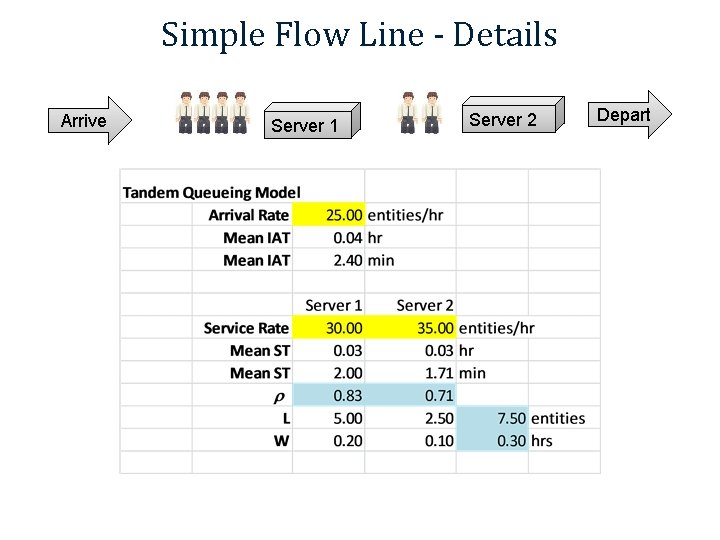
Simple Flow Line - Details Arrive Server 1 Server 2 Depart
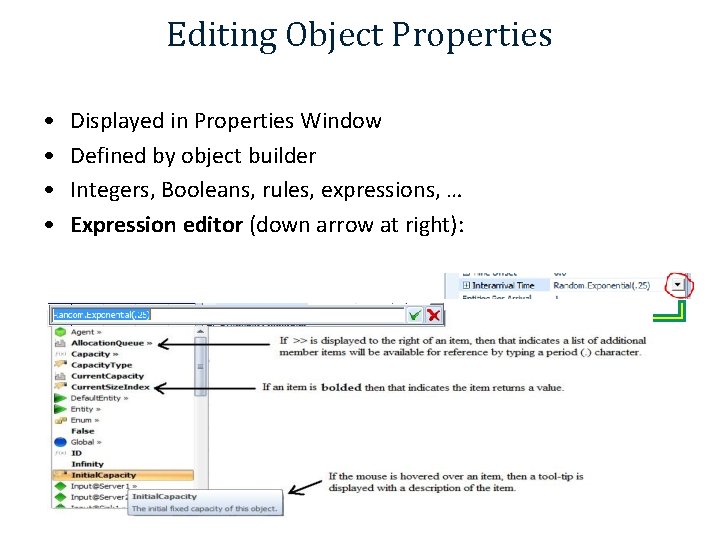
Editing Object Properties • • Displayed in Properties Window Defined by object builder Integers, Booleans, rules, expressions, … Expression editor (down arrow at right):
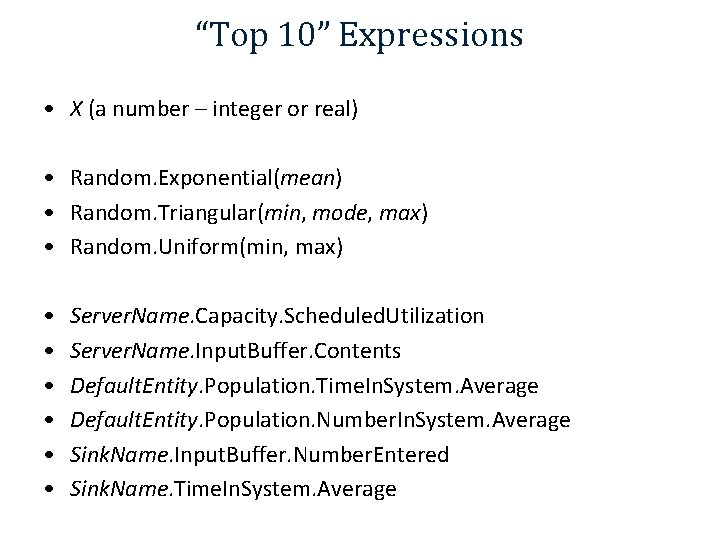
“Top 10” Expressions • X (a number – integer or real) • Random. Exponential(mean) • Random. Triangular(min, mode, max) • Random. Uniform(min, max) • • • Server. Name. Capacity. Scheduled. Utilization Server. Name. Input. Buffer. Contents Default. Entity. Population. Time. In. System. Average Default. Entity. Population. Number. In. System. Average Sink. Name. Input. Buffer. Number. Entered Sink. Name. Time. In. System. Average
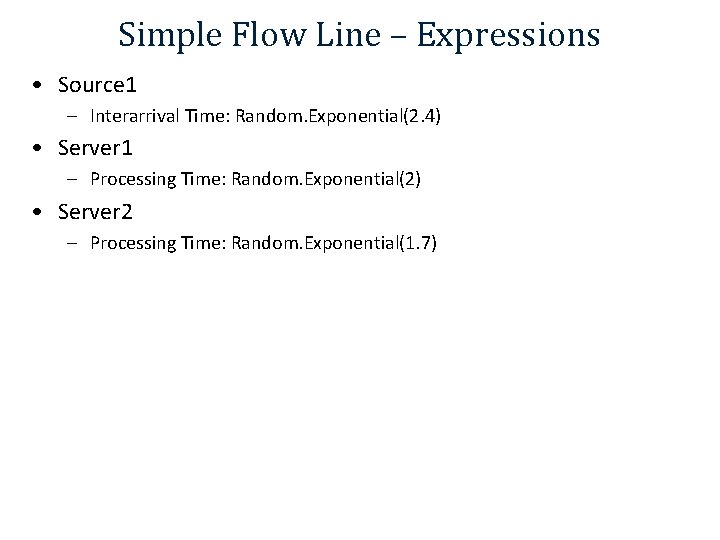
Simple Flow Line – Expressions • Source 1 – Interarrival Time: Random. Exponential(2. 4) • Server 1 – Processing Time: Random. Exponential(2) • Server 2 – Processing Time: Random. Exponential(1. 7)
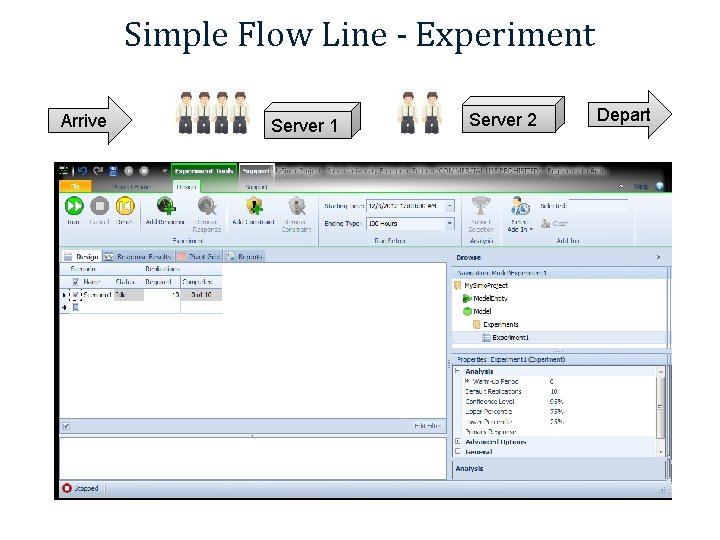
Simple Flow Line - Experiment Arrive Server 1 Server 2 Depart
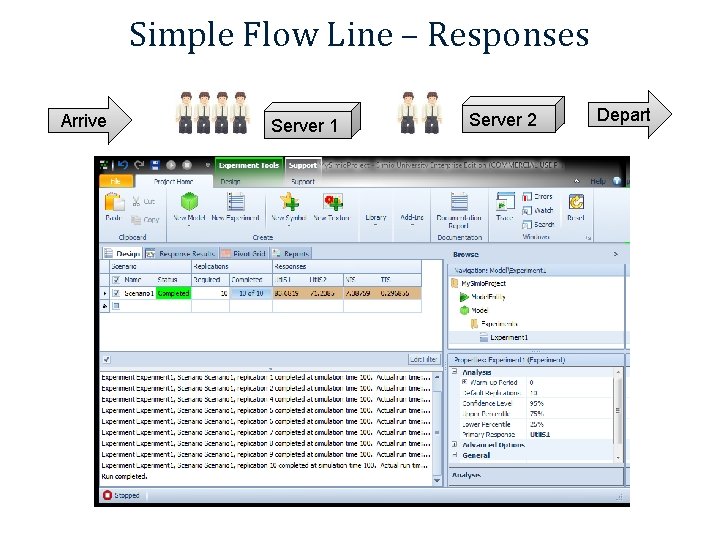
Simple Flow Line – Responses Arrive Server 1 Server 2 Depart
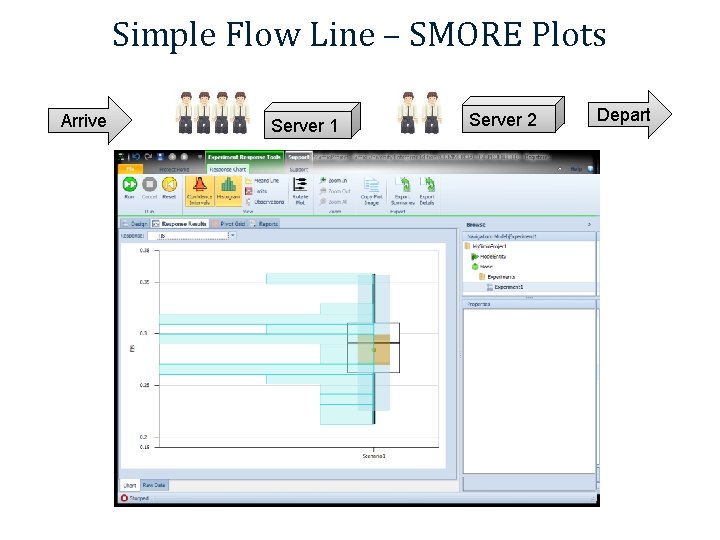
Simple Flow Line – SMORE Plots Arrive Server 1 Server 2 Depart
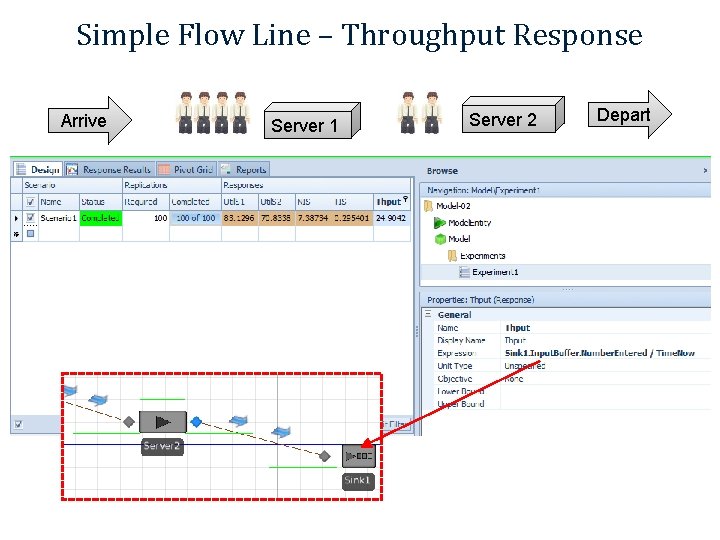
Simple Flow Line – Throughput Response Arrive Server 1 Server 2 Depart
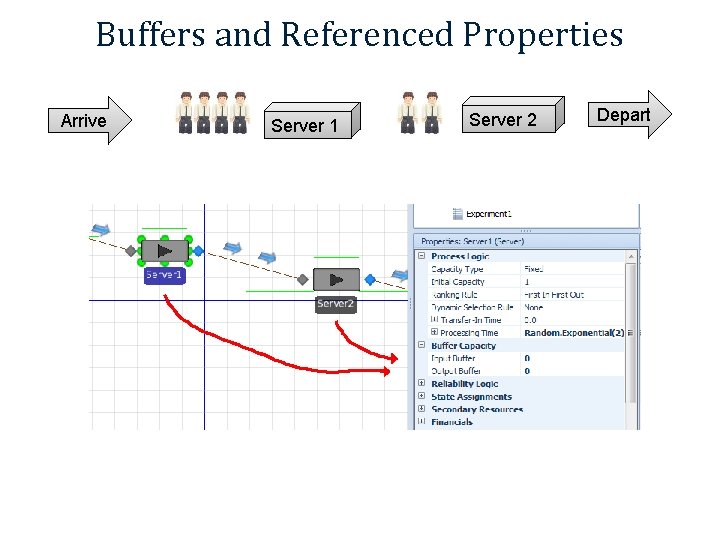
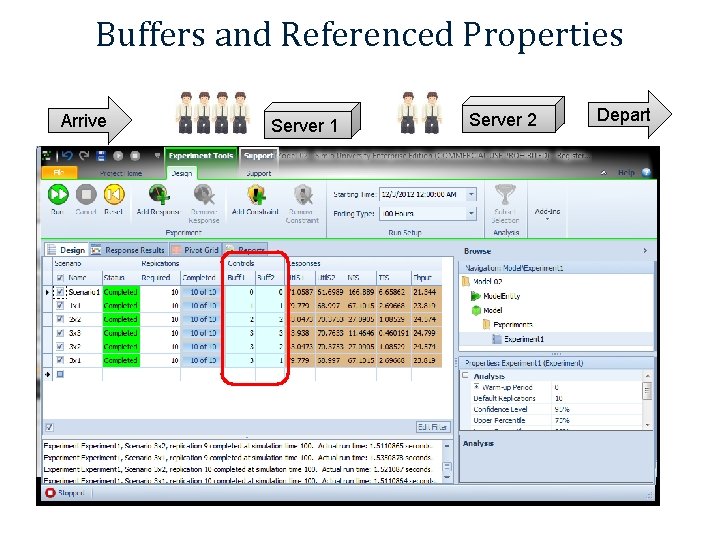
Buffers and Referenced Properties Arrive Server 1 Server 2 Depart
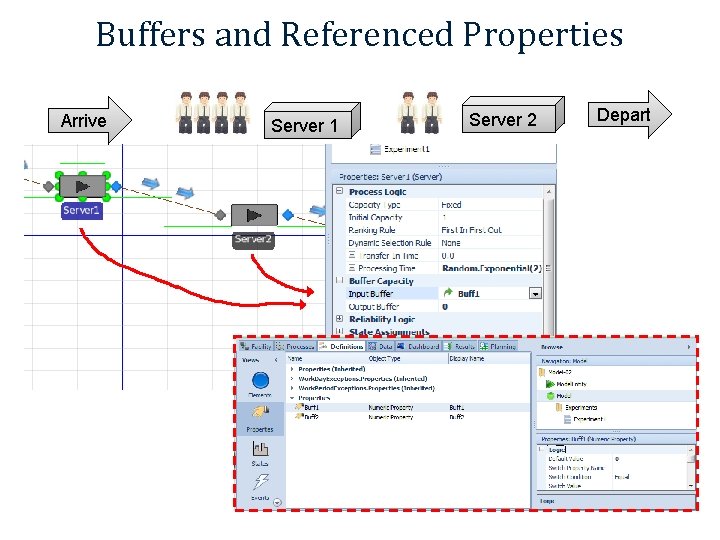
Buffers and Referenced Properties Arrive Server 1 Server 2 Depart
Buffers and Referenced Properties Arrive Server 1 Server 2 Depart
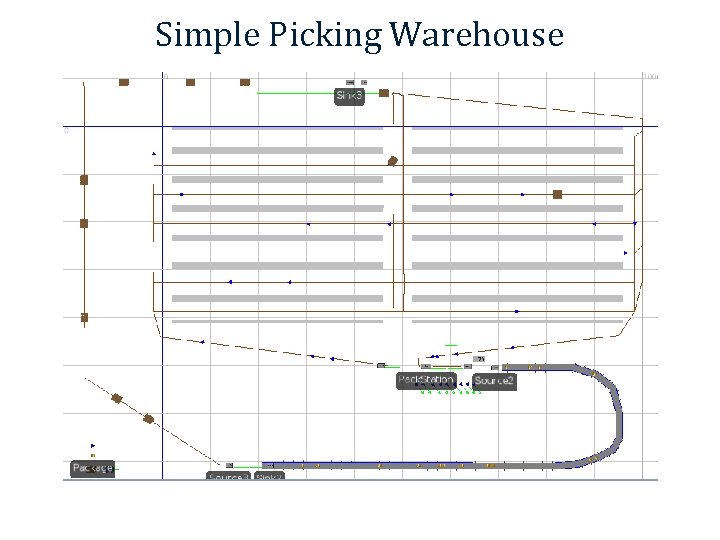
Simple Picking Warehouse
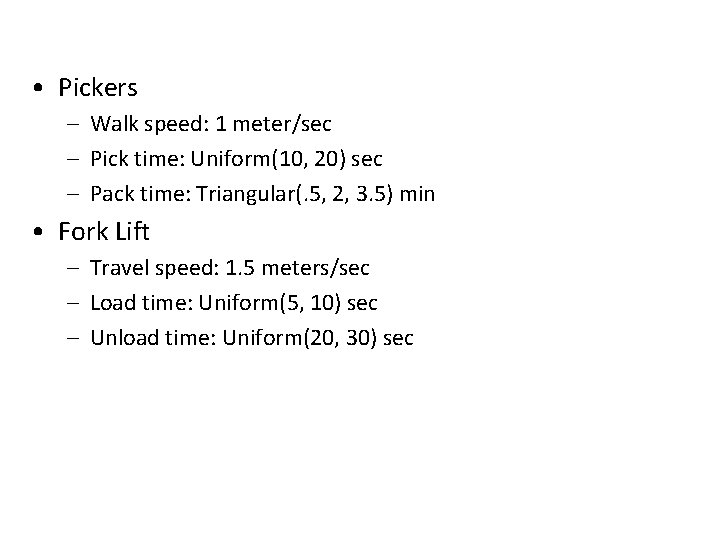
• Pickers – Walk speed: 1 meter/sec – Pick time: Uniform(10, 20) sec – Pack time: Triangular(. 5, 2, 3. 5) min • Fork Lift – Travel speed: 1. 5 meters/sec – Load time: Uniform(5, 10) sec – Unload time: Uniform(20, 30) sec
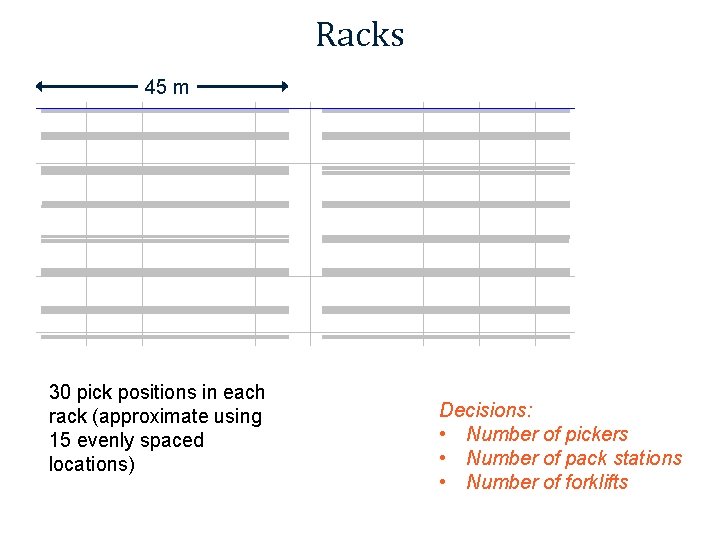
Racks 45 m 30 pick positions in each rack (approximate using 15 evenly spaced locations) Decisions: • Number of pickers • Number of pack stations • Number of forklifts