
ModelBased Engineering Environment for ModelBased Systems Engineering Christopher
Model-Based Engineering Environment for Model-Based Systems Engineering Christopher L Delp Jet Propulsion Laboratory, California Institute of Technology © 2014 California Institute of Technology. Government sponsorship acknowledged.
Outline • • • Background Architectural Drivers Concepts for MBEE Realization of MBEE Concepts Architectural Trades Technology Trades
JPL MODEL BASED ENGINEERING
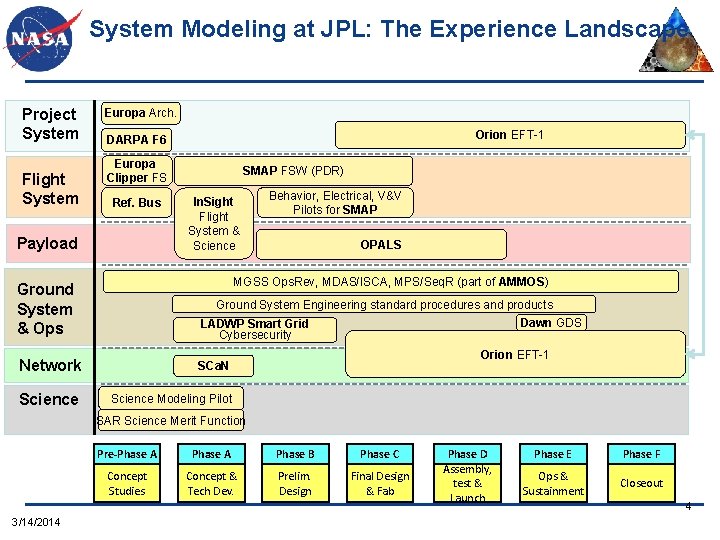
System Modeling at JPL: The Experience Landscape Project System Flight System Europa Arch. Orion EFT-1 DARPA F 6 Europa Clipper FS Ref. Bus Payload SMAP FSW (PDR) In. Sight Flight System & Science Behavior, Electrical, V&V Pilots for SMAP OPALS MGSS Ops. Rev, MDAS/ISCA, MPS/Seq. R (part of AMMOS) Ground System & Ops LADWP Smart Grid Cybersecurity Network SCa. N Science Modeling Pilot Ground System Engineering standard procedures and products Dawn GDS Orion EFT-1 SAR Science Merit Function 3/14/2014 Pre-Phase A Phase B Phase C Concept Studies Concept & Tech Dev. Prelim. Design Final Design & Fab Phase D Assembly, test & Launch Phase E Phase F Ops & Sustainment Closeout 4
ARCHITECTURE DRIVERS
Approach for Assessing Adoption Barriers • Sources of Data – Practitioner Feedback – Practitioner Customer Feedback • Technique – Formal Interviews – Practitioner Community
Customers of Systems Engineering Products • SEs cannot radically change their existing work products • MBSE must only improve the quality of these products • MBSE must not burden consumers of SE products without providing substantial technical and/or economic value
Challenges for SE Practitioners using MBSE Ø Broad consensus behind MBSE Ø Less consensus on what it is or how to do it Ø MBSE Challenges for SEs Ø not used to working in collaborative integrated environment Ø not used to formal version control of SE artifacts Ø Not used to explicitly cross-referencing items representing modeled elements of the system. Ø Challenges for SE practitioners describing systems Ø Not used to using languages or formal vocabulary for describing systems Ø Not used to having explicit representations of systems beyond requirements and design review packages Ø Challenges for SE practitioners analyzing systems Ø Not used to formal analysis at level of system Ø Several areas of analysis are not yet clearly defined for SEs Ø Challenges for SE practitioners communicating about systems Ø Complex options for visualization Ø Difficulty with flexible yet accurate visualizations
Challenges with state of the practice MBSE • Practices – Language standards not flexible enough to accommodate range of visualization • Apps and Tools – Tools do not provide efficient communication mechanisms – Tools lack fast simple collaboration capabilities – Lack of interoperability still an enormous challenge – Lack of web-based access still a challenge
MBEE CONCEPTS
Foundation of SE Practices • System Description – Complete and correct – Mutually correspondent • System Analysis – Focused around requirements – System level – Focused on answering questions about the system • System Communication – Simple and clear – Effective – Accurate and precise
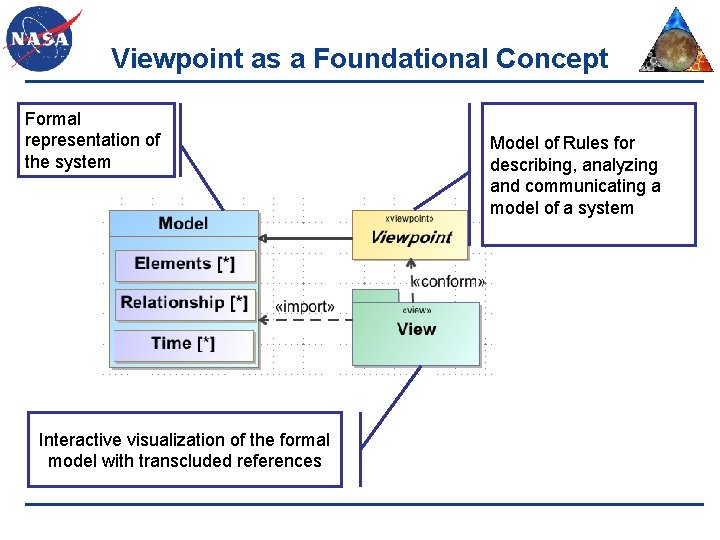
Viewpoint as a Foundational Concept Formal representation of the system Interactive visualization of the formal model with transcluded references Model of Rules for describing, analyzing and communicating a model of a system
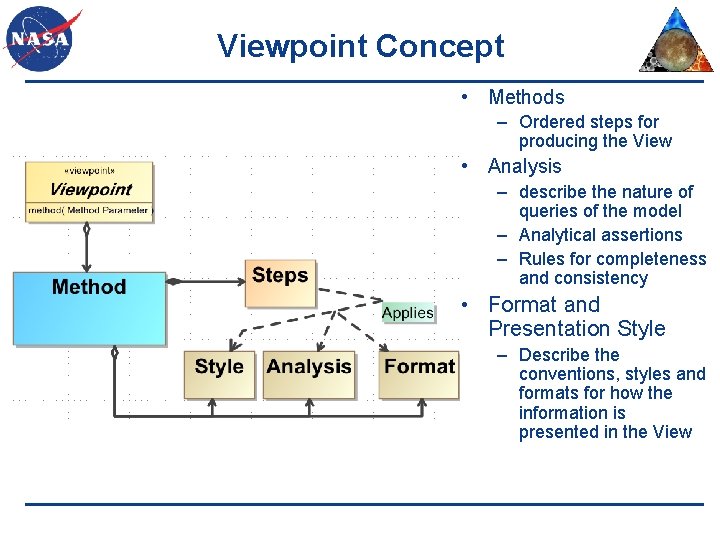
Viewpoint Concept • Methods – Ordered steps for producing the View • Analysis – describe the nature of queries of the model – Analytical assertions – Rules for completeness and consistency • Format and Presentation Style – Describe the conventions, styles and formats for how the information is presented in the View
Functional Qualities • • • Collaboration – Large engineering teams working across the models and products Managing Large Complex Models – order of millions of elements – Complex reuse – Variations and trades – Managing propagation of changes – Managing system configuration Integrity - Guaranteeing Completeness And Consistency – Rules-based checking and correcting of models and data Flexibility – The world will never be entirely model based – Elements considered outside the scope of models will always be a part of the business models live in Accountability – Who can do what with what Economical – Reusable – efficient
Terminology • Model Based Engineering Environment (MBEE) – An environment for describing, analyzing and communicating mutually correspondent engineering models.
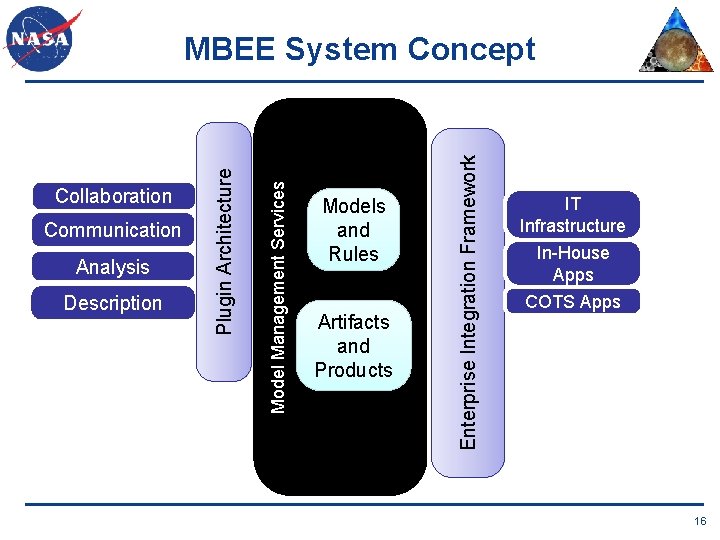
Analysis Description Models and Rules Artifacts and Products Enterprise Integration Framework Communication Model Management Services Collaboration Plugin Architecture MBEE System Concept IT Infrastructure In-House Apps COTS Apps 16
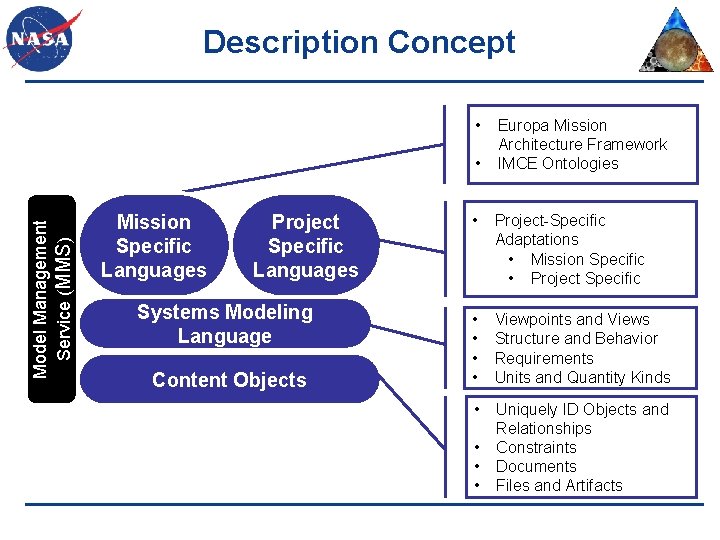
Description Concept • Model Management Service (MMS) • Mission Specific Languages Project Specific Languages Systems Modeling Language Content Objects Europa Mission Architecture Framework IMCE Ontologies • Project-Specific Adaptations • Mission Specific • Project Specific • • Viewpoints and Views Structure and Behavior Requirements Units and Quantity Kinds • Uniquely ID Objects and Relationships Constraints Documents Files and Artifacts • • •
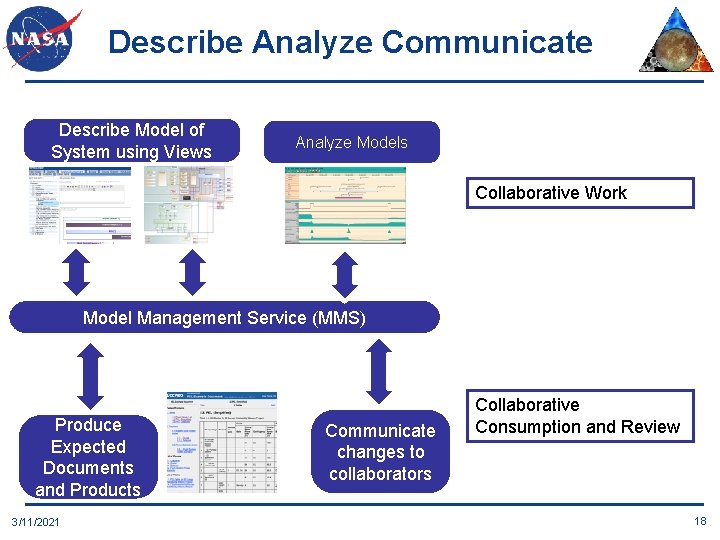
Describe Analyze Communicate Describe Model of System using Views Analyze Models Collaborative Work Model Management Service (MMS) Produce Expected Documents and Products 3/11/2021 Communicate changes to collaborators Collaborative Consumption and Review 18
MBEE REALIZATION
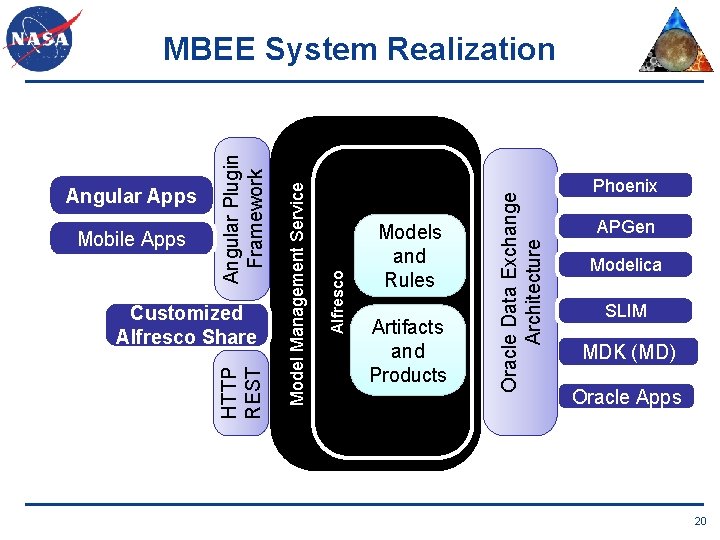
Models and Rules Artifacts and Products Oracle Data Exchange Architecture HTTP REST Customized Alfresco Share Alfresco Mobile Apps Model Management Service Angular Apps Angular Plugin Framework MBEE System Realization Phoenix APGen Modelica SLIM MDK (MD) Oracle Apps 20
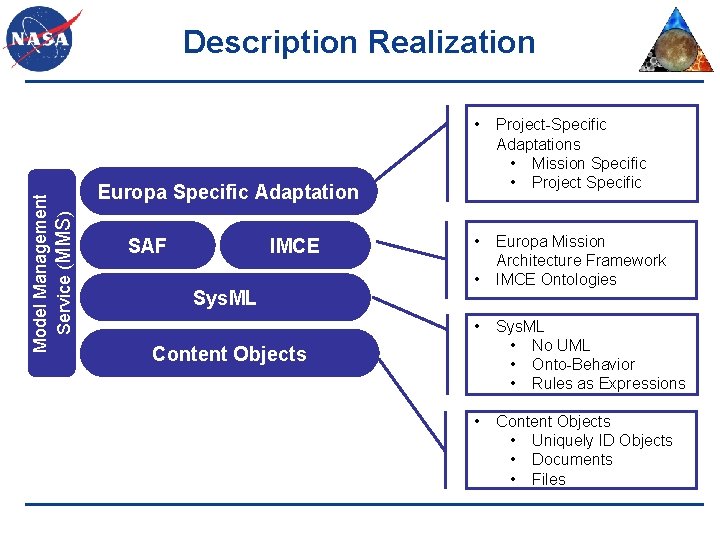
Model Management Service (MMS) Description Realization • Project-Specific Adaptations • Mission Specific • Project Specific • Europa Mission Architecture Framework IMCE Ontologies Europa Specific Adaptation SAF IMCE Sys. ML • • Sys. ML • No UML • Onto-Behavior • Rules as Expressions • Content Objects • Uniquely ID Objects • Documents • Files Content Objects
TECHNOLOGY ALTERNATIVES
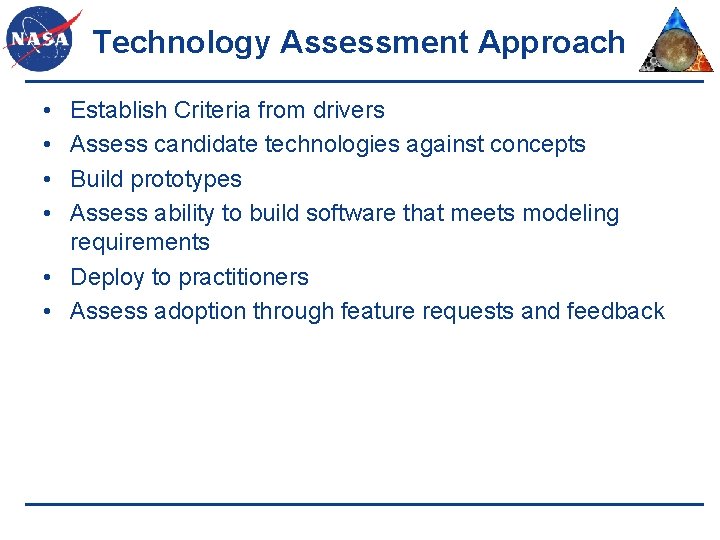
Technology Assessment Approach • • Establish Criteria from drivers Assess candidate technologies against concepts Build prototypes Assess ability to build software that meets modeling requirements • Deploy to practitioners • Assess adoption through feature requests and feedback
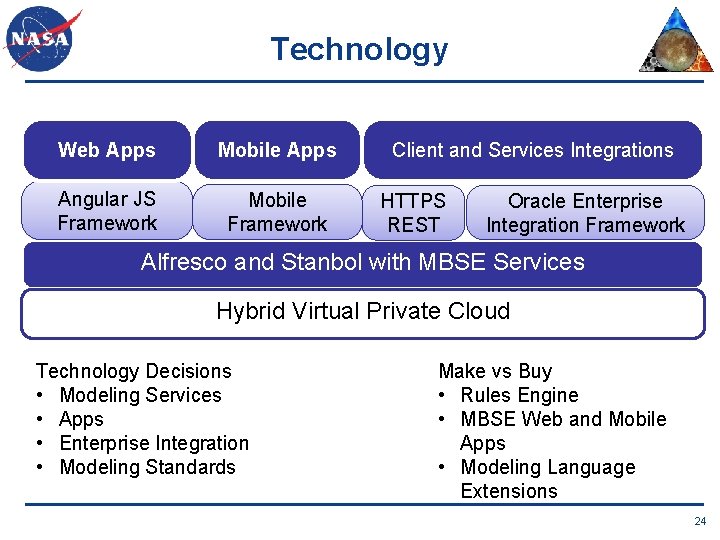
Technology Web Apps Mobile Apps Angular JS Framework Mobile Framework Client and Services Integrations HTTPS REST Oracle Enterprise Integration Framework Alfresco and Stanbol with MBSE Services Hybrid Virtual Private Cloud Technology Decisions • Modeling Services • Apps • Enterprise Integration • Modeling Standards Make vs Buy • Rules Engine • MBSE Web and Mobile Apps • Modeling Language Extensions 24
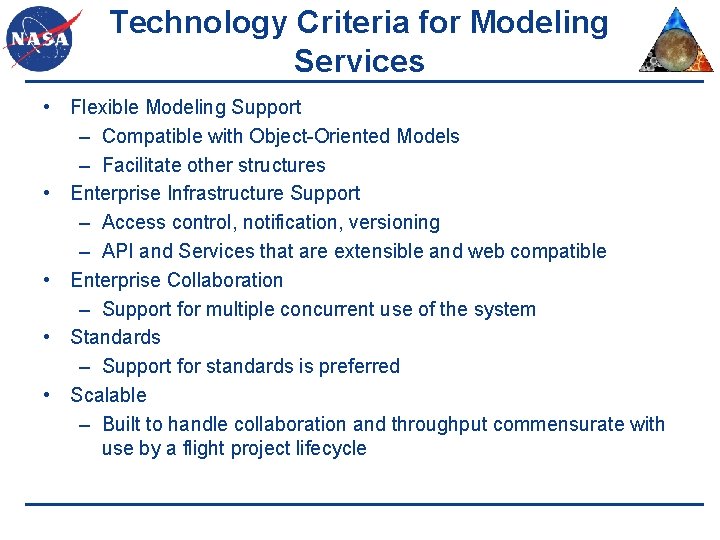
Technology Criteria for Modeling Services • Flexible Modeling Support – Compatible with Object-Oriented Models – Facilitate other structures • Enterprise Infrastructure Support – Access control, notification, versioning – API and Services that are extensible and web compatible • Enterprise Collaboration – Support for multiple concurrent use of the system • Standards – Support for standards is preferred • Scalable – Built to handle collaboration and throughput commensurate with use by a flight project lifecycle
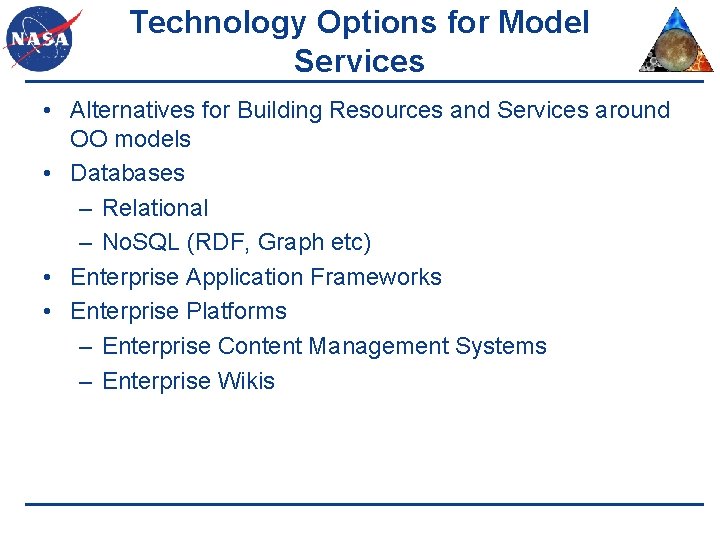
Technology Options for Model Services • Alternatives for Building Resources and Services around OO models • Databases – Relational – No. SQL (RDF, Graph etc) • Enterprise Application Frameworks • Enterprise Platforms – Enterprise Content Management Systems – Enterprise Wikis
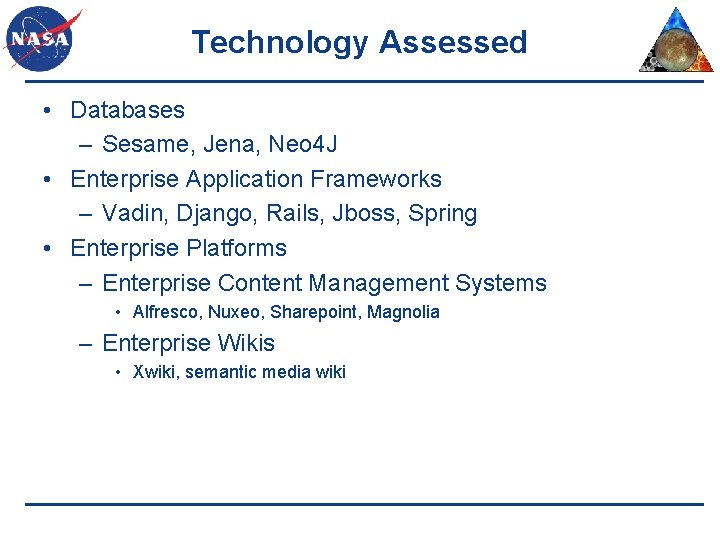
Technology Assessed • Databases – Sesame, Jena, Neo 4 J • Enterprise Application Frameworks – Vadin, Django, Rails, Jboss, Spring • Enterprise Platforms – Enterprise Content Management Systems • Alfresco, Nuxeo, Sharepoint, Magnolia – Enterprise Wikis • Xwiki, semantic media wiki
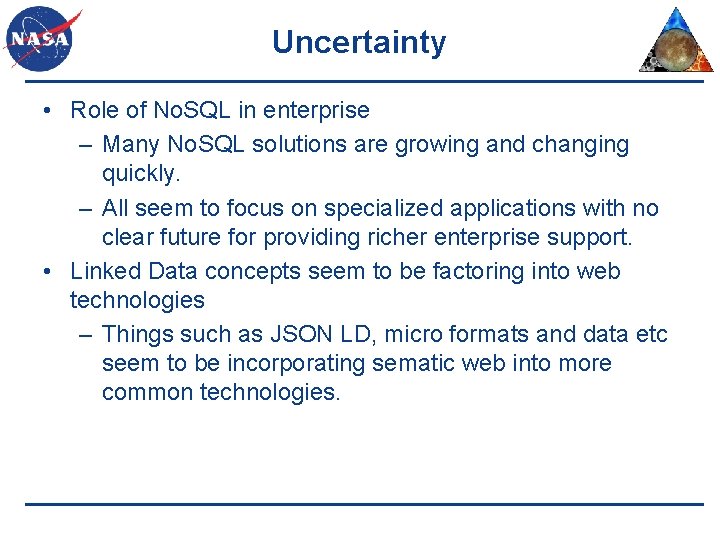
Uncertainty • Role of No. SQL in enterprise – Many No. SQL solutions are growing and changing quickly. – All seem to focus on specialized applications with no clear future for providing richer enterprise support. • Linked Data concepts seem to be factoring into web technologies – Things such as JSON LD, micro formats and data etc seem to be incorporating sematic web into more common technologies.
Analysis Results
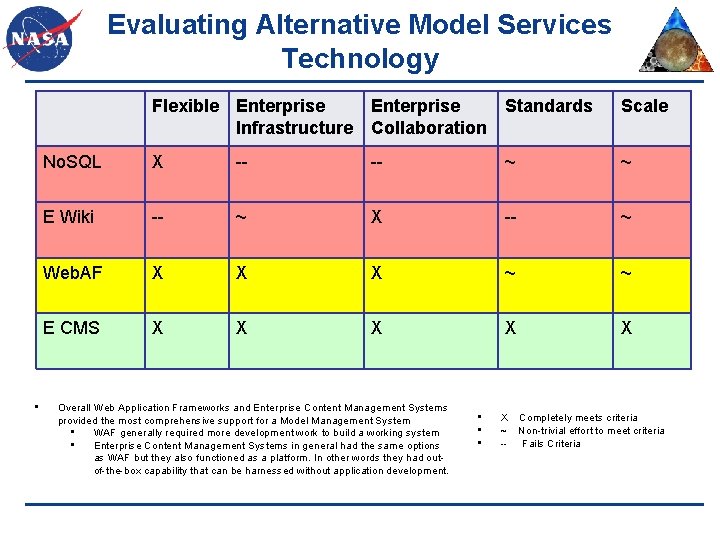
Evaluating Alternative Model Services Technology • Flexible Enterprise Infrastructure Enterprise Collaboration Standards Scale No. SQL X -- -- ~ ~ E Wiki -- ~ X -- ~ Web. AF X X X ~ ~ E CMS X X X Overall Web Application Frameworks and Enterprise Content Management Systems provided the most comprehensive support for a Model Management System • WAF generally required more development work to build a working system • Enterprise Content Management Systems in general had the same options as WAF but they also functioned as a platform. In other words they had outof-the-box capability that can be harnessed without application development. • • • X ~ -- Completely meets criteria Non-trivial effort to meet criteria Fails Criteria
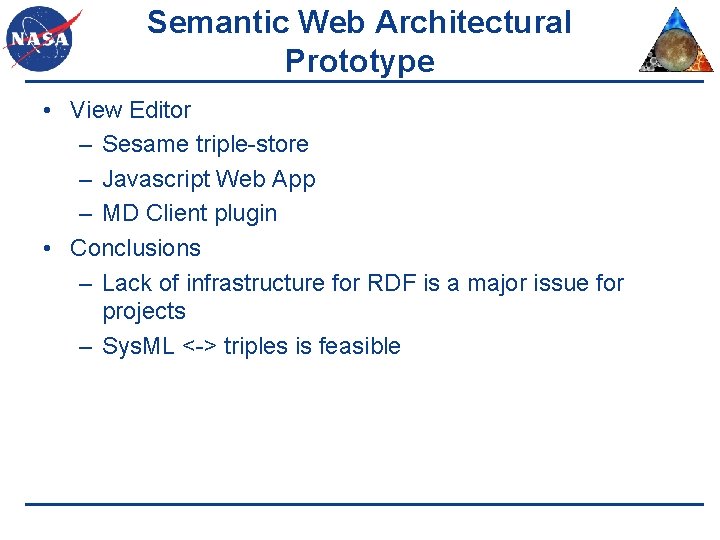
Semantic Web Architectural Prototype • View Editor – Sesame triple-store – Javascript Web App – MD Client plugin • Conclusions – Lack of infrastructure for RDF is a major issue for projects – Sys. ML <-> triples is feasible
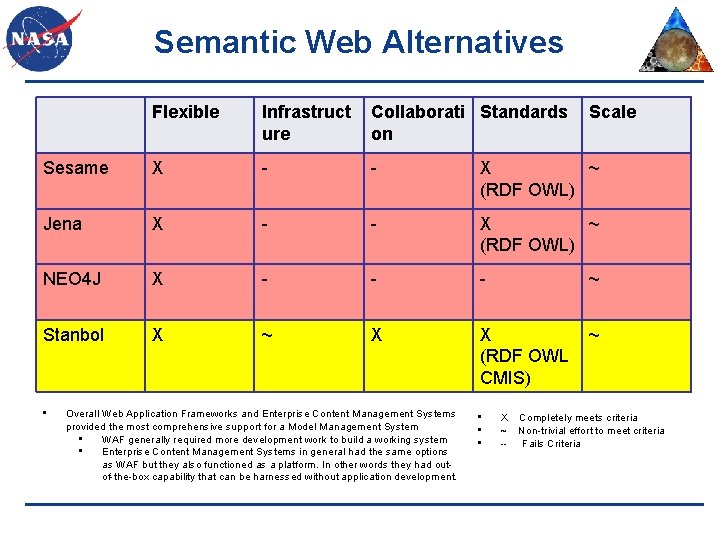
Semantic Web Alternatives Flexible Infrastruct ure Collaborati Standards on Sesame X - - X ~ (RDF OWL) Jena X - - X ~ (RDF OWL) NEO 4 J X - - - ~ Stanbol X ~ X X (RDF OWL CMIS) ~ • Overall Web Application Frameworks and Enterprise Content Management Systems provided the most comprehensive support for a Model Management System • WAF generally required more development work to build a working system • Enterprise Content Management Systems in general had the same options as WAF but they also functioned as a platform. In other words they had outof-the-box capability that can be harnessed without application development. • • • X ~ -- Scale Completely meets criteria Non-trivial effort to meet criteria Fails Criteria
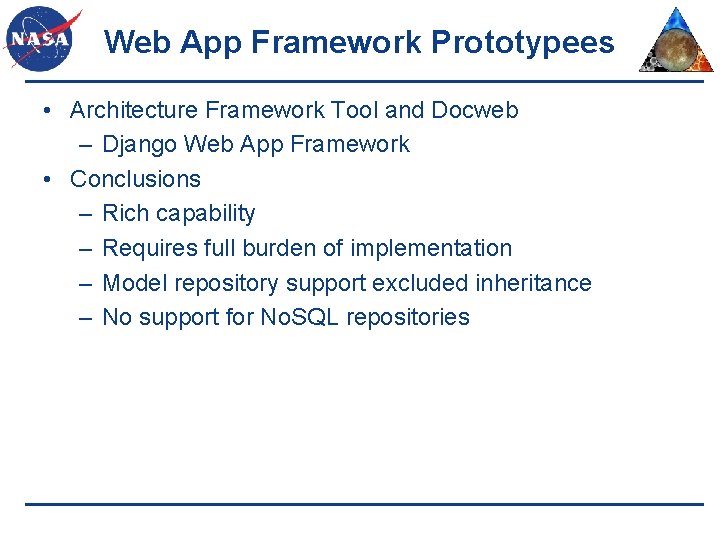
Web App Framework Prototypees • Architecture Framework Tool and Docweb – Django Web App Framework • Conclusions – Rich capability – Requires full burden of implementation – Model repository support excluded inheritance – No support for No. SQL repositories
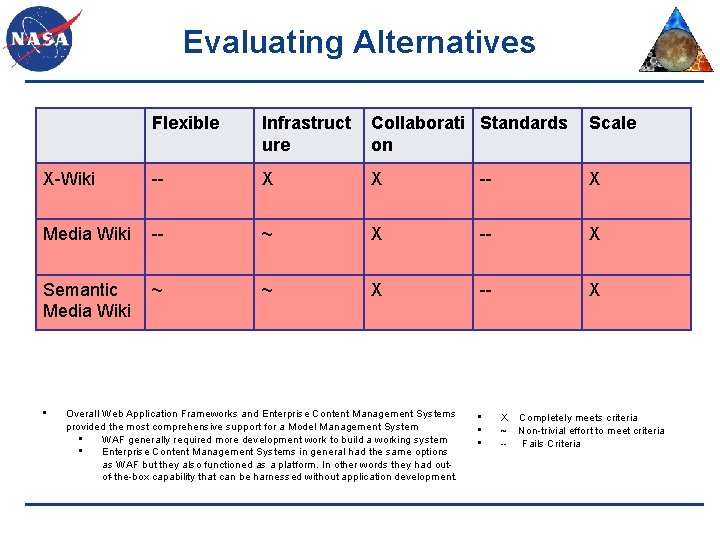
Evaluating Alternatives Flexible Infrastruct ure Collaborati Standards on Scale X-Wiki -- X X -- X Media Wiki -- ~ X -- X Semantic Media Wiki ~ ~ X -- X • Overall Web Application Frameworks and Enterprise Content Management Systems provided the most comprehensive support for a Model Management System • WAF generally required more development work to build a working system • Enterprise Content Management Systems in general had the same options as WAF but they also functioned as a platform. In other words they had outof-the-box capability that can be harnessed without application development. • • • X ~ -- Completely meets criteria Non-trivial effort to meet criteria Fails Criteria
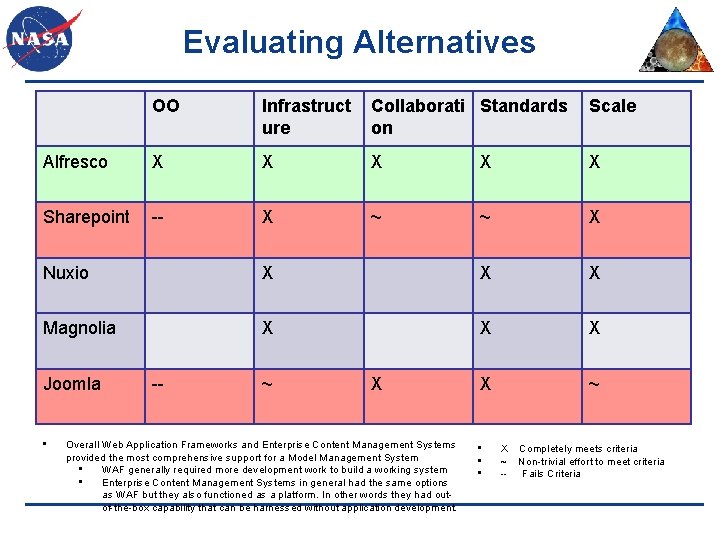
Evaluating Alternatives OO Infrastruct ure Collaborati Standards on Scale Alfresco X X X Sharepoint -- X ~ ~ X Nuxio X X X Magnolia X X ~ Joomla • -- ~ X Overall Web Application Frameworks and Enterprise Content Management Systems provided the most comprehensive support for a Model Management System • WAF generally required more development work to build a working system • Enterprise Content Management Systems in general had the same options as WAF but they also functioned as a platform. In other words they had outof-the-box capability that can be harnessed without application development. • • • X ~ -- Completely meets criteria Non-trivial effort to meet criteria Fails Criteria
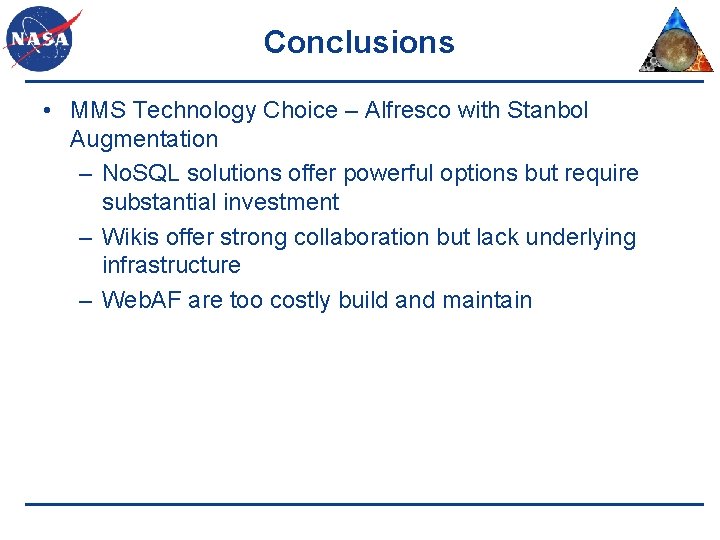
Conclusions • MMS Technology Choice – Alfresco with Stanbol Augmentation – No. SQL solutions offer powerful options but require substantial investment – Wikis offer strong collaboration but lack underlying infrastructure – Web. AF are too costly build and maintain
Backup
EXAMPLES
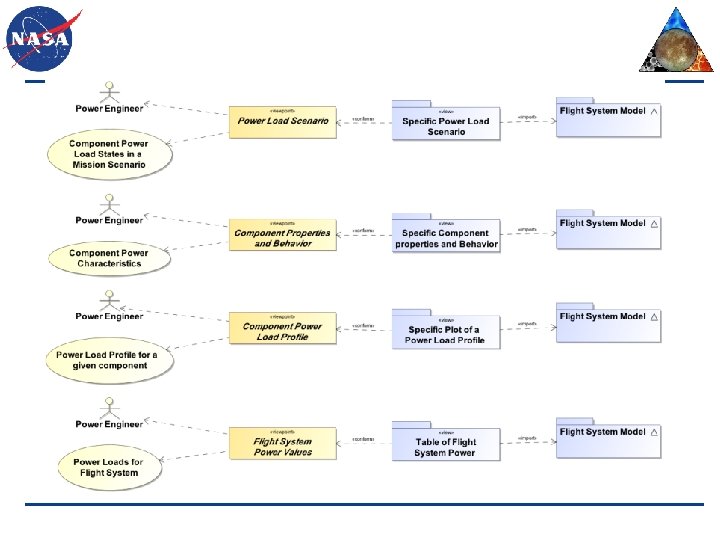
Viewpoint and View
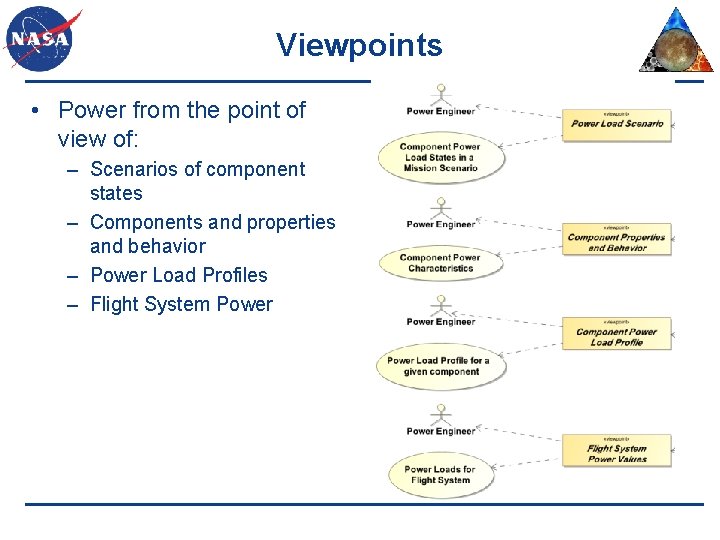
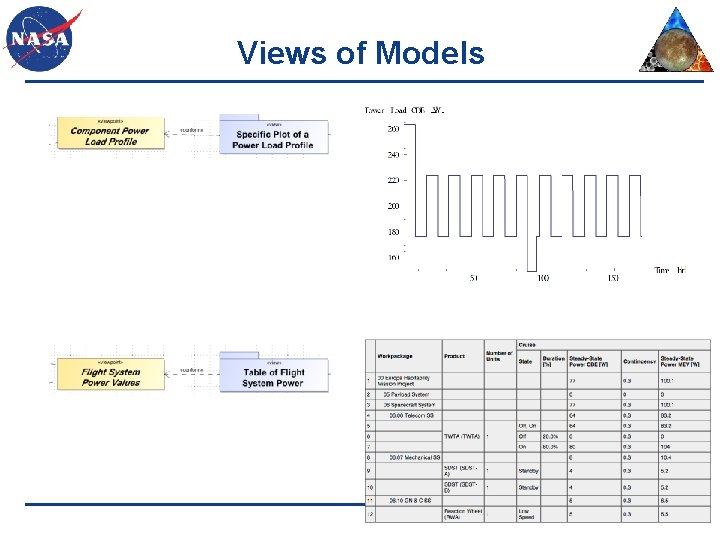
Viewpoints • Power from the point of view of: – Scenarios of component states – Components and properties and behavior – Power Load Profiles – Flight System Power
Views of Models
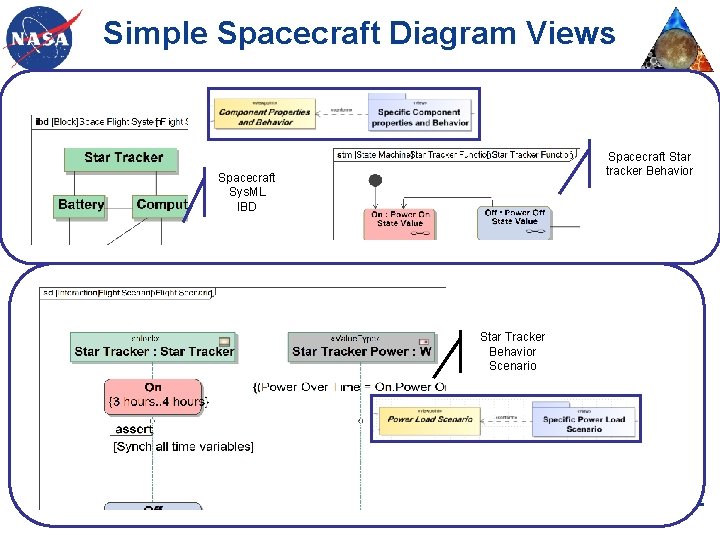
Simple Spacecraft Diagram Views Spacecraft Star tracker Behavior Spacecraft Sys. ML IBD Star Tracker Behavior Scenario
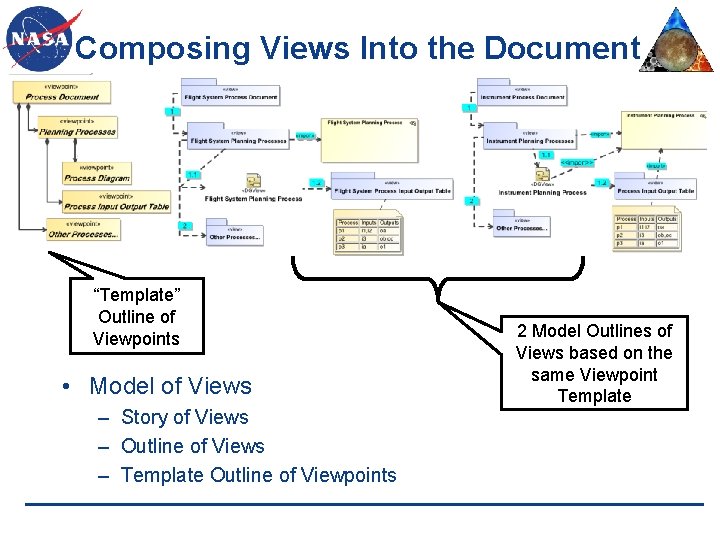
Composing Views Into the Document “Template” Outline of Viewpoints • Model of Views – Story of Views – Outline of Views – Template Outline of Viewpoints 2 Model Outlines of Views based on the same Viewpoint Template
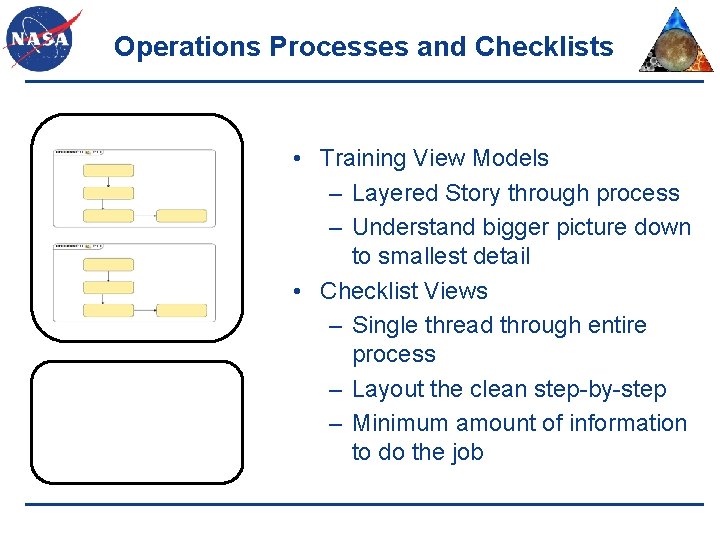
Operations Processes and Checklists Training Document Operational Checklist 1. Step 1 2. Step 2 1. Sub Step 1 2. Sub Step 2 • Training View Models – Layered Story through process – Understand bigger picture down to smallest detail • Checklist Views – Single thread through entire process – Layout the clean step-by-step – Minimum amount of information to do the job
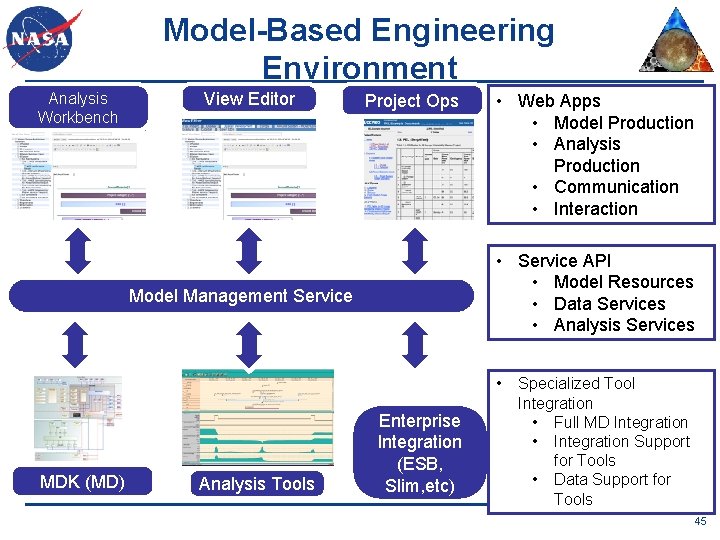
Model-Based Engineering Environment Analysis Workbench View Editor Project Ops • Web Apps • Model Production • Analysis Production • Communication • Interaction • Service API • Model Resources • Data Services • Analysis Services Model Management Service • MDK (MD) Analysis Tools Enterprise Integration (ESB, Slim, etc) Specialized Tool Integration • Full MD Integration • Integration Support for Tools • Data Support for Tools 45
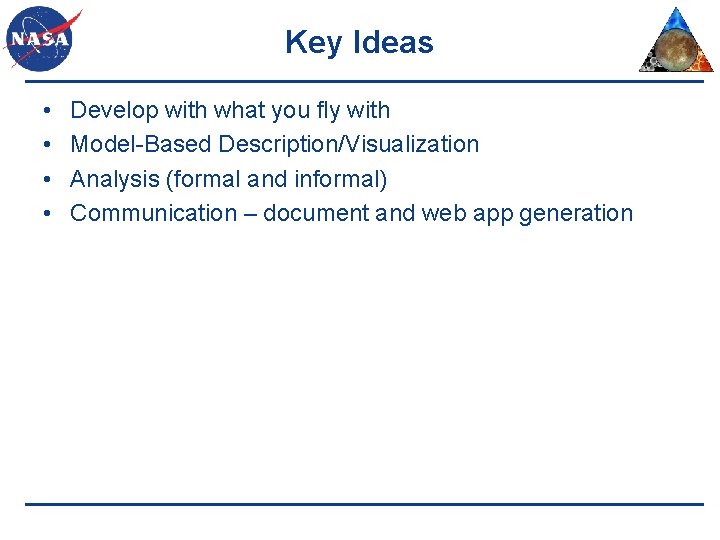
Key Ideas • • Develop with what you fly with Model-Based Description/Visualization Analysis (formal and informal) Communication – document and web app generation
Roadmap
- Slides: 47