
Model Organisms Jennifer Slade B Sc Hon M
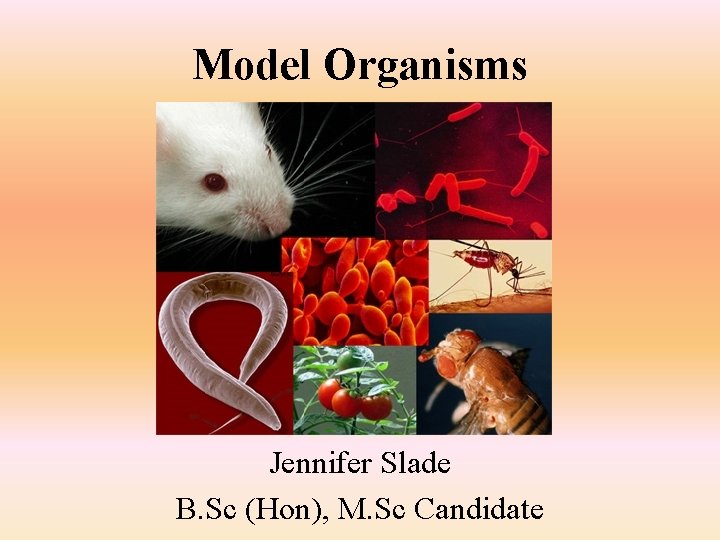
Model Organisms Jennifer Slade B. Sc (Hon), M. Sc Candidate
Outline • Model organism – Definition – Current models – Characterisitics of a “good” model organism? • Drosophila as a model organism – Characteristics – Uses in Research • Developmental disorders – Conserved genes, similar functions – Conserved genes, different functions • Neurological disorders – – Triple-repeat diseases Parkinson disease Familial Alzheimer disease Fragile X • Cancer – RTK-RAS-MAPK signaling – Targets of Rapamycin pathway – Cell cycle control – Tumour metastasis • Limitations of fly models • Summary
Definition of Model Organism • Specific species or organism • Extensively studied in research laboratories • Advance our understanding of – Cellular function – Development – Disease • Ability to apply new knowledge to other organisms
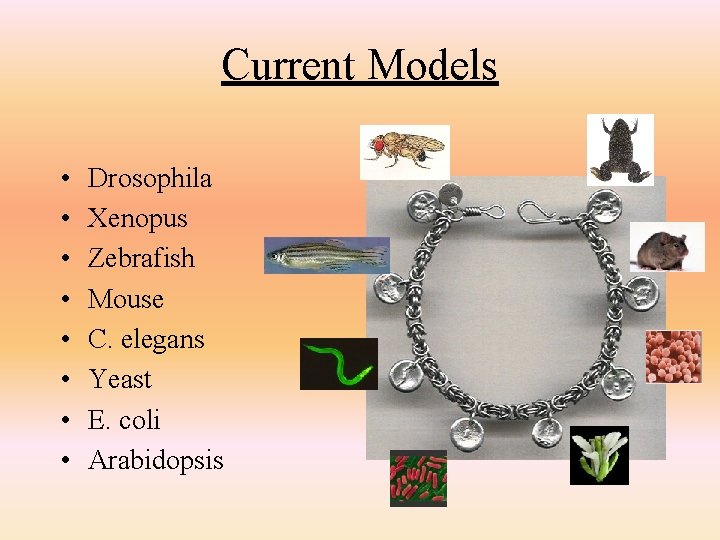
Current Models • • Drosophila Xenopus Zebrafish Mouse C. elegans Yeast E. coli Arabidopsis
Characteristics of a “Good” Model Organism • Think individually – Make jot notes – 5 to 10 minutes • Share in groups – Get in groups of 4 – Discuss various characteristics • Share with the class – One person from each group write one characteristic discussed on board – Explain why characteristic is beneficial
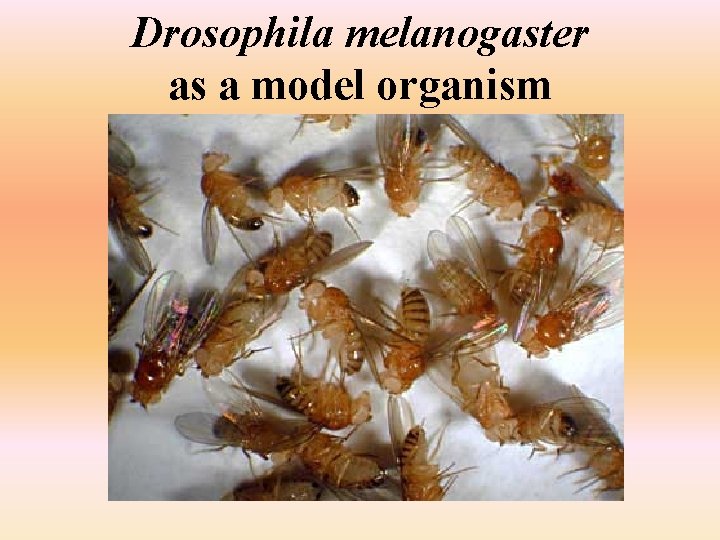
Drosophila melanogaster as a model organism
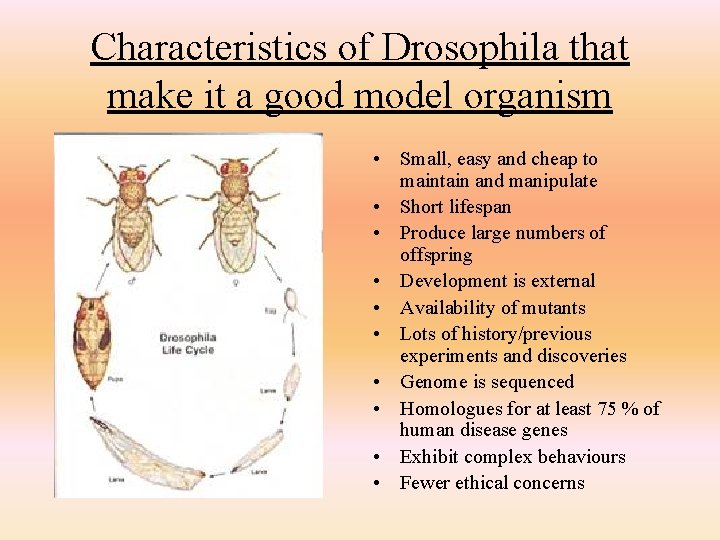
Characteristics of Drosophila that make it a good model organism • Small, easy and cheap to maintain and manipulate • Short lifespan • Produce large numbers of offspring • Development is external • Availability of mutants • Lots of history/previous experiments and discoveries • Genome is sequenced • Homologues for at least 75 % of human disease genes • Exhibit complex behaviours • Fewer ethical concerns
Drosophila in Research • Early research aided in the understanding of development – Made first link between chromosome and phenotype – Identified various genes and mechanisms of development • Current research focuses on the study of human disease – Developmental disorders – Neurological disorders – Cancer
Technique: Second site modifier screen • Begin with a fly posessing a mutant phenotype • Create random mutations that might effect this phenotype in this genetic background – Via radiation or feeding of a mutagen – Observe offspring or “grandoffspring” for either less or much more severe phenotype • Some might be revertants of the original gene • Others might be mutants for upstream or downstream components of the pathway(s) that lead to the original phenotype • Rarely, there might be mutants of a gene with a compensational function.
Human Disease : Developmental Disorders • Dysmorphologies – Diseases resulting in morphological defects – Largest, most prevalent human genetic disorders • Result from mutations in genes that control important steps in development, such as: – Transcription factors – Proteins involved in signal transduction • Two broad categories: – Conserved genes with orthologous function – Conserved genes having different functions
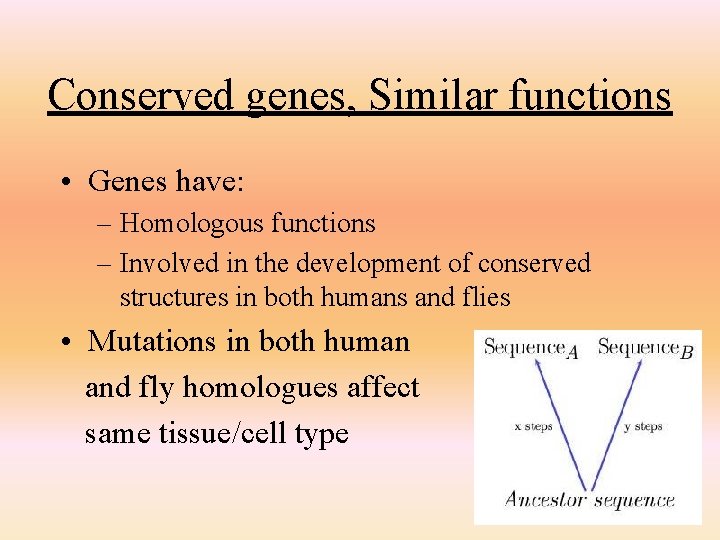
Conserved genes, Similar functions • Genes have: – Homologous functions – Involved in the development of conserved structures in both humans and flies • Mutations in both human and fly homologues affect same tissue/cell type
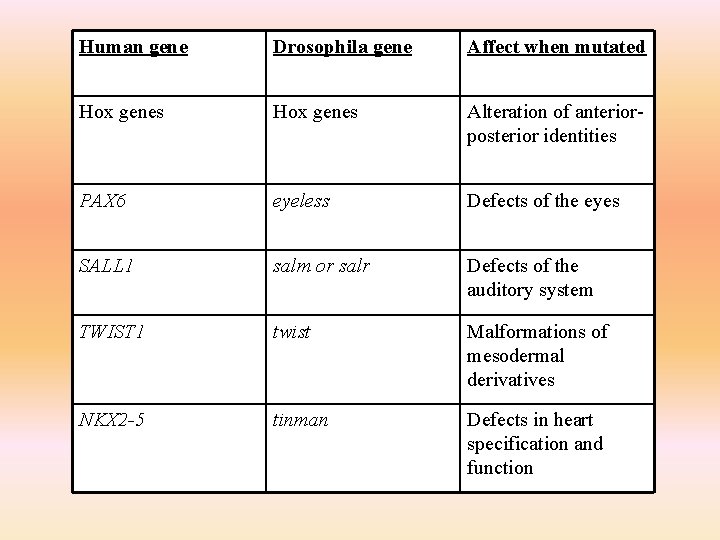
Human gene Drosophila gene Affect when mutated Hox genes Alteration of anteriorposterior identities PAX 6 eyeless Defects of the eyes SALL 1 salm or salr Defects of the auditory system TWIST 1 twist Malformations of mesodermal derivatives NKX 2 -5 tinman Defects in heart specification and function
Conserved genes, Similar functions • Regulators of expression of effector genes • Sometimes effects on the transcription of target genes differ between fly and vertebrate – Flies: twist activates FGFR (Fibroblast Growth Factor Receptor) – Mammals: TWIST 1 negatively regulates Fgfr 2 • Hox genes differ in their detailed nature of target recognition – Overall proteins function in a homologous manner to determine cell fate • Recognition of DNA binding sites on target genes remains evolutionarily conserved • Enhancer sequence containing DNA binding site may have changed slightly due to natural selection
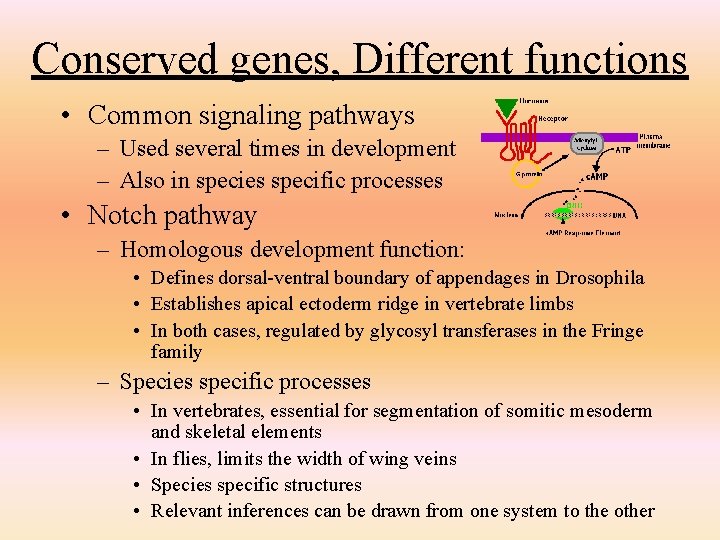
Conserved genes, Different functions • Common signaling pathways – Used several times in development – Also in species specific processes • Notch pathway – Homologous development function: • Defines dorsal-ventral boundary of appendages in Drosophila • Establishes apical ectoderm ridge in vertebrate limbs • In both cases, regulated by glycosyl transferases in the Fringe family – Species specific processes • In vertebrates, essential for segmentation of somitic mesoderm and skeletal elements • In flies, limits the width of wing veins • Species specific structures • Relevant inferences can be drawn from one system to the other
Conserved genes, Different function • Discovery of Delta in Drosophila – Encodes a cell-surface ligand for the notch receptor – Mutated in Drosophila – thickens the wings – Loss of function in vertebrate homologue – related spinal malformations • Served as a guide to discover other human homologues of Delta – JAG 1 (jagged 1) and DLL 3 (delta-like 3) – When mutated, see similar spinal abnormailites observed in human diseases • Alagille syndrome and spondylocostal dysotosis • Advantage of fly model: – Ability to identify and encourage further identification of genes associated with similar disease phenotypes
Human disease: Neurological disorders • Disorders that affect: – Central nervous system (brain, brainstem and cerebellum) – Peripheral nervous system (Peripheral nerves – cranial nerves) – Autonomic nervous system (Parts of which are located both in the central and peripheral nervous systems) • Four types currently studied in Drosophila: – – Triple-repeat diseases Parkinson’s Disease Familial Alzheimer disease Fragile X syndrome
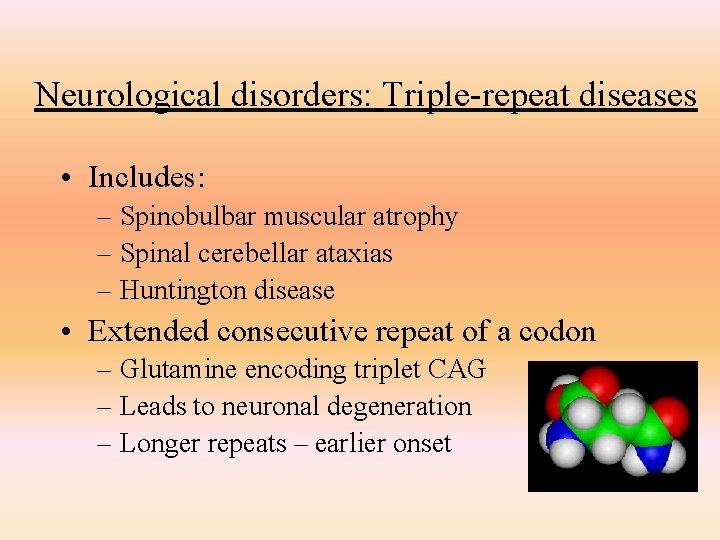
Neurological disorders: Triple-repeat diseases • Includes: – Spinobulbar muscular atrophy – Spinal cerebellar ataxias – Huntington disease • Extended consecutive repeat of a codon – Glutamine encoding triplet CAG – Leads to neuronal degeneration – Longer repeats – earlier onset
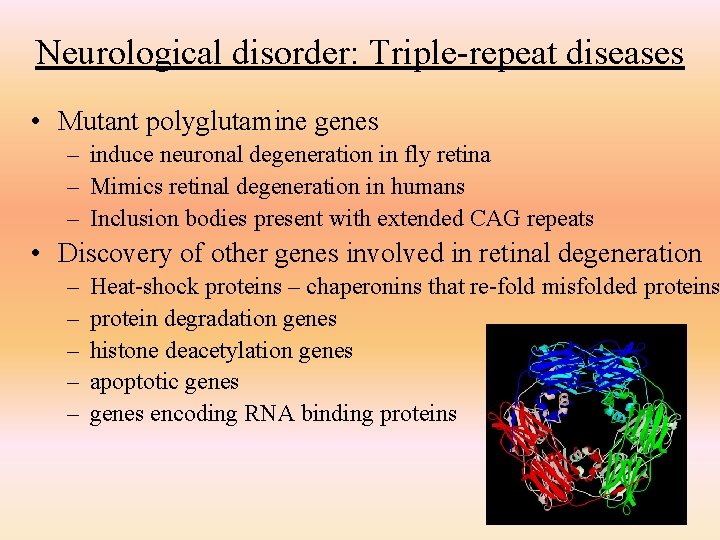
Neurological disorder: Triple-repeat diseases • Mutant polyglutamine genes – induce neuronal degeneration in fly retina – Mimics retinal degeneration in humans – Inclusion bodies present with extended CAG repeats • Discovery of other genes involved in retinal degeneration – – – Heat-shock proteins – chaperonins that re-fold misfolded proteins protein degradation genes histone deacetylation genes apoptotic genes encoding RNA binding proteins
Neurological disorder: Triple-repeat diseases • Some of these genes may regulate/clear inclusion bodies – Expression of HSP 70 in vertebrates – Expression of histone deacetlyase inhibitors in mice – Reduce effects of overexpressing expanded polyglutamine proteins. • Advantage of fly model: – Can validate activity of small molecule candidates to be used as therapeutic agents
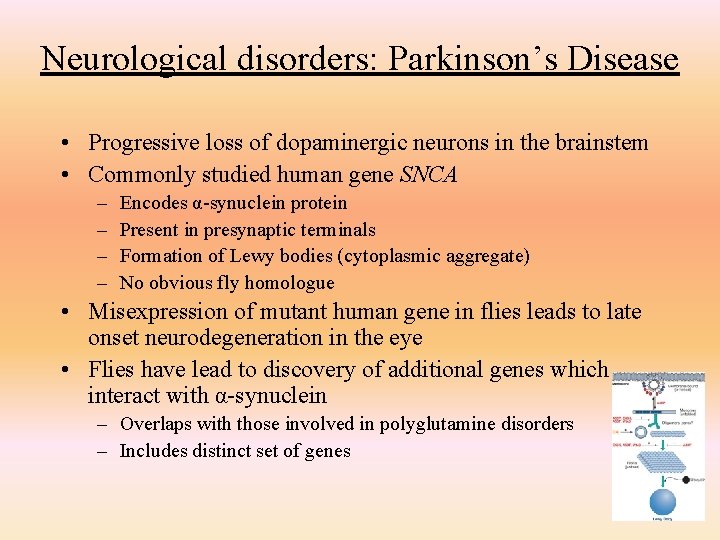
Neurological disorders: Parkinson’s Disease • Progressive loss of dopaminergic neurons in the brainstem • Commonly studied human gene SNCA – – Encodes α-synuclein protein Present in presynaptic terminals Formation of Lewy bodies (cytoplasmic aggregate) No obvious fly homologue • Misexpression of mutant human gene in flies leads to late onset neurodegeneration in the eye • Flies have lead to discovery of additional genes which interact with α-synuclein – Overlaps with those involved in polyglutamine disorders – Includes distinct set of genes
Neurological disorders: Parkinson’s Disease • Ubiquitin pathway – accumulation of α-synuclein • Parkinson’s Disease caused by mutations in PARK 2 gene – Encodes parkin, an e 3 -ligase • Attaches ubiquitin to lysines of proteins to be destroyed – – When not mutated, forms a complex with α-synuclein Mutation of fly homologue, park: Degenerates flight muscles Makes the fly more sensitive to free radicals • Similar to sensitivity of dopaminergic neurons to toxin induced degeneration • Overexpression of park rescues effects of α-synuclein in the eye
Neurological Disorders: Familial Alzheimer disease (FAD) • Responsible genes well-studied in flies – Presenilin genes – Transmembrane proteases – Cleaves β-amyloid (APP) • Transmembrane protein in extracellular plaques found in brains of FAD patients – Normal function of APP: • Mediates cell-surface signaling • Functions as a receptor for kinesin-dependent transport of specific cargo molecules along axons • Binds Cu 2+ and reduces its neurotoxicity
Neurological Disorders: Familial Alzheimer disease (FAD) • Mutations in human APP causes FAD – Unclear which function, when disrupted, is the one responsible for development of FAD • Mutant Presenilin genes lead to accumulation of APP proteins in plaques • Drosophila homologue of APP (Appl) leads to premature death when mutated
Neurological disorders: Fragile X syndrome • Mental retardation, associated with autism • Expansion of non-coding CGG repeat • Loss of function FMR 1 (Fragile X mental retardation 1) gene – RNA binding protein – Negatively regulates translation of: • Genes that function at synapses for normal dendrite morphology • Mutant triple-repeat gene – Heterozygous carriers • Neuronal degeneration – Homozygous carriers • Do not express FMR 1 and suffer no neuronal degeneration, only mental retardation
Neurological Disorders: Fragile X syndrome • In the fly eye: – Expanded CGG causes neurodegeneration – Wildtype CGG numbers do not • Overexpression of other non-coding triplet, CAG also leads to neurodegenration – Suppressed by HSP 70 – Therefore triplet RNAs associated with aggregates acted upon by HSP 70 • As non-coding, neural degeneration phenotype could be mediated exclusively at RNA level
Human disease: Cancer • Abnormal growth of cells • Cancer in Drosophila – Short lived organism – Therefore does not naturally develop cancer manifested by lethal tumour overgrowth and metastasis • Genes that affect cell cycle control and epithelial integrity recovered and studied – Homolgous genes have important roles in formation and dispersion of tumours in humans
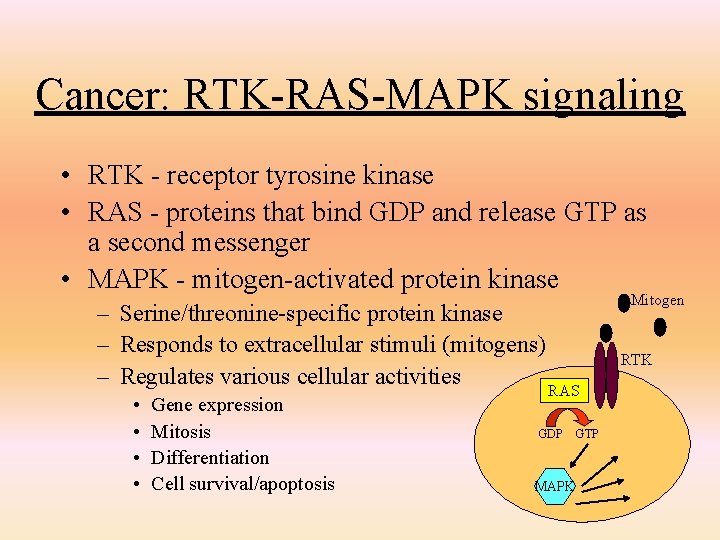
Cancer: RTK-RAS-MAPK signaling • RTK - receptor tyrosine kinase • RAS - proteins that bind GDP and release GTP as a second messenger • MAPK - mitogen-activated protein kinase – Serine/threonine-specific protein kinase – Responds to extracellular stimuli (mitogens) – Regulates various cellular activities RAS • • Gene expression Mitosis Differentiation Cell survival/apoptosis GDP MAPK GTP Mitogen RTK
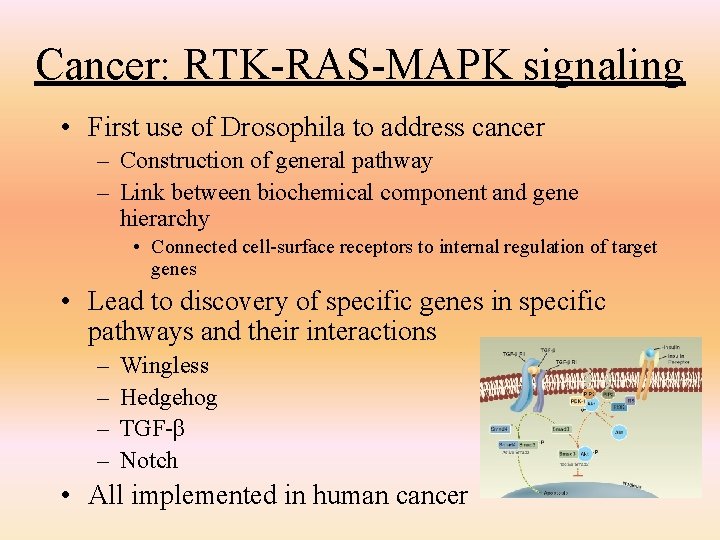
Cancer: RTK-RAS-MAPK signaling • First use of Drosophila to address cancer – Construction of general pathway – Link between biochemical component and gene hierarchy • Connected cell-surface receptors to internal regulation of target genes • Lead to discovery of specific genes in specific pathways and their interactions – – Wingless Hedgehog TGF-β Notch • All implemented in human cancer
Cancer: Target of Rapamycin (TOR) pathway • Excessive cell growth – Formation of benign tumours, such as in Tuberous sclerosis • Mutations in TSC 1 or TSC 2 – Form complex and act as GTPase protein – Inactivate RAS protein: RAS homologue enriched in brain (RHEB) • RHEB enhances TOR signaling – Enahnces protein synthesis – Inhibits autophagy – Insulin pathway inactivates TSC 1/2, thus activating TOR signaling – PTEN inactivates insulin signaling, thus activation TSC 1/2 and inactivating TOR • Mutations in PTEN activate insulin signaling, thus TOR • Leads to excess cell growth
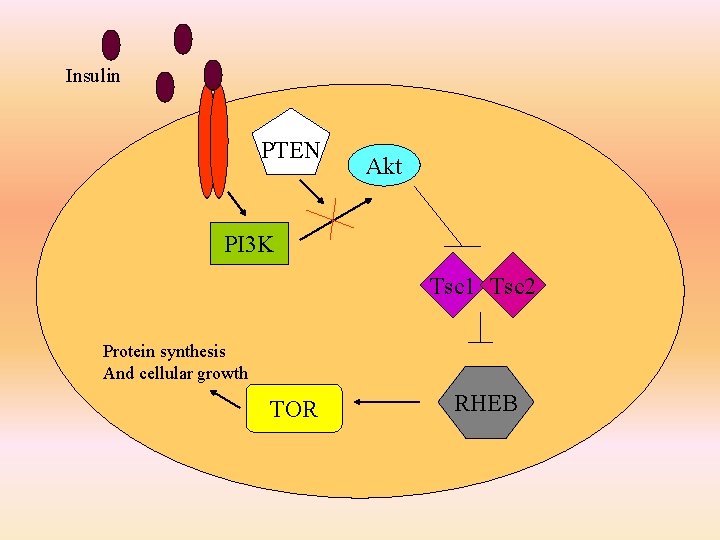
Insulin PTEN Akt PI 3 K Tsc 1 Tsc 2 Protein synthesis And cellular growth TOR RHEB
Cancer: Cell cycle control • Cancer sometimes caused by disruption of components at check points – Negatively regulate cell cycle under normal conditions • Drosophila homologues: – Cyclins, cyclin dependent kinases, E 2 F genes (enhance cell cycle progression) – CDKN 2 B (decapo), C 1 B 1 (kip) and retinoblastoma protein (Rb) (inhibit cell cycle progression) – P 53 –downstream, pro-apoptotic effector of E 2 F genes • Flies have one copy of these genes – Vertebrates often have several
Cancer: Cell Cycle Control • Searching for tumour suppressors in Drosophila leading to cellular growth (like PTEN) – Discovered previously unknown negative regulators of cell cycle: • Warts (WTS or LATS) • Salvadore (SAV) • Hippo • Motivated studies in mice and humans to confirm importance of new genes in tumourgenesis – LATS 1 mutant mice – tumour overgrowths (like fly) – Human renal and colon cancer cell lines – mutations in SAV homologue • Flies help clarify cell cycle control mechanisms and lead to identification of new genes which may prevent excessive cell proliferation and cancer
Cancer: Tumour metastasis • Not observed in wild-type flies • Instead, study genes involved in regulation of cell behaviours – Migration – Invasion of epithelial sheets • Show mechanistic similarities to processes involved in multistep spread of cancer cells • Normal cells can undergo programmed migrations, and then invasion of epithelial sheet – Two distinct steps
Cancer: Tumour metastasis • Screen to find genes involved in metastasis – Identified mutations in scribbled (scrib) • Maintains normal apical/basal cell polarity • Scrib mutants – overproliferation of cells – When have both • Mutated form of Drosophila RAS • A loss-of-function scrib – Cells break free and move to other locations – Migration also seen with notch mutations combined with scrib mutants – Like mammalian tumours, E-cadherin is downregulated • Adhesion molecule which would prevent metastasis • Invasive cancer thus results from distinct steps and separate processes which can be studied in Drosophila
Limitations of fly models • Some biological processes evolved in vertebrate lineage only – Genes involved in creating four-chambered heart – However, could study genes in specific steps of these processes • Smaller organism, such as yeast, might be preferred when studying cell-autonomous functions (ie: DNA repair) – Shorter generation time, smaller genome, large number of individuals produced • Ideal study of human disease might be: – Parallel analysis of gene at all relevant tiers • Cell autonoumous effects in yeast • Multicellular or inductive events mediated by gene in Drosophila • Accurate disease model and mutations of gene in mice
Summary • Benefits of Drosophila include: – Broad spectrum of genes related to human disease already discovered – Many successful techniques already developed – Already a powerful tool in study of developmental and neurological disorders, and cancer • Future Perpectives: – Identification of novel genes functioning in disease processes – Determination of genes contributing to complex disorders – Exploit the fly to answer already existing questions, and formulate new hypotheses • Drosophila is a most effective model: • More simplicity than vertebrate models • Greater complexity than yeast or bacteria models
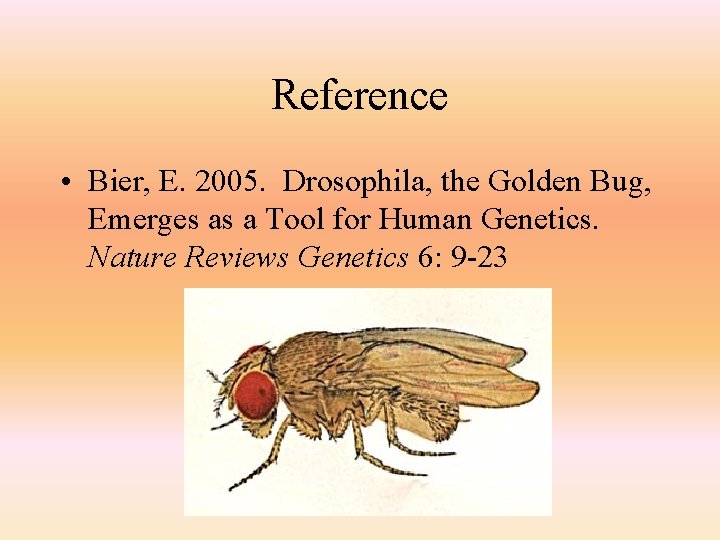
Reference • Bier, E. 2005. Drosophila, the Golden Bug, Emerges as a Tool for Human Genetics. Nature Reviews Genetics 6: 9 -23
- Slides: 37