
Model organism genetics and human disease With an

- Slides: 41
Model organism genetics and human disease With an emphasis on…. . APOYG!
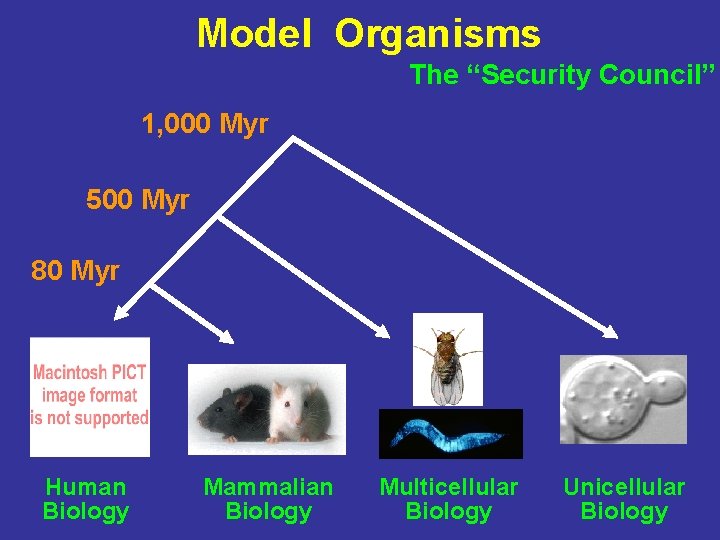
Model Organisms The “Security Council” 1, 000 Myr 500 Myr 80 Myr Human Biology Mammalian Biology Multicellular Biology Unicellular Biology
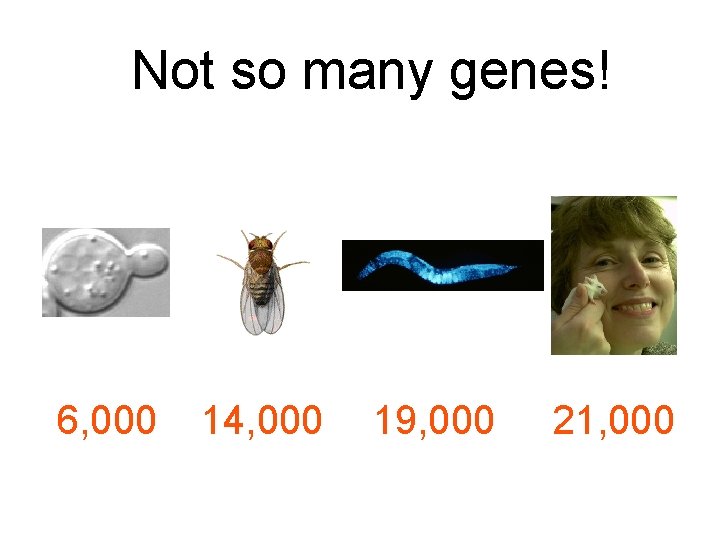
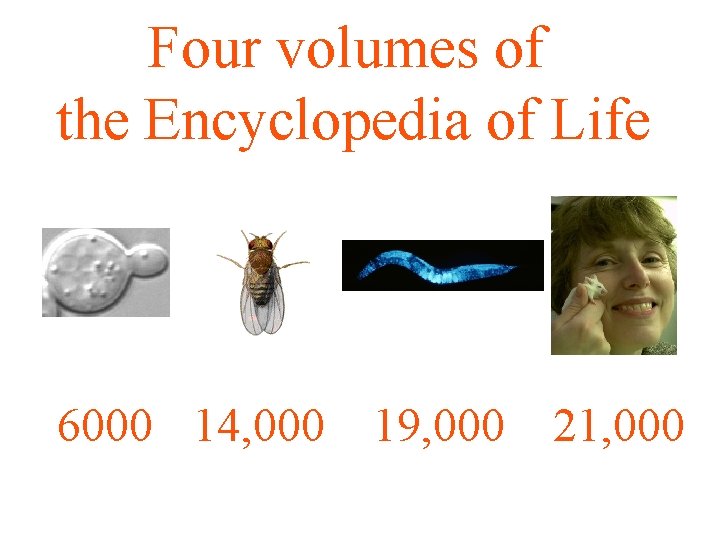
Not so many genes! 6, 000 14, 000 19, 000 21, 000
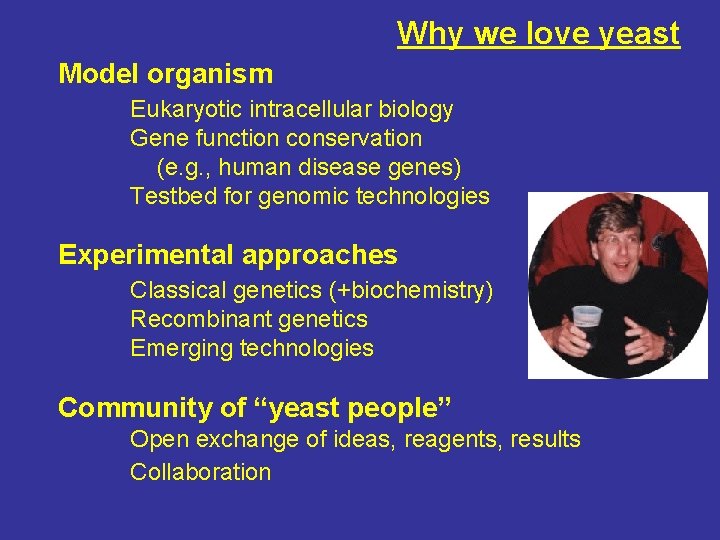
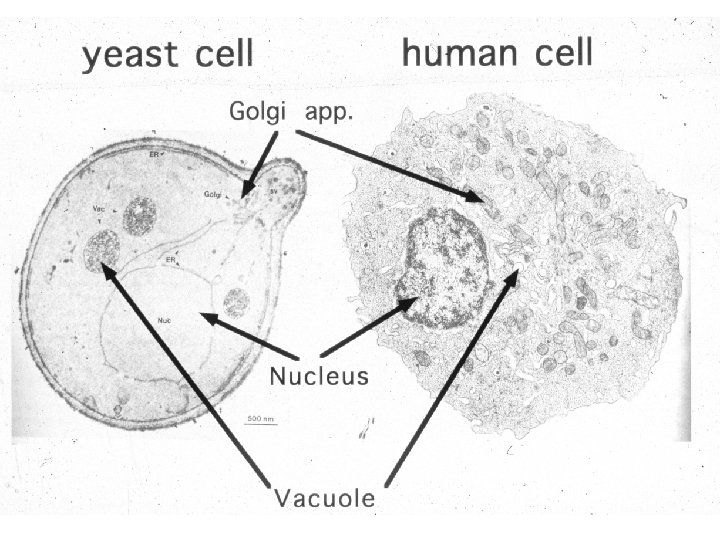
Why we love yeast Model organism Eukaryotic intracellular biology Gene function conservation (e. g. , human disease genes) Testbed for genomic technologies Experimental approaches Classical genetics (+biochemistry) Recombinant genetics Emerging technologies Community of “yeast people” Open exchange of ideas, reagents, results Collaboration
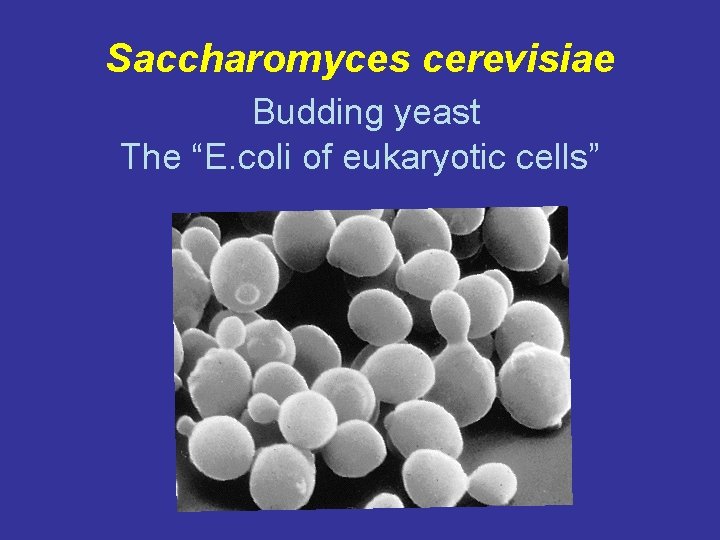
Saccharomyces cerevisiae Budding yeast The “E. coli of eukaryotic cells”
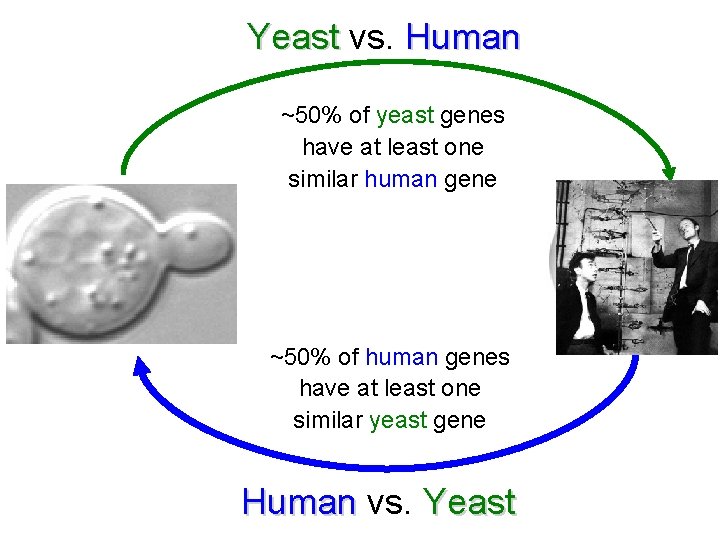
Yeast vs. Human ~50% of yeast genes have at least one similar human gene ~50% of human genes have at least one similar yeast gene Human vs. Yeast
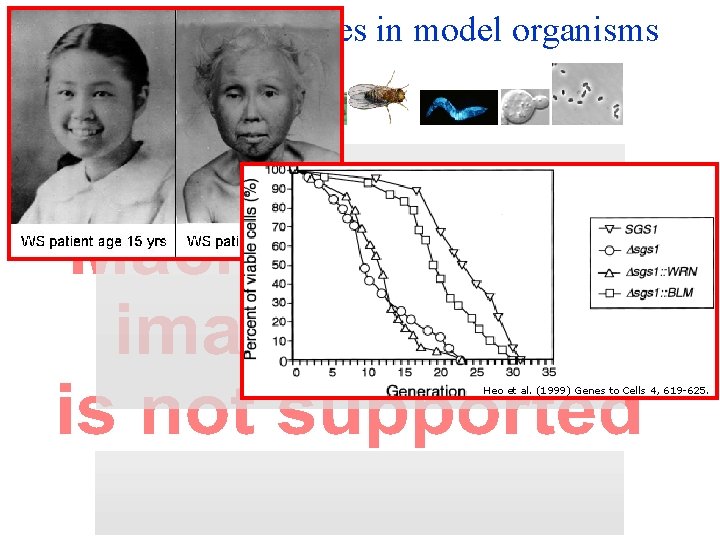
Human disease genes in model organisms
Human disease genes in model organisms Heo et al. (1999) Genes to Cells 4, 619 -625.
APOYG and Disease: Two examples Zelwegers Syndrome Peroxisome biogenesis Colorectal Cancer Genome instability
Zellweger Spectrum Zellweger syndrome Neonatal adrenoleukodystrophy Infantile Refsum Disease
Zellweger Patient Cells Share a Common Phenotype with Yeast pex Mutants Control Zellweger patient Wild-type pex mutant Human PTS 1) Yeast (PTS 1 - GFP)
Strategies for Mammalian PEX Gene Identification Functional complementation Mammalian c. DNA expression libraries “Homology probing” Identify all yeast peroxins Identify all homologous human proteins Test as “candidate genes”
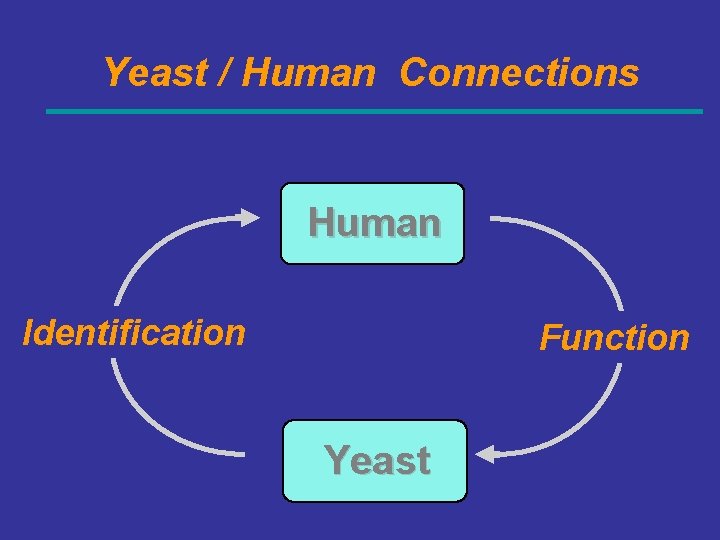
Yeast / Human Connections Human Identification Function Yeast
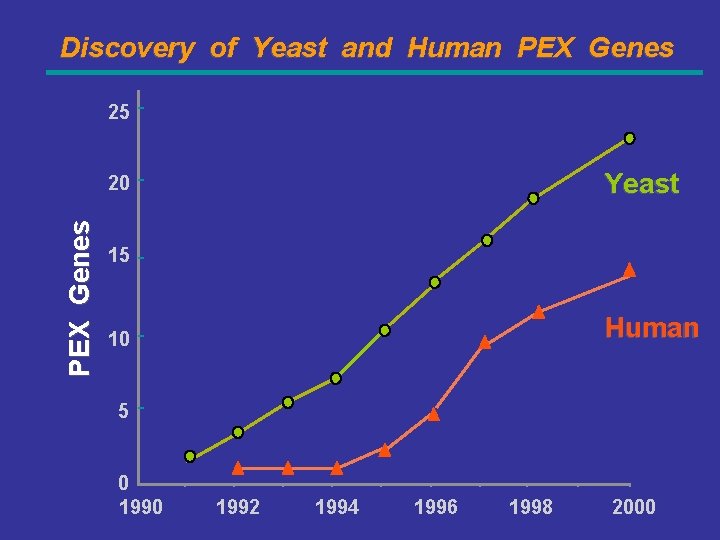
Discovery of Yeast and Human PEX Genes 25 Yeast PEX Genes 20 15 Human 10 5 0 1992 1994 1996 1998 2000
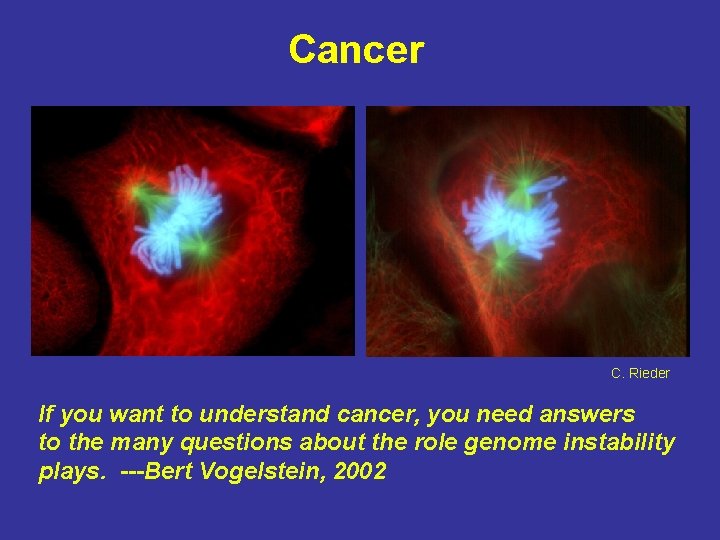
Cancer C. Rieder If you want to understand cancer, you need answers to the many questions about the role genome instability plays. ---Bert Vogelstein, 2002
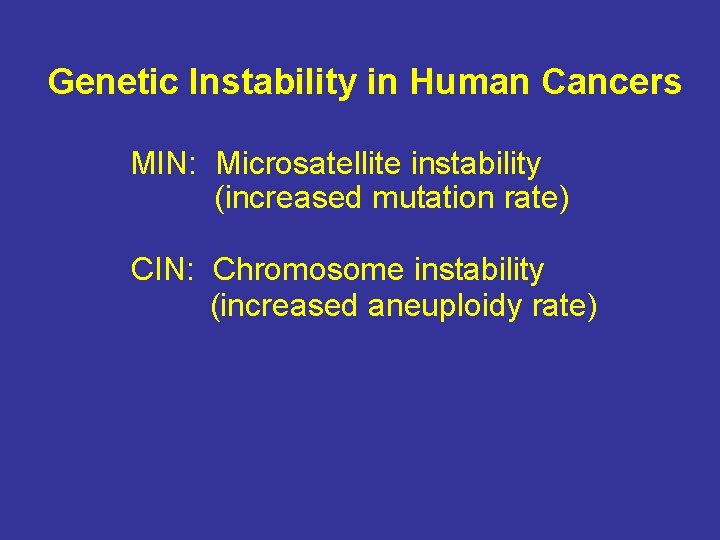
Genetic Instability in Human Cancers MIN: Microsatellite instability (increased mutation rate) CIN: Chromosome instability (increased aneuploidy rate)
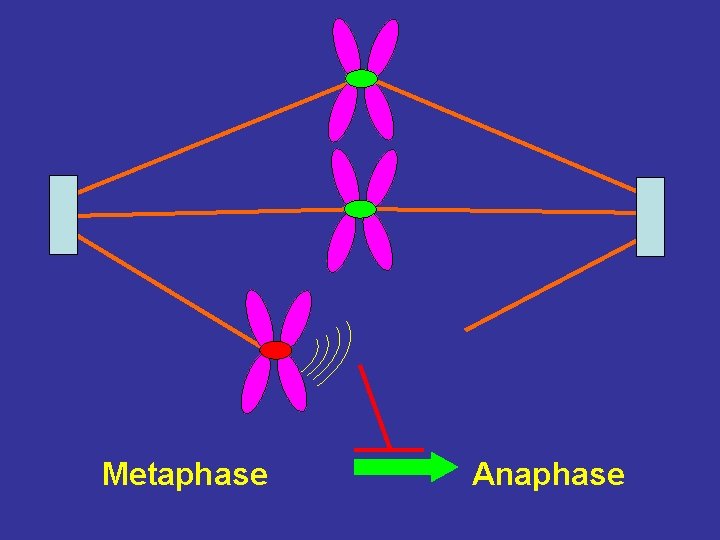
Metaphase Anaphase
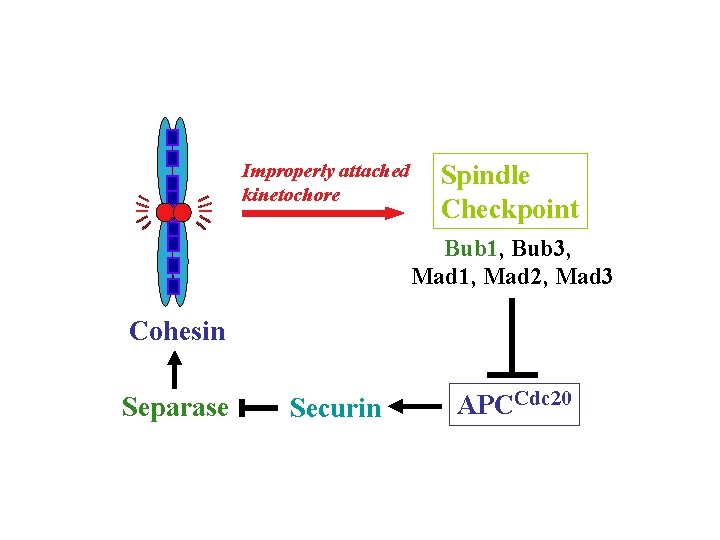
Improperly attached kinetochore Spindle Checkpoint Bub 1, Bub 3, Mad 1, Mad 2, Mad 3 Cohesin Separase Securin APCCdc 20
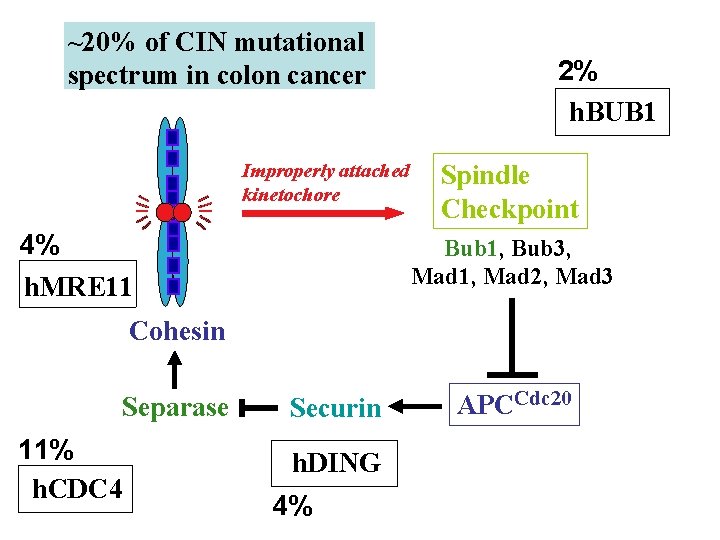
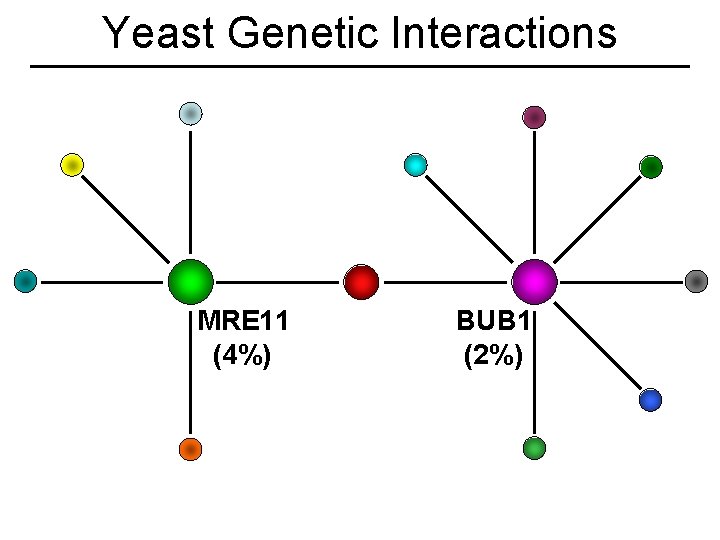
~20% of CIN mutational spectrum in colon cancer Improperly attached kinetochore 4% 2% h. BUB 1 Spindle Checkpoint Bub 1, Bub 3, Mad 1, Mad 2, Mad 3 h. MRE 11 Cohesin Separase 11% h. CDC 4 Securin h. DING 4% APCCdc 20
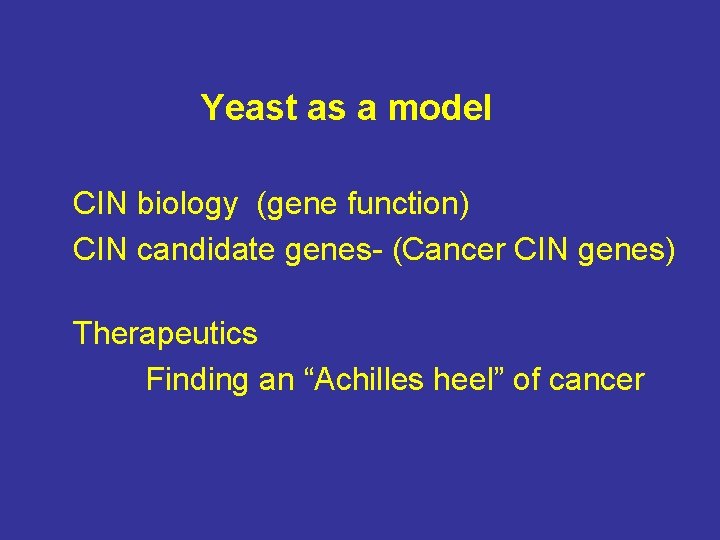
Yeast as a model CIN biology (gene function) CIN candidate genes- (Cancer CIN genes) Therapeutics Finding an “Achilles heel” of cancer
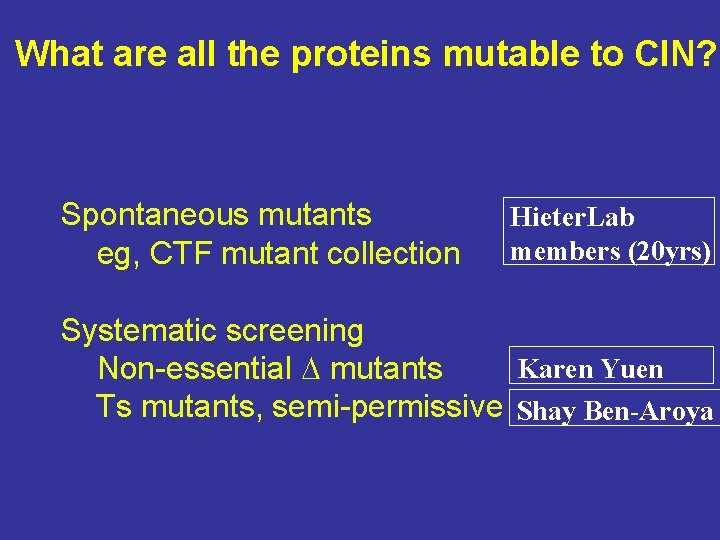
What are all the proteins mutable to CIN? Spontaneous mutants eg, CTF mutant collection Hieter. Lab members (20 yrs) Systematic screening Karen Yuen Non-essential D mutants Ts mutants, semi-permissive Shay Ben-Aroya
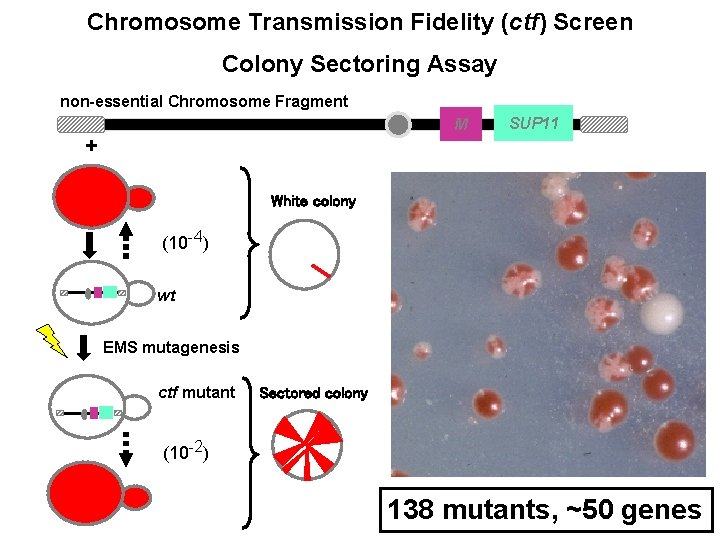
Chromosome Transmission Fidelity (ctf) Screen Colony Sectoring Assay non-essential Chromosome Fragment M + SUP 11 White colony (10 -4) wt EMS mutagenesis ctf mutant Sectored colony (10 -2) 138 mutants, ~50 genes
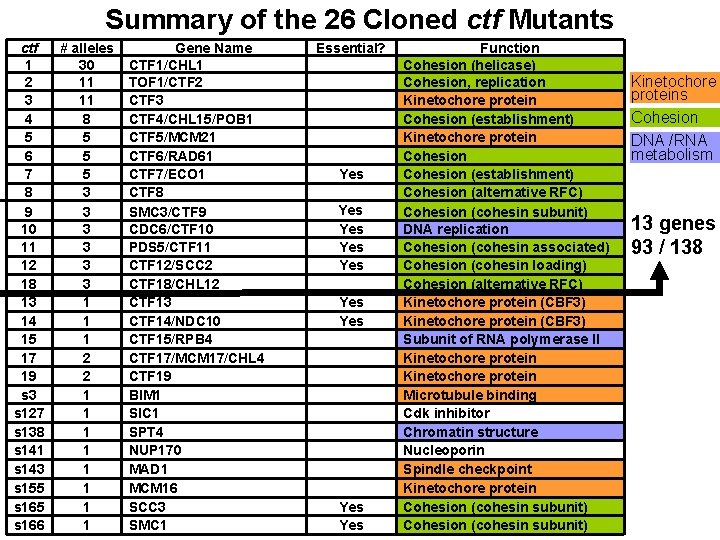
Summary of the 26 Cloned ctf Mutants ctf 1 2 3 4 5 6 7 8 9 10 11 12 18 13 14 15 17 19 s 3 s 127 s 138 s 141 s 143 s 155 s 166 # alleles 30 11 11 8 5 5 5 3 3 3 1 1 1 2 2 1 1 1 1 Gene Name CTF 1/CHL 1 TOF 1/CTF 2 CTF 3 CTF 4/CHL 15/POB 1 CTF 5/MCM 21 CTF 6/RAD 61 CTF 7/ECO 1 CTF 8 SMC 3/CTF 9 CDC 6/CTF 10 PDS 5/CTF 11 CTF 12/SCC 2 CTF 18/CHL 12 CTF 13 CTF 14/NDC 10 CTF 15/RPB 4 CTF 17/MCM 17/CHL 4 CTF 19 BIM 1 SIC 1 SPT 4 NUP 170 MAD 1 MCM 16 SCC 3 SMC 1 Essential? Yes Yes Yes Function Cohesion (helicase) Cohesion, replication Kinetochore protein Cohesion (establishment) Cohesion (alternative RFC) Cohesion (cohesin subunit) DNA replication Cohesion (cohesin associated) Cohesion (cohesin loading) Cohesion (alternative RFC) Kinetochore protein (CBF 3) Subunit of RNA polymerase II Kinetochore protein Microtubule binding Cdk inhibitor Chromatin structure Nucleoporin Spindle checkpoint Kinetochore protein Cohesion (cohesin subunit) Kinetochore proteins Cohesion DNA /RNA metabolism 13 genes 93 / 138
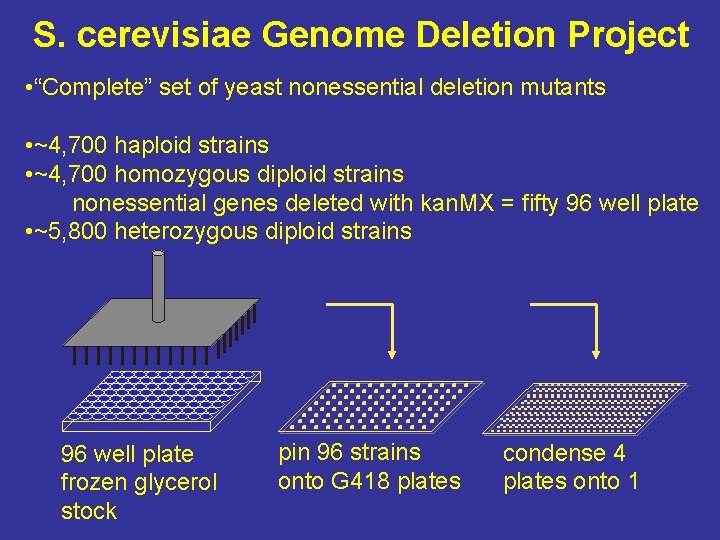
S. cerevisiae Genome Deletion Project • “Complete” set of yeast nonessential deletion mutants • ~4, 700 haploid strains • ~4, 700 homozygous diploid strains nonessential genes deleted with kan. MX = fifty 96 well plate • ~5, 800 heterozygous diploid strains 96 well plate frozen glycerol stock pin 96 strains onto G 418 plates condense 4 plates onto 1
The yeast gene knockout collection
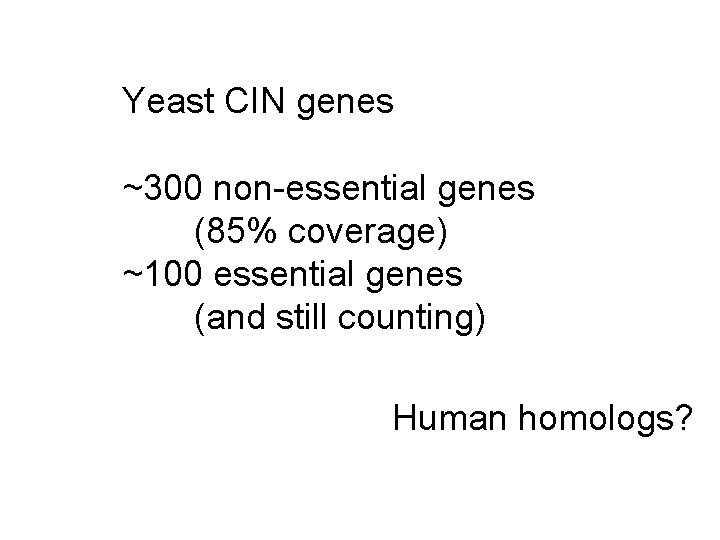
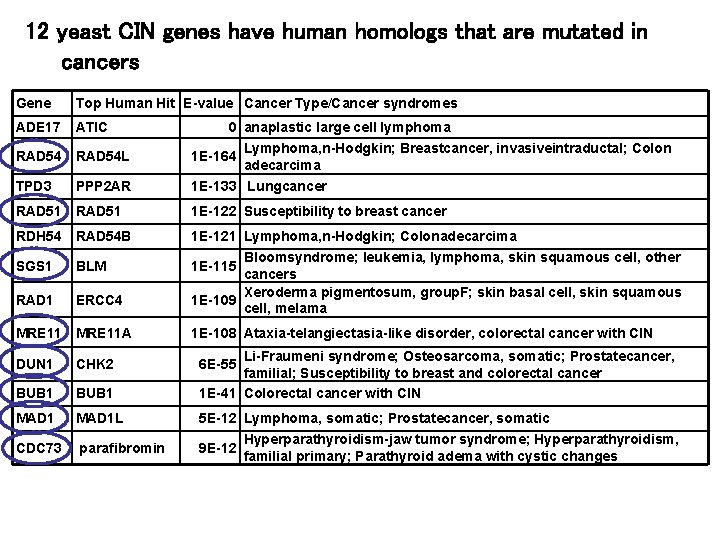
Yeast CIN genes ~300 non-essential genes (85% coverage) ~100 essential genes (and still counting) Human homologs?
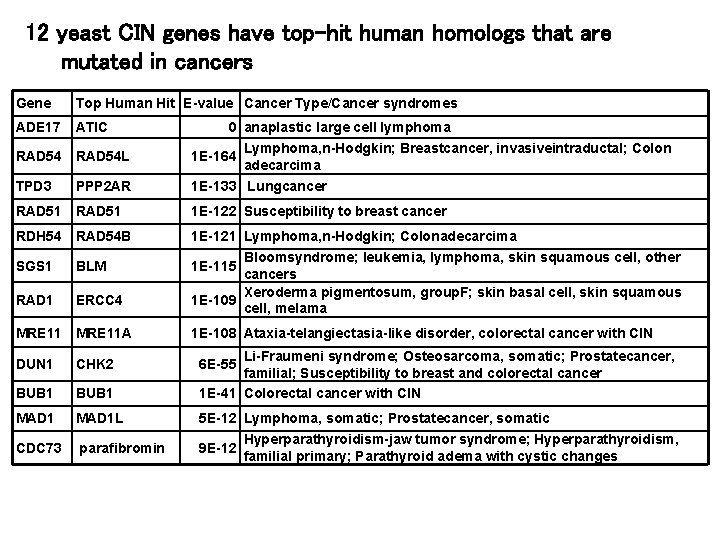
12 yeast CIN genes have top-hit human homologs that are mutated in cancers Gene Top Human Hit E-value Cancer Type/Cancer syndromes ADE 17 ATIC RAD 54 L TPD 3 PPP 2 AR 1 E-133 Lungcancer RAD 51 1 E-122 Susceptibility to breast cancer RDH 54 RAD 54 B SGS 1 BLM RAD 1 ERCC 4 1 E-121 Lymphoma, n-Hodgkin; Colonadecarcima Bloomsyndrome; leukemia, lymphoma, skin squamous cell, other 1 E-115 cancers Xeroderma pigmentosum, group. F; skin basal cell, skin squamous 1 E-109 cell, melama MRE 11 A DUN 1 CHK 2 BUB 1 MAD 1 L CDC 73 parafibromin 0 anaplastic large cell lymphoma Lymphoma, n-Hodgkin; Breastcancer, invasiveintraductal; Colon 1 E-164 adecarcima 1 E-108 Ataxia-telangiectasia-like disorder, colorectal cancer with CIN Li-Fraumeni syndrome; Osteosarcoma, somatic; Prostatecancer, familial; Susceptibility to breast and colorectal cancer 1 E-41 Colorectal cancer with CIN 6 E-55 5 E-12 Lymphoma, somatic; Prostatecancer, somatic Hyperparathyroidism-jaw tumor syndrome; Hyperparathyroidism, 9 E-12 familial primary; Parathyroid adema with cystic changes
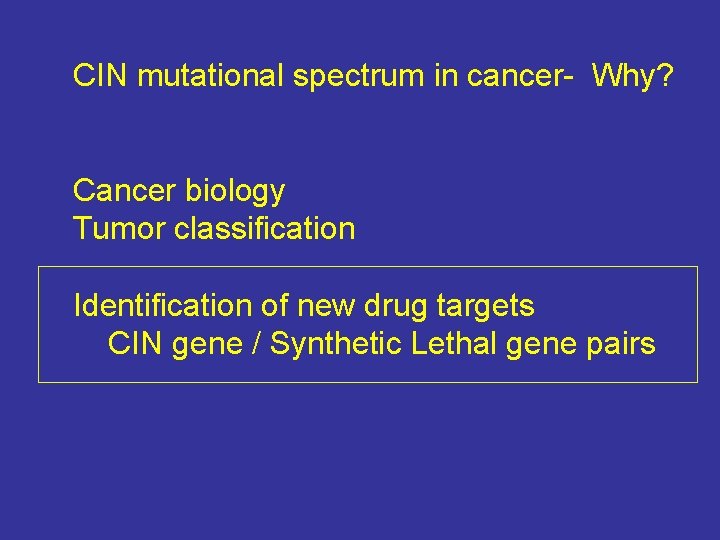
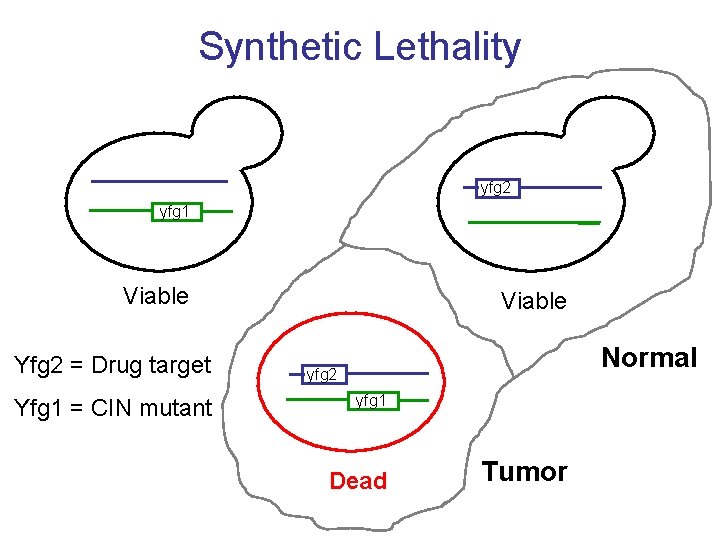
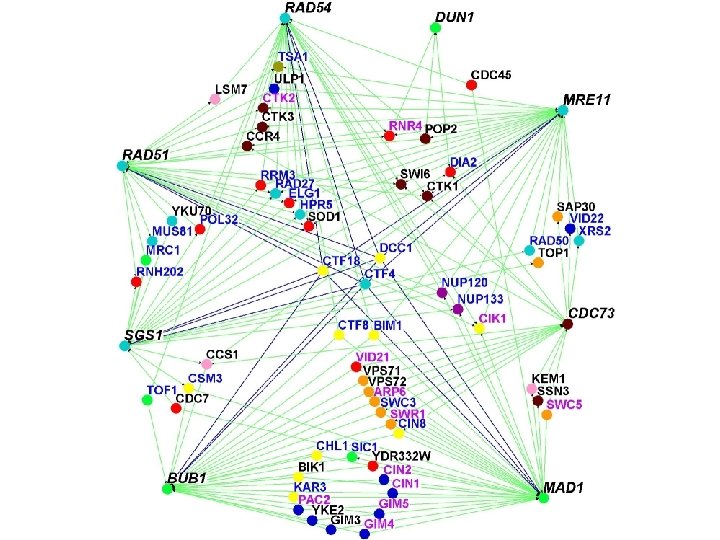
CIN mutational spectrum in cancer- Why? Cancer biology Tumor classification Identification of new drug targets CIN gene / Synthetic Lethal gene pairs
Synthetic Lethality yfg 2 yfg 1 Viable Yfg 2 = Drug target Yfg 1 = CIN mutant Viable Normal yfg 2 yfg 1 Dead Tumor
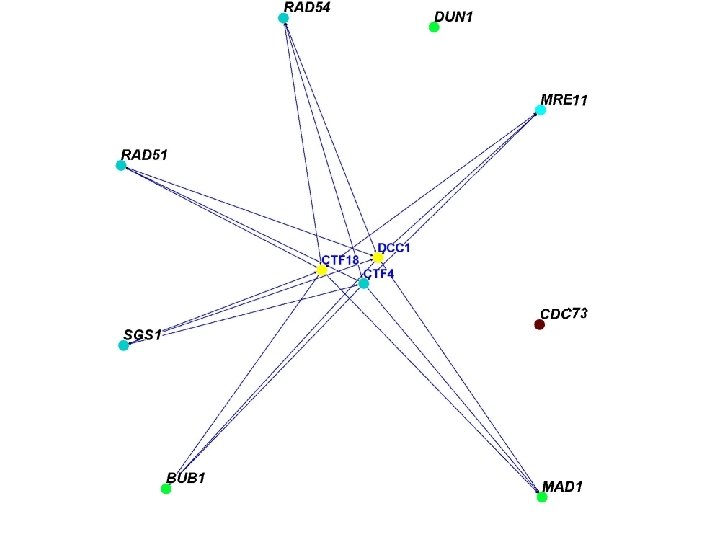
Yeast Genetic Interactions MRE 11 (4%) BUB 1 (2%)
12 yeast CIN genes have human homologs that are mutated in cancers Gene Top Human Hit E-value Cancer Type/Cancer syndromes ADE 17 ATIC RAD 54 L TPD 3 PPP 2 AR 1 E-133 Lungcancer RAD 51 1 E-122 Susceptibility to breast cancer RDH 54 RAD 54 B SGS 1 BLM RAD 1 ERCC 4 1 E-121 Lymphoma, n-Hodgkin; Colonadecarcima Bloomsyndrome; leukemia, lymphoma, skin squamous cell, other 1 E-115 cancers Xeroderma pigmentosum, group. F; skin basal cell, skin squamous 1 E-109 cell, melama MRE 11 A DUN 1 CHK 2 BUB 1 MAD 1 L CDC 73 parafibromin 0 anaplastic large cell lymphoma Lymphoma, n-Hodgkin; Breastcancer, invasiveintraductal; Colon 1 E-164 adecarcima 1 E-108 Ataxia-telangiectasia-like disorder, colorectal cancer with CIN Li-Fraumeni syndrome; Osteosarcoma, somatic; Prostatecancer, familial; Susceptibility to breast and colorectal cancer 1 E-41 Colorectal cancer with CIN 6 E-55 5 E-12 Lymphoma, somatic; Prostatecancer, somatic Hyperparathyroidism-jaw tumor syndrome; Hyperparathyroidism, 9 E-12 familial primary; Parathyroid adema with cystic changes
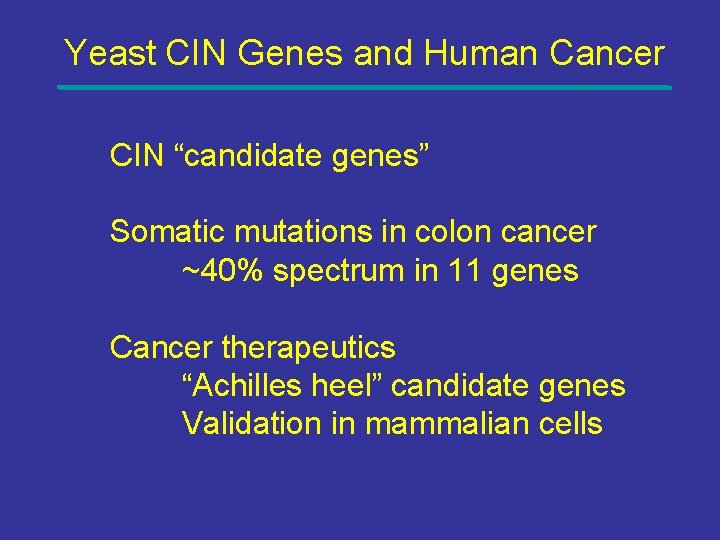
Yeast CIN Genes and Human Cancer CIN “candidate genes” Somatic mutations in colon cancer ~40% spectrum in 11 genes Cancer therapeutics “Achilles heel” candidate genes Validation in mammalian cells
Four volumes of the Encyclopedia of Life 6000 14, 000 19, 000 21, 000
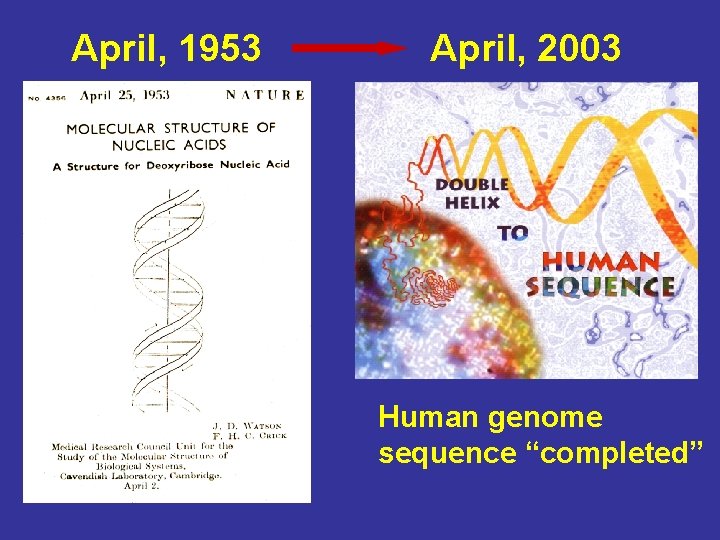
April, 1953 April, 2003 Human genome sequence “completed”
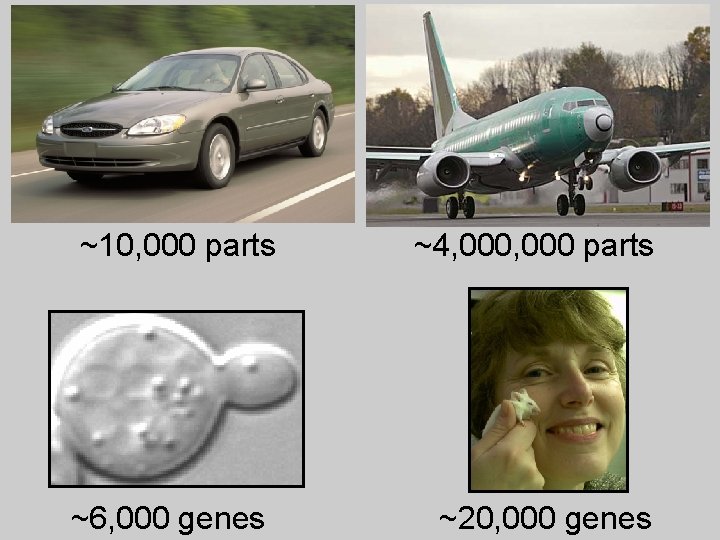
~10, 000 parts ~6, 000 genes ~4, 000 parts ~20, 000 genes
Power of Model Organism Research Genetics, biochemistry, genomics Basic biology Human health Human disease Therapy Preventative medicine APOYG! APOWG! APOIBE!