
MODEL OF PROGRESS FOR INDIA PPIUCD SCALE UP
- Slides: 1
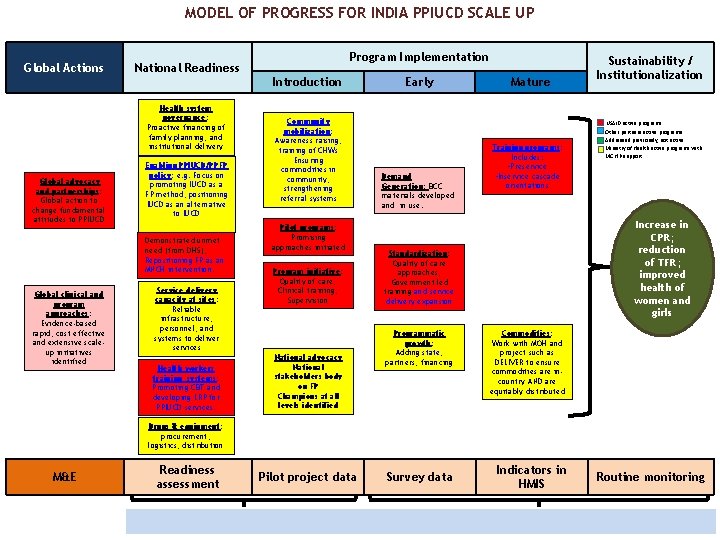
MODEL OF PROGRESS FOR INDIA PPIUCD SCALE UP Global Actions Program Implementation National Readiness Introduction Health system governance: Proactive financing of family planning, and institutional delivery Global advocacy and partnerships: Global action to change fundamental attitudes to PPIUCD Enabling PPIUCD/PPFP policy: e. g. Focus on promoting IUCD as a FP method; positioning IUCD as an alternative to IUCD Demonstrated unmet need (from DHS); Repositioning FP as an MNCH intervention. Global clinical and program approaches: Evidence-based rapid, cost effective and extensive scaleup initiatives identified Service delivery capacity at sites: Reliable infrastructure, personnel, and systems to deliver services Health workers training systems: Promoting CBT and developing LRP for PPIUCD services. Community mobilization: Awareness raising; training of CHWs Ensuring commodities in community; strengthening referral systems Pilot programs: Promising approaches initiated Program initiative: Quality of care; Clinical training; Supervision National advocacy National stakeholders body on FP Champions at all levels identified Early Demand Generation: BCC materials developed and in use. Mature Training programs: Includes: • Preservice • Inservice cascade orientations USAID active programs Other partners active programs Addressed previously, not active Ministry of Health active programs with MCHIP support Increase in CPR; reduction of TFR; improved health of women and girls Standardization: Quality of care approaches; Government led training and service delivery expansion Programmatic growth: Adding state, partners, financing Sustainability / Institutionalization Commodities: Work with MOH and project such as DELIVER to ensure commodities are incountry AND are equitably distributed Drugs & equipment: procurement, logistics, distribution M&E Readiness assessment Pilot project data Survey data Indicators in HMIS Routine monitoring