
Model of Effective Facilitation for Independent Learning one
- Slides: 22
Model of Effective Facilitation for Independent Learning - one that brings about transformation Capable NZ, Otago Polytechnic, New Zealand Glenys Ker, 2018 Doc. Prof. Studies (Adult Learning)
Context – the typical learner The non-traditional learner and higher education Professionally/vocationally very experienced (not academically experienced) Learning has been in, for and through work Tertiary learning wasn’t ‘for them’ and most haven’t engaged in formal learning since leaving school Self-starters, willing and able to embrace an independent study pathway but most require support as they embark on that journey and to be scaffolded into the reflective process which is the underpinning ILP approach Barrier of time and place (can’t take time out to study) Clear about the need for relevance – learning needs to be contextualised into real life contexts Key – connection to the workplace and of learning to be future proofed, non-linear (lattice pathways)
Criteria – significant learning from the skills and knowledge gained from experience CV and self-assessment (against graduate profile) Independent, able to self-manage, responsible for new learning and meeting timelines, ability to question and communicate Guided by a series of learning tasks designed to critically reflect in and on practice Work-based learning – projects New learning – application of theory to practice, ability to critically reflect, ability to research and apply new learning to practice Changes – in personal and professional practice (old and new me) Where to next?
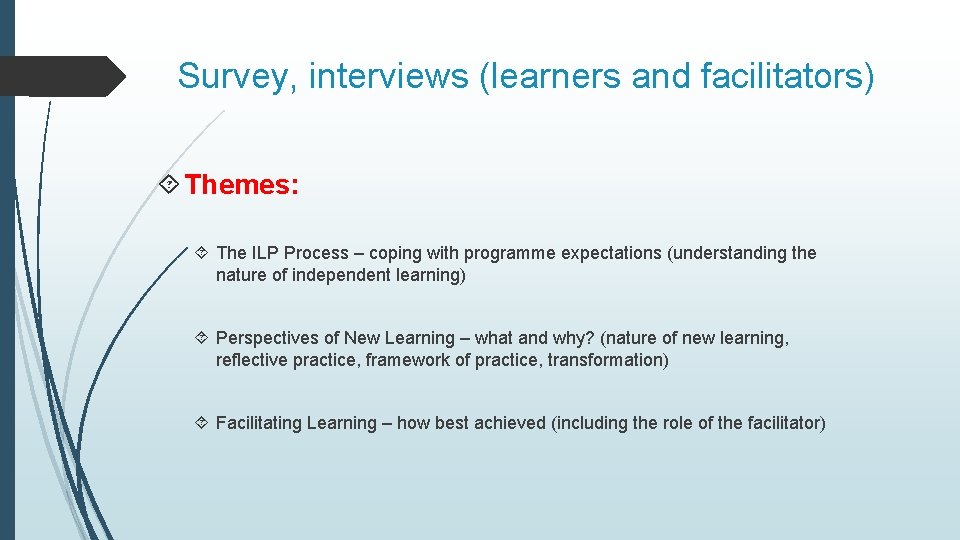
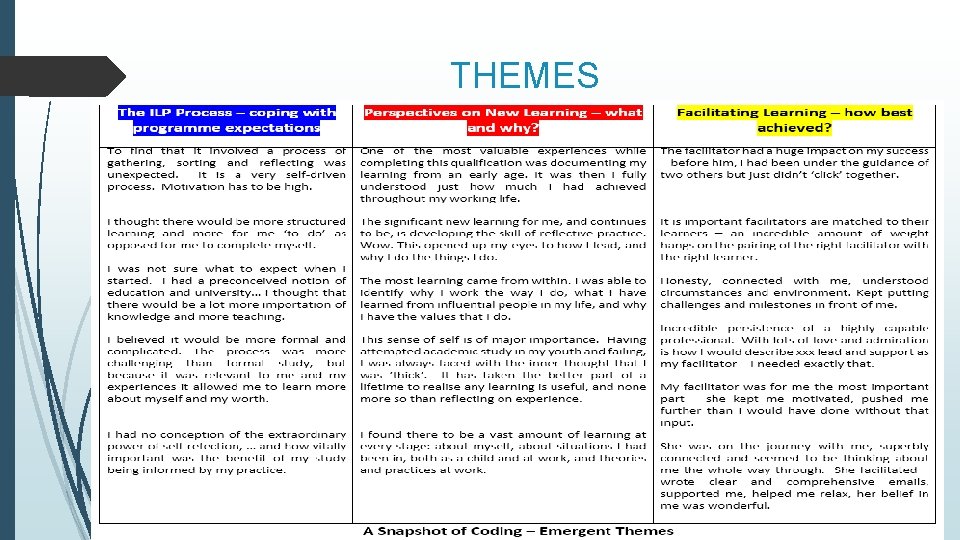
Survey, interviews (learners and facilitators) Themes: The ILP Process – coping with programme expectations (understanding the nature of independent learning) Perspectives of New Learning – what and why? (nature of new learning, reflective practice, framework of practice, transformation) Facilitating Learning – how best achieved (including the role of the facilitator)
THEMES
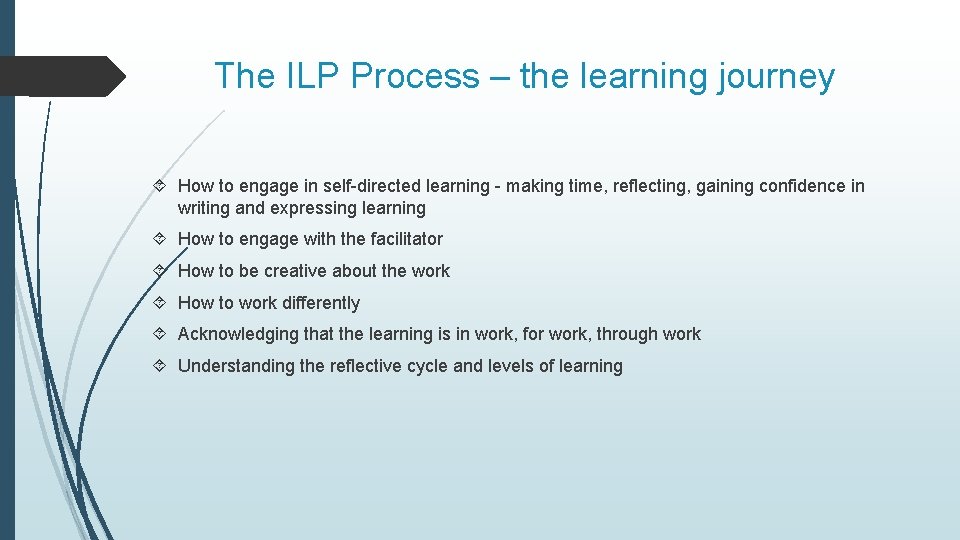
The ILP Process – the learning journey How to engage in self-directed learning - making time, reflecting, gaining confidence in writing and expressing learning How to engage with the facilitator How to be creative about the work How to work differently Acknowledging that the learning is in work, for work, through work Understanding the reflective cycle and levels of learning
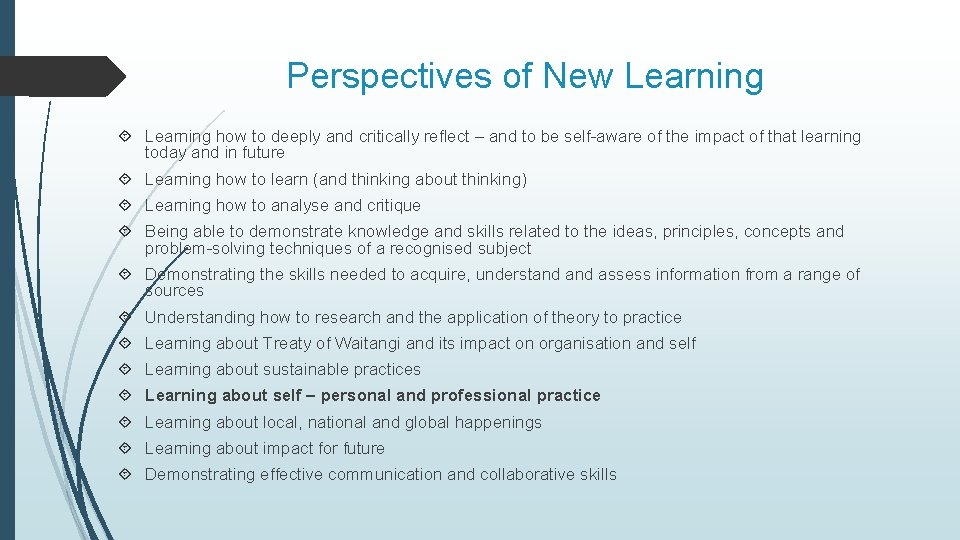
Perspectives of New Learning how to deeply and critically reflect – and to be self-aware of the impact of that learning today and in future Learning how to learn (and thinking about thinking) Learning how to analyse and critique Being able to demonstrate knowledge and skills related to the ideas, principles, concepts and problem-solving techniques of a recognised subject Demonstrating the skills needed to acquire, understand assess information from a range of sources Understanding how to research and the application of theory to practice Learning about Treaty of Waitangi and its impact on organisation and self Learning about sustainable practices Learning about self – personal and professional practice Learning about local, national and global happenings Learning about impact for future Demonstrating effective communication and collaborative skills
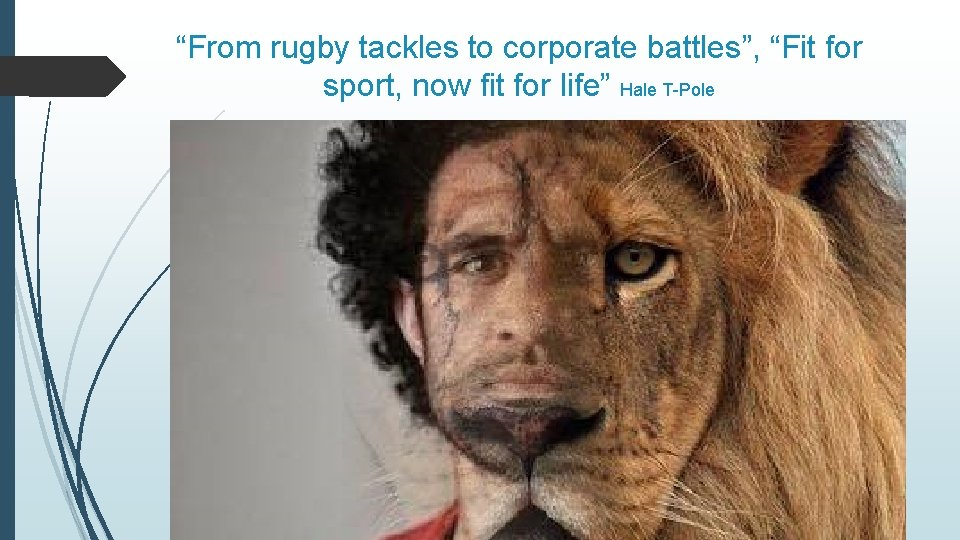
“From rugby tackles to corporate battles”, “Fit for sport, now fit for life” Hale T-Pole
Role of Facilitator Key to the learning process Skills, knowledge and attitudes expected and required (competency framework) Importance of the right ‘fit’ (model developed) 24/7 support – these learners are usually engaged in the evenings and weekends Learner first = Led me to design a model of effective facilitation of learning Facilitation is unpredictable, variable and complex; therefore techniques and knowledge must be accompanied by intuition, creativeness and insightfulness
Why a Model of Effective Facilitation of Learning? High quality of both learning (by the learners) and facilitation (by CNZ academic staff) Effective facilitation is not a simple set of technical tasks which are easily obtained Good facilitators require high levels of skill and are not easy to find. Easy to get wrong – the process is designed to generate new learning and is intended to be transformational for the learner. Facilitators need to know how to exercise judgment and need to understand that facilitation is a relational role, that requires an empathy with and an understanding of the learner Facilitators operate in the best interests of their learners ie they get to know them and they matter. The knowledge is not handed down, it is co-constructed. It is the learner’s knowledge but comes about through the reflection and reflexivity in the process of learning.
Model for Effective Facilitation/Mentoring comprises of two parts: 1 Conception of facilitation/mentoring as a professional educational activity, a set of principles and a competency framework 2 Overview of the learning process, a set of individually focused learning tasks to aid learners and a visual map to guide the use of these tasks, as well as complementary tools for facilitators/mentors A tool for self-assessment and reflection for facilitators/mentors - SPRINGBOARD
Facilitation as a professional activity The learners are all unique individuals who present with individual challenges Learners need to be supported by facilitators who have well-developed diagnostic and analytical skills, who recognise when challenges are interrupting the learning process, and who are capable of exercising sound judgments in the interests of the learners. Facilitators are expected to acquire a repertoire of specialised techniques and knowledge, including knowledge of when to use a particular technique. Implicit in this conception of facilitation is the view that any problems in facilitation or learning can be solved given the skills, knowledge and expertise the person has in this area. Facilitators must define and enforce their standards of practice that align with the ‘facilitation of learning’ model ie autonomy, self-discipline, and a shared ethic of performance that support professional activity. Ultimate goal – the promotion and enhancement of learning Workman and Helyer (2016: 43) suggest that a facilitator of learning should “do whatever you can to develop your own understanding of the learning theories, learning styles and approaches, therefore enabling learning that is ‘fit for purpose’”.
Four Principles: “Fit” – age, ethnicity, location, interests …. Relationship – mutual respect, trust and empathy Skills, knowledge and attitudes – important that the facilitator has the capabilities for the role Learners First – important that facilitators are responsive to learners, available to meet learner needs and always act in the interest of the learner
“FIT” The learner’s needs and expectations come first Learners are provided with a facilitator who is the best match for their needs and preferences Allocate facilitator who has been requested by name from the learner “she cared about me”, “I felt I mattered”, “we had a lot in common”, “he met up with me one Sunday a month – rode his bike over and worked with me at home”
RELATIONSHIPS One that is bound by mutual respect, trust and empathy Ability of facilitator to gain insights into their learner Rapport building, caring and demonstrating to the learner that they matter Active Engagement: creating a mattering environment (Amundson, 2009)
“He simply appears to know and understand exactly where I’m at and where I should be going deeper – he does this in a genuine and caring way whilst managing to keep me on track” “She made me feel important – I trusted her with my stories because she was always respectful – challenging my thinking and our robust discussions. She kept me inspired throughout the whole journey – we had an excellent respectful relationship; one that was based on humour, enquiry and constructive feedback”.
SKILLS, KNOWLEDGE, ATTITUDES Facilitator has capabilities for role – passion, energy, empathy, role model, accessible, available, responsive, timely and needs to know when to be ‘patient and pushy’ (paradoxical) Learners like to know they are in ‘good hands’ Affirming conversations Facilitator must demonstrate a knowledge of adult learning, reflective practice, experiential and transformational learning Must adhere to the principles of manaaki and the concept of mana
LEARNERS FIRST Facilitators are responsive to learners Willing to work flexibly and be able to engage within the parameters of their work and life constraints Effective facilitators are encouraging of autonomous, self-directed learning and empowering the learner to take control of their learning Must be able to work with learners from different cultural backgrounds OP Values – Accountability (Takohaka), Courage (Maia), Caring (Manaakitaka), Empowerment (Whakamanataka)
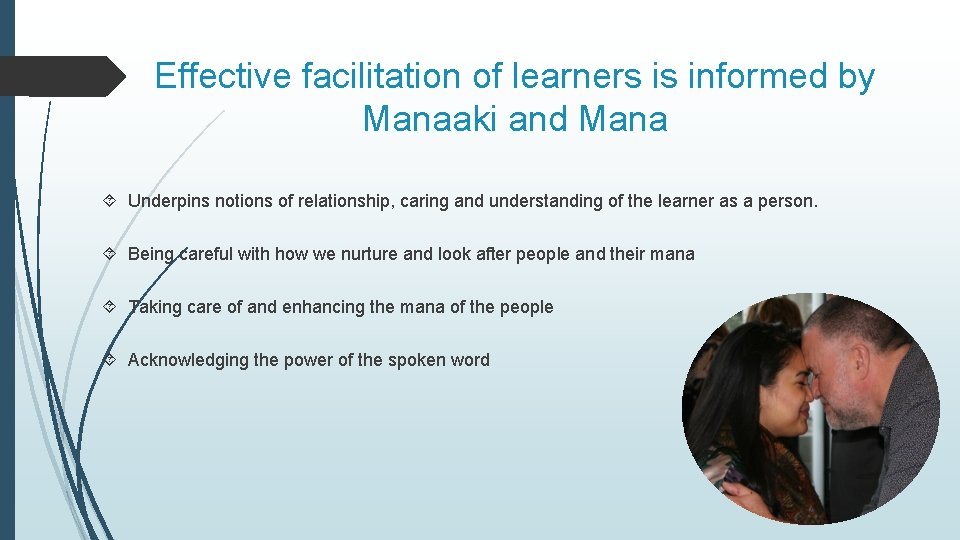
Effective facilitation of learners is informed by Manaaki and Mana Underpins notions of relationship, caring and understanding of the learner as a person. Being careful with how we nurture and look after people and their mana Taking care of and enhancing the mana of the people Acknowledging the power of the spoken word
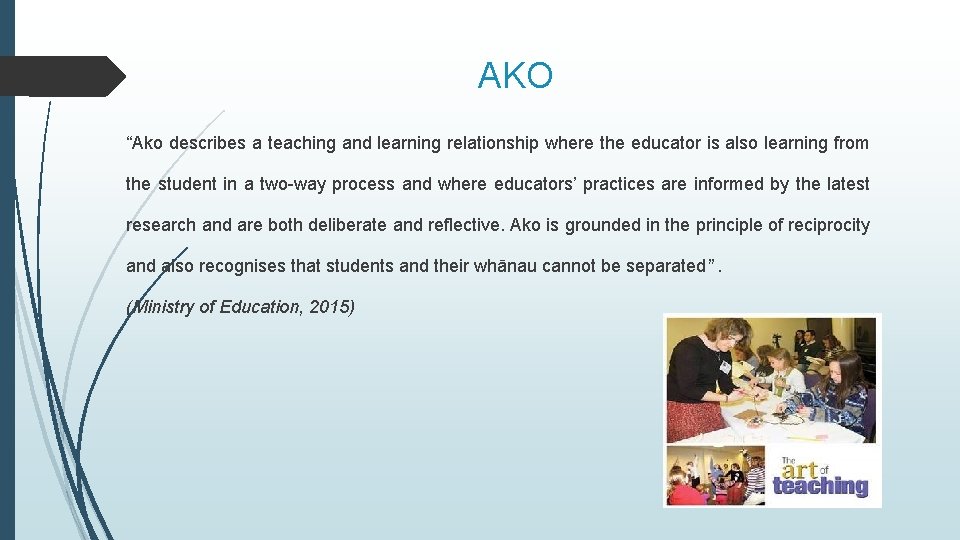
AKO “Ako describes a teaching and learning relationship where the educator is also learning from the student in a two-way process and where educators’ practices are informed by the latest research and are both deliberate and reflective. Ako is grounded in the principle of reciprocity and also recognises that students and their whānau cannot be separated”. (Ministry of Education, 2015)
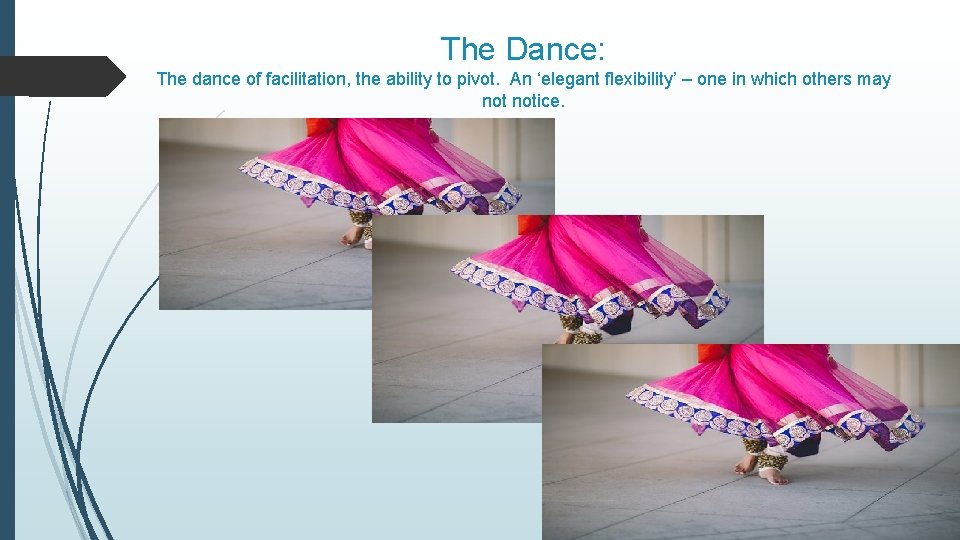
The Dance: The dance of facilitation, the ability to pivot. An ‘elegant flexibility’ – one in which others may notice.