
Model Description Model Overview Written in Java Open


![Marina Intermediate Cover [Cover placed late 2006] Field Measurement % CH 4 (v/v) at](https://slidetodoc.com/presentation_image_h2/4aa3272c2736a4a98260797037e4597e/image-43.jpg "Marina Intermediate Cover [Cover placed late 2006] Field Measurement % CH 4 (v/v) at")
- Slides: 55
Model Description
Model Overview Written in Java Open Source / cross platform 71 source files After encountering memory issues: ○ Switched to a pre-compiled version of the program (Excelsior JET package) 4 other programmers: ○ Roger Schlachter, Chris Schmitt, Andy Kuhn, and Andy Korth Assistance from several JAVA library developers
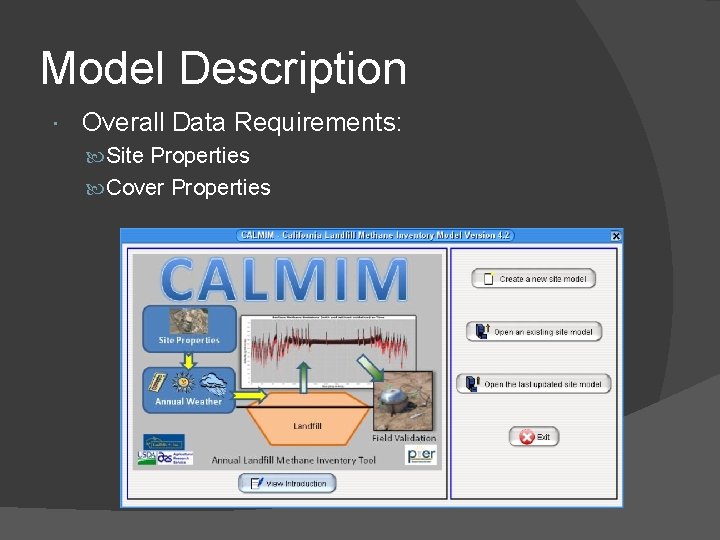
Model Description Overall Data Requirements: Site Properties Cover Properties
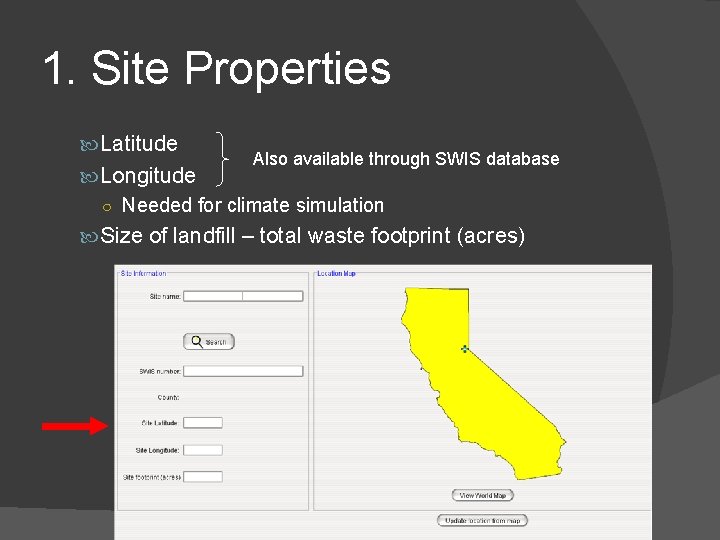
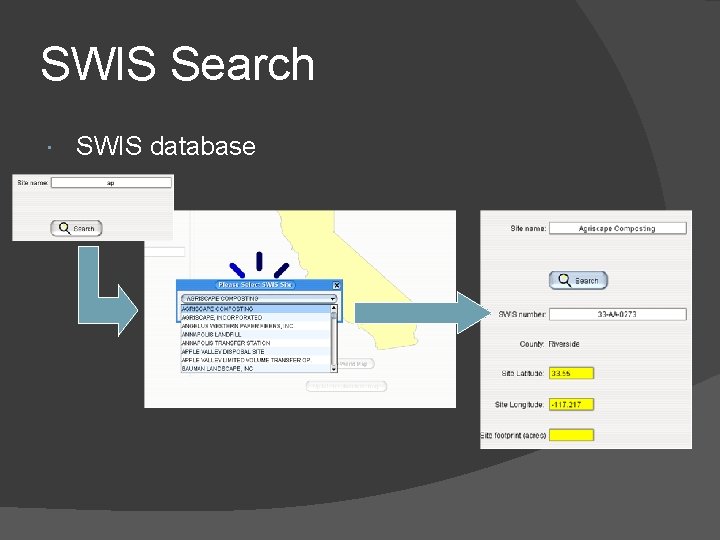
1. Site Properties Latitude Also available through SWIS database Longitude ○ Needed for climate simulation Size of landfill – total waste footprint (acres)
SWIS Search SWIS database
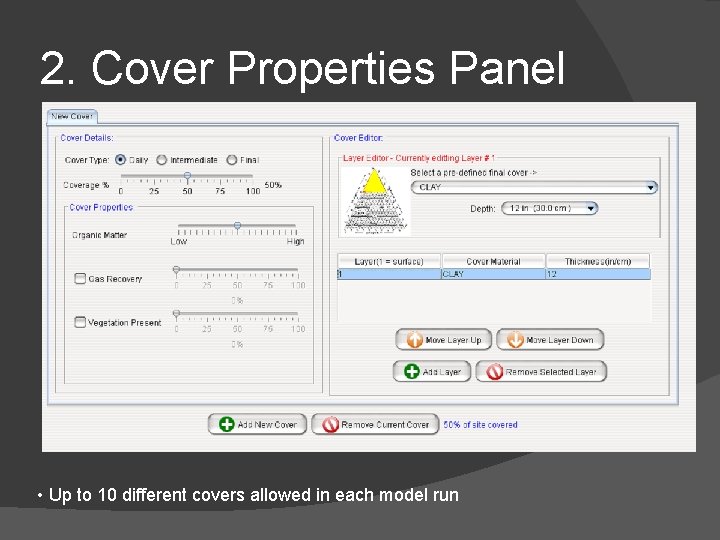
2. Cover Properties Panel • Up to 10 different covers allowed in each model run
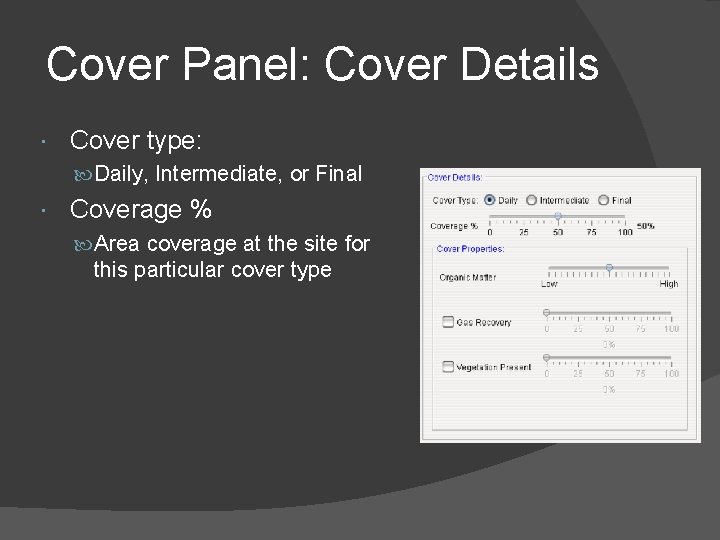
Cover Panel: Cover Details Cover type: Daily, Intermediate, or Final Coverage % Area coverage at the site for this particular cover type
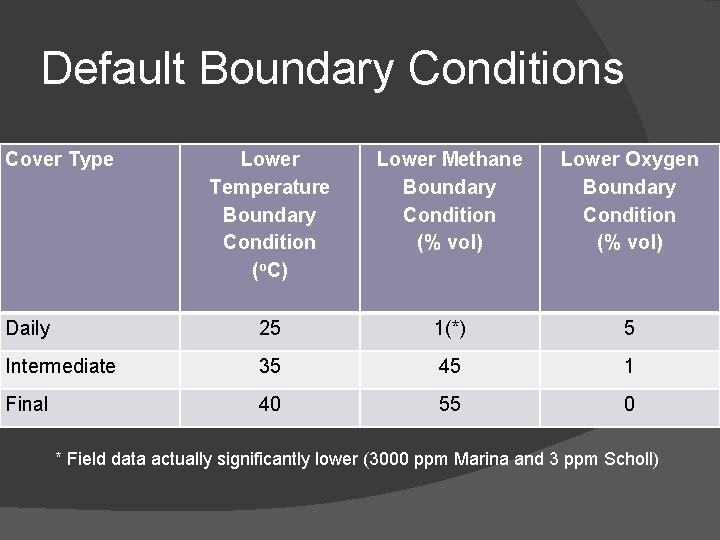
Default Boundary Conditions Cover Type Lower Temperature Boundary Condition (o. C) Lower Methane Boundary Condition (% vol) Lower Oxygen Boundary Condition (% vol) Daily 25 1(*) 5 Intermediate 35 45 1 Final 40 55 0 * Field data actually significantly lower (3000 ppm Marina and 3 ppm Scholl)
Cover Panel: Cover Details Cover Properties scroll bars Organic Matter content Gas Recovery Vegetation Presence
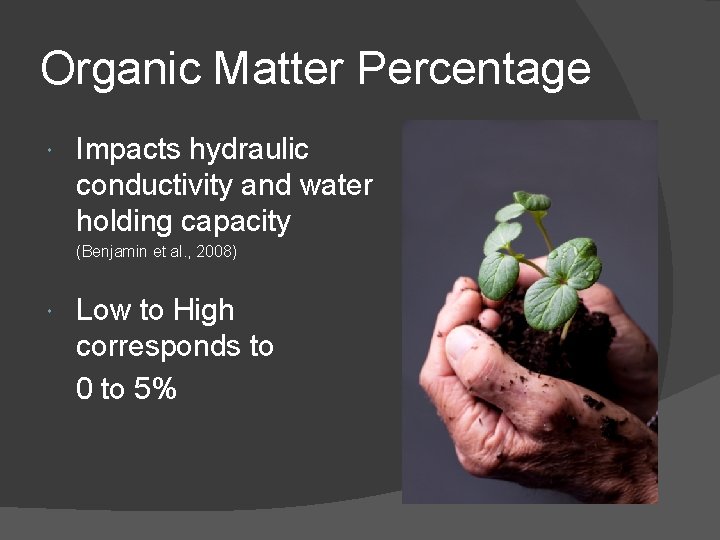
Organic Matter Percentage Impacts hydraulic conductivity and water holding capacity (Benjamin et al. , 2008) Low to High corresponds to 0 to 5%
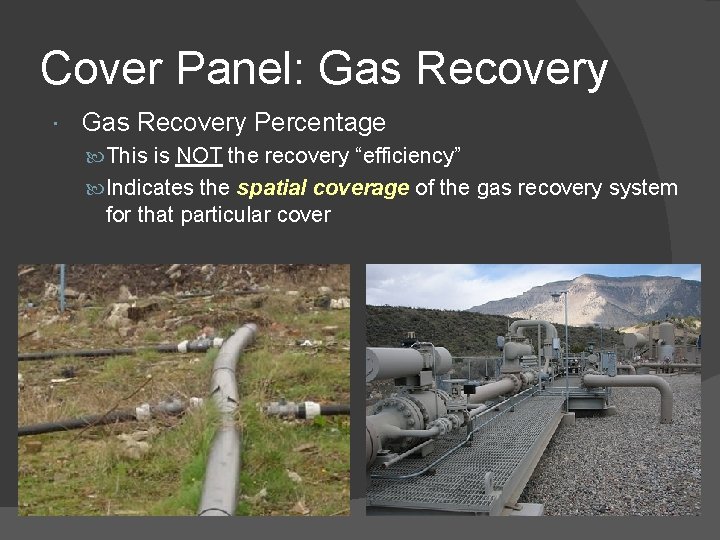
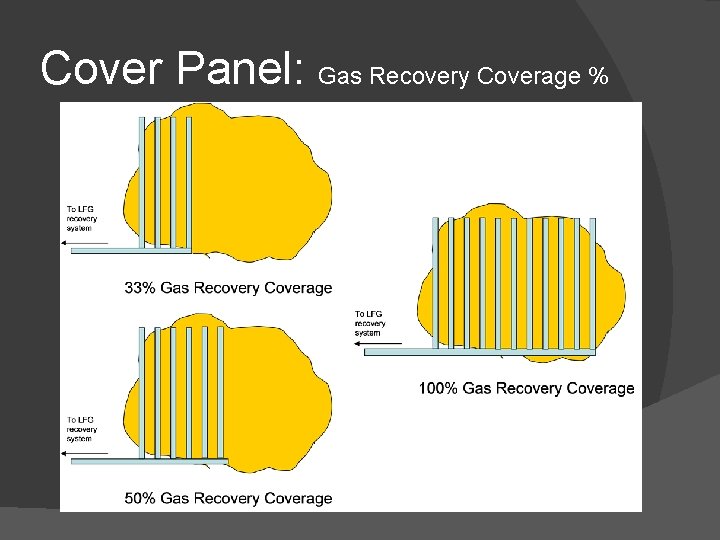
Cover Panel: Gas Recovery Percentage This is NOT the recovery “efficiency” Indicates the spatial coverage of the gas recovery system for that particular cover
Cover Panel: Gas Recovery Coverage %
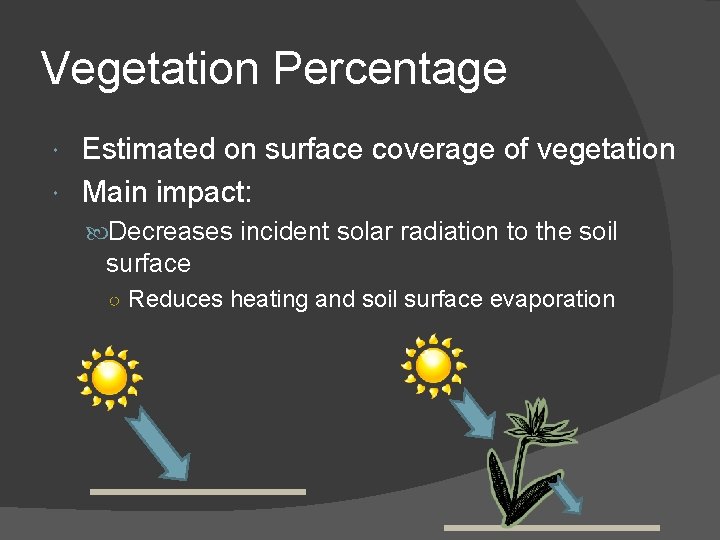
Vegetation Percentage Estimated on surface coverage of vegetation Main impact: Decreases incident solar radiation to the soil surface ○ Reduces heating and soil surface evaporation
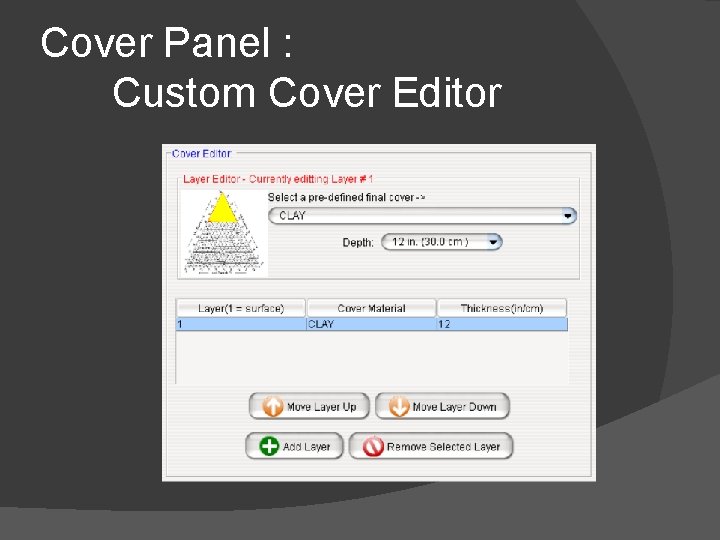
Cover Panel : Custom Cover Editor
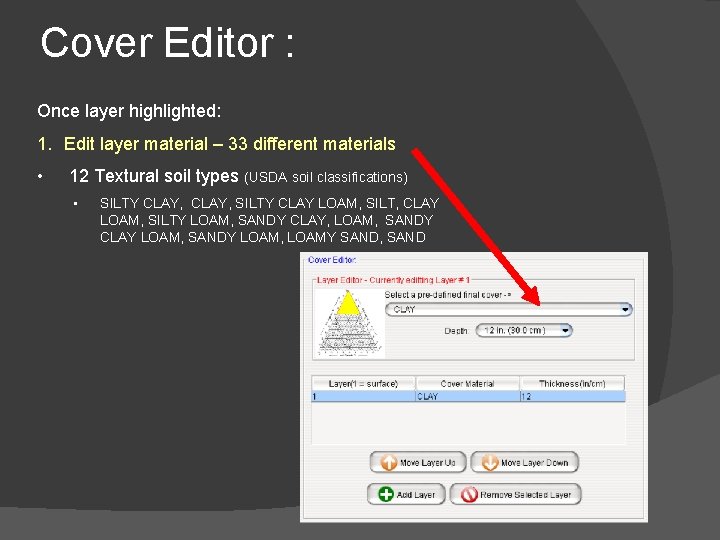
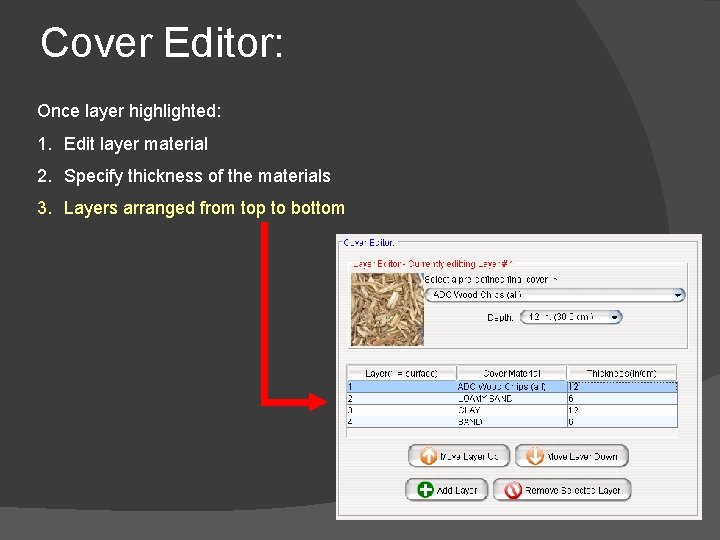
Cover Editor : Once layer highlighted: 1. Edit layer material – 33 different materials • 12 Textural soil types (USDA soil classifications) • SILTY CLAY, SILTY CLAY LOAM, SILT, CLAY LOAM, SILTY LOAM, SANDY CLAY, LOAM, SANDY CLAY LOAM, SANDY LOAM, LOAMY SAND, SAND
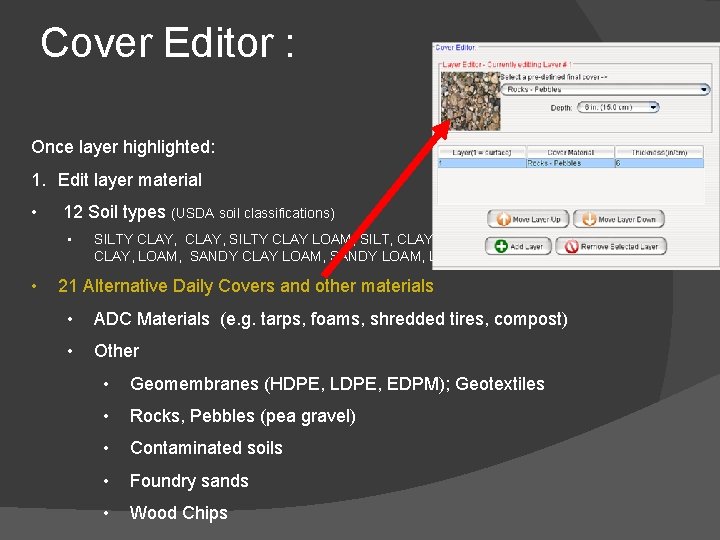
Cover Editor : Once layer highlighted: 1. Edit layer material • 12 Soil types (USDA soil classifications) • • SILTY CLAY, SILTY CLAY LOAM, SILT, CLAY LOAM, SILTY LOAM, SANDY CLAY, LOAM, SANDY CLAY LOAM, SANDY LOAM, LOAMY SAND, SAND 21 Alternative Daily Covers and other materials • ADC Materials (e. g. tarps, foams, shredded tires, compost) • Other • Geomembranes (HDPE, LDPE, EDPM); Geotextiles • Rocks, Pebbles (pea gravel) • Contaminated soils • Foundry sands • Wood Chips
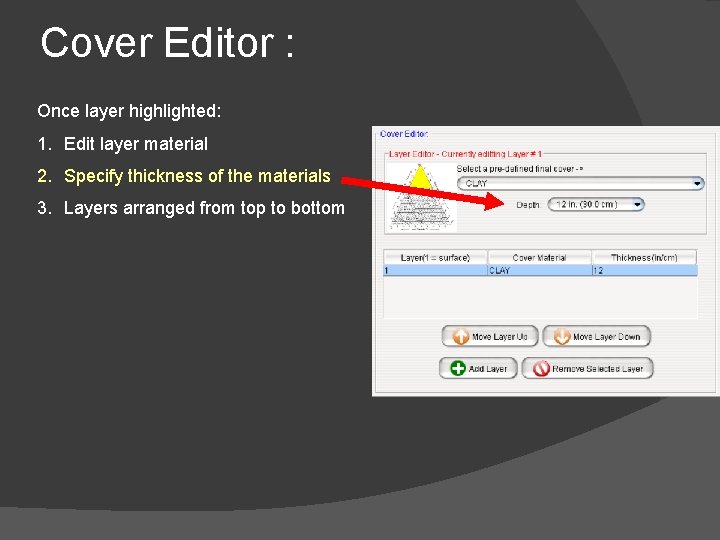
Cover Editor : Once layer highlighted: 1. Edit layer material 2. Specify thickness of the materials 3. Layers arranged from top to bottom
Cover Editor: Once layer highlighted: 1. Edit layer material 2. Specify thickness of the materials 3. Layers arranged from top to bottom
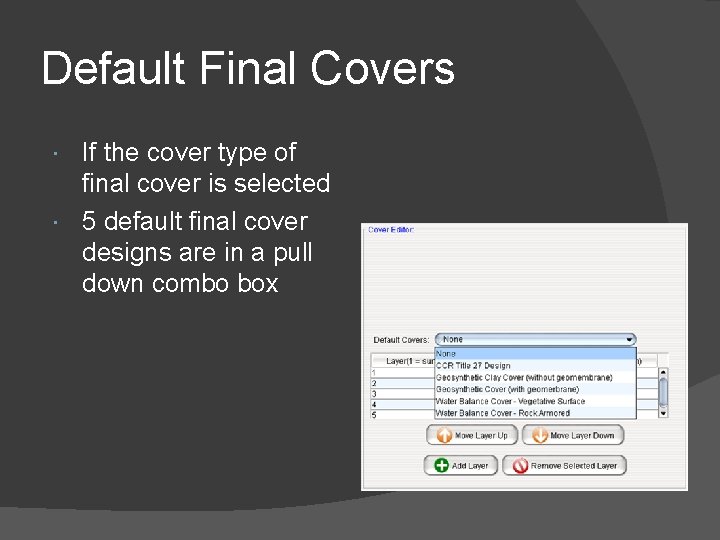
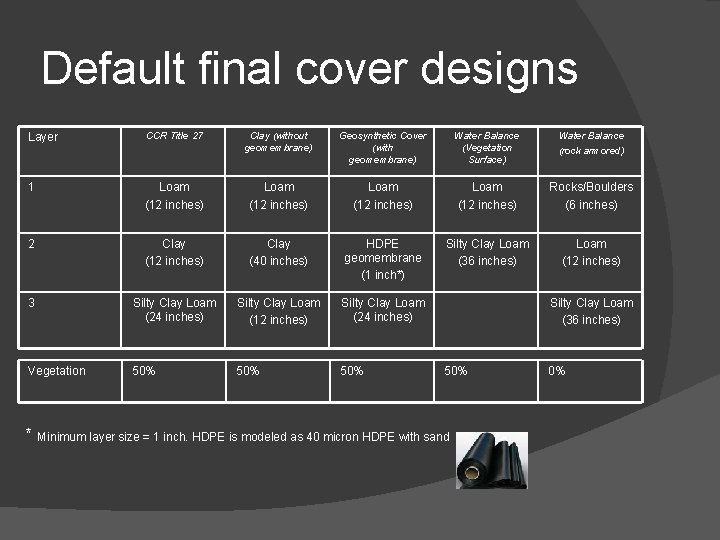
Default Final Covers If the cover type of final cover is selected 5 default final cover designs are in a pull down combo box
Default final cover designs Layer CCR Title 27 Clay (without geomembrane) Geosynthetic Cover (with geomembrane) Water Balance (Vegetation Surface) Water Balance (rock armored) 1 Loam (12 inches) Rocks/Boulders (6 inches) 2 Clay (12 inches) Clay (40 inches) HDPE geomembrane (1 inch*) Silty Clay Loam (36 inches) Loam (12 inches) 3 Silty Clay Loam (24 inches) Silty Clay Loam (12 inches) Silty Clay Loam (24 inches) Vegetation 50% 50% Silty Clay Loam (36 inches) 50% * Minimum layer size = 1 inch. HDPE is modeled as 40 micron HDPE with sand 0%
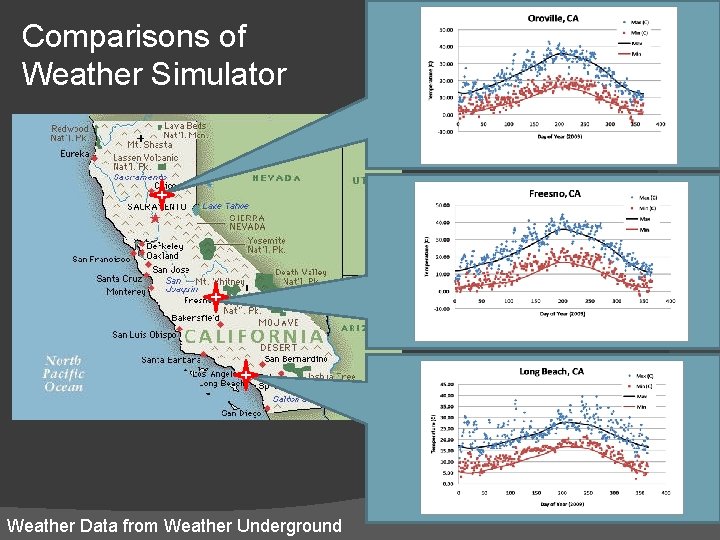
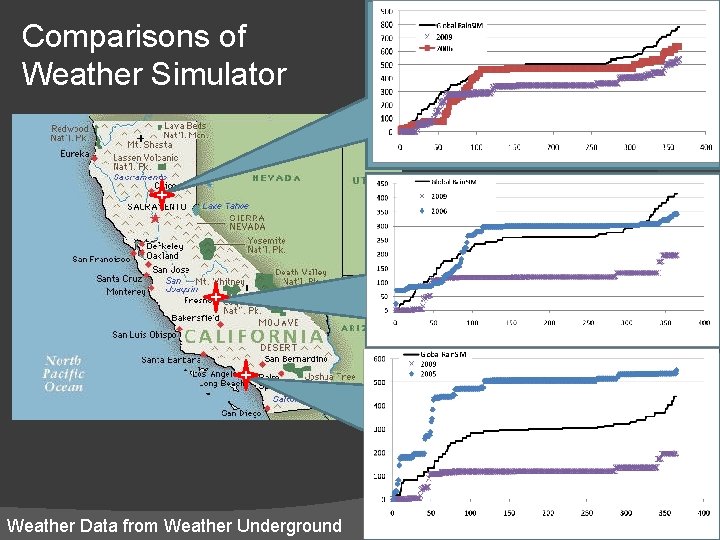
3. Simulated Weather CALMIM uses 3 previously validated simulation models ○ Global. Temp. SIM ○ Global. Rain. SIM ○ Solar. Calc
Comparisons of Weather Simulator Oroville, CA (2009) Fresno, CA (2009) Long Beach, CA (2009) Weather Data from Weather Underground
Comparisons of Weather Simulator Oroville, CA (2009) Fresno, CA (2009) Long Beach, CA (2009) Weather Data from Weather Underground
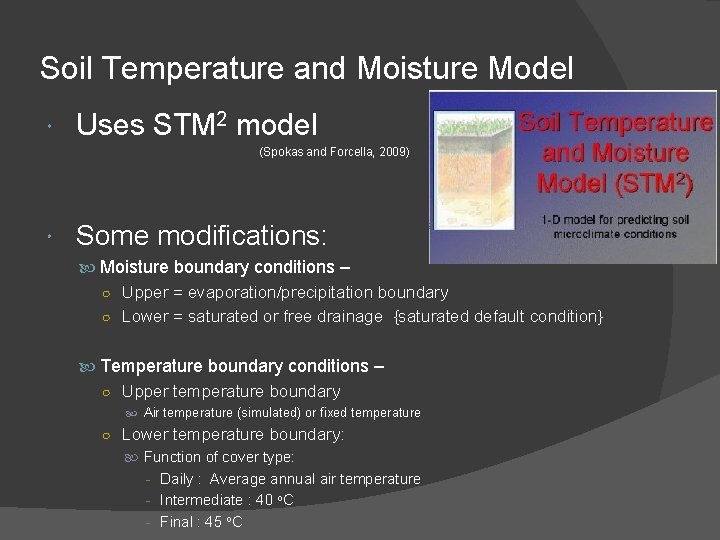
Soil Temperature and Moisture Model Uses STM 2 model (Spokas and Forcella, 2009) Some modifications: Moisture boundary conditions – ○ Upper = evaporation/precipitation boundary ○ Lower = saturated or free drainage {saturated default condition} Temperature boundary conditions – ○ Upper temperature boundary Air temperature (simulated) or fixed temperature ○ Lower temperature boundary: Function of cover type: - Daily : Average annual air temperature - Intermediate : 40 o. C - Final : 45 o. C
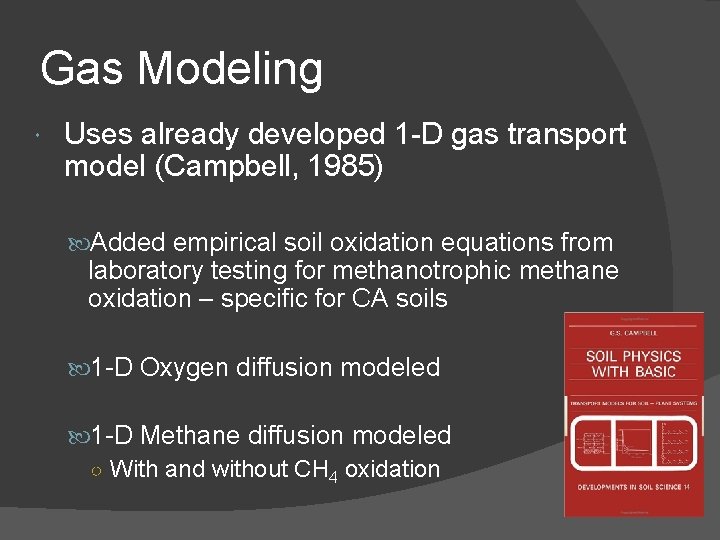
Gas Modeling Uses already developed 1 -D gas transport model (Campbell, 1985) Added empirical soil oxidation equations from laboratory testing for methanotrophic methane oxidation – specific for CA soils 1 -D Oxygen diffusion modeled 1 -D Methane diffusion modeled ○ With and without CH 4 oxidation
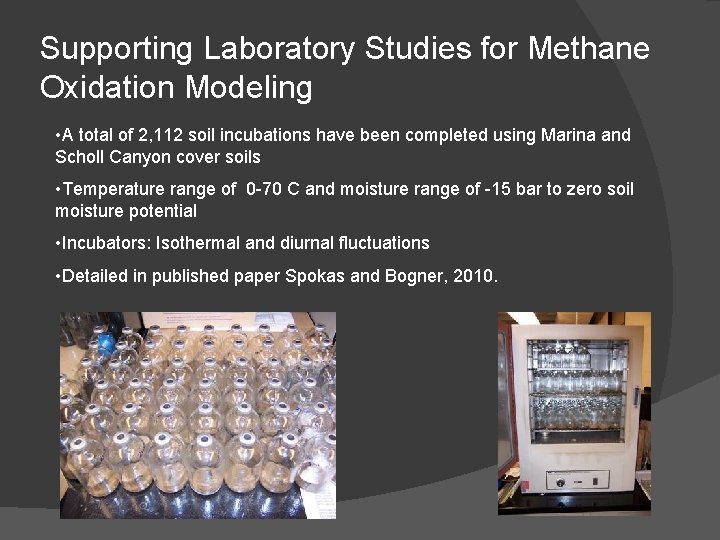
Supporting Laboratory Studies for Methane Oxidation Modeling • A total of 2, 112 soil incubations have been completed using Marina and Scholl Canyon cover soils • Temperature range of 0 -70 C and moisture range of -15 bar to zero soil moisture potential • Incubators: Isothermal and diurnal fluctuations • Detailed in published paper Spokas and Bogner, 2010.
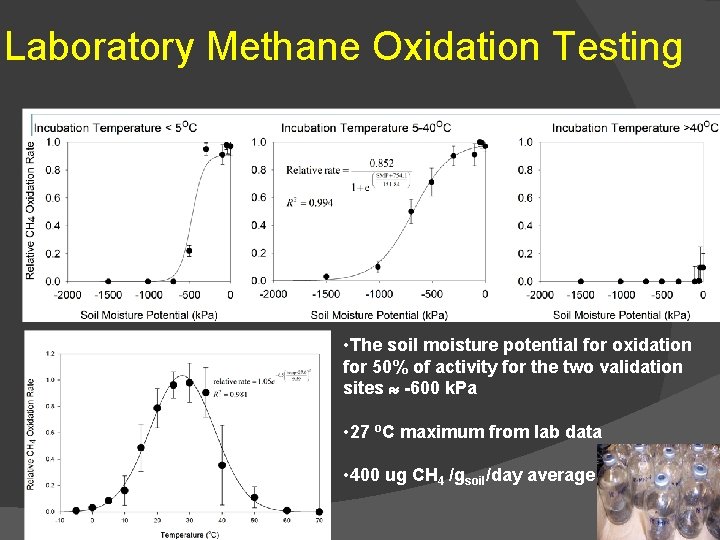
Laboratory Methane Oxidation Testing • The soil moisture potential for oxidation for 50% of activity for the two validation sites -600 k. Pa • 27 o. C maximum from lab data • 400 ug CH 4 /gsoil/day average
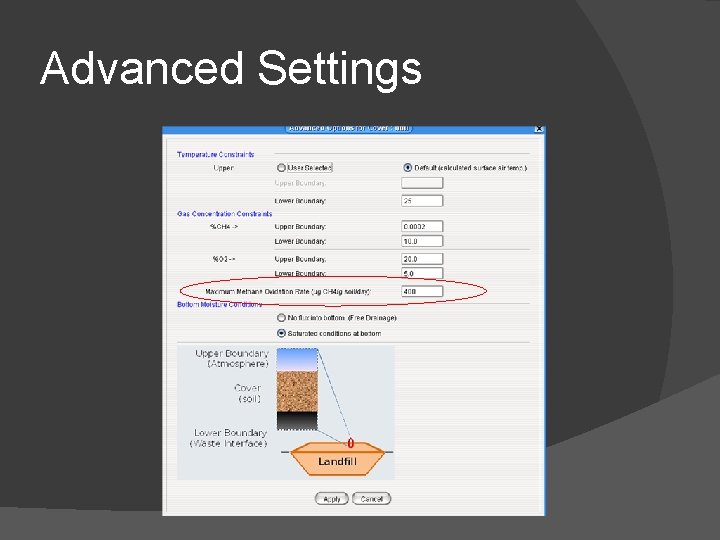
Advanced Settings
Beta Testing Initial testing conducted via USDA Share. Point server ○ Total # of registered users = 52 Due to file compatibility issues (EXE files) and delay in getting individuals registered with Share. Point moved to http: //calmim. lmem. us ○ 55 downloads of versions up to 4. 0 ○ 83 downloads of version 4. 2 (newest)
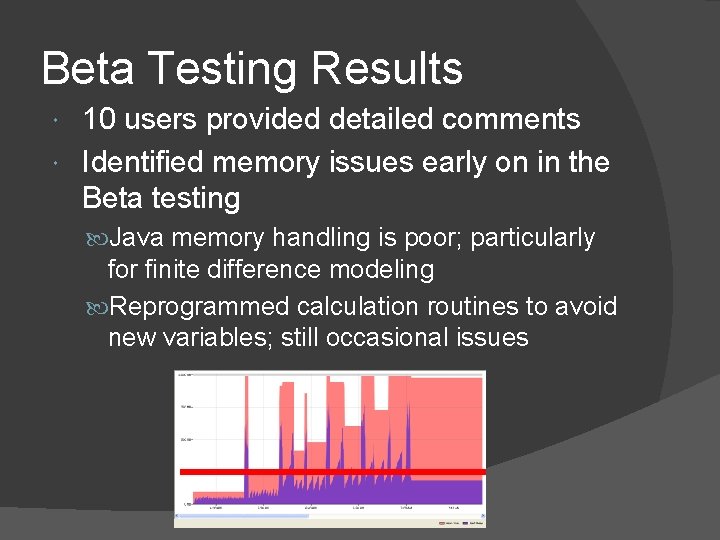
Beta Testing Results 10 users provided detailed comments Identified memory issues early on in the Beta testing Java memory handling is poor; particularly for finite difference modeling Reprogrammed calculation routines to avoid new variables; still occasional issues
Field Validation
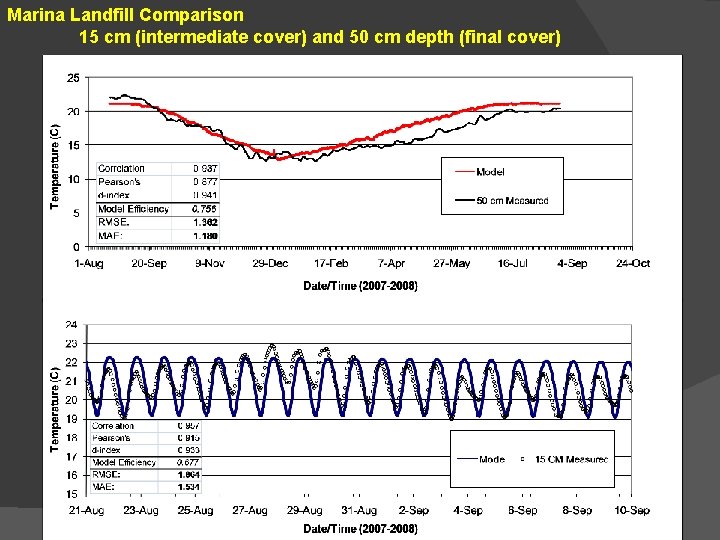
Marina Landfill Comparison 15 cm (intermediate cover) and 50 cm depth (final cover)
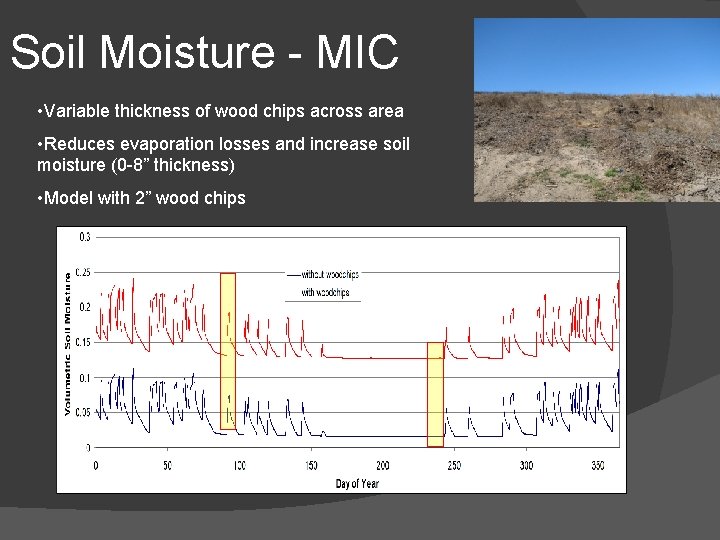
Soil Moisture - MIC • Variable thickness of wood chips across area • Reduces evaporation losses and increase soil moisture (0 -8” thickness) • Model with 2” wood chips
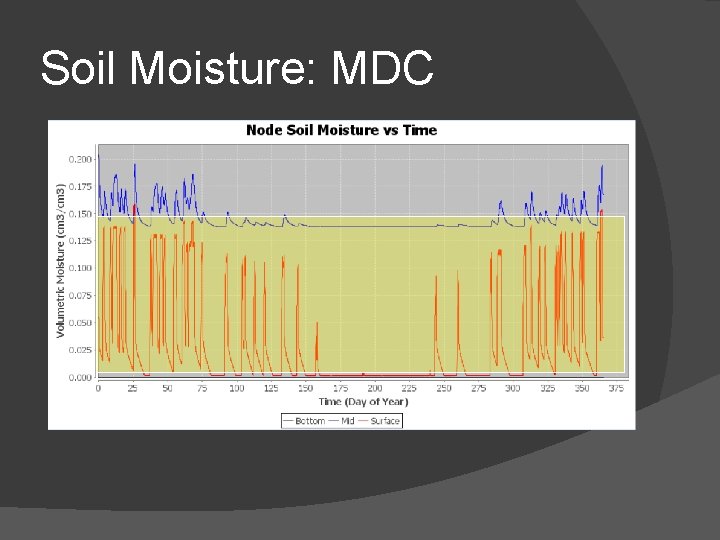
Soil Moisture: MDC
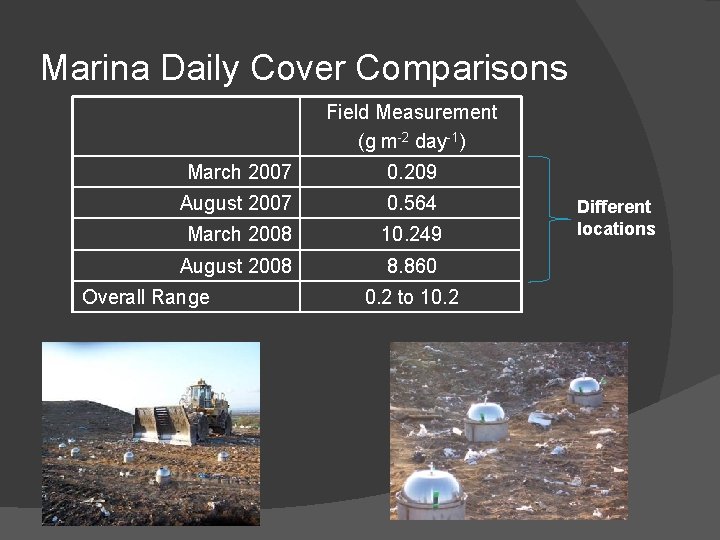
Marina Daily Cover Comparisons Field Measurement (g m-2 day-1) March 2007 0. 209 August 2007 0. 564 March 2008 10. 249 August 2008 8. 860 Overall Range 0. 2 to 10. 2 Different locations
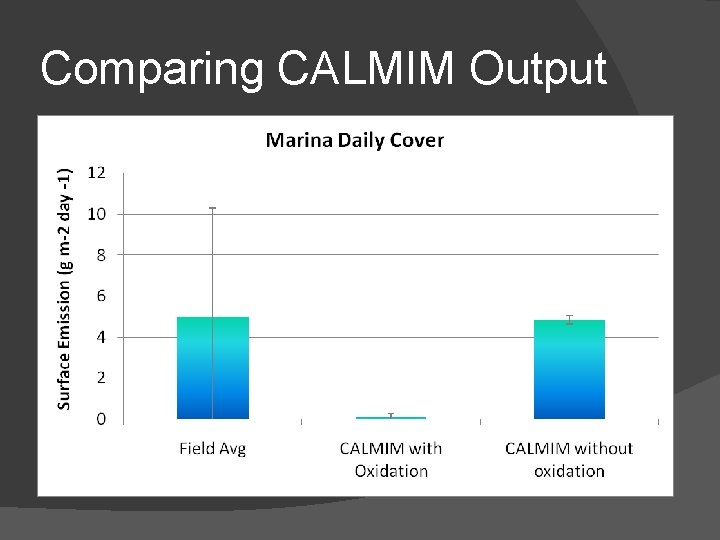
Comparing CALMIM Output
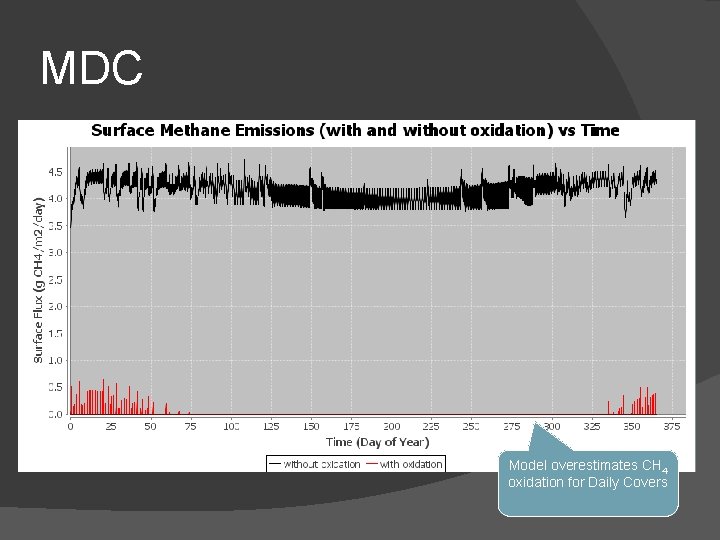
MDC Model overestimates CH 4 oxidation for Daily Covers
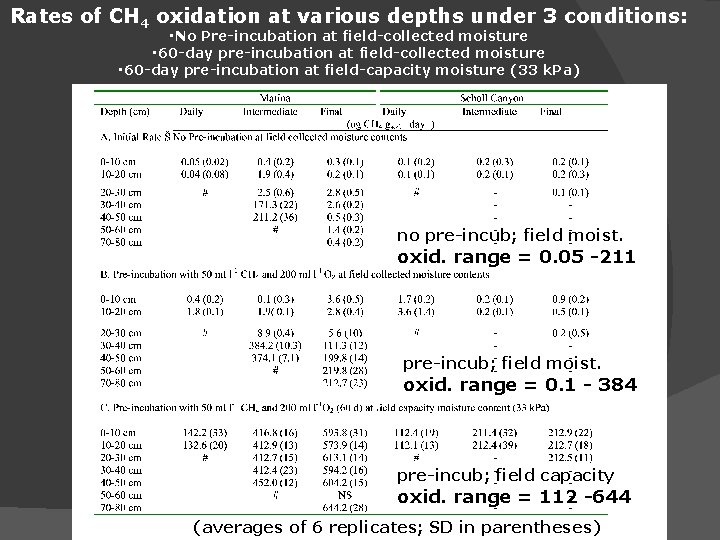
Rates of CH 4 oxidation at various depths under 3 conditions: • No Pre-incubation at field-collected moisture • 60 -day pre-incubation at field-capacity moisture (33 k. Pa) no pre-incub; field moist. oxid. range = 0. 05 -211 pre-incub; field moist. oxid. range = 0. 1 - 384 pre-incub; field capacity oxid. range = 112 -644 (averages of 6 replicates; SD in parentheses)
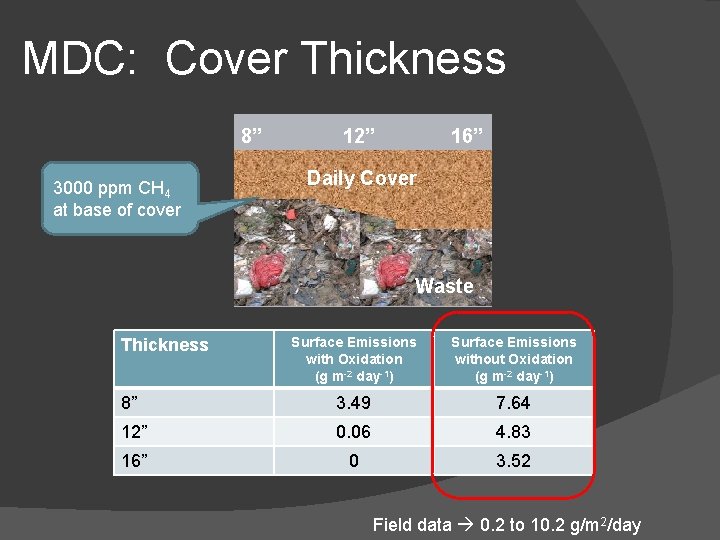
MDC: Cover Thickness 8” 3000 ppm CH 4 at base of cover 12” 16” Daily Cover Waste Surface Emissions with Oxidation (g m-2 day-1) Surface Emissions without Oxidation (g m-2 day-1) 8” 3. 49 7. 64 12” 0. 06 4. 83 16” 0 3. 52 Thickness Field data 0. 2 to 10. 2 g/m 2/day
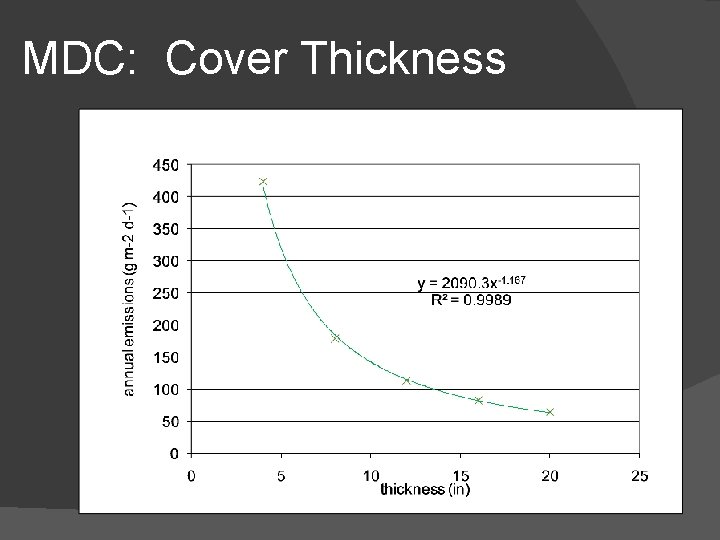
MDC: Cover Thickness
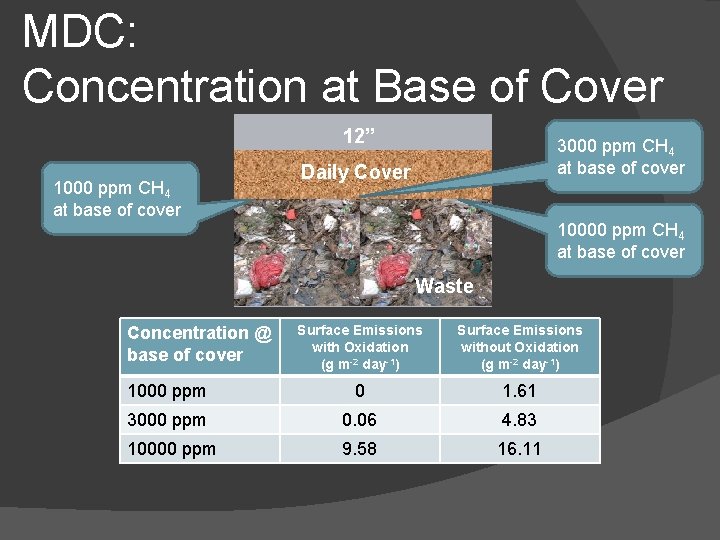
MDC: Concentration at Base of Cover 12” 1000 ppm CH 4 at base of cover 3000 ppm CH 4 at base of cover Daily Cover 10000 ppm CH 4 at base of cover Waste Surface Emissions with Oxidation (g m-2 day-1) Surface Emissions without Oxidation (g m-2 day-1) 1000 ppm 0 1. 61 3000 ppm 0. 06 4. 83 10000 ppm 9. 58 16. 11 Concentration @ base of cover
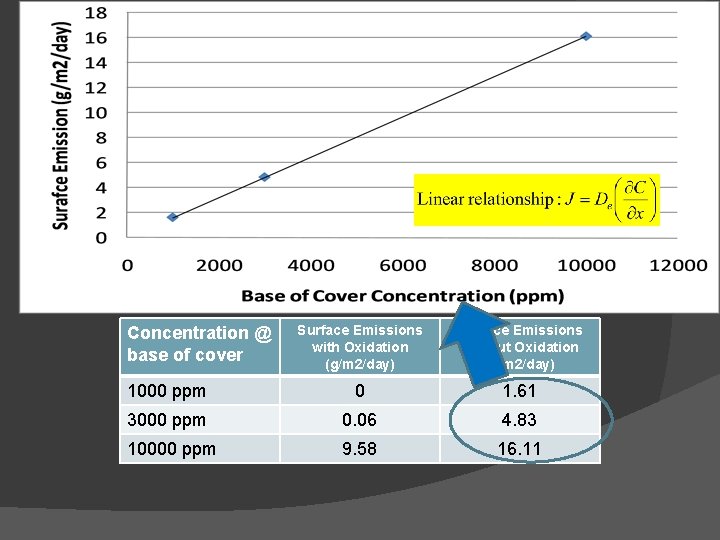
MDC: Concentration at Base of Cover 12” 1000 ppm CH 4 at base of cover 3000 ppm CH 4 at base of cover Daily Cover 10000 ppm CH 4 at base of cover Waste Surface Emissions with Oxidation (g/m 2/day) Surface Emissions without Oxidation (g/m 2/day) 1000 ppm 0 1. 61 3000 ppm 0. 06 4. 83 10000 ppm 9. 58 16. 11 Concentration @ base of cover
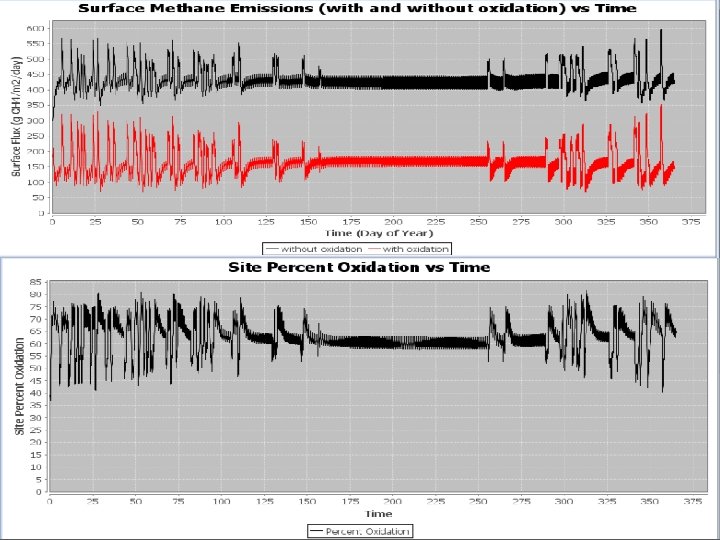
Marina Intermediate Cover [Cover placed late 2006] Field Measurement % CH 4 (v/v) at base of cover (g m-2 day-1) March 2007 0. 03 11. 2 August 2007 53. 17 40. 7 March 2008 34. 20 54. 9 August 2008 237. 81 54. 4
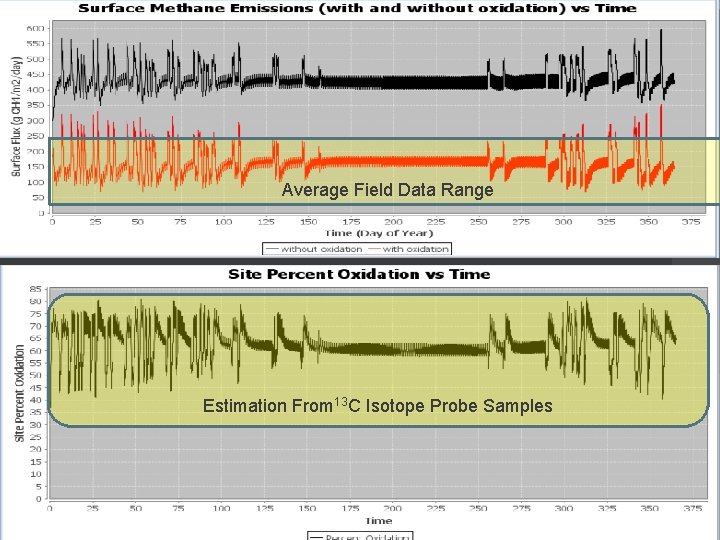
Average Field Data Range Estimation From 13 C Isotope Probe Samples
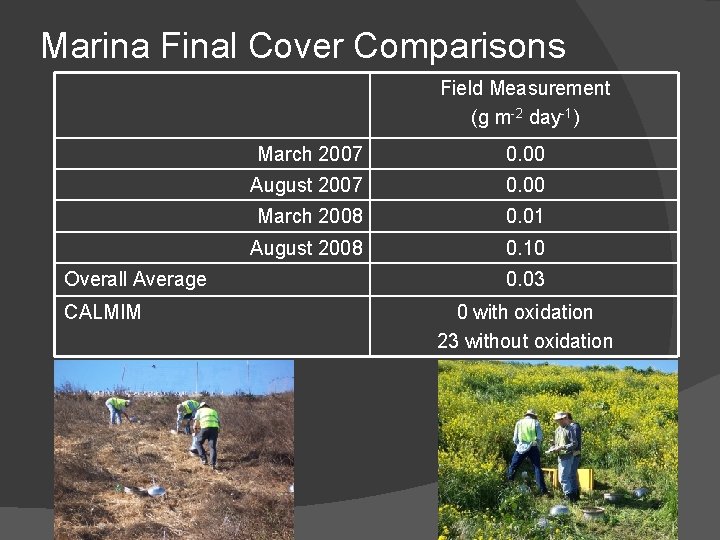
Marina Final Cover Comparisons Field Measurement (g m-2 day-1) Overall Average CALMIM March 2007 0. 00 August 2007 0. 00 March 2008 0. 01 August 2008 0. 10 0. 03 0 with oxidation 23 without oxidation
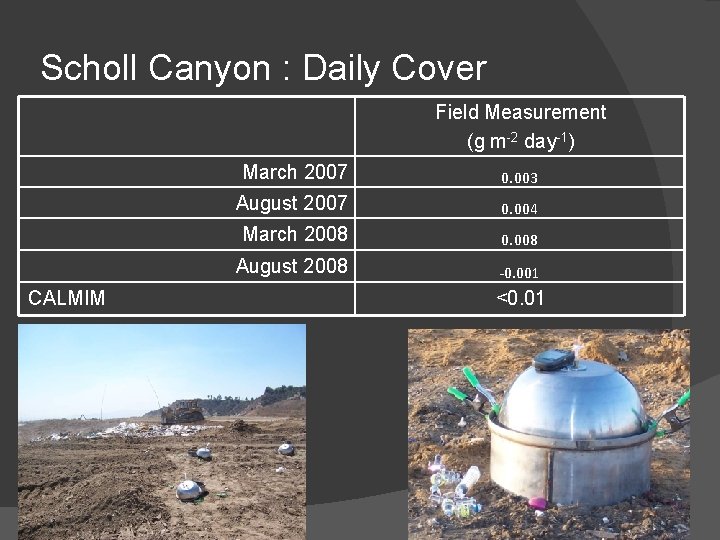
Scholl Canyon : Daily Cover Field Measurement (g m-2 day-1) CALMIM March 2007 0. 003 August 2007 0. 004 March 2008 0. 008 August 2008 -0. 001 <0. 01
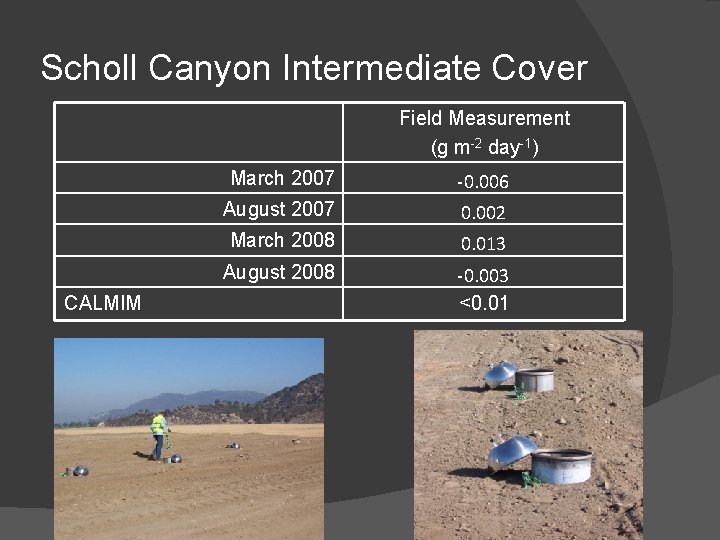
Scholl Canyon Intermediate Cover Field Measurement (g m-2 day-1) CALMIM March 2007 -0. 006 August 2007 0. 002 March 2008 0. 013 August 2008 -0. 003 <0. 01
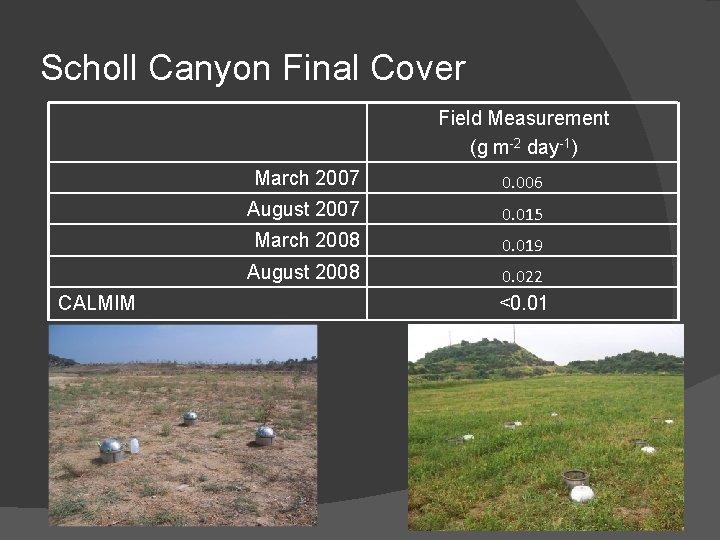
Scholl Canyon Final Cover Field Measurement (g m-2 day-1) CALMIM March 2007 0. 006 August 2007 0. 015 March 2008 0. 019 August 2008 0. 022 <0. 01
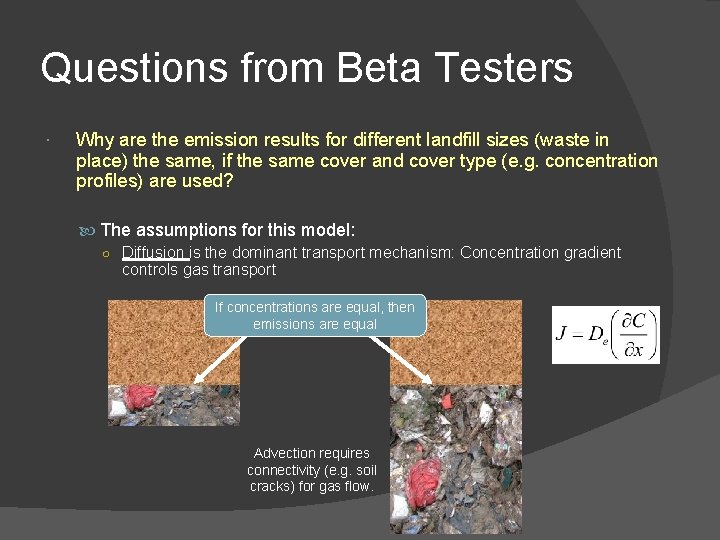
Questions from Beta Testers Why are the emission results for different landfill sizes (waste in place) the same, if the same cover and cover type (e. g. concentration profiles) are used? The assumptions for this model: ○ Diffusion is the dominant transport mechanism: Concentration gradient controls gas transport If concentrations are equal, then emissions are equal Advection requires connectivity (e. g. soil cracks) for gas flow.
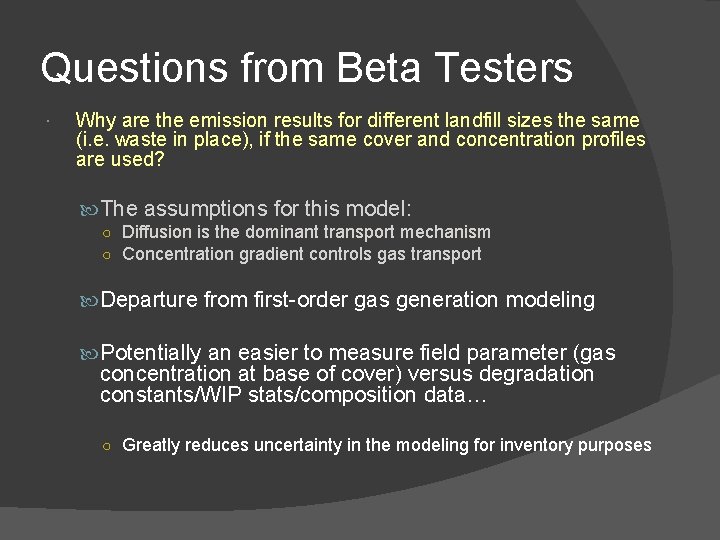
Questions from Beta Testers Why are the emission results for different landfill sizes the same (i. e. waste in place), if the same cover and concentration profiles are used? The assumptions for this model: ○ Diffusion is the dominant transport mechanism ○ Concentration gradient controls gas transport Departure from first-order gas generation modeling Potentially an easier to measure field parameter (gas concentration at base of cover) versus degradation constants/WIP stats/composition data… ○ Greatly reduces uncertainty in the modeling for inventory purposes
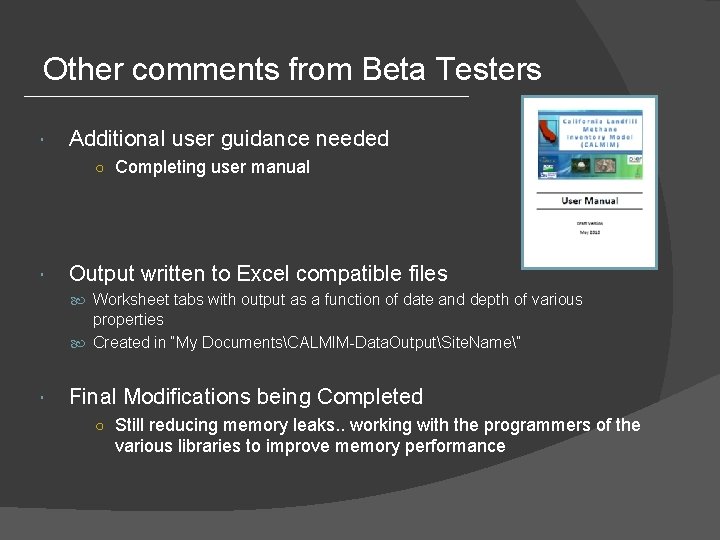
Other comments from Beta Testers Additional user guidance needed ○ Completing user manual Output written to Excel compatible files Worksheet tabs with output as a function of date and depth of various properties Created in “My DocumentsCALMIM-Data. OutputSite. Name” Final Modifications being Completed ○ Still reducing memory leaks. . working with the programmers of the various libraries to improve memory performance
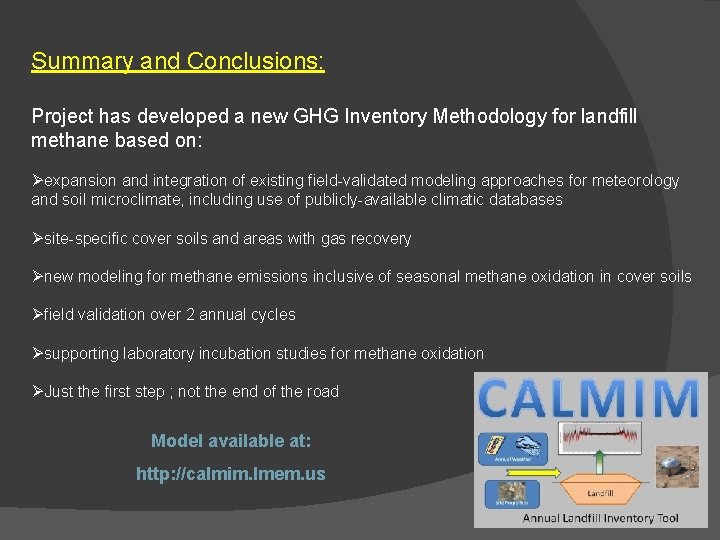
Summary and Conclusions: Project has developed a new GHG Inventory Methodology for landfill methane based on: Øexpansion and integration of existing field-validated modeling approaches for meteorology and soil microclimate, including use of publicly-available climatic databases Øsite-specific cover soils and areas with gas recovery Ønew modeling for methane emissions inclusive of seasonal methane oxidation in cover soils Øfield validation over 2 annual cycles Øsupporting laboratory incubation studies for methane oxidation ØJust the first step ; not the end of the road Model available at: http: //calmim. lmem. us
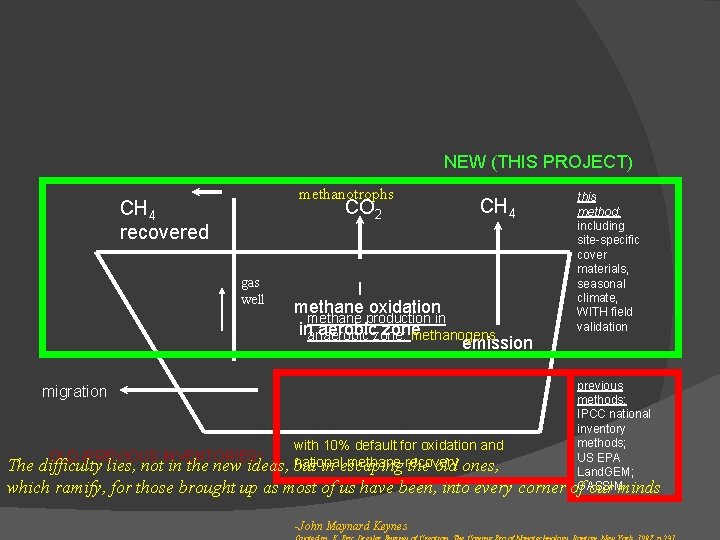
NEW (THIS PROJECT) methanotrophs CO 2 CH 4 recovered gas well CH 4 methane oxidation methane production in inanaerobiczone: zone methanogens emission migration OLD (PREVIOUS INVENTORIES) with 10% default for oxidation and national methane recovery but in escaping the old ones, The difficulty lies, not in the new ideas, which ramify, for those brought up as most of us have been, into every corner -John Maynard Keynes this method: including site-specific cover materials, seasonal climate, WITH field validation previous methods: IPCC national inventory methods; US EPA Land. GEM; of. GASSIM our minds
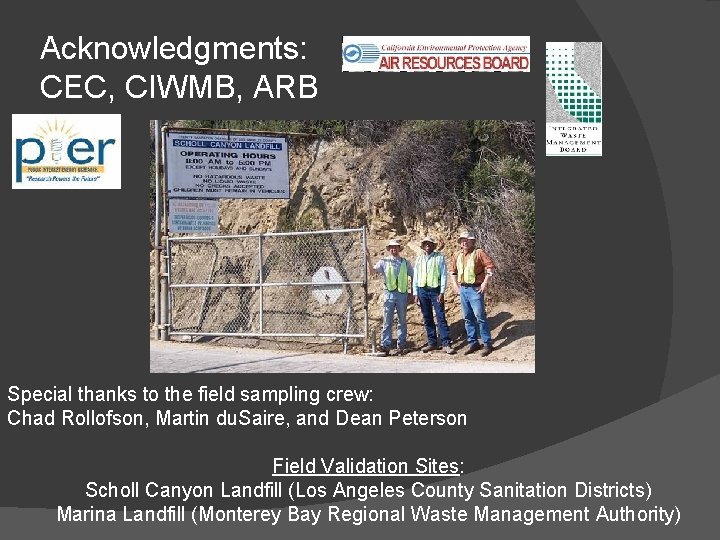
Acknowledgments: CEC, CIWMB, ARB Special thanks to the field sampling crew: Chad Rollofson, Martin du. Saire, and Dean Peterson Field Validation Sites: Scholl Canyon Landfill (Los Angeles County Sanitation Districts) Marina Landfill (Monterey Bay Regional Waste Management Authority)