
MODEL BASED REASONING BY INTRODUCTORY STUDENTS WHEN ANALYZING
MODEL BASED REASONING BY INTRODUCTORY STUDENTS WHEN ANALYZING EARTH SYSTEMS AND SOCIETAL CHALLENGES Lauren Holder and Dr. Bruce Herbert Texas A&M University LNHOLDER@TAMU. EDU HERBERT@GEO. TAMU. EDU
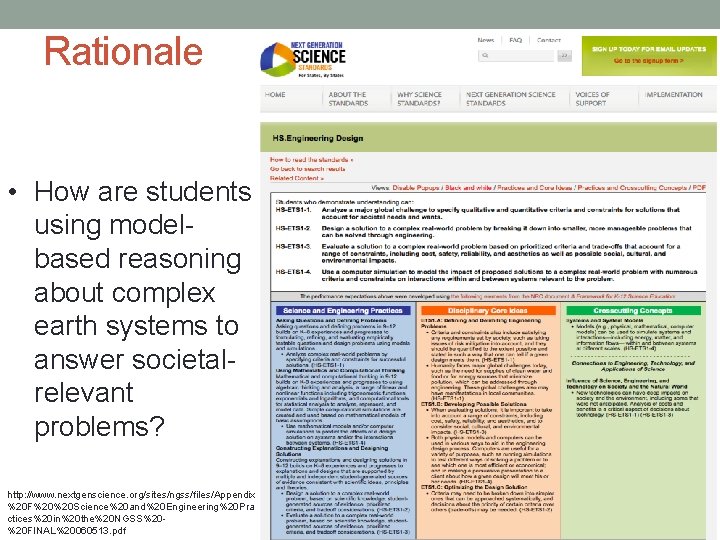
Rationale • How are students using modelbased reasoning about complex earth systems to answer societalrelevant problems? http: //www. nextgenscience. org/sites/ngss/files/Appendix %20 F%20%20 Science%20 and%20 Engineering%20 Pra ctices%20 in%20 the%20 NGSS%20%20 FINAL%20060513. pdf
Theoretical Framework Learning is: 1. Conceptual 2. Social 3. Situated • Learning is best when embedded in authentic practices Duschl, R. (2008). Science education in three-part harmony: Balancing conceptual, epistemic, and social learning goals. Review of research in education, 32(1), 268 -291. Bransford, J. D. , Brown, A. L. , & Cocking, R. R. (2000). How people learn.

Land Grant Institutions http: //provost. tamu. edu/initiatives/SPDraft. Mar 29 revised 1117 Tuesday. pdf
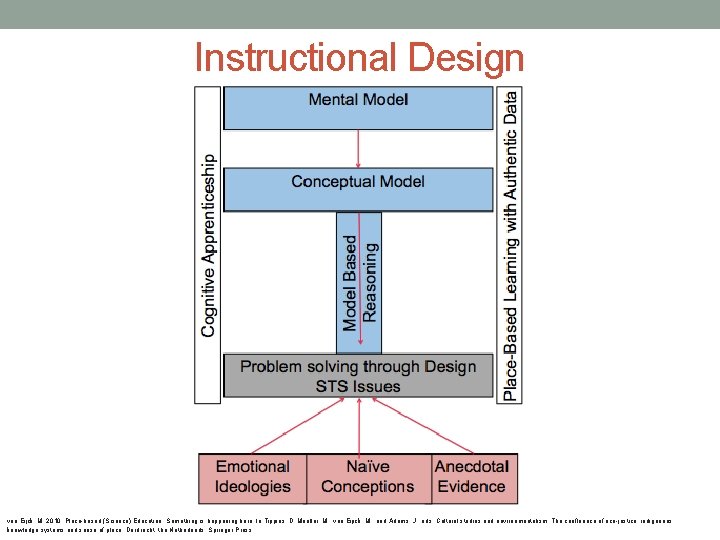
Instructional Design van Eijck, M. 2010. Place-based (Science) Education: Something is happening here. In Tippins, D. Mueller, M. , van Eijick, M. , and Adams, J. , eds. Cultural studies and environmentalism: The confluence of eco-justice, indigenous knowledge systems and sense of place. Dordrecht, the Netherlands: Springer Press.
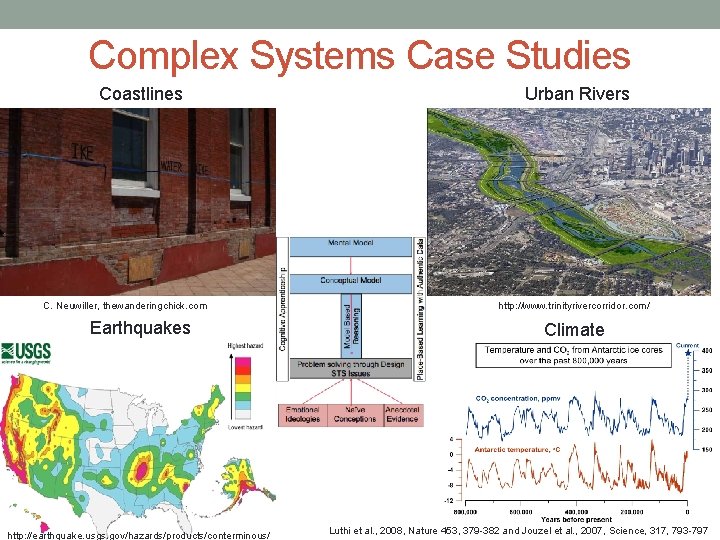
Complex Systems Case Studies Coastlines C. Neuwiller, thewanderingchick. com Earthquakes http: //earthquake. usgs. gov/hazards/products/conterminous/ Urban Rivers http: //www. trinityrivercorridor. com/ Climate Luthi et al. , 2008, Nature 453, 379 -382 and Jouzel et al. , 2007, Science, 317, 793 -797
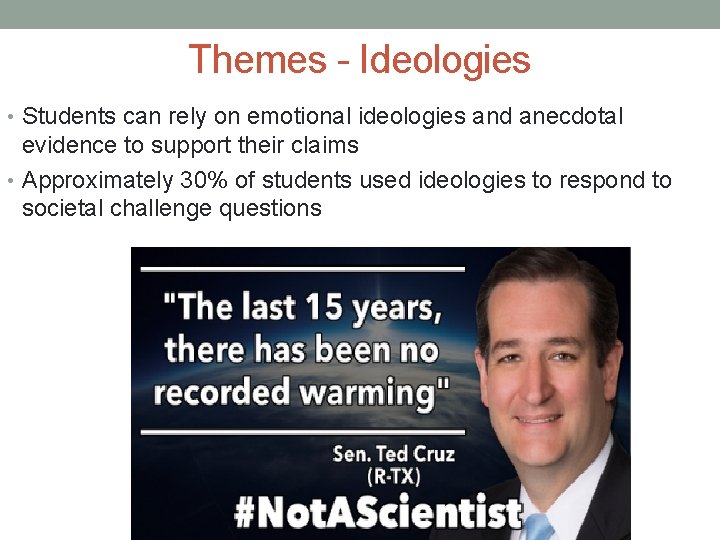
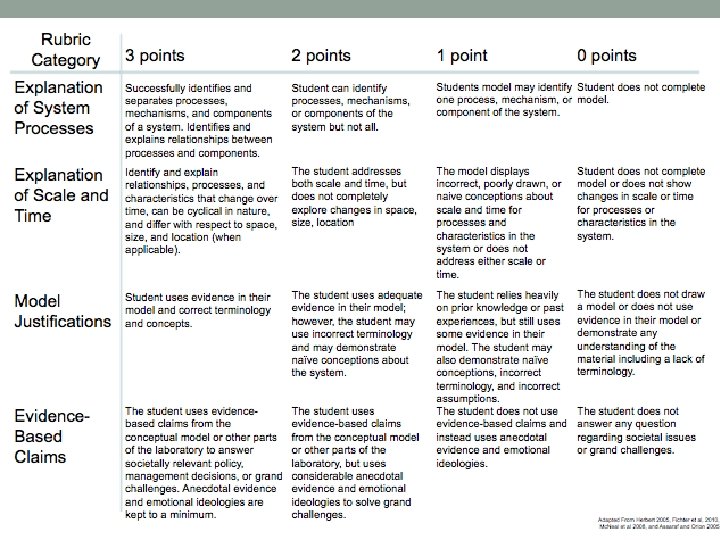
Themes - Ideologies • Students can rely on emotional ideologies and anecdotal evidence to support their claims • Approximately 30% of students used ideologies to respond to societal challenge questions
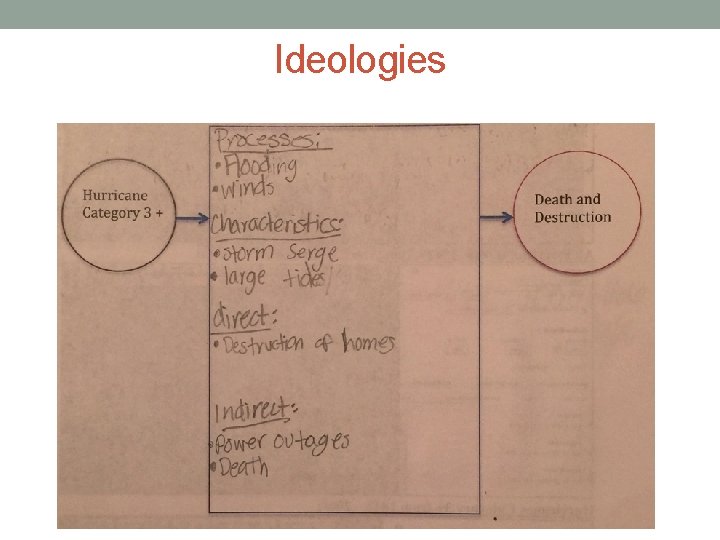
Ideologies
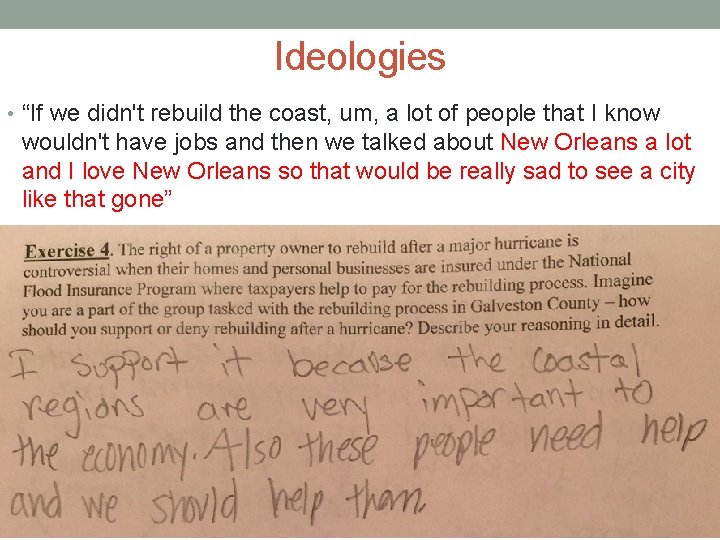
Ideologies • “If we didn't rebuild the coast, um, a lot of people that I know wouldn't have jobs and then we talked about New Orleans a lot and I love New Orleans so that would be really sad to see a city like that gone”
Themes – Scientific Argumentation • Key to presenting a scientific claim • Approximately 50% of students used argumentation Bransford, J. D. , Brown, A. L. , & Cocking, R. R. (2000). How people learn. http: //www. nextgenscience. org/sites/ngss/files/Appendix%20 F%20%2 0 Science%20 and%20 Engineering%20 Practices%20 in%20 the%20 NG SS%20 -%20 FINAL%20060513. pdf
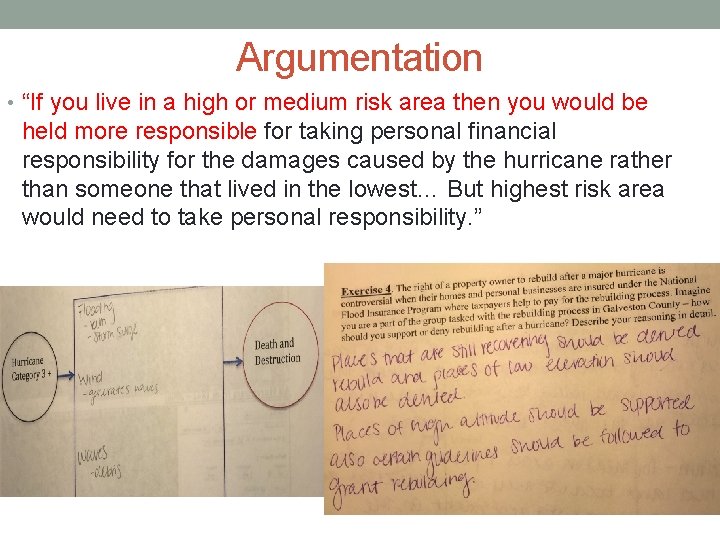
Argumentation • “If you live in a high or medium risk area then you would be held more responsible for taking personal financial responsibility for the damages caused by the hurricane rather than someone that lived in the lowest… But highest risk area would need to take personal responsibility. ”
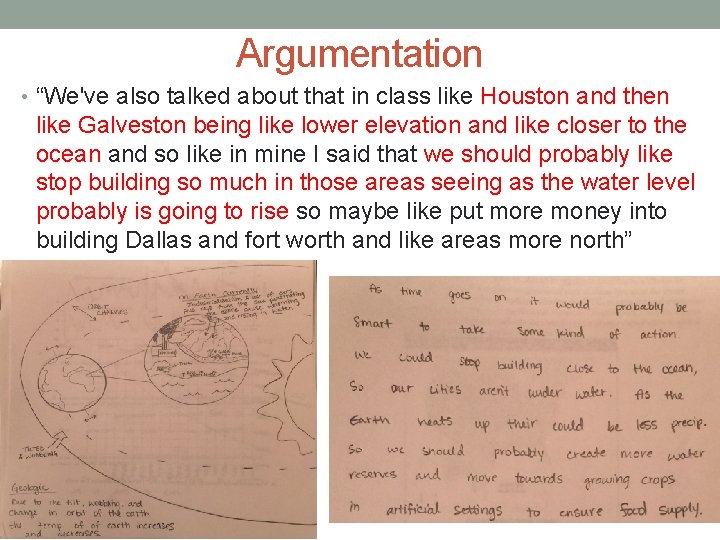
Argumentation • “We've also talked about that in class like Houston and then like Galveston being like lower elevation and like closer to the ocean and so like in mine I said that we should probably like stop building so much in those areas seeing as the water level probably is going to rise so maybe like put more money into building Dallas and fort worth and like areas more north”
Themes - Analogous Reasoning • The transfer of learning is a sign of expert behavior • Less than 10% of students exhibited knowledge transfer across the four labs, and less described this phenomenon in written artifacts Bransford, J. D. , Brown, A. L. , & Cocking, R. R. (2000). How people learn.
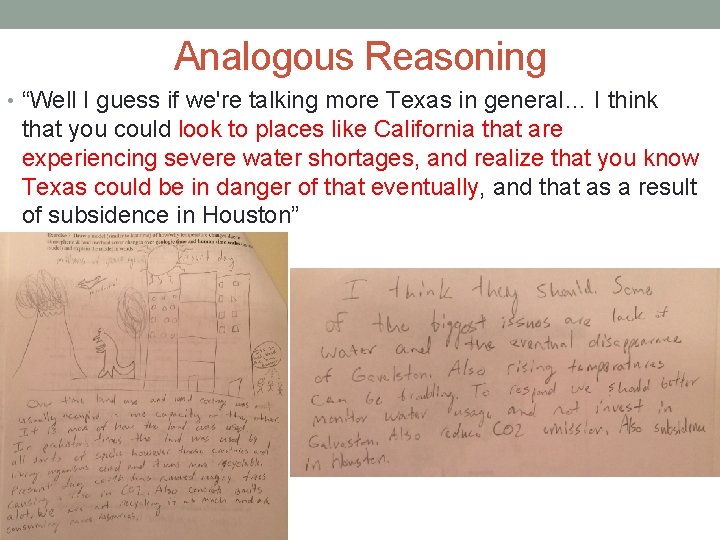
Analogous Reasoning • “Well I guess if we're talking more Texas in general… I think that you could look to places like California that are experiencing severe water shortages, and realize that you know Texas could be in danger of that eventually, and that as a result of subsidence in Houston”
Conclusions • Our analysis of data showed students struggled in two ways: • The nature of their argumentation • Ideology • Scientific argumentation • Knowledge Transfer • The importance of authentic design that is directly linked to authentic inquiry in case studies • Future questions: • The impact of authentic case studies on students’ beliefs and values
Questions?
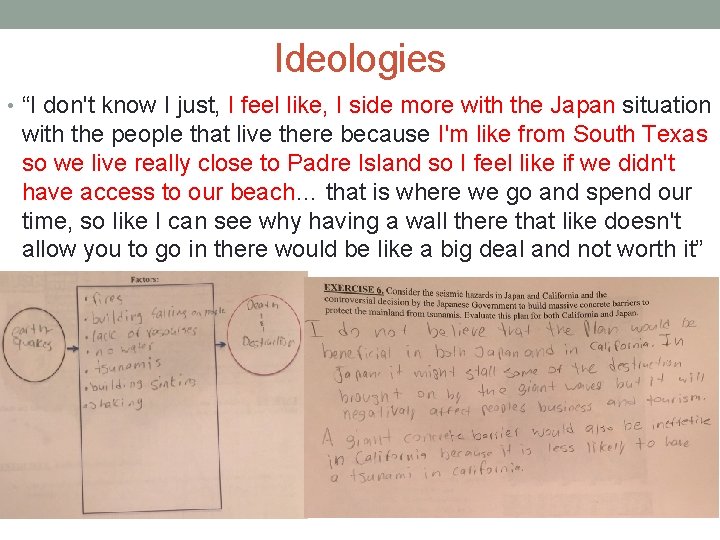
Ideologies • “I don't know I just, I feel like, I side more with the Japan situation with the people that live there because I'm like from South Texas so we live really close to Padre Island so I feel like if we didn't have access to our beach… that is where we go and spend our time, so like I can see why having a wall there that like doesn't allow you to go in there would be like a big deal and not worth it”
- Slides: 18