
Model Based Engineering Environment Christopher Delp NASACaltech Jet
Model Based Engineering Environment Christopher Delp NASA/Caltech Jet Propulsion Laboratory
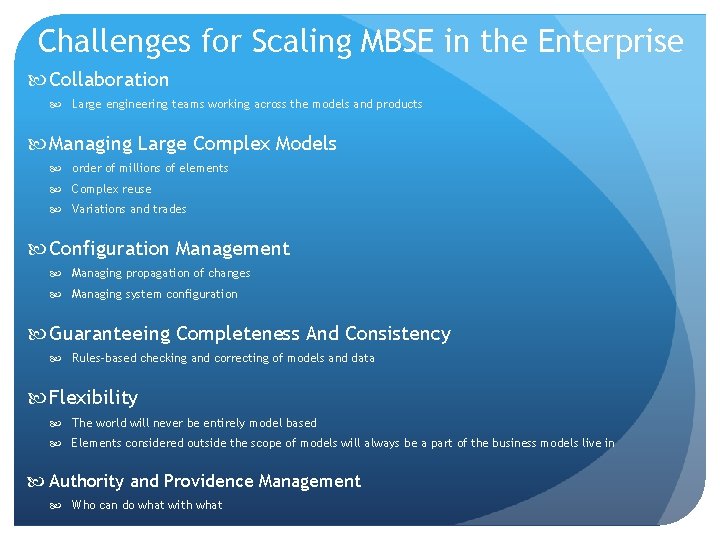
Challenges for Scaling MBSE in the Enterprise Collaboration Large engineering teams working across the models and products Managing Large Complex Models order of millions of elements Complex reuse Variations and trades Configuration Management Managing propagation of changes Managing system configuration Guaranteeing Completeness And Consistency Rules-based checking and correcting of models and data Flexibility The world will never be entirely model based Elements considered outside the scope of models will always be a part of the business models live in Authority and Providence Management Who can do what with what
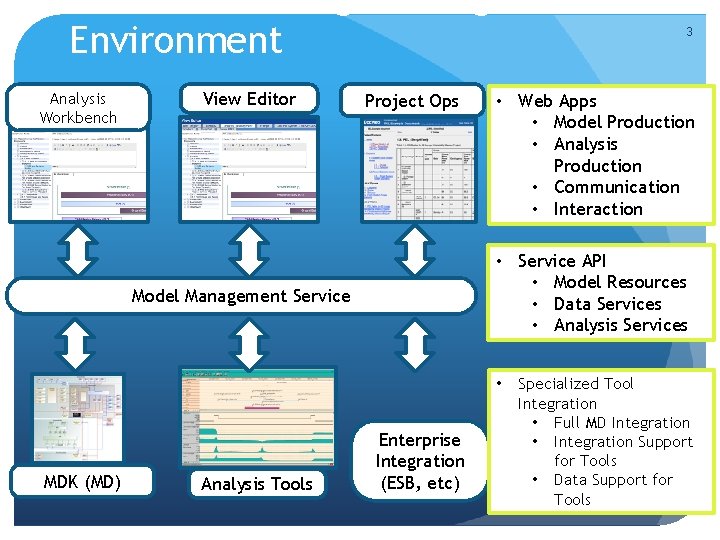
Model-Based Engineering Environment Analysis Workbench View Editor Project Ops 3 • Web Apps • Model Production • Analysis Production • Communication • Interaction • Service API • Model Resources • Data Services • Analysis Services Model Management Service • MDK (MD) Analysis Tools Enterprise Integration (ESB, etc) Specialized Tool Integration • Full MD Integration • Integration Support for Tools • Data Support for Tools
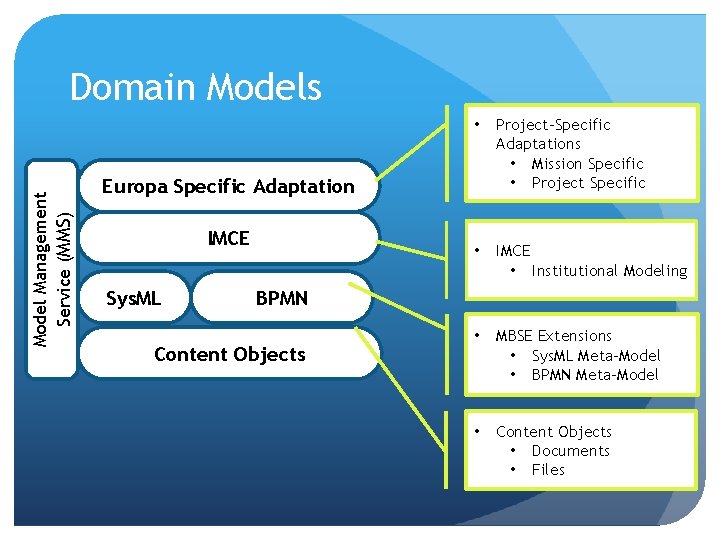
Model Management Service (MMS) Domain Models • Project-Specific Adaptations • Mission Specific • Project Specific • IMCE • Institutional Modeling • MBSE Extensions • Sys. ML Meta-Model • BPMN Meta-Model • Content Objects • Documents • Files Europa Specific Adaptation IMCE Sys. ML BPMN Content Objects
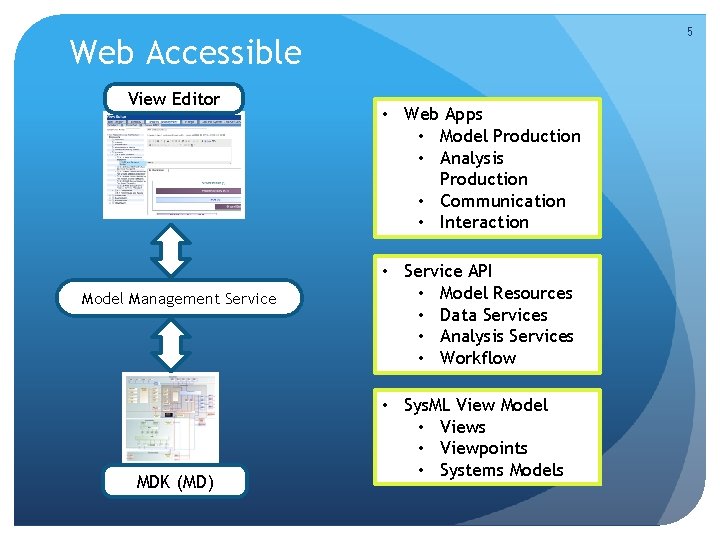
5 Web Accessible View Editor Model Management Service MDK (MD) • Web Apps • Model Production • Analysis Production • Communication • Interaction • Service API • Model Resources • Data Services • Analysis Services • Workflow • Sys. ML View Model • Views • Viewpoints • Systems Models
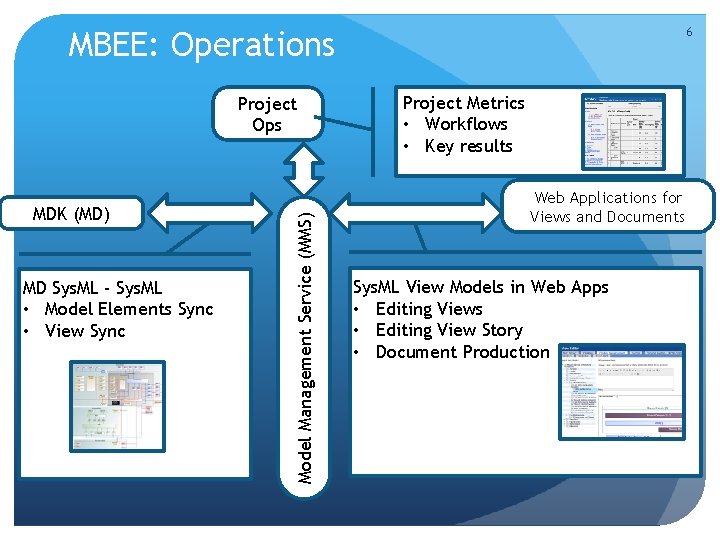
MBEE: Operations MDK (MD) MD Sys. ML - Sys. ML • Model Elements Sync • View Sync Model Management Service (MMS) Project Ops 6 Project Metrics • Workflows • Key results Web Applications for Views and Documents Sys. ML View Models in Web Apps • Editing View Story • Document Production
Enterprise Content Management Systems Highly Accessible Variety of Web-apps Web-app extensions Support for Model and Non-model content Web-based Collaboration Workflow Notification Rules Large OO Model Support Version Control
Backup
Software Environment for MBSE Model Based Engineering Environment An environment for developing mutually correspondent and consistent engineering models Engineering Modeling Information Systems A class of Information Systems design to enable the development of engineering models
Sys. ML 1. 4 RTF
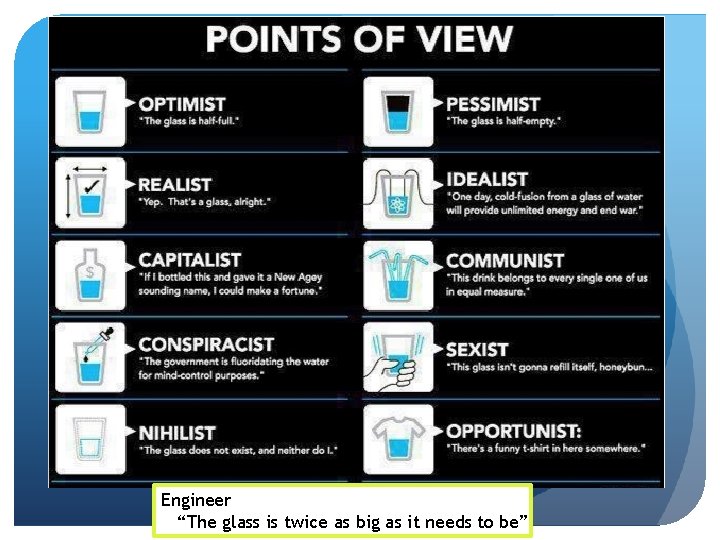
Engineer “The glass is twice as big as it needs to be”
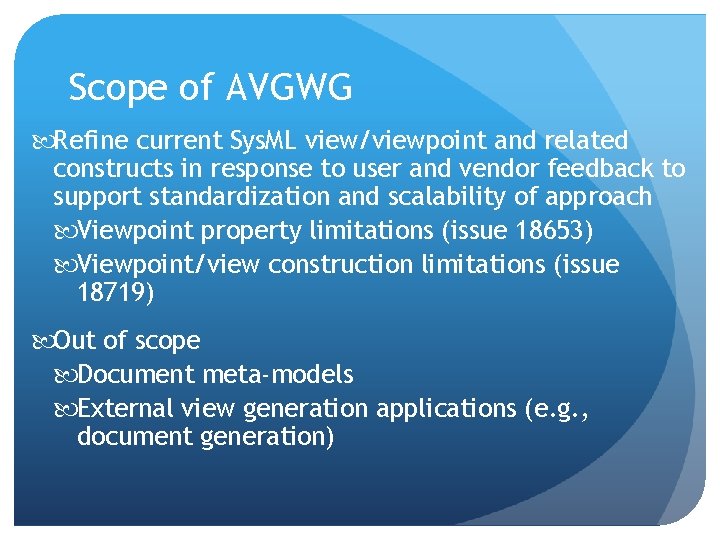
Scope of AVGWG Refine current Sys. ML view/viewpoint and related constructs in response to user and vendor feedback to support standardization and scalability of approach Viewpoint property limitations (issue 18653) Viewpoint/view construction limitations (issue 18719) Out of scope Document meta-models External view generation applications (e. g. , document generation)
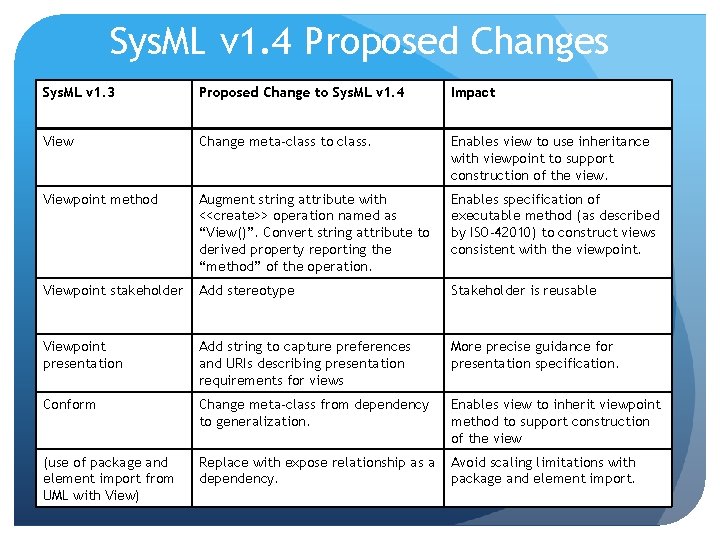
Sys. ML v 1. 4 Proposed Changes Sys. ML v 1. 3 Proposed Change to Sys. ML v 1. 4 Impact View Change meta-class to class. Enables view to use inheritance with viewpoint to support construction of the view. Viewpoint method Augment string attribute with <<create>> operation named as “View()”. Convert string attribute to derived property reporting the “method” of the operation. Enables specification of executable method (as described by ISO-42010) to construct views consistent with the viewpoint. Viewpoint stakeholder Add stereotype Stakeholder is reusable Viewpoint presentation Add string to capture preferences and URIs describing presentation requirements for views More precise guidance for presentation specification. Conform Change meta-class from dependency to generalization. Enables view to inherit viewpoint method to support construction of the view (use of package and element import from UML with View) Replace with expose relationship as a dependency. Avoid scaling limitations with package and element import.
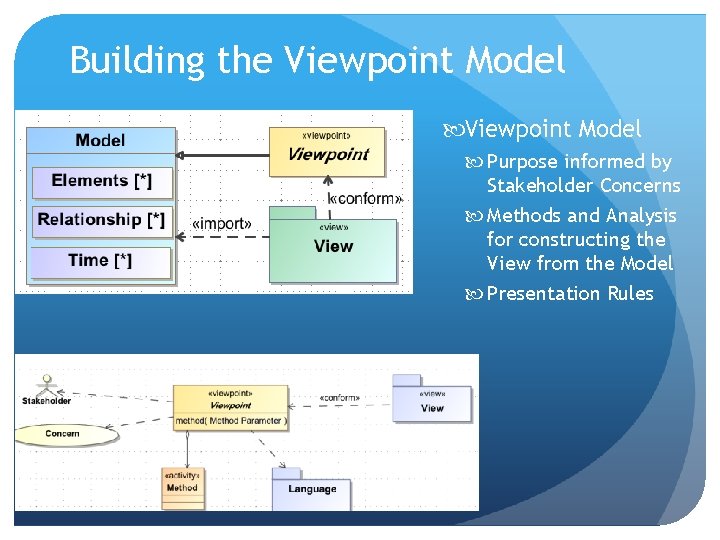
Building the Viewpoint Model Purpose informed by Stakeholder Concerns Methods and Analysis for constructing the View from the Model Presentation Rules
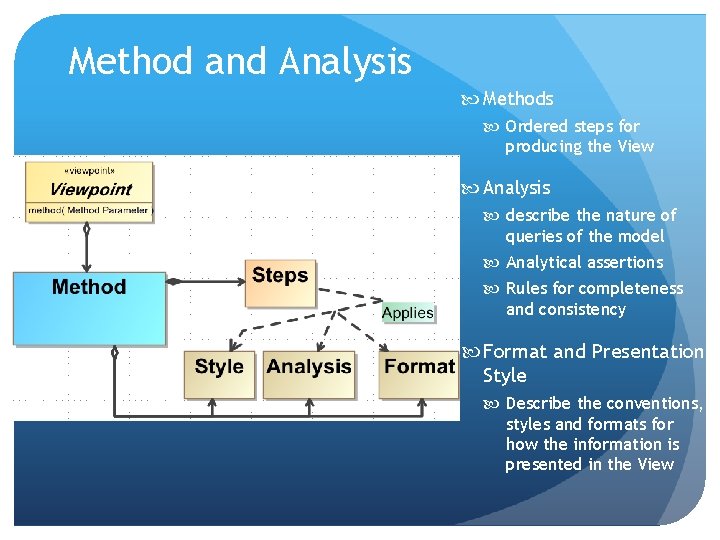
Method and Analysis Methods Ordered steps for producing the View Analysis describe the nature of queries of the model Analytical assertions Rules for completeness and consistency Format and Presentation Style Describe the conventions, styles and formats for how the information is presented in the View
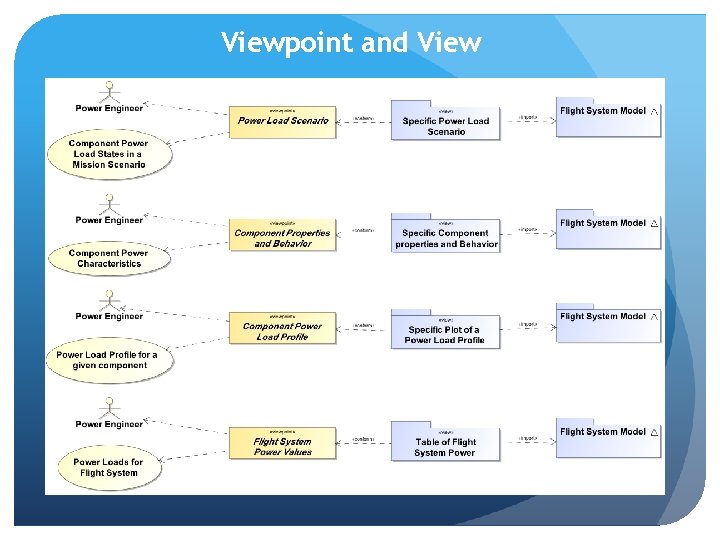
Viewpoint and View
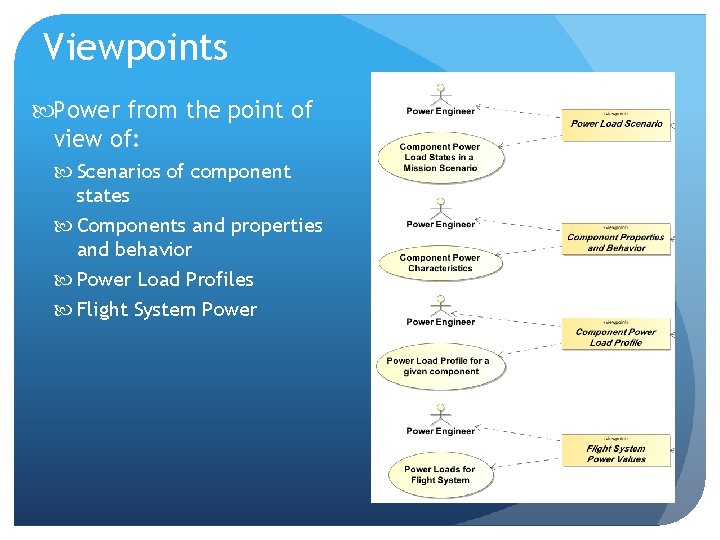
Viewpoints Power from the point of view of: Scenarios of component states Components and properties and behavior Power Load Profiles Flight System Power
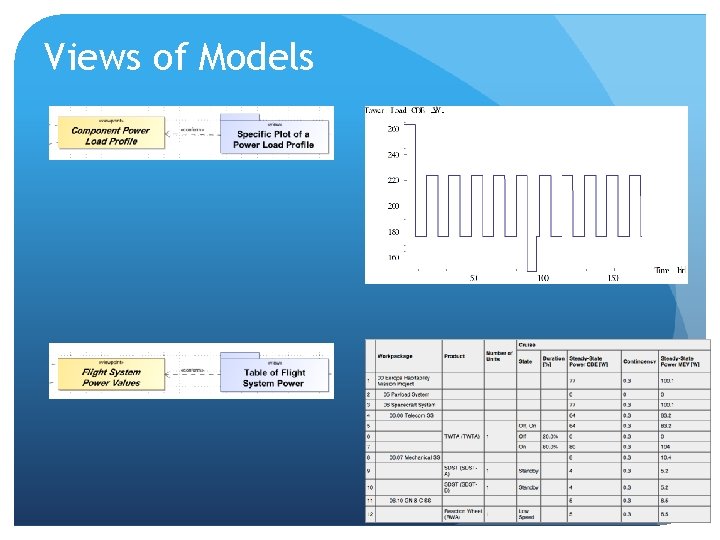
Views of Models
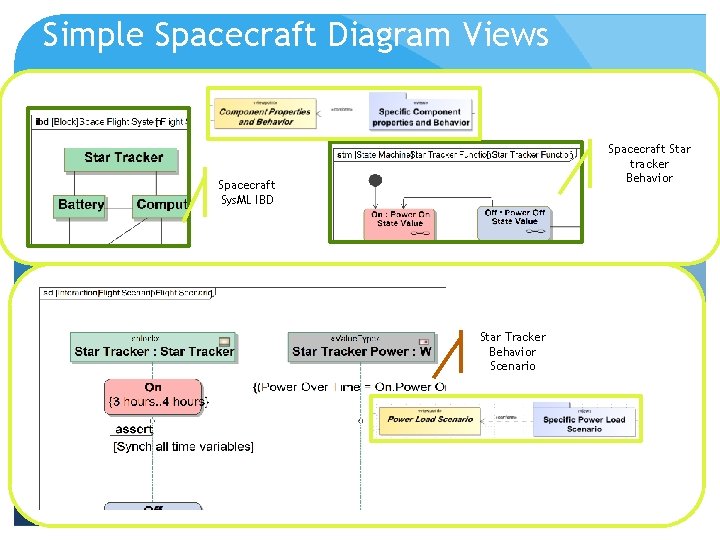
Simple Spacecraft Diagram Views Spacecraft Star tracker Behavior Spacecraft Sys. ML IBD Star Tracker Behavior Scenario
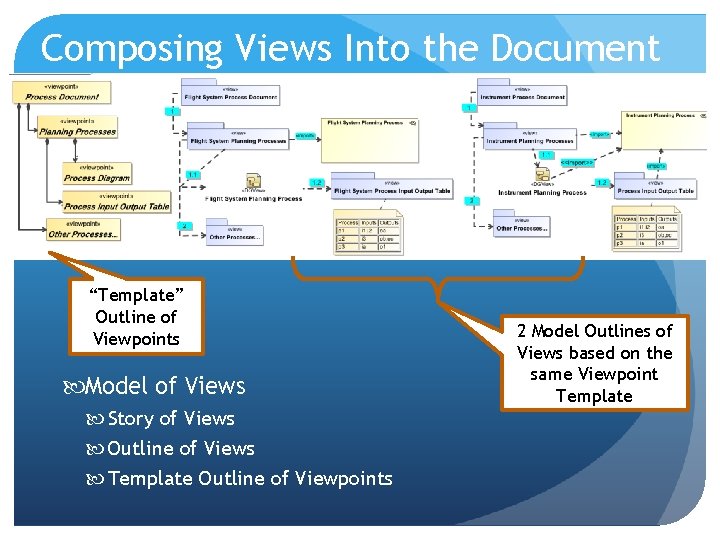
Composing Views Into the Document “Template” Outline of Viewpoints Model of Views Story of Views Outline of Views Template Outline of Viewpoints 2 Model Outlines of Views based on the same Viewpoint Template
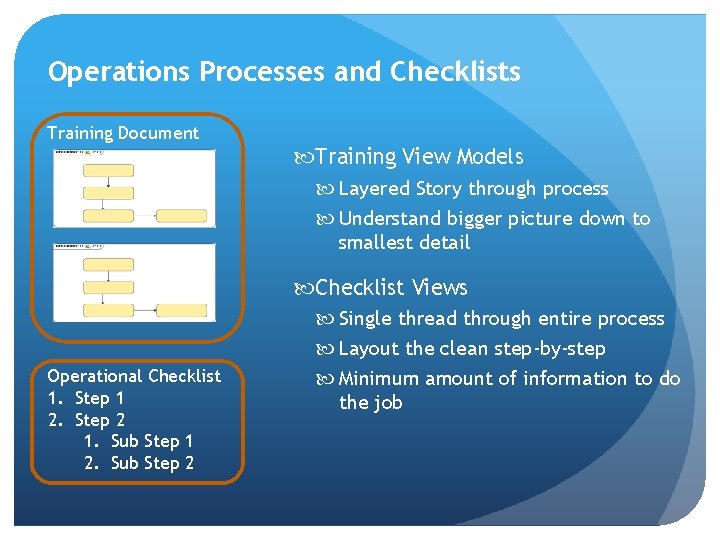
Operations Processes and Checklists Training Document Training View Models Layered Story through process Understand bigger picture down to smallest detail Checklist Views Operational Checklist 1. Step 1 2. Step 2 1. Sub Step 1 2. Sub Step 2 Single thread through entire process Layout the clean step-by-step Minimum amount of information to do the job
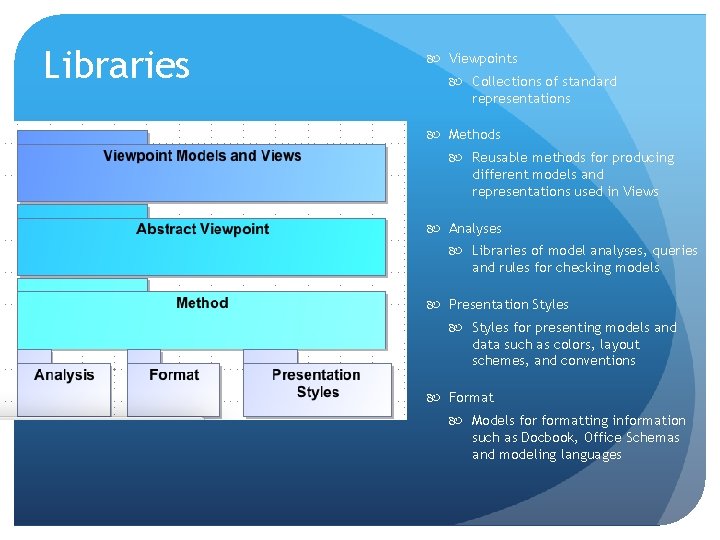
Libraries Viewpoints Collections of standard representations Methods Reusable methods for producing different models and representations used in Views Analyses Libraries of model analyses, queries and rules for checking models Presentation Styles for presenting models and data such as colors, layout schemes, and conventions Format Models formatting information such as Docbook, Office Schemas and modeling languages
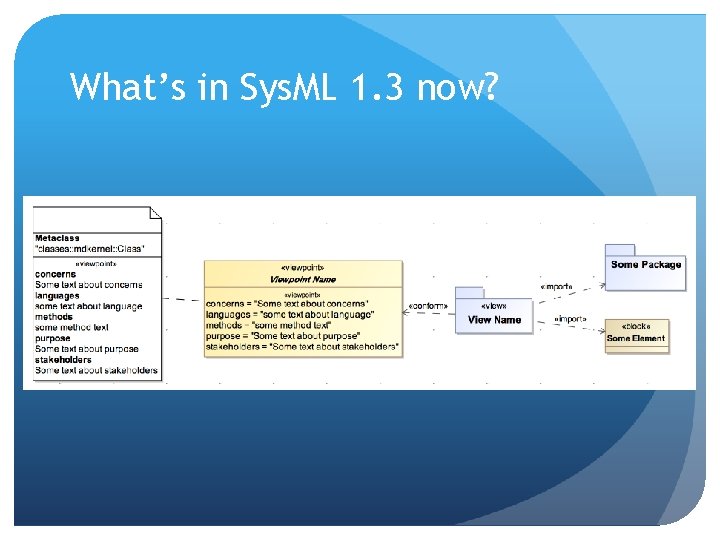
What’s in Sys. ML 1. 3 now?
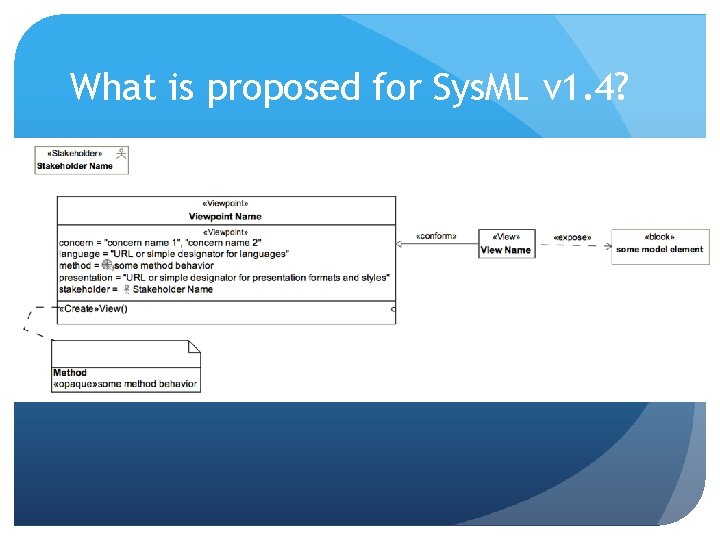
What is proposed for Sys. ML v 1. 4?
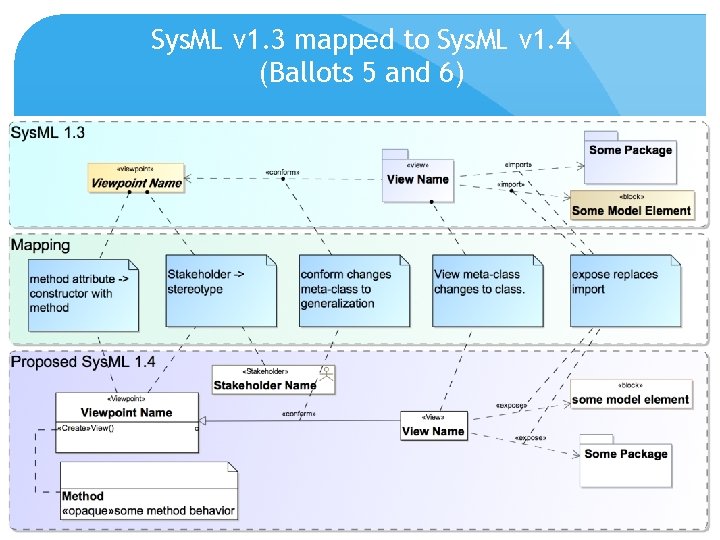
Sys. ML v 1. 3 mapped to Sys. ML v 1. 4 (Ballots 5 and 6)
- Slides: 26