
MODE OF ACTION OF CARBAMATES Note Adapted from
MODE OF ACTION OF CARBAMATES Note: Adapted from internet resources including ppts, pdfs, wikipedia, research papers and books
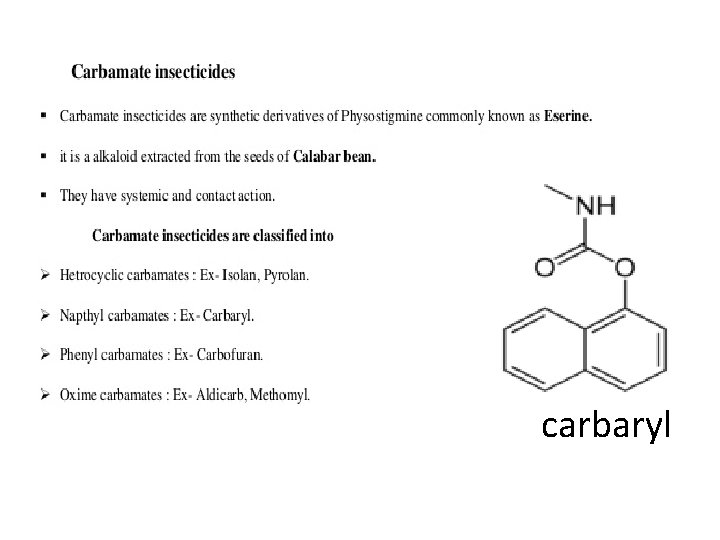
carbaryl


![HISTORY • Esters of methyl and dimethylcarbamic acid [CHa. HNC(O)OH and (CHa)2 NC(O)OH] have](http://slidetodoc.com/presentation_image_h2/00529b9e46137c8f90adf3142b59e05b/image-7.jpg "HISTORY • Esters of methyl and dimethylcarbamic acid [CHa. HNC(O)OH and (CHa)2 NC(O)OH] have")
HISTORY • Esters of methyl and dimethylcarbamic acid [CHa. HNC(O)OH and (CHa)2 NC(O)OH] have been used for many years as parasympathomimetic agents. • Interest in biologically active carbamates originated with the use of Calabar beans, the seeds of Physostigma venenosum (Balfour), as an ordeal poison in West African witchcraft trials. • The toxic constituent, physostigmine or eserine, was isolated one hundred years ago and identified in 1925 as the methylcarbamate ester of eseroline. • Physostigmine is the only known naturally occurring carbamate ester. • The extensive literature on the development of synthetic analogues of physostigmine for use in clinical medicine has been reviewed. • Successful development of carbamates as insecticides was initiated by the researches of Hans Gysin in Switzerland, and Robert Metcalf and co-workers in the United States
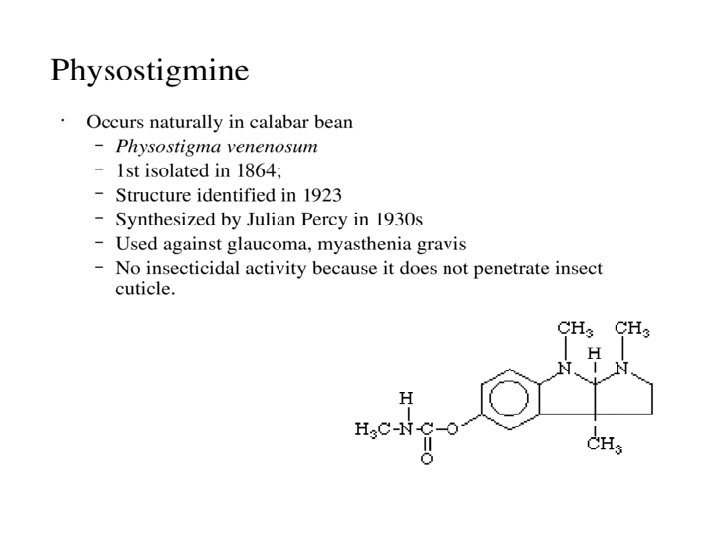

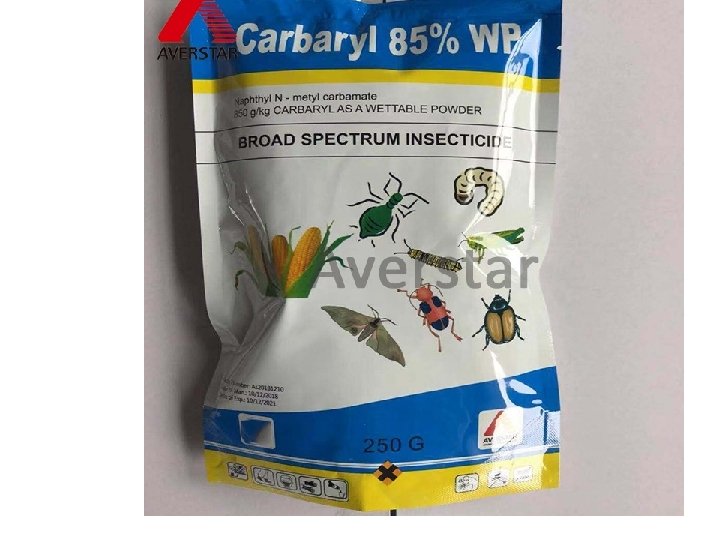
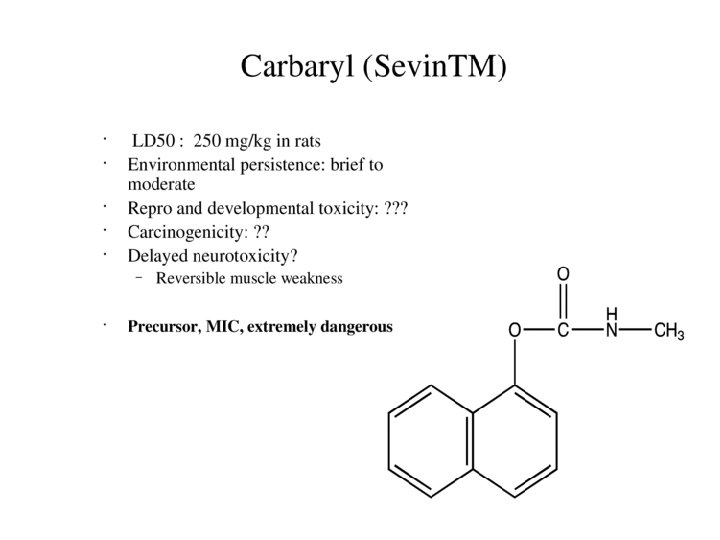
CARBAMATE INSECTICIDES • Carbamate insecticides are derivative of carbamic acids and the first carbamate insecticide, carbazyl was introduced in 1956 (Thacker, 2002). • They inhibit the ACh. E enzyme and cause over stimulation of nervous system. • Carbaryl (1 -naphthyl N-methylcarbamate), broad spectrum carbamate insecticide is extensively used worldwide for more than 120 different crops and ornamental plants (Ware, 2000). • Because of very low mammalian toxicity together with short half-life in the environment carbaryl are the most popular insecticide and effectively acts against 160 harmful insects (Ware, 2001). • Carbaryl is the second most widely detected insecticide in surface waters in the United States (Martin et al. , 2003).
• Figure below shows how a cholinesterase inhibitor (in this case, a nerve agent) attaches to the serine hydroxyl group on acetylcholinesterase. • This prevents acetylcholine from interacting with the cholinesterase enzyme and being broken down. • δ + Indicates that phosphorus is partially electropositive. • δ – Indicates that oxygen is partially electronegative.
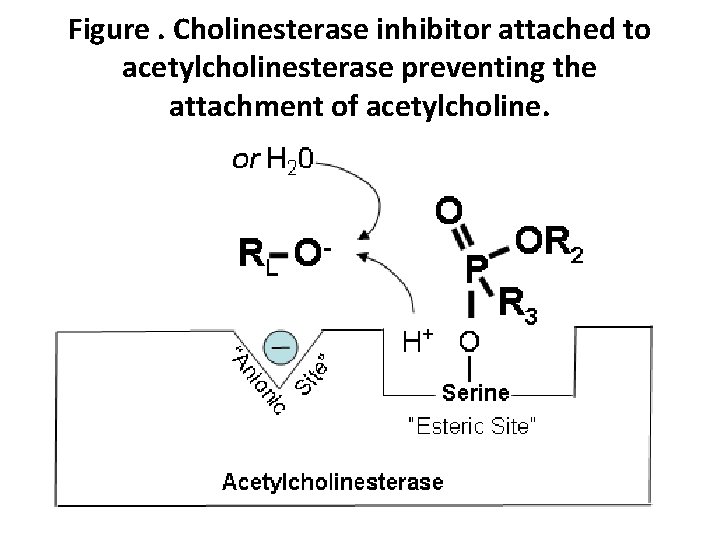
Figure. Cholinesterase inhibitor attached to acetylcholinesterase preventing the attachment of acetylcholine.
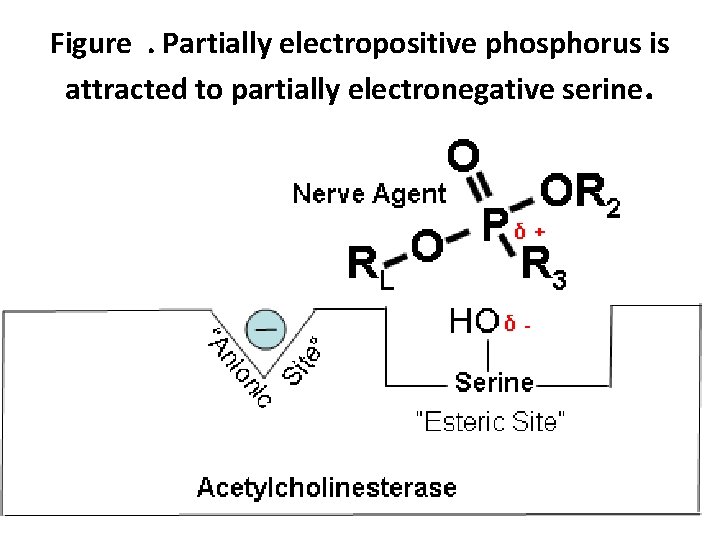
Figure. Partially electropositive phosphorus is attracted to partially electronegative serine.
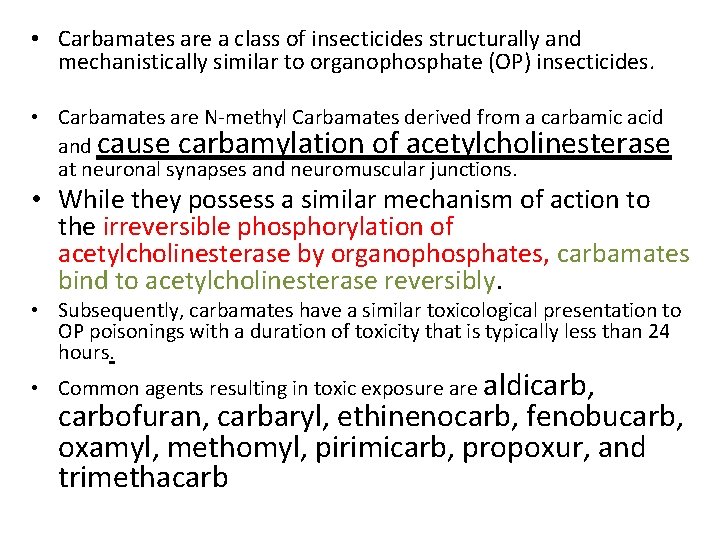
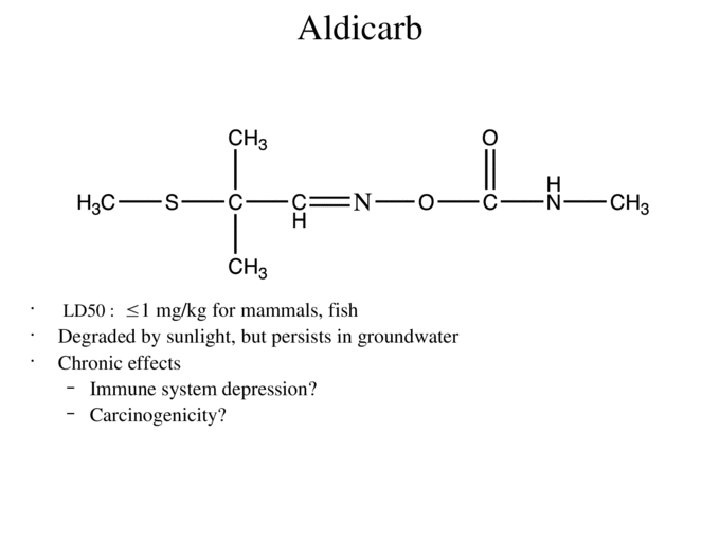
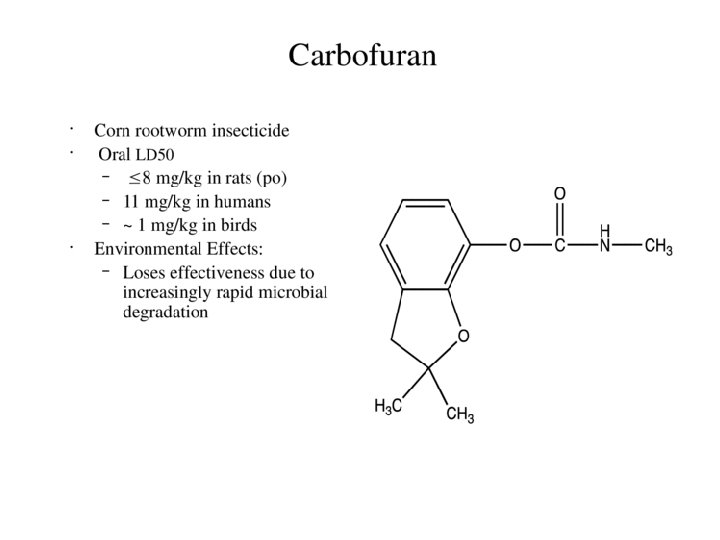
• Carbamates are a class of insecticides structurally and mechanistically similar to organophosphate (OP) insecticides. • Carbamates are N-methyl Carbamates derived from a carbamic acid and cause carbamylation of acetylcholinesterase at neuronal synapses and neuromuscular junctions. • While they possess a similar mechanism of action to the irreversible phosphorylation of acetylcholinesterase by organophosphates, carbamates bind to acetylcholinesterase reversibly. • Subsequently, carbamates have a similar toxicological presentation to OP poisonings with a duration of toxicity that is typically less than 24 hours. • Common agents resulting in toxic exposure aldicarb, carbofuran, carbaryl, ethinenocarb, fenobucarb, oxamyl, methomyl, pirimicarb, propoxur, and trimethacarb

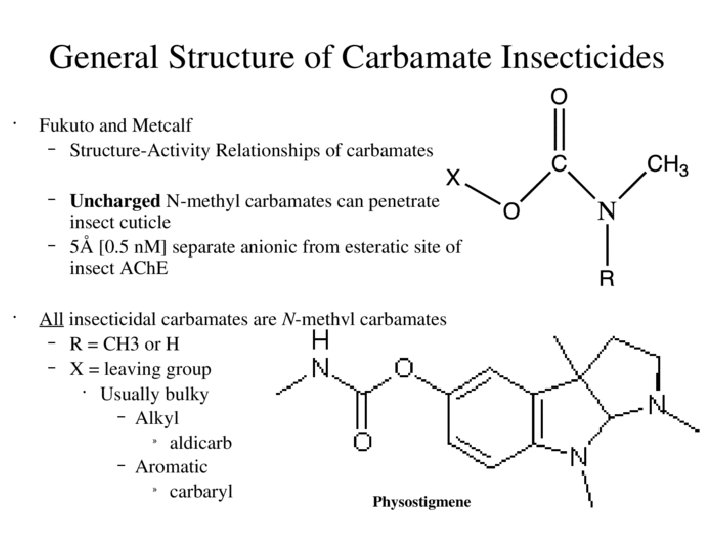
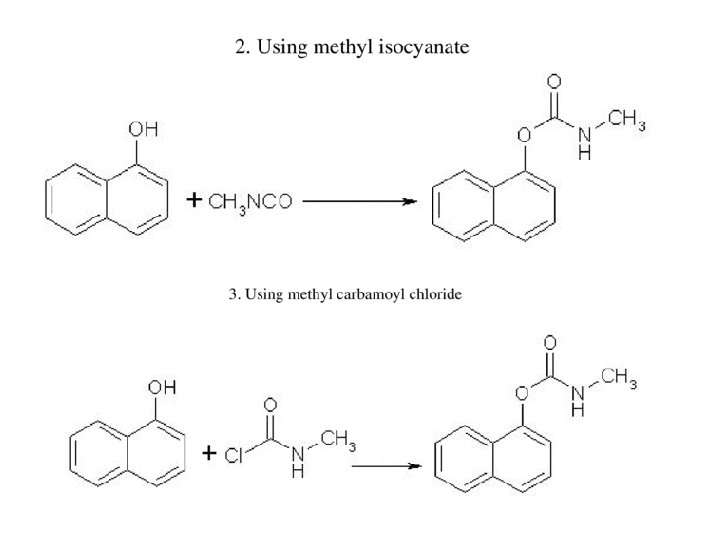
• The so-called carbamate insecticides feature the carbamate ester functional group. • Included in this group Are aldicarb (Temik), carbofuran (Furadan), carbaryl (S evin), ethienocarb, fenobucarb, oxamyl, and methomyl. • These insecticides kill insects by reversibly inactivating the enzyme acetylcholinesterase. • The organophosphate pesticides also inhibit this enzyme, although irreversibly, and cause a more severe form of cholinergic poisoning. [6] • Fenoxycarb has a carbamate group but acts as a juvenile hormone mimic, rather than inactivating acetylcholinesterase. [7] • The insect repellent icaridin is a substituted carbamate

EFFECTS OF SOME CARBAMATE FORMULATIONS ON INSECTS • Pyrolan@ (l-phenyl-3 -methyl-5 -pyrazolyl dimethylcarbamate) poisoning of P. americana has been extensively studied in relation to symptomology and action on the heart, spiracles, respiration and nervous system. • Nerve sectioning experiments have shown the necessity for the intact reflex arc in the action of the carbamate, and that the site of action is central in the motor part of the thoracic ganglion. • Blood and muscle p. H dropped considerably during the Pyrolaninduced tremors probably due to lactic acid production, with death most likely resulting from exhaustion and auto-intoxication (124). • It is not clear whether certain types of insecticidal carbamates (23, 68) act through cholinesterase inhibition. • The action of Zectran@ (4 -dimethylamino-3, 5 -dimethylphenyl methylcarbamate) may be more extensive than "just" cholinesterase inhibition since at toxic levels Zectran, but not Sevin, caused darkening and constriction or shriveling of two species of lepidopterous larvae • Carbamates are used as insecticides, miticides, molluscicides, fungicides, and herbicides.
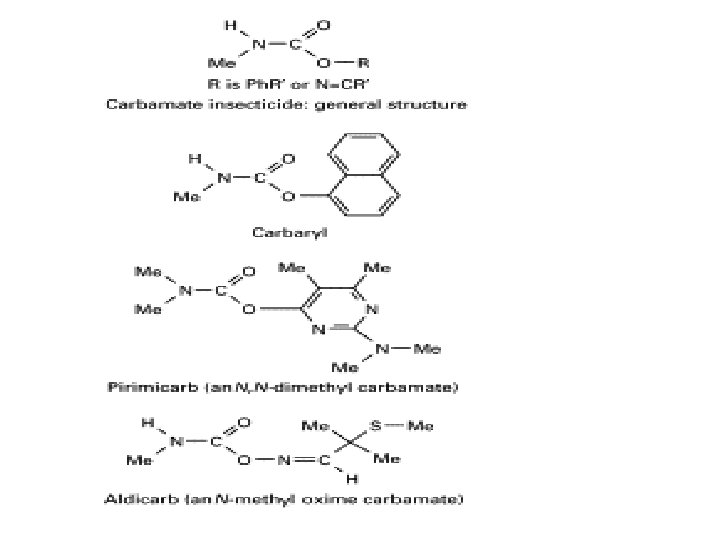
• The current insecticidal carhamates have the general formula R 1 R 2 NC(O)OX, with X as a substituted phenol when Rl is methyl and R 2 is hydrogen, and X as a N-heterocyclic or hydroaromatic enol when Rl and R 2 are both methyl groups. • The methylcarbamates usually have a high degree of specificity among pest species making them potentially good for integrated control programs. • Toxicity to bees has been high with several carbamates. • The broad spectrum of insecticidal activity found with many of the phosphates has not yet appeared in a commercial carbamate insecticide. • Systemic activity results with certain members of both the methyl- and dimethylcarbamates. • The residual persistence of the carbamate insecticides varies from a few hours to several weeks depending both on the nature of the compound and the conditions of use.
Effects of Blocked Acetylcholine Breakdown • This leads to the build up of excessive levels of the neurotransmitter, acetylcholine, at the skeletal neuromuscular junction and those synapses where acetylcholine receptors are located • Thus, the primary manifestations of acute cholinesterase inhibitor toxicity are those of cholinergic (neurotransmitter) hyperactivit y. (Carlton, Simpson et al. 1998)
Carbamate poisoning symptoms in humans • Acetylcholinesterase (ACh. E) normally hydrolyzes acetylcholine to acetic acid and choline, leading to the cessation of neurotransmitter signaling. • Carbamates cause reversible inhibition of the acetylcholinesterase enzyme, which is present at parasympathetic and sympathetic ganglia, parasympathetic muscarinic terminal junctions, sympathetic fibers located in sweat glands, and nicotinic receptors at the skeletal neuromuscular junction. • Persistently elevated acetylcholine levels due to ACh. E inhibition leads to increased neurotransmitter signaling. • Central nervous system symptoms from increased acetylcholine include confusion, delirium, hallucinations, tremor, and seizures • Increased acetylcholine levels in the autonomic nervous system increase sympathetic and parasympathetic activity. • Classic mnemonics emphasize the parasympathetic symptoms from carbamate and OP toxicity. For example, "DUMBBELS" stands for defecation, urination, miosis, bronchospasm or bronchorrhea, emesis, lacrimation, salivation.
Two classes of cholinesterase inhibitors • • • Two classes of cholinesterase inhibitors are organophosphorus compounds and carbamates. The key differences are listed in the table below. (Erdman 2004)
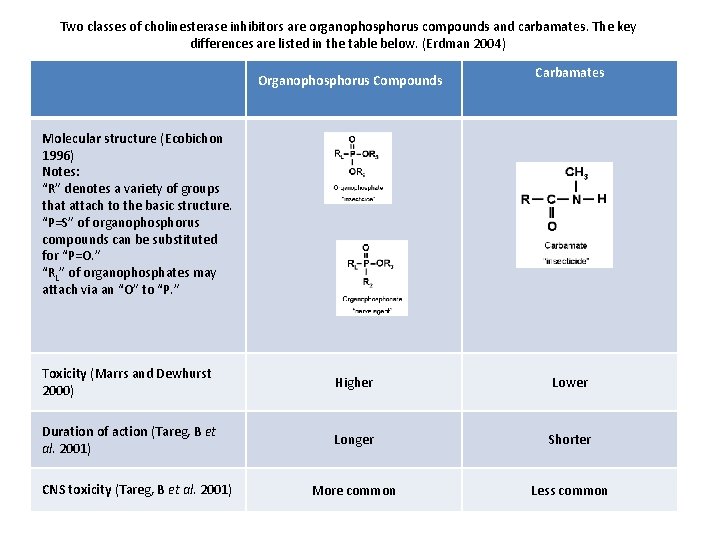
Two classes of cholinesterase inhibitors are organophosphorus compounds and carbamates. The key differences are listed in the table below. (Erdman 2004) Organophosphorus Compounds Carbamates Molecular structure (Ecobichon 1996) Notes: “R” denotes a variety of groups that attach to the basic structure. “P=S” of organophosphorus compounds can be substituted for “P=O. ” “RL” of organophosphates may attach via an “O” to “P. ” Toxicity (Marrs and Dewhurst 2000) Higher Lower Duration of action (Tareg, B et al. 2001) Longer Shorter More common Less common CNS toxicity (Tareg, B et al. 2001)

THANKS
- Slides: 31