
MODALS PART 1 By Yuli Marina M Pd
MODALS PART 1 By; Yuli Marina M. Pd
INTRODUCTION The modal auxiliaries in English are; will, shall, may, might, can, could, must, ought to, should, would, used to. The modal verb occupies the first position in verb phrase, coming before any other auxiliary verb (like have or be) and the main lexical verb. Example; q. He should be here by now. q. I could swim quite well when I was younger. q. You mustn’t blame yourself for this.

USING MODALS IN POLITE REQUEST “I” as the subject v May i borrow your pen? v Can i borrow your book? “you” as the subject Would you pass the salt ? Would you mind 2. Asking to do something. (would you mind +ing/gerund) Ø Would you mind closing the window? 1. Asking permission; (Would you main if+ simple past). v Would you mind if i closed the door?
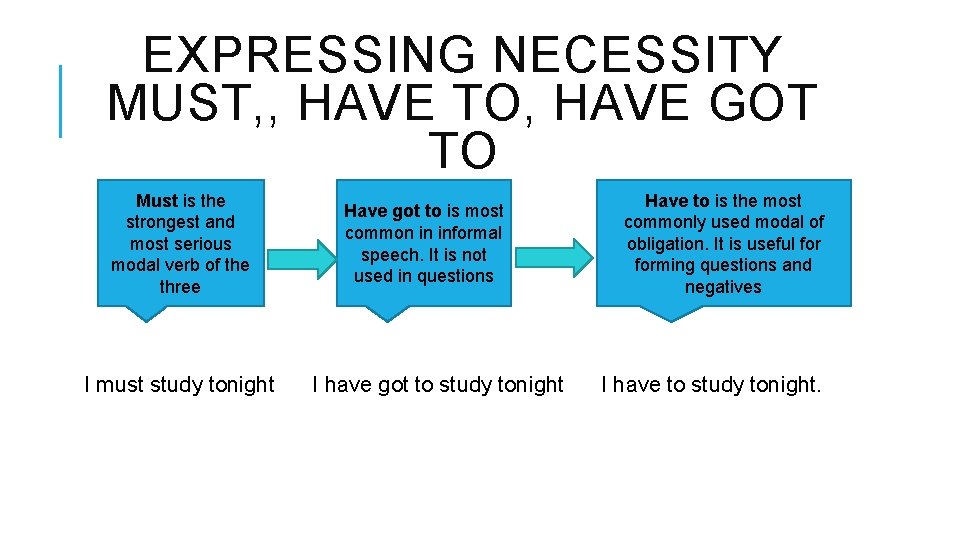
EXPRESSING NECESSITY MUST, , HAVE TO, HAVE GOT TO Must is the strongest and most serious modal verb of the three I must study tonight Have got to is most common in informal speech. It is not used in questions I have got to study tonight Have to is the most commonly used modal of obligation. It is useful forming questions and negatives I have to study tonight.
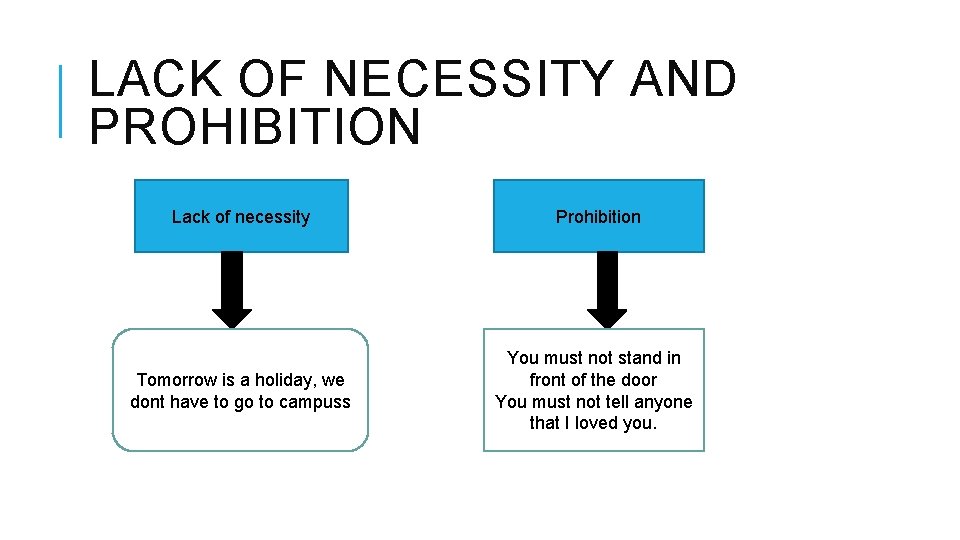
LACK OF NECESSITY AND PROHIBITION Lack of necessity Prohibition Tomorrow is a holiday, we dont have to go to campuss You must not stand in front of the door You must not tell anyone that I loved you.
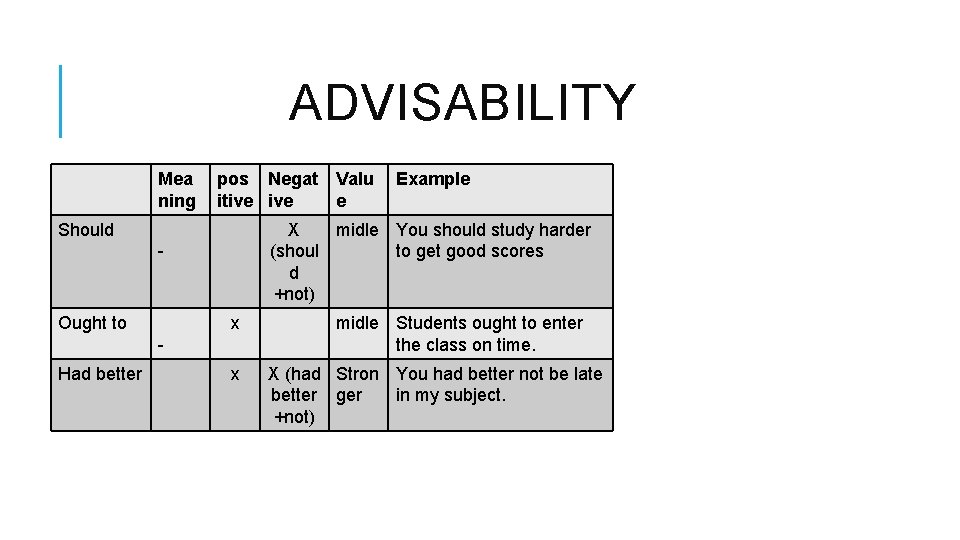
ADVISABILITY Mea ning pos Negat itive Should x - Had better Example X midle You should study harder (shoul to get good scores d +not) - Ought to Valu e x midle Students ought to enter the class on time. X (had Stron You had better not be late better ger in my subject. +not)
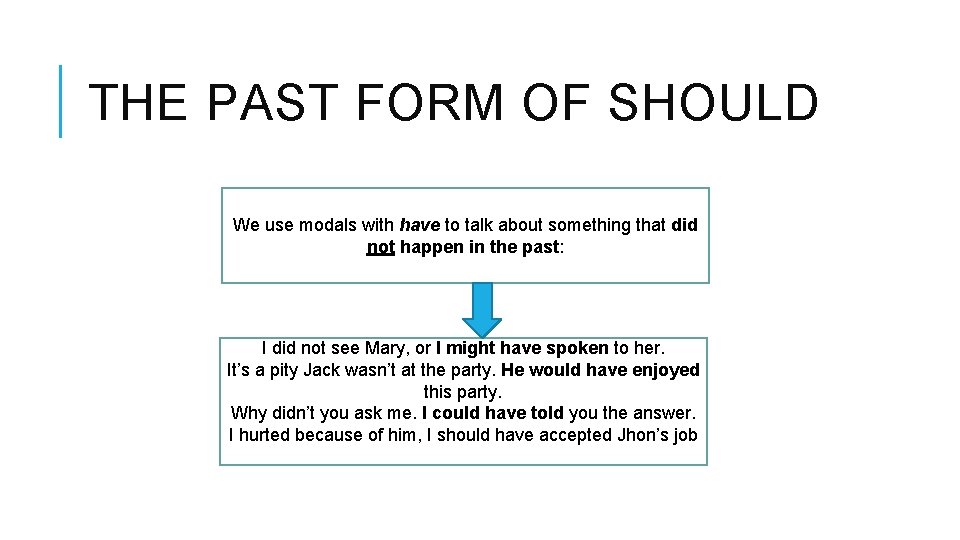
THE PAST FORM OF SHOULD We use modals with have to talk about something that did not happen in the past: I did not see Mary, or I might have spoken to her. It’s a pity Jack wasn’t at the party. He would have enjoyed this party. Why didn’t you ask me. I could have told you the answer. I hurted because of him, I should have accepted Jhon’s job
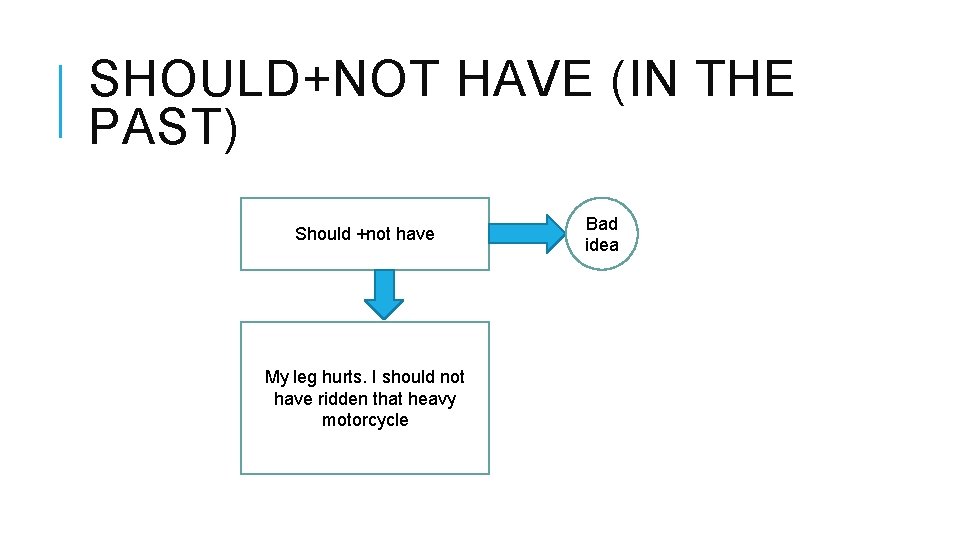
SHOULD+NOT HAVE (IN THE PAST) Should +not have My leg hurts. I should not have ridden that heavy motorcycle Bad idea
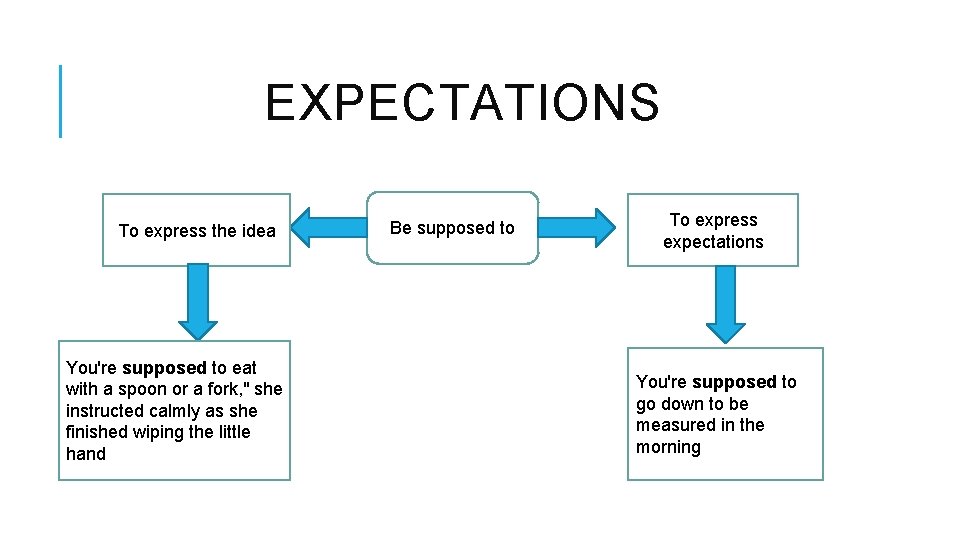
EXPECTATIONS To express the idea You're supposed to eat with a spoon or a fork, " she instructed calmly as she finished wiping the little hand Be supposed to To express expectations You're supposed to go down to be measured in the morning
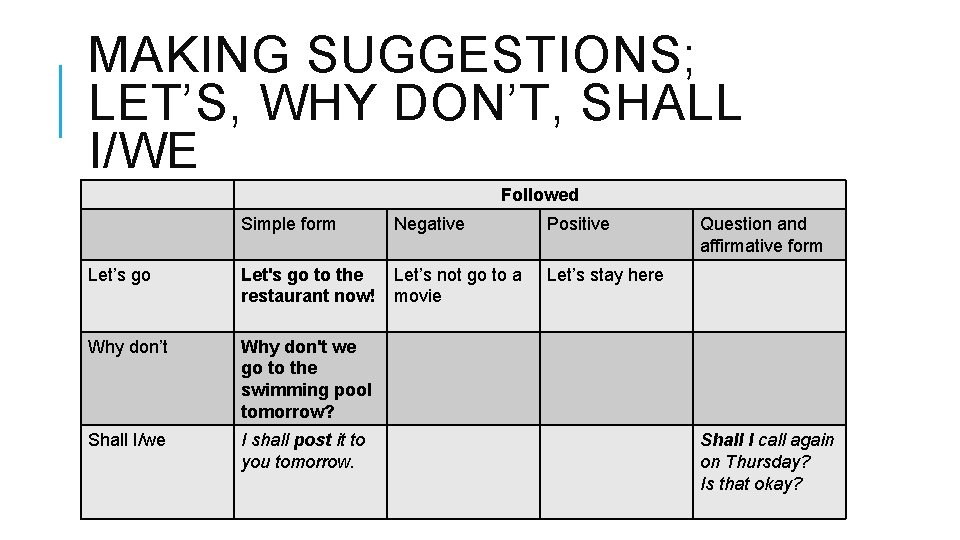
MAKING SUGGESTIONS; LET’S, WHY DON’T, SHALL I/WE Followed Simple form Negative Positive Let’s go Let's go to the restaurant now! Let’s not go to a movie Let’s stay here Why don’t Why don't we go to the swimming pool tomorrow? Shall I/we I shall post it to you tomorrow. Question and affirmative form Shall I call again on Thursday? Is that okay?
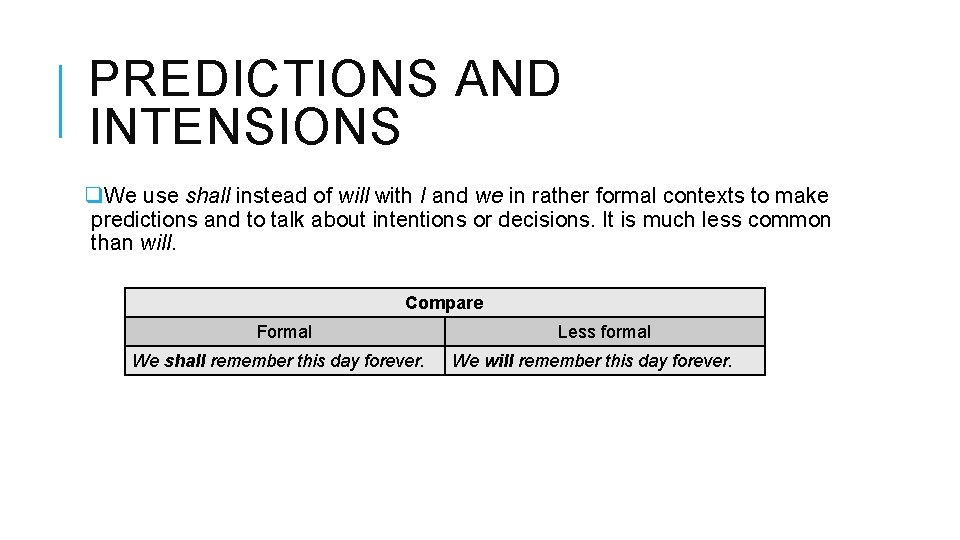
PREDICTIONS AND INTENSIONS q. We use shall instead of will with I and we in rather formal contexts to make predictions and to talk about intentions or decisions. It is much less common than will. Compare Formal We shall remember this day forever. Less formal We will remember this day forever.
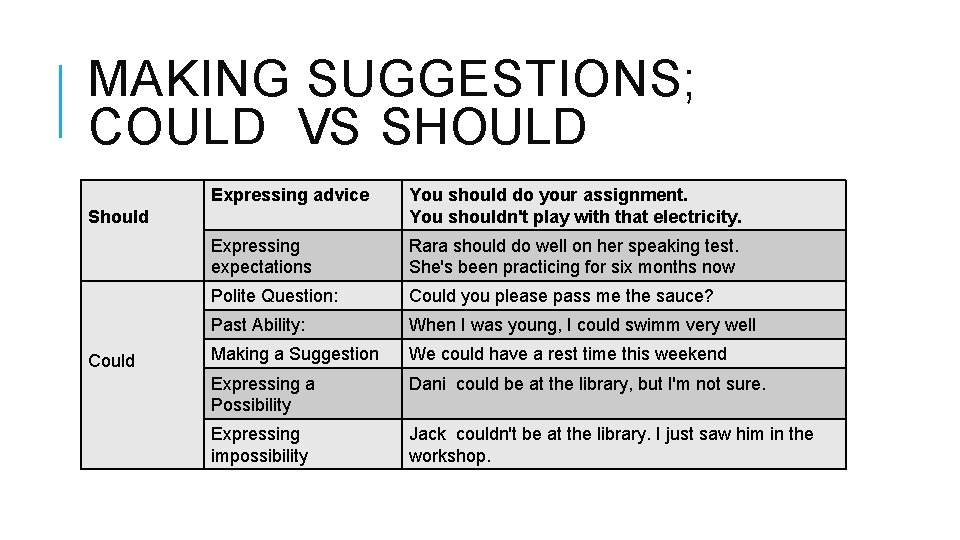
MAKING SUGGESTIONS; COULD VS SHOULD Expressing advice You should do your assignment. You shouldn't play with that electricity. Expressing expectations Rara should do well on her speaking test. She's been practicing for six months now Polite Question: Could you please pass me the sauce? Past Ability: When I was young, I could swimm very well Making a Suggestion We could have a rest time this weekend Expressing a Possibility Dani could be at the library, but I'm not sure. Expressing impossibility Jack couldn't be at the library. I just saw him in the workshop. Should Could
- Slides: 13