
MODAL VERBS Modal verbs are used to express
MODAL VERBS
Modal verbs are used to express the following ideas:
Ability can could You use can when you are saying that someone is able to do something. In the past tense, you use could or was/were able to.
• He can speak Russian. • Can you remember her name? • I can’t find my shoes. • Could you hear what she was saying? • Dinosaurs were able to run very fast.
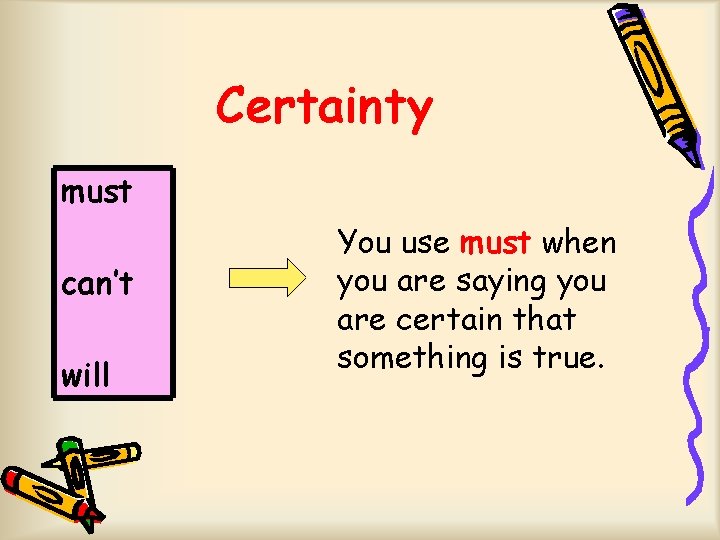
Certainty must can’t will You use must when you are saying you are certain that something is true.
• You must be tired after all your hard work. • They must have left by now.
If you want to say that you are certain that something is not true, you use can’t. (Don’t use “must” in this situation. ) • You can’t be tired – you’ve only been working for an hour. • They can’t have left yet.
You use will when you are saying that something will definitely happen. You can also use will when you are talking about something that is always true. • I will be 18 next year. • Oil will float on water.

Intention will shall would You use will when you are saying that you intend to do something. In British English, people sometimes use shall (but only with “I” and “we”).
• The letter says they will definietly give us our money back. • I won’t stay long. • I shall be going soon.
You use would if there are conditions which control whether something can happen. • I would leave tomorrow, if I had the money.

Necessity/Obligation must need have to have got to You use must when you are saying that it is necessary for something to happen or it is someone’s duty to do something. In spoken English, people often say have got to instead of have to.
• I must get my hair cut this weekend. • All passengers must wear seat belts. • The doctor says I’ve got to give up smoking.
If you want to say that you think that something is not necessary, you use needn’t, need not, or don’t need to. (Don’t use “must not” in this situation. ) • You don’t need to wear a tie if you don’t want to.
If you want to talk about the future, use will have to or will need to. • You will have to be home by 10. • We’ll need to leave soon.
Offers can may shall will You use Can I …? when you are offering to help someone. May I …? is used in formal English. In British English, people sometimes say shall I …? You can offer to help someone by saying I’ll…
• Can I get you anything from the store? • May I help you, madam? • Shall I carry your bags? • I’ll open the door for you?
Permission can may could You use can and may when you are giving permission or asking permission to do something. Could is more polite than can. May is used in formal English.
• You can go home now. • May we use your office for a few minutes? • Could I use your phone?
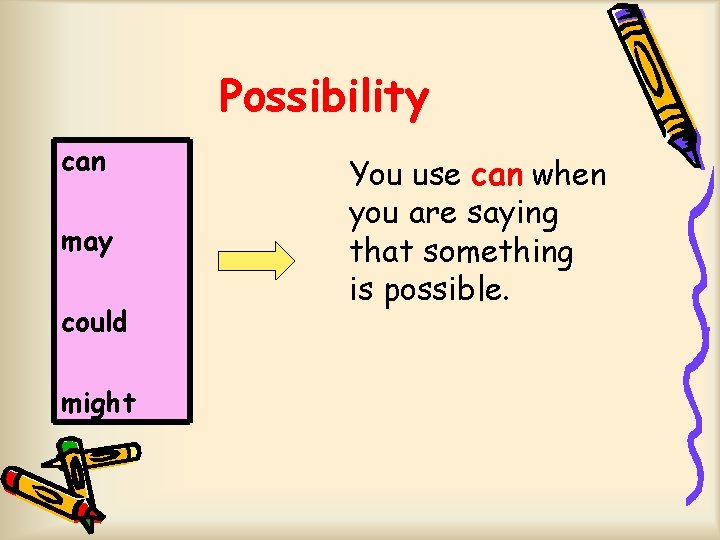
Possibility can may could might You use can when you are saying that something is possible.
• You can go by bus from London to Liverpool.
You use may or could when you are saying that something is possible, but you are not certain about it. In both of the following sentences the stress is placed on the modal verb (may or could), rather than the main verb. • You may find him in his office. • He could be in his office.
You use might when you are suggesting that something could happen, but you are very doubtful and uncertain about it. • He might be in his office.
You also use could if there are conditions which control whether something can happen. • I could leave tomorrow, if I had the money.
Prediction will shall You use will when you are saying that something is certain to happen. In British English, people sometimes use shall (but only with I and we).
• The car will be there on time, I promise. • There’s no doubt that we shall win.
Probability should ought to You use should and ought to when you are saying that something will probably happen, although you are not completely sure.
• We should be there by 6 o’clock. • We ought to be there by 6 o’clock. • If you take these tablets, you should be all right.
Requests can will could would You use Can I … ? , Can you … ? , and Will you … ? when asking someone to do something.
• Can I borrow your dictionary? • Can you hold my bag? • Will you give me a lift to the station?
Could I … ? , Could you … ? , and Would you … ? are a little more formal or polite. • Could I have another cup of coffe, please? • Fiona, would you bring another chair, please?
Suggestions/Advice should ought to shall must You use should and ought to when you are suggesting that someone should do something. In British English you use Shall I/we … ? in questions when suggesting that you do something.
• You should get the early flight if you want to be in good time. • You ought to meet him; he is really nice. • Shall we leave?
You use must when you are suggesting that someone should do something because you think it is very good. • You must see “Cinema Paradiso” – it is a really good film.

THANK YOU
- Slides: 35