
MODAL VERBS I Must have to dont have
MODAL VERBS (I): Must, have to, don’t have to, mustn’t

Have to, don’t have to (+) She has to get up at 7 every day. You have to drive on the left in the UK. (-) We don’t have to wear a uniform. He doesn’t have to work today. (? ) Do we have to study this for the exam? Does he have to tidy his room?
u Use have to to talk about rules and obligations, or to say that something is necessary. I have to study harder if I want to pass the exam. Muslims have to pray 5 times a day.

Must, mustn’t (+)You must do your homework tonight. She must wash the dishes before she leaves. (-) You mustn’t smoke in class. They mustn’t leave their bags here. (mustn’t = must not)
u Use must + infinitive to talk about rules and obligations. u Must is a modal verb. The only forms are must and mustn’t. u Must, as ALL MODALS, is ALWAYS followed by infinitive WITHOUT TO!!!
Must vs. Have to u Both indicate obligation, but there’s a little difference. It’s getting late. I must go now obligation from the speaker. It’s getting late. My mum told me I have to be at home at 9. obligation from another person.
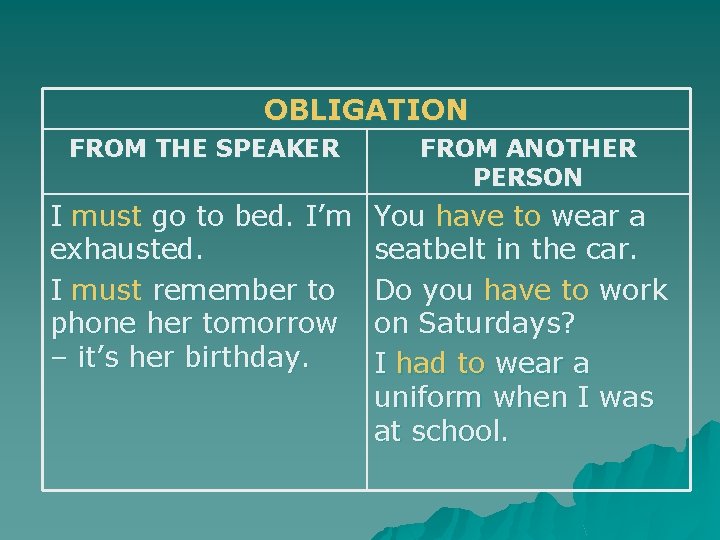
OBLIGATION FROM THE SPEAKER I must go to bed. I’m exhausted. I must remember to phone her tomorrow – it’s her birthday. FROM ANOTHER PERSON You have to wear a seatbelt in the car. Do you have to work on Saturdays? I had to wear a uniform when I was at school.

No obligation/necessity: don’t have to. You don’t have to come to the party if you don’t want to. You don’t have to pay for the photocopies, they are free.

Prohibition: mustn’t u Don’t have to and mustn’t are completely different. Compare You mustn’t smoke inside a hospital. It’s forbbiden. (It’s the law) You mustn’t drink and drive. You don’t have to drive to the party, I’ll pick you up. (You can drive if you want, but it is not necessary).
- Slides: 9