
Mobilise Behaviour as Communication Session 3 Why are
Mobilise Behaviour as Communication Session 3
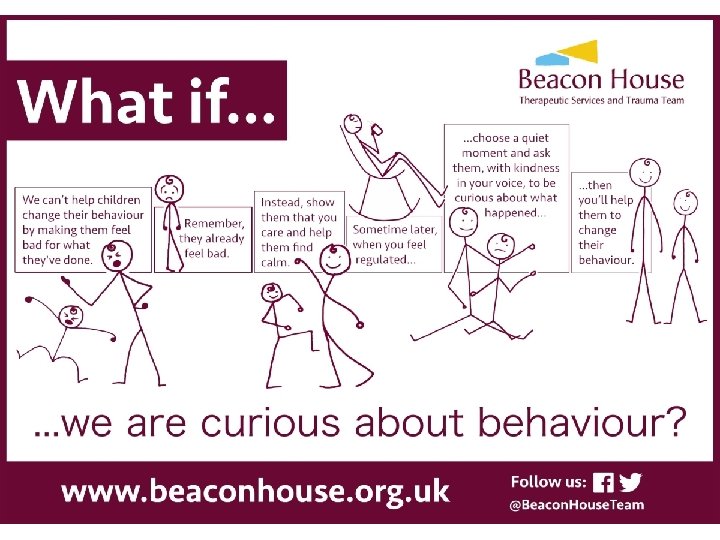
Why are we talking about this? With so many uncertainties, children may be returning to school in a state of hypervigilance; behaviour may be out-of-character as they use flight/freeze responses to experience feelings of safety. For some children this response may be delayed. Responses that follow a more punitive approach will not address the underlying cause of the behaviour and could well escalate negative behaviour; we need to be curious why a particular behaviour developed. Not understanding the behaviour will make the most appropriate response a guessing-game or one-size-fits-all. The Guidance for full opening: schools (July 2020)*1 from the Df. E is somewhat contradictory*; rewards and sanctions directly conflict with a trauma-informed approach. ‘Deliberately breaking the rules’ does not fit with a trauma-informed understanding of ‘behaviour as communication’. Schools need to have a clear, consistent plan for supporting pupils’ SEMH needs for when schools open fully in September. Knowing what the child is experiencing to have prompted the behaviour will support adults to respond more effectively. The complexity of reasons for the behaviour means the adult-response may need to be different to meet the child’s individual needs.
Why are we talking about this? The Future in Mind report - promoting, protecting and improving our children and young people's mental health and wellbeing *2(2015) recognised that attachment relationships have a direct bearing on children’s capacity to succeed in school. It emphasises that relationships and a sense of belonging, are key to good mental health for all, but are essential for children who have experienced multiple relational losses and trauma. Building on the principles outlined in Future in Mind, the Transforming Children and Young People’s Mental Health Provision: a Green Paper *3(2017) highlighted the importance of a whole-school approach to mental health and wellbeing, with commitment from senior leadership and supported by external expertise. The change in terminology in the 2014 Code of Practice of Special Educational Needs *4(SEN) - which replaced the Behaviour and Social Difficulties (BESD) with Social, Emotional, and Mental Health (SEMH) difficulties – helps to promote a shift towards viewing behaviour as a communication of an emotional need (whether conscious or unconscious) and responding accordingly. ‘Behaviour as communication’ fits within a trauma-informed and/or a restorative/relational approach. It is important however to remember that the ‘repair’ within restorative practice could induce feelings of shame in children who have experienced trauma. This should be handled sensitively and a child should never be forced to engage with the repair process or to say sorry.
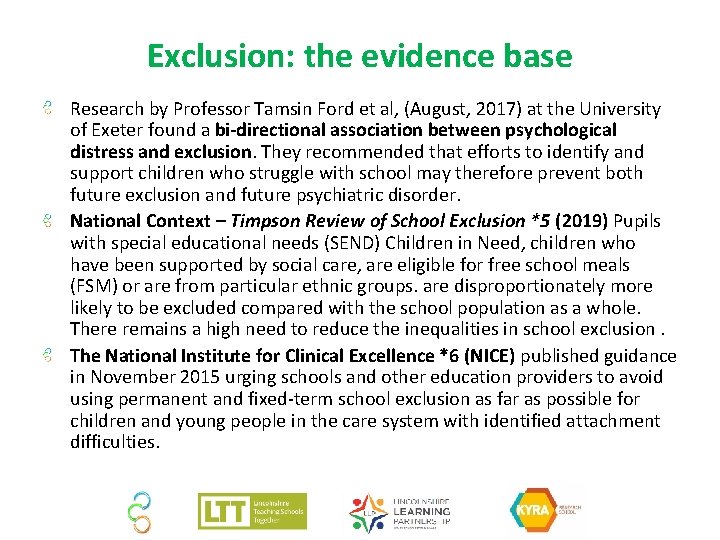
Exclusion: the evidence base Research by Professor Tamsin Ford et al, (August, 2017) at the University of Exeter found a bi-directional association between psychological distress and exclusion. They recommended that efforts to identify and support children who struggle with school may therefore prevent both future exclusion and future psychiatric disorder. National Context – Timpson Review of School Exclusion *5 (2019) Pupils with special educational needs (SEND) Children in Need, children who have been supported by social care, are eligible for free school meals (FSM) or are from particular ethnic groups. are disproportionately more likely to be excluded compared with the school population as a whole. There remains a high need to reduce the inequalities in school exclusion. The National Institute for Clinical Excellence *6 (NICE) published guidance in November 2015 urging schools and other education providers to avoid using permanent and fixed-term school exclusion as far as possible for children and young people in the care system with identified attachment difficulties.
What we know about emotional wellbeing and mental health The foundations of mental health are laid out in infancy in the context of family relationships (Mental Health Foundation, 2016). Social and emotional wellbeing provides the building block for healthy behaviours, educational attainment and reduced participation in risky behaviour. Supporting children to develop social and emotional skills is important for their individual mental wellbeing, helping them to build resilience in childhood (NICE, 2019). Mental health problems often develop early and, between the ages of 5 -15, one in every nine children has a mental health disorder. Half of all mental health problems are established by the age of 14, with three quarters established by 24 years of age. Prompt access to appropriate support enables children and young people experiencing difficulties to maximise their prospects for a healthy and happy life. (NHS 10 year plan, 2019)*8
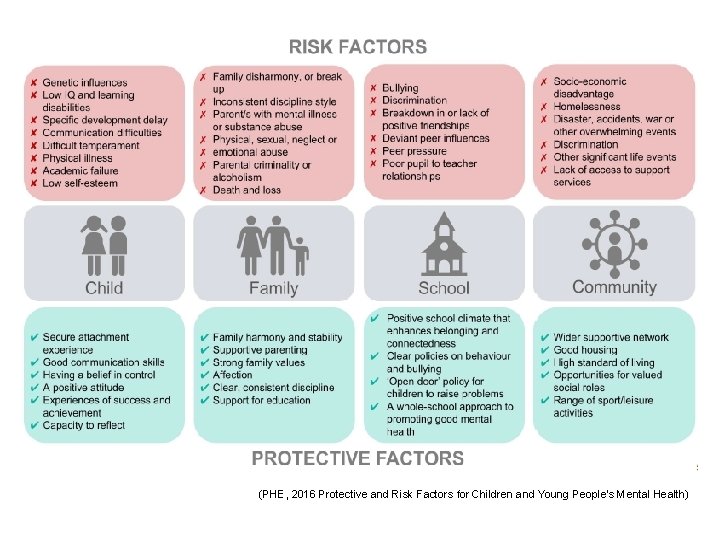
(PHE, 2016 Protective and Risk Factors for Children and Young People's Mental Health)
ACES Adverse childhood experiences are traumatic events that can have negative, longlasting effects on health and behaviour. They are relevant to all sectors and involve all of us in society. ACEs should not be seen as someone’s destiny. There is much that can be done to offer hope and build resilience in children, young people and adults who have experienced adversity in early life. ‘There is not enough evidence to support ACE scoring. ACE questionnaires do not take account of all types of adversity, aspects of personal resilience or acknowledge that different types of adversity may have different impacts. Scoring could be misleading or lead to unhelpful labelling and stigmatisation. ACE enquiry is not currently advised with children. Where a child discloses trauma or abuse, workers should respond in a way that is trauma-informed and use local child protection procedures and protocols. ’ Taken from Ending Childhood Adversity, A Public Health Approach (June 2020)*11 How childhood trauma affects health across a lifetime - Nadine Burke Harris: https: //www. youtube. com/watch? v=95 ov. IJ 3 ds. Nk Nadine Burke Harris describes ACES as the single greatest unaddressed mental health threat.
It’s All About Relationships Education staff are often experts in building relationships with children and young people and have the power to create and foster a culture of warmth, nurture, kindness and positive relationships within their school environments. What is relational practice? • nurturing • compassionate • rights’ respecting • acknowledges the impact of adversity and trauma • builds resilience • care deeply about children and young people’s mental health and wellbeing A film produced in a partnership with NHS Health Scotland Barnardo’s Scotland called ‘It’s All About Relationships: Embedding relational, trauma sensitive approaches in education’ *12 (May 2020) aims to highlight this and celebrate the positive impact that this can have on children and young people: https: //vimeo. com/380509352
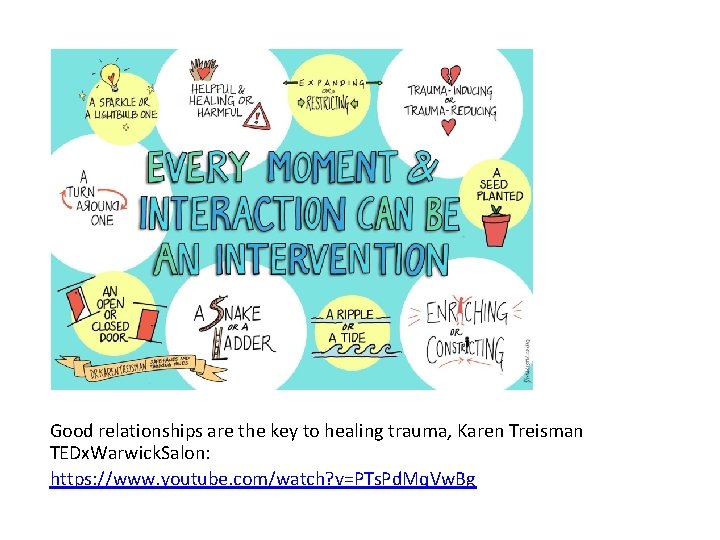
Good relationships are the key to healing trauma, Karen Treisman TEDx. Warwick. Salon: https: //www. youtube. com/watch? v=PTs. Pd. Mq. Vw. Bg
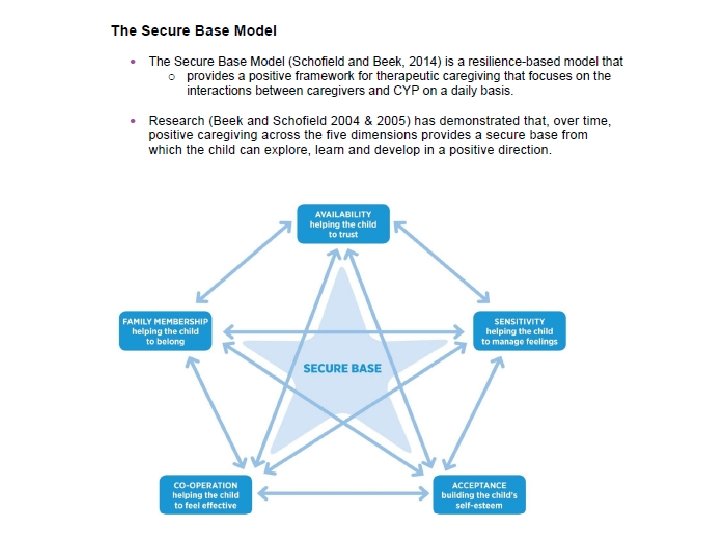
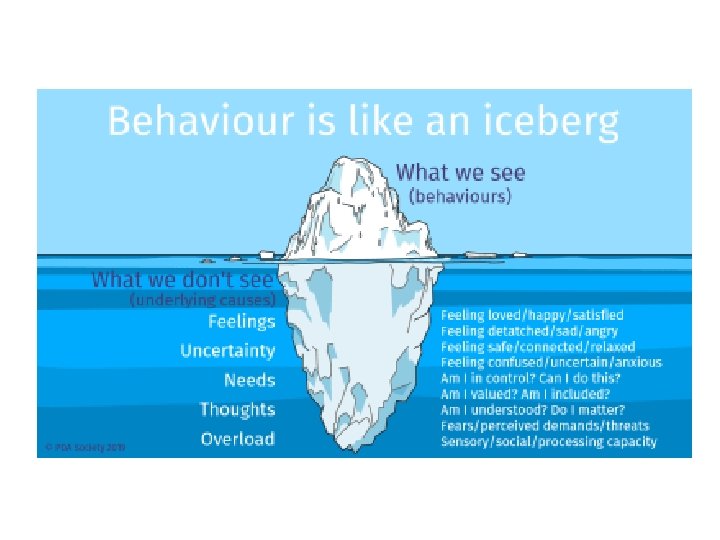
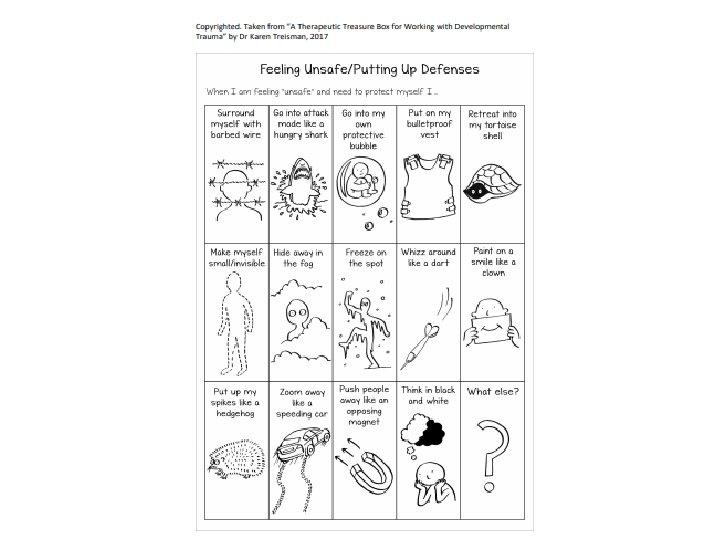
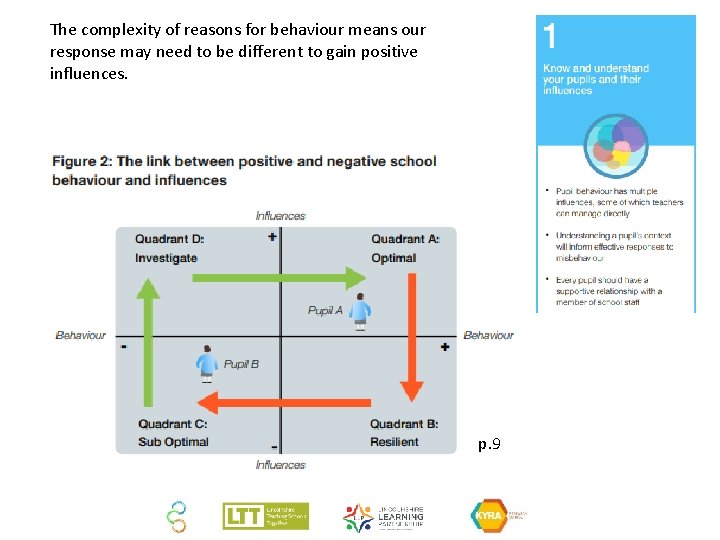
The complexity of reasons for behaviour means our response may need to be different to gain positive influences. p. 9
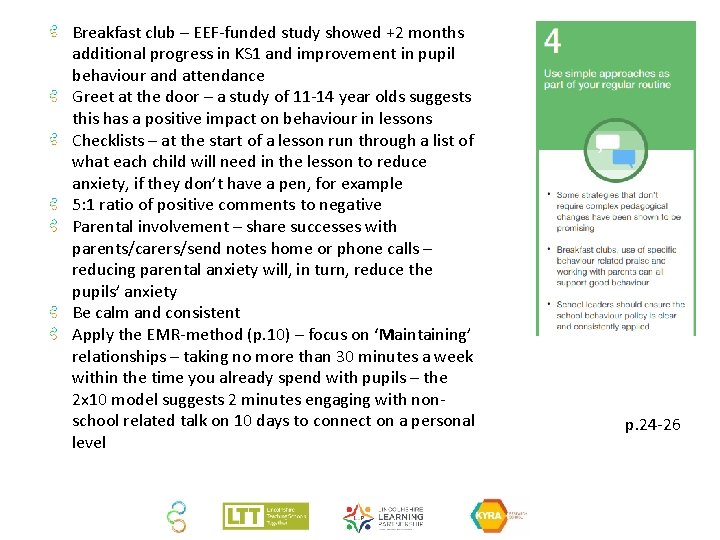
Breakfast club – EEF-funded study showed +2 months additional progress in KS 1 and improvement in pupil behaviour and attendance Greet at the door – a study of 11 -14 year olds suggests this has a positive impact on behaviour in lessons Checklists – at the start of a lesson run through a list of what each child will need in the lesson to reduce anxiety, if they don’t have a pen, for example 5: 1 ratio of positive comments to negative Parental involvement – share successes with parents/carers/send notes home or phone calls – reducing parental anxiety will, in turn, reduce the pupils’ anxiety Be calm and consistent Apply the EMR-method (p. 10) – focus on ‘Maintaining’ relationships – taking no more than 30 minutes a week within the time you already spend with pupils – the 2 x 10 model suggests 2 minutes engaging with nonschool related talk on 10 days to connect on a personal level p. 24 -26
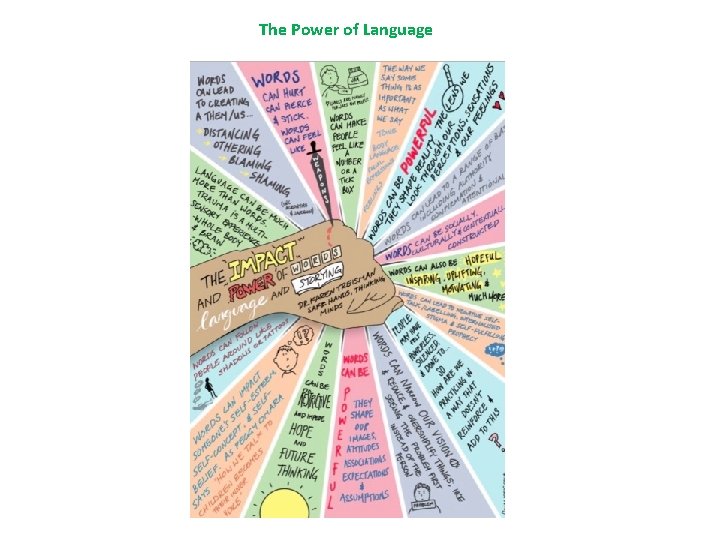
The Power of Language
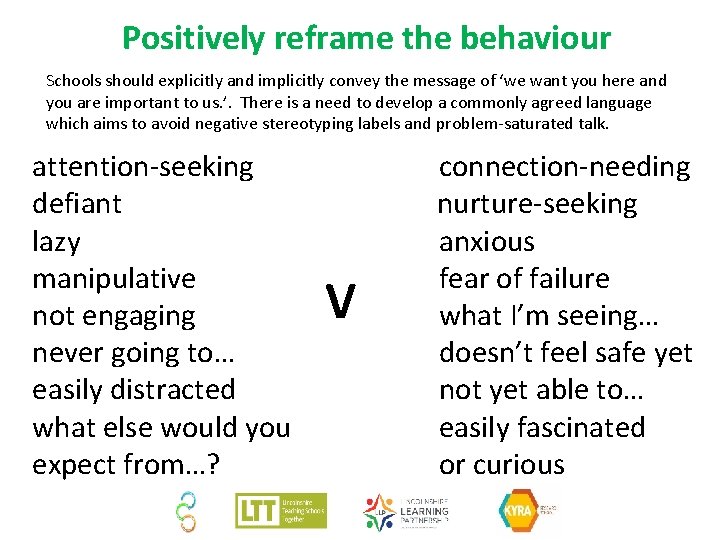
Positively reframe the behaviour Schools should explicitly and implicitly convey the message of ‘we want you here and you are important to us. ’. There is a need to develop a commonly agreed language which aims to avoid negative stereotyping labels and problem-saturated talk. attention-seeking defiant lazy manipulative not engaging never going to… easily distracted what else would you expect from…? V connection-needing nurture-seeking anxious fear of failure what I’m seeing… doesn’t feel safe yet not yet able to… easily fascinated or curious
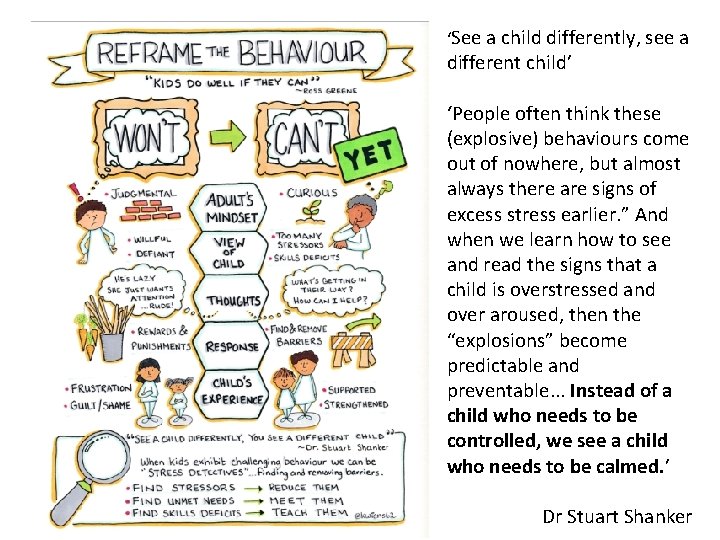
‘See a child differently, see a different child’ ‘People often think these (explosive) behaviours come out of nowhere, but almost always there are signs of excess stress earlier. ” And when we learn how to see and read the signs that a child is overstressed and over aroused, then the “explosions” become predictable and preventable. . . Instead of a child who needs to be controlled, we see a child who needs to be calmed. ’ Dr Stuart Shanker
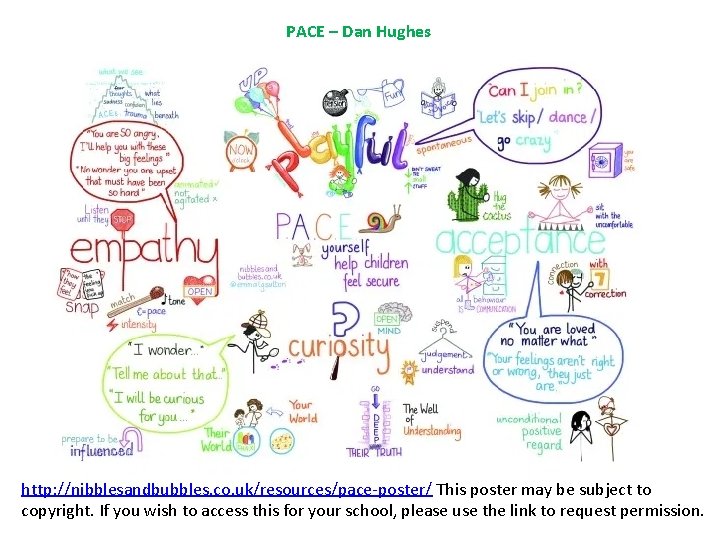
PACE – Dan Hughes http: //nibblesandbubbles. co. uk/resources/pace-poster/ This poster may be subject to copyright. If you wish to access this for your school, please use the link to request permission.
Emotional regulation in the context of relational and developmental trauma Children are likely to have had their experiences chronically misattuned to or misattributed by dysregulated caregivers. Several of these children would not have experienced their feelings being noticed, labelled and/or responded to. They might not have learned that their feelings were tolerable, important or acceptable. Additionally some children will have learned that others’ feelings take precedence over their own. Some children may have had to find different ways to survive, have their needs met and be noticed. Some children may have been shown that their feelings were linked to terrifying responses. * Children growing up who are exposed to any of the experiences named above are likely to be vulnerable to living in a dysregulated state of arousal where they are trapped in toxic stress* and exposed to a rapid pendulum of high-intensity swings of emotion through to flat disconnected responses. They are likely to be regularly triggered into flight/freeze responses with few coping strategies available to them. Children can be then driven by these pouring, cascading out emotions, which can show themselves as a variety of behaviours. Adapted from Working with Relational and Developmental Trauma in Children and Adolescents – Karen Treisman (2017)*19
Triggers A trauma trigger is a psychological stimulus that prompts recall of a previous traumatic experience. The stimulus itself need not be frightening or traumatic and may be indirectly reminiscent of an earlier traumatic incident, such as a scent or a piece of clothing. Triggers are often multi-sensory and can be subtle and difficult to anticipate. Triggers can evoke strong emotional reactions; they can be overwhelming and result in a flight/freeze response. By identifying triggers, this can make it more manageable to find ways to reduce them, and to subsequently increase feelings of safety. Research has shown that children who have experienced relational or developmental trauma tend to struggle with differentiating facial expressions and are more likely to interpret events and faces as negative, angry or threatening and subsequently have stronger reactions to them (Perlman et al. , 2008) e. g. a teacher reminding the wholeclass of a behavioural expectation/a peer looking at them across the room. Covid - Survival modes & resurfacing past traumas - falling down a memory timehole - Dr Karen Treisman *20: https: //www. youtube. com/watch? v=ms. NO 7 Zm. LXns&feature=youtu. be
Strategies to support regulation Support children to recognise, name and label their feelings making links between feelings and body sensations Co-regulate before expecting children to self-regulate ‘Model the model’ – adults model, scaffold and coach how to identify and respond to feelings As adults, be aware of our own triggers; have I over-reacted because the behaviour has triggered something in me, linked to my own history? Get to know the whole child Support children in increasing their awareness of their own feelings e. g. using scaling, idioms and metaphors, blob trees. Use a bottom-up approach –the 3 Rs*; rhythmic, patterned repetitive activities can support regulation, calming the brainstem.
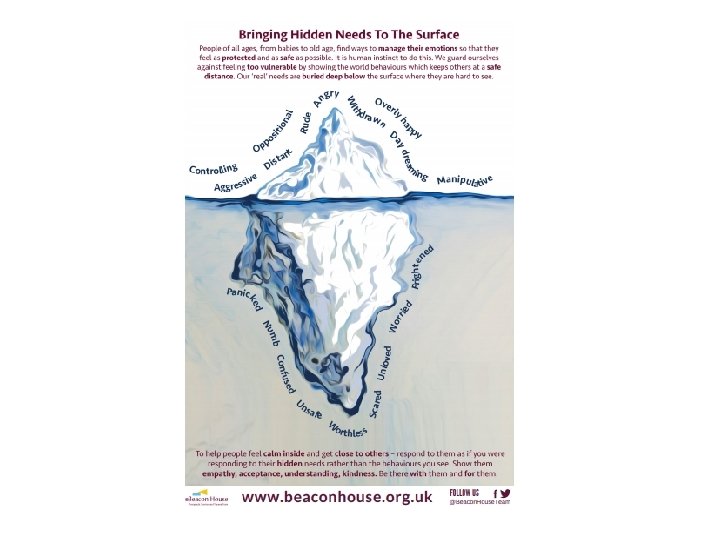
Behaviours are powerful and can get under people’s skin. For example, consider a foster carer whose foster child refuses to eat. Now bring into the mix the foster carer’s: • • • history of having an eating disorder belief that food is a vehicle for giving love being raised in a war-torn country where food was limited The behaviour will be conceptualised, interpreted and responded to differently depending on the lens through which it is viewed. The behaviours often preoccupy people and define the child. Behaviours can conceal the child’s unmet need. We need to see the behaviour amongst a landscape of other relational, emotional, cognitive, historical and systemic factors. Adapted from Working with Relational and Developmental Trauma in Children and Adolescents – Karen Treisman (2017)*
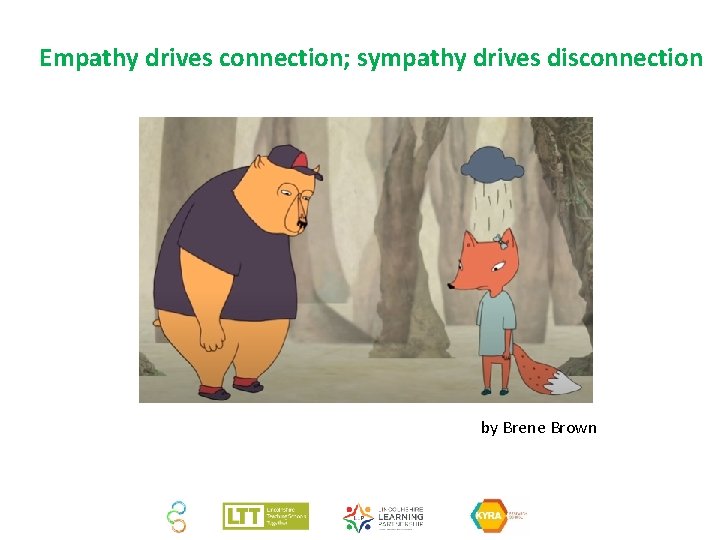
Empathy drives connection; sympathy drives disconnection by Brene Brown
Developmentally traumatized children have a foundation of mistrust of parents and thus experience management of behaviour as signs that they are going to be hurt or rejected again. These children need parents who can connect with the child’s experience before, or when appropriate instead of, discipline. This is described here as ‘connection before correction’. Correction in this context means helping children to develop pro-social behaviours and to find safe ways to express intense emotional experience. Connection Before Correction Supporting parents to meet the challenges of parenting children who have been traumatized within their early parenting environments Kim S Golding (August 2014)
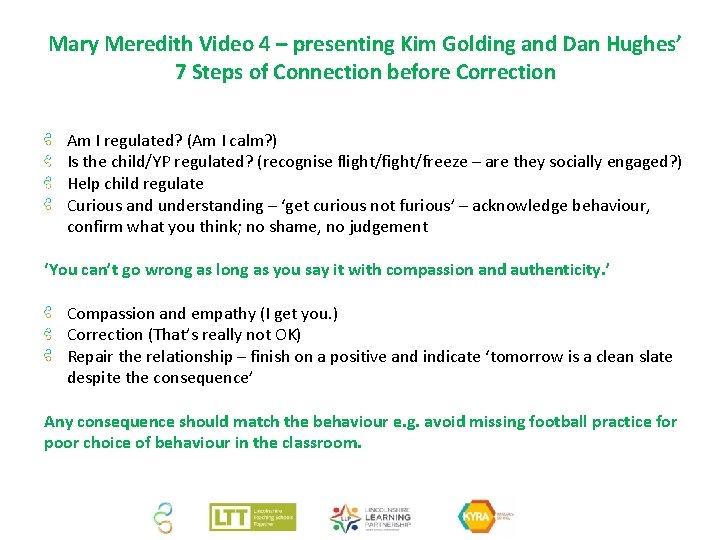
Mary Meredith Video 4 – presenting Kim Golding and Dan Hughes’ 7 Steps of Connection before Correction Am I regulated? (Am I calm? ) Is the child/YP regulated? (recognise flight/freeze – are they socially engaged? ) Help child regulate Curious and understanding – ‘get curious not furious’ – acknowledge behaviour, confirm what you think; no shame, no judgement ‘You can’t go wrong as long as you say it with compassion and authenticity. ’ Compassion and empathy (I get you. ) Correction (That’s really not OK) Repair the relationship – finish on a positive and indicate ‘tomorrow is a clean slate despite the consequence’ Any consequence should match the behaviour e. g. avoid missing football practice for poor choice of behaviour in the classroom.
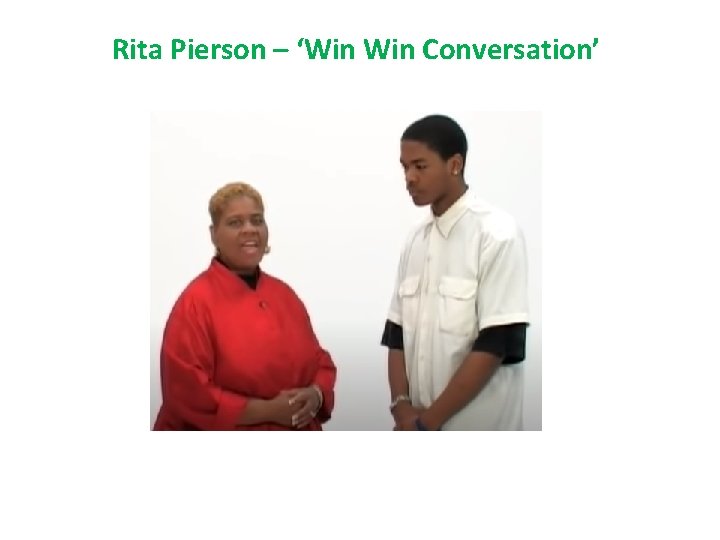
Rita Pierson – ‘Win Conversation’
To remember… Not all behaviours are a matter of ‘choice’ and not all factors linked to the behaviour of CYP are within their control. Therefore the language of choice (e. g. ‘good choice/bad choice’) is not always helpful. Encouraging parental engagement and involvement is absolutely crucial when addressing and planning support for CYP’s SEMH needs. “The parent-child connection is the most powerful mental health intervention known to mankind” (Bessel van der Kolk) Creating an inclusive and positive school ethos around behaviour is something that must be driven by the senior leadership team in order to be endorsed by, and embedded across, the whole school community. Responding to the SEMH needs of CYP is not the responsibility of a few staff in school; it is everyone’s responsibility. Behaviour policy development and review should be supported by training so that staff understand are able to implement the policy. It is important that action-planning and practice-review follows any training. Key messages to be embedded into practice should be shared with all members of the school community, including: pupils, governors and parents/carers,
To remember… Positive home-school relationships Home-school communication should be two-way, communication from school being proactive and positive rather than reactionary and punitive, and communication that emphasises similarities between home and school rather than differences (Gus, 2017). A Team Around the Child/School Approach can help improve home-school relationships via an emphasis on openness, trust and effective communication, Reflective practice opportunities are essential to support staff with: awareness of their own emotions and attachment styles; understanding of the behaviours from others that might trigger a particular response in them; maintaining appropriate boundaries; managing secondary stress. This is only possible within a school culture where staff feel safe and are encouraged as part of good EMHWB practice to express how their work impacts on their emotions and vice versa.
Top tips for a trauma-informed approach Recognise behaviour as a form of communication. Consider what might be underpinning behaviour. Don’t immediately seek within-child explanations - e. g. labels such as ADHD. Consider the child holistically/in context. Their behaviour might be a very normal response to adverse life experiences. Spot CYP behaving well/doing the right thing. Offer specific and descriptive praise (or for those CYP who find it difficult to accept praise, offer discrete non-verbal feedback). Differentiate expectations - How long should you expect a CYP who is hypervigilant to sit still during carpet time or assembly? Differentiate response - Some CYP perceive/experience public verbal reminders/prompts around expected behaviour to be very shaming. Consider nonverbal cues/gestures agreed with the CYP. Ensure that any disapproval expressed is of the behaviour and not the person (i. e. maintain a sense of unconditional positive regard). Relationships first! ‘Engage, don’t Enrage’ ‘Connection before Correction’ ‘The 3 Rs: Regulate, Reason’
Top tips for a trauma-informed approach A whole school approach - All members of staff are responsible for supporting the behaviour of CYP across the school. Attachment/building relationships is everybody’s business! Use agreed tools for recording, monitoring and sharing planned strategies/support/progress around behaviour so that they can be consistently implemented * 26 Small actions can make a big difference! Smiling at/greeting a CYP on their way into school/class can add to their sense of belonging/ feeling liked, respected and valued. Don’t expect immediate results or returns! A CYP might be very dismissive of you behaving in a kind/empathic manner towards them, but this doesn’t mean that your actions weren’t important, or valued. It may just mean they are not in a good place to be able to receive kindness and/or that they need lots more experiences of this positive approach/kind behaviour to even begin to internalise a positive sense of self. Recognise that what you feel is a likely indication of how the CYP feels If you feel helpless/stuck/frustrated/angry, this is often an important indication of how the CYP is feeling inside and what they are projecting out. Be cautious around suggestions of a ‘fresh start’ Often people start to look for fresh starts such as another school for a CYP when they feel stuck. Don’t assume anyone else will be able to manage the behaviour any better/feel less stuck. Often CYP who unconsciously push others away through their behaviour are the ones who have experienced the most rejection and are most successful at being repeatedly rejected/ excluded.
Final words… Instead of ‘What’s wrong with you? ’ ask ‘What happened to you? ’ Consider, ‘What’s the reason behind the behaviour? ’ FAIR doesn’t mean everybody gets the same thing, it means everybody gets what they NEED. (EEF Improving Behaviour in Schools guidance report Recommendation 5 – targeted approaches) Be curious, not furious. Apply PACE as an approach through connection before correction. Empathy drives connection, sympathy drives disconnection. Connection before correction.
A huge thank you to the following agencies, who have given their time so generously at the sessions. Please contact them directly, if you wish to take up an offer of follow-up CPD or access supporting resources at: Lincolnshire BOSS: Lincolnshireboss@family-action. org. uk Restorative Solutions: Clare. Boardman@family-action. org. uk Caring 2 Learn: https: //lincolnshire. fsd. org. uk/kb 5/lincs/fsd/family. page? familychannel=1900 To book onto events email: Caring 2 Learn@lincolnshire. gov. uk The Working Together Team: vicky. turner@twtt. org. uk or : http: //website. twtt. org. uk/ Futures in Mind – bespoke psychological services: https: //www. futuresinmind. org/ Lincolnshire Parent Carer Forum: www. lincspcf. org. uk/index. php admin@lincspcf. org. uk
A huge thank you to the following agencies, serviced and schools who have given their time so generously at the sessions. Please contact them directly, if you wish to take up an offer of follow-up CPD or access supporting resources at: Mindspace Stamford: https: //www. mindspacestamford. com/ Bite-sized Psychology: @HLucas 8 bitesizedpsychology@gmail. com The Pilgrim School: https: //www. pilgrim. lincs. sch. uk/ Joseph Norton Academy in Huddersfield: https: //www. josephnorton. co. uk/
Further reading The Boy Who was Raised as a Dog - Dr Bruce Perry (2017) Inventing Ourselves – The Secret Life of a Teenage Brain - Sarah-Jayne Blakemore (2019) When the Adults Change, Everything Changes - Paul Dix (2017) Leading Better Behaviour: A Guide for School Leaders - Jarlath O Brien (2020) Working with Relational and Developmental Trauma in Children and Adolescents Karen Treisman (2017) The Deepest Well: Healing the Long-Term Effects of Childhood Adversity – Nadine Burke Harris (2018) Toxic Childhood Stress: The Legacy of Early Trauma and How to Heal - Nadine Burke Harris (2020) Conversations that Matter – Dr Margot Sunderland (2015) EEF Improving Behaviour in Schools Guidance Report https: //educationendowmentfoundation. org. uk/tools/guidance-reports/improvingbehaviour-in-schools/ EEF Improving Social & Emotional Learning in Primary Schools (easily adaptable for other phases) https: //educationendowmentfoundation. org. uk/tools/guidancereports/social-and-emotional-learning/
Agency Contacts for Further Support Lincolnshire BOSS (Behavioural Outreach Support Service) Lincolnshireboss@family-action. org. uk Restorative Solutions – free support to develop a whole-school restorative approach: Clare. Boardman@family-action. org. uk Caring 2 Learn: work towards a Caring Schools Award; access free CPD – whole-school restorative approach, Social Pedagogy, Secondary Trauma https: //mobilise. kyrateachingschool. com/assets/uploads/files/Training-Events. Calendar-SD-updated-May-2020. pdf Contact: Caring 2 Learn@lincolnshire. gov. uk Healthy Minds: https: //www. lpft. nhs. uk/youngpeople/lincolnshire/professionals/service-offer-and-referrals/healthy-mindslincolnshire Think 2 Speak: support for schools and counselling for pupils, families and staff: https: //www. think 2 speak. com/counselling Futures in Mind: online Emotion Coaching training and bespoke training for schools: https: //www. futuresinmind. org/
References • • • *1 Df. E Guidance for full opening: schools (July 2020)* https: //www. gov. uk/government/publications/actions-for-schools-during-thecoronavirus-outbreak/guidance-for-full-opening-schools *2 Future in Mind report - promoting, protecting and improving our children and young people's mental health and wellbeing (2015): https: //assets. publishing. service. gov. uk/government/uploads/system/uploads/attachm ent_data/file/414024/Childrens_Mental_Health. pdf *3 Transforming Children and Young People’s Mental Health Provision: a Green Paper (2017): https: //assets. publishing. service. gov. uk/government/uploads/system/uploads/attachm ent_data/file/664855/Transforming_children_and_young_people_s_mental_health_pr ovision. pdf *4 2014 Code of Practice of Special Educational Needs: https: //www. gov. uk/government/publications/send-code-of-practice-0 -to-25 *5 Timpson Review of School Exclusion (2019): https: //assets. publishing. service. gov. uk/government/uploads/system/uploads/attachm ent_data/file/807862/Timpson_review. pdf *6 National Institute for Clinical Excellence (NICE) Guidance: Children’s Voices excluded from Schools: https: //www. childrenscommissioner. gov. uk/wpcontent/uploads/2017/11/CCO-Childrens-Voices-Excluded-from-schools-and-altprovision. pdf
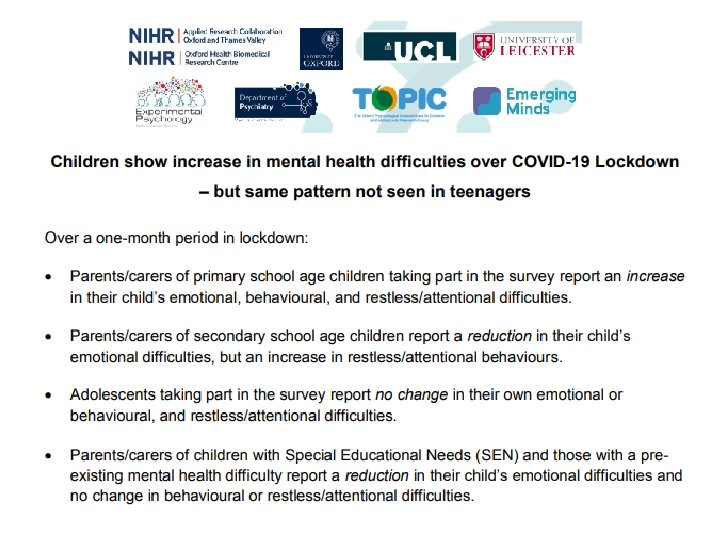
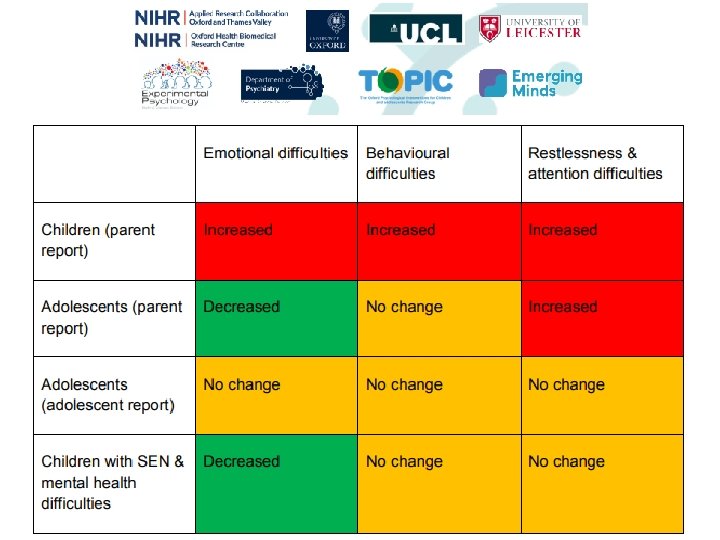
References • • *7 Co-SPACE Report: Full report published 4 th https: //emergingminds. org. uk/wpcontent/uploads/2020/06/Co. SPACE-Report-4 -June-2020. pdf *8 NHS 10 year plan (2019): https: //www. longtermplan. nhs. uk/publication/nhslong-term-plan/ *9 EEF Guidance Report - Improving Social and Emotional Learning in Primary Schools: https: //educationendowmentfoundation. org. uk/tools/guidancereports/social-and-emotional-learning/ *10 PHE, Protective and Risk Factors for Children and Young People's Mental Health (2016): https: //assets. publishing. service. gov. uk/government/uploads/system/uploads/att achment_data/file/575632/Mental_health_of_children_in_England. pdf *11 Ending Childhood Adversity, A Public Health Approach (June 2020): http: //www. healthscotland. scot/publications/ending-childhood-adversity-a-public -health-approach *12 ‘It’s All About Relationships: Embedding relational, trauma sensitive approaches in education’ (2020): https: //vimeo. com/380509352 ( *13 Good relationships are the key to healing trauma, Karen Treisman TEDx. Warwick. Salon (2018) : https: //www. youtube. com/watch? v=PTs. Pd. Mq. Vw. Bg
References • • *14 Developing an Attachment Aware Behaviour Regulation Policy: Guidance for Brighton & Hove Schools (September 2018): https: //www. brightonhove. gov. uk/sites/brightonhove. gov. uk/files/Behaviour%20 Regulation%20 Policy%20 Guidance%20%20 Sep%2018_1. pdf *15 Feeling safe/putting up defences - Safe Hands Thinking Minds: http: //www. safehandsthinkingminds. co. uk/wp-content/uploads/2016/03/feelingsafe-putting-up-defenses. pdf *16 EEF Guidance Report - Improving Behaviour in Schools: https: //educationendowmentfoundation. org. uk/public/files/Publications/Behavio ur/EEF_Improving_behaviour_in_schools_Report. pdf *17 PACE – Dan Hughes: http: //nibblesandbubbles. co. uk/resources/pace-poster/ *18 What if we are curious about behaviour? Beacon House: https: //beaconhouse. org. uk/wp-content/uploads/2019/09/What-if. . . -1. jpg *19 Working with Relational and Developmental Trauma in Children and Adolescents – Karen Treisman (2017) *20 Covid - Survival modes & resurfacing past traumas - falling down a memory timehole - Dr Karen Treisman: https: //www. youtube. com/watch? v=ms. NO 7 Zm. LXns&feature=youtu. be
References • • *21 Behaviour as Communication, the Behaviour Kaleidoscope : http: //www. safehandsthinkingminds. co. uk/wp-content/uploads/2016/03/behaviour-as -communication-behaviour-is-a-kaleidoscope. pdf *22 Brene Brown - Empathy vs sympathy: https: //www. youtube. com/watch? v=KZBTYVi. DPl. Q *23 Supporting parents to meet the challenges of parenting children who have been traumatized within their early parenting environments Kim S Golding(2014): https: //kimsgolding. co. uk/publication/journal-papers/connectionbefore-correction/ *24 Mary Meredith’s video 4 - Post Pandemic Pastoral Care 4 - Building positive relationships: https: //www. youtube. com/watch? v=YX 1 BQXTJX 18&list=PLL 2 ZK 9 Cq. Kpu 2 h. Aqg. Dsw. Al. Yjven. UHNlvu&index=5&t=0 s *25 Rita Pierson Teaching Tips (Win Conversation): https: //www. youtube. com/watch? v=jw. SZ 3 XYUZME *26 Lincolnshire Trauma-informed PSP: *27 Mary Meredith - primary and secondary assembly on behaviour and fairness : https: //marymered. com/2019/02/09/a-primary-school-assembly-on-behaviour-andfairness-towards-traumainformed/ (primary) https: //marymered. com/2019/02/02/anassembly-about-behaviour-and-fairness-trauma-informed/ (secondary)
- Slides: 49