
Mobile video reminder to improve medicine compliance of
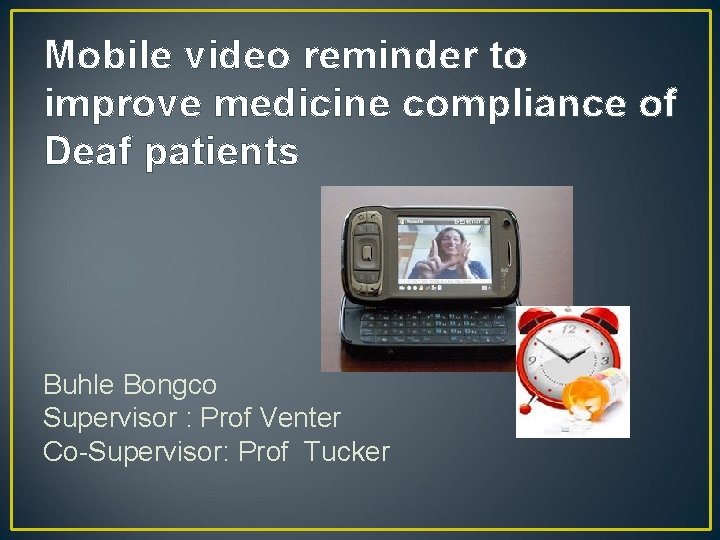
Mobile video reminder to improve medicine compliance of Deaf patients Buhle Bongco Supervisor : Prof Venter Co-Supervisor: Prof Tucker
Overview 1. 2. 3. 4. 5. 6. 7. 8. Requirement Analysis User Interface Specification High Level Design Low Level Design Technologies to be used Project Plan References Demo
Requirement Analysis User Designer • Reminder to remind • Remind the user to to the user to take medication • SASL video manual • SASL video instruction with a set of of how to take the instructions. medication • Minimal operation • Easy to operate steps required. • Very simple to use.
The solution • High quality non-audio based reminder • User friendly • Punctual • Operated by one button on the patient interface
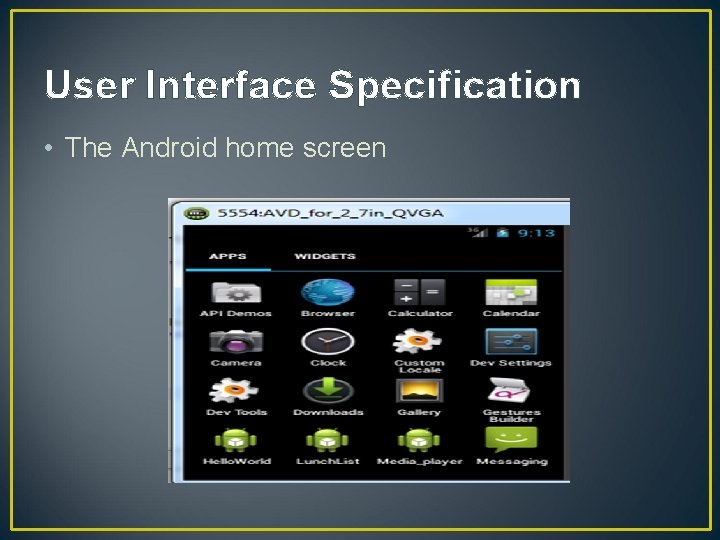
User Interface Specification • The Android home screen
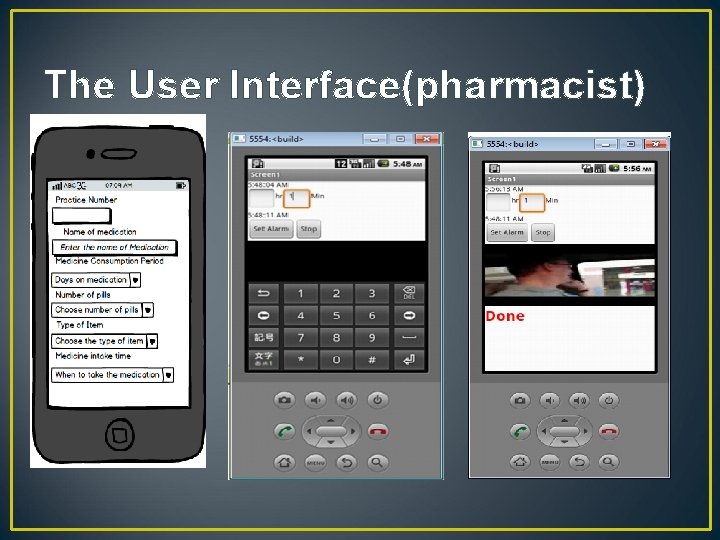
The User Interface(pharmacist)
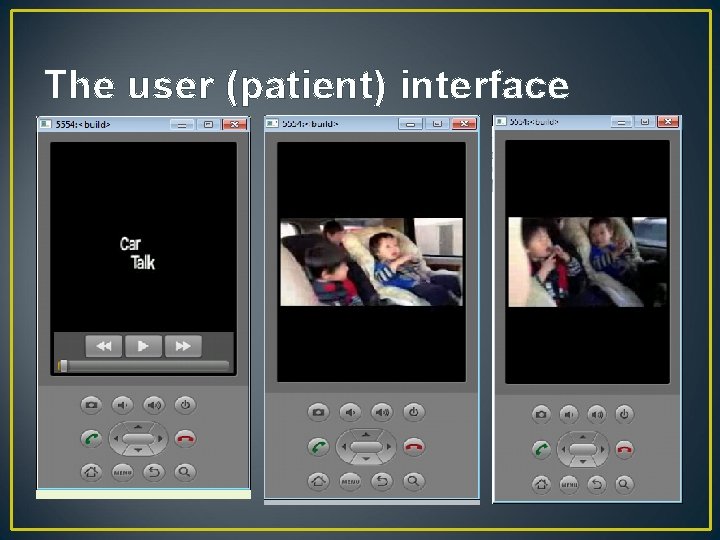
The user (patient) interface
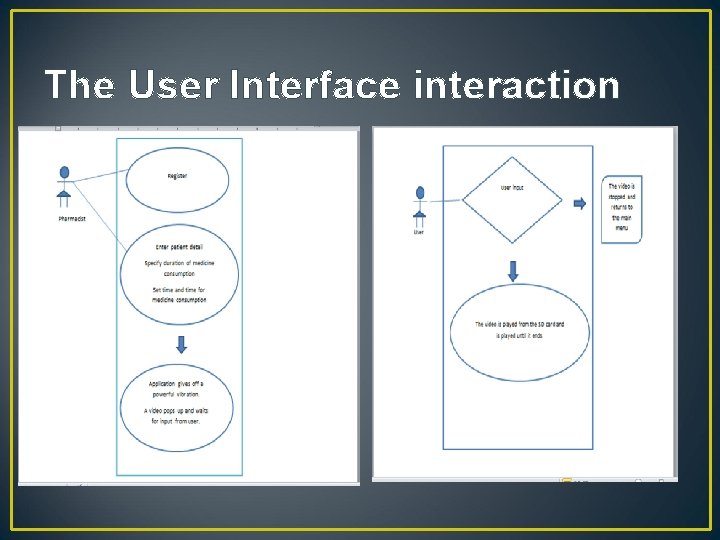
The User Interface interaction

High Level design
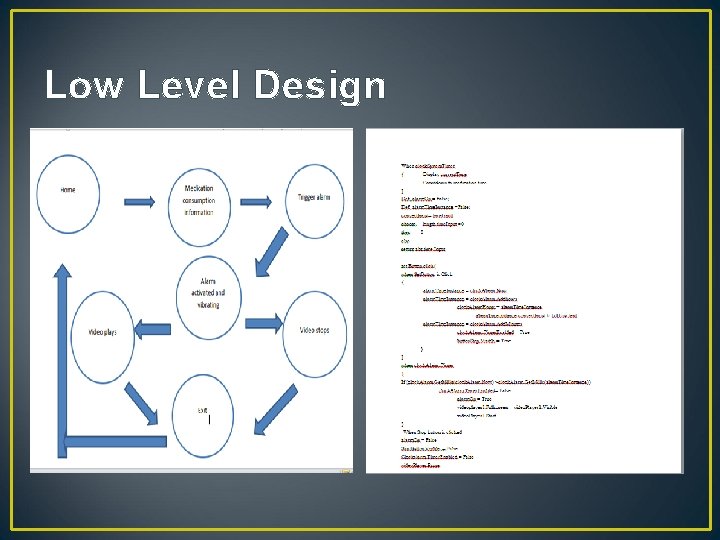
Low Level Design
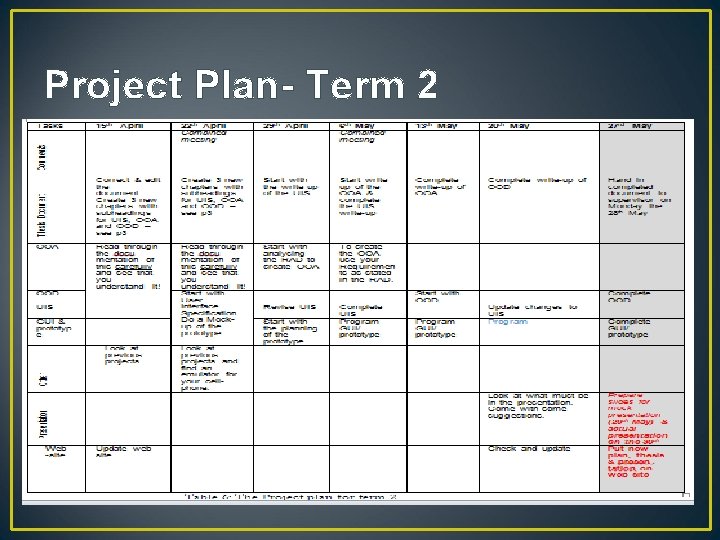
Project Plan- Term 2
References • • • Android. (2013, May 01). Android 4. 2. Retrieved from Android 4. 2: http: //developer. android. com/reference/android/media/Media. Player. html Ashish. (2013, January 29). Guide to Manage Sd Card on Windows Phone. Retrieved from WP XBox: http: //www. wpxbox. com/guide-to-manage-sd-card-on-windows-phone/ Barnett, S. (1999). Clinical and cultural issues in caring for Deaf people. FAMILY MEDICINE, 1722. Carol, P. (1991). 2. 4 The Deaf Community and the Culture of Deaf People. Constructing Deafness, 40. D. J. Power, M. R. (2007). German deaf people using Text Communication : Short Message Service , TTY, Relay Services, Fax and Email. Ammerican Annals of the Deaf, 291 -301. Edwin Blake, W. T. (2011). Interaction Design: Beyond Human Computer Interaction. Deaf Telephony: Community Based Co-Design, 1 -48. Enterprise, Q. (2013, May 27). user interface. Retrieved from www. webopedia. com: http: //www. webopedia. com/TERM/U/user_interface. html Harmer, L. (1999). Health care delivery and deaf people: practice, problems and recommedations for change. Journal of Deaf Studies and Deaf education 4. 2, 73 -110. http: //en. wikipedia. org/wiki/Functional_illiteracy#cite_ref-1. (n. d. ). http: //www. google. co. za/url? sa. commons. wikimedia. org/ACloud_computing. (2012). Kennedy, S. G. (1995). HIV and AIDS amoung the Deaf. Sexuality and Disability 13. 2, 145 -158. Kiyaga, N. B. (2003). Deafness in the Sub-Saharan Africa. American Annals of the Deaf 148. 1, 1823.
References(continued) • • • Ladner, R. (1993). Mobile. ASL: Making Cell Phones Accessible to the Deaf Community. Lewis, J. D. (March 1985). Designing for Usability Key Principles and What Designers Think. Human Aspects of Computing, 300 -311. M. B. Motlhabi, W. D. (2011). A Limited Communication Domain Mobile Aid for a Deaf patient at the pharmacy. Miller, M. (2009). Cloud computing - Web- Based Applications That Change the Way You Work and Collaborate Online. Indiana, Indianapolis: Que Publishing. Olsen, J. (1965). Instructional Materials for Functionally Illiterate Adults. The Phi Delta Kappan , 450 -452. Red. Orbit. (2013, May 26). Memory Card. Retrieved from www. red. Orbit. com: http: //www. redorbit. com/education/reference_library/technology_1/inventions/2583816/memory_ca rd/ Richard Ladner, R. D. (1987). A User Interface for Deaf-Blind people(Preliminary Report). Seattle, Washington: CHI+GI. Ros Dowse, M. S. (2001). The evaluation of pharmeceutical pictograms in a low literate South African population. Patient Education and Counselling, 87 -99. Russell, S. S. (2006). An Overview of Adult Learning Processes. URLOGIC NURSING, 349 -352. Shih, G. , Lakhani, P. , & Nagy, P. (2010). Is Android or iphone the Platform for Innovation in Imaging Informatics. Journal of Digital Imaging, 2 -7. Strassler, B. (2002). Deafdigest Blue Edition.
• Questions? ? ?
Demo
- Slides: 15