
MOBILE RADIOWAVE PROPAGATION ETI 2511 WIRELESS COMMUNICATION Monday
MOBILE RADIOWAVE PROPAGATION ETI 2511 – WIRELESS COMMUNICATION Monday, 09 November 2015 1
WHERE IN ETI 2511 SYLLABUS • RF propagation considerations in cellular mobile environment. Diversity reception, LOS, Fresnel zones. 2

RADIO WAVE PROPAGATION WITH OBSTACLES Radio wave propagation in the mobile communication environment is affected by the following mechanisms: 1. Reflection at obstacles larger than the wavelength of the signal reflection 2. Scattering at obstacles whose size is smaller than the wavelength of the signal scattering 3. Diffraction at surfaces with sharp irregular edges. diffraction 3
SIGNAL DEGRADATION Radio wave signal is subject to degradation resulting from propagation in the mobile radio environment. The principal phenomena are: 1. Path loss due to distance covered by radio signal (frequency dependent, less at low frequencies) 2. Fading (frequency dependent, related to multipath propagation) 3. Shadowing induced by obstacles in the path between the transmitted and the receiver 4
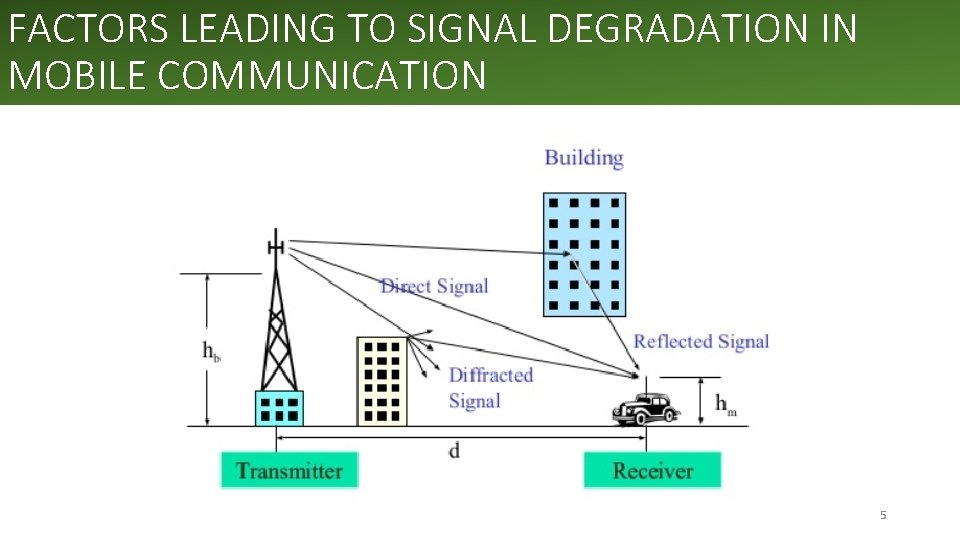
FACTORS LEADING TO SIGNAL DEGRADATION IN MOBILE COMMUNICATION 5
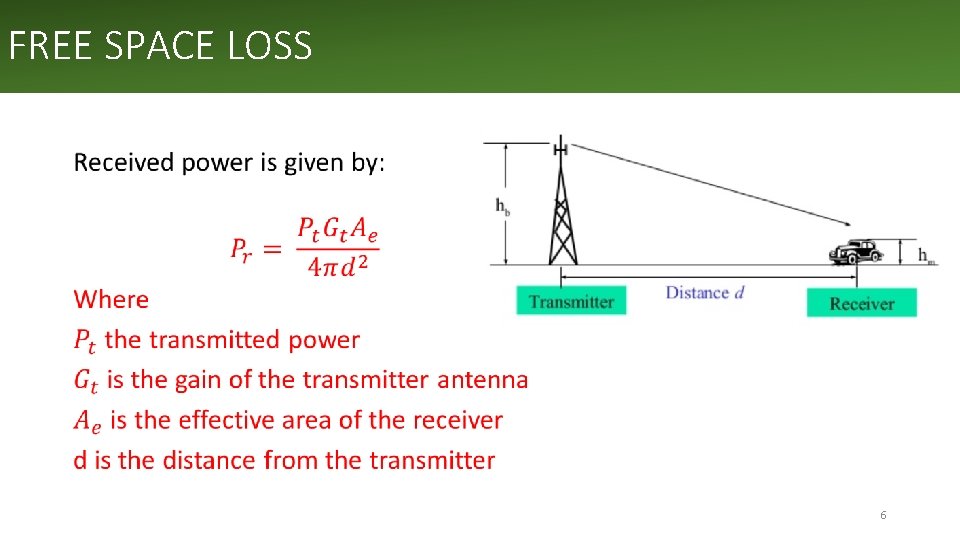
FREE SPACE LOSS • 6
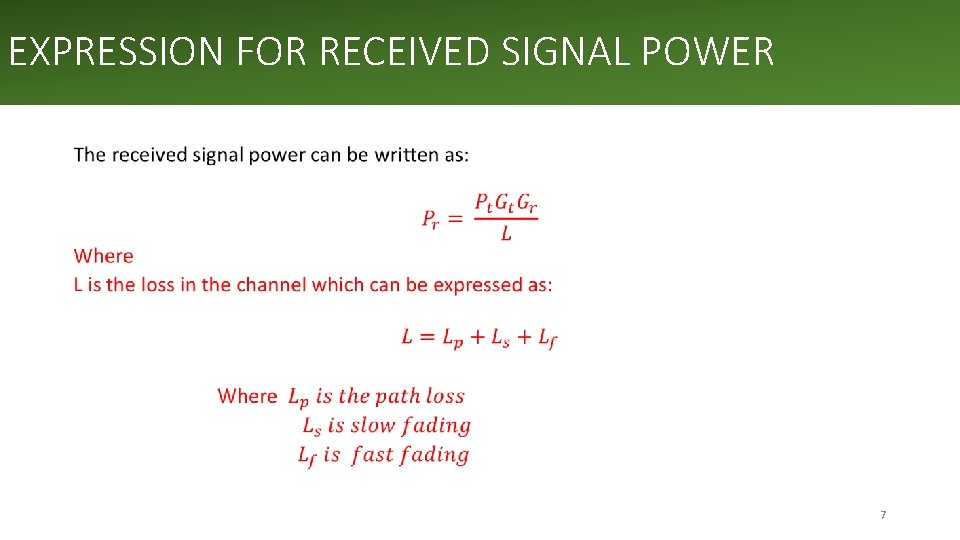
EXPRESSION FOR RECEIVED SIGNAL POWER • 7
MOBILE COMMUNICATION & THE ENVIRONMENT 1. Propagation characteristics differ with the environment through and over which radio waves travel. 2. Several types of environments can be identified (dense urban, suburban and rural) and are classified according to the following parameters: a) Terrain morphology b) Vegetation density c) Buildings: density and height d) Open areas e) Water surfaces 8
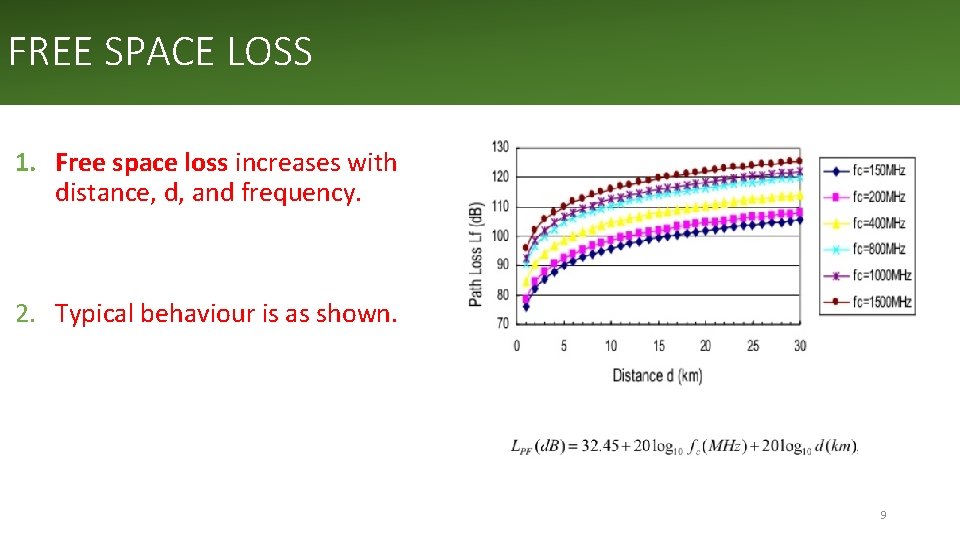
FREE SPACE LOSS 1. Free space loss increases with distance, d, and frequency. 2. Typical behaviour is as shown. 9
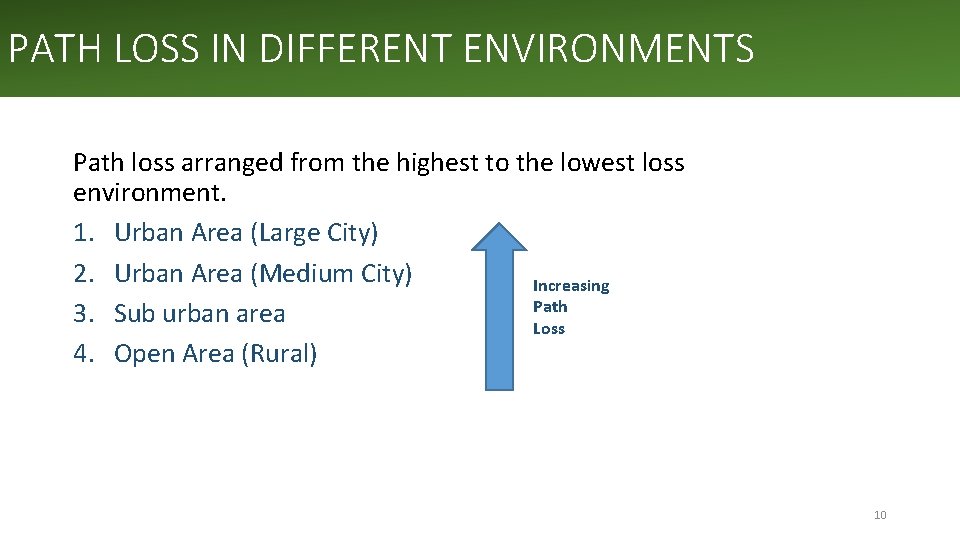
PATH LOSS IN DIFFERENT ENVIRONMENTS Path loss arranged from the highest to the lowest loss environment. 1. Urban Area (Large City) 2. Urban Area (Medium City) Increasing Path 3. Sub urban area Loss 4. Open Area (Rural) 10
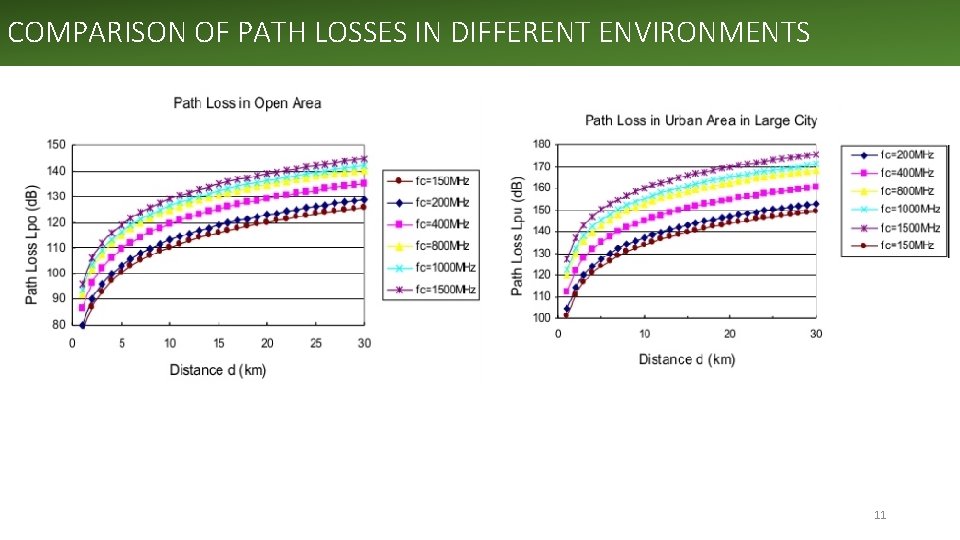
COMPARISON OF PATH LOSSES IN DIFFERENT ENVIRONMENTS 11
INTERFERENCE IN MOBILE COMMUNICATION SYSTEMS Interference from other sources and noise will also impact signal strength. Key contributors here are: 1. Co-channel interference: from adjacent clusters using same frequency. 2. Adjacent channel interference: From frequencies adjacent to transmission/reception frequency. 3. Ambient noise: from the radio transmitter components or other electronic devices in the neighbourhood. 12
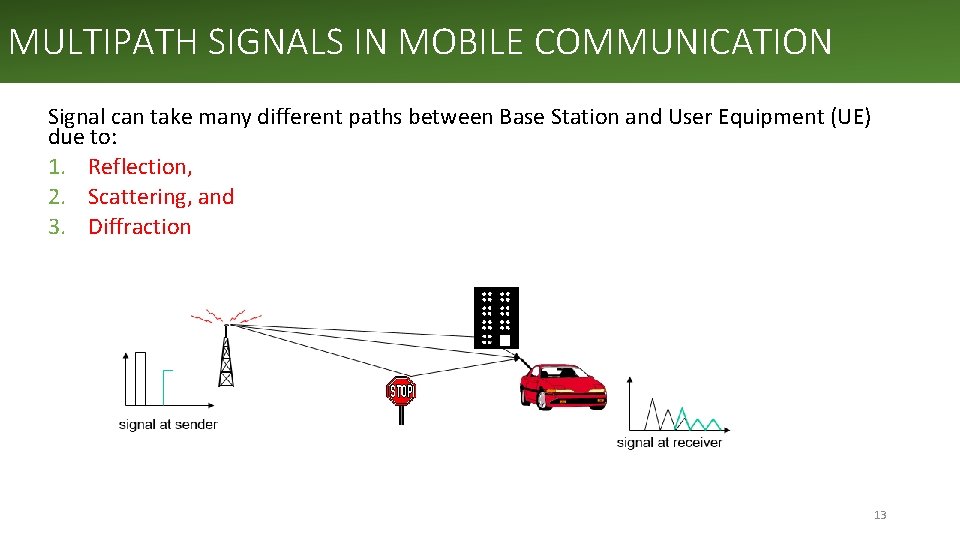
MULTIPATH SIGNALS IN MOBILE COMMUNICATION Signal can take many different paths between Base Station and User Equipment (UE) due to: 1. Reflection, 2. Scattering, and 3. Diffraction 13
POSITIVE EFFECTS OF MULTIPATH 1. Multipath enables communication even when transmitter and receiver are not in Line of Sight (LOS) conditions. 2. Radio waves go around them thereby increasing the radio coverage area. 14
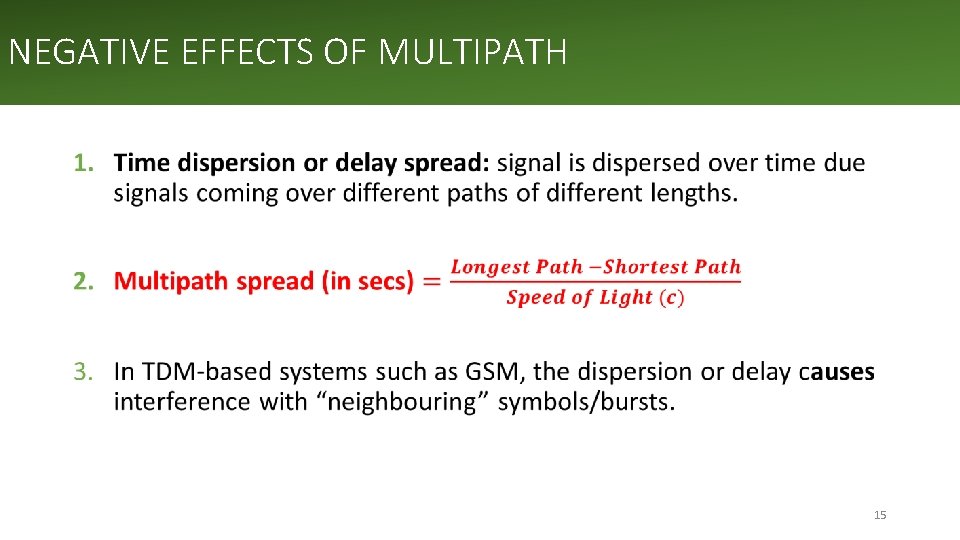
NEGATIVE EFFECTS OF MULTIPATH • 15
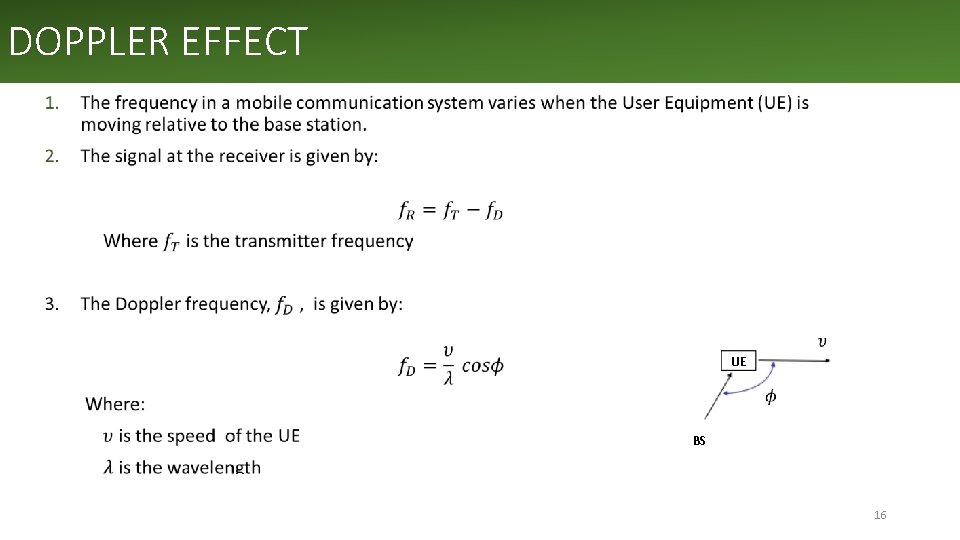
DOPPLER EFFECT • UE BS 16
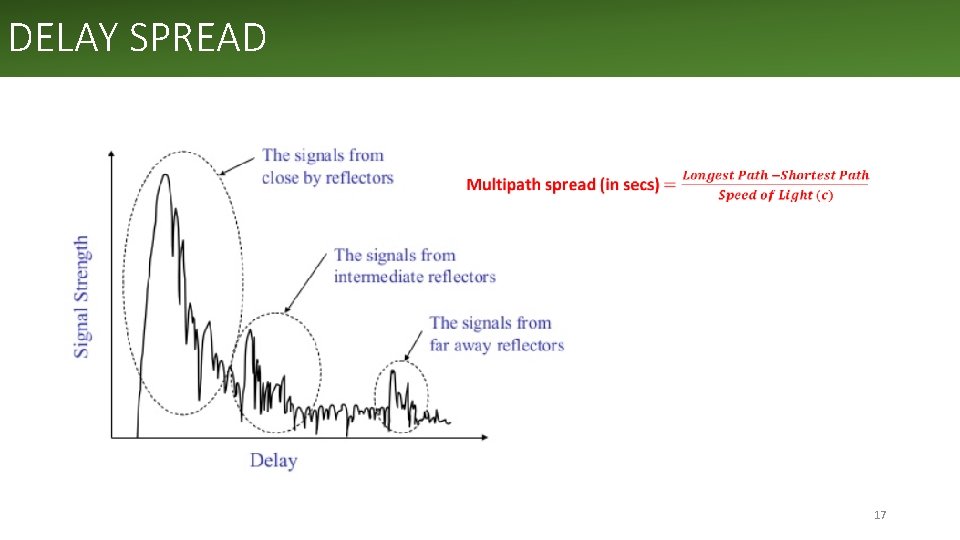
DELAY SPREAD 17
- Slides: 17