
MOBILE Learning Young people use computers cell phones
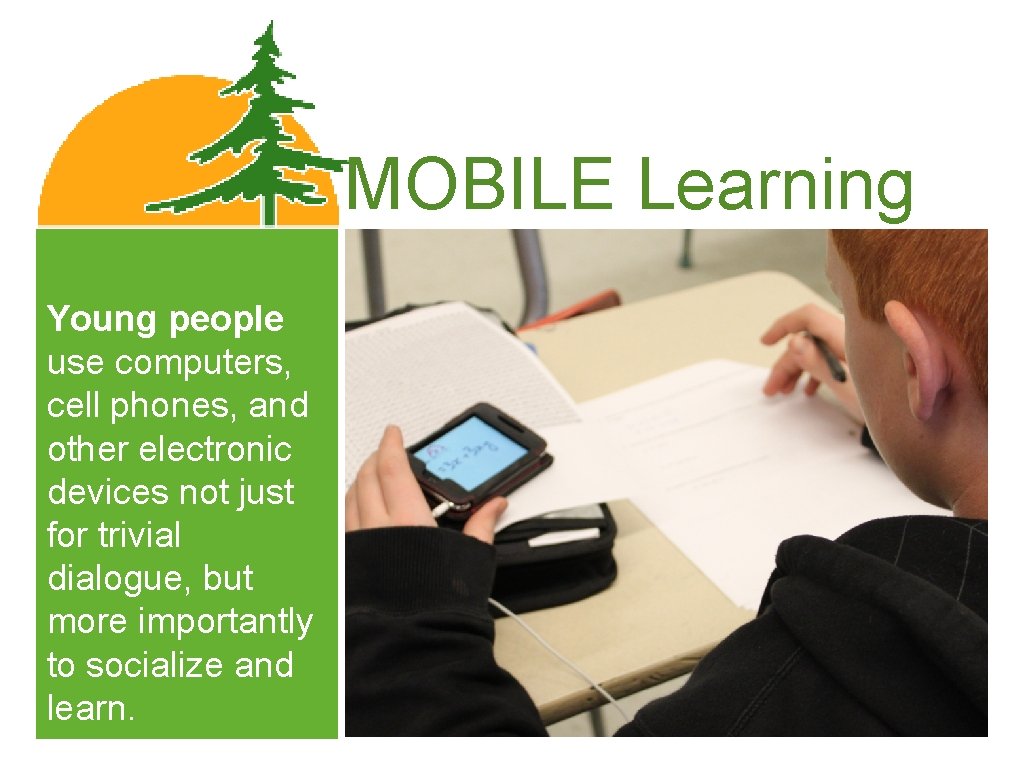
MOBILE Learning Young people use computers, cell phones, and other electronic devices not just for trivial dialogue, but more importantly to socialize and learn.
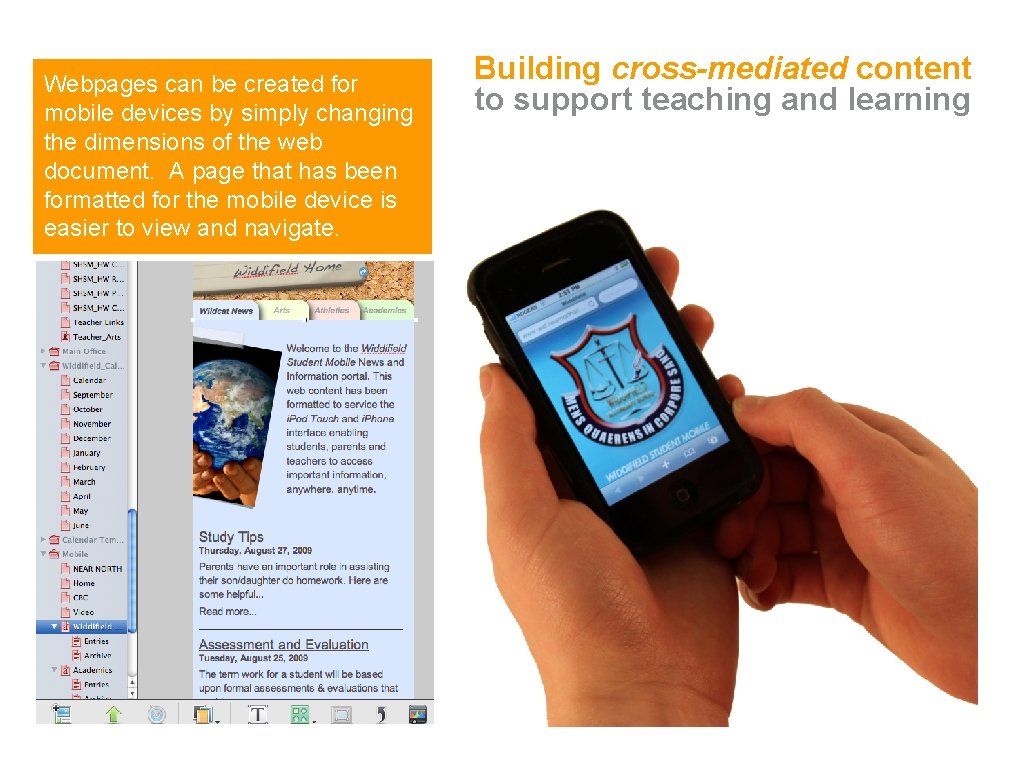
Webpages can be created for mobile devices by simply changing the dimensions of the web document. A page that has been formatted for the mobile device is easier to view and navigate. Building cross-mediated content to support teaching and learning
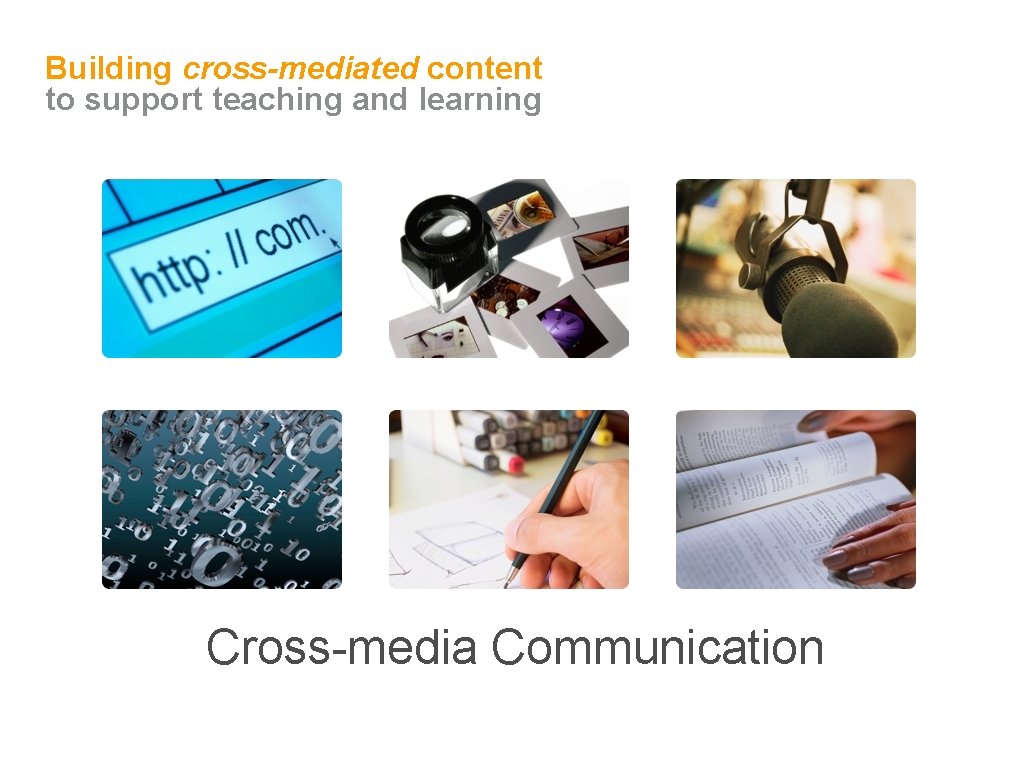
Building cross-mediated content to support teaching and learning Cross-media Communication

Smart Board meets i. Pod Touch Using screen capture to create podcasts “I am trying to find a way to use the i. Pods to build knowledge, not just review it”
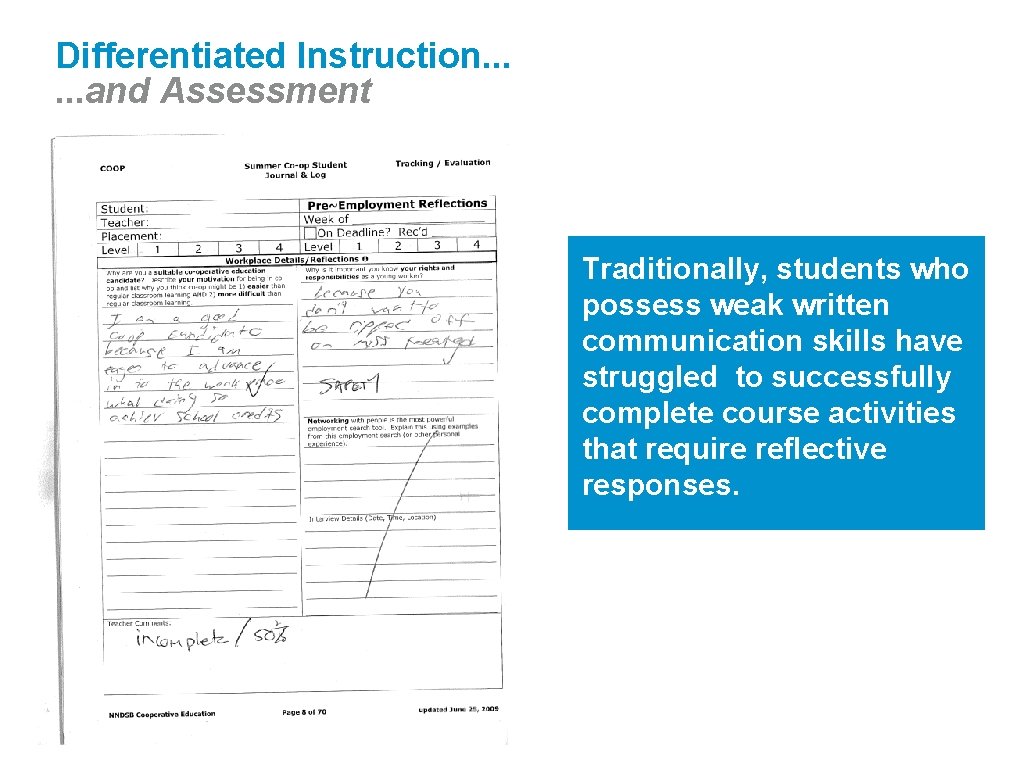
Differentiated Instruction. . . and Assessment Traditionally, students who possess weak written communication skills have struggled to successfully complete course activities that require reflective responses.
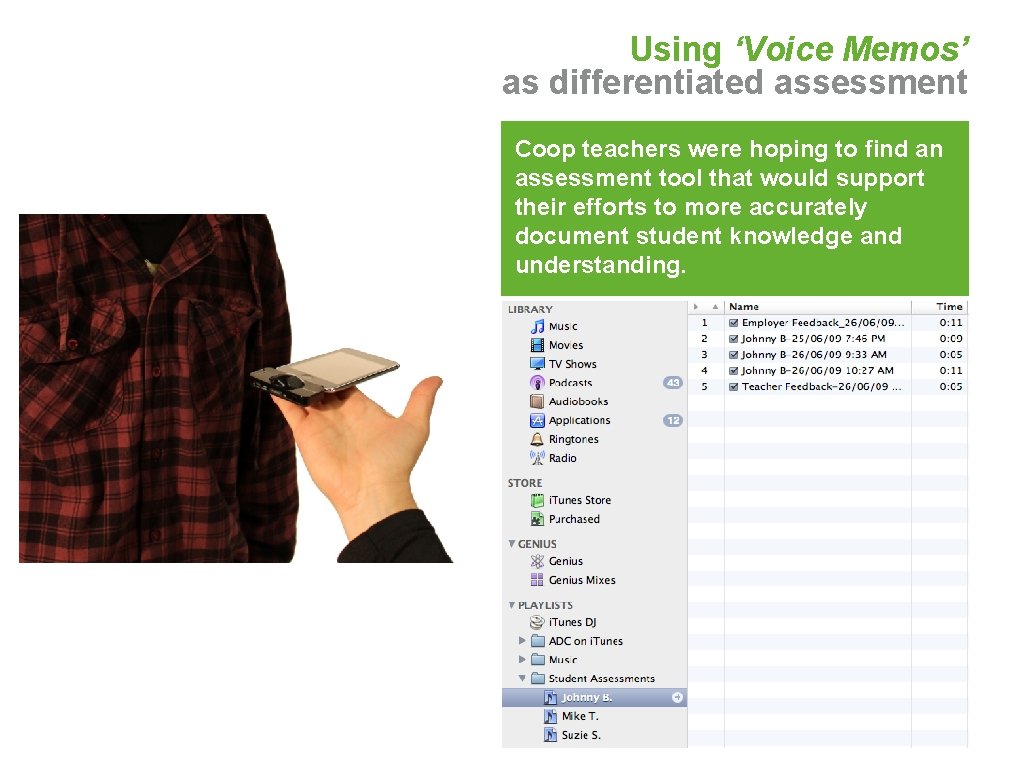
Using ‘Voice Memos’ as differentiated assessment Coop teachers were hoping to find an assessment tool that would support their efforts to more accurately document student knowledge and understanding.

Exploring New Technology. . . to support student success “In many cases, students’ oral reflections provide a more accurate demonstration of their knowledge and understanding. ” “Students are now able to communicate their knowledge and understanding of curriculum expectations more accurately. Using audio and video assessments teachers are better able to document and encourage student success. . . ”
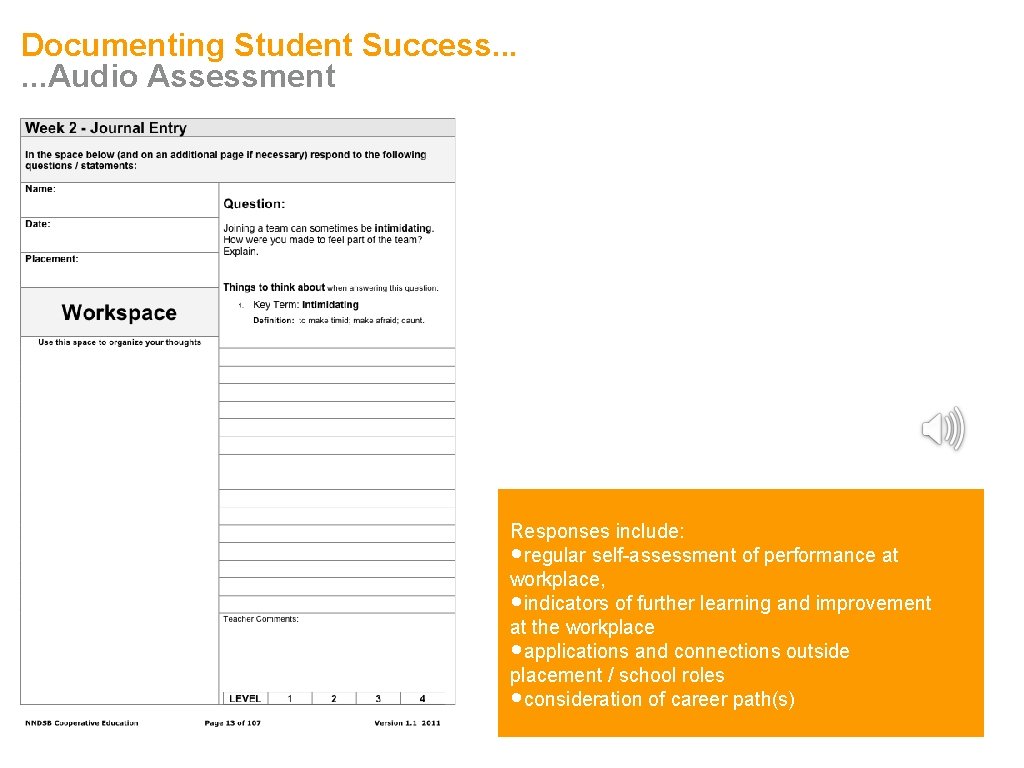
Documenting Student Success. . . Audio Assessment Responses include: • regular self-assessment of performance at workplace, • indicators of further learning and improvement at the workplace • applications and connections outside placement / school roles • consideration of career path(s)
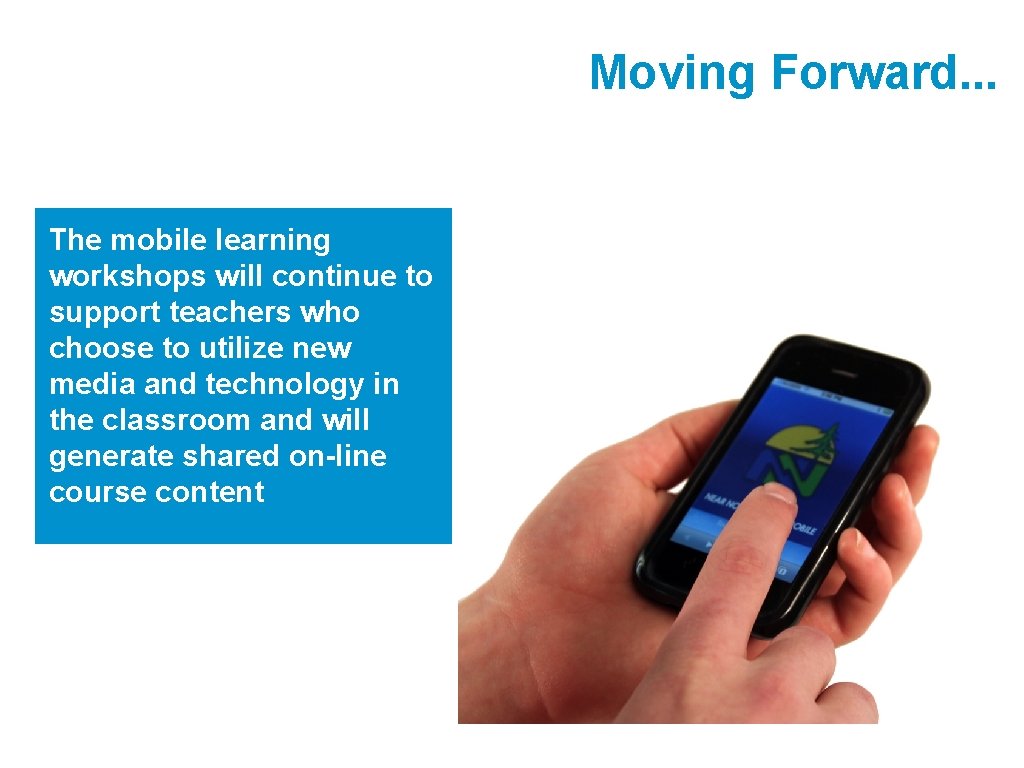
Moving Forward. . . The mobile learning workshops will continue to support teachers who choose to utilize new media and technology in the classroom and will generate shared on-line course content
- Slides: 10