
MNP 1163 Software Construction Managing Construction This Module
- Slides: 21
MNP 1163 (Software Construction) Managing Construction
This Module �SDLC and Construction Models �Construction Planning �Construction Measurement
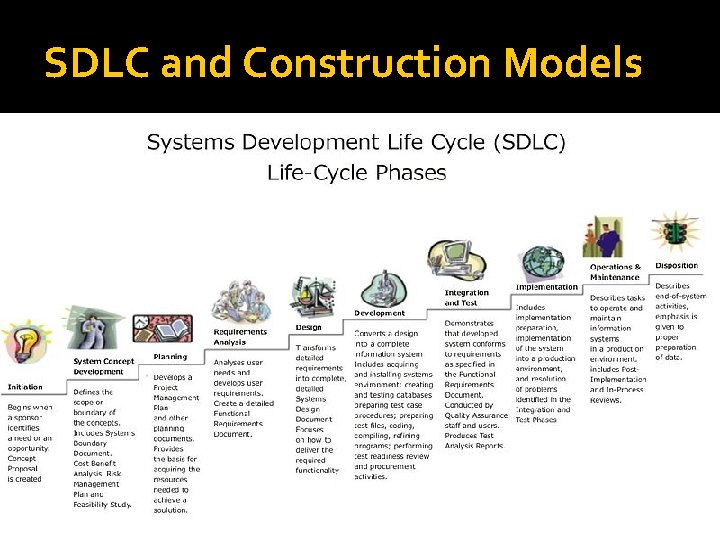
SDLC and Construction Models
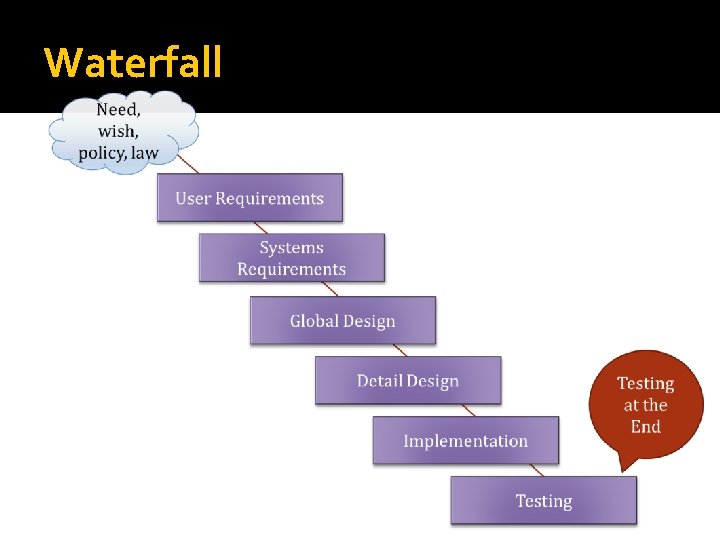
Waterfall
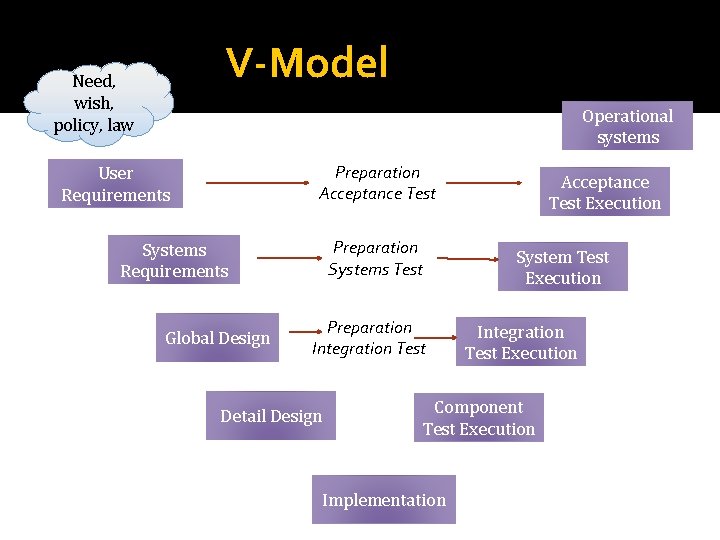
V-Model Need, wish, policy, law Operational systems Preparation Acceptance Test User Requirements Preparation Systems Test Systems Requirements Global Design Preparation Integration Test Detail Design Acceptance Test Execution System Test Execution Integration Test Execution Component Test Execution Implementation
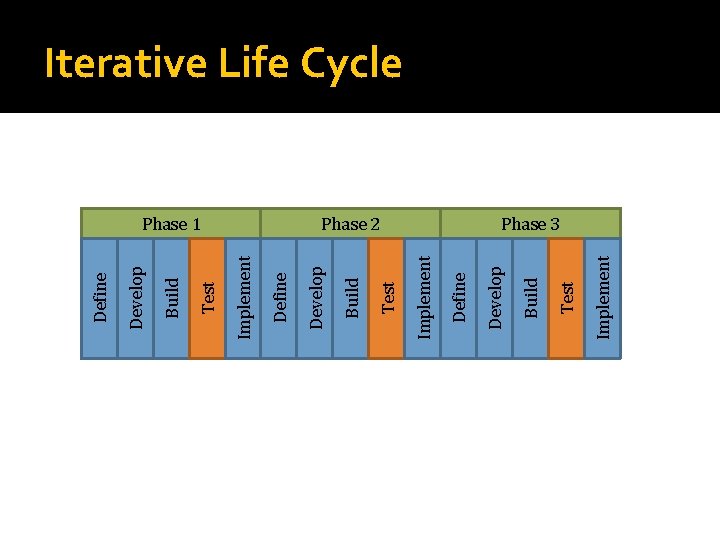
Implement Test Build Phase 2 Develop Define Implement Test Build Phase 1 Develop Define Implement Test Build Develop Define Iterative Life Cycle Phase 3
Construction Planning �What is Construction Planning? �Laying out the work plan (i. e. schedule) to design, implement, debug, and unit test the software
Construction planning �Construction planning major concerns: Coders are typically not planners Schedules will be difficult to maintain unless a good architecture design is in place Many organizations to not collect project data on which to plan future projects Many managers consider planning to be a waste of time and therefore don’t encourage it Project plans may be limited to the construction plans Many organizations and projects do not use systematic cost estimating methods such as models
Construction Planning �Consider reducing development costs by planning to: Reduce the size and/or complexity Improve the development process Use more highly skilled people and build better teams Use better tools Reduce quality thresholds
Construction Planning �Some actions include Use an object-oriented approach Use COTS components Use an iterative approach Provide training to development team Automate tedious tasks with tools
Construction Planning �As with building construction, much of the success or failure of the project already determined before construction begins �Upstream activities such as project planning, requirements, architecture, and design are crucial to success �Typical high-risk areas Project planning Requirements Architecture �Preparation is a way to reduce these risks
Construction Planning �The problem being solved via the application must be well defined �Common names for the document containing the problem statement: Product Vision Statement Product Definition �Defines the problem without reference to potential solutions �Helps avoid solving the wrong problem!
Construction Planning �Requirements describe in detail what a system is supposed to do, therefore are invaluable for construction �Explicit requirements: Help ensure the user drives system functionality ▪ Rather than the programmer Reduce the number of construction debates Help minimize changes after development begins �Specifying requirements adequately is a key to project success
Construction Planning �Quality of the architecture determines the conceptual integrity of the system �A proper architecture: Gives structure to maintain conceptual integrity Provides guidance to programmers Partitions work �Architecture-level problems are much more costly to fix than are coding errors �Good architecture can make construction easy Bad architecture makes construction difficult
Construction Planning �Time budgeted for requirements and architecture work 10 to 20 percent of manpower 20 to 30 percent of schedule �If requirements are unstable Do not ignore, spend time to fix The analyst should fix if a formal project Can be fixed by the programmer for informal projects �Use same heuristics for problems with the architecture
Construction Planning � Many software development approaches have been tried over the years � Some examples: Functional Object-Oriented Iterative Waterfall Agile Data-centric � The construction team must follow some approach � Chosen approach must be appropriate for the task at hand
Construction Planning �Programming language choices affect Productivity Code quality �Programmers more productive using a familiar language �High-level languages provided higher quality and better productivity �Some languages better at expressing programming concepts than others �The ways in which a programmers express themselves are affected by the chosen language
Construction Planning � Questions to answer regarding practices: How detailed will the design be? What are the coding conventions for names, comments, layout, etc. ? How will the architecture be enforced? Is the project’s use of technology ahead of or behind the power curve, and is this appropriate given the circumstances? What is the integration procedure, how often is it done, and who participates? Will developers program individually, in pairs, or some combination of this? Where and when will builds occur?
Construction Planning Modern programming tools Are essential to maintain programmer productivity Reduce tedious and redundant tasks Must be appropriate for the task at hand Tools preparation checklist: Are all product licenses current? Are all products at current, supported revision level? Have all programmers received proper training on the tools? Does the project have a configuration management tool? Does the project have a tool to track change requests? Do project team members have sufficient workstations? Does the project have sufficient test environments? Does the project have sufficient build environments?
Construction Planning �For small development efforts Self managed Everyone is a peer �For mid-size development efforts Single team �For large development efforts Multiple teams
References � [IE 04] IEEE Computer Society, Guide to the Software Engineering Body of Knowledge (SWEBOK), IEEE Computer Society Press, Los Alamitos, CA 20001, June 2004 � [RS 04] IBM Rational Software, The Rational Unified Process v 2003. 06. 13, 2004 � [RT 03] � [SM 04] S. Mc. Connell, Code Complete: A Practical Handbook of Software Construction, Second Edition, Microsoft Press, 2004. � [WR 01] Walker Royce, Software Project Management, A Unified Framework, Addison-Wesley, Boston, MA, 2001