
MNA Mosbys Long Term Care Assistant Chapter 26
MNA Mosby’s Long Term Care Assistant Chapter 26 Vital Signs
Vital Signs Reflect function of body process needed for life: Temperature Pulse Respirations Blood Pressure. TPR, RR, HR and B/P
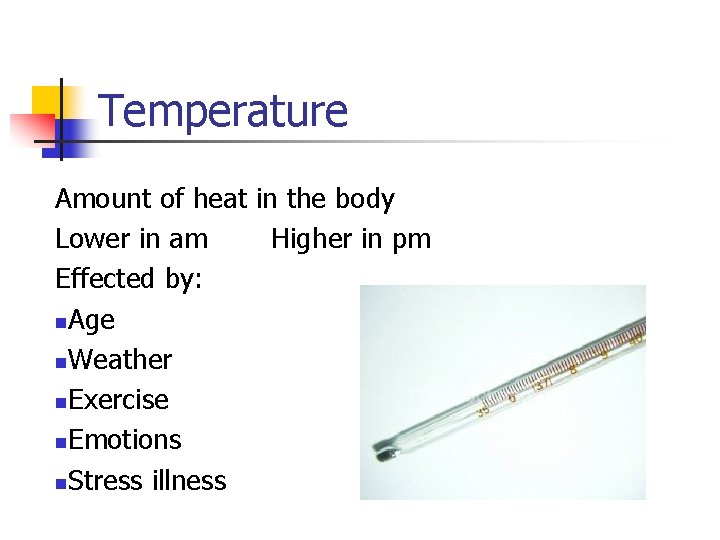
Temperature Amount of heat in the body Lower in am Higher in pm Effected by: n. Age n. Weather n. Exercise n. Emotions n. Stress illness
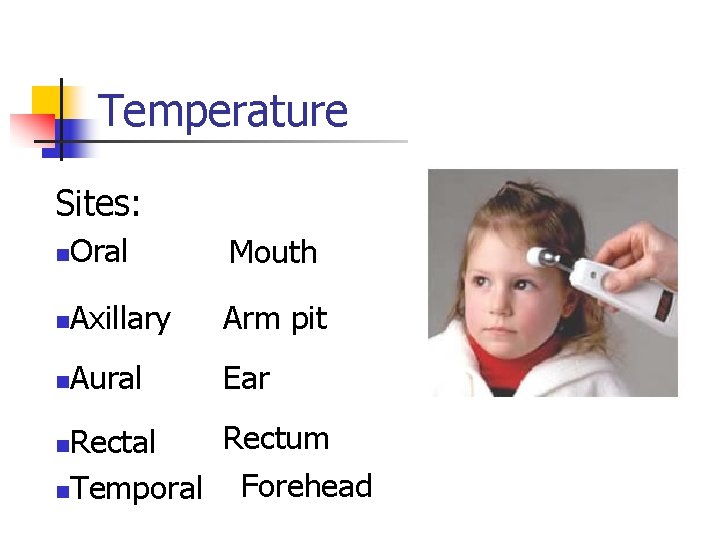
Temperature Sites: n Oral Mouth n Axillary Arm pit n Aural Ear Rectum Rectal Forehead n. Temporal n
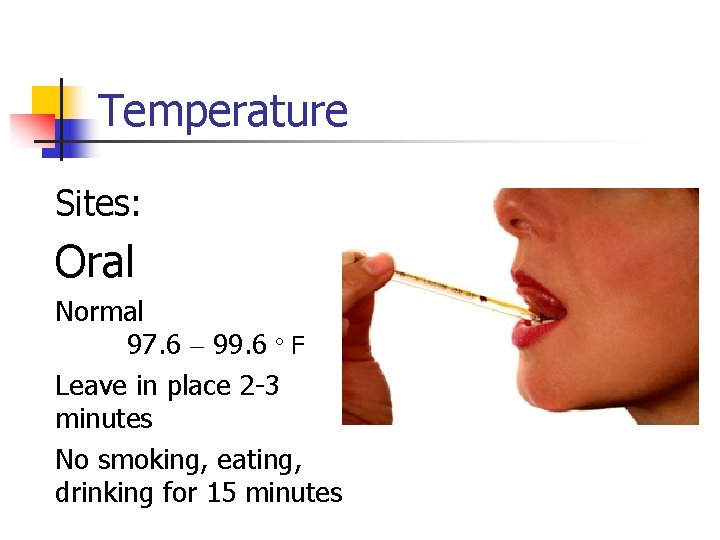
Temperature Sites: Oral Normal 97. 6 – 99. 6 º F Leave in place 2 -3 minutes No smoking, eating, drinking for 15 minutes
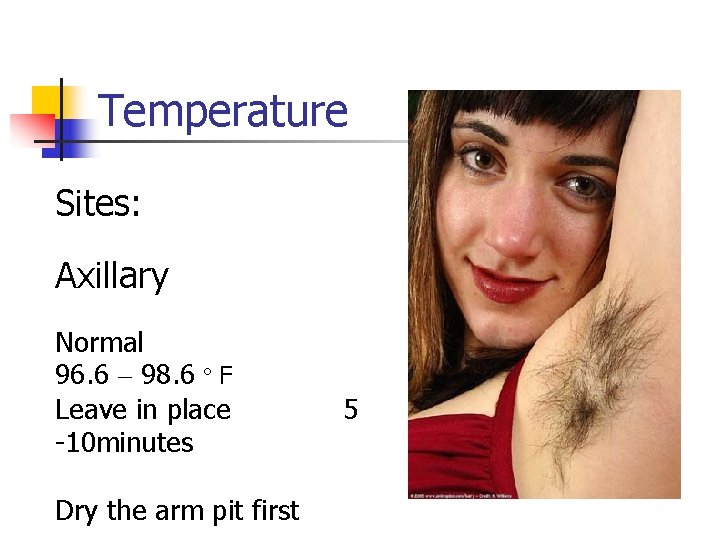
Temperature Sites: Axillary Normal 96. 6 – 98. 6 º F Leave in place -10 minutes Dry the arm pit first 5
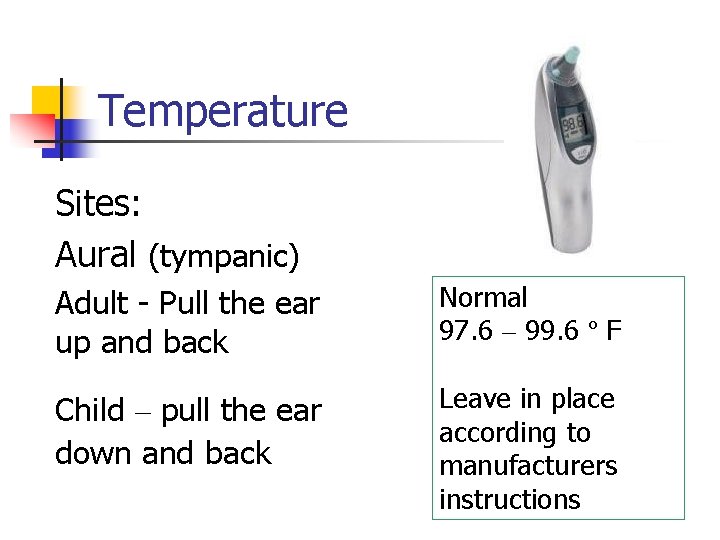
Temperature Sites: Aural (tympanic) Adult - Pull the ear up and back Normal 97. 6 – 99. 6 º F Child – pull the ear down and back Leave in place according to manufacturers instructions
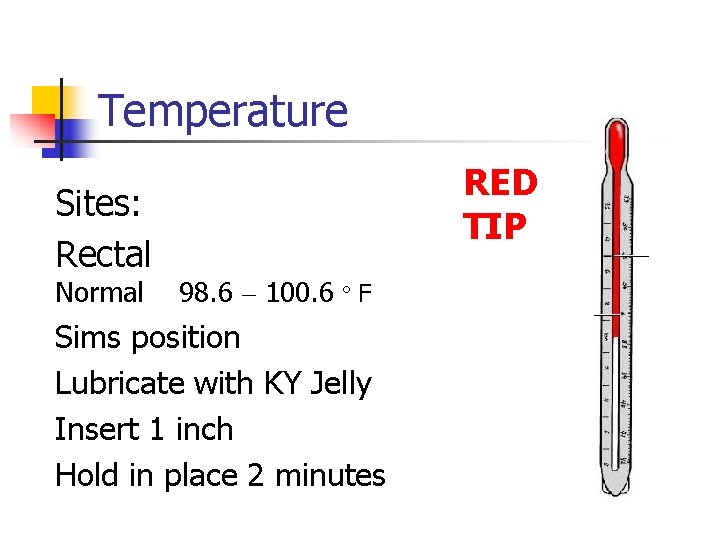
Temperature Sites: Rectal Normal RED TIP 98. 6 – 100. 6 º F Sims position Lubricate with KY Jelly Insert 1 inch Hold in place 2 minutes
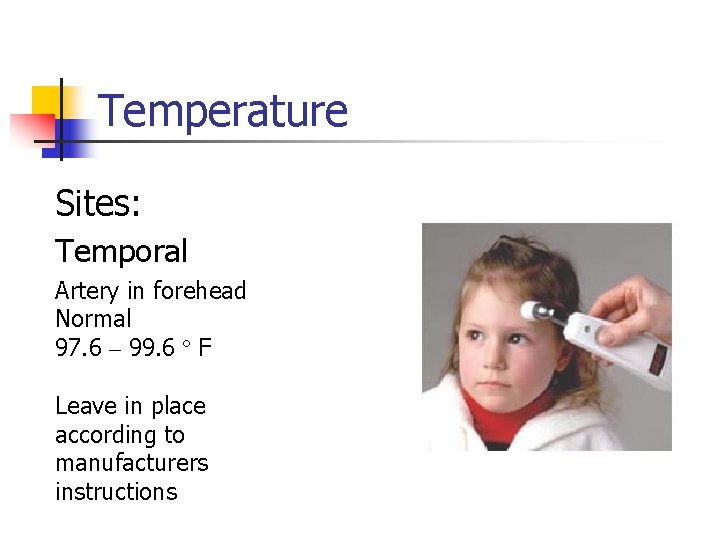
Temperature Sites: Temporal Artery in forehead Normal 97. 6 – 99. 6 º F Leave in place according to manufacturers instructions
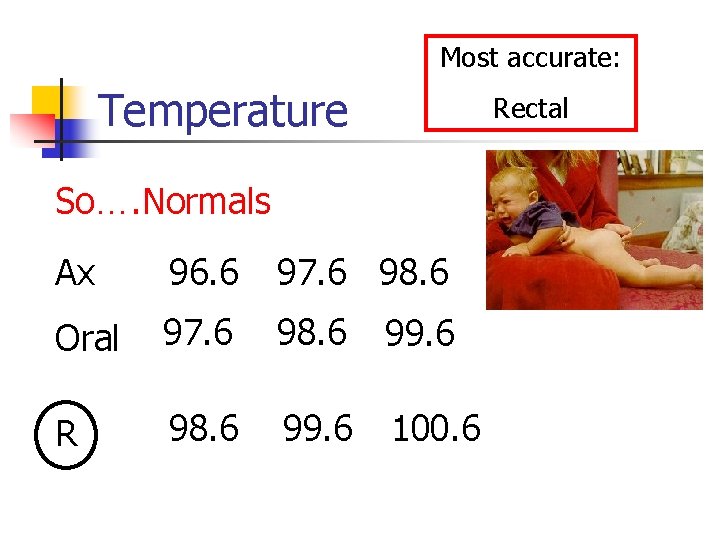
Most accurate: Temperature Rectal So…. Normals Ax 96. 6 97. 6 98. 6 Oral 97. 6 98. 6 99. 6 R 98. 6 99. 6 100. 6
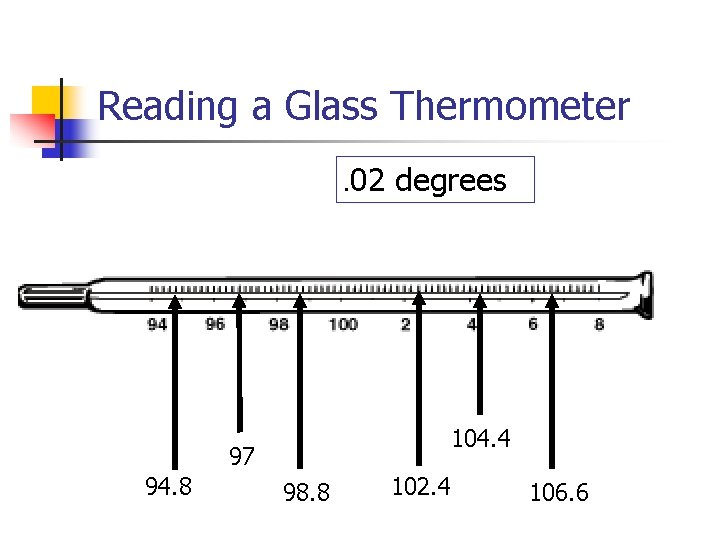
Reading a Glass Thermometer. 02 degrees 104. 4 97 94. 8 98. 8 102. 4 106. 6
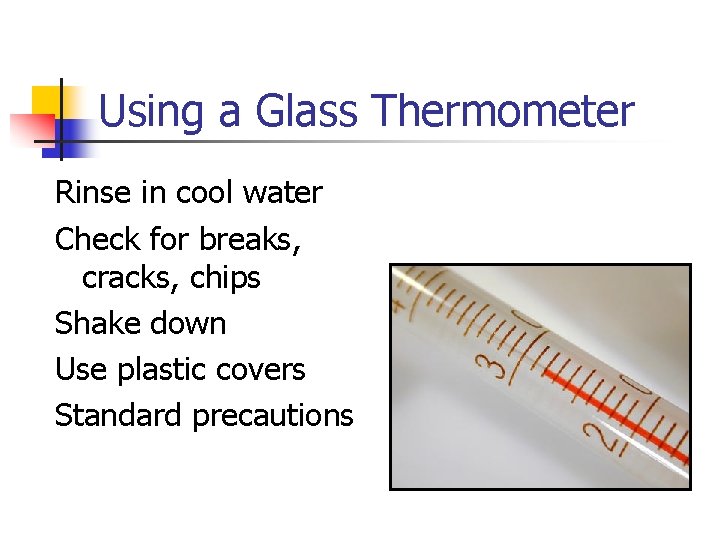
Using a Glass Thermometer Rinse in cool water Check for breaks, cracks, chips Shake down Use plastic covers Standard precautions
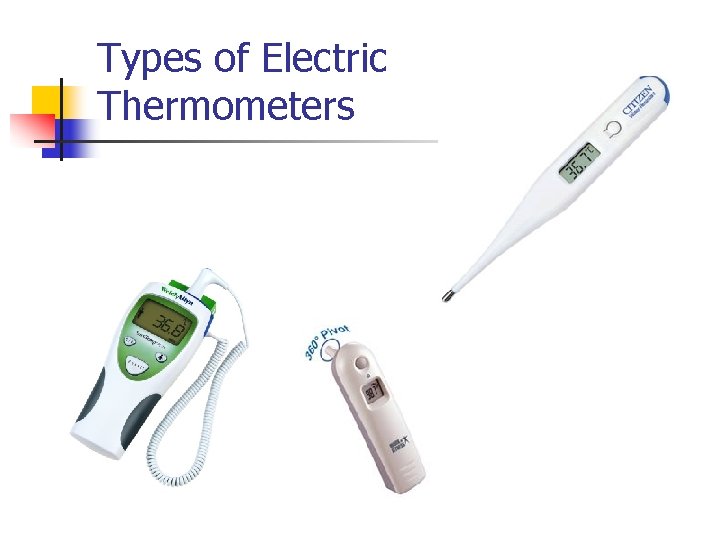
Types of Electric Thermometers
Pulse Beat of the felt at an artery Normal Adult Pulse: 60 - 100
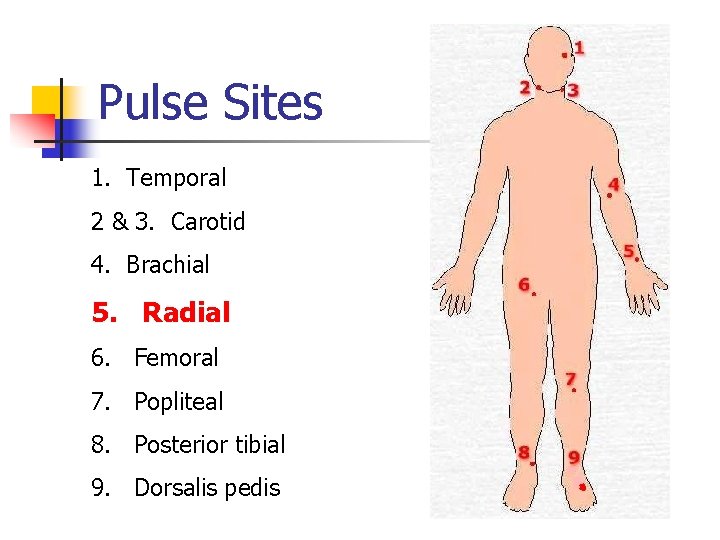
Pulse Sites 1. Temporal 2 & 3. Carotid 4. Brachial 5. Radial 6. Femoral 7. Popliteal 8. Posterior tibial 9. Dorsalis pedis
Terms Tachycardia Bradycardia Rate Rhythm Force Rate over 100 per minute Rate below 60 per minute Number ex 68 Regular or irregular Strong, weak, thready
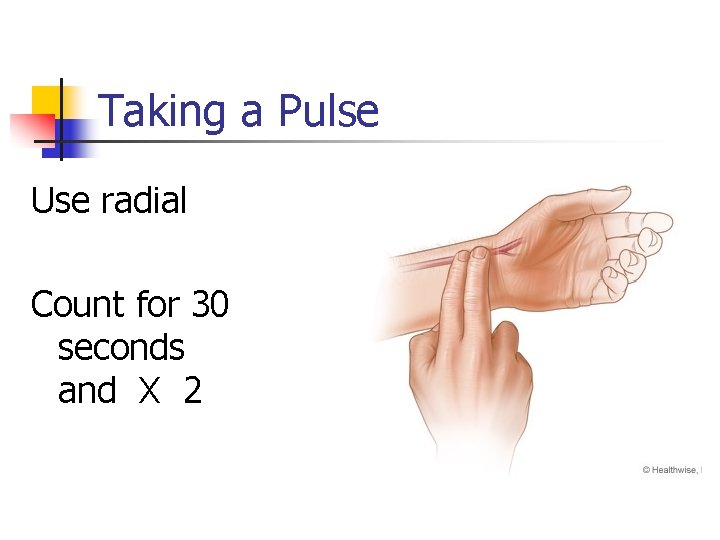
Taking a Pulse Use radial Count for 30 seconds and X 2
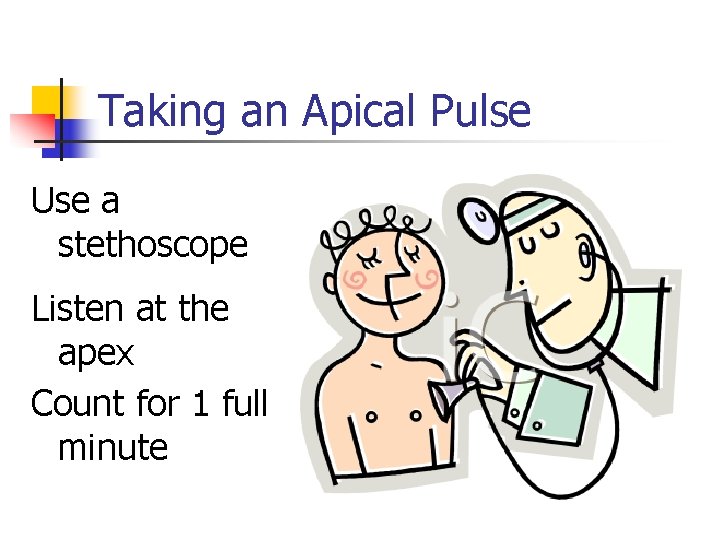
Taking an Apical Pulse Use a stethoscope Listen at the apex Count for 1 full minute
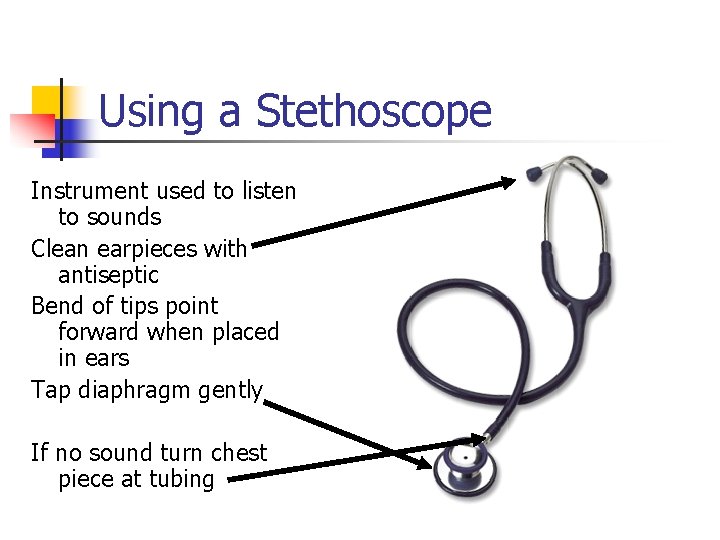
Using a Stethoscope Instrument used to listen to sounds Clean earpieces with antiseptic Bend of tips point forward when placed in ears Tap diaphragm gently If no sound turn chest piece at tubing
Respirations Inhalation Breath in Exhalation Breath out Normal 12 -20 per minute Count for 30 seconds X 2 Count when pt is at rest and unaware that you are counting
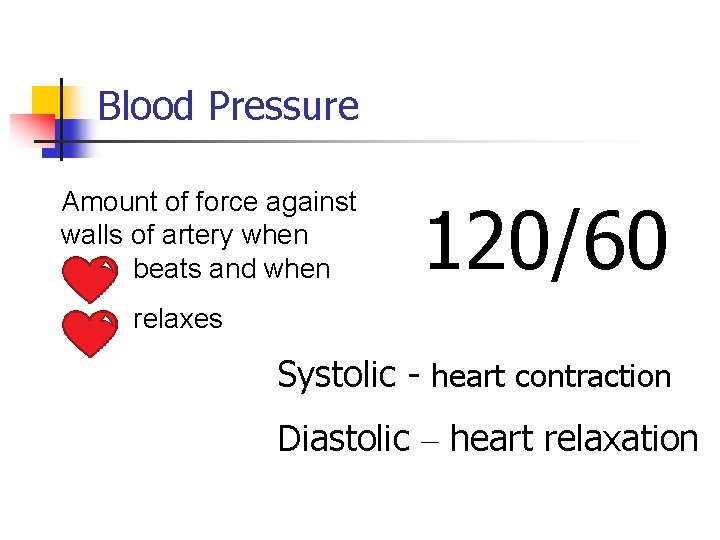
Blood Pressure Amount of force against walls of artery when beats and when 120/60 relaxes Systolic - heart contraction Diastolic – heart relaxation
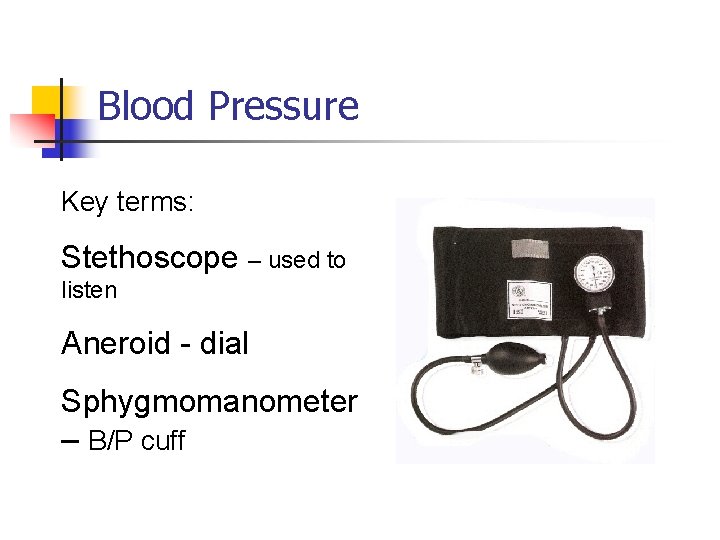
Blood Pressure Key terms: Stethoscope – used to listen Aneroid - dial Sphygmomanometer – B/P cuff
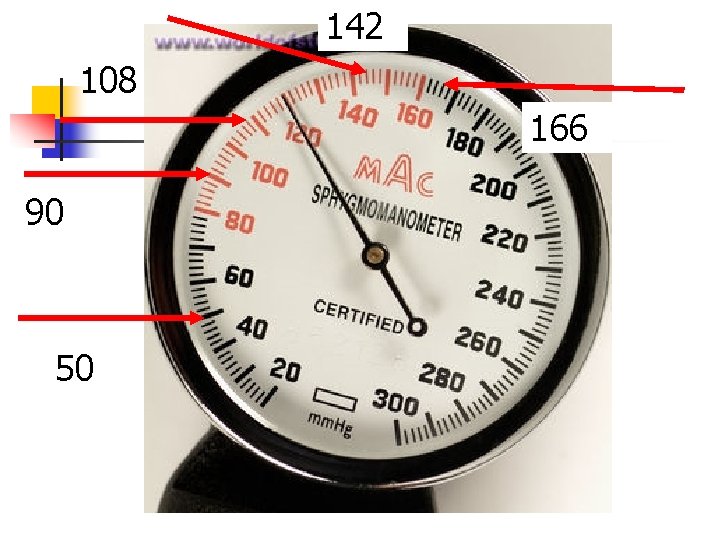
142 108 166 90 50
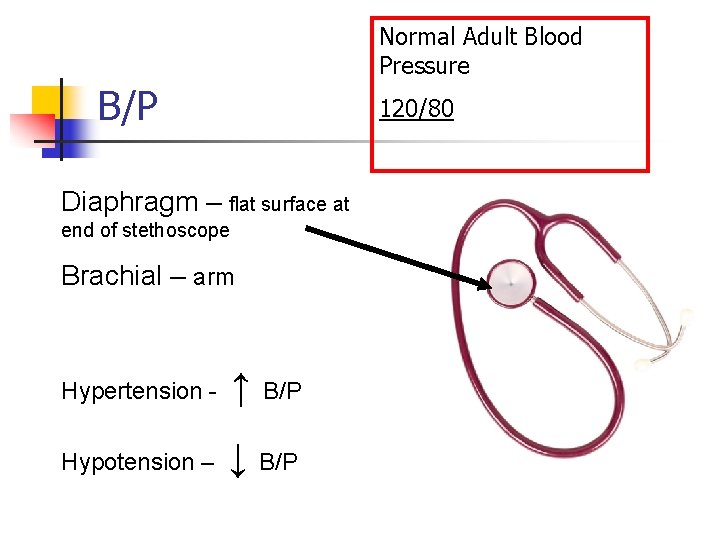
Normal Adult Blood Pressure B/P 120/80 Diaphragm – flat surface at end of stethoscope Brachial – arm Hypertension - ↑ Hypotension – ↓ B/P
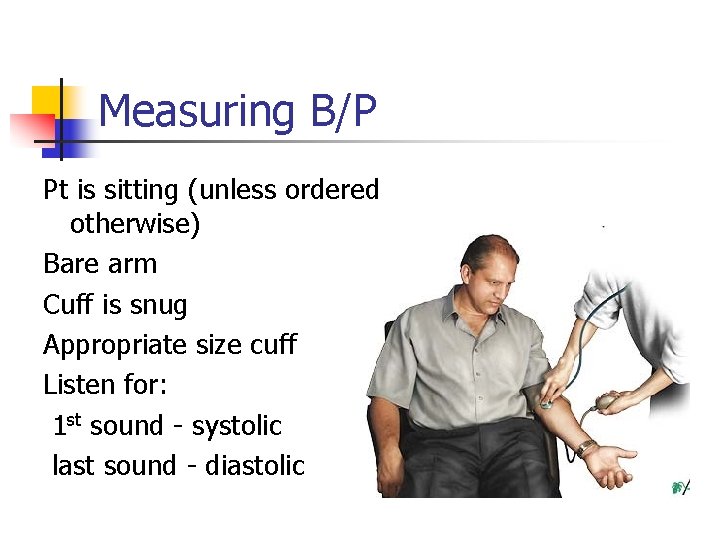
Measuring B/P Pt is sitting (unless ordered otherwise) Bare arm Cuff is snug Appropriate size cuff Listen for: 1 st sound - systolic last sound - diastolic
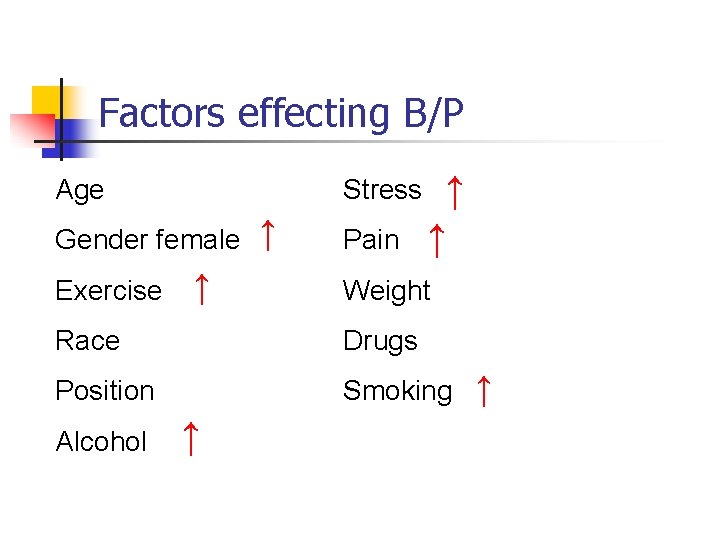
Factors effecting B/P Age Stress Gender female Exercise ↑ ↑ Pain ↑ ↑ Weight Race Drugs Position Smoking Alcohol ↑ ↑
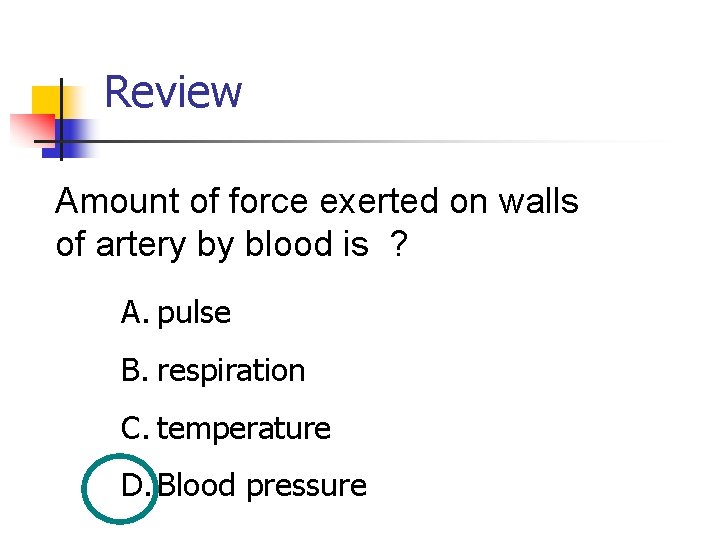
Review Amount of force exerted on walls of artery by blood is ? A. pulse B. respiration C. temperature D. Blood pressure
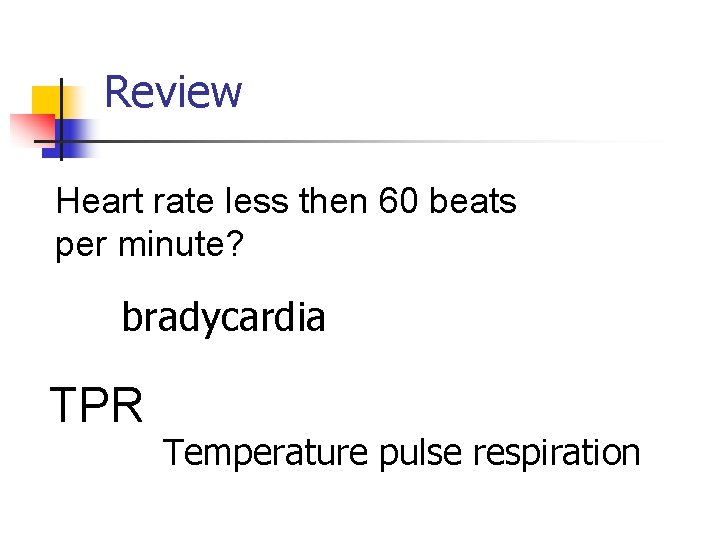
Review Heart rate less then 60 beats per minute? bradycardia TPR Temperature pulse respiration
Review The beat of the heart is felt at A. A vein B. An artery C. A capillary D. A joint
Review Used to measure B/P? sphygmomanometer Used to listen to body sounds? stethoscope
Review Rectal thermometer is color coded? RED Most common site for taking a pulse? Radial
Review How long after smoking before taking an oral temp? 10 - 15 minutes
Review Normal respiration rate? 12 – 20 per minute
Review The diastolic pressure is the first sound heard True False
- Slides: 34