
MMODE ECHOCARDIOGRPHY THE LOST ART MMODE PHYSICS B
M-MODE ECHOCARDIOGRPHY THE LOST ART
M-MODE PHYSICS B mode echoes from an interface that changes position will be seen as echoes moving towards and away from the transducer. If a trace line is place on this interface and the resulting trace is made to drift across the face of a CRT screen a motion pattern is obtained.
M-MODE PHYSICS The resulting display shows motion of a reflector over distance and time – a distance time graph The change in distance (dy) over a period of time dt is represented by the slope of the reflector line of motion. dy/dt = slope = velocity
M-MODE PHYSICS If this motion pattern is obtained on moving cardiac structures then the resulting images constitute M-mode echocardiography is use to evaluate the morphology of structures, movement and velocity of cardiac valves and walls and timing of cardiac events.
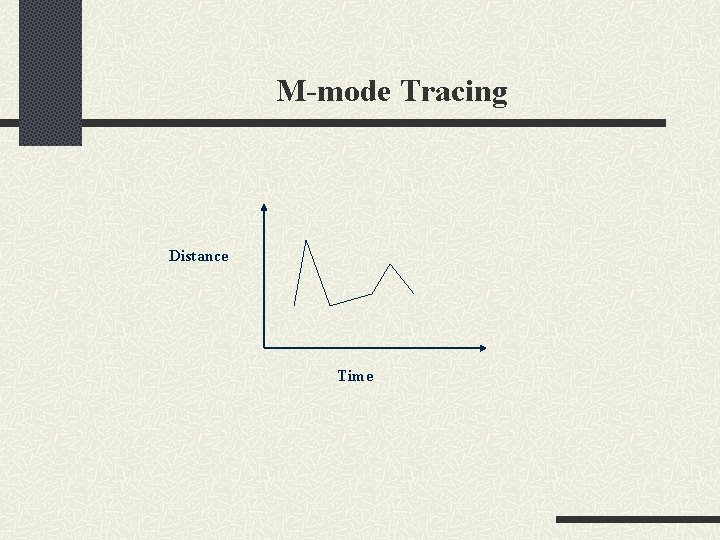
M-mode Tracing Distance Time
M-mode Evaluation Amplitude Velocity Time intervals Morphology
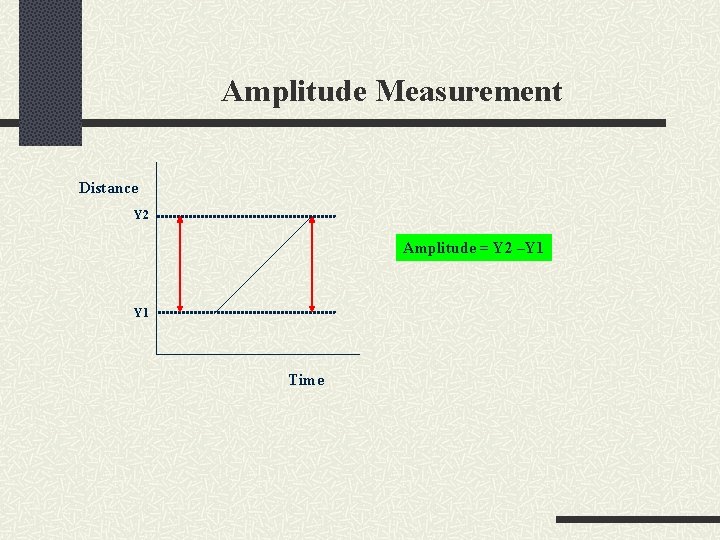
Amplitude Measurement Distance Y 2 Amplitude = Y 2 –Y 1 Time
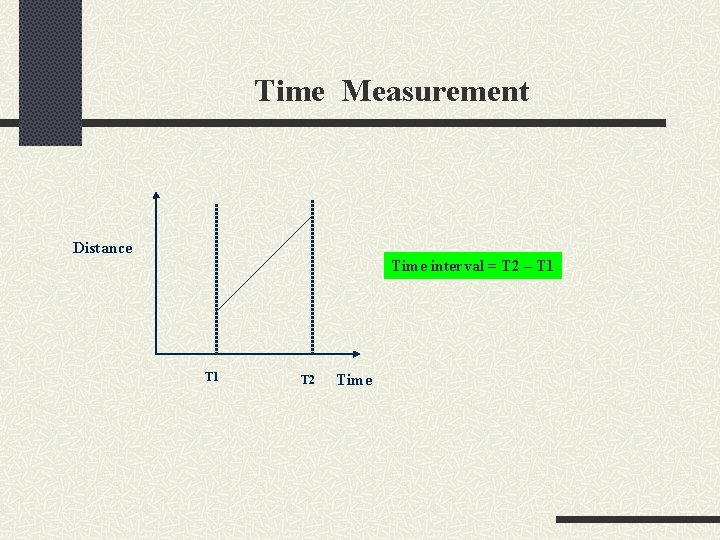
Time Measurement Distance Time interval = T 2 – T 1 T 2 Time
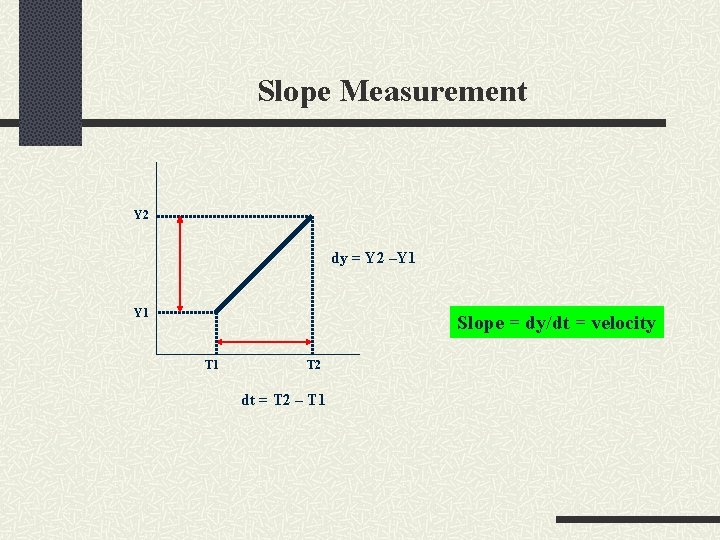
Slope Measurement Y 2 dy = Y 2 –Y 1 Slope = dy/dt = velocity T 1 T 2 dt = T 2 – T 1
M-mode at the Mitral Valve The mitral valve has 2 leaflets – anterior and posterior. Specific letters corresponding to systole and diastole are assigned to the m-mode tracing of the mitral valve.
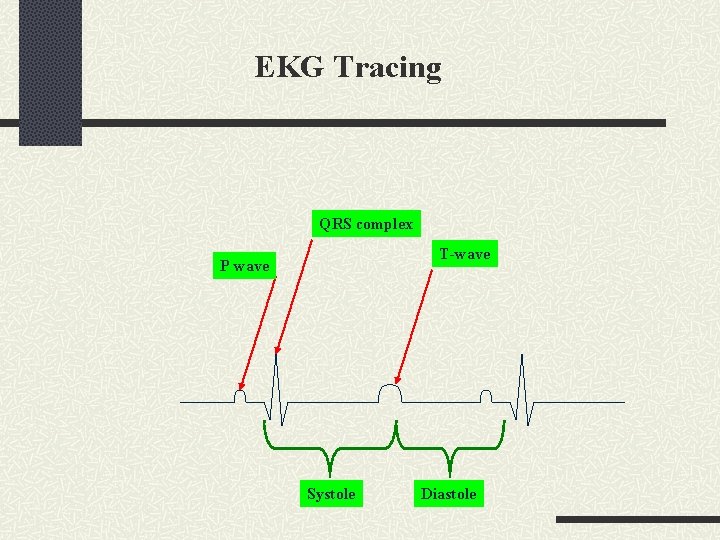
EKG Tracing QRS complex T-wave P wave Systole Diastole
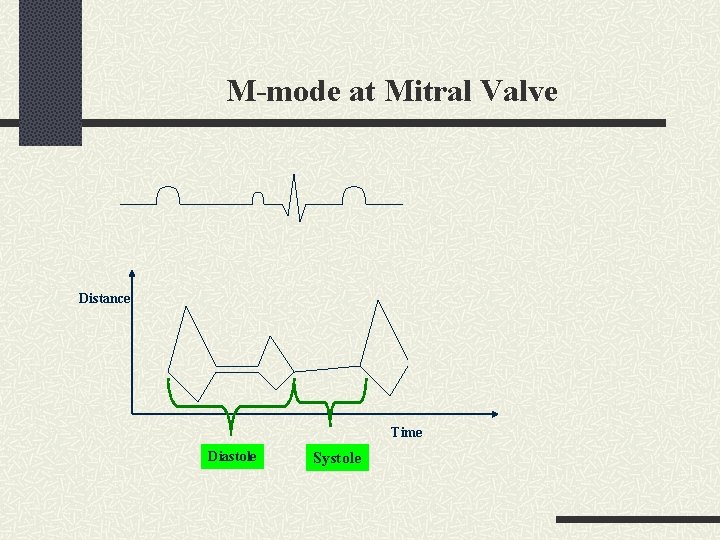
M-mode at Mitral Valve Distance Time Diastole Systole
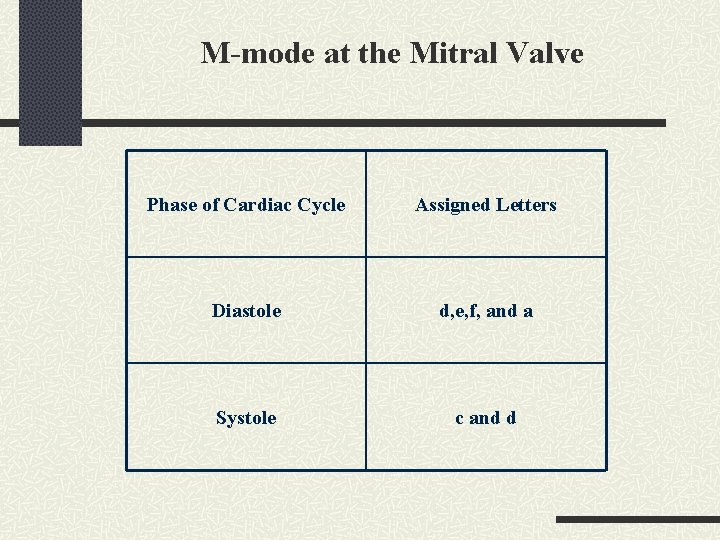
M-mode at the Mitral Valve Phase of Cardiac Cycle Assigned Letters Diastole d, e, f, and a Systole c and d
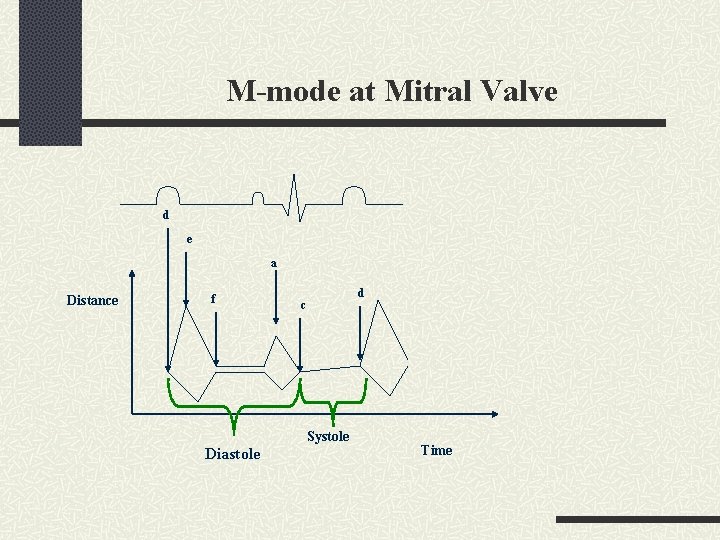
M-mode at Mitral Valve d e a Distance f d c Systole Diastole Time
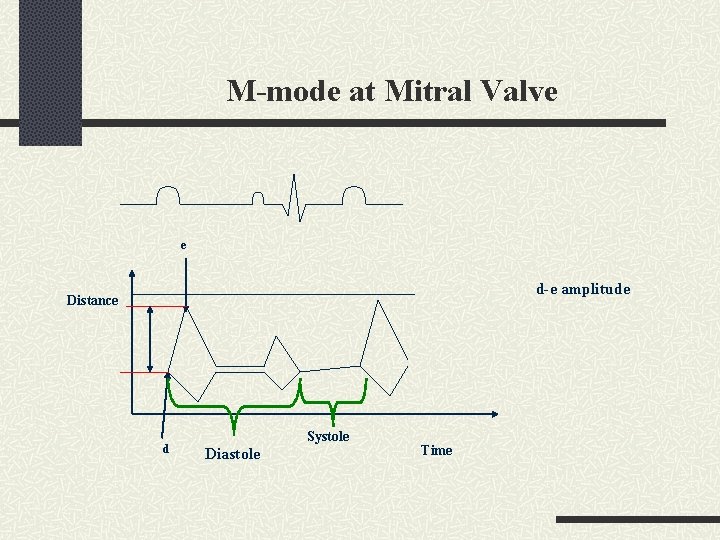
M-mode at Mitral Valve e d-e amplitude Distance d Systole Diastole Time
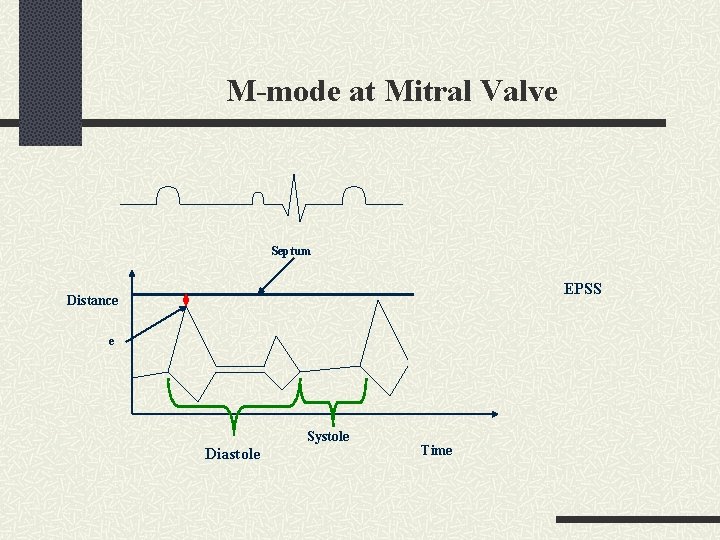
M-mode at Mitral Valve Septum EPSS Distance e Systole Diastole Time
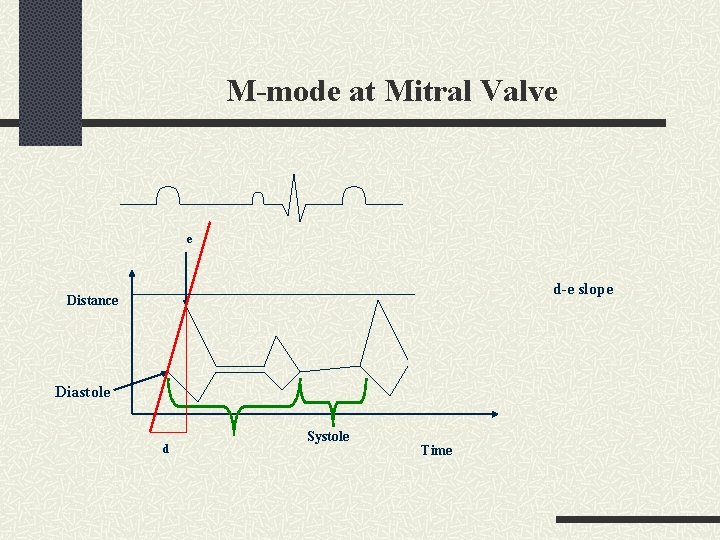
M-mode at Mitral Valve e d-e slope Distance Diastole d Systole Time
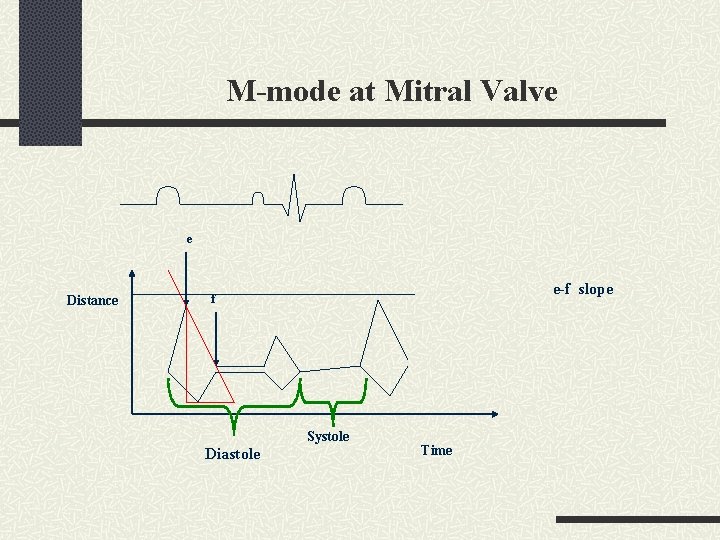
M-mode at Mitral Valve e Distance e-f slope f Systole Diastole Time
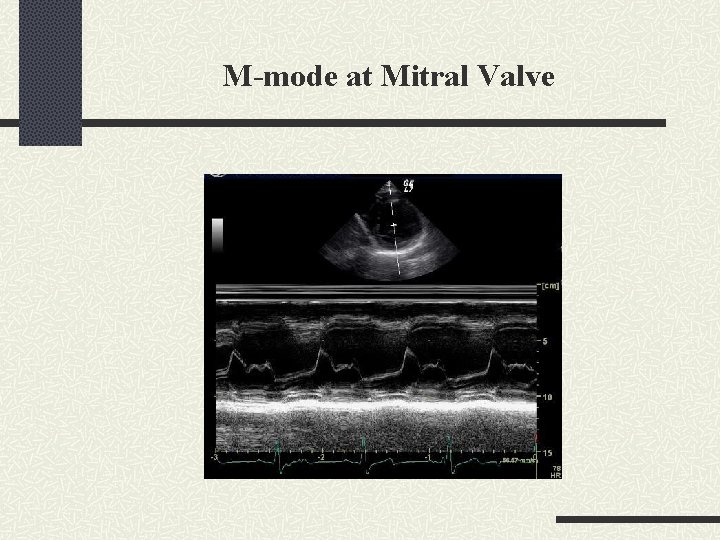
M-mode at Mitral Valve
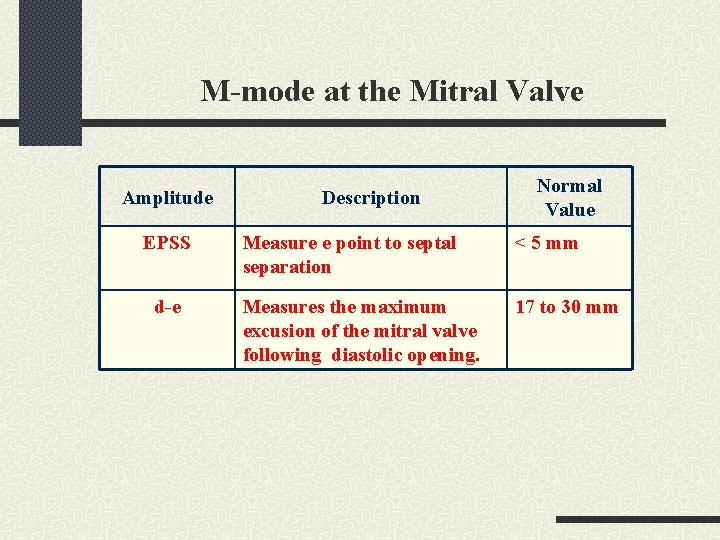
M-mode at the Mitral Valve Amplitude EPSS d-e Description Normal Value Measure e point to septal separation < 5 mm Measures the maximum excusion of the mitral valve following diastolic opening. 17 to 30 mm
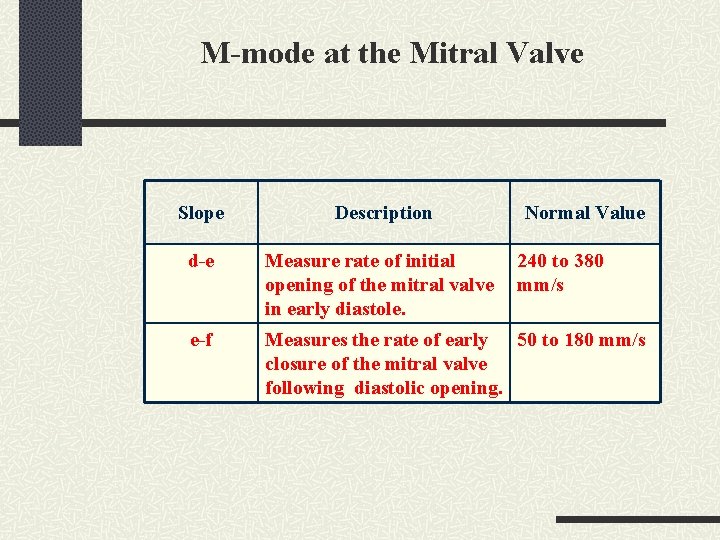
M-mode at the Mitral Valve Slope Description Normal Value d-e Measure rate of initial 240 to 380 opening of the mitral valve mm/s in early diastole. e-f Measures the rate of early 50 to 180 mm/s closure of the mitral valve following diastolic opening.
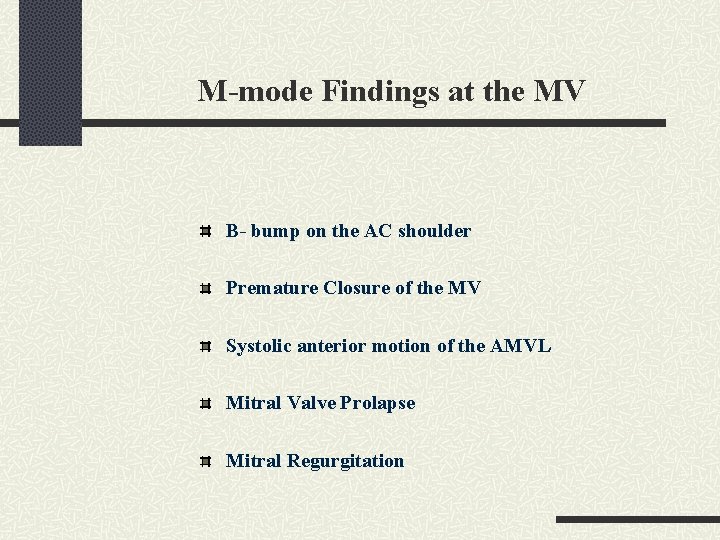
M-mode Findings at the MV B- bump on the AC shoulder Premature Closure of the MV Systolic anterior motion of the AMVL Mitral Valve Prolapse Mitral Regurgitation
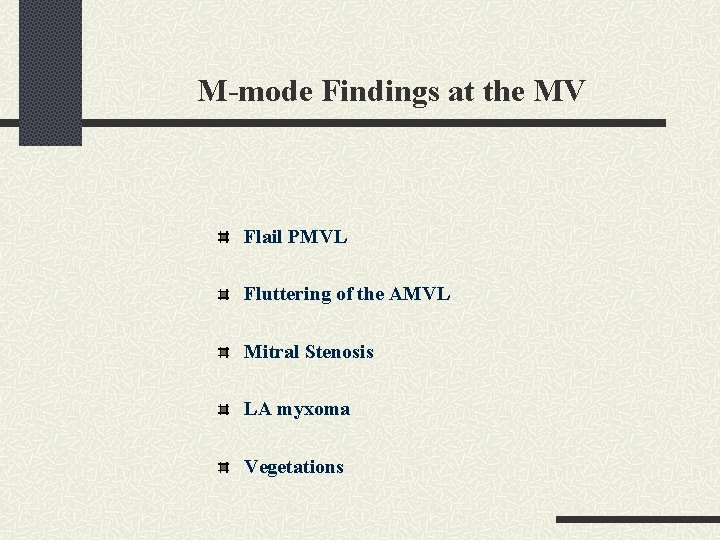
M-mode Findings at the MV Flail PMVL Fluttering of the AMVL Mitral Stenosis LA myxoma Vegetations
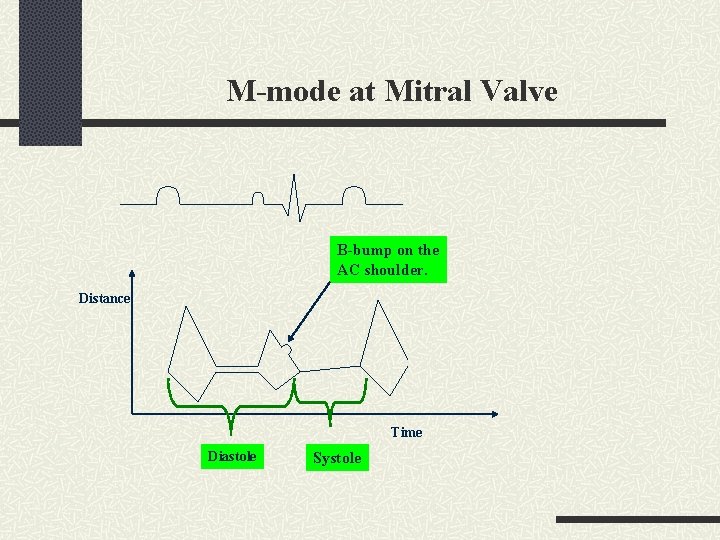
M-mode at Mitral Valve B-bump on the AC shoulder. Distance Time Diastole Systole
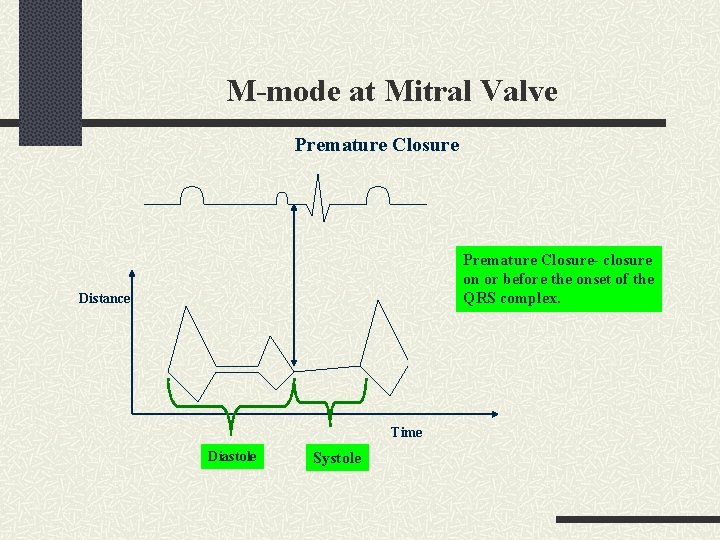
M-mode at Mitral Valve Premature Closure- closure on or before the onset of the QRS complex. Distance Time Diastole Systole
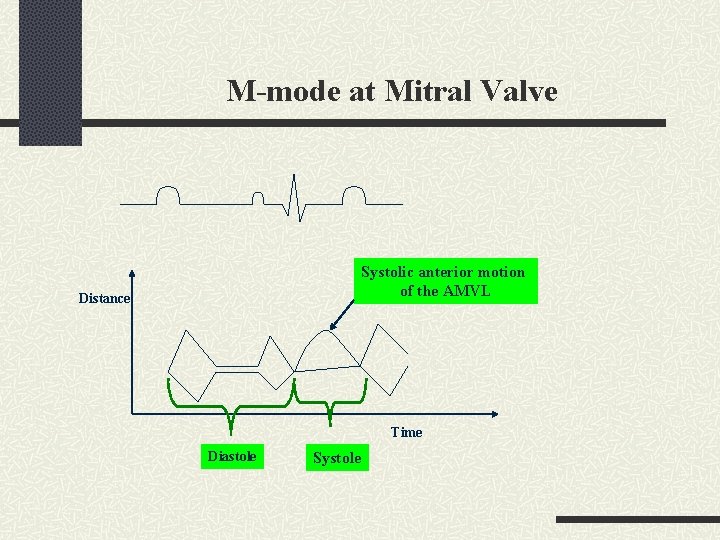
M-mode at Mitral Valve Systolic anterior motion of the AMVL Distance Time Diastole Systole
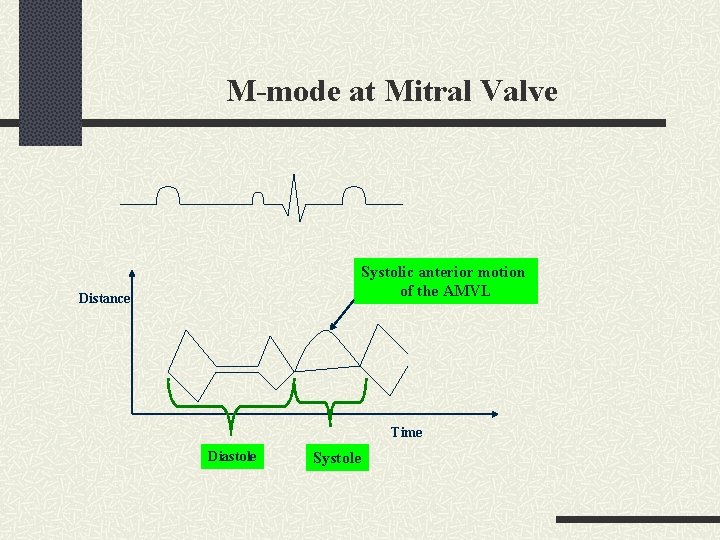
M-mode at Mitral Valve Systolic anterior motion of the AMVL Distance Time Diastole Systole
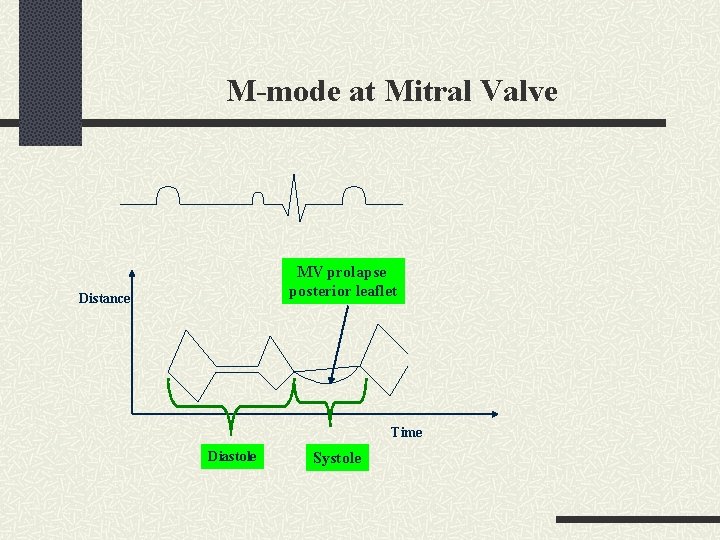
M-mode at Mitral Valve MV prolapse posterior leaflet Distance Time Diastole Systole
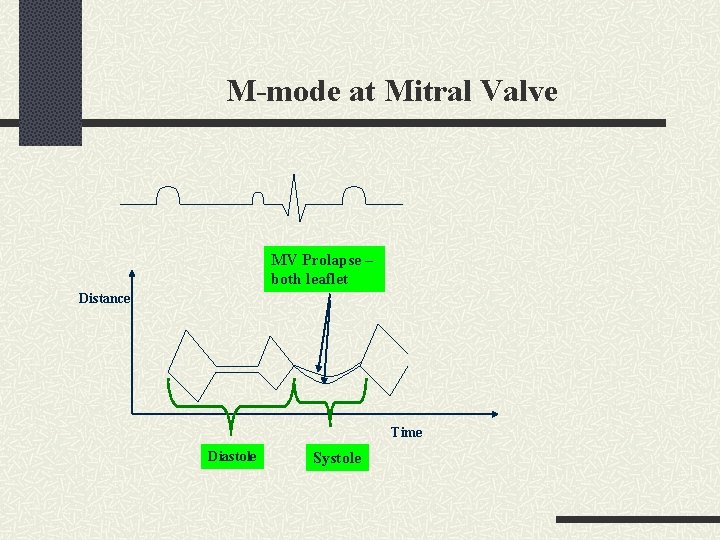
M-mode at Mitral Valve MV Prolapse – both leaflet Distance Time Diastole Systole
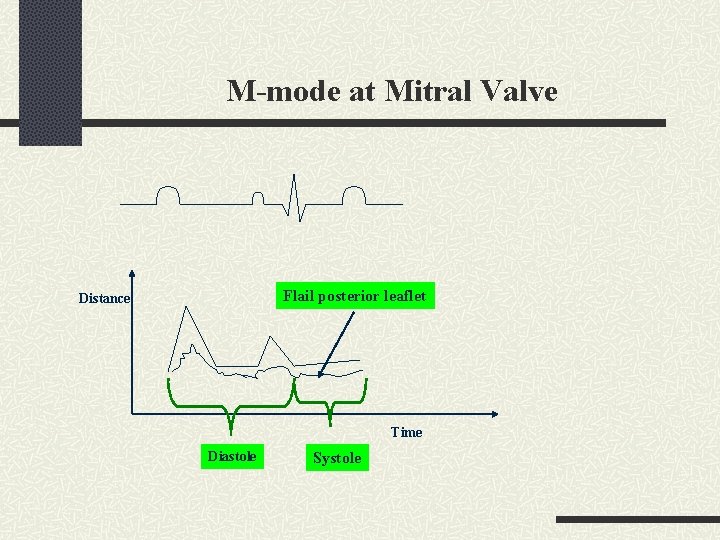
M-mode at Mitral Valve Flail posterior leaflet Distance Time Diastole Systole
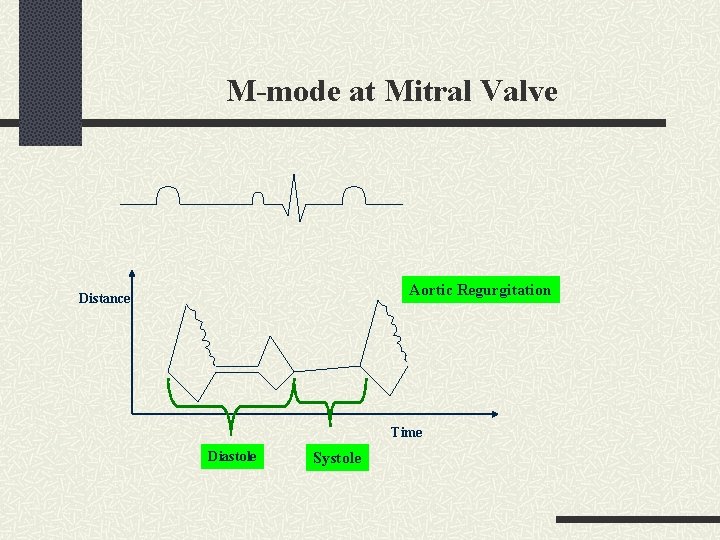
M-mode at Mitral Valve Aortic Regurgitation Distance Time Diastole Systole
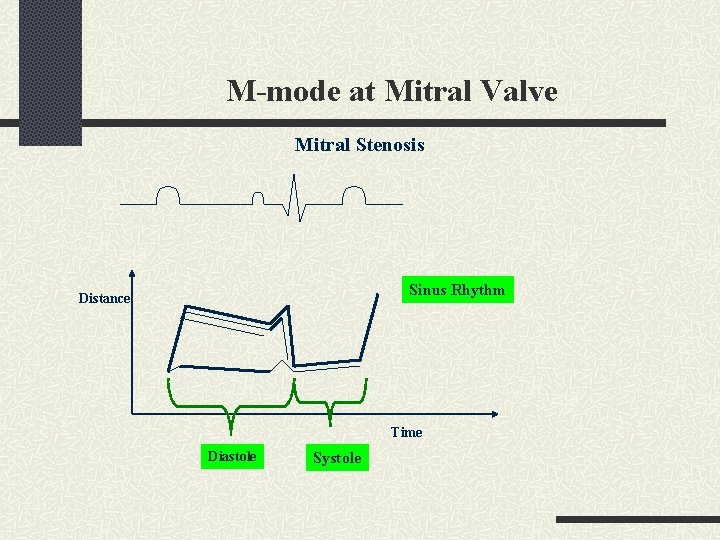
M-mode at Mitral Valve Mitral Stenosis Sinus Rhythm Distance Time Diastole Systole
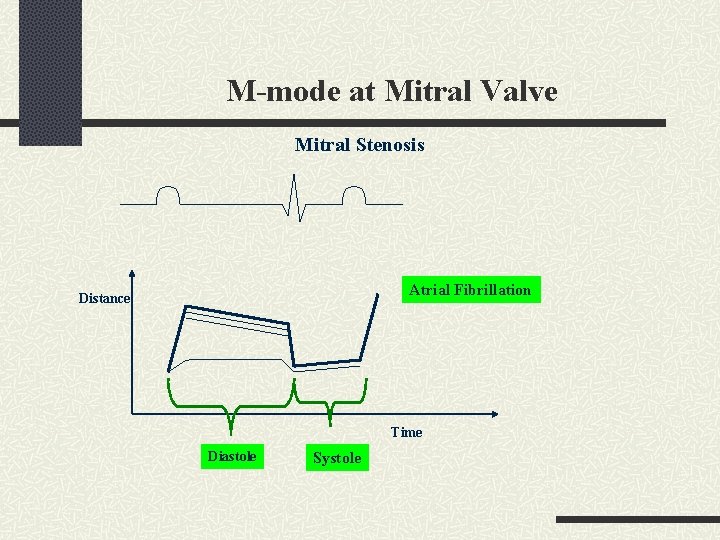
M-mode at Mitral Valve Mitral Stenosis Atrial Fibrillation Distance Time Diastole Systole
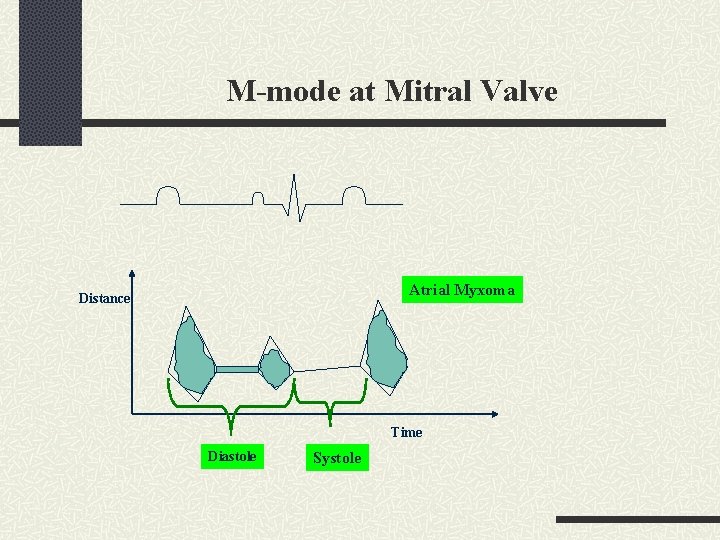
M-mode at Mitral Valve Atrial Myxoma Distance Time Diastole Systole
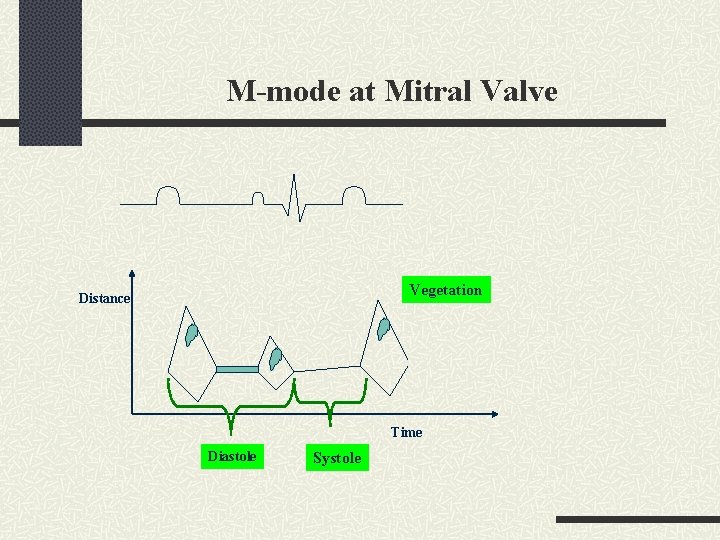
M-mode at Mitral Valve Vegetation Distance Time Diastole Systole
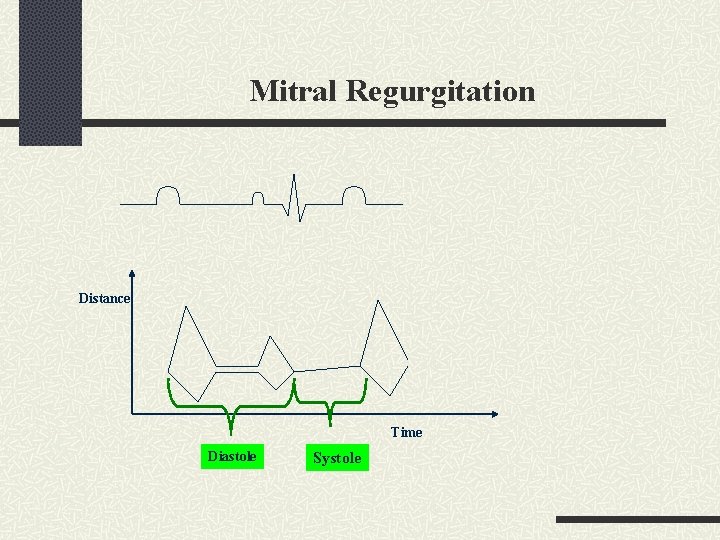
Mitral Regurgitation Distance Time Diastole Systole
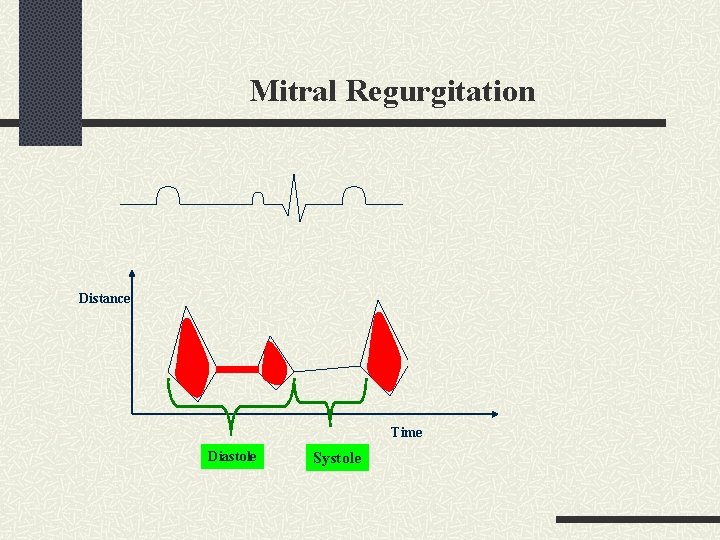
Mitral Regurgitation Distance Time Diastole Systole
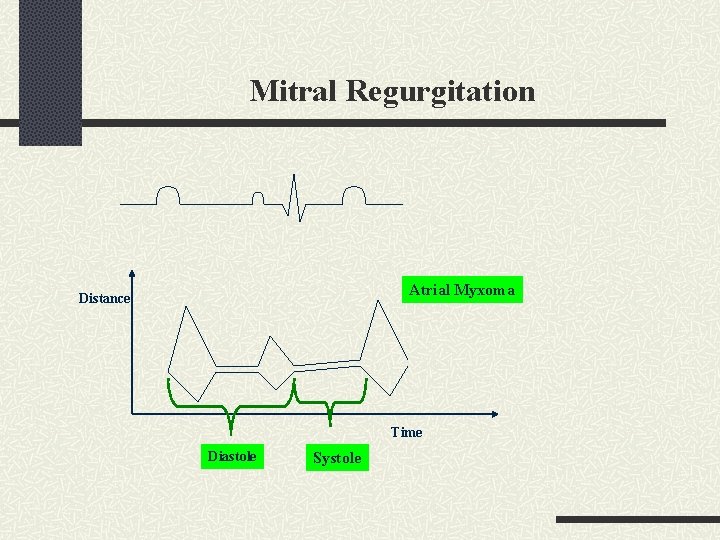
Mitral Regurgitation Atrial Myxoma Distance Time Diastole Systole
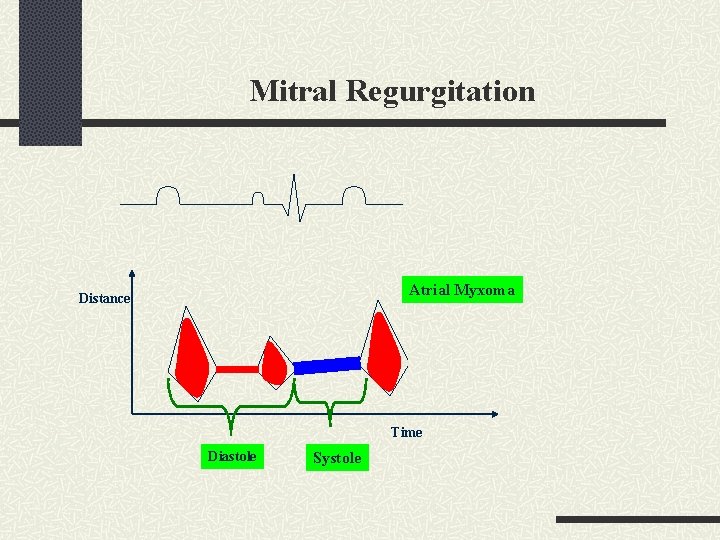
Mitral Regurgitation Atrial Myxoma Distance Time Diastole Systole
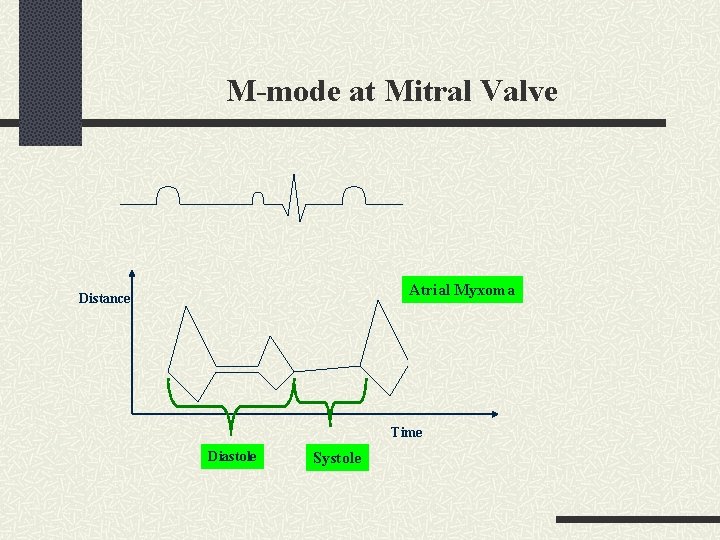
M-mode at Mitral Valve Atrial Myxoma Distance Time Diastole Systole
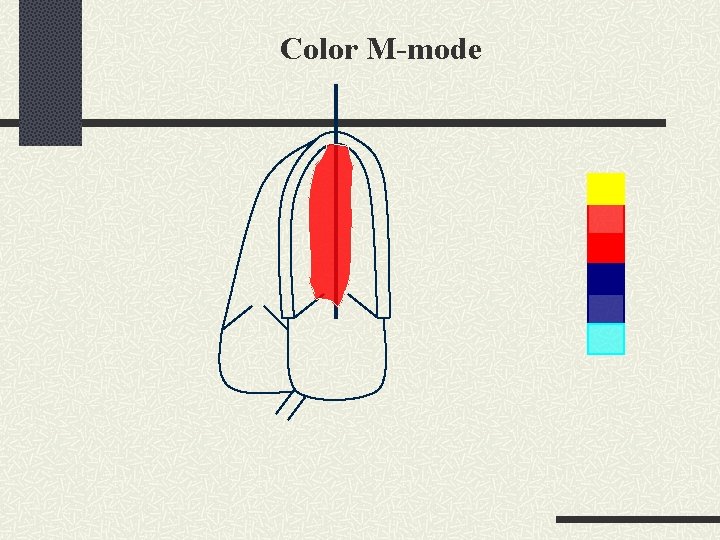
Color M-mode
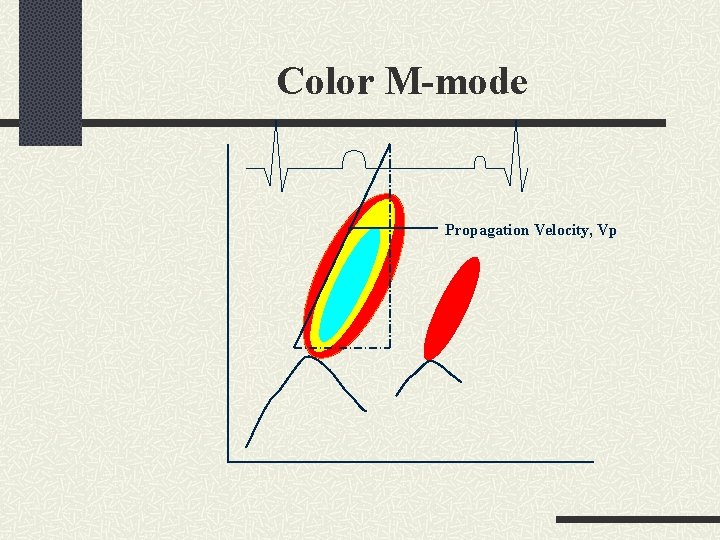
Color M-mode Propagation Velocity, Vp
M- Mode Aortic Valve
M-mode at the Aortic Valve The aortic valve has 3 cusps – right coronary, left coronary and non-coronary cusps. The cusps imaged in the PLAX view are the right coronary and the non-coronary cusps.
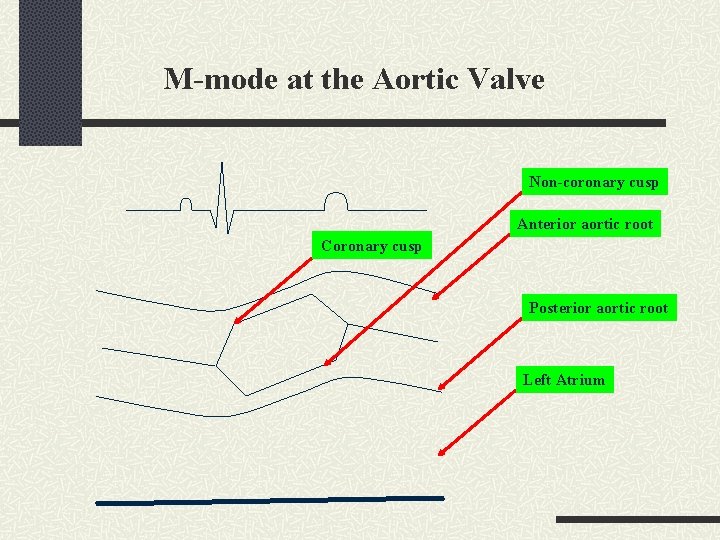
M-mode at the Aortic Valve Non-coronary cusp Anterior aortic root Coronary cusp Posterior aortic root Left Atrium
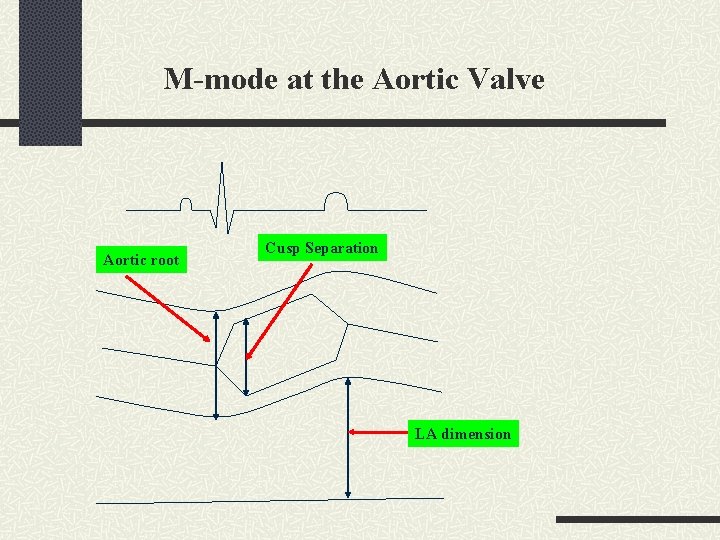
M-mode at the Aortic Valve Aortic root Cusp Separation LA dimension
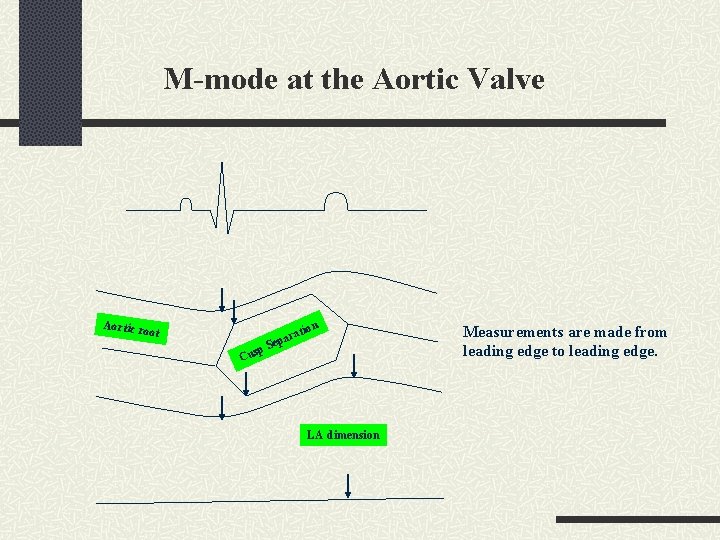
M-mode at the Aortic Valve Aortic ro ot tion ra epa C S usp LA dimension Measurements are made from leading edge to leading edge.
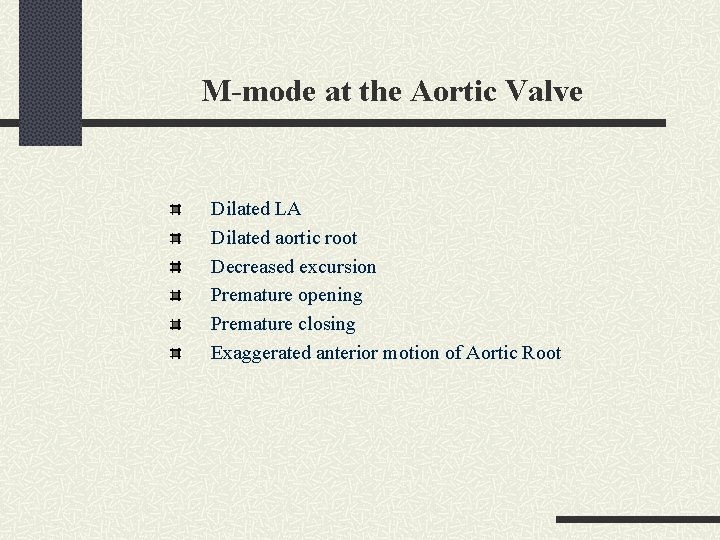
M-mode at the Aortic Valve Dilated LA Dilated aortic root Decreased excursion Premature opening Premature closing Exaggerated anterior motion of Aortic Root
M-mode at the Aortic Valve Reduced anterior motion of Aortic Root Thickening Calcification Vegetations Bicuspid valve Prosthetic valve Aortic Regurgitation
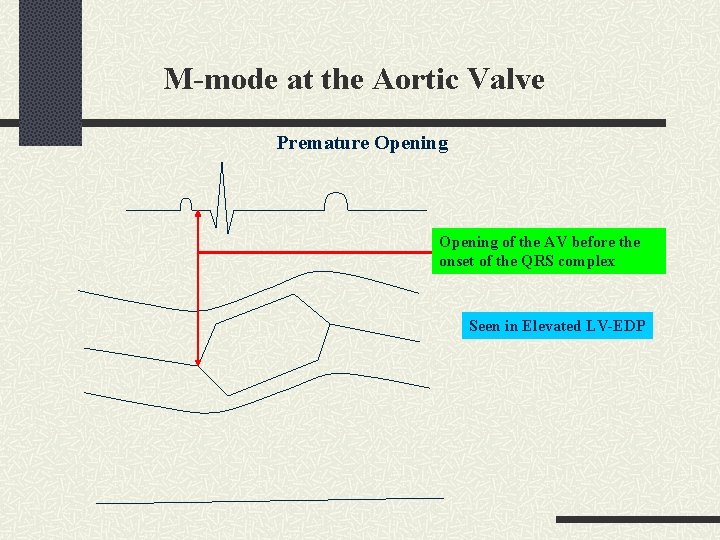
M-mode at the Aortic Valve Premature Opening of the AV before the onset of the QRS complex Seen in Elevated LV-EDP
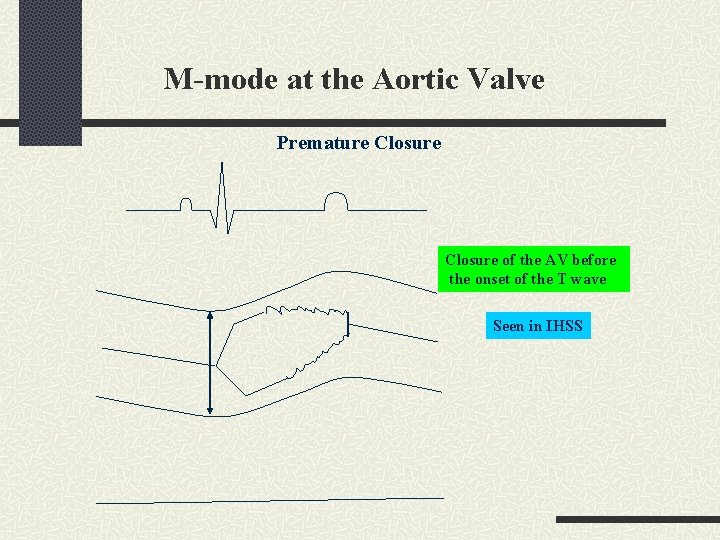
M-mode at the Aortic Valve Premature Closure of the AV before the onset of the T wave Seen in IHSS
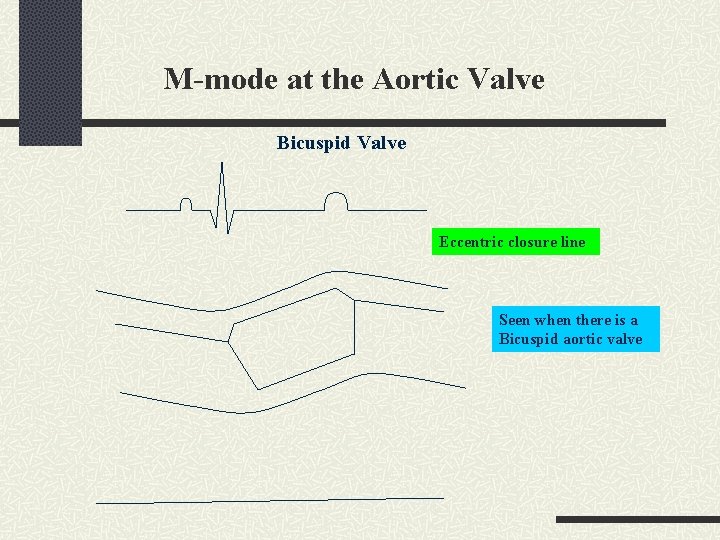
M-mode at the Aortic Valve Bicuspid Valve Eccentric closure line Seen when there is a Bicuspid aortic valve
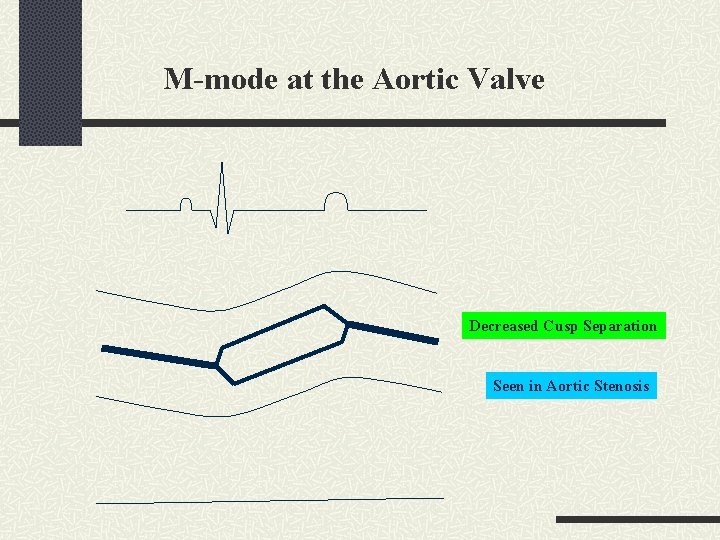
M-mode at the Aortic Valve Decreased Cusp Separation Seen in Aortic Stenosis
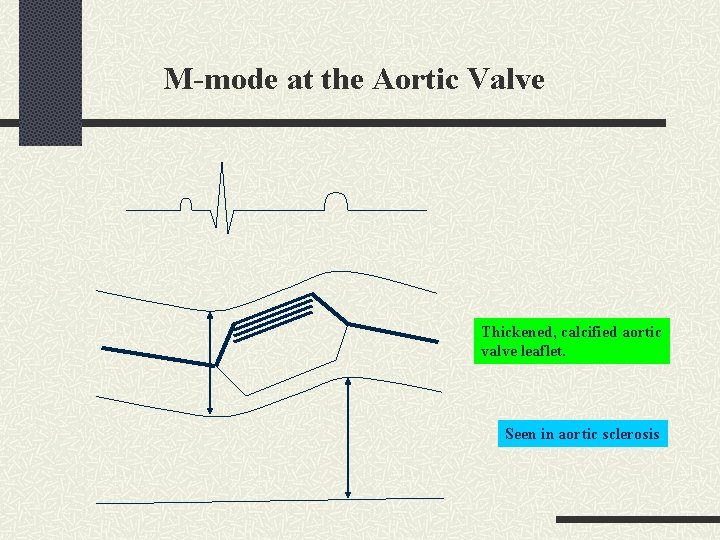
M-mode at the Aortic Valve Thickened, calcified aortic valve leaflet. Seen in aortic sclerosis
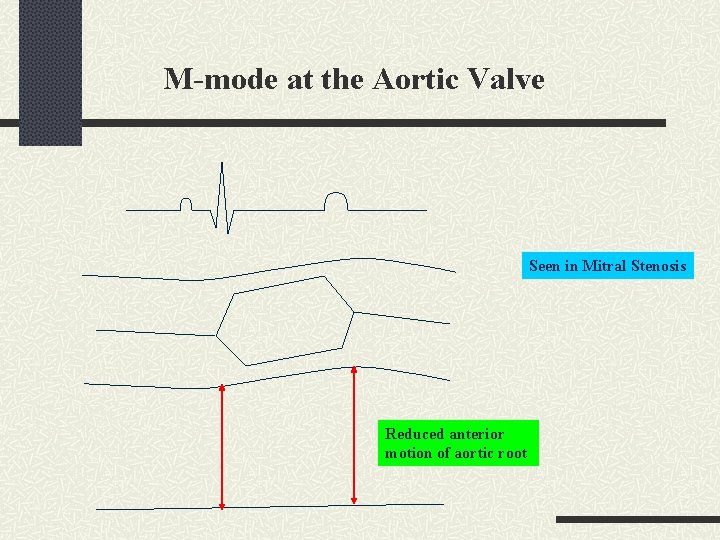
M-mode at the Aortic Valve Seen in Mitral Stenosis Reduced anterior motion of aortic root
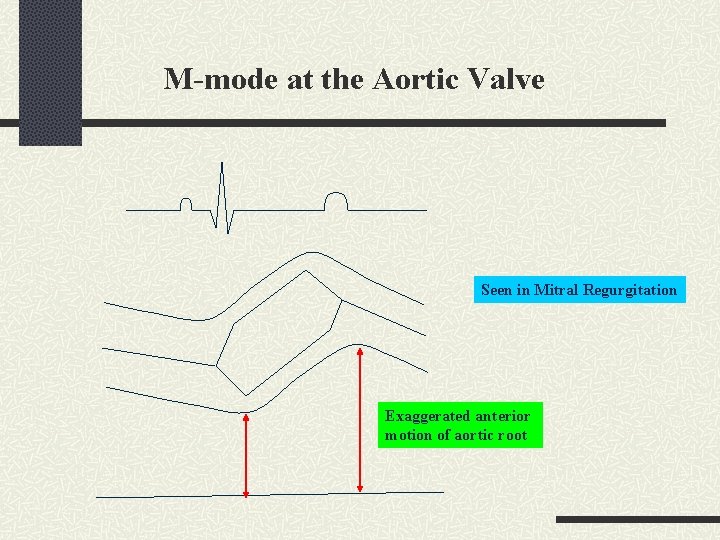
M-mode at the Aortic Valve Seen in Mitral Regurgitation Exaggerated anterior motion of aortic root
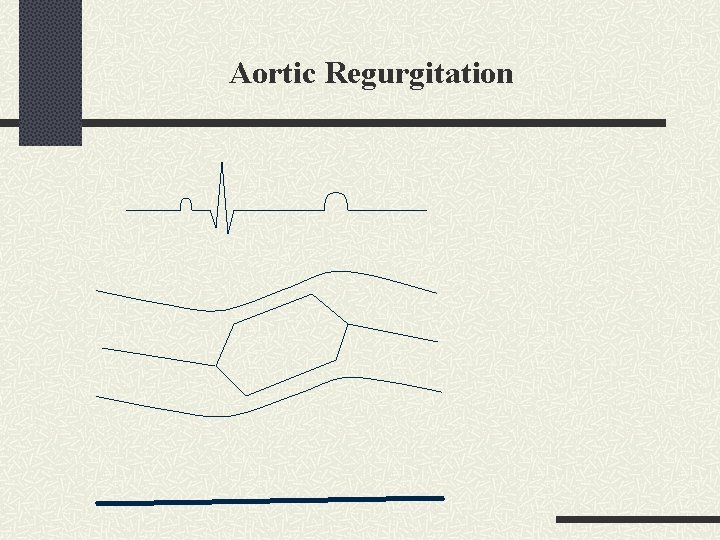
Aortic Regurgitation
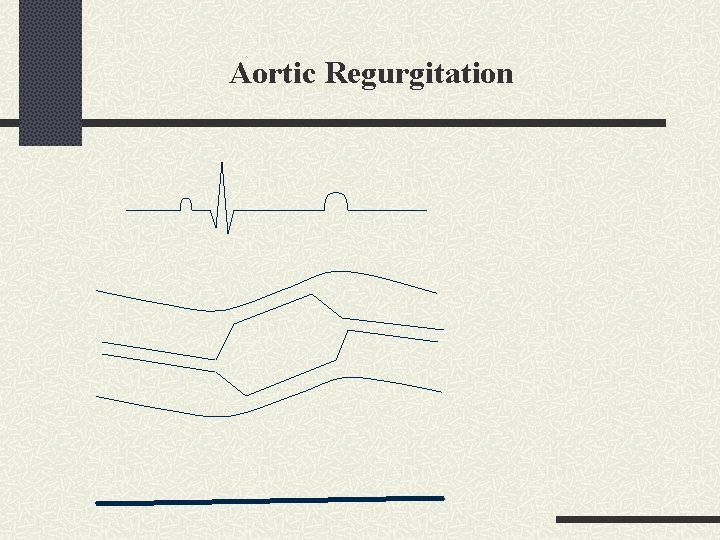
Aortic Regurgitation
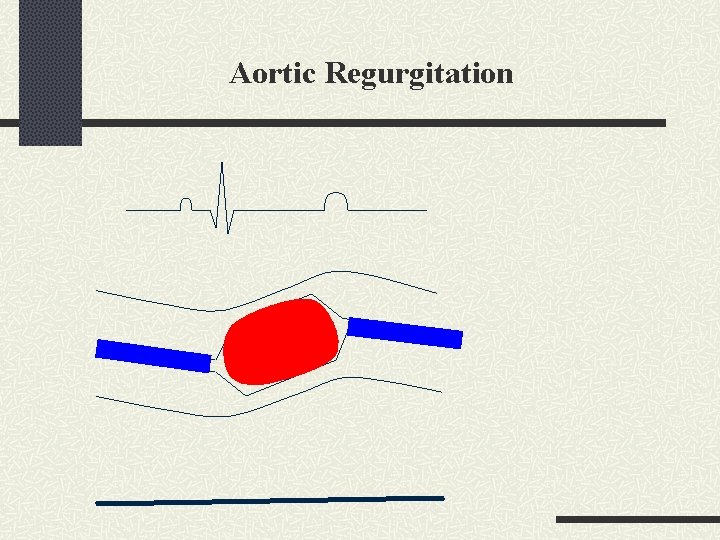
Aortic Regurgitation
M - Mode Left Ventricle
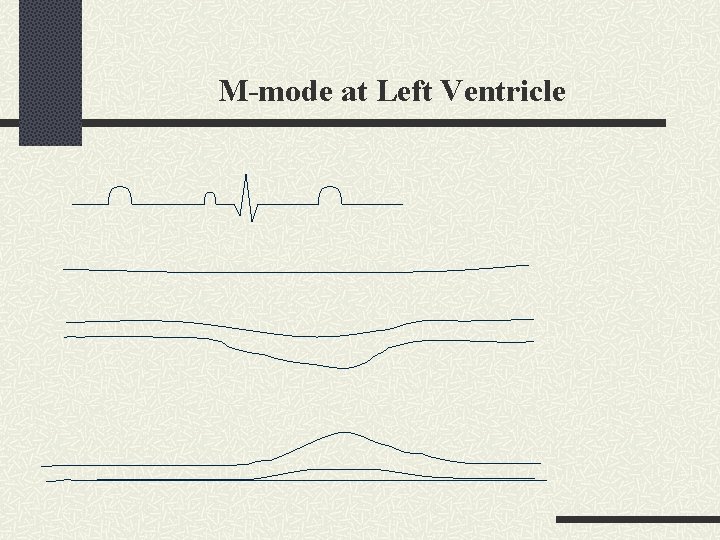
M-mode at Left Ventricle
M-mode at Left Ventricle Thickening of the IVS and LVPW Movement of the IVS and LVPW
M-mode Measurement • RVWd • RVIDd
M-mode Measurement • IVSd • IVS excursion • IVSs
M-mode Measurement • LVIDd index • LVIDs index
M-mode Measurement • LVPWd • LVPW excursion • LVPW max excursion velocity • LVPWs
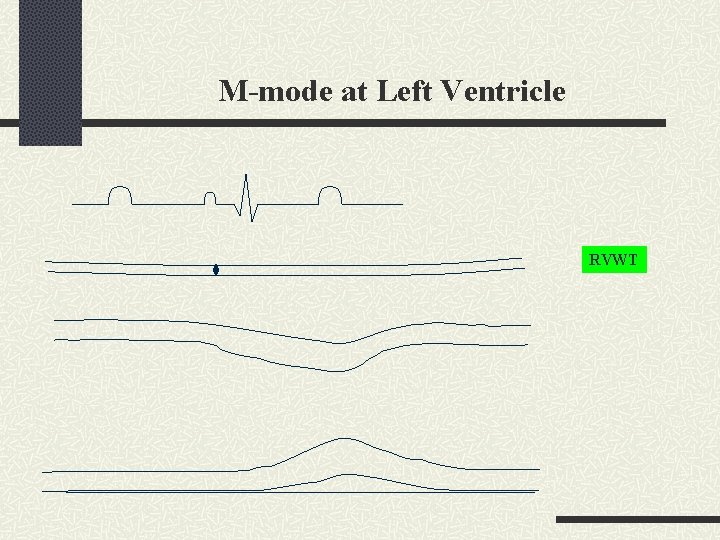
M-mode at Left Ventricle RVWT
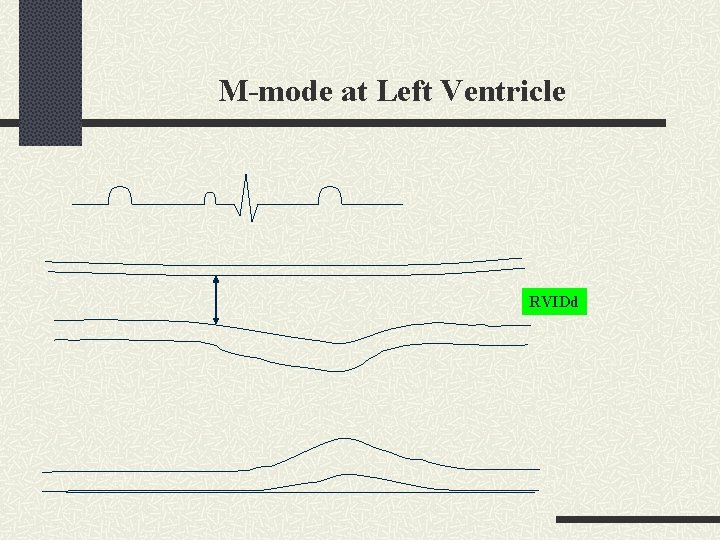
M-mode at Left Ventricle RVIDd
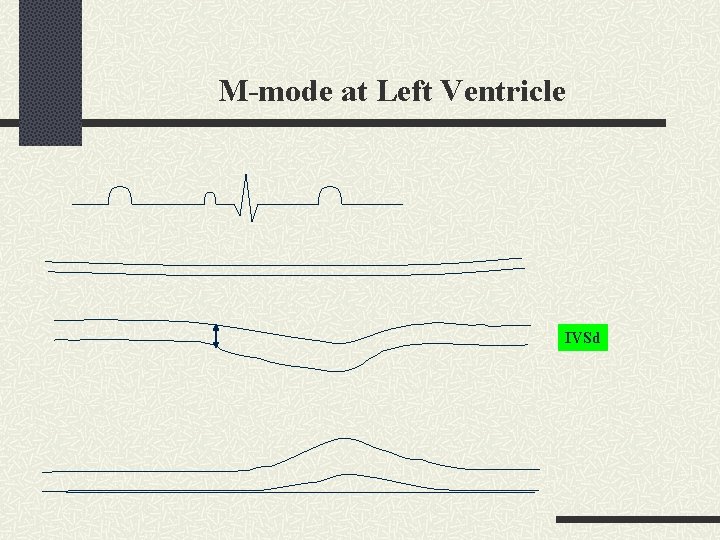
M-mode at Left Ventricle IVSd
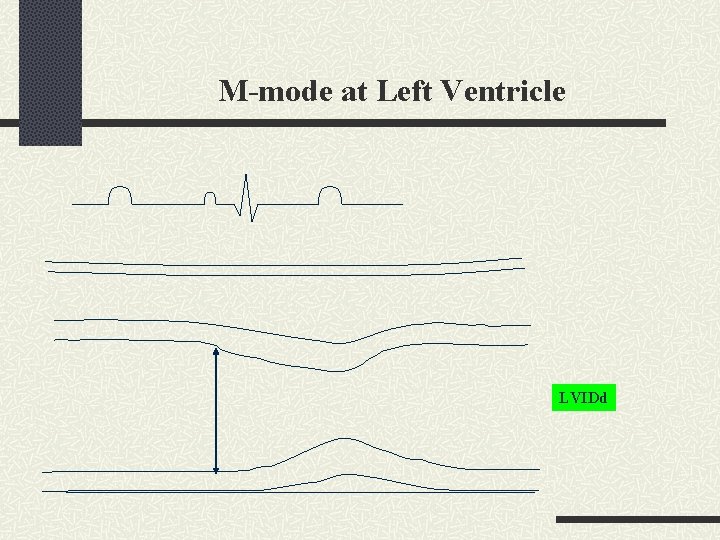
M-mode at Left Ventricle LVIDd
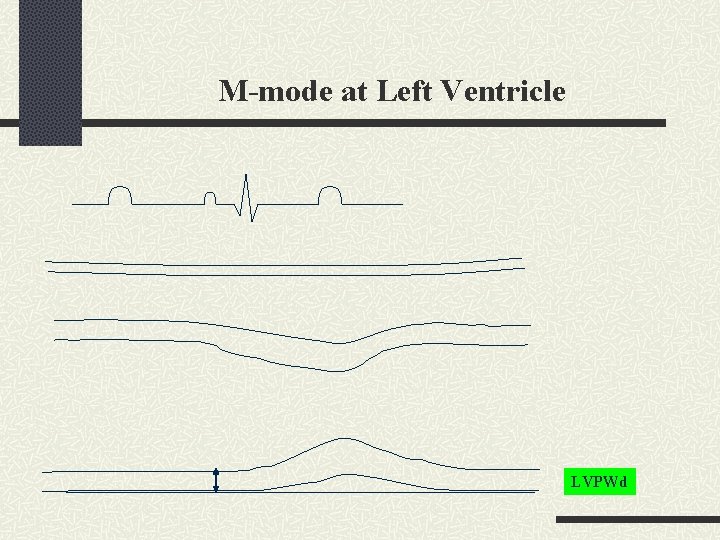
M-mode at Left Ventricle LVPWd
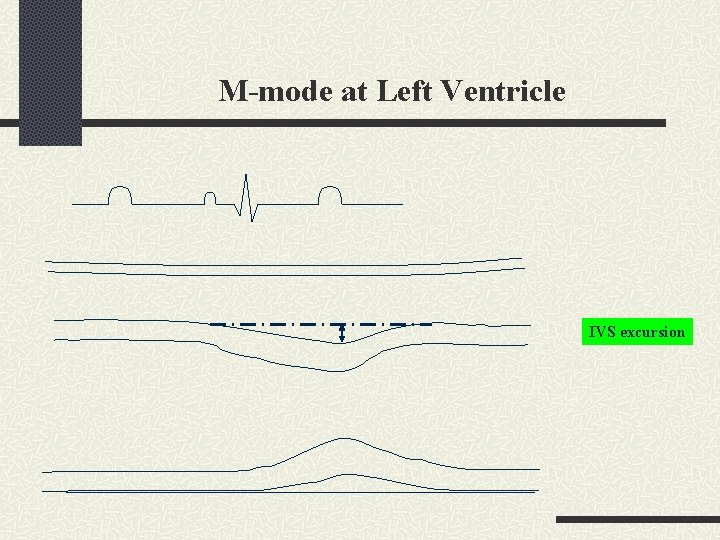
M-mode at Left Ventricle IVS excursion
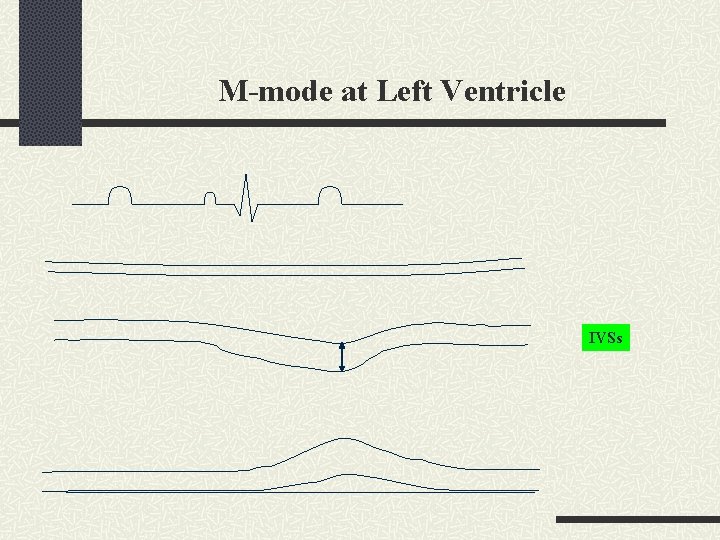
M-mode at Left Ventricle IVSs
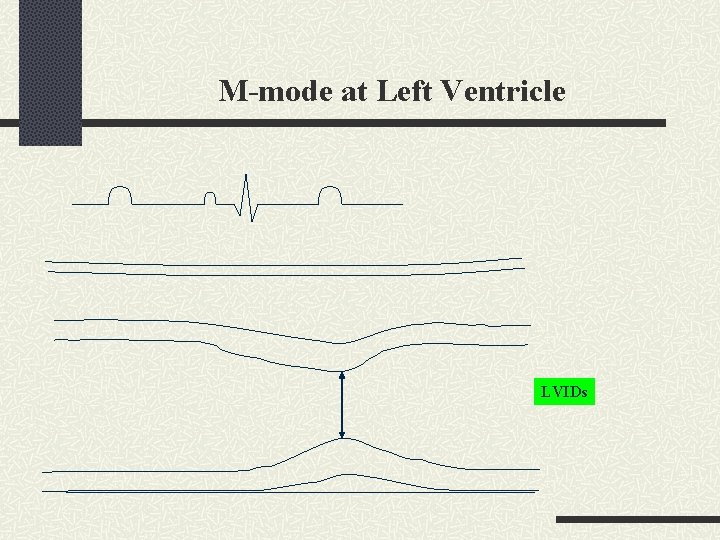
M-mode at Left Ventricle LVIDs
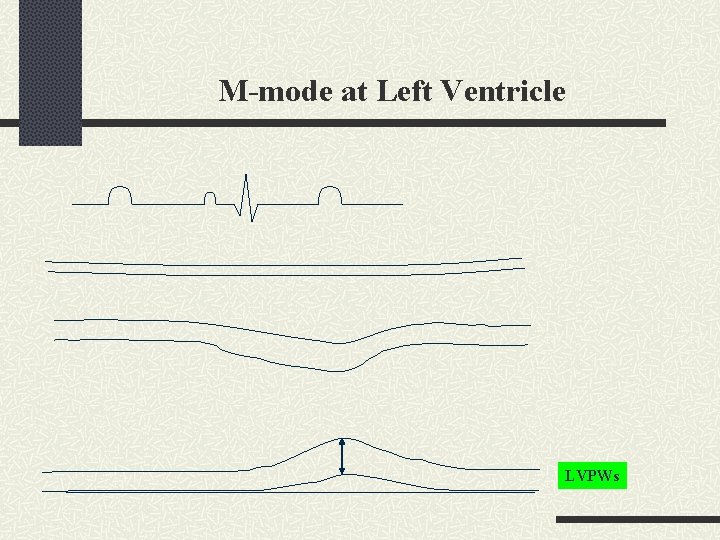
M-mode at Left Ventricle LVPWs
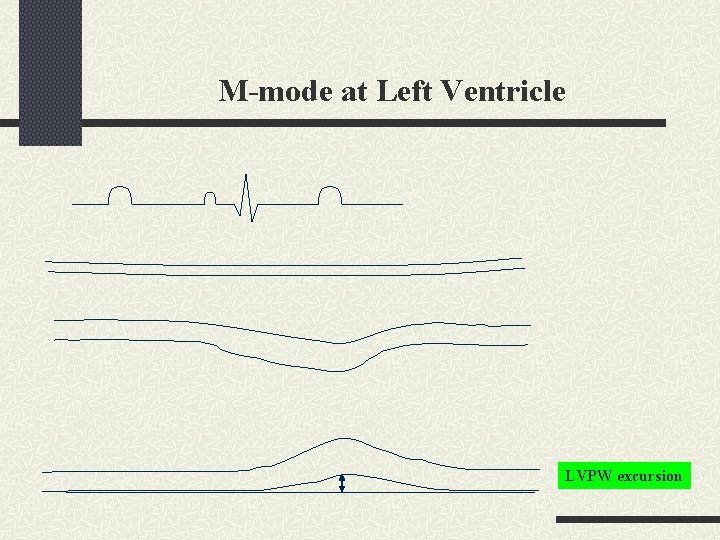
M-mode at Left Ventricle LVPW excursion
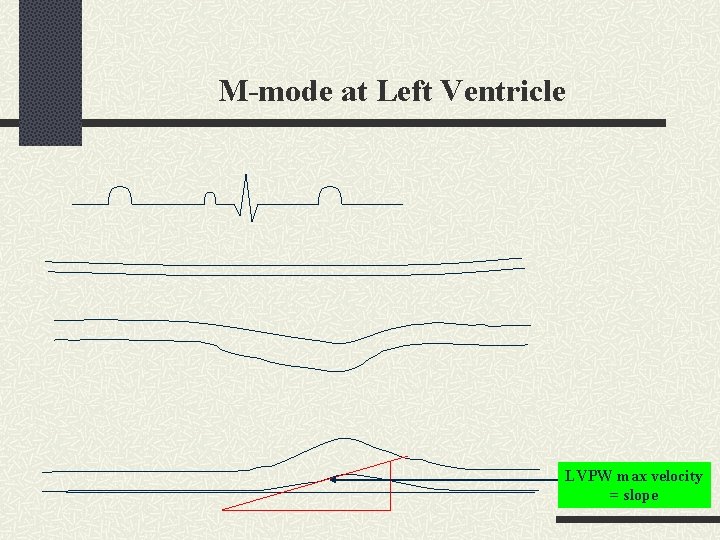
M-mode at Left Ventricle LVPW max velocity = slope
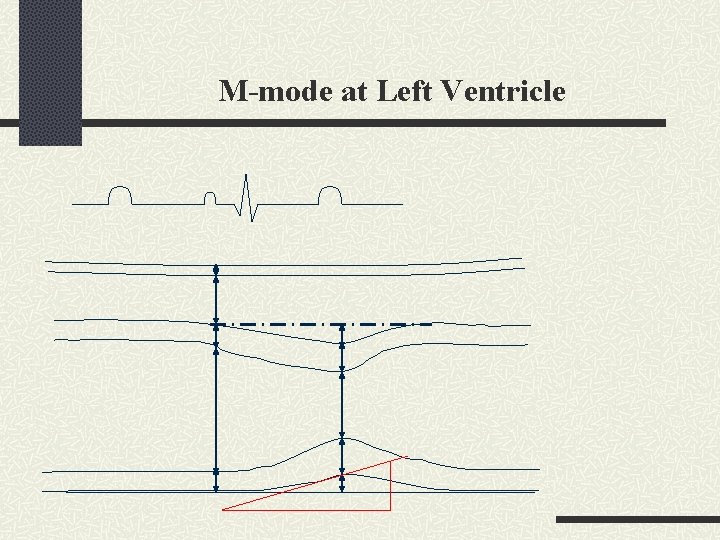
M-mode at Left Ventricle
M-mode LV Calculation • FS • EF • LV mass • RWT
M-mode LV Calculation • % IVS thickening • % LVPW thickening • IVS/LVPW ratio
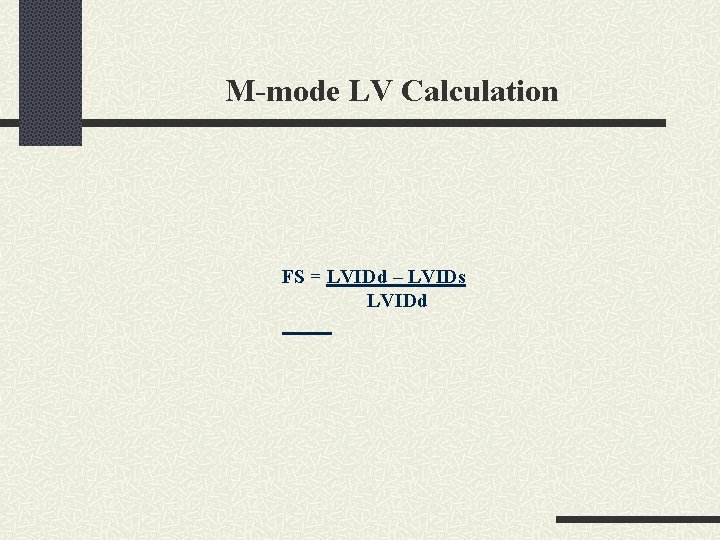
M-mode LV Calculation FS = LVIDd – LVIDs LVIDd
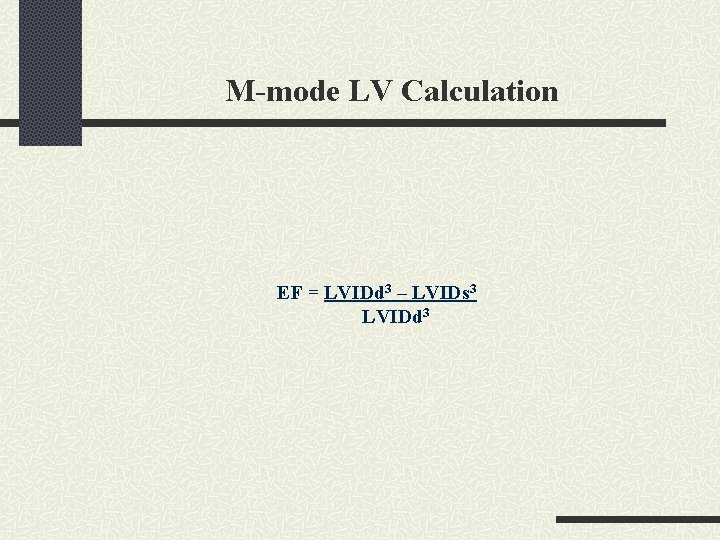
M-mode LV Calculation EF = LVIDd 3 – LVIDs 3 LVIDd 3
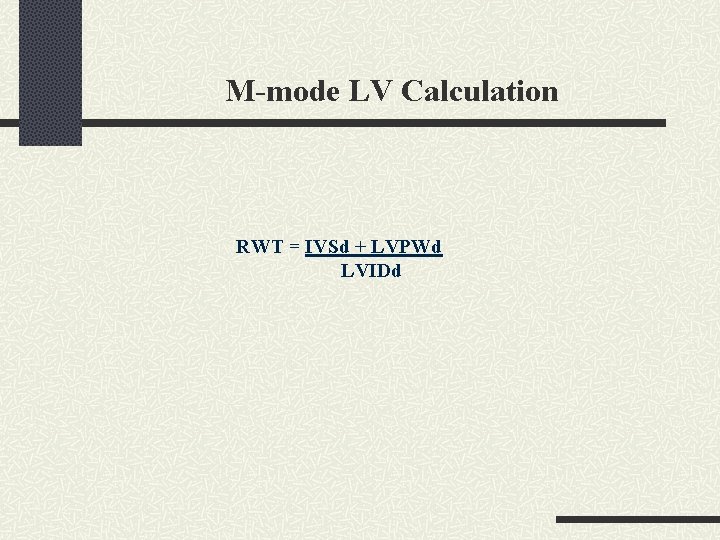
M-mode LV Calculation RWT = IVSd + LVPWd LVIDd
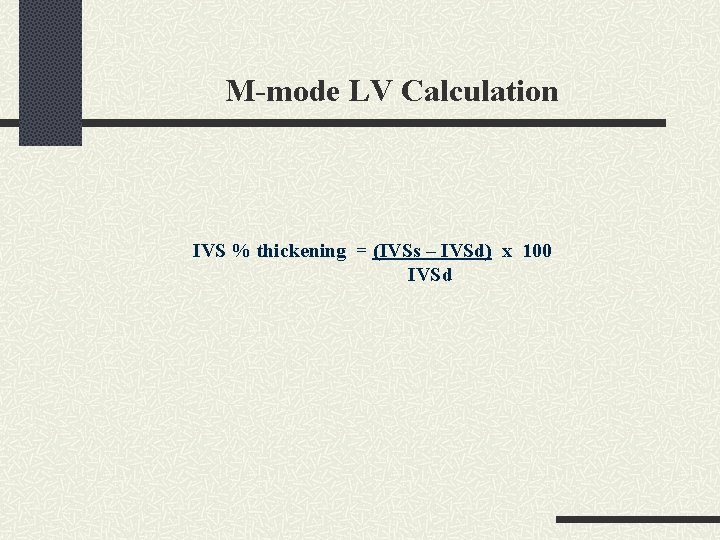
M-mode LV Calculation IVS % thickening = (IVSs – IVSd) x 100 IVSd
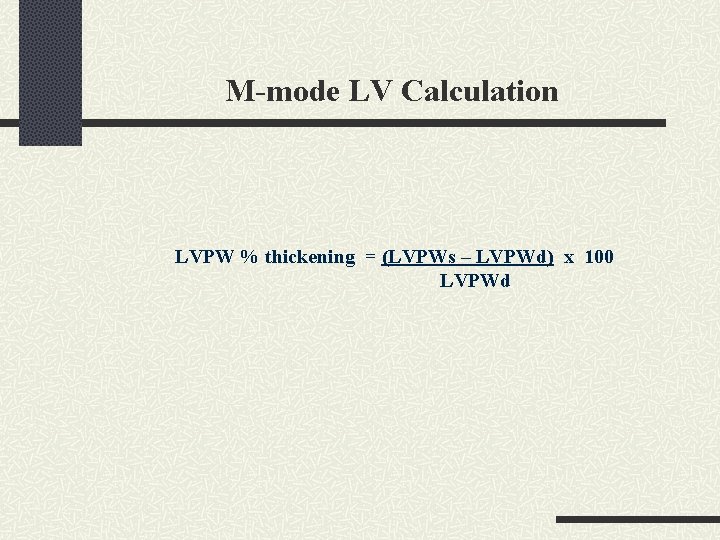
M-mode LV Calculation LVPW % thickening = (LVPWs – LVPWd) x 100 LVPWd
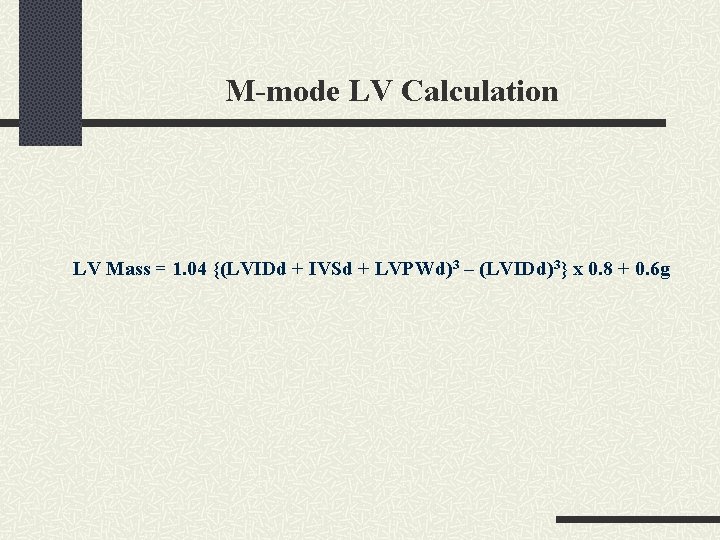
M-mode LV Calculation LV Mass = 1. 04 {(LVIDd + IVSd + LVPWd)3 – (LVIDd)3} x 0. 8 + 0. 6 g
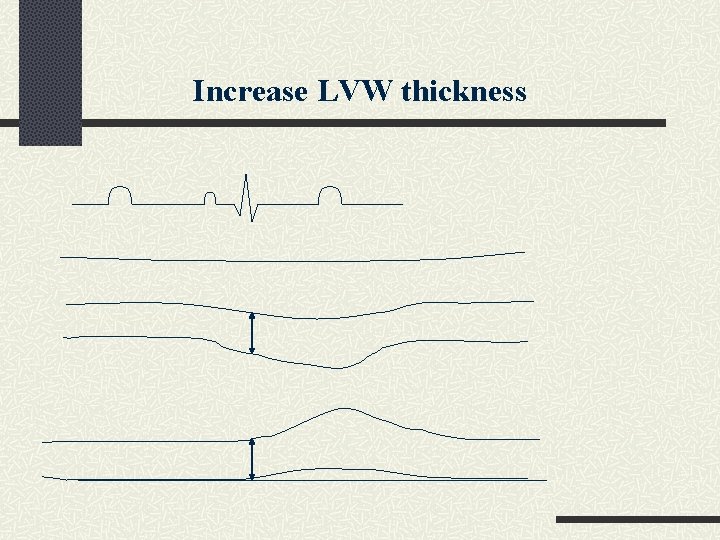
Increase LVW thickness
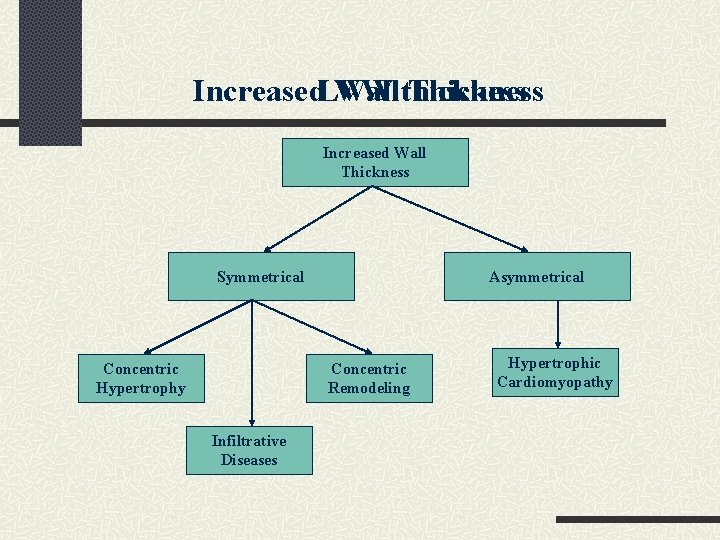
Increase LVW thickness Increased Wall Thickness Symmetrical Concentric Hypertrophy Asymmetrical Concentric Remodeling Infiltrative Diseases Hypertrophic Cardiomyopathy
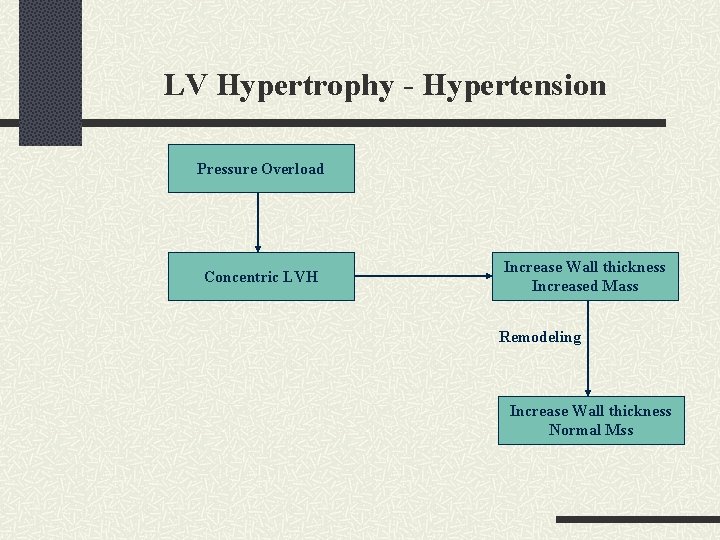
LV Hypertrophy - Hypertension Pressure Overload Concentric LVH Increase Wall thickness Increased Mass Remodeling Increase Wall thickness Normal Mss
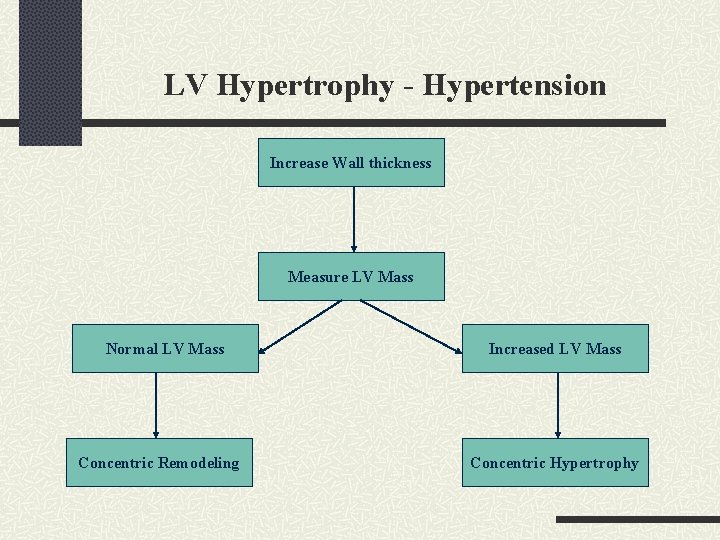
LV Hypertrophy - Hypertension Increase Wall thickness Measure LV Mass Normal LV Mass Concentric Remodeling Increased LV Mass Concentric Hypertrophy
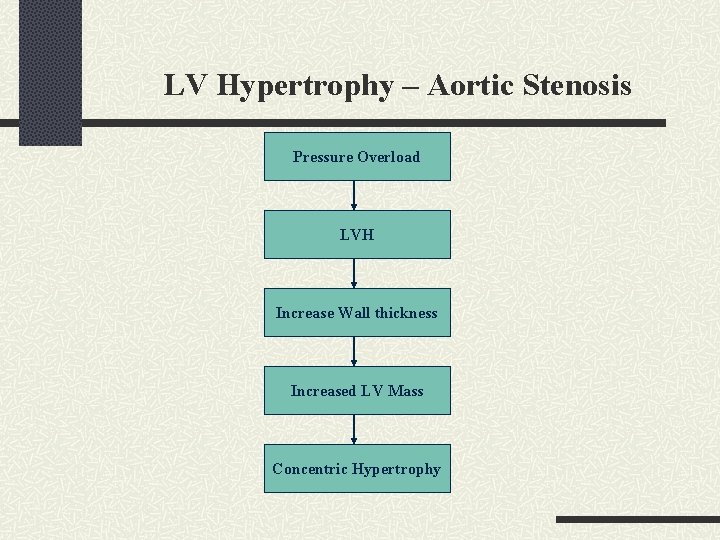
LV Hypertrophy – Aortic Stenosis Pressure Overload LVH Increase Wall thickness Increased LV Mass Concentric Hypertrophy
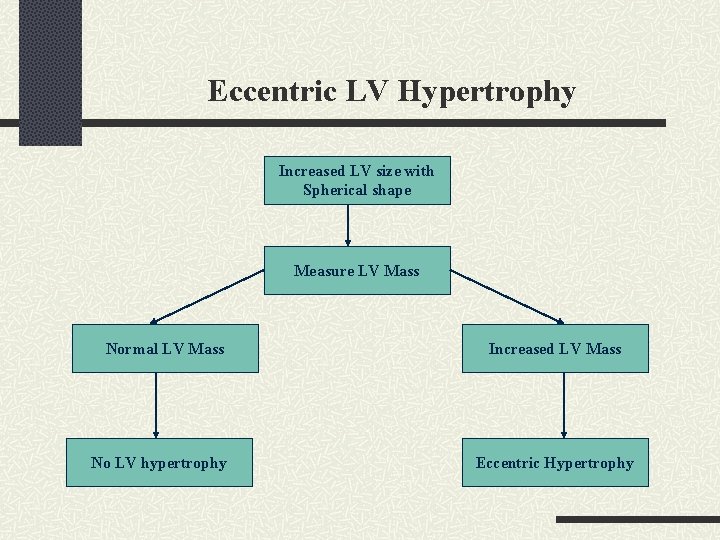
Eccentric LV Hypertrophy Increased LV size with Spherical shape Measure LV Mass Normal LV Mass No LV hypertrophy Increased LV Mass Eccentric Hypertrophy
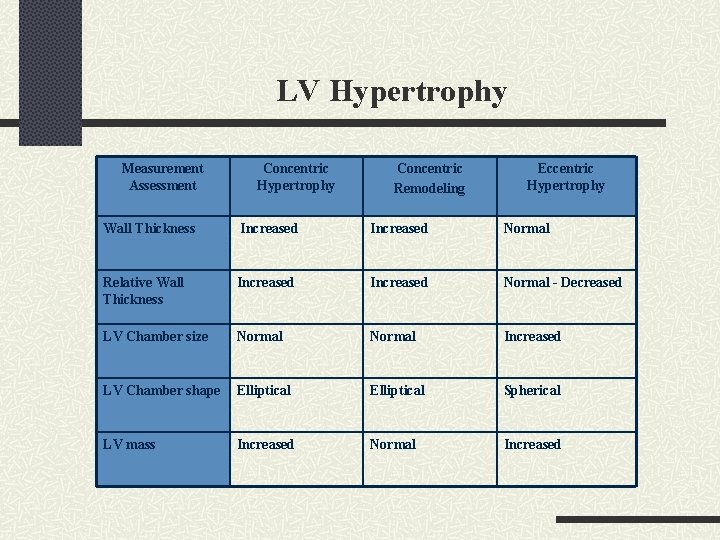
LV Hypertrophy Measurement Assessment Concentric Hypertrophy Concentric Remodeling Eccentric Hypertrophy Wall Thickness Increased Normal Relative Wall Thickness Increased Normal - Decreased LV Chamber size Normal Increased LV Chamber shape Elliptical Spherical LV mass Increased Normal Increased
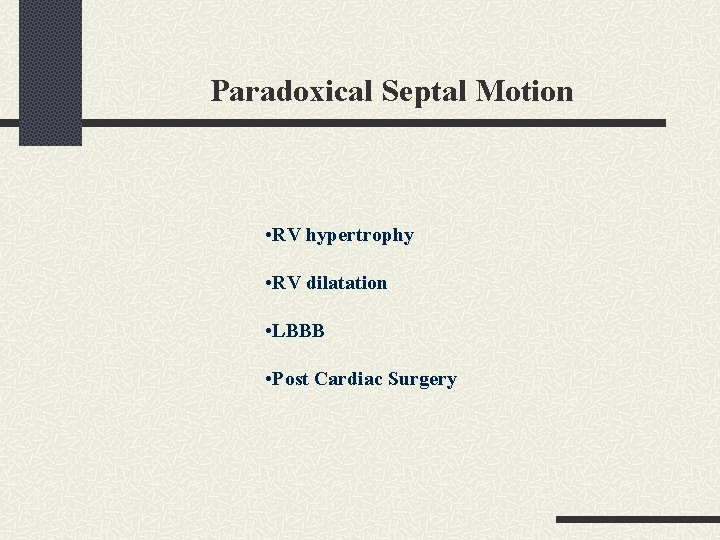
Paradoxical Septal Motion
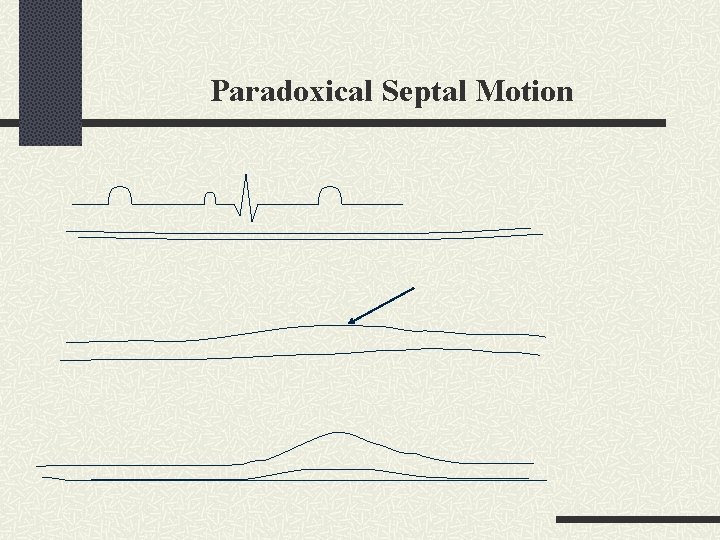
Paradoxical Septal Motion • RV hypertrophy • RV dilatation • LBBB • Post Cardiac Surgery
Ischemia
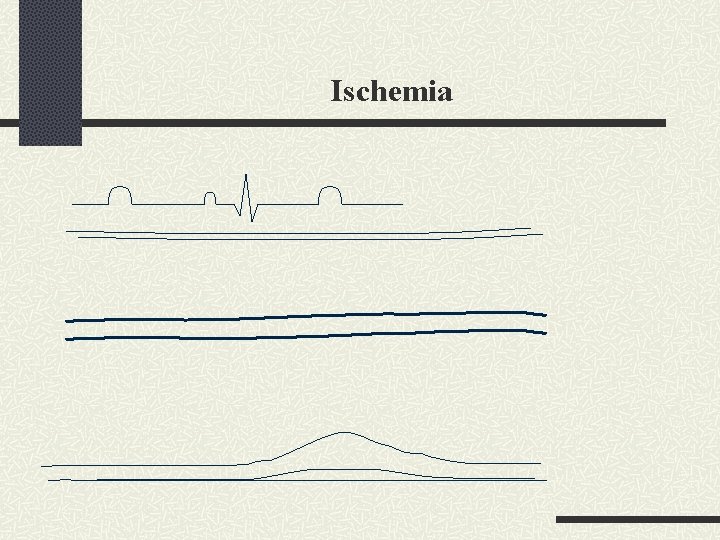
Ischemia Normal Wall thickness No systolic thickening Reduced Motion
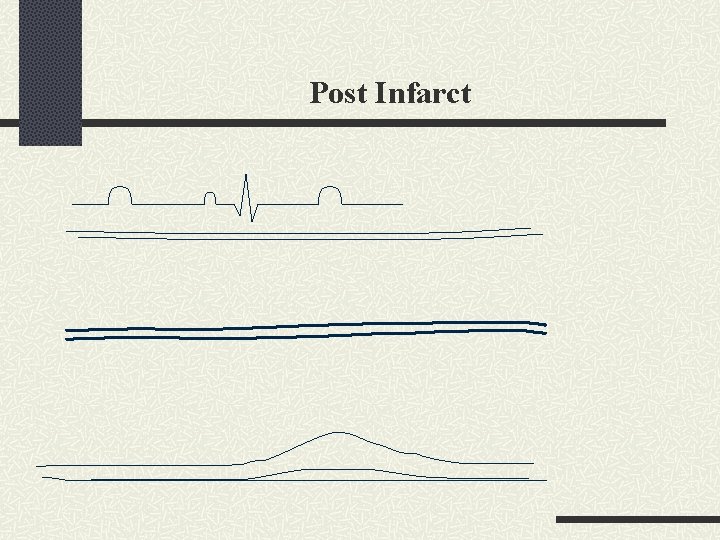
Post Infarct
Post Infarct Thin echogenic wall No systolic thickening Reduced Motion
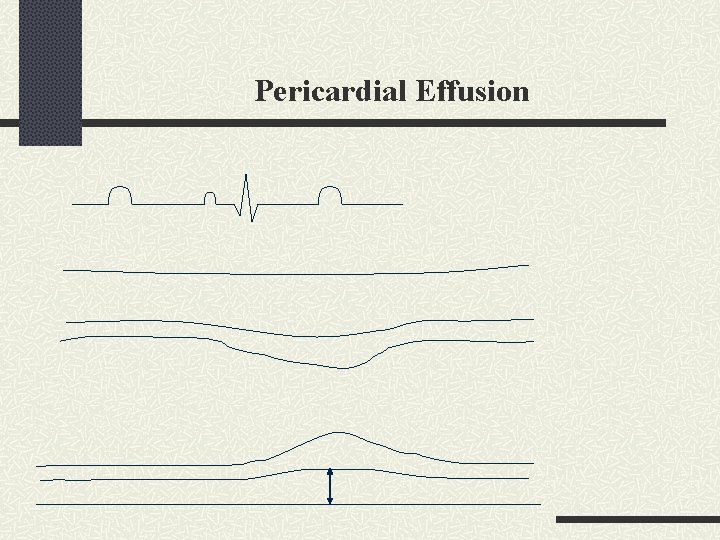
Pericardial Effusion
Pericardial Effusion Infection Postviral pericarditis Bacterial Tuberculosis
Pericardial Effusion Malignant Metastatic disease – lymphoma & melanoma Direct extension – lung and breast Primary cardiac malignancy
Pericardial Effusion Inflammatory Post MI (Dressler’s Syndrome) Uremia Collagen vascular disease Post cardiac surgery
Pericardial Effusion Intracardiac-Pericardial communication Blunt or penetrating chest trauma Post catheter procedures LV rupture (post MI)
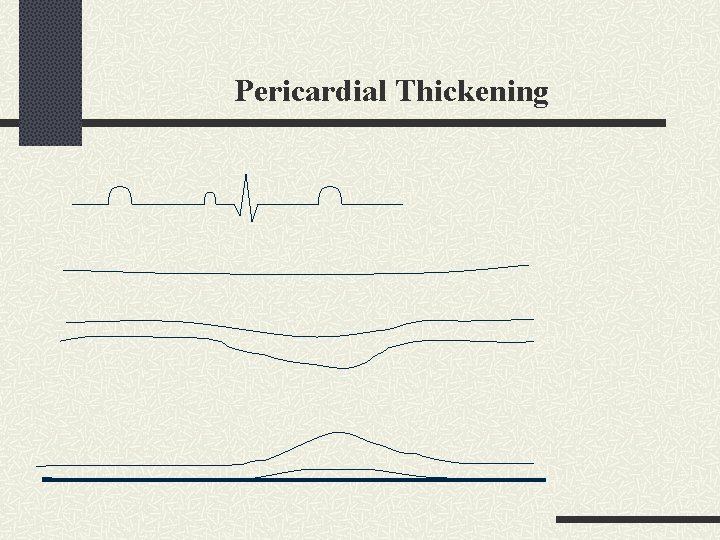
Pericardial Thickening
Pericardial Thickening Constrictive pericarditis Occurs following Surgery Radiation therapy Repeated episodes of pericarditis
- Slides: 106