
MMAT 5390 Mathematical Imaging Lecture 5 More about
MMAT 5390: Mathematical Imaging Lecture 5: More about Haar and Walsh Transform, DFT, Image Enhancement Prof. Ronald Lok Ming Lui Department of Mathematics, The Chinese University of Hong Kong
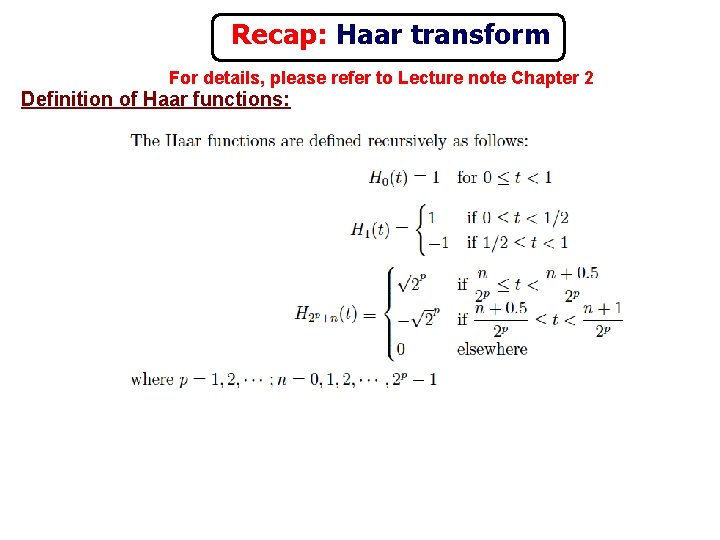
Recap: Haar transform For details, please refer to Lecture note Chapter 2 Definition of Haar functions:
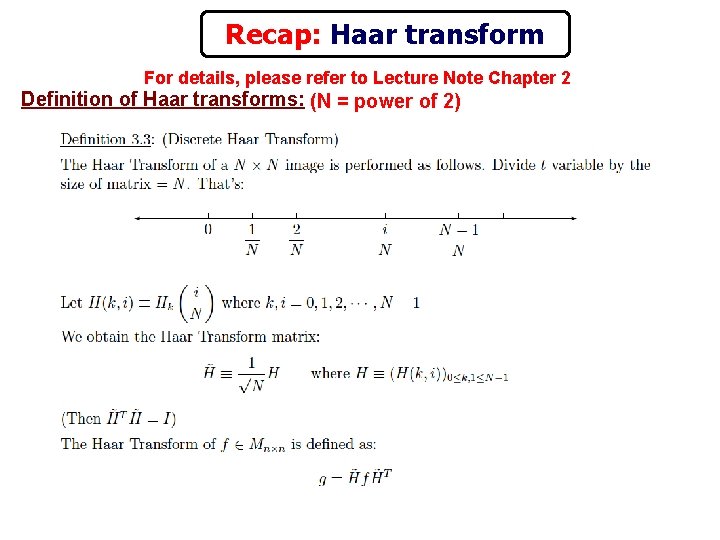
Recap: Haar transform For details, please refer to Lecture Note Chapter 2 Definition of Haar transforms: (N = power of 2)
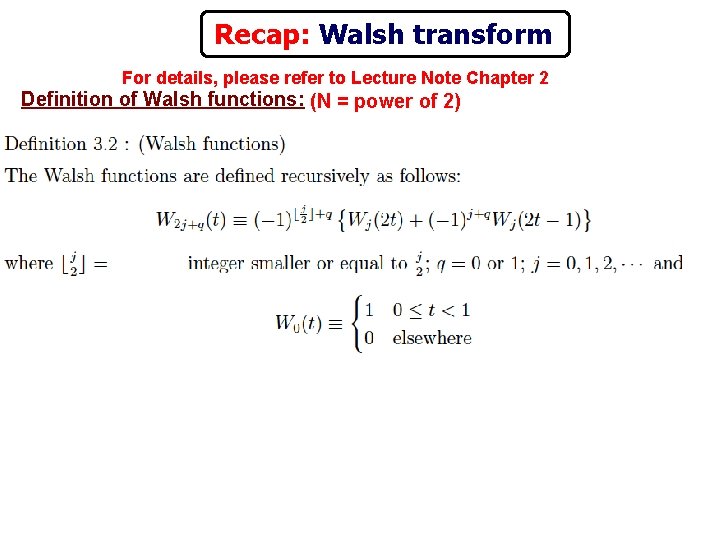
Recap: Walsh transform For details, please refer to Lecture Note Chapter 2 Definition of Walsh functions: (N = power of 2)
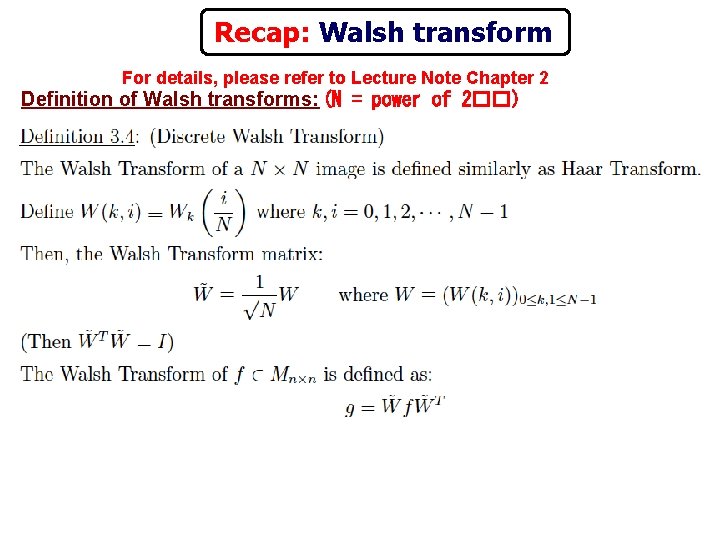
Recap: Walsh transform For details, please refer to Lecture Note Chapter 2 Definition of Walsh transforms: (N = power of 2��)
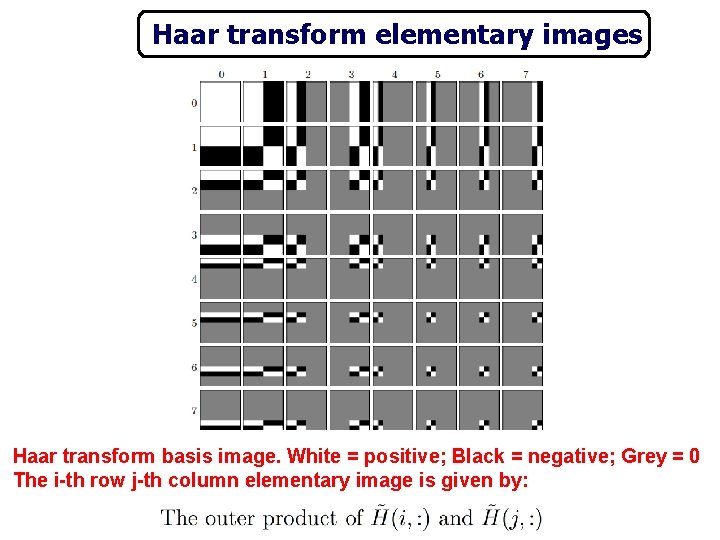
Haar transform elementary images Haar transform basis image. White = positive; Black = negative; Grey = 0 The i-th row j-th column elementary image is given by:
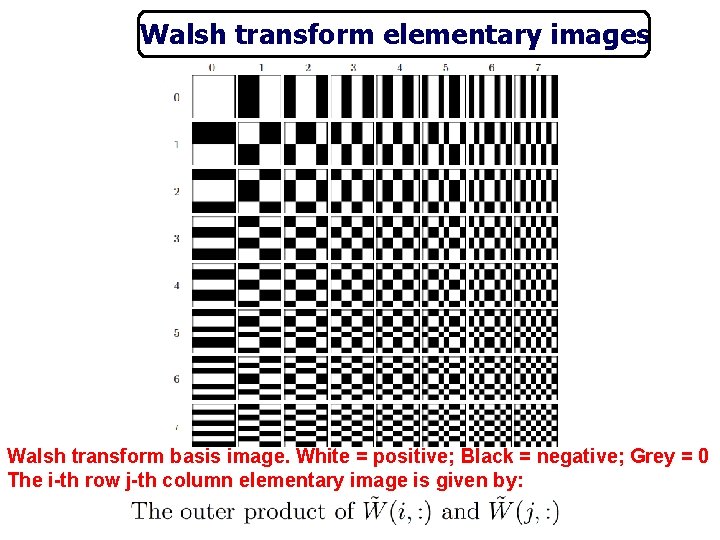
Walsh transform elementary images Walsh transform basis image. White = positive; Black = negative; Grey = 0 The i-th row j-th column elementary image is given by:
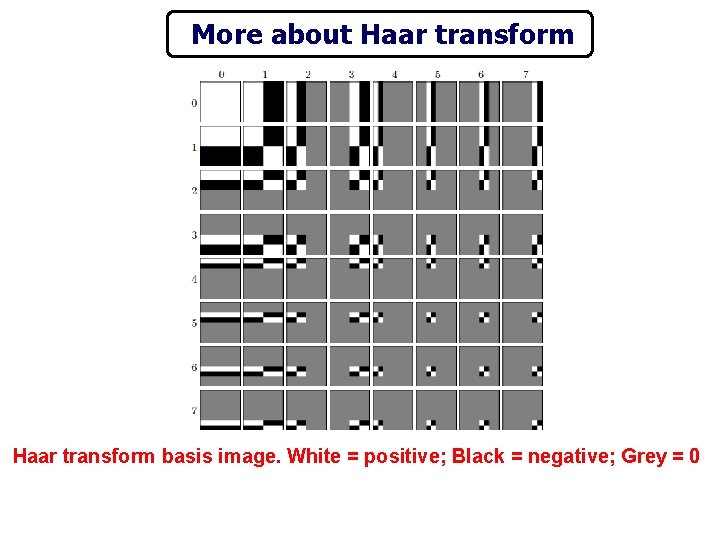
More about Haar transform basis image. White = positive; Black = negative; Grey = 0
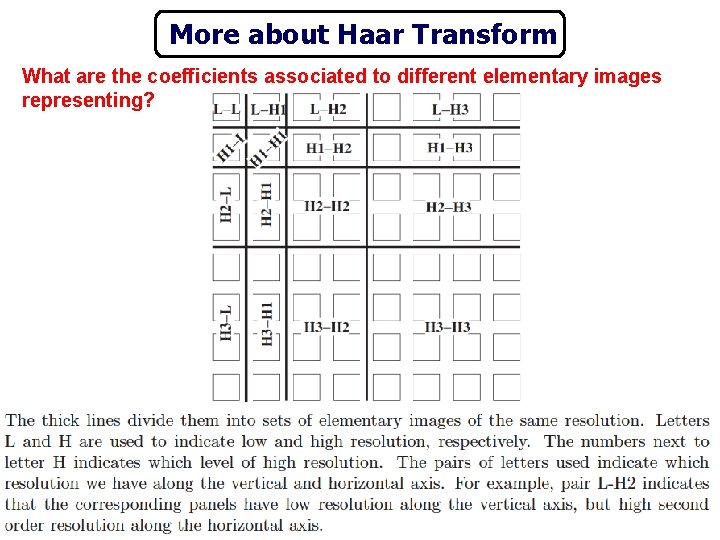
More about Haar Transform What are the coefficients associated to different elementary images representing?
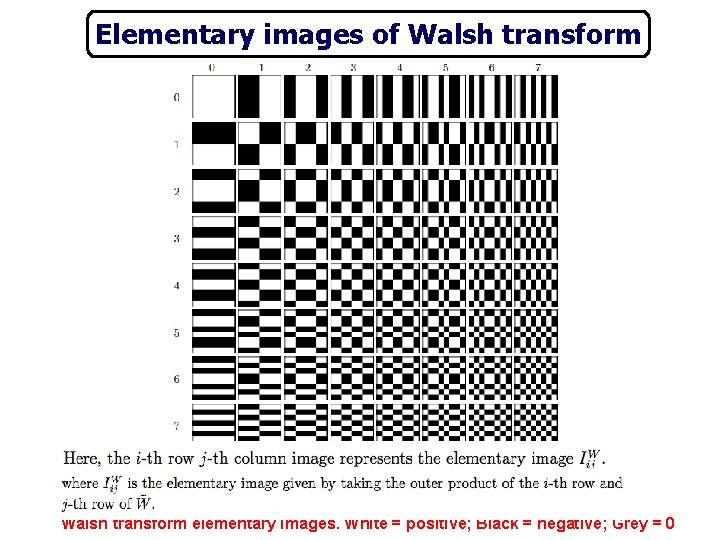
Elementary images of Walsh transform elementary images. White = positive; Black = negative; Grey = 0
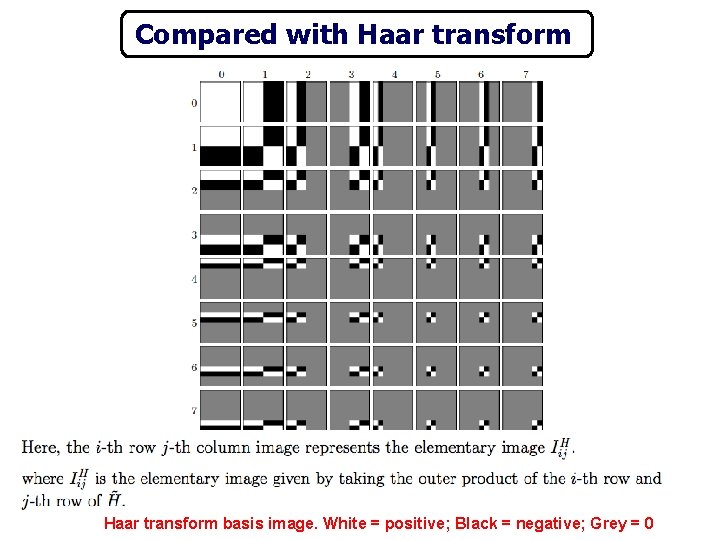
Compared with Haar transform basis image. White = positive; Black = negative; Grey = 0
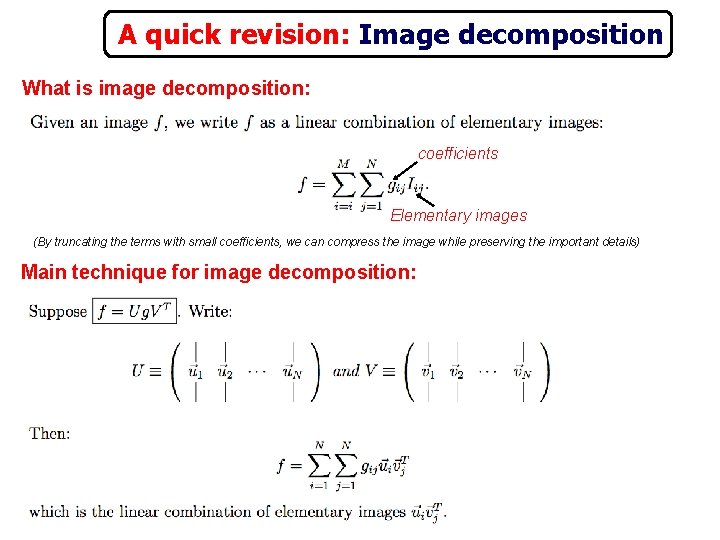
A quick revision: Image decomposition What is image decomposition: coefficients Elementary images (By truncating the terms with small coefficients, we can compress the image while preserving the important details) Main technique for image decomposition:
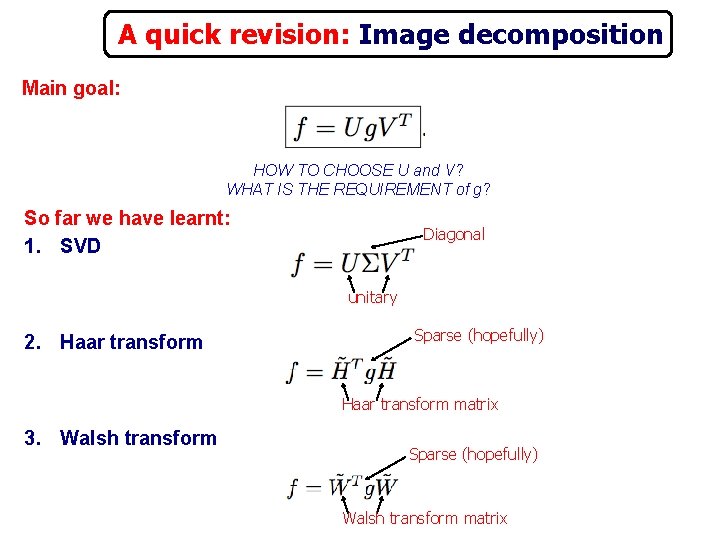
A quick revision: Image decomposition Main goal: HOW TO CHOOSE U and V? WHAT IS THE REQUIREMENT of g? So far we have learnt: 1. SVD Diagonal unitary 2. Haar transform Sparse (hopefully) Haar transform matrix 3. Walsh transform Sparse (hopefully) Walsh transform matrix
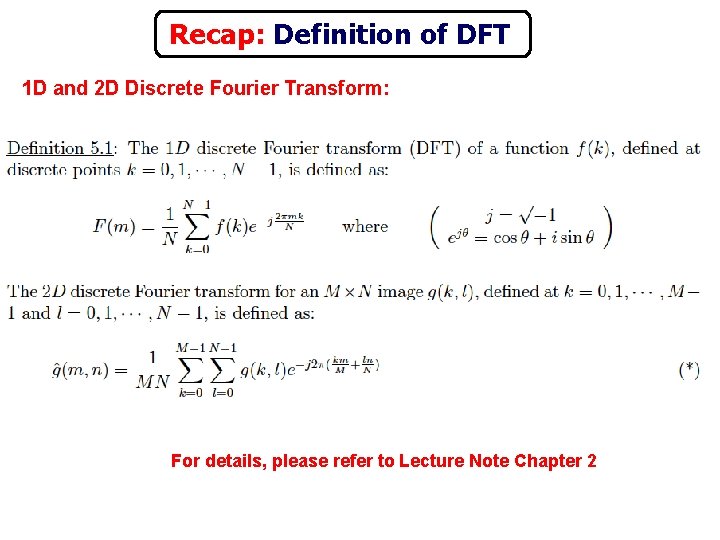
Recap: Definition of DFT 1 D and 2 D Discrete Fourier Transform: For details, please refer to Lecture Note Chapter 2
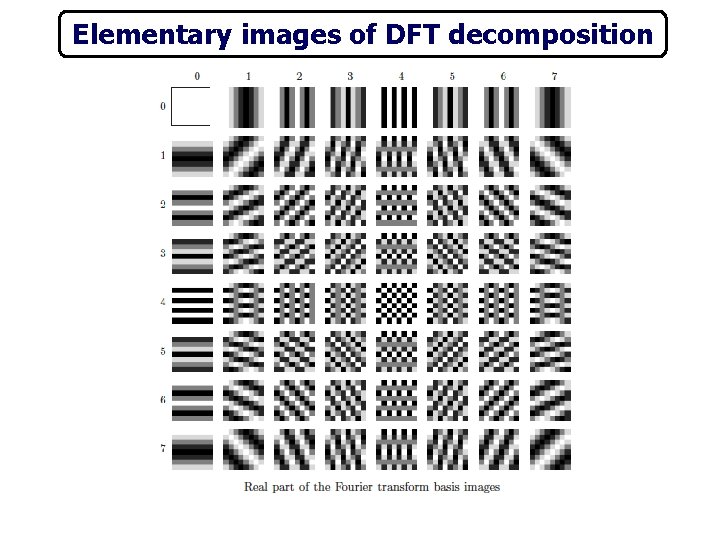
Elementary images of DFT decomposition
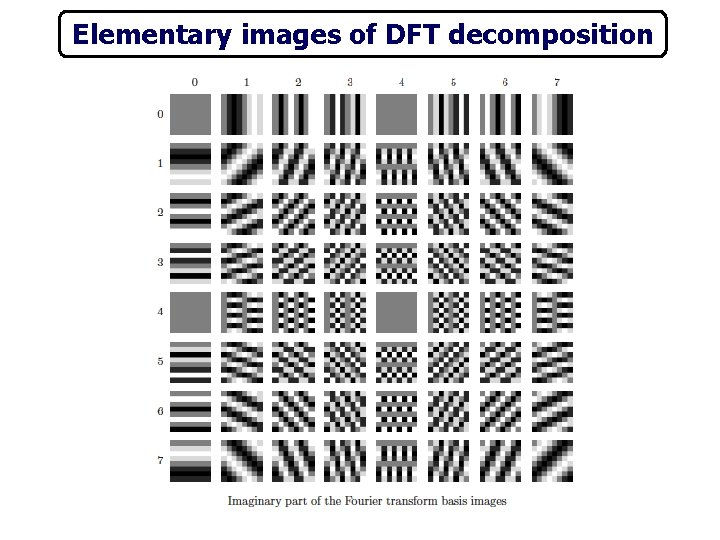
Elementary images of DFT decomposition
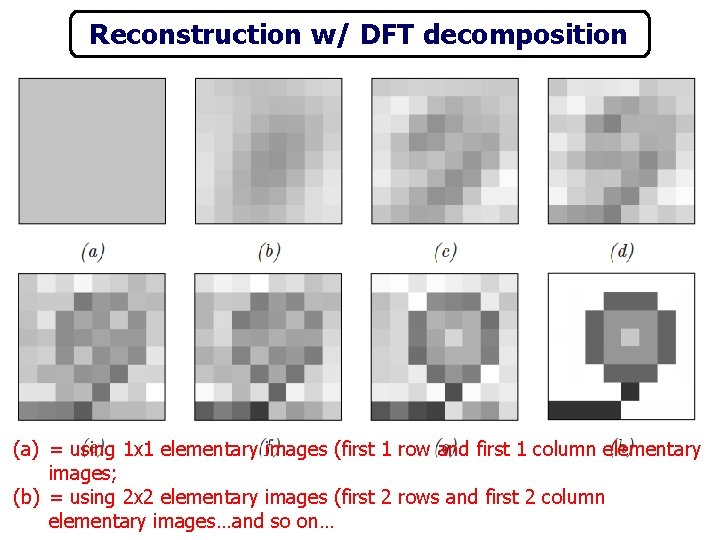
Reconstruction w/ DFT decomposition (a) = using 1 x 1 elementary images (first 1 row and first 1 column elementary images; (b) = using 2 x 2 elementary images (first 2 rows and first 2 column elementary images…and so on…
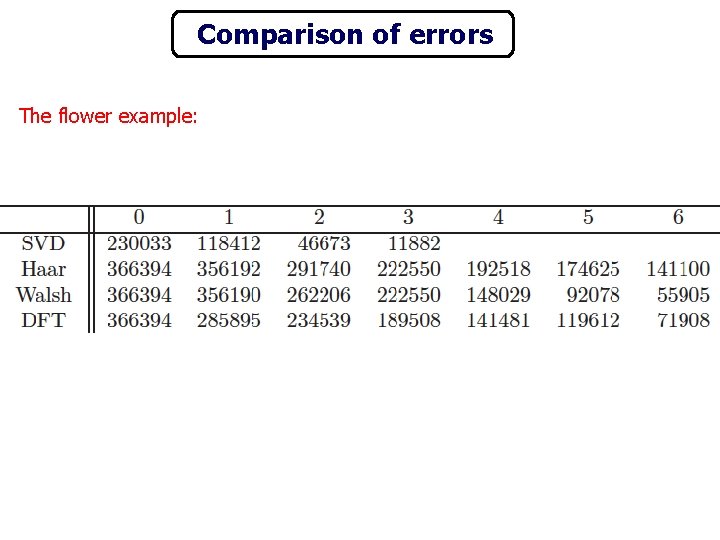
Comparison of errors The flower example:
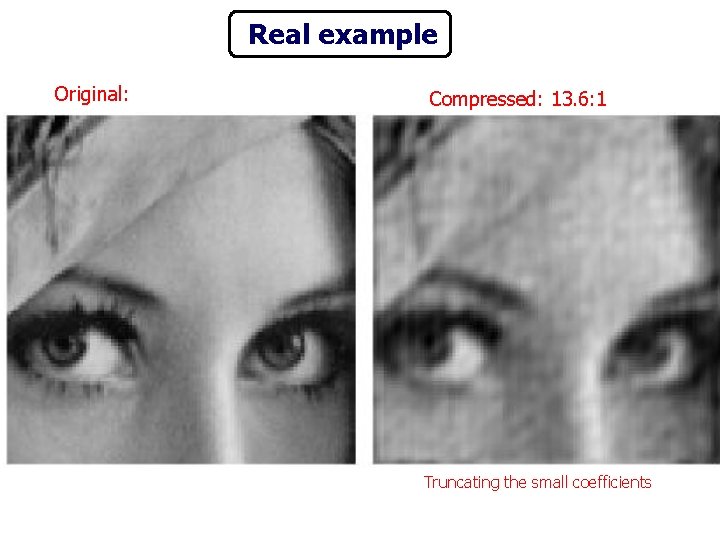
Real example Original: Compressed: 13. 6: 1 Truncating the small coefficients
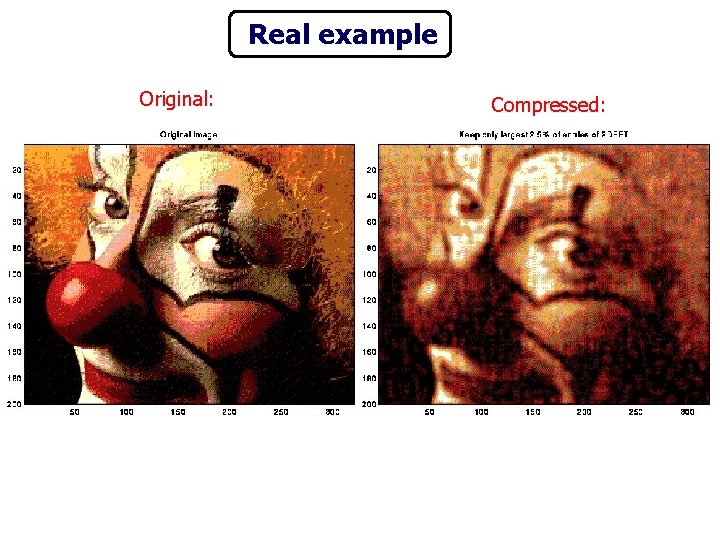
Real example Original: Compressed:
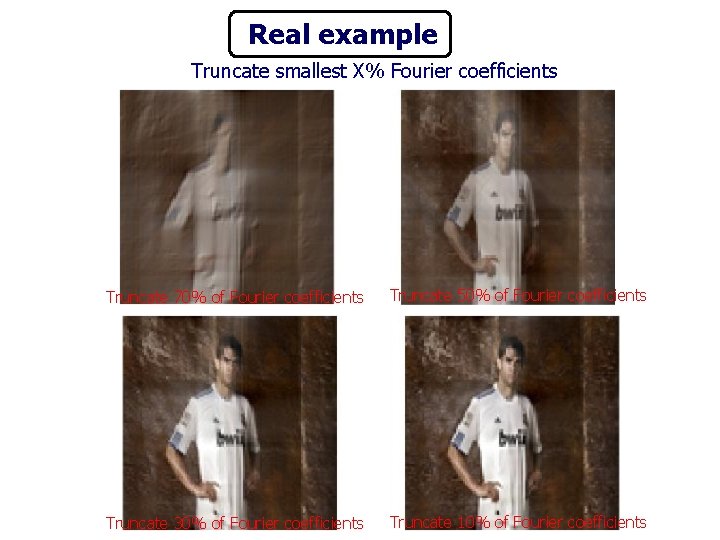
Real example Truncate smallest X% Fourier coefficients Truncate 70% of Fourier coefficients Truncate 50% of Fourier coefficients Truncate 30% of Fourier coefficients Truncate 10% of Fourier coefficients
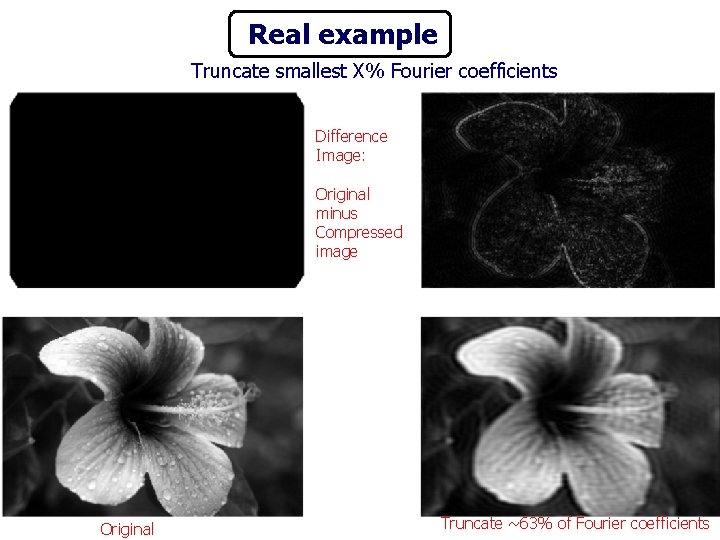
Real example Truncate smallest X% Fourier coefficients Difference Image: Original minus Compressed image Original Truncate ~63% of Fourier coefficients
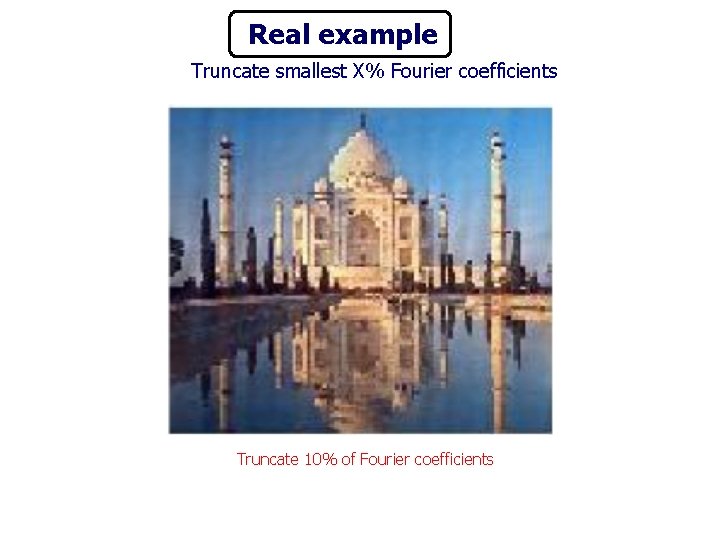
Real example Truncate smallest X% Fourier coefficients Difference Image: Original minus Compressed image Truncate 10% of Fourier coefficients
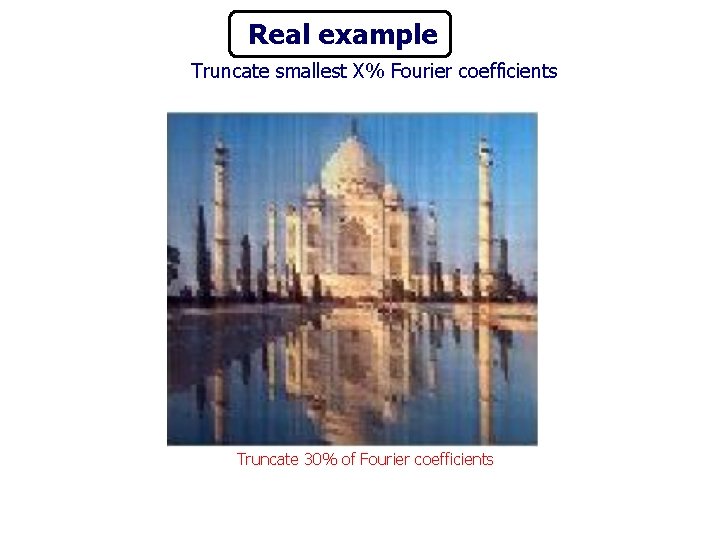
Real example Truncate smallest X% Fourier coefficients Truncate 30% of Fourier coefficients
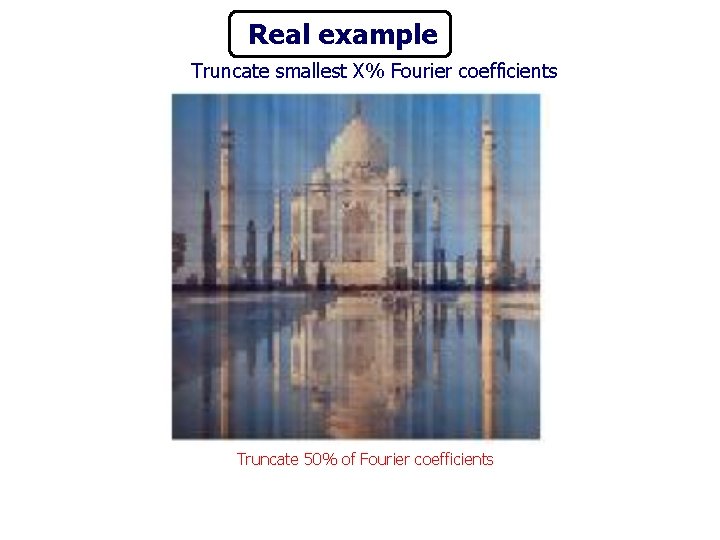
Real example Truncate smallest X% Fourier coefficients Truncate 50% of Fourier coefficients
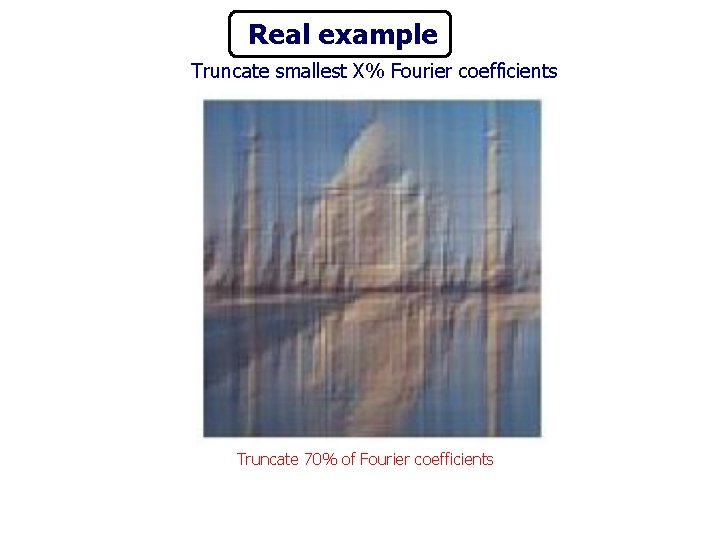
Real example Truncate smallest X% Fourier coefficients Truncate 70% of Fourier coefficients
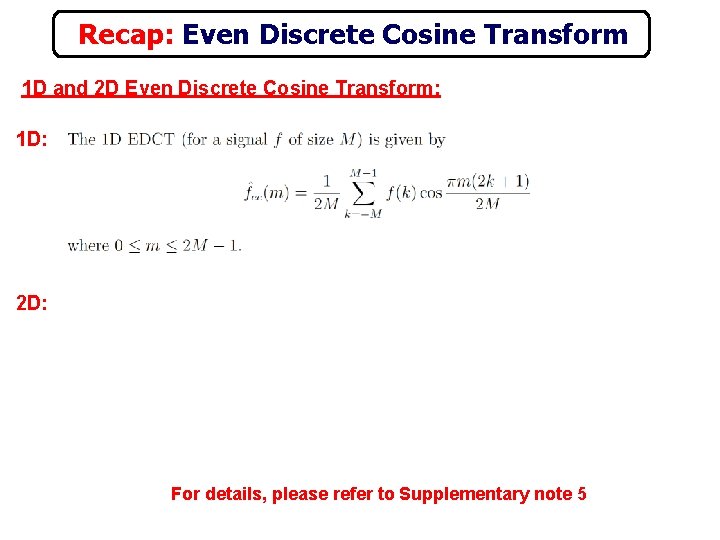
Recap: Even Discrete Cosine Transform 1 D and 2 D Even Discrete Cosine Transform: 1 D: 2 D: For details, please refer to Supplementary note 5
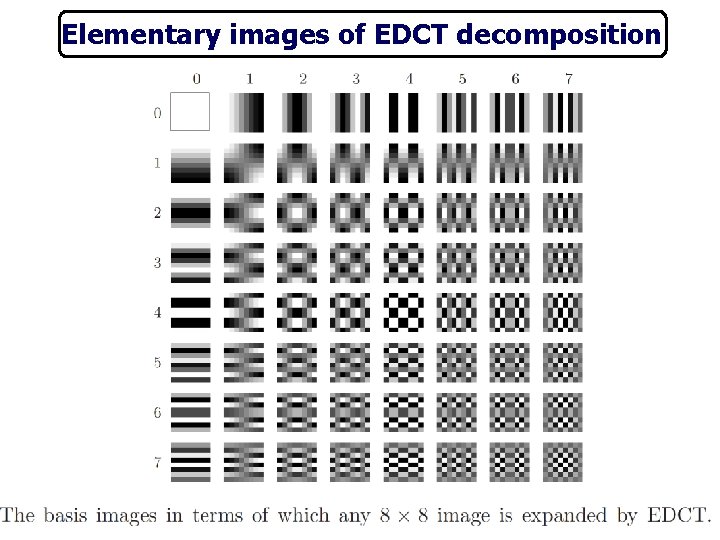
Elementary images of EDCT decomposition
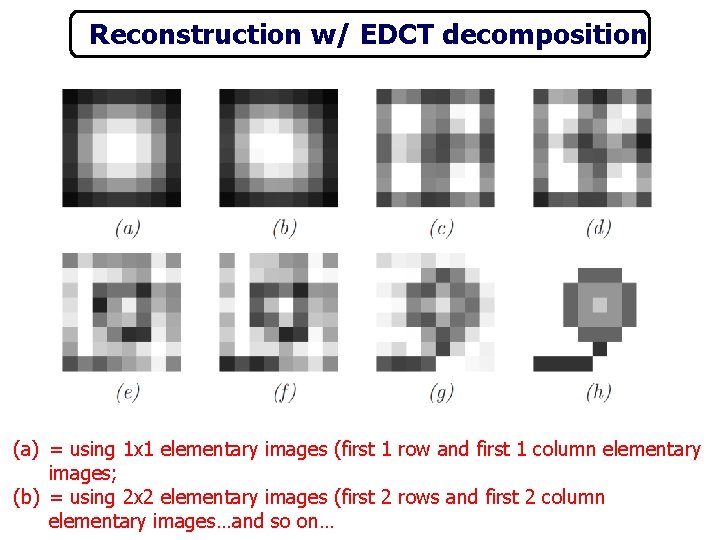
Reconstruction w/ EDCT decomposition (a) = using 1 x 1 elementary images (first 1 row and first 1 column elementary images; (b) = using 2 x 2 elementary images (first 2 rows and first 2 column elementary images…and so on…
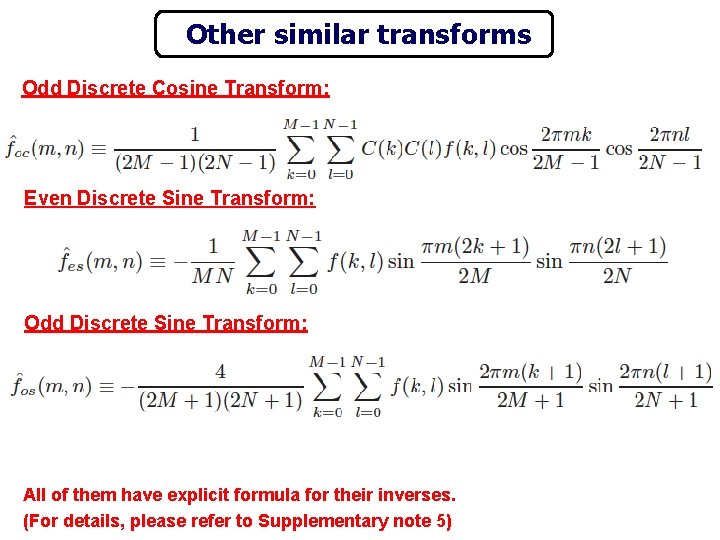
Other similar transforms Odd Discrete Cosine Transform: Even Discrete Sine Transform: Odd Discrete Sine Transform: All of them have explicit formula for their inverses. (For details, please refer to Supplementary note 5)
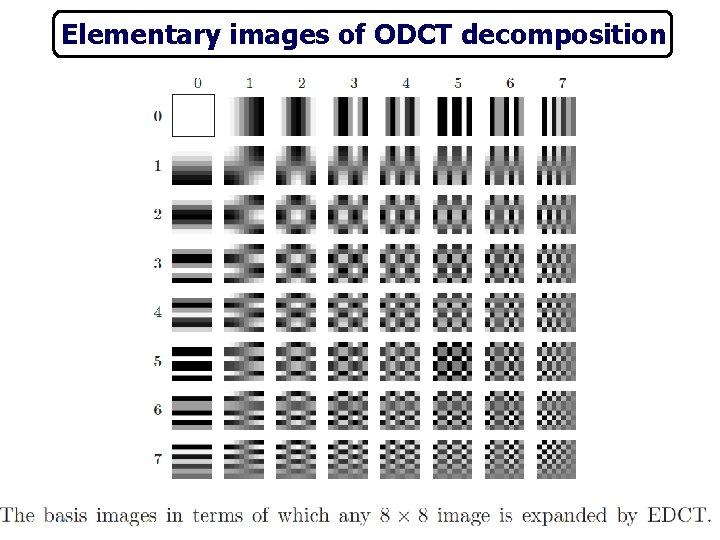
Elementary images of ODCT decomposition
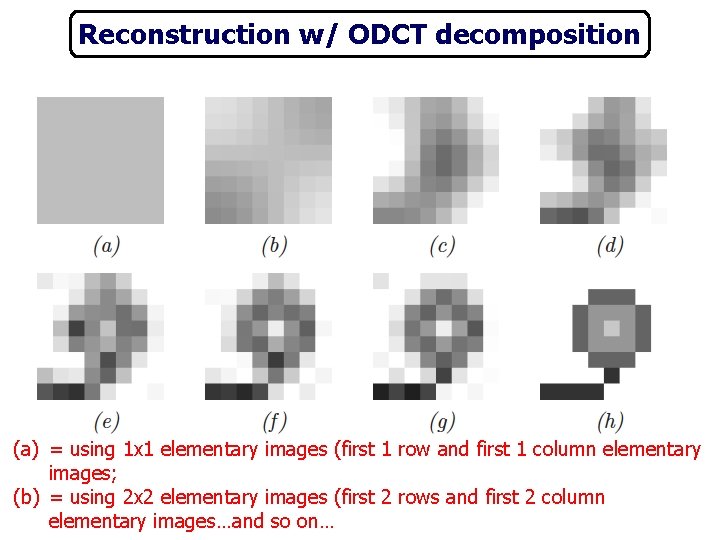
Reconstruction w/ ODCT decomposition (a) = using 1 x 1 elementary images (first 1 row and first 1 column elementary images; (b) = using 2 x 2 elementary images (first 2 rows and first 2 column elementary images…and so on…
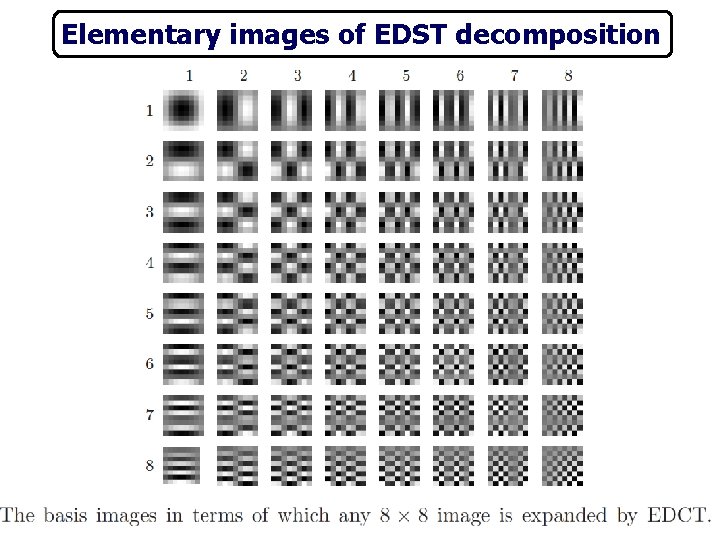
Elementary images of EDST decomposition
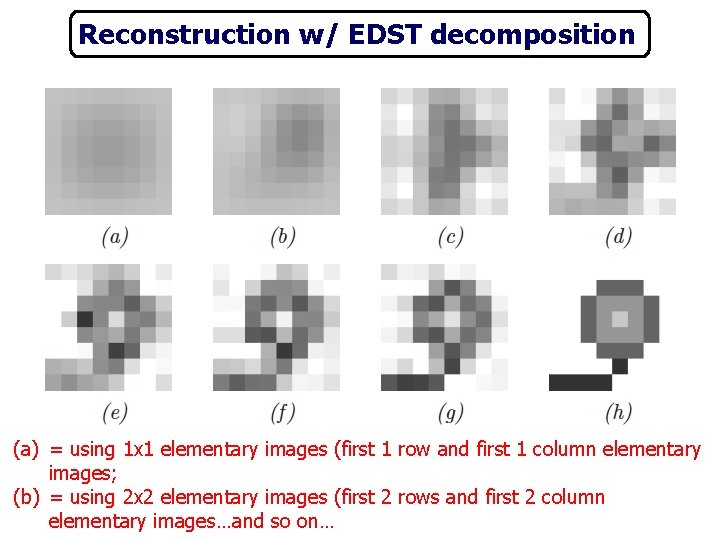
Reconstruction w/ EDST decomposition (a) = using 1 x 1 elementary images (first 1 row and first 1 column elementary images; (b) = using 2 x 2 elementary images (first 2 rows and first 2 column elementary images…and so on…
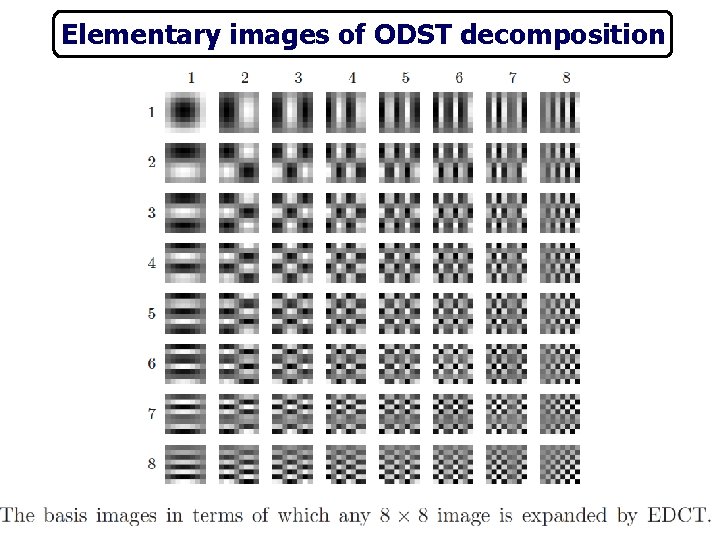
Elementary images of ODST decomposition
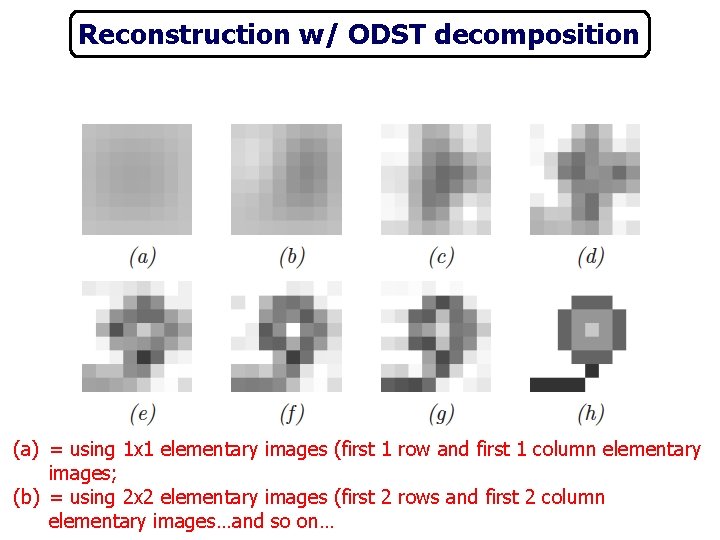
Reconstruction w/ ODST decomposition (a) = using 1 x 1 elementary images (first 1 row and first 1 column elementary images; (b) = using 2 x 2 elementary images (first 2 rows and first 2 column elementary images…and so on…
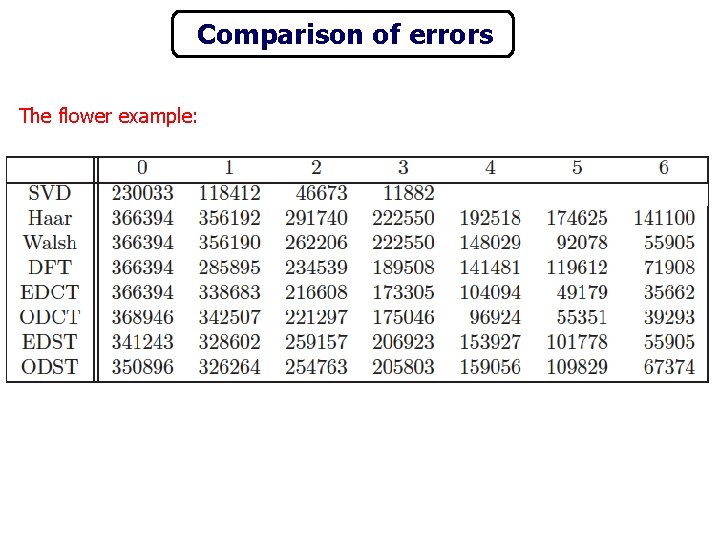
Comparison of errors The flower example:
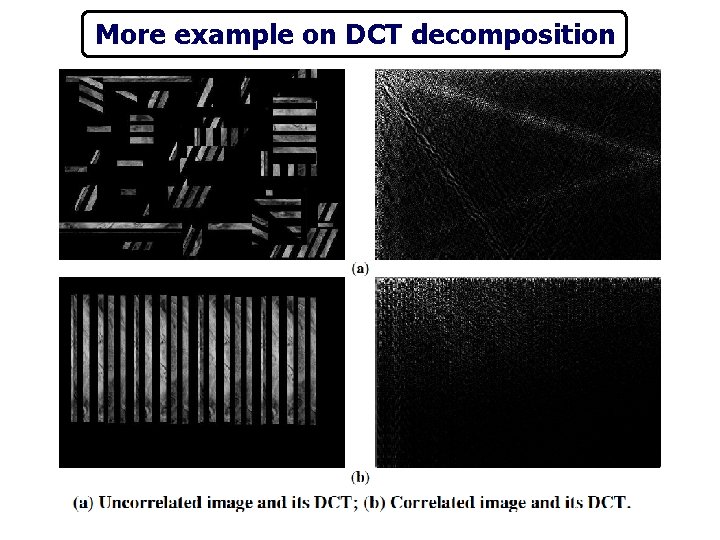
More example on DCT decomposition
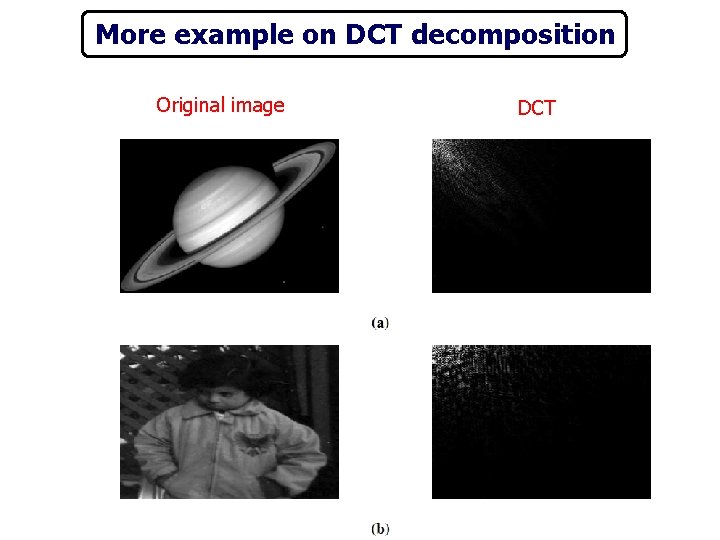
More example on DCT decomposition Original image DCT
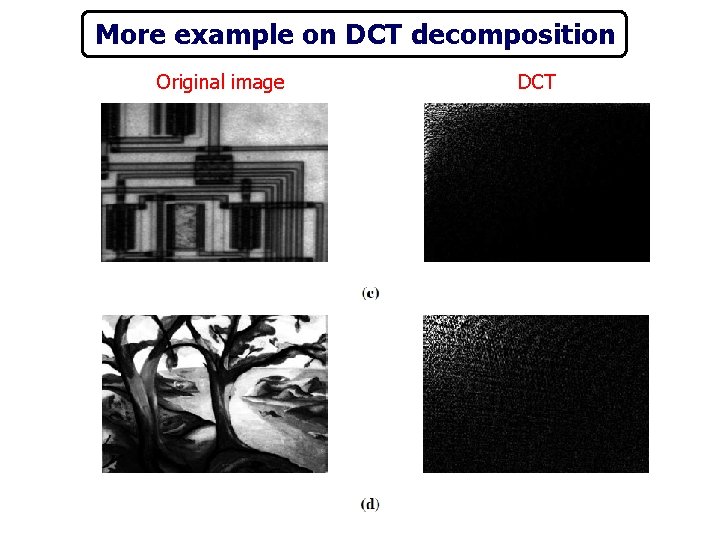
More example on DCT decomposition Original image DCT
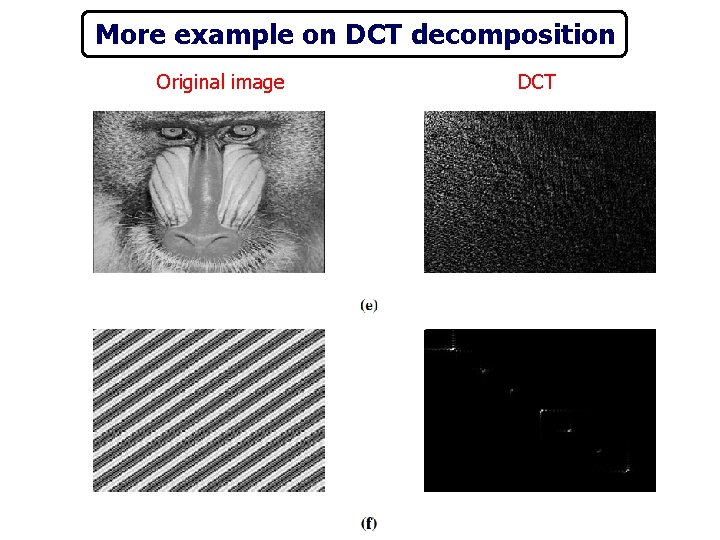
More example on DCT decomposition Original image DCT
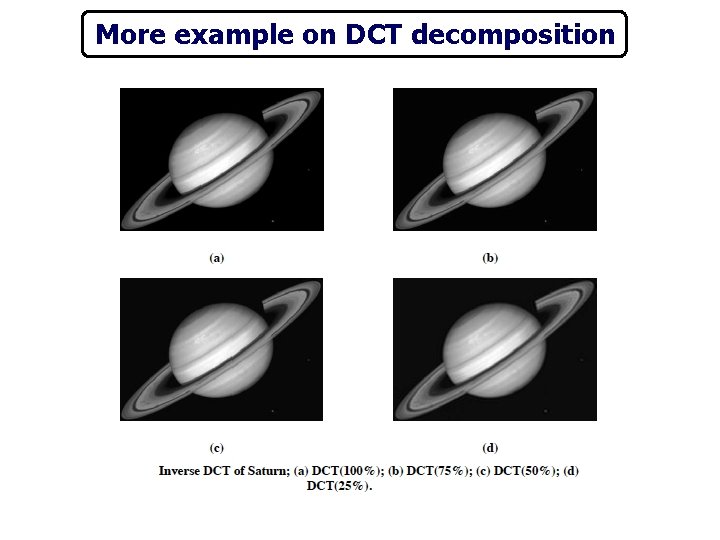
More example on DCT decomposition
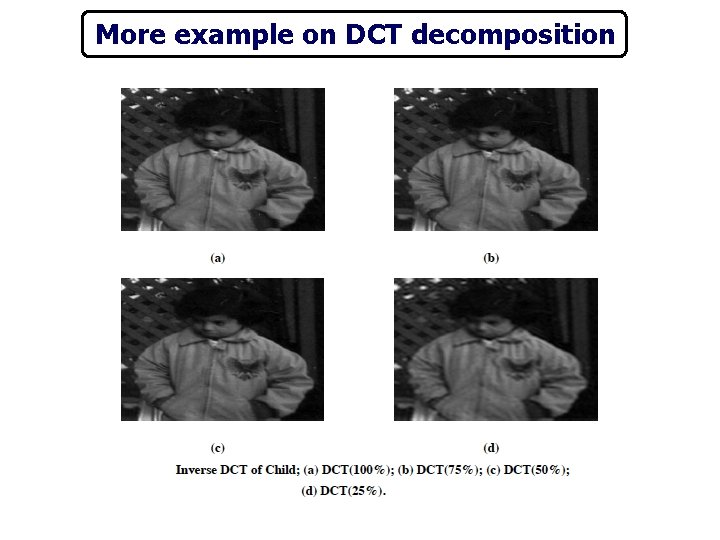
More example on DCT decomposition
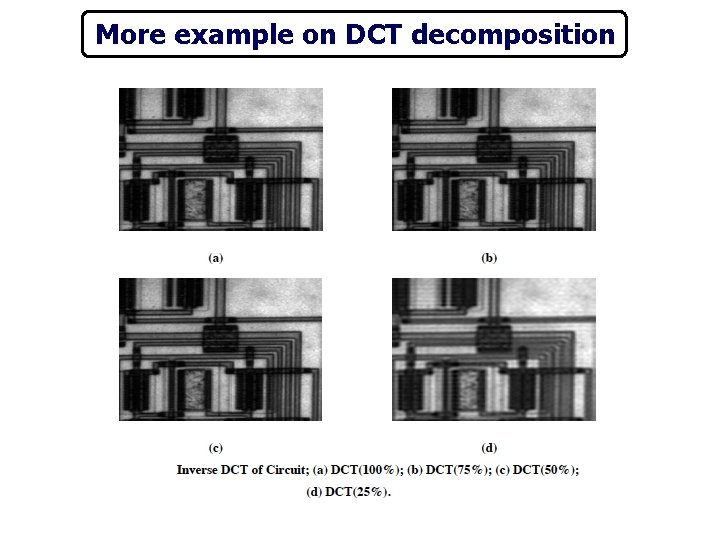
More example on DCT decomposition
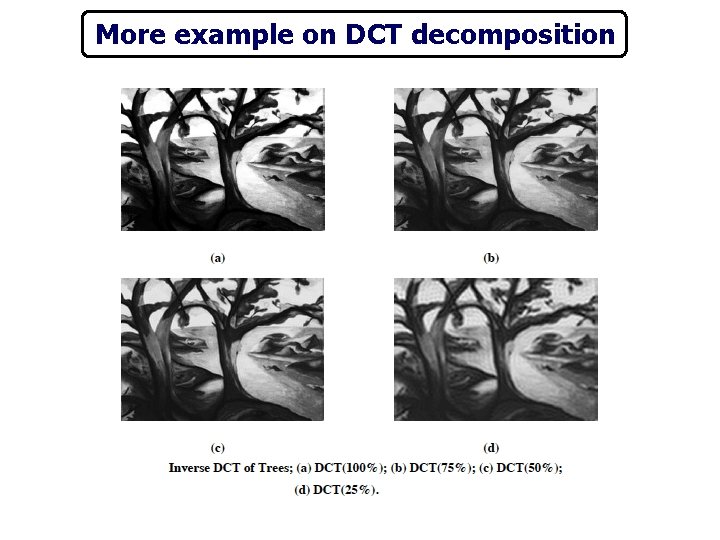
More example on DCT decomposition
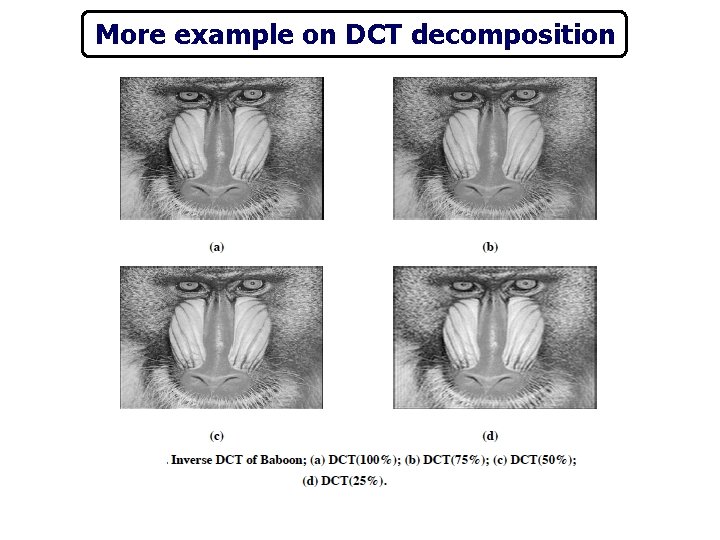
More example on DCT decomposition
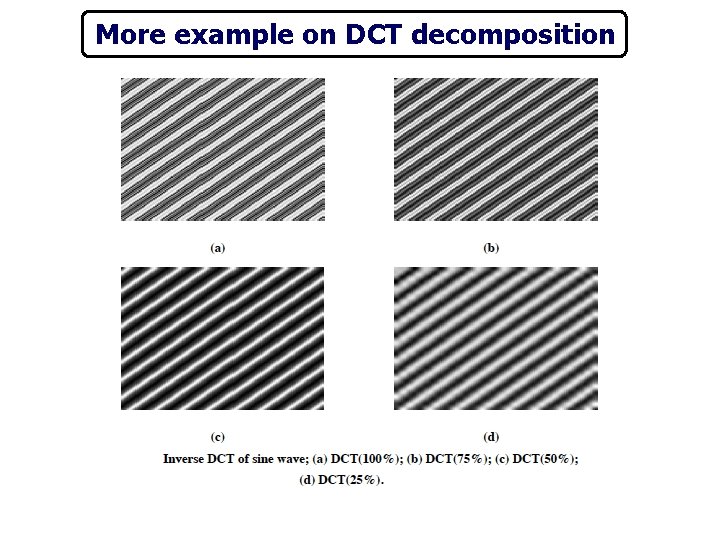
More example on DCT decomposition
- Slides: 47