
MLY 612 S Marketing Communication Strategy Vacation School

- Slides: 46
MLY 612 S Marketing Communication Strategy Vacation School 21 st 2018 Donald Hlahla 12– 1
Programme Tutorial letter Study Guide/Prescribed Text/Reading/Other references Approach to learning ü Theory-key areas ü Practice-Namibian Context ü Analysis-Linking theory and Practice Learning Outcomes Page 4 of the Study Guide 12– 2
Programme cont- Assignments ü Understanding the question ü Evidence of wide reading ü Practical application to the context ü Presentation 12– 3
Assumption and Terms used in questioning We are making the assumption that you already have a flair for marketing as a tool for communicating a company’s image, products and/or service benefit and offerings to the various stakeholders-see p 5 of the Tutorial letter. Marketing Management ü Brand Management ü Integrated Marketing Communication (IMC) ü Consumer Behaviour 12– 4
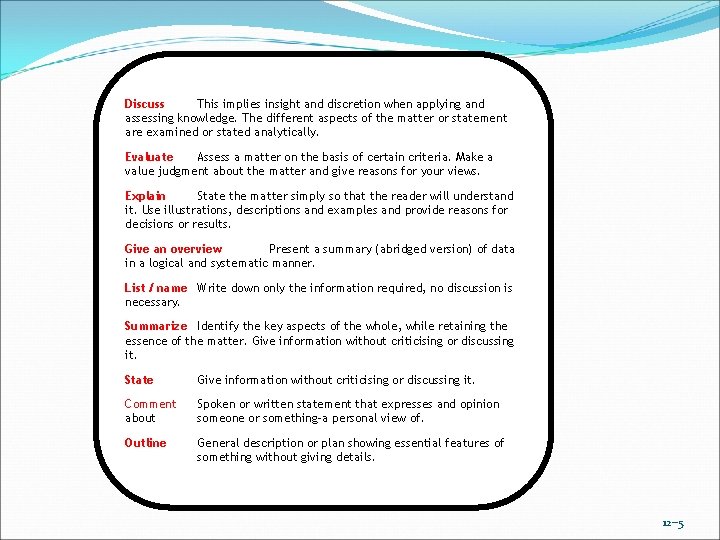
Discuss This implies insight and discretion when applying and assessing knowledge. The different aspects of the matter or statement are examined or stated analytically. Evaluate Assess a matter on the basis of certain criteria. Make a value judgment about the matter and give reasons for your views. Explain State the matter simply so that the reader will understand it. Use illustrations, descriptions and examples and provide reasons for decisions or results. Give an overview Present a summary (abridged version) of data in a logical and systematic manner. List / name Write down only the information required, no discussion is necessary. Summarize Identify the key aspects of the whole, while retaining the essence of the matter. Give information without criticising or discussing it. State Give information without criticising or discussing it. Comment about Spoken or written statement that expresses and opinion someone or something-a personal view of. Outline General description or plan showing essential features of something without giving details. 12– 5
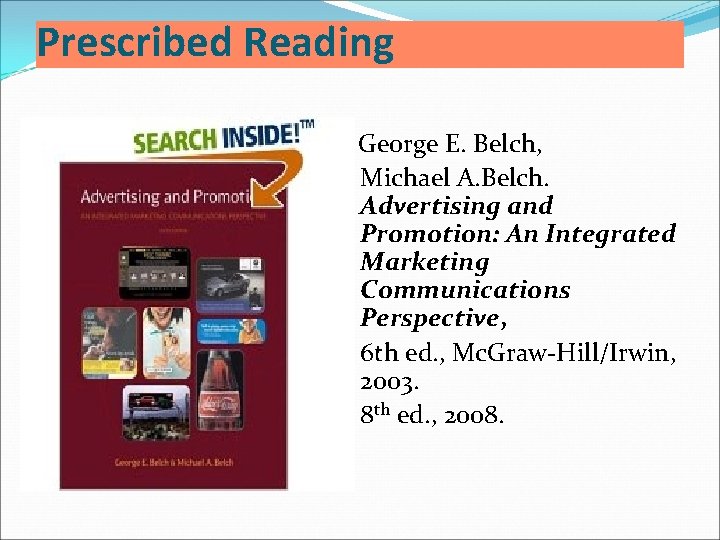
Prescribed Reading George E. Belch, Michael A. Belch. Advertising and Promotion: An Integrated Marketing Communications Perspective, 6 th ed. , Mc. Graw-Hill/Irwin, 2003. 8 th ed. , 2008.
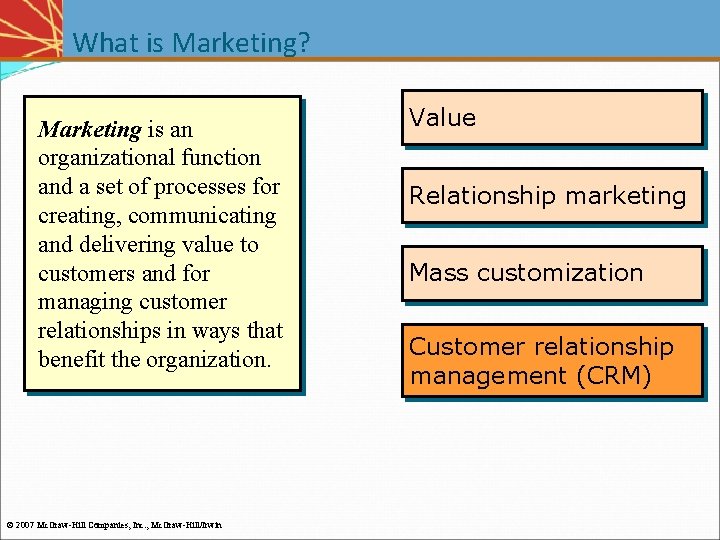
What is Marketing? Marketing is an organizational function and a set of processes for creating, communicating and delivering value to customers and for managing customer relationships in ways that benefit the organization. © 2007 Mc. Graw-Hill Companies, Inc. , Mc. Graw-Hill/Irwin Value Relationship marketing Mass customization Customer relationship management (CRM)
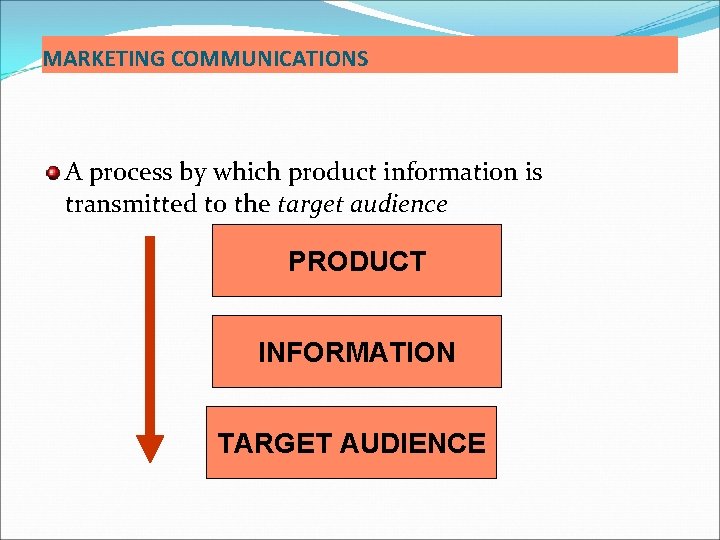
MARKETING COMMUNICATIONS A process by which product information is transmitted to the target audience PRODUCT INFORMATION TARGET AUDIENCE
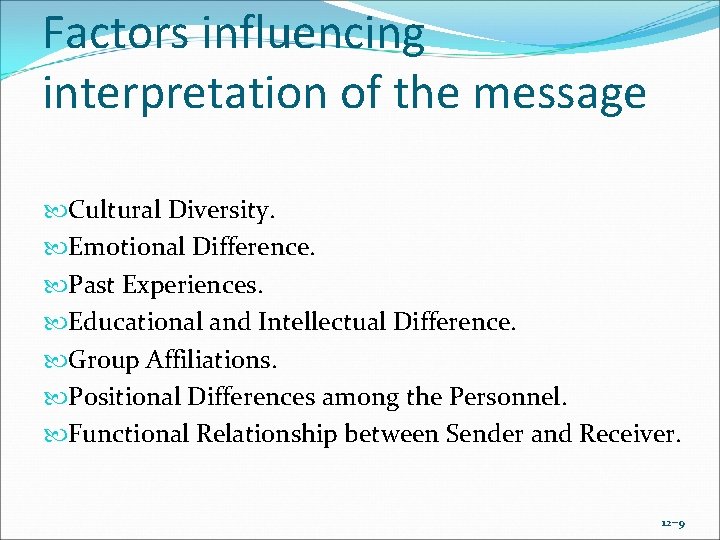
Factors influencing interpretation of the message Cultural Diversity. Emotional Difference. Past Experiences. Educational and Intellectual Difference. Group Affiliations. Positional Differences among the Personnel. Functional Relationship between Sender and Receiver. 12– 9
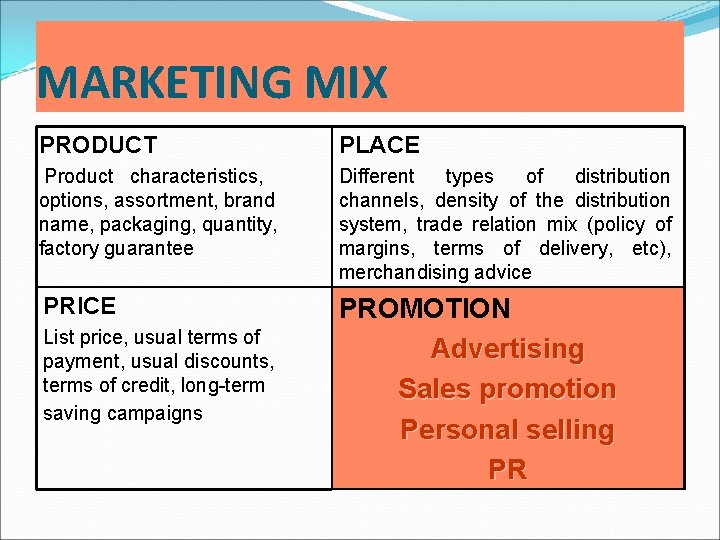
MARKETING MIX PRODUCT PLACE Product characteristics, options, assortment, brand name, packaging, quantity, factory guarantee Different types of distribution channels, density of the distribution system, trade relation mix (policy of margins, terms of delivery, etc), merchandising advice PRICE PROMOTION Advertising Sales promotion Personal selling PR List price, usual terms of payment, usual discounts, terms of credit, long-term saving campaigns
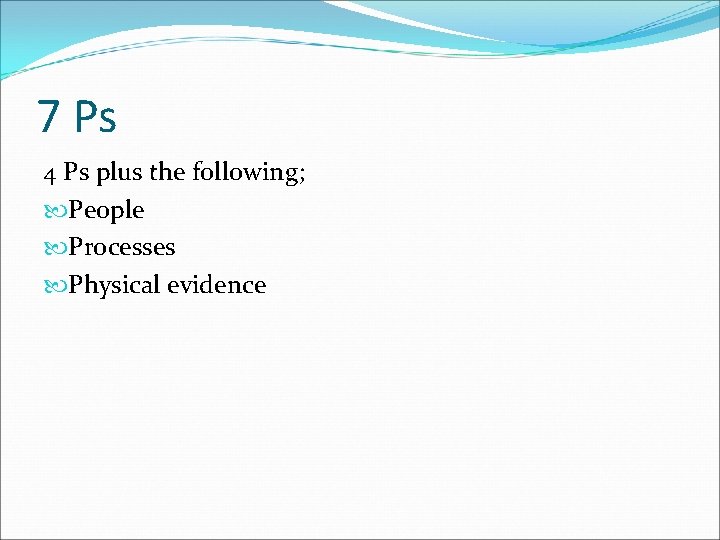
7 Ps 4 Ps plus the following; People Processes Physical evidence
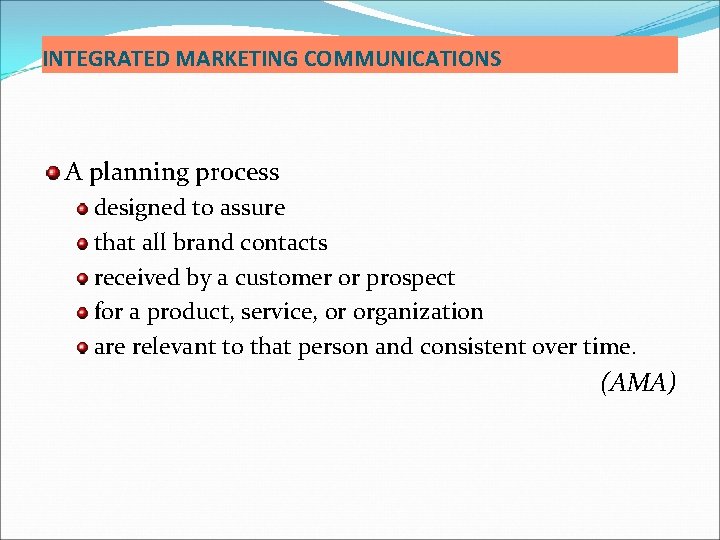
INTEGRATED MARKETING COMMUNICATIONS A planning process designed to assure that all brand contacts received by a customer or prospect for a product, service, or organization are relevant to that person and consistent over time. (AMA)
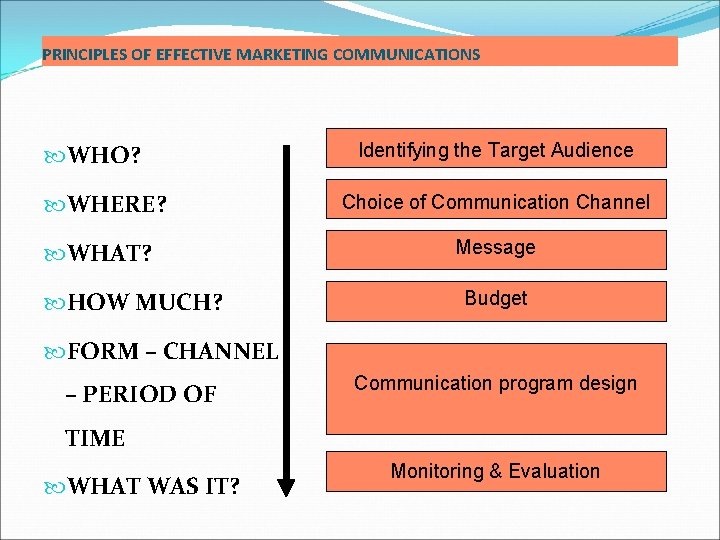
PRINCIPLES OF EFFECTIVE MARKETING COMMUNICATIONS WHO? WHERE? WHAT? HOW MUCH? Identifying the Target Audience Choice of Communication Channel Message Budget FORM – CHANNEL – PERIOD OF Communication program design TIME WHAT WAS IT? Monitoring & Evaluation
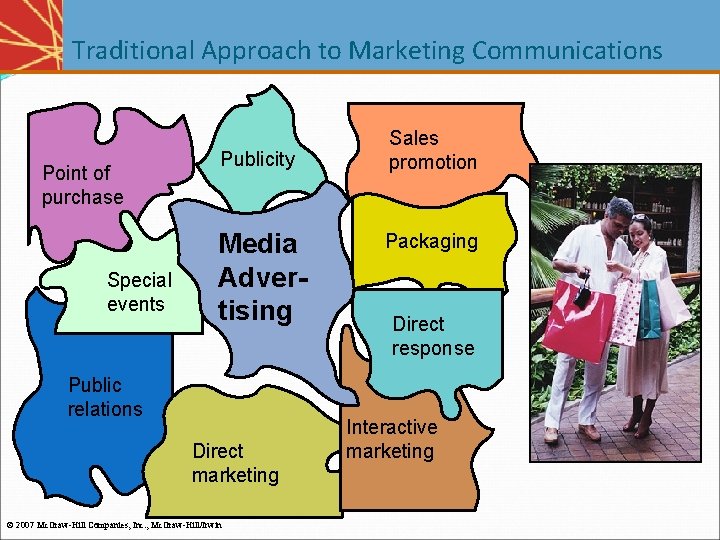
Traditional Approach to Marketing Communications Point of purchase Special events Publicity Media Advertising Public relations Direct marketing © 2007 Mc. Graw-Hill Companies, Inc. , Mc. Graw-Hill/Irwin Sales promotion Packaging Direct response Interactive marketing
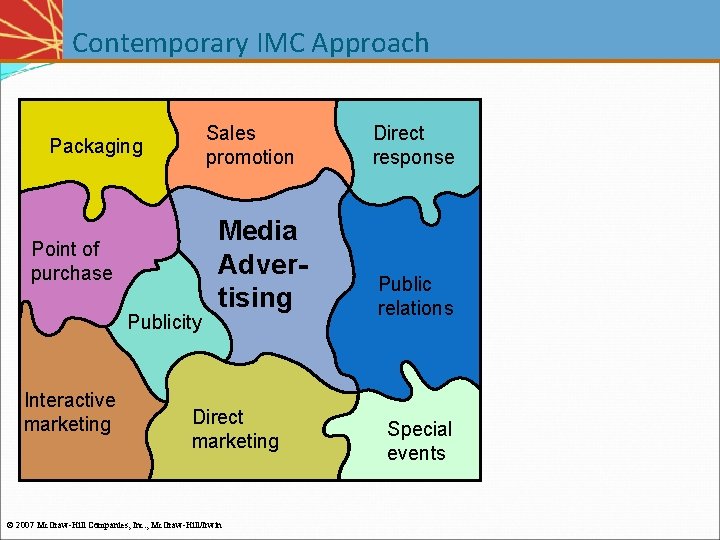
Contemporary IMC Approach Sales promotion Packaging Point of purchase Publicity Interactive marketing Media Advertising Direct marketing © 2007 Mc. Graw-Hill Companies, Inc. , Mc. Graw-Hill/Irwin Direct response Public relations Special events
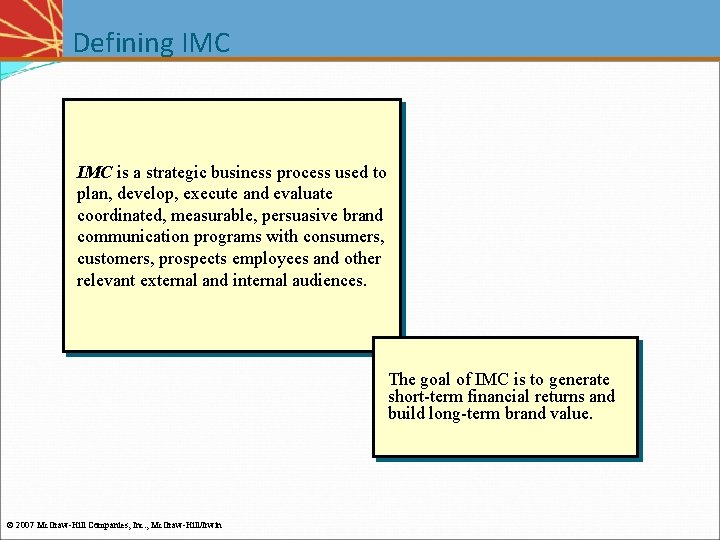
Defining IMC is a strategic business process used to plan, develop, execute and evaluate coordinated, measurable, persuasive brand communication programs with consumers, customers, prospects employees and other relevant external and internal audiences. The goal of IMC is to generate short-term financial returns and build long-term brand value. © 2007 Mc. Graw-Hill Companies, Inc. , Mc. Graw-Hill/Irwin
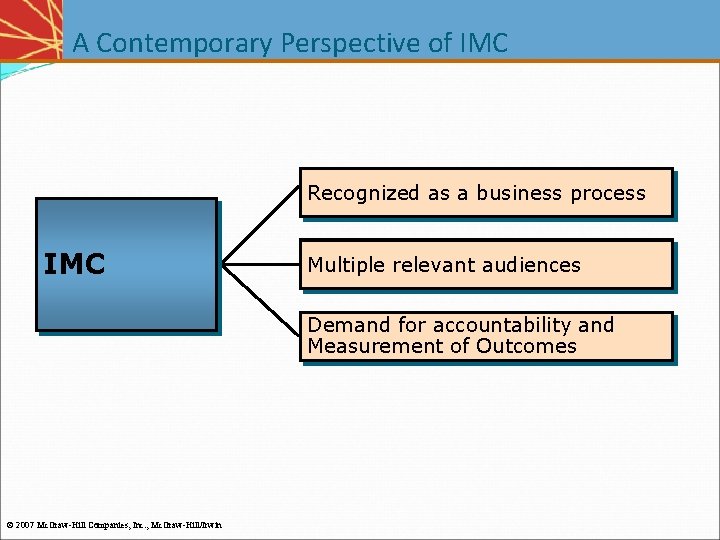
A Contemporary Perspective of IMC Recognized as a business process IMC Importance of relevant audience Multiple relevant audiences Demand for accountability and Demand for accountability Measurement of Outcomes © 2007 Mc. Graw-Hill Companies, Inc. , Mc. Graw-Hill/Irwin
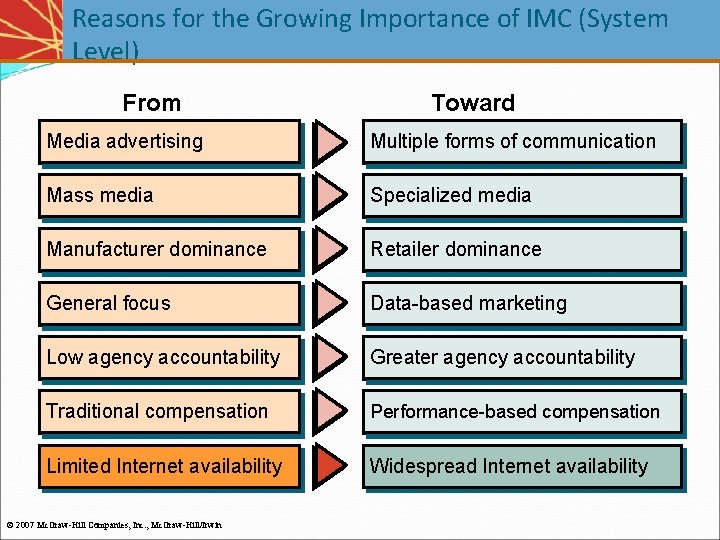
Reasons for the Growing Importance of IMC (System Level) From Toward Media advertising Multiple forms of communication Mass media Specialized media Manufacturer dominance Retailer dominance General focus Data-based marketing Low agency accountability Greater agency accountability Traditional compensation Performance-based compensation Limited Internet availability Widespread Internet availability © 2007 Mc. Graw-Hill Companies, Inc. , Mc. Graw-Hill/Irwin
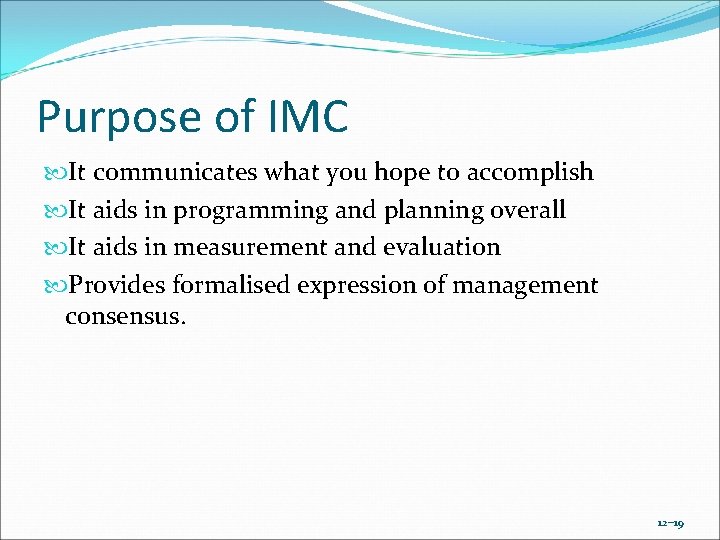
Purpose of IMC It communicates what you hope to accomplish It aids in programming and planning overall It aids in measurement and evaluation Provides formalised expression of management consensus. 12– 19
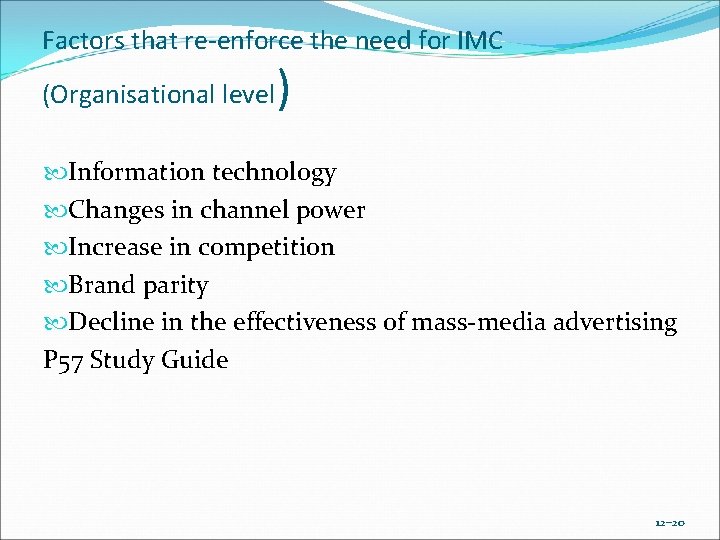
Factors that re-enforce the need for IMC (Organisational level ) Information technology Changes in channel power Increase in competition Brand parity Decline in the effectiveness of mass-media advertising P 57 Study Guide 12– 20
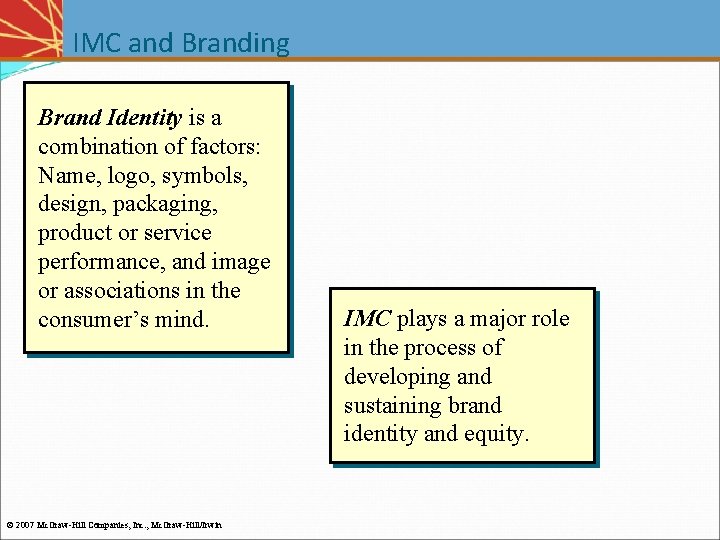
IMC and Branding Brand Identity is a combination of factors: Name, logo, symbols, design, packaging, product or service performance, and image or associations in the consumer’s mind. © 2007 Mc. Graw-Hill Companies, Inc. , Mc. Graw-Hill/Irwin IMC plays a major role in the process of developing and sustaining brand identity and equity.
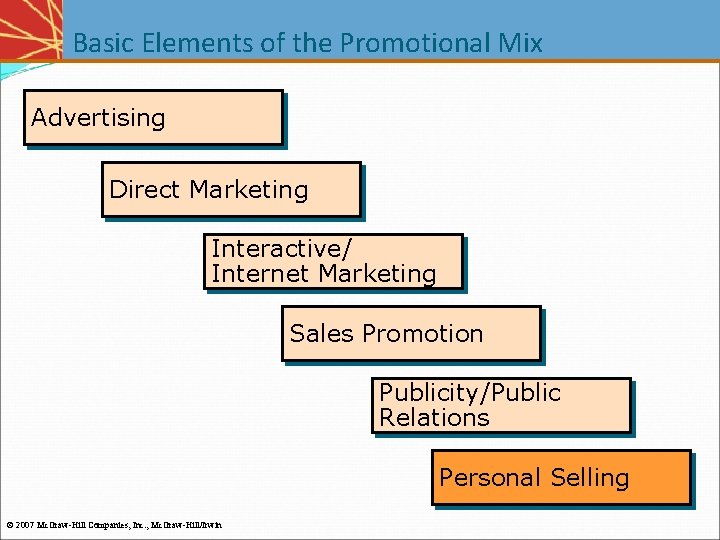
Basic Elements of the Promotional Mix Advertising Direct Marketing Interactive/ Internet Marketing Sales Promotion Publicity/Public Relations Personal Selling © 2007 Mc. Graw-Hill Companies, Inc. , Mc. Graw-Hill/Irwin
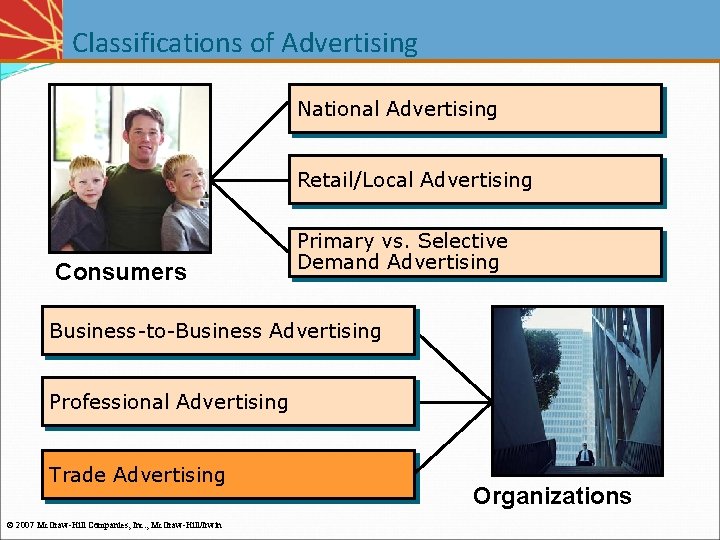
Classifications of Advertising National Advertising Retail/Local Advertising Consumers Primary vs. Selective Demand Advertising Business-to-Business Advertising Professional Advertising Trade Advertising © 2007 Mc. Graw-Hill Companies, Inc. , Mc. Graw-Hill/Irwin Organizations
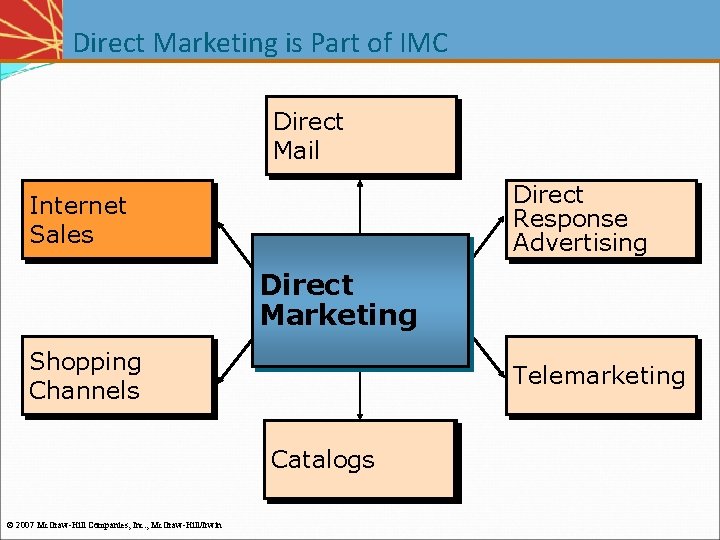
Direct Marketing is Part of IMC Direct Mail Direct Response Advertising Internet Sales Direct Marketing Shopping Channels Telemarketing Catalogs © 2007 Mc. Graw-Hill Companies, Inc. , Mc. Graw-Hill/Irwin
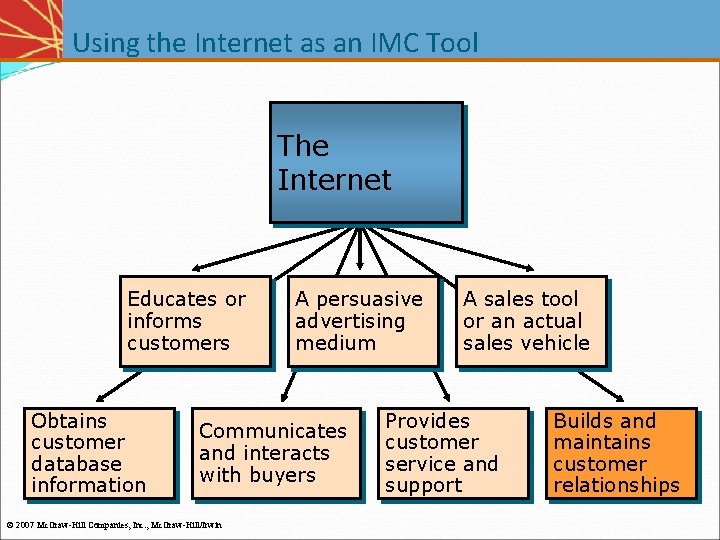
Using the Internet as an IMC Tool The Internet Educates or informs customers Obtains customer database information A persuasive advertising medium Communicates and interacts with buyers © 2007 Mc. Graw-Hill Companies, Inc. , Mc. Graw-Hill/Irwin A sales tool or an actual sales vehicle Provides customer service and support Builds and maintains customer relationships
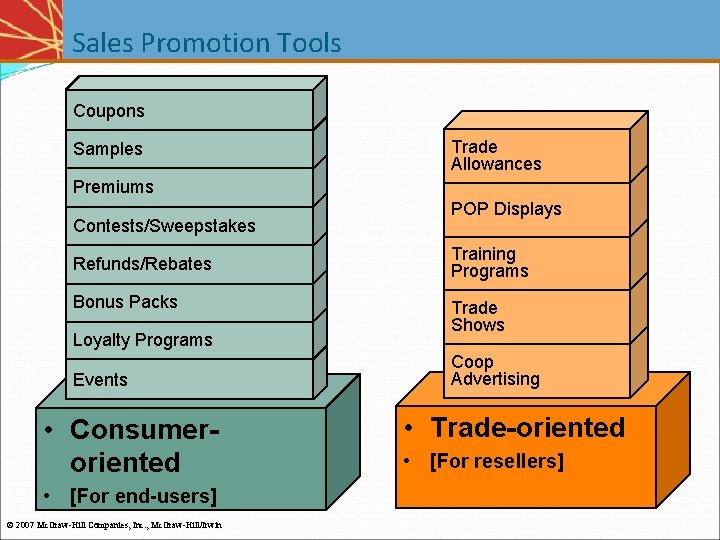
Sales Promotion Tools Coupons Samples Trade Allowances Premiums Contests/Sweepstakes Refunds/Rebates Bonus Packs Loyalty Programs Events • Consumeroriented • [For end-users] © 2007 Mc. Graw-Hill Companies, Inc. , Mc. Graw-Hill/Irwin POP Displays Training Programs Trade Shows Coop Advertising • Trade-oriented • [For resellers]
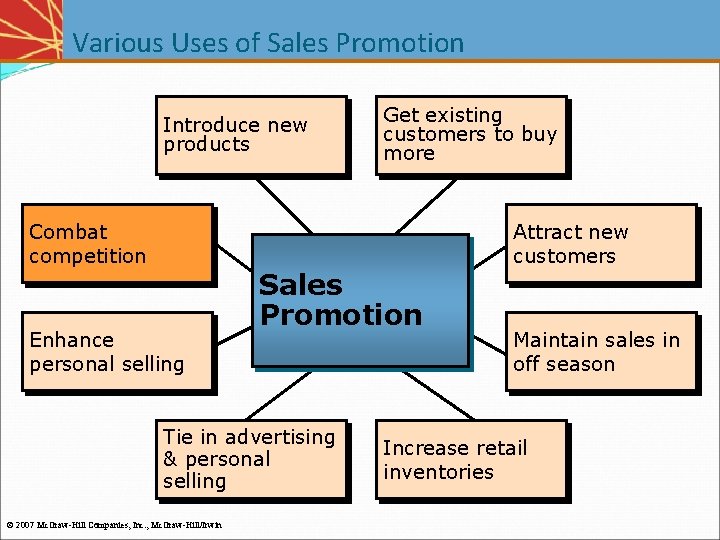
Various Uses of Sales Promotion Introduce new products Combat competition Enhance personal selling Sales Promotion Tie in advertising & personal selling © 2007 Mc. Graw-Hill Companies, Inc. , Mc. Graw-Hill/Irwin Get existing customers to buy more Attract new customers Maintain sales in off season Increase retail inventories
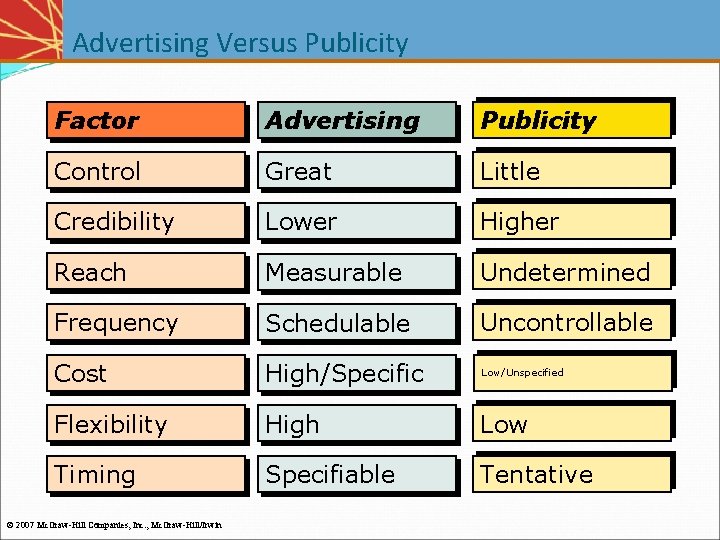
Advertising Versus Publicity Factor Advertising Publicity Control Great Little Credibility Lower Higher Reach Measurable Undetermined Frequency Schedulable Uncontrollable Cost High/Specific Low/Unspecified Flexibility High Low Timing Specifiable Tentative © 2007 Mc. Graw-Hill Companies, Inc. , Mc. Graw-Hill/Irwin
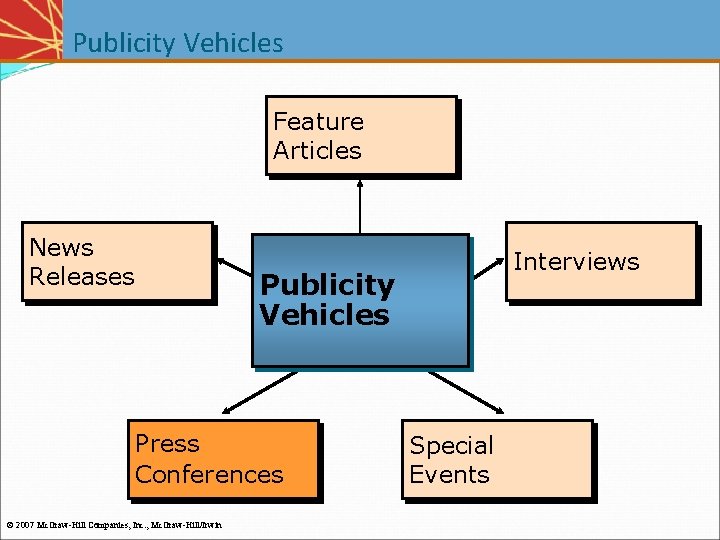
Publicity Vehicles Feature Articles News Releases Interviews Publicity Vehicles Press Conferences © 2007 Mc. Graw-Hill Companies, Inc. , Mc. Graw-Hill/Irwin Special Events
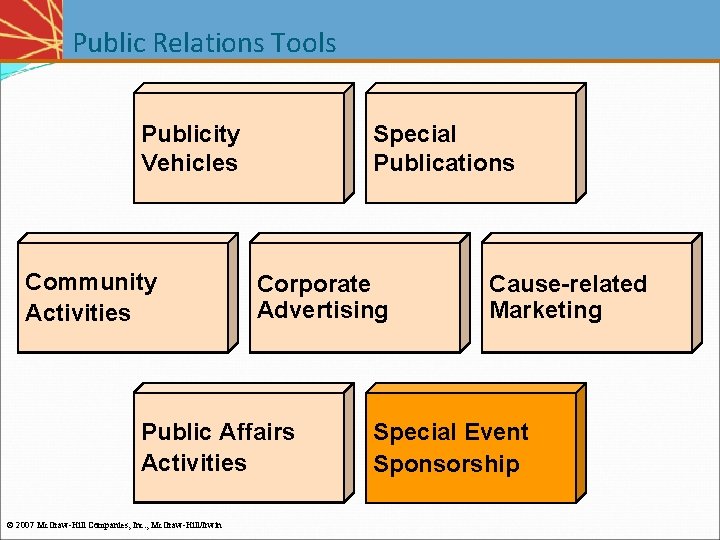
Public Relations Tools Publicity Vehicles Community Activities Special Publications Corporate Advertising Public Affairs Activities © 2007 Mc. Graw-Hill Companies, Inc. , Mc. Graw-Hill/Irwin Cause-related Marketing Special Event Sponsorship
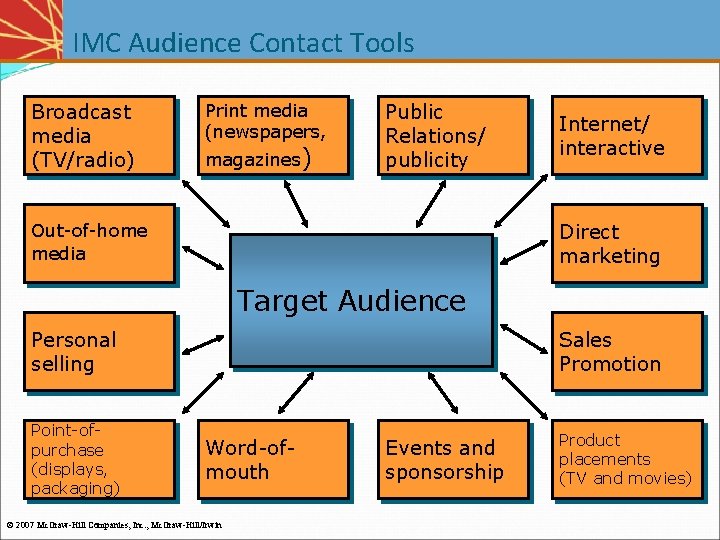
IMC Audience Contact Tools Broadcast media (TV/radio) Print media (newspapers, magazines) Public Relations/ publicity Out-of-home media Internet/ interactive Direct marketing Target Audience Personal selling Point-ofpurchase (displays, packaging) Sales Promotion Word-ofmouth © 2007 Mc. Graw-Hill Companies, Inc. , Mc. Graw-Hill/Irwin Events and sponsorship Product placements (TV and movies)
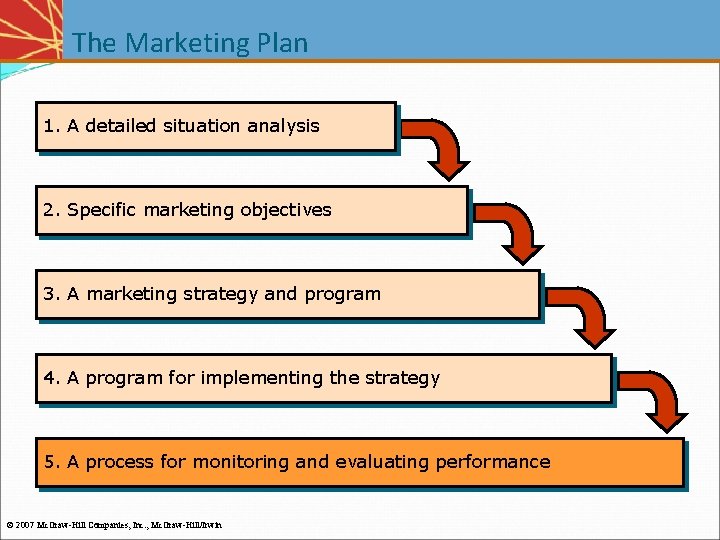
The Marketing Plan 1. A detailed situation analysis 2. Specific marketing objectives 3. A marketing strategy and program 4. A program for implementing the strategy 5. A process for monitoring and evaluating performance © 2007 Mc. Graw-Hill Companies, Inc. , Mc. Graw-Hill/Irwin
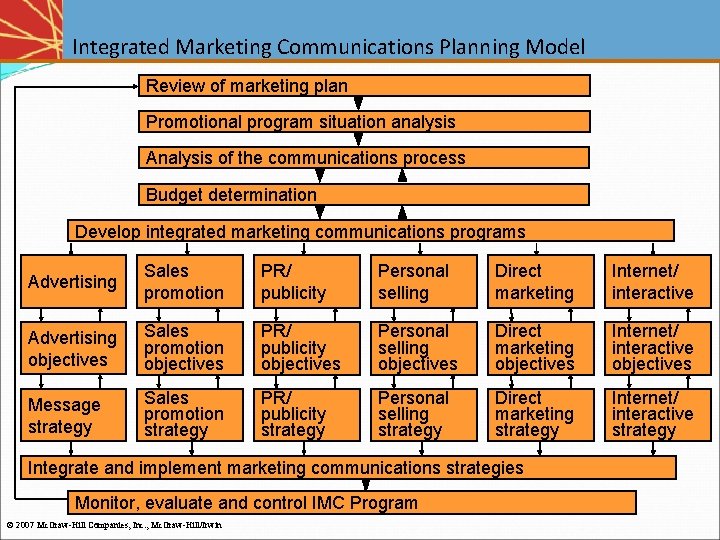
Integrated Marketing Communications Planning Model Review of marketing plan Promotional program situation analysis Analysis of the communications process Budget determination Develop integrated marketing communications programs Advertising Sales promotion PR/ publicity Personal selling Direct marketing Internet/ interactive Advertising objectives Sales promotion objectives PR/ publicity objectives Personal selling objectives Direct marketing objectives Internet/ interactive objectives Message strategy Sales promotion strategy PR/ publicity strategy Personal selling strategy Direct marketing strategy Internet/ interactive strategy Integrate and implement marketing communications strategies Monitor, evaluate and control IMC Program © 2007 Mc. Graw-Hill Companies, Inc. , Mc. Graw-Hill/Irwin
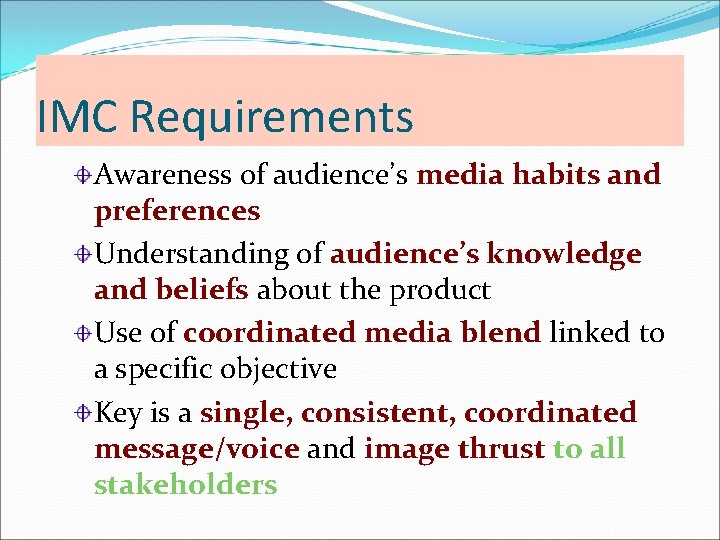
IMC Requirements Awareness of audience’s media habits and preferences Understanding of audience’s knowledge and beliefs about the product Use of coordinated media blend linked to a specific objective Key is a single, consistent, coordinated message/voice and image thrust to all stakeholders
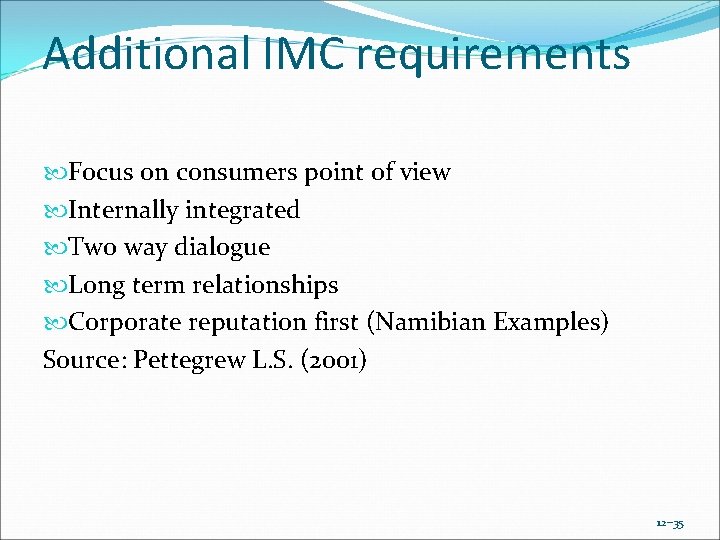
Additional IMC requirements Focus on consumers point of view Internally integrated Two way dialogue Long term relationships Corporate reputation first (Namibian Examples) Source: Pettegrew L. S. (2001) 12– 35
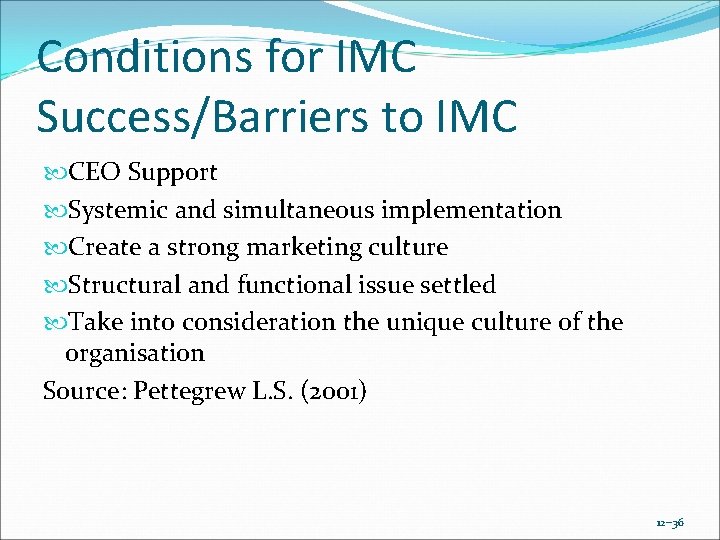
Conditions for IMC Success/Barriers to IMC CEO Support Systemic and simultaneous implementation Create a strong marketing culture Structural and functional issue settled Take into consideration the unique culture of the organisation Source: Pettegrew L. S. (2001) 12– 36
Other important considerations Segmentation Targeting Positioning
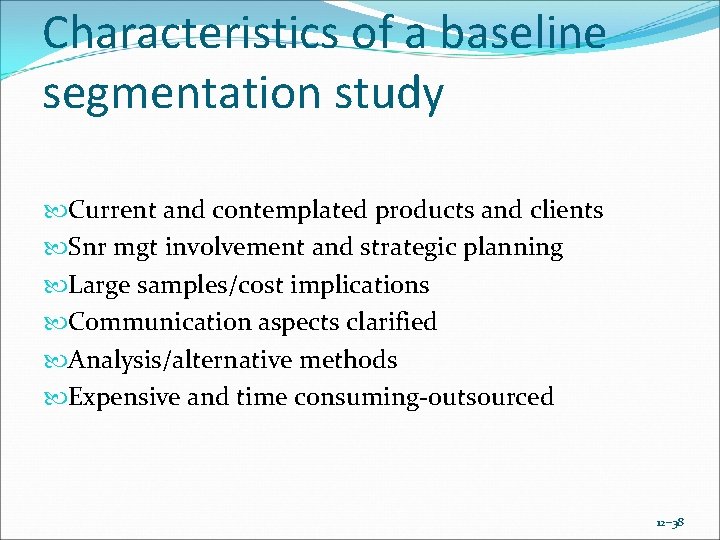
Characteristics of a baseline segmentation study Current and contemplated products and clients Snr mgt involvement and strategic planning Large samples/cost implications Communication aspects clarified Analysis/alternative methods Expensive and time consuming-outsourced 12– 38
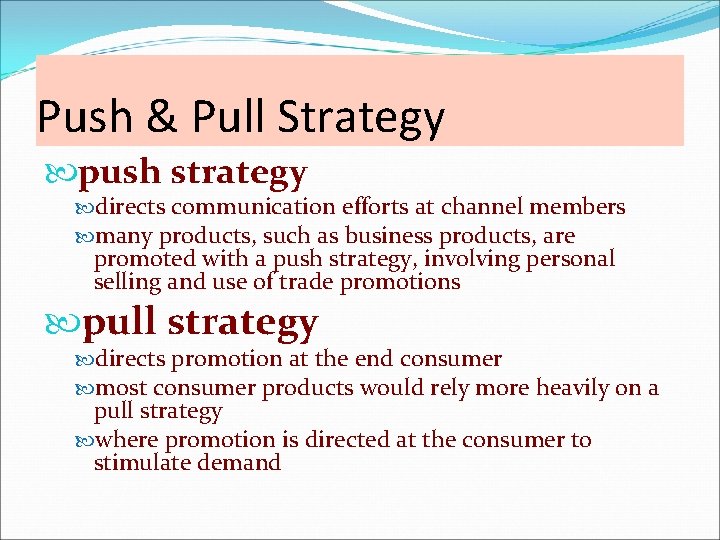
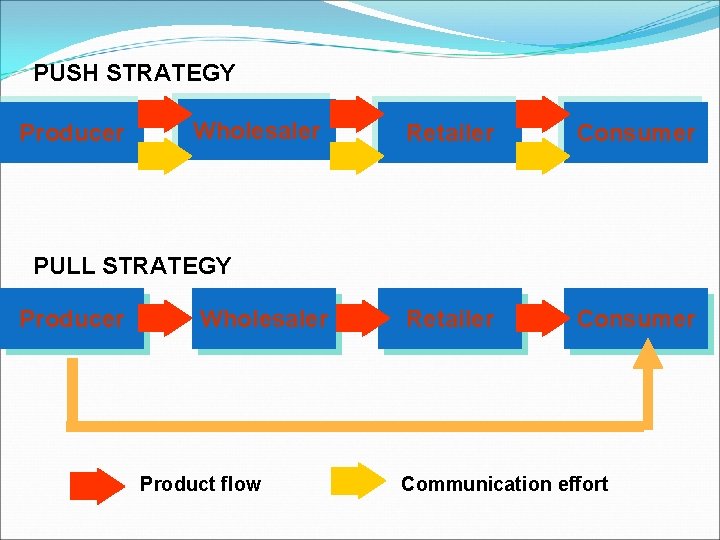
Push & Pull Strategy push strategy directs communication efforts at channel members many products, such as business products, are promoted with a push strategy, involving personal selling and use of trade promotions pull strategy directs promotion at the end consumer most consumer products would rely more heavily on a pull strategy where promotion is directed at the consumer to stimulate demand
PUSH STRATEGY Producer Wholesaler Retailer Consumer PULL STRATEGY Producer Wholesaler Product flow Communication effort
Benefits of IMC Synergy Better use of communication funds Balancing the ‘push’ and ‘pull’ strategies Improves the company’s ability to reach the right consumer at the right place at the right time with the right message
Factors in brand building Quality Well-balanced communication Positioning Credibility Long term perspective Internal marketing Repositioning P 44 Study Guide 12– 42
Emerging trends in Consumer Behaviour Information super highway Use of the internet/social platforms Focus on health fitness and beauty Shifting roles of males and females in society Telecommuting and the Office Home Personalized economy-mass communication Migration Youthful market P 73 Study Guide 12– 43
DAGMAR: Defining advertising goals for measured advertising response Measures effectiveness of advertising How marketers might use DAGMAR ü Objective setting Ø Measure Ø Target Ø Bench mark Ø Timing/time period ü Evaluation P 95 Study Guide 12– 44
DAGMAR: Limitations Based hierarchy of effects model instead of appropriate response model (situational) Uses other quantifiable measures for effectiveness instead of sales goals (investment? ? ) Only for large companies/budgets Restrains creativity-emphasis on numbers Ignores issue of relationships Does not take into consideration customer needs. P 96 Study Guide 12– 45
Thank You and Best Wishes Please refer to the Study Guide, Prescribed and recommended texts for details dhlahla@gmail. com 12– 46