
MLA Formatting English 112 K Beam General Notes
MLA Formatting English 112 K. Beam
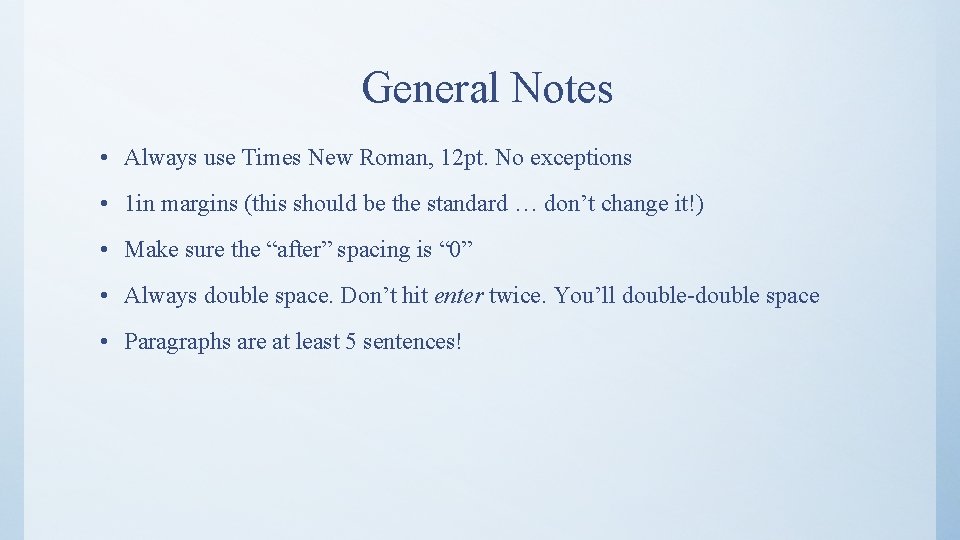
General Notes • Always use Times New Roman, 12 pt. No exceptions • 1 in margins (this should be the standard … don’t change it!) • Make sure the “after” spacing is “ 0” • Always double space. Don’t hit enter twice. You’ll double-double space • Paragraphs are at least 5 sentences!
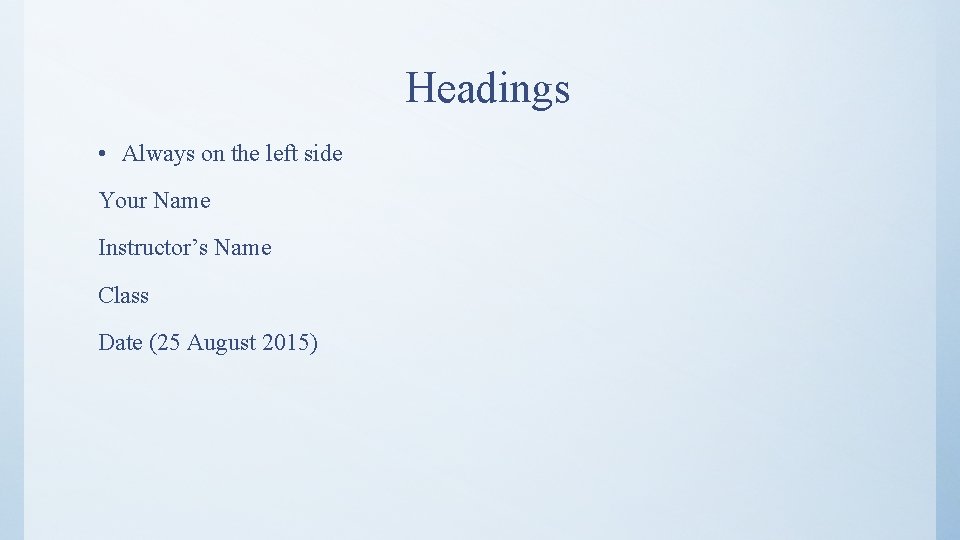
Headings • Always on the left side Your Name Instructor’s Name Class Date (25 August 2015)
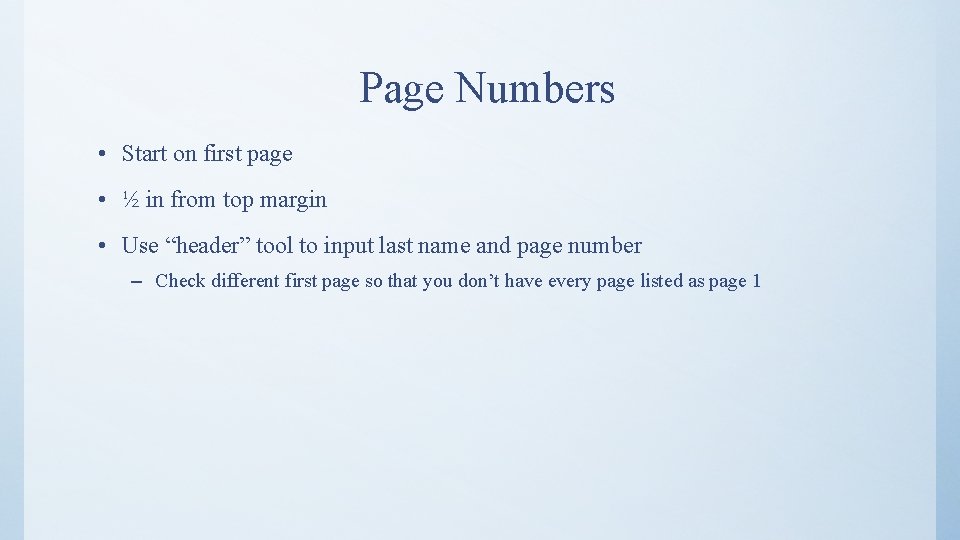
Page Numbers • Start on first page • ½ in from top margin • Use “header” tool to input last name and page number – Check different first page so that you don’t have every page listed as page 1
Title • Centered • No underlining, bold, punctuation, quotations, fancy stuff • Don’t use the prompt as your title! Create your own name – it’s your baby
Introduction • You should intro the author and text along with basic information within this paragraph. • Give background information that leads UP TO your thesis. • The last sentence is your THESIS. – This is something YOU come up with. NOT a quote or facts. Create an opinion that you will argue.
Body Paragraphs • Start every paragraph with a topic sentence. This is a claim that should relate to your thesis. • Include a transition phrase to connect previous ideas to the one you’re starting. This helps your reader move through your paper logically.
Body Paragraphs • CONCRETE EVIDENCE • This means page numbers and direct quotes. Ambiguous evidence will lose your points and you’ll also lose your reader and your argument.

Body Paragraphs • Analyze your evidence. This is your own words! • How does this evidence support your topic sentence? (Which ultimately leads back to your thesis!!) • Avoid summary. Analysis = good, Summary = bad. Sometimes plot details are necessary to make a point, but avoid extensive summaries and do NOT let this substitute for your analysis. • Answer WHY it matters not WHAT it is.
Body Paragraphs • End with your strongest piece of evidence. – Intro/Topic Sentence – 2 nd strongest evidence – 3 rd strongest evidence – 1 st strongest evidence – Conclusion • Have a concluding sentence that wraps everything up and reminds the reader of the topic sentence.
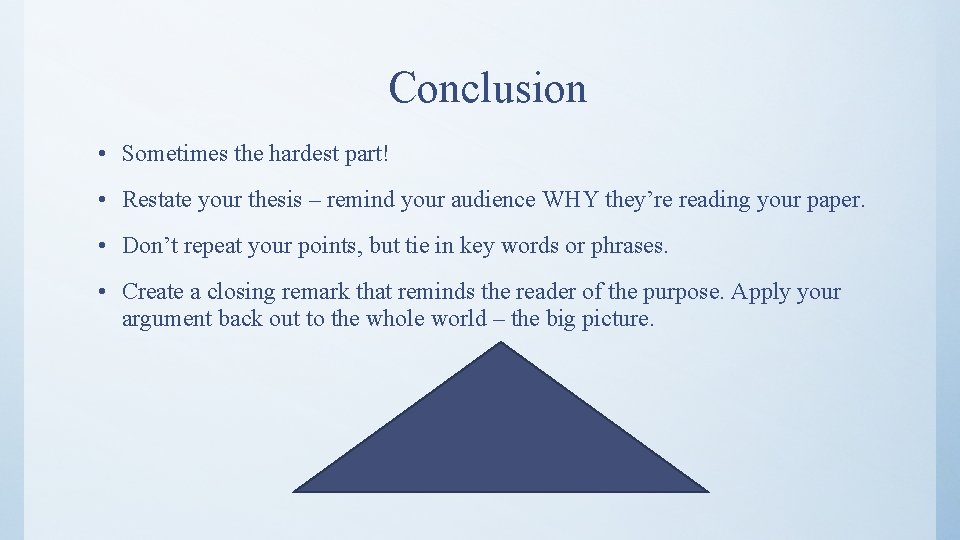
Conclusion • Sometimes the hardest part! • Restate your thesis – remind your audience WHY they’re reading your paper. • Don’t repeat your points, but tie in key words or phrases. • Create a closing remark that reminds the reader of the purpose. Apply your argument back out to the whole world – the big picture.
- Slides: 11