
MLA ATO Development The Plymouth Experience Presented by

MLA / ATO Development: The Plymouth Experience Presented by Gill Jones BSc, CSci, FIBMS Department of Microbiology, Plymouth Hospitals NHS Trust. 01/11/2005 1
Order of Events • Reasons for change in working practices • Development of training pathways for ATO staff • LATA NVQ overview • Current situation • Take – home messages 2
Reasons for change in working practices 1998/9 PHLS South West initiated survey “Recruitment and Retention of MLAs” Supporting Facts: • turnover – 29 -100% (mean 62%) • sickness – increased rates (turnover associated) • accident occurrence turnover, shortages, sickness 3
Survey cont. Recruitment and Retention of MLAs Objectives: • Revise pay structure • Identify needs and expectations • Introduce national qualification Recommendations: • Regrade as ATOs • Access to enhanced salary points (e. g. SATO, MTO 1, MTO 2) • Introduction of NVQs e. g. LATA * (Level 3) * Laboratory and Technical Activities 4
Moving on……. 2000: - All Pathology MLAs regraded as ATOs 2001: - 5 ATOs commenced NVQ training 2003: - 2 Senior BMS staff became NVQ Assessors - First wave of ATOs completed LATA NVQ level 3 - First qualified ATOs appointed SATO status 5
One step further……. Jan. 2003: Team of 3 BMS appointed “To Review the Training of Pathology ATO Staff” Objectives • To provide a clearly defined training pathway for developing and progressing ATO staff • To provide common ATO training programmes and records 6
Outcomes: Pathways for Progression of ATO Staff I. Routes of progression to BMS level. Routes identified: • • • 2 Science “A” Levels (one must be Chemistry / Biology) Chemistry “A” or “AS” Level Access to Higher Education (Science) - currently £ 361 (HNC in Laboratory Technology - Truro) LATA NVQ Level 3 - currently £ 320 • Access to BMS BSc verified by University West of England • Funding via NHS NVQ (< £ 550) or NHS ILA (£ 150) 7
Outcomes: Pathways for Progression of ATO Staff II. Routes of progression to MTO level. • Some ATOs either do not want, or lack academic skills, to progress to BMS level. • SATO, MTO 1 and MTO 2 grades redefined using Professional and Technical Staffs B Whitley Council (PTB) guidelines. Alternative career structure provided for Pathology support staff. 8
Outcomes: Training Programmes & Records Common Training Programmes & Records for: • Trust and Departmental Induction • Competency Training • Statutory Update Essential Training • Staff appraisal • Monthly Feedback Reports on Performance • Common JDs 9
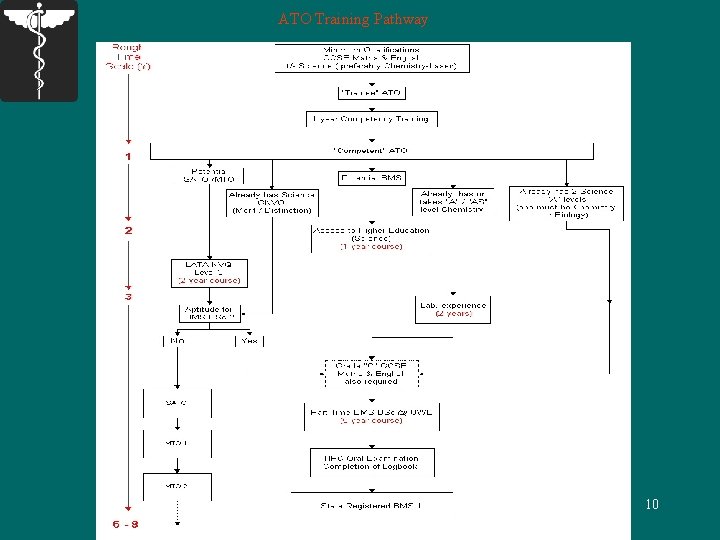
ATO Training Pathway 10
Preferred routes of progression Access to Higher Education (Science) • Best suited for ATOs that demonstrate clear potential and commitment to become a BMS and lack science A Level(s) LATA NVQ Level 3 • Best suited for ATOs that have developed and demonstrated real progress during competency training 11
Outcomes: ……. . Summarised • A clearly defined training pathway was developed for ATO staff: ATO SATO MTO (via LATA NVQ 3) Trainee BMS (via Access Course) • It provided the Plymouth Pathology Directorate with a stable ATO workforce. • Electronic ATO programmes and records developed for all disciplines. • Managers advised to consider laboratory needs at recruitment 12 and selection stage.
Example of pathway in practice: In Microbiology: 9 ATOs 3 SATO MTO 2 1 BMS (First Class BMS BSc) Trainee BMS 1 BMS 2 1 studying Access to Higher Education (Science) Ongoing 2 about to commence LATA NVQ 3 13

What are NVQs? • National Vocational Qualifications • Designed to assess competence in the workplace • Individuals must demonstrate: technical competence underpinning knowledge 14
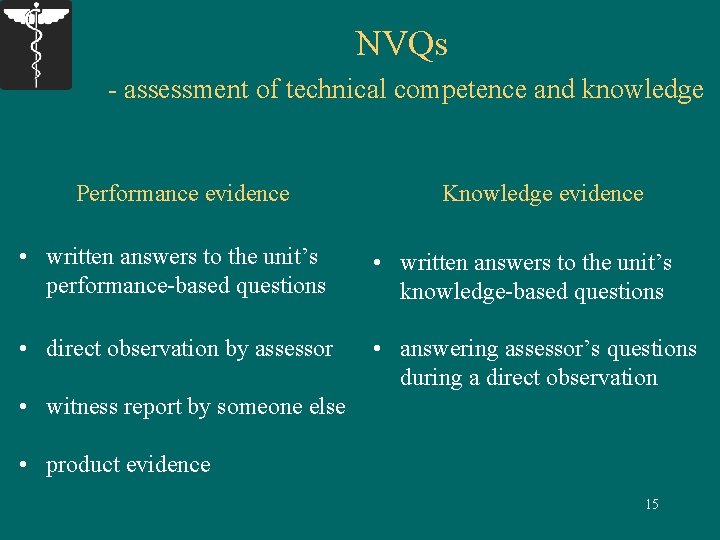
NVQs - assessment of technical competence and knowledge Performance evidence Knowledge evidence • written answers to the unit’s performance-based questions • written answers to the unit’s knowledge-based questions • direct observation by assessor • answering assessor’s questions during a direct observation • witness report by someone else • product evidence 15
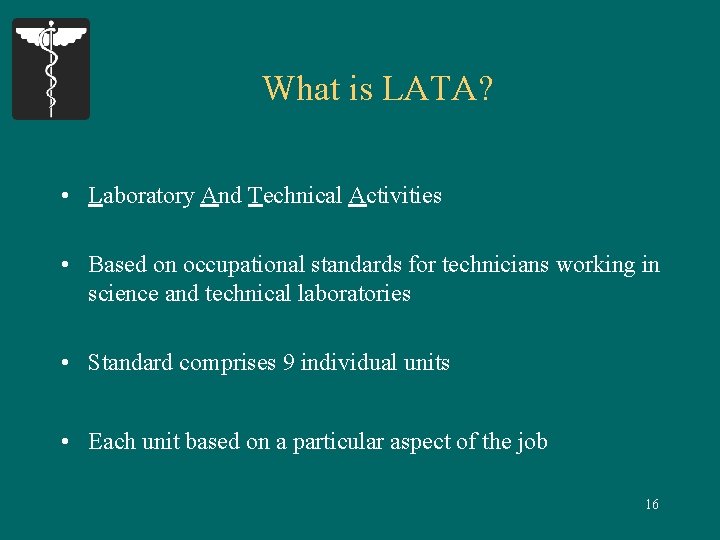
What is LATA? • Laboratory And Technical Activities • Based on occupational standards for technicians working in science and technical laboratories • Standard comprises 9 individual units • Each unit based on a particular aspect of the job 16
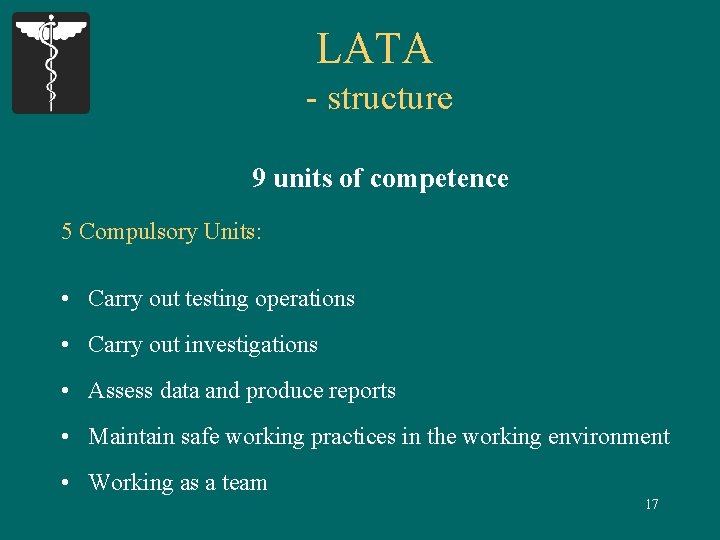
LATA - structure 9 units of competence 5 Compulsory Units: • Carry out testing operations • Carry out investigations • Assess data and produce reports • Maintain safe working practices in the working environment • Working as a team 17
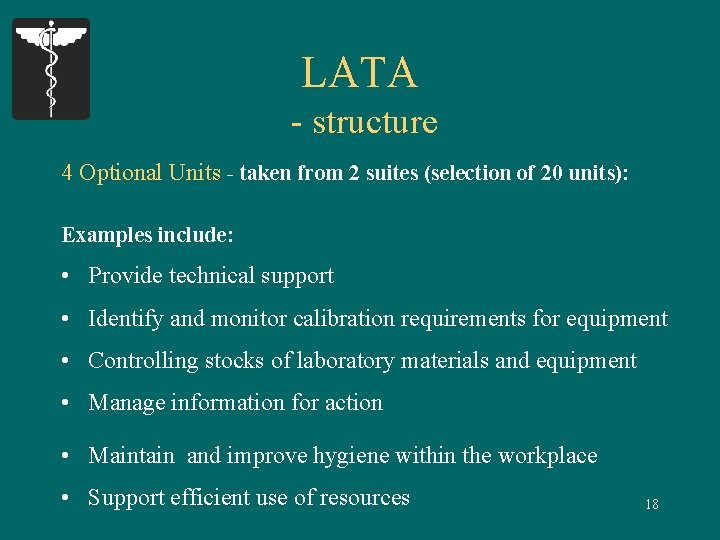
LATA - structure 4 Optional Units - taken from 2 suites (selection of 20 units): Examples include: • Provide technical support • Identify and monitor calibration requirements for equipment • Controlling stocks of laboratory materials and equipment • Manage information for action • Maintain and improve hygiene within the workplace • Support efficient use of resources 18
LATA Overview Laboratory & Technical Activities NVQ Level 3 (Course Code SH LOA) • Course provider • Plymouth Coll. of Further Education (CFE) • Awarding body • Edexcel • Entry requirem’ts • GCSEs (english, maths) >1 yr lab. experience • Cost • £ 320 • Funding • SHA via Hospital’s Training Dept. (£ 550*) * £ 250 in 2 instalments to Assessor’s lab • Course length • <3 years (18 months realistic target)19
LATA Overview Laboratory & Technical Activities NVQ Level 3 (Course Code SH LOA) • Laboratory Time • ½ day every 2 wks recomm; ½ day every 2 months more realistic. Competence assess. @ work, paperwork in own time. • Training/Assessing • Planning, overseeing, witnessing to be performed by assessor, trainer, supervisor or colleague. • Access to BMS BSc • UWE has agreed to accept students with this NVQ. Laboratory to decide whether appropriate. 20
LATA – Advantages & Disadvantages: (All time related) Candidate • Reluctance to sacrifice his/her own time. (1 -2 hrs per week) • 3 -4 hours laboratory time per unit for meeting with Assessor and follow-up sessions with the Training Officer (T. O) • 3 -4 hours laboratory time per unit for meeting with Assessor and follow-up sessions with the Candidate. Laboratory • Minimal – approx. ½ day every 2 months per Candidate + ½ day 21 per T. O.
LATA – Advantages & Disadvantages Advantages: • Encourages MLAs / ATOs to look beyond ‘just doing the job’. • Increases awareness / knowledge - reflected in monthly feedback sheets on performance at bench level. • Feeling of self worth. • Other ATOs eager to start. • Backs up GLP • MLAs / ATOs gain nationally recognised qualification. • ATOs @ Plymouth need NVQ 3 or equiv. to become SATO. (NOTE that an NVQ 3 does not automatically entitle SATO status) 22
And still there’s more…. Recent developments • Clinical Laboratory Support NVQ Level 2 • Foundation degrees • National Occupational Standards IBMS Gazette / Website keeps us informed 23

The way forward? …. . it’s your choice 24

We were quite happy with ours! 25
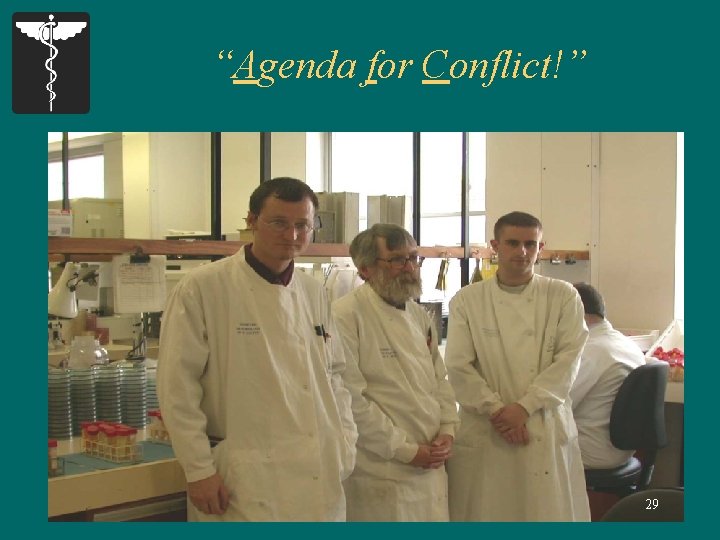
And then there was…. . Agenda for Change • ATOs at Plymouth have been placed onto Band 2. • Other Healthcare staff on Band 2 include porters and cleaners. • MLAs / ATOs in neighbouring hospitals have either been banded, or are likely to be banded on 3. • Af. C has given staff more annual leave but has not funded for the extra staff needed to cover absentees. • The laboratory is often short staffed leaving those left on duty to struggle through an increasing workload. 26
Agenda for Change • Our ATOs are angry and disappointed; they have lost their feeling of self worth. • They have started to look elsewhere for employment. • 67% of ATO staff (equiv. to 40% support staff) have applied, or are about to apply for other jobs. • Other staff also feel dejected. • It has literally taken just a few months to undo 7 years 27 of progress.
Af. C • AFC was viewed by healthcare workers as an opportunity for achieving parity of pay. • Staff would be rewarded fairly for their knowledge, skills and responsibilties irrespective of profession. • This has not happened. ------ - - • Given time, the resultant disparity in pay for many staff will no doubt be resolved. • For the time being, Af. C appears to stand for…. . 28
“Agenda for Conflict!” 29
Take home messages • Be proactive! • Be prepared to change – but only if it’s a real improvement. • Staff seem to respond well rather than vote with their feet – well, at least they used to! • …. and even when you think that you have got it sorted, be prepared to start again. 30

Thank you for listening! Any Questions? gillian. jones@phnt. swest. nhs. uk 31
- Slides: 31