
Mixturesa blend of two or more 1 substances
Mixtures-a blend of two or more 1 substances n When we classified matter, we learned that mixtures can be classified as: Homogeneous (visually the same throughout) or Heterogeneous visually different throughout) n What are some examples of each of these types of mixtures?
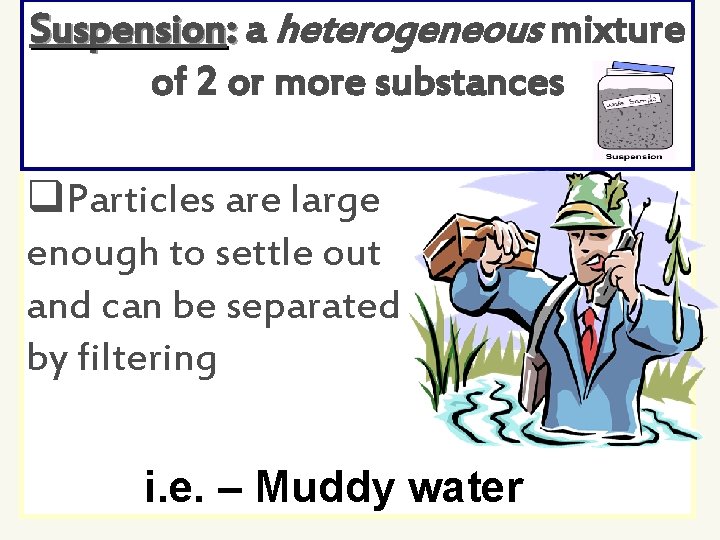
2 Suspension: a heterogeneous mixture of 2 or more substances q. Particles are large enough to settle out and can be separated by filtering i. e. – Muddy water
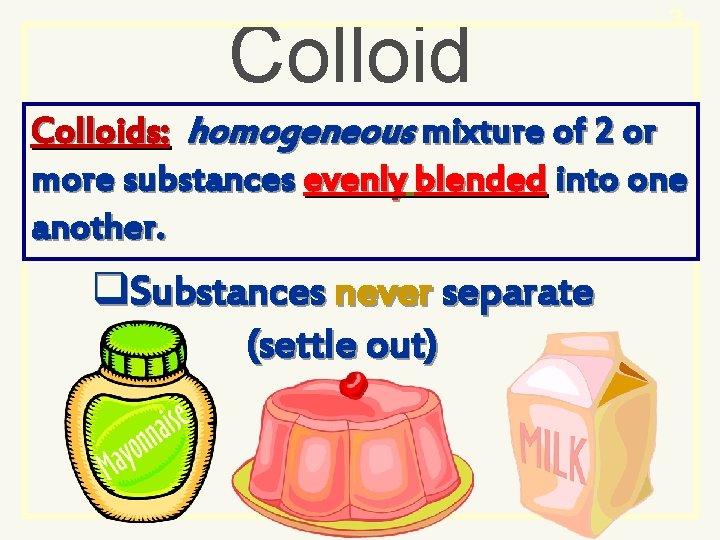
Colloid 3 Colloids: homogeneous mixture of 2 or more substances evenly blended into one another. q. Substances never separate (settle out)
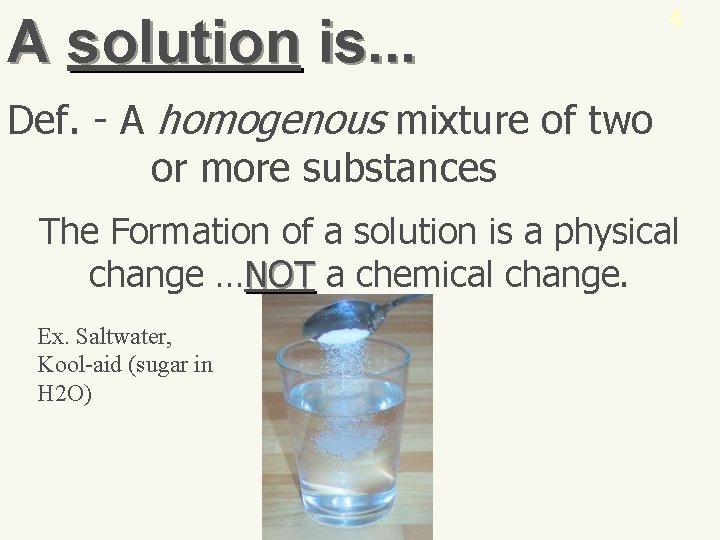
A solution is. . . 4 Def. - A homogenous mixture of two or more substances The Formation of a solution is a physical change …NOT a chemical change. Ex. Saltwater, Kool-aid (sugar in H 2 O)
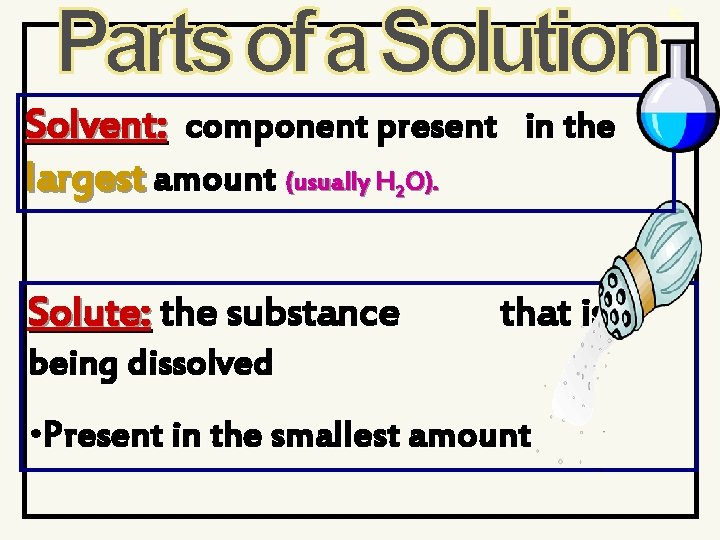
5 Solvent: component present in the largest amount (usually H 2 O). Solute: the substance that is being dissolved • Present in the smallest amount
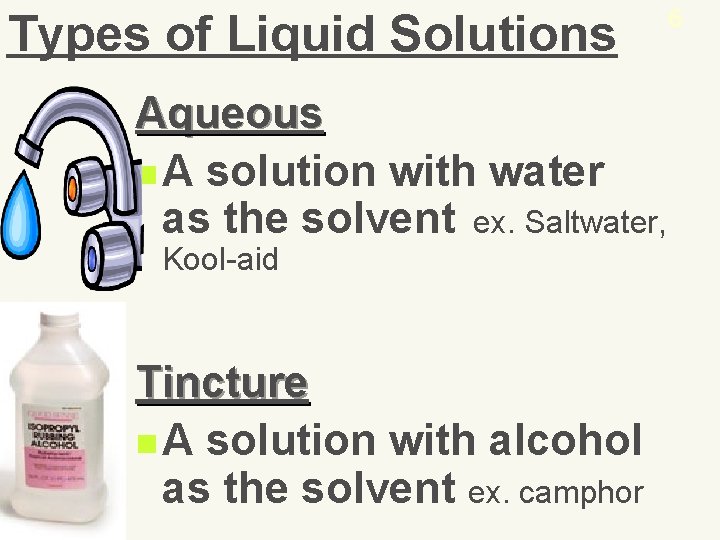
Types of Liquid Solutions Aqueous n A solution with water as the solvent ex. Saltwater, Kool-aid Tincture n A solution with alcohol as the solvent ex. camphor 6
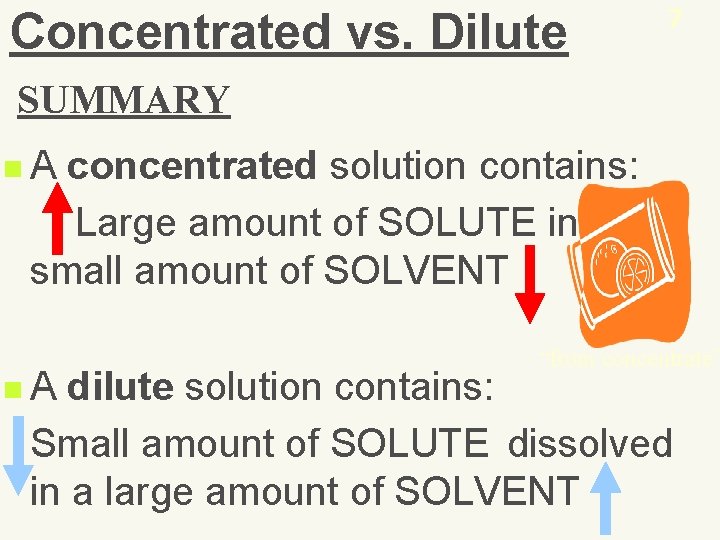
Concentrated vs. Dilute 7 SUMMARY n. A concentrated solution contains: Large amount of SOLUTE in a small amount of SOLVENT n. A “from concentrate” dilute solution contains: Small amount of SOLUTE dissolved in a large amount of SOLVENT
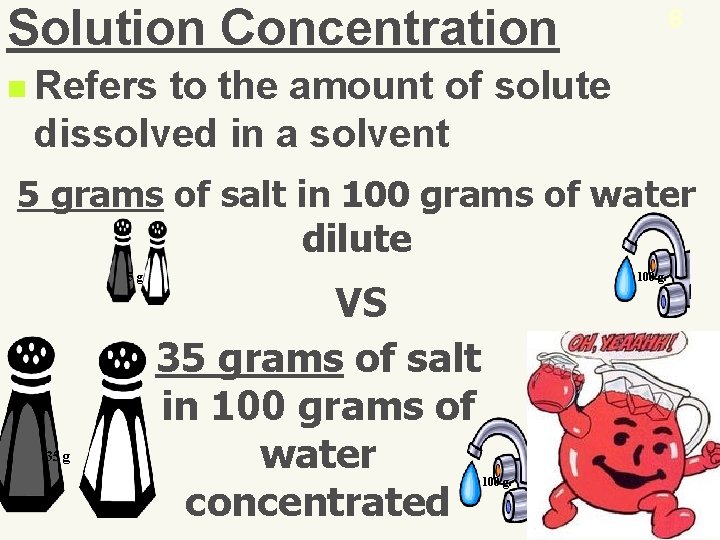
Solution Concentration 8 n Refers to the amount of solute dissolved in a solvent 5 grams of salt in 100 grams of water dilute 5 g 35 g VS 35 grams of salt in 100 grams of water concentrated 100 g.
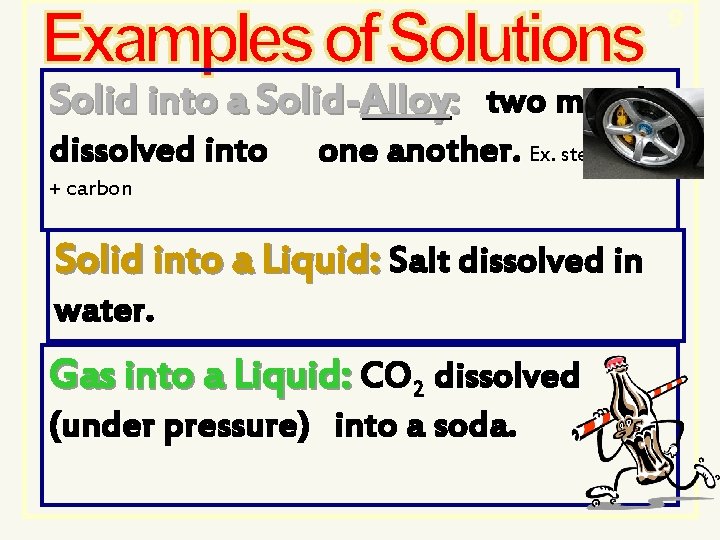
9 Solid into a Solid-Alloy: two metals dissolved into one another. Ex. steel= iron + carbon Solid into a Liquid: Salt dissolved in water. Gas into a Liquid: CO 2 dissolved (under pressure) into a soda.
Dissolving 10 n the process of creating a solution through the mixing of solute and solvent particles n Can a solute be dissolved by any solvent? n NO!!
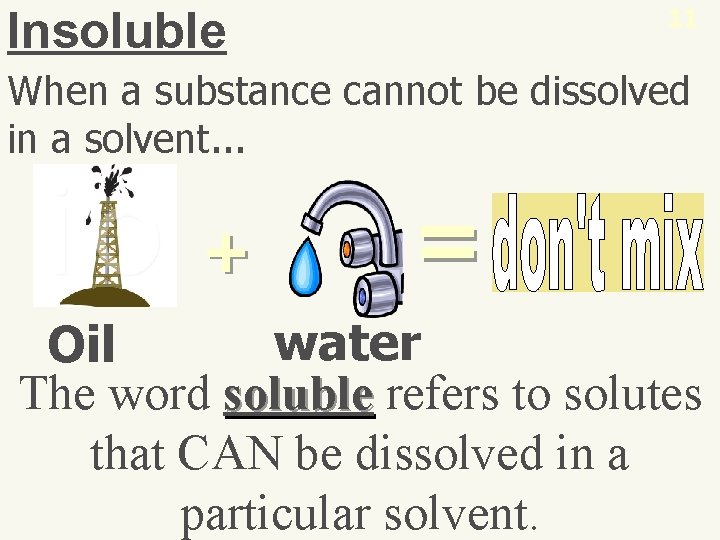
Insoluble 11 When a substance cannot be dissolved in a solvent. . . + = water Oil The word soluble refers to solutes that CAN be dissolved in a particular solvent.
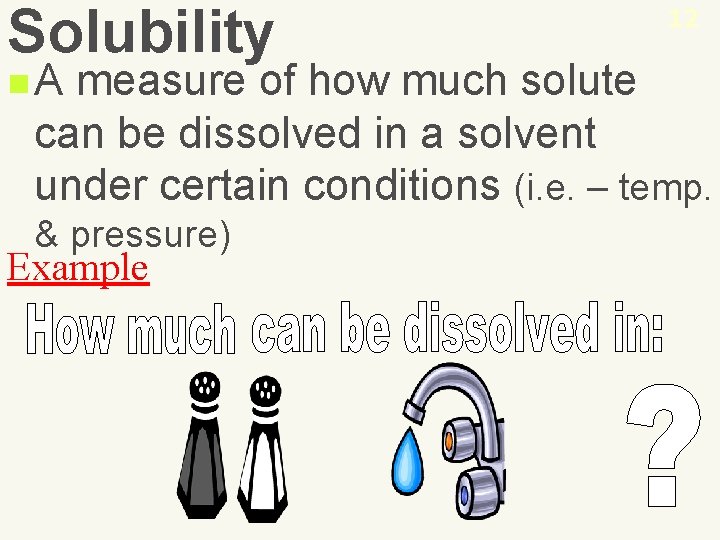
Solubility n. A 12 measure of how much solute can be dissolved in a solvent under certain conditions (i. e. – temp. & pressure) Example
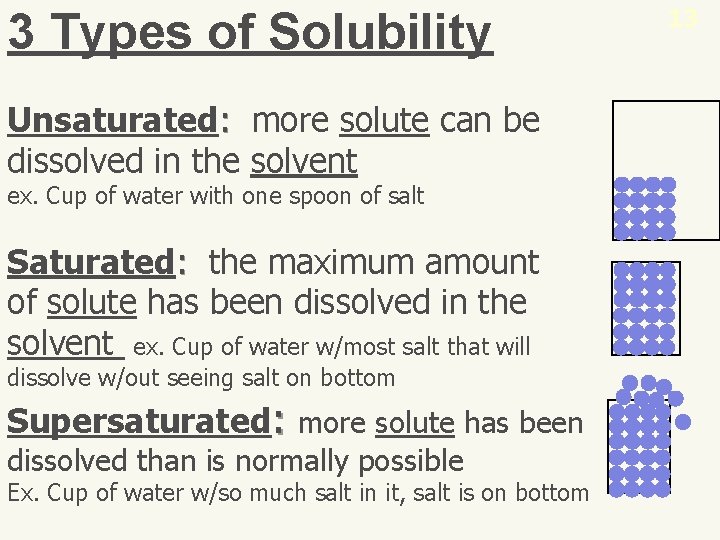
3 Types of Solubility Unsaturated: more solute can be dissolved in the solvent ex. Cup of water with one spoon of salt Saturated: the maximum amount of solute has been dissolved in the solvent ex. Cup of water w/most salt that will dissolve w/out seeing salt on bottom Supersaturated: more solute has been dissolved than is normally possible Ex. Cup of water w/so much salt in it, salt is on bottom 13
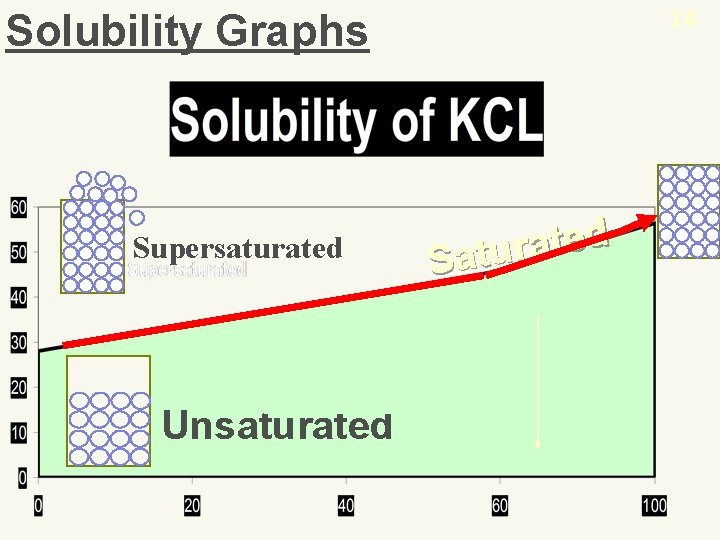
14 Solubility Graphs Supersaturated Unsaturated d e t a r Satu
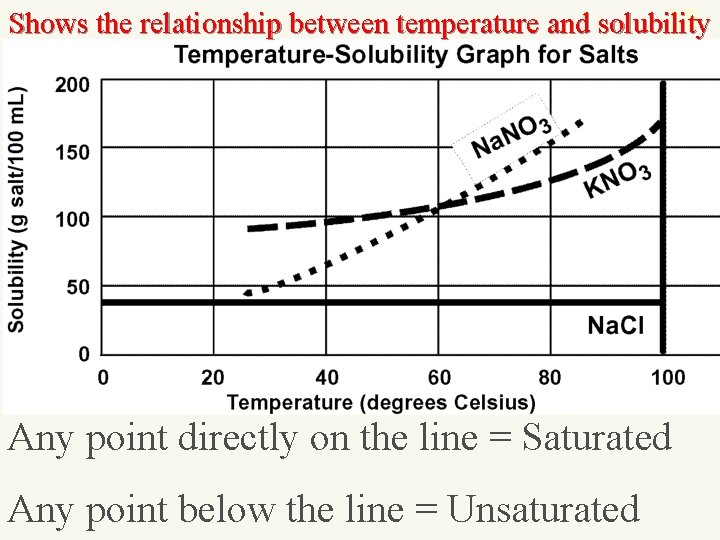
15 Shows the relationship between temperature and solubility Any point directly on the line = Saturated Any point below the line = Unsaturated
Dissolving Rate n. Def. – The amount of time required for a solvent to dissolve a particular solute n “Speed of dissolving” 16
17 Three Factors Affecting Dissolving Rate of a Solid into a Liquid: 1. Temperature 2. Stirring 3. Surface Area
Temperature n Increasing the temperature causes an increase in kinetic energy of the solid solute and liquid solvent particles n As the particles move faster, they collide into each other more, thereby increasing the DISSOLVING RATE 18
Stirring n Stirring also increases dissolving rate n Stirring causes an increase in collisions between the particles in a solution 19
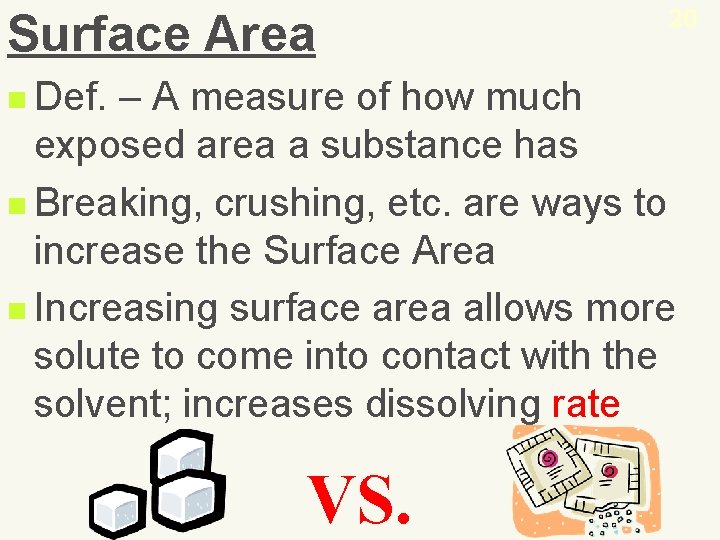
Surface Area n Def. 20 – A measure of how much exposed area a substance has n Breaking, crushing, etc. are ways to increase the Surface Area n Increasing surface area allows more solute to come into contact with the solvent; increases dissolving rate VS.
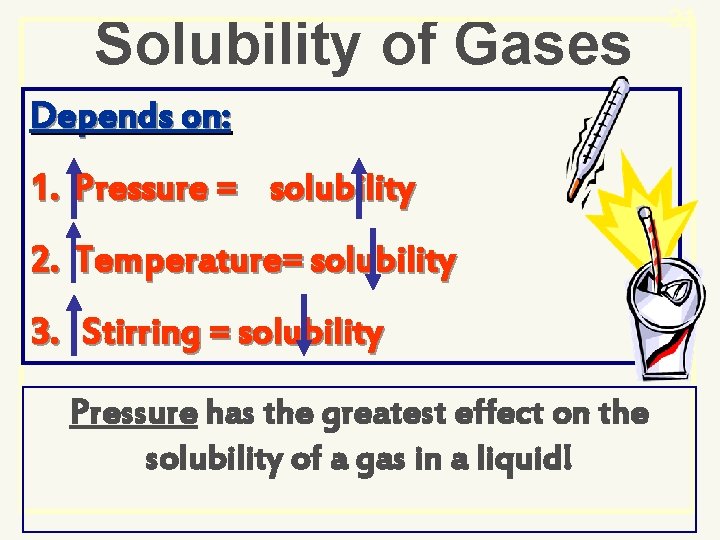
Solubility of Gases Depends on: 1. Pressure = solubility 2. Temperature= solubility 3. Stirring = solubility Pressure has the greatest effect on the solubility of a gas in a liquid! 21
- Slides: 21