
Mixtures and Solutions Mixtures in Everyday Life Part
- Slides: 10
Mixtures and Solutions Mixtures in Everyday Life Part II
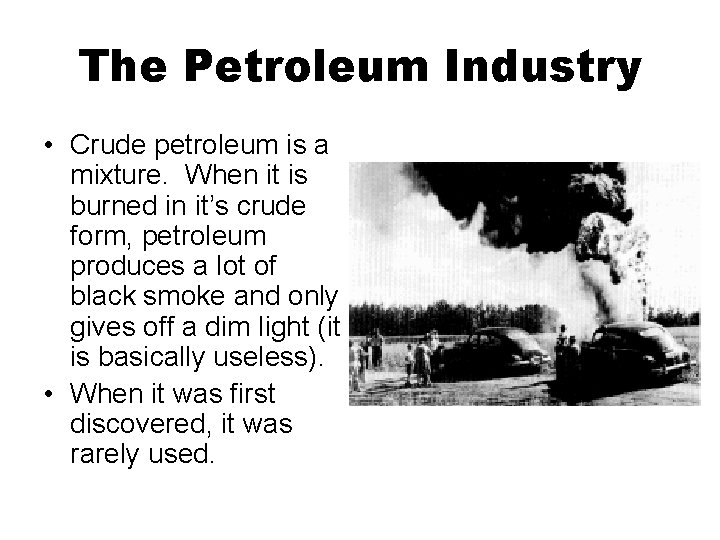
The Petroleum Industry • Crude petroleum is a mixture. When it is burned in it’s crude form, petroleum produces a lot of black smoke and only gives off a dim light (it is basically useless). • When it was first discovered, it was rarely used.
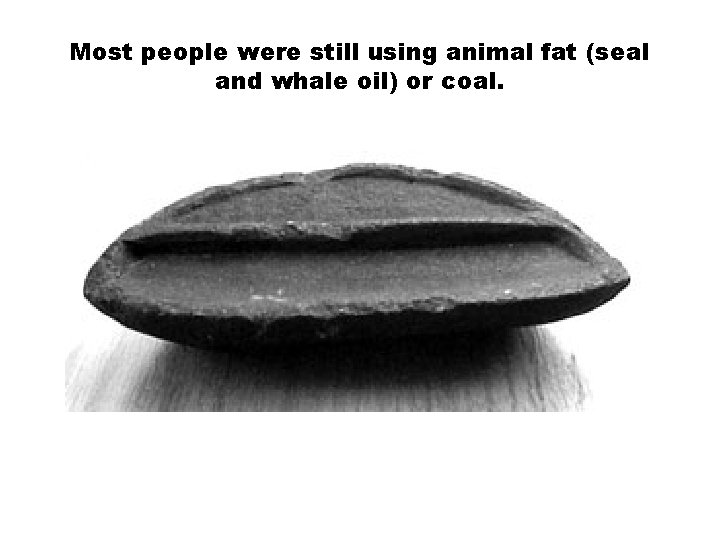
Most people were still using animal fat (seal and whale oil) or coal.
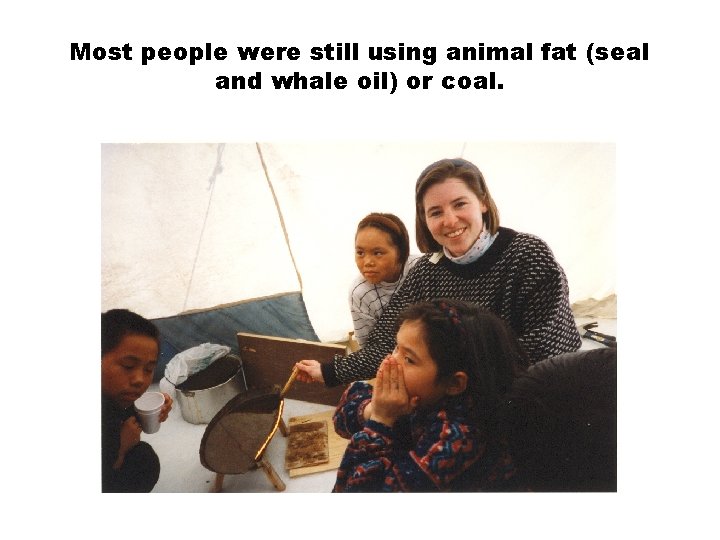
Most people were still using animal fat (seal and whale oil) or coal.
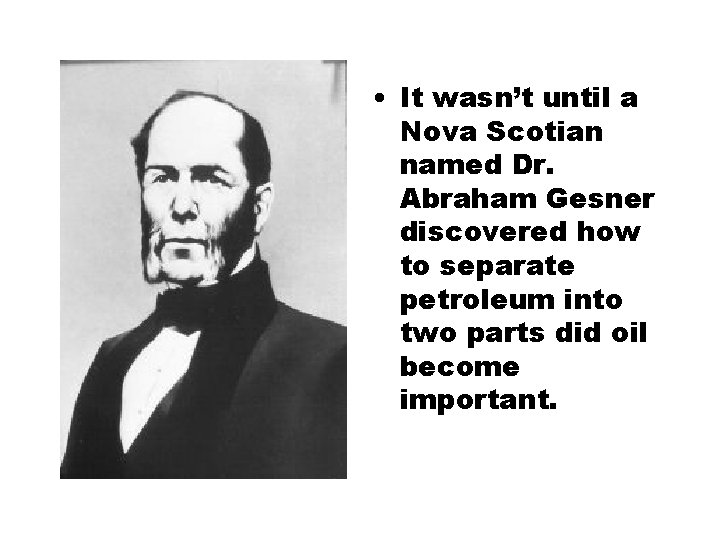
• It wasn’t until a Nova Scotian named Dr. Abraham Gesner discovered how to separate petroleum into two parts did oil become important.
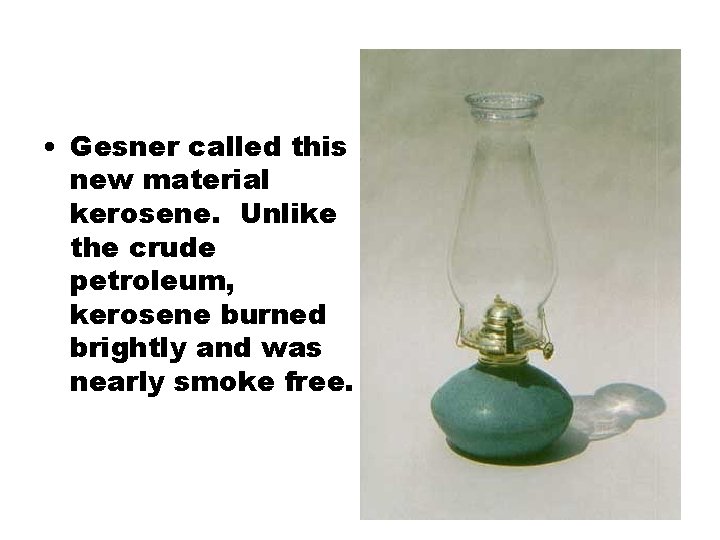
• Gesner called this new material kerosene. Unlike the crude petroleum, kerosene burned brightly and was nearly smoke free.
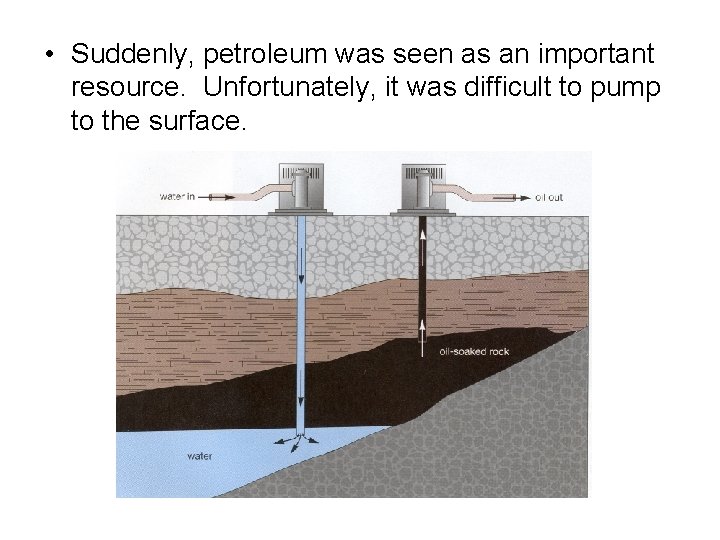
• Suddenly, petroleum was seen as an important resource. Unfortunately, it was difficult to pump to the surface.
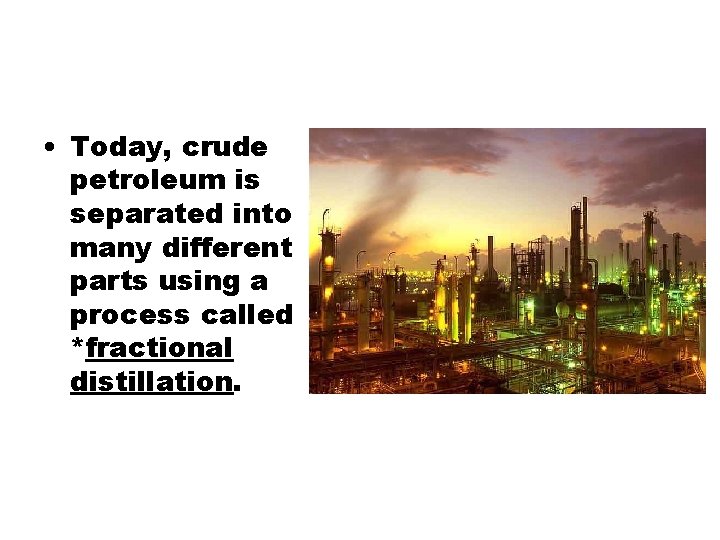
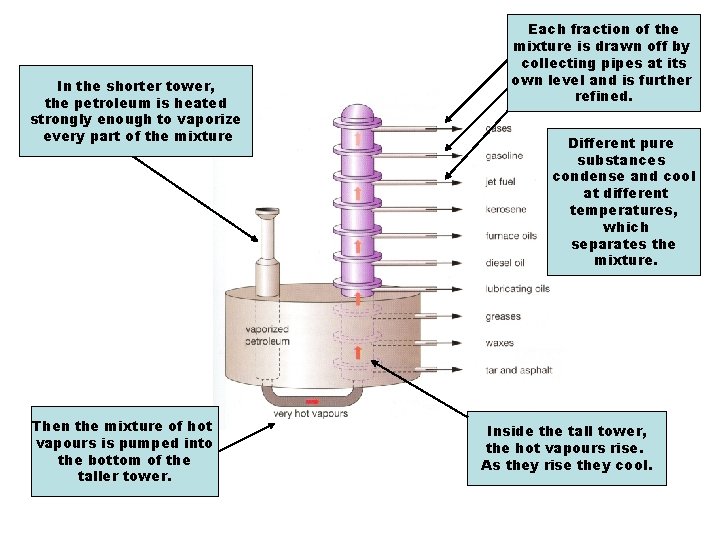
• Today, crude petroleum is separated into many different parts using a process called *fractional distillation.
In the shorter tower, the petroleum is heated strongly enough to vaporize every part of the mixture Then the mixture of hot vapours is pumped into the bottom of the taller tower. Each fraction of the mixture is drawn off by collecting pipes at its own level and is further refined. Different pure substances condense and cool at different temperatures, which separates the mixture. Inside the tall tower, the hot vapours rise. As they rise they cool.
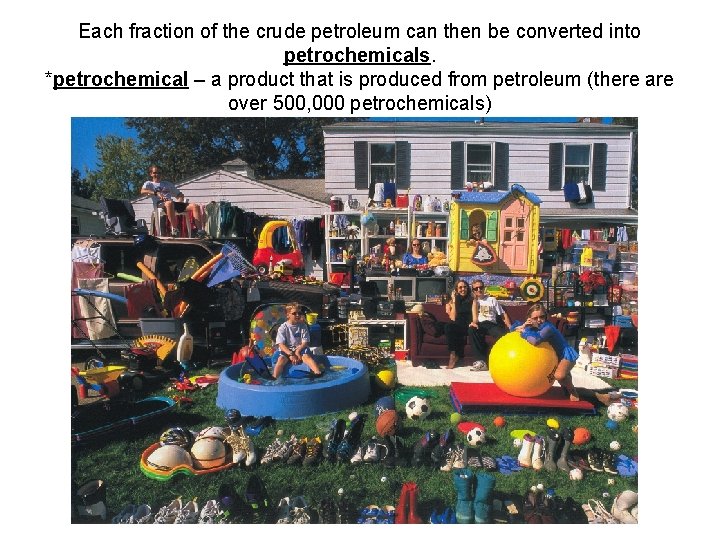
Each fraction of the crude petroleum can then be converted into petrochemicals. *petrochemical – a product that is produced from petroleum (there are over 500, 000 petrochemicals)