
Mixed Stoichiometry Calculations Objectives Today I will be

Mixed Stoichiometry Calculations
� Objectives Today I will be able to: � Apply the conversion factors of molar mass, Avogadro’s number and mol ratios to calculating the volume, mass and quantity of particles in a sample. � Informal assessment – monitor student interactions and questions as they complete the mixed practice problems � Formal assessment – analyzing student responses to the practice worksheets and exit ticket � Common Core Connection �Demonstrate Independence �Build Strong Content Knowledge �Make sense of problem and persevere in solving them �Reason abstractly and quantitatively
Lesson Sequence �Evaluate: Warm-Up �Evaluate: Review Homework �Explain: Mixed Stoichiometry Calculations �Elaborate: Mixed Stoichiometry Calculation Practice �Evaluate: Exit Ticket
Warm-Up �Take one of each paper on your way in! �Why did scientists create the mole? �What is the purpose of completing mass to mass conversions?
Objectives �Today I will be able to: Apply the conversion factors of molar mass, Avogadro’s number and mol ratios to calculating the volume, mass and quantity of particles in a sample.
Homework �Finish Mixed Stoichiometry Worksheet �Mole Project Due
Agenda �Warm-Up �Review HW �Mixed Stoichiometry Calculations Examples �Mixed Stoichiometry Calculation Practice �Exit Ticket

Mixed Stoichiometry Calculations Examples
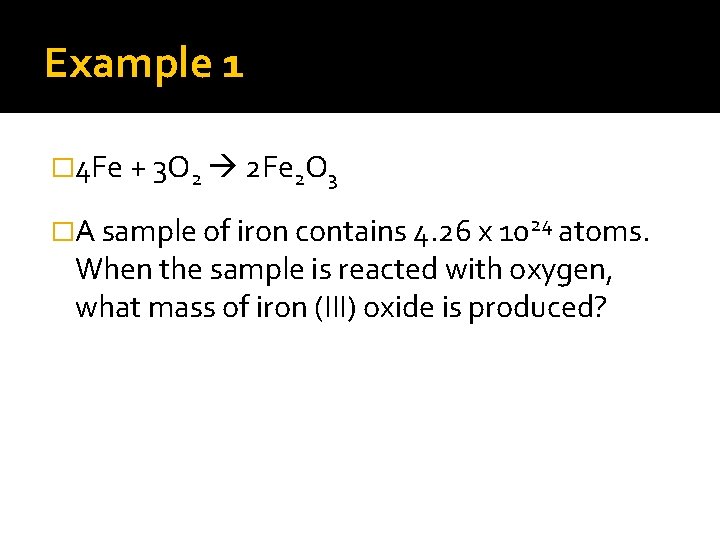
Example 1 � 4 Fe + 3 O 2 2 Fe 2 O 3 �A sample of iron contains 4. 26 x 1024 atoms. When the sample is reacted with oxygen, what mass of iron (III) oxide is produced?
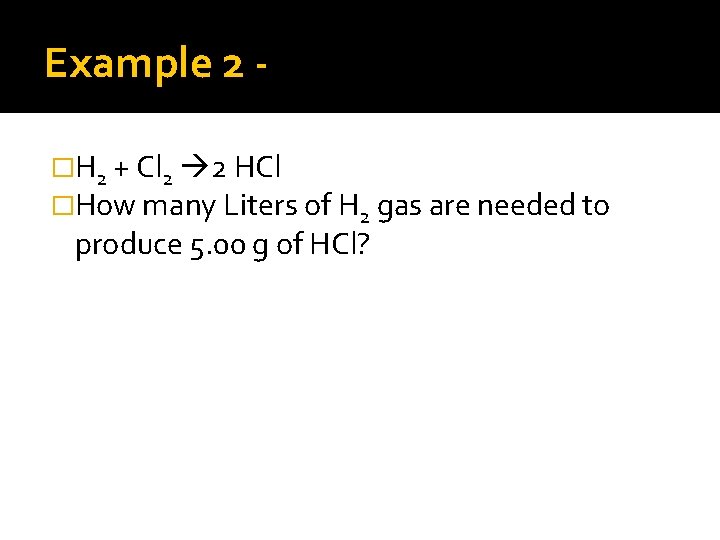
Example 2 �H 2 + Cl 2 2 HCl �How many Liters of H 2 gas are needed to produce 5. 00 g of HCl?
Complete the practice at your desk. The problems not completed in class will become your homework. Mixed Calculation Practice
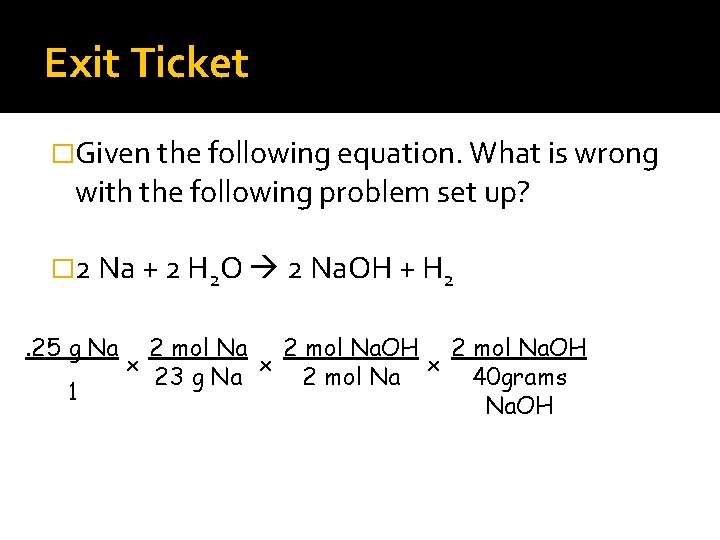
Exit Ticket �Given the following equation. What is wrong with the following problem set up? � 2 Na + 2 H 2 O 2 Na. OH + H 2. 25 g Na 1 x 2 mol Na. OH x x 23 g Na 2 mol Na 40 grams Na. OH
- Slides: 12