
Mixed Question Atmosphere and Ocean Explain how energy
- Slides: 13
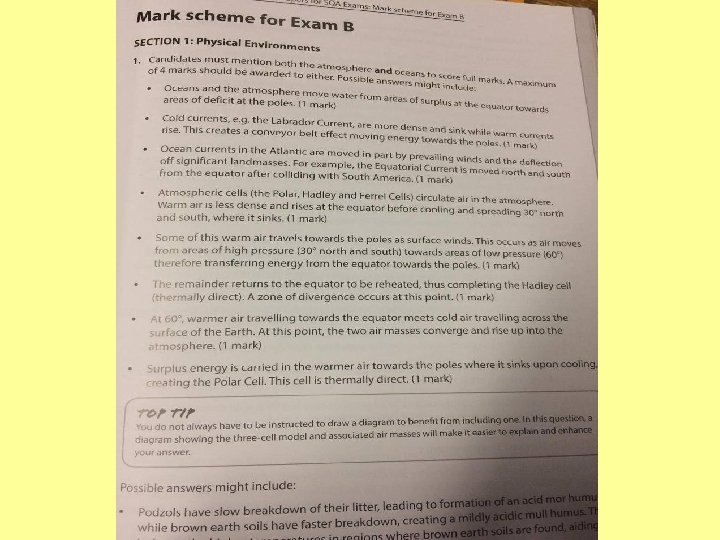
Mixed Question – Atmosphere and Ocean… • Explain how energy is redistributed throughout the globe through both the atmosphere and the oceans (10).
Global Heat Budget
The Global Heat Budget • The atmospheric system involves inputs and outputs. • Incoming solar energy v outgoing energy from Earth. • Balance between input and output is usually referred to as the global heat budget.
100% of solar energy leaves sun – why is only half left when it hits surface?
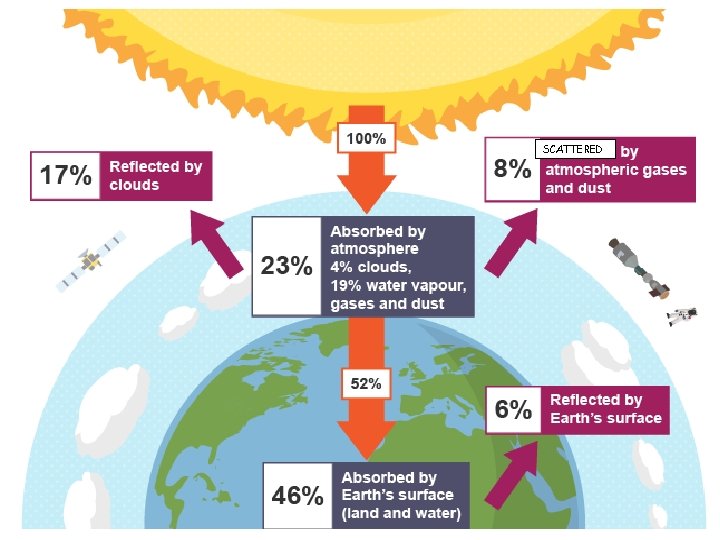
SCATTERED
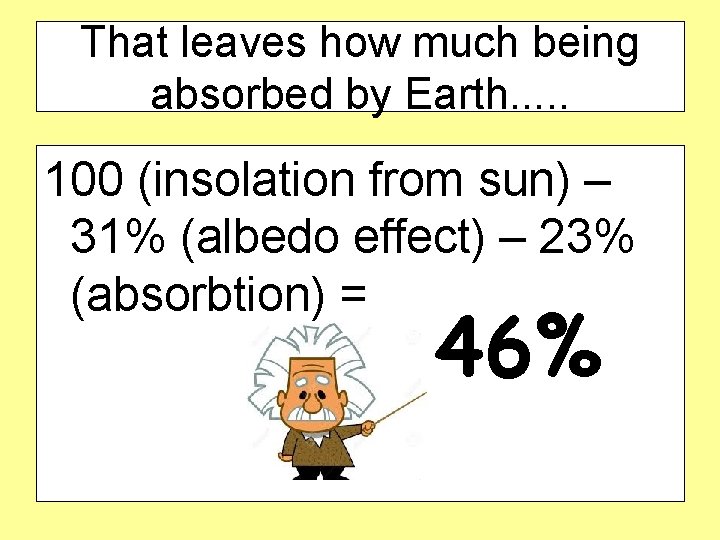
Inputs to Earth • Begins with short-wave solar energy (insolation) enters the atmosphere and transferred downwards all the way to the surface – only about 46% reaches the surfaces.
Where is it lost? • Some insolation is reflected by the clouds and the earths surface (snow, ice) – albedo effect. • Some is scattered by gas particles in the air. • Reflection and scattering = about 31% of radiation loss. • Some insolation is absorbed by clouds, water vapour and dust = about 23%
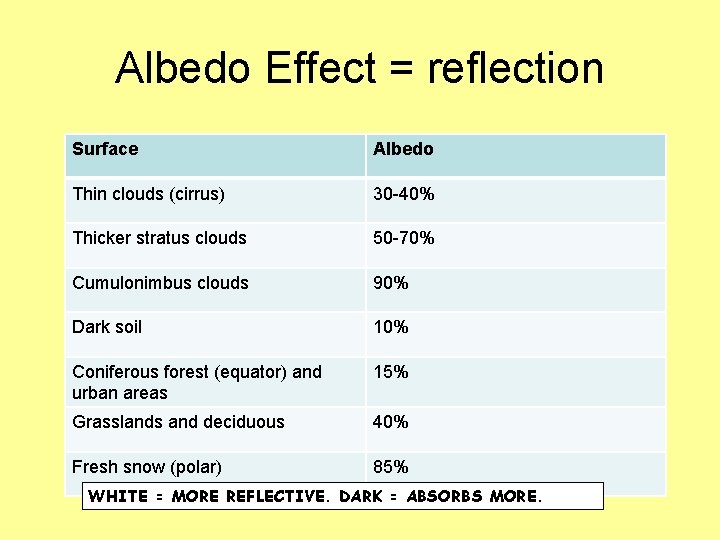
Albedo Effect = reflection Surface Albedo Thin clouds (cirrus) 30 -40% Thicker stratus clouds 50 -70% Cumulonimbus clouds 90% Dark soil 10% Coniferous forest (equator) and urban areas 15% Grasslands and deciduous 40% Fresh snow (polar) 85% WHITE = MORE REFLECTIVE. DARK = ABSORBS MORE.
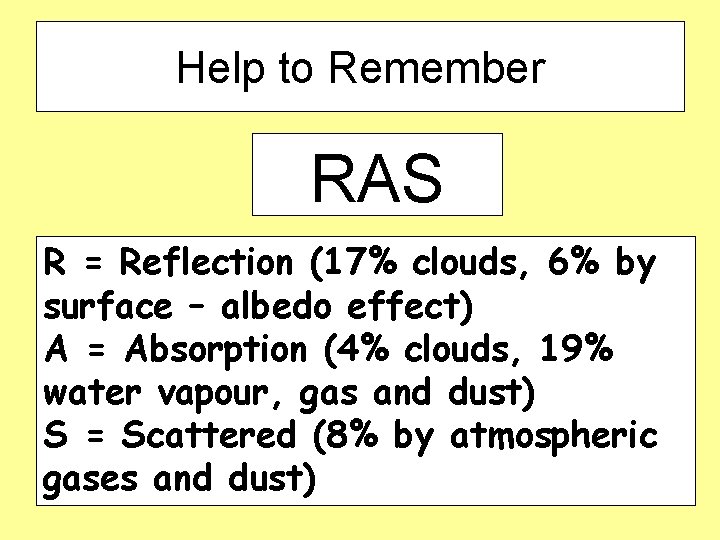
Help to Remember RAS R = Reflection (17% clouds, 6% by surface – albedo effect) A = Absorption (4% clouds, 19% water vapour, gas and dust) S = Scattered (8% by atmospheric gases and dust)
That leaves how much being absorbed by Earth. . . 100 (insolation from sun) – 31% (albedo effect) – 23% (absorbtion) = 46%
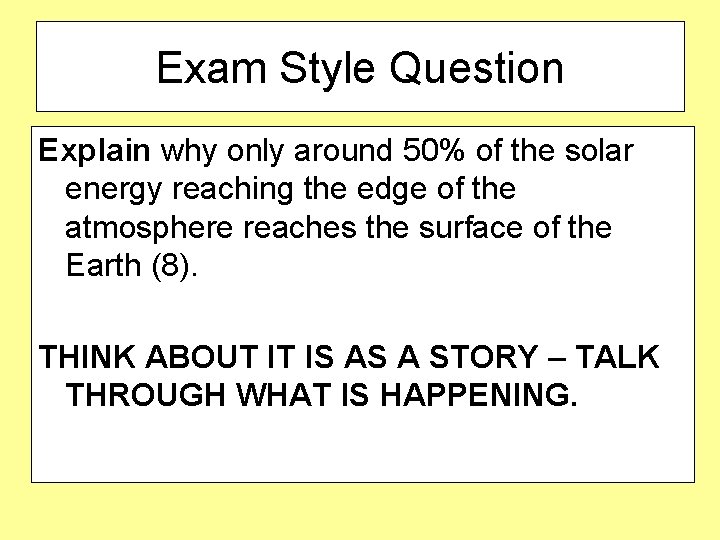
Exam Style Question Explain why only around 50% of the solar energy reaching the edge of the atmosphere reaches the surface of the Earth (8). THINK ABOUT IT IS AS A STORY – TALK THROUGH WHAT IS HAPPENING.
Example Answer • Reflection from the atmosphere reduces the amount of energy reaching the Earth’s surface (26%) as solar energy reflects off clouds and gas and dust particles. • Reflection levels vary across the planet and according to weather conditions. Higher levels of cloud cover lead to greater rates of energy loss. • The reflective properties of the Earth’s surface (albedo) add to energy loss. This is greatest at the white surfaces, including the polar ice caps. • At the equator, where forest cover dominates, the dark colour is less reflective and absorbs energy, increasing the % of solar energy absorbed in these areas. • Energy is lost through absorption by the atmosphere. Clouds, gas (greenhouse gases) and dust absorb solar energy (about 20%) within the atmosphere and store this, reducing the energy that can be absorbed by Earth surface.