
Mixed conditionals Cambridge University Press 2017 Conditional sentences
Mixed conditionals © Cambridge University Press 2017
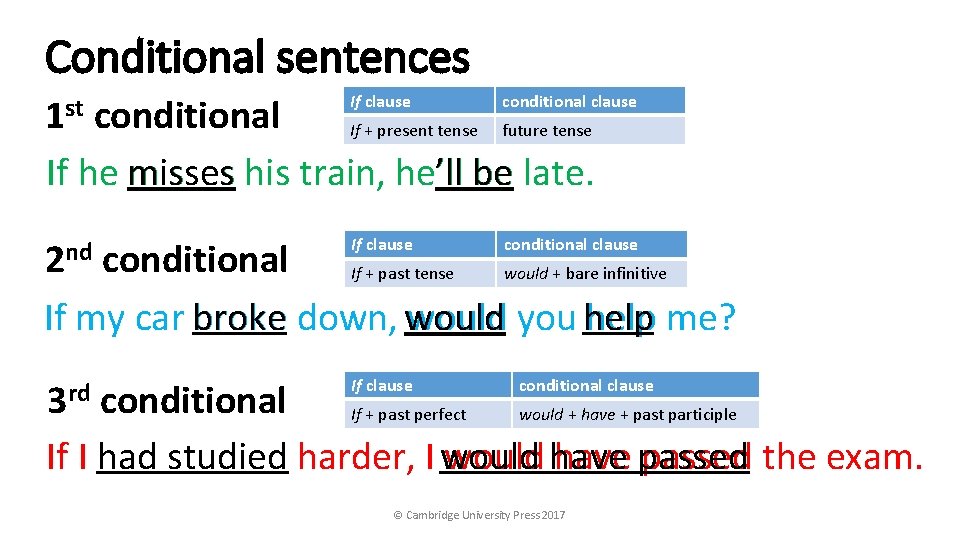
Conditional sentences 1 st If clause conditional clause 2 nd If clause conditional clause 3 rd If clause conditional If + present tense future tense If he misses his train, he’ll be late. conditional If + past tense would + bare infinitive If my car broke down, would you help me? conditional clause conditional If + past perfect would + have + past participle If I had studied harder, I would have passed the exam. © Cambridge University Press 2017
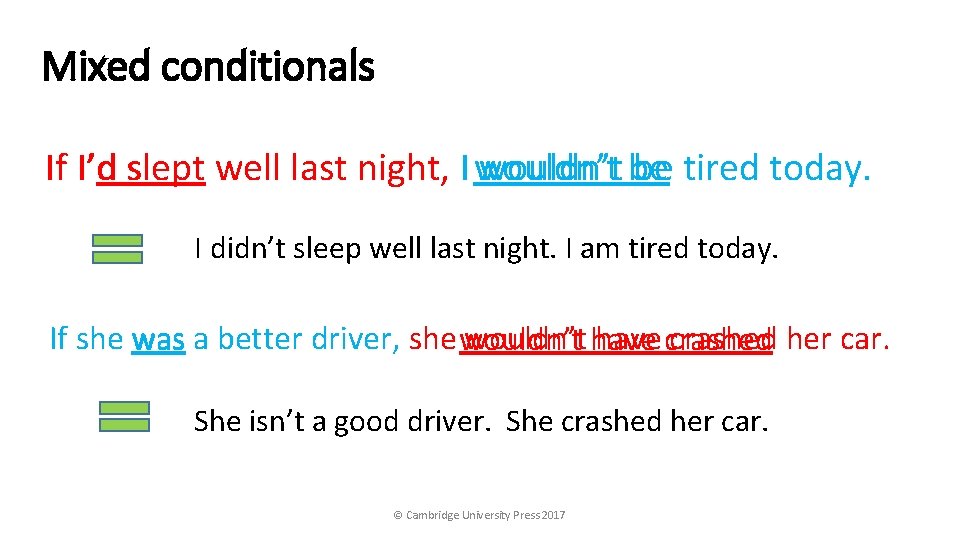
Mixed conditionals If I’d wouldn’t be be tired today. ’d slept well last night, I wouldn’t I didn’t sleep well last night. I am tired today. If she was a better driver, she wouldn’t have crashed her car. She isn’t a good driver. She crashed her car. © Cambridge University Press 2017
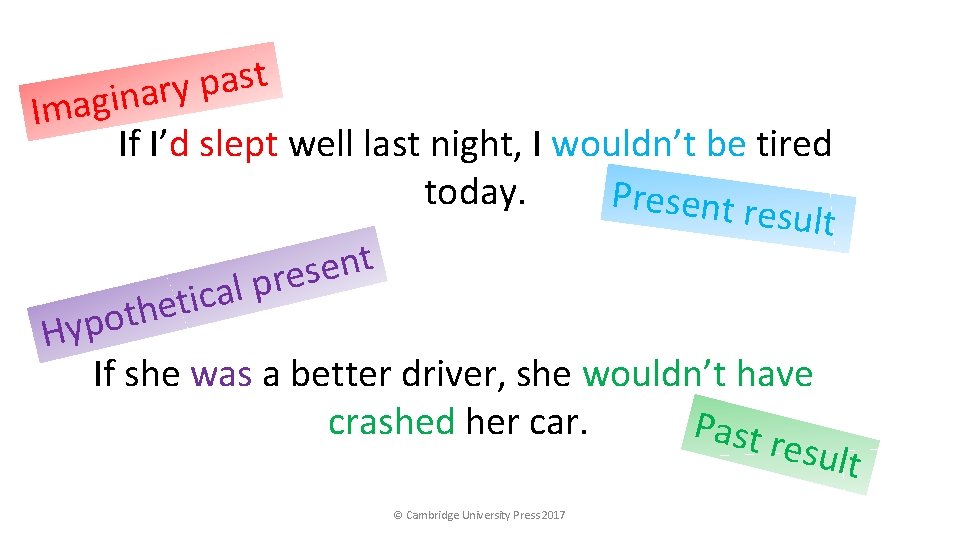
t s a p y r a n i g Ima If I’d slept well last night, I wouldn’t be tired today. Present re sult t n e s e r p l a c i t e h t o Hyp If she was a better driver, she wouldn’t have crashed her car. Past r esult © Cambridge University Press 2017
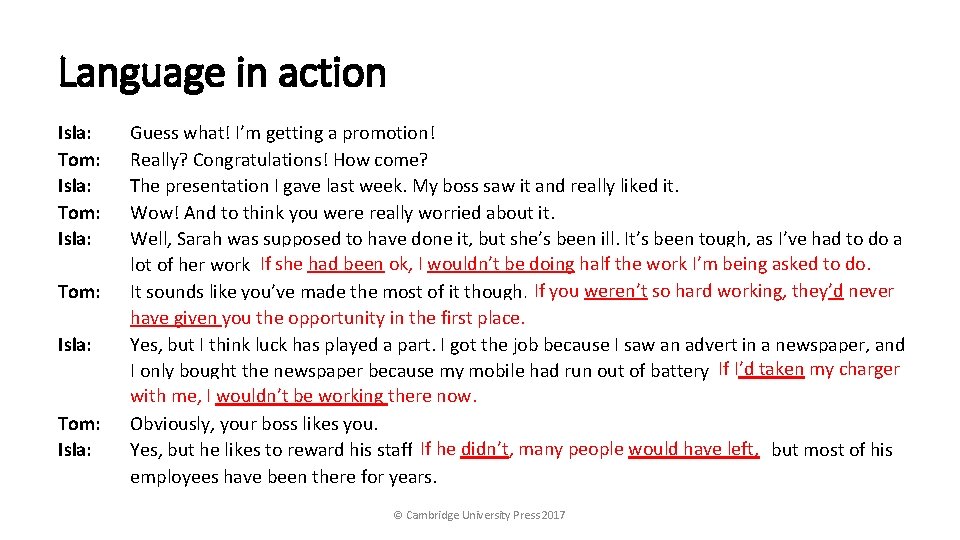
Language in action Isla: Tom: Isla: Guess what! I’m getting a promotion! Really? Congratulations! How come? The presentation I gave last week. My boss saw it and really liked it. Wow! And to think you were really worried about it. Well, Sarah was supposed to have done it, but she’s been ill. It’s been tough, as I’ve had to do a lot of her work. If she had been ok, I wouldn’t be doing half the work I’m being asked to do. It sounds like you’ve made the most of it though. If you weren’t so hard working, they’d never have given you the opportunity in the first place. Yes, but I think luck has played a part. I got the job because I saw an advert in a newspaper, and I only bought the newspaper because my mobile had run out of battery. If I’d taken my charger with me, I wouldn’t be working there now. Obviously, your boss likes you. Yes, but he likes to reward his staff. If he he didn’t, many people would have left, but most of his employees have been there for years. © Cambridge University Press 2017
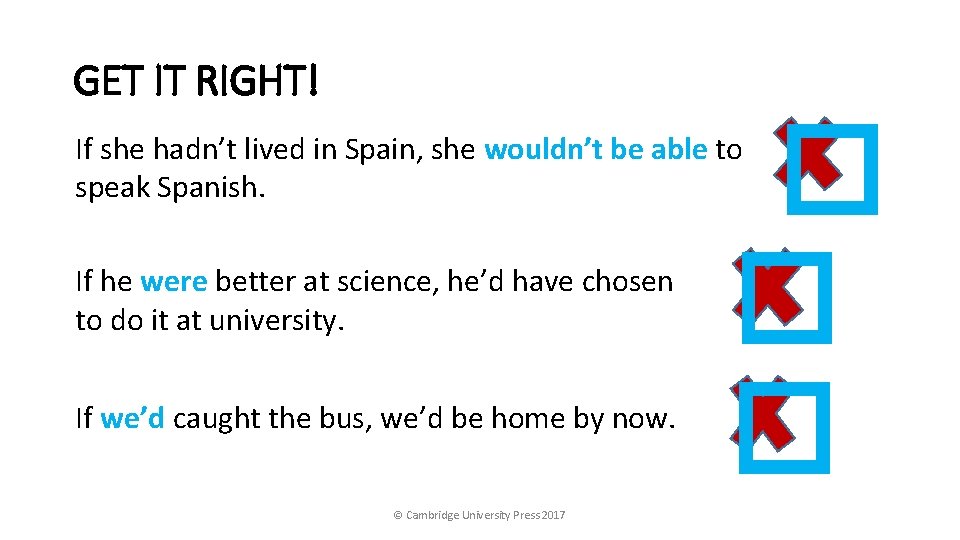
GET IT RIGHT! � � � been If she hadn’t lived in Spain, she wouldn’t have be able to speak Spanish. able to. Spanish. speak If he would be better at science, were better at science, he’d have chosen do it at university. to do it to at university. we caught the bus, we’d bebe home byby now. If we’d caught the bus, we’d home now. © Cambridge University Press 2017

Can you remember the rules? 1 If we want to connect a hypothetical (imaginary) past with a present action or situation, the if clause follows the pattern of the third conditional and the consequence clause follows the pattern of the seconditional. In the past (If clause) Now (consequence) 3 rd conditional 2 nd conditional If I had caught the bus, I would be at school now. = I didn’t catch the bus and I’m not at school yet. © Cambridge University Press 2017
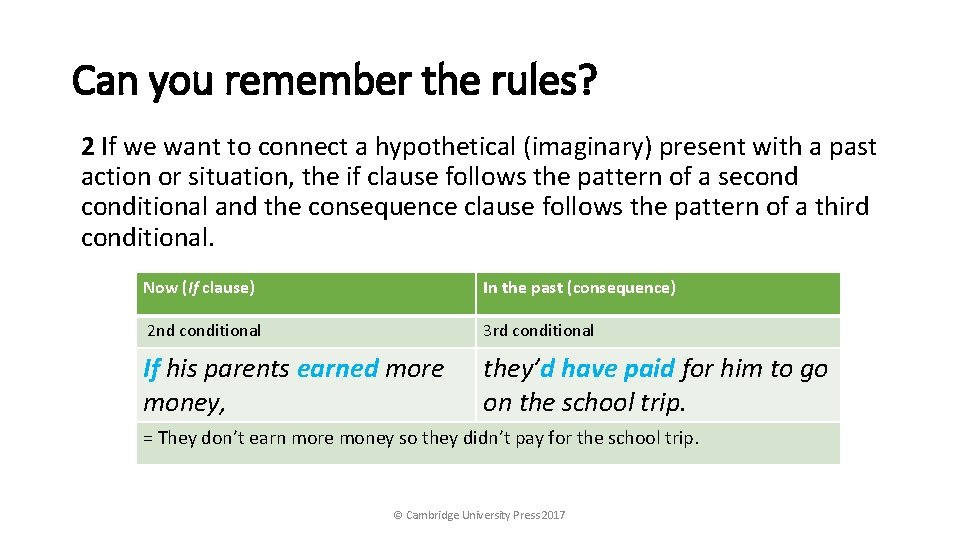
Can you remember the rules? 2 If we want to connect a hypothetical (imaginary) present with a past action or situation, the if clause follows the pattern of a seconditional and the consequence clause follows the pattern of a third conditional. Now (If clause) In the past (consequence) 2 nd conditional 3 rd conditional If his parents earned more money, they’d have paid for him to go on the school trip. = They don’t earn more money so they didn’t pay for the school trip. © Cambridge University Press 2017
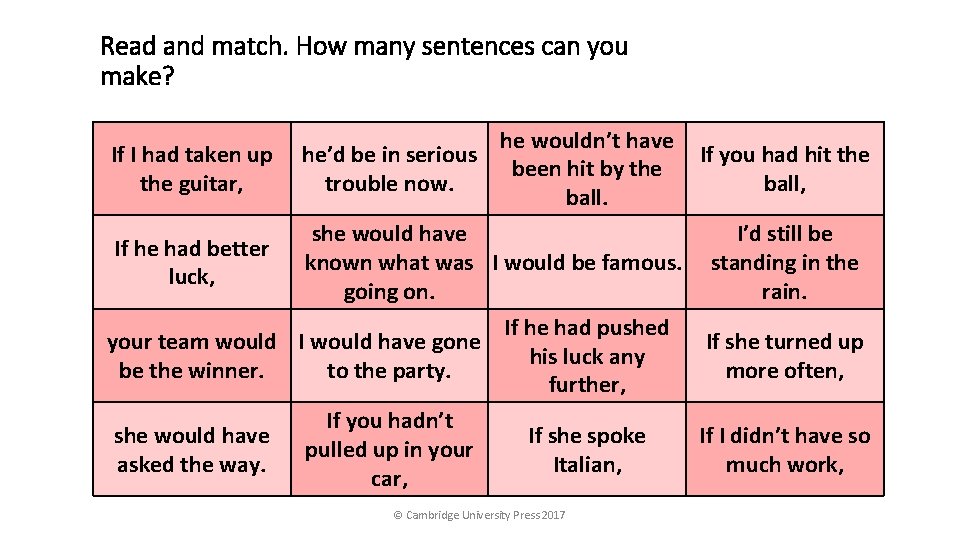
Read and match. How many sentences can you make? If I had taken up the guitar, If he had better luck, he wouldn’t have he’d be in serious If you had hit the been hit by the trouble now. ball, ball. she would have I’d still be known what was I would be famous. standing in the going on. rain. If he had pushed your team would I would have gone his luck any be the winner. to the party. further, If she turned up more often, If you hadn’t pulled up in your car, If I didn’t have so much work, she would have asked the way. If she spoke Italian, © Cambridge University Press 2017
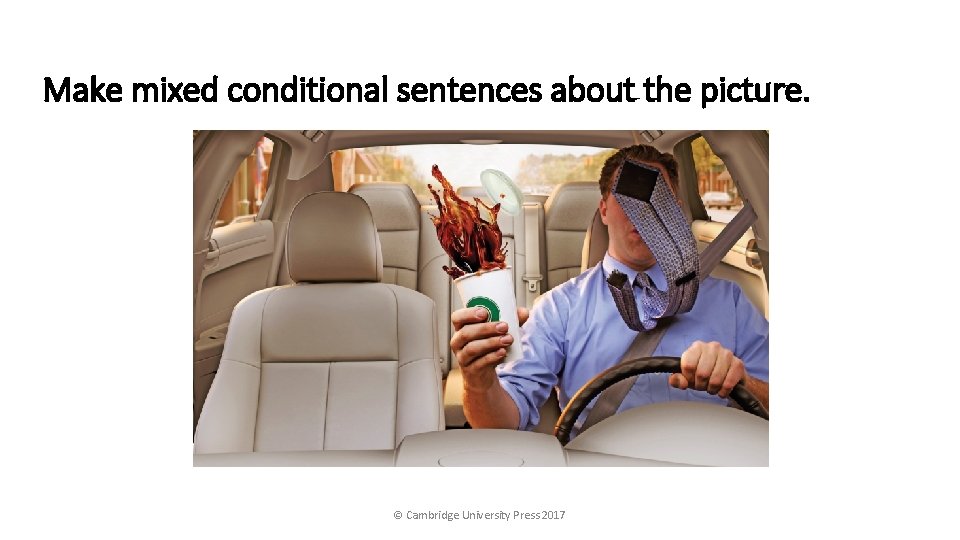
Make mixed conditional sentences about the picture. © Cambridge University Press 2017
Acknowledgements The authors and publishers acknowledge the following sources of copyright material and are grateful for the permissions granted. While every effort has been made, it has not always been possible to identify the sources of all the material used, or to trace all copyright holders. If any omissions are brought to our notice, we will be happy to include the appropriate acknowledgements on reprinting and in the next update to the digital edition, as applicable. The publishers are grateful to the following for permission to reproduce copyright photographs and material: © Chris Clor/Blend Images/Getty Images. Written by Emma Szlachta. © Cambridge University Press 2017
- Slides: 11