
MIX IT UP Mixtures Solutions and Solubility how
MIX IT UP! Mixtures, Solutions and Solubility: how mixed up is this crazy world?
What do you notice about these substances?
OBJECTIVES ·Learner will: • Demonstrate an understanding of the physical nature of science by classifying substances as elements, compounds, or mixtures · Demonstrate an understanding of the physical nature of science by distinguishing among solvents, solutes, and solutions (PS. 5. 7. 6) (PS. 5. 7. 7)
MIXTURES Combination of substances that: �Are not bonded together �Can be separated by physical means
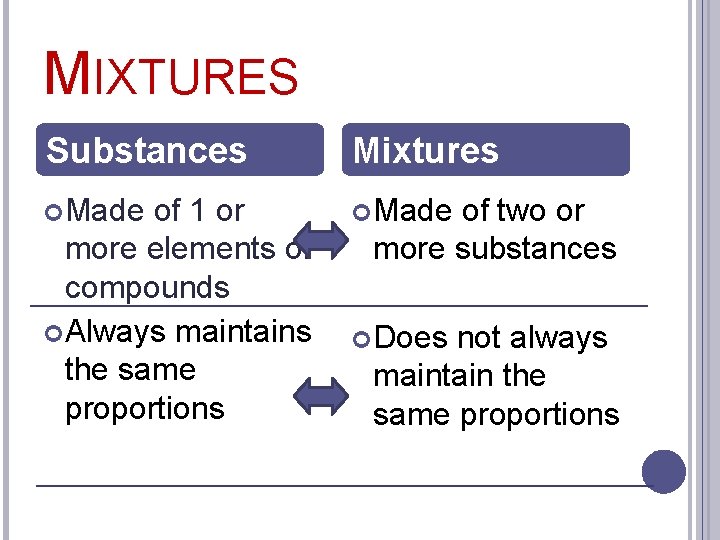
MIXTURES Substances Mixtures Made of 1 or more elements or compounds Always maintains the same proportions of two or more substances Does not always maintain the same proportions

MIXTURES Substances Mixtures Chemically Not combined Cannot be separated by physical means chemically combined Can be separated by physical means
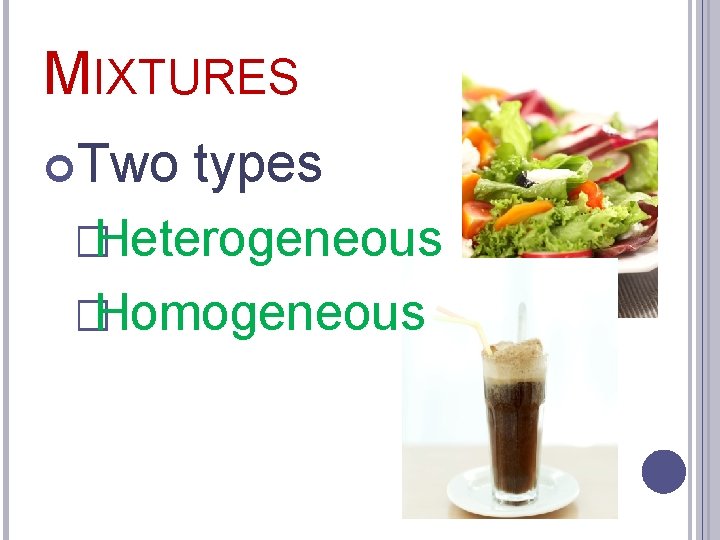
MIXTURES Two types �Heterogeneous �Homogeneous
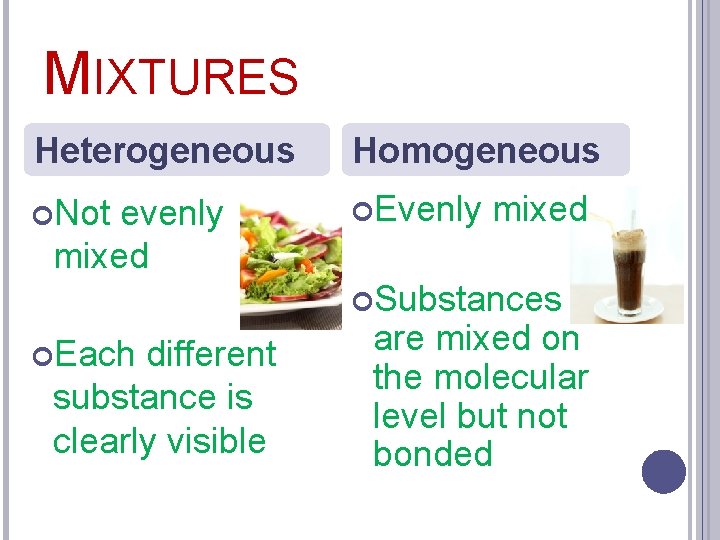
MIXTURES Heterogeneous Homogeneous Not Evenly evenly mixed Substances Each different substance is clearly visible are mixed on the molecular level but not bonded
SOLUTIONS Solution �Homogeneous mixture
SOLUTIONS Two parts �Solute- dissolved �Solvent- dissolves the solute
SOLUTIONS Liquid solutions �Can form with solids, liquids or gases Gaseous solutions �Forms only with other gases Solid solutions �Can form with solids, liquids or gases
SOLUTIONS Precipitate �Solid that comes back out of a solution �Example: stalactites and stalagmites
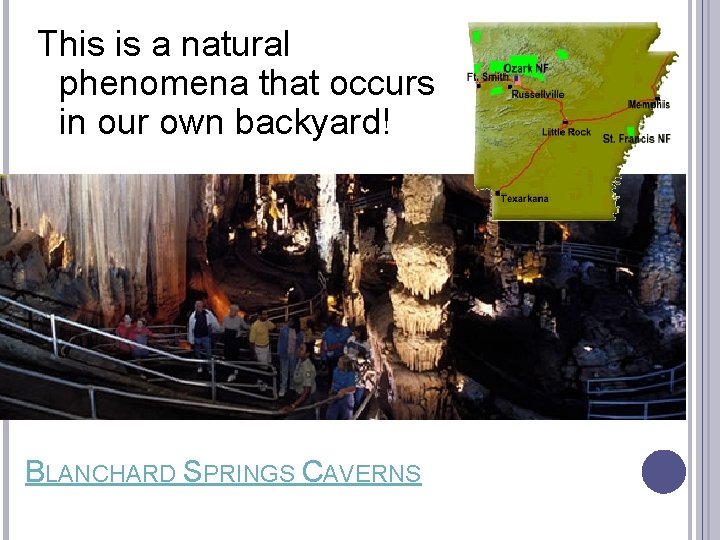
This is a natural phenomena that occurs in our own backyard! BLANCHARD SPRINGS CAVERNS
OBJECTIVES Learner will: · Understand the physical nature or science by observing the effects of variables on solubility rates · Apply the knowledge of the physical nature of science by interpreting solubility graphs (PS. 5. 7. 8) (PS. 5. 7. 9)
SOLUBILITY Water is called the universal solvent because it can dissolve so many substances
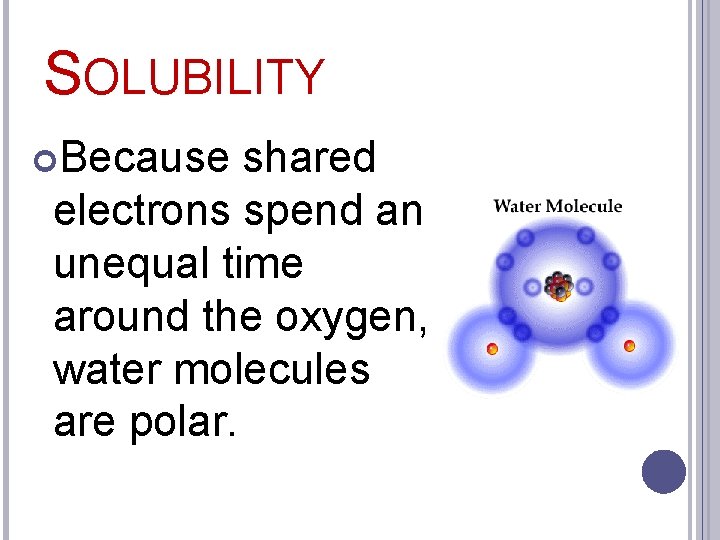
SOLUBILITY Because shared electrons spend an unequal time around the oxygen, water molecules are polar.
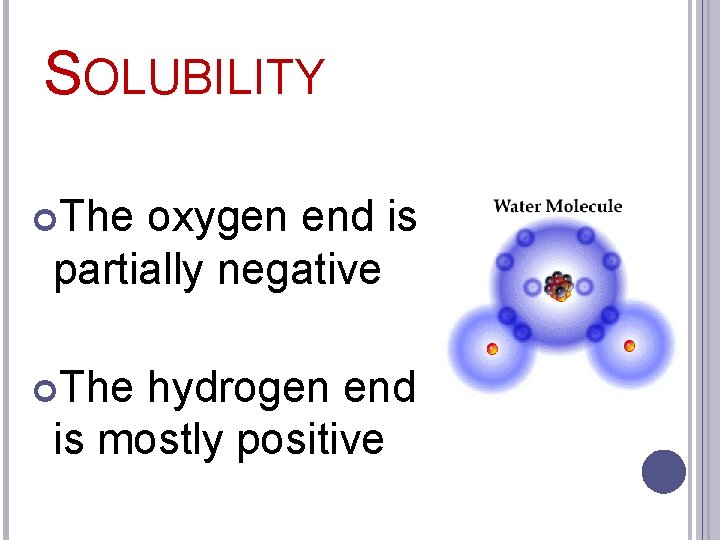
SOLUBILITY The oxygen end is partially negative The hydrogen end is mostly positive
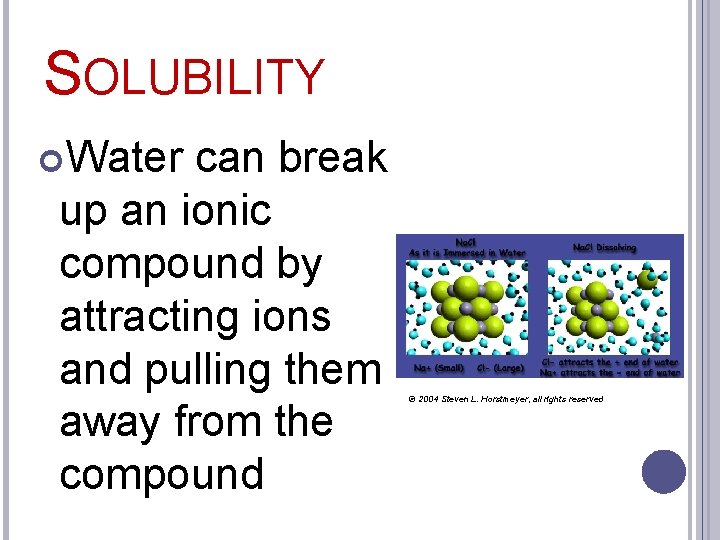
SOLUBILITY Water can break up an ionic compound by attracting ions and pulling them away from the compound © 2004 Steven L. Horstmeyer, all rights reserved
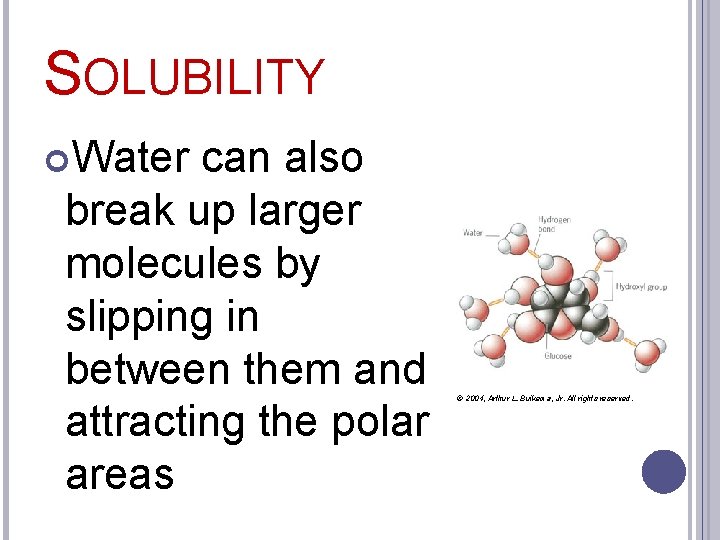
SOLUBILITY Water can also break up larger molecules by slipping in between them and attracting the polar areas © 2004, Arthur L. Buikema, Jr. All rights reserved.
SOLUBILITY Like-dissolves-like �Polar – polar �Non-polar – non-polar �Complex molecules may dissolve both
SOLUBILITY Polar �Dissolves ionic substances �Breaks apart large molecules
SOLUBILITY Non-polar �Dissolves covalent substances
SOLUBILITY Solubility �Measurement of solute dissolved in solvent
SOLUBILITY Temperature �Factor that increases solubility
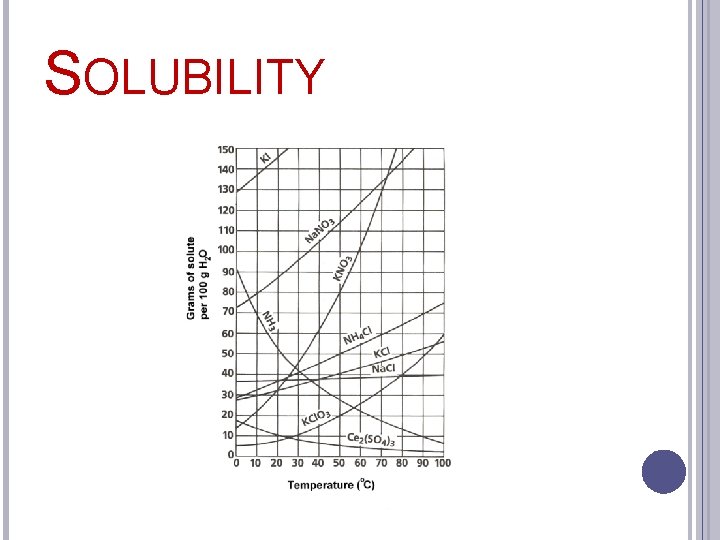
SOLUBILITY Temperature �Liquid-solid solutions Solubility increases with rise in temperature
SOLUBILITY Temperature �Liquid-gas solutions Solubility decreases with rise in temperature
SOLUBILITY
SOLUBILITY Saturated �A solution holds as much solute as it can at a given temperature
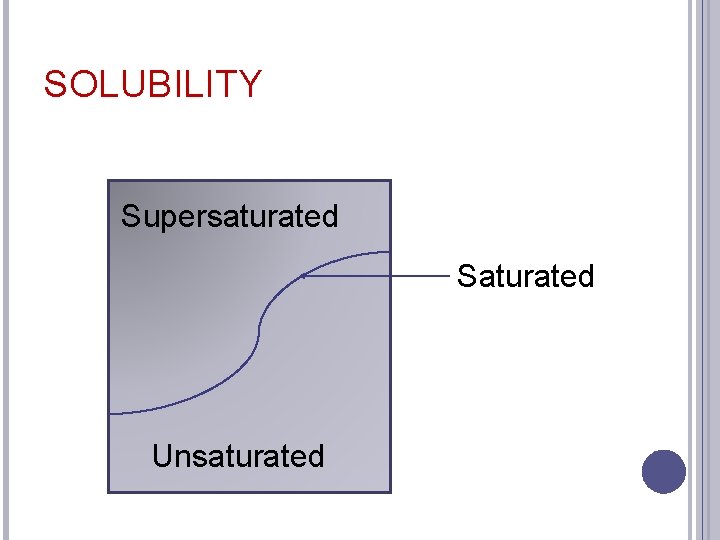
SOLUBILITY Supersaturated Saturated Unsaturated
OBJECTIVES Learner will: · Demonstrate an understanding of the physical nature of science by distinguishing among solvents, solutes, and solutions (PS. 5. 7. 7)
SOLUBILITY Rate of dissolving �Increases with temperature �Increases with agitation
SOLUBILITY Concentration �Amount solute compared to amount of solvent
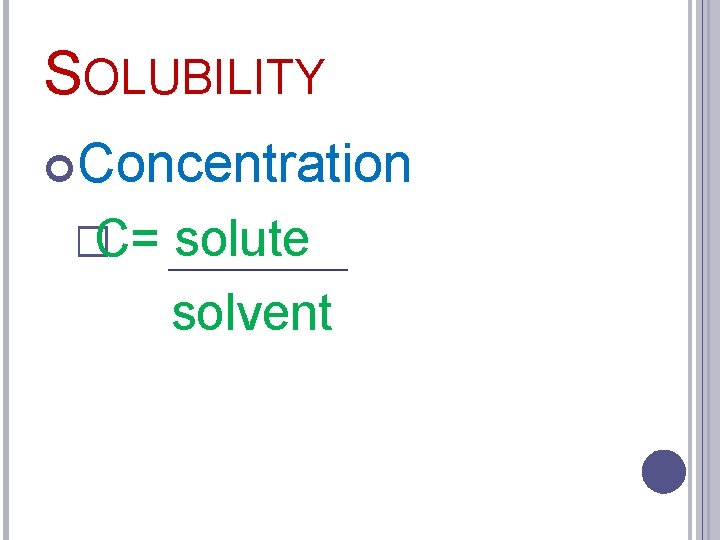
SOLUBILITY Concentration �C= solute solvent
SOLUBILITY Solutes �Effect physical properties
OBJECTIVES Learner will: ·Apply knowledge of the physical nature of science by demonstrating techniques forming and separating mixtures • Investigate breakthroughs related to mixtures (PS. 5. 7. 5) (PS. 5. 7. 10)
FORMING MIXTURES Two ways �Mixing �Dissolving
SEPARATION TECHNIQUES Physical means �Settling �Straining �Filtration �Evaporation
SEPARATION TECHNIQUES Physical means �Chromatography �Electrophorensis �Light and electromagnetic spectrum
- Slides: 38