
Mitutoyo Gauge Tests on RA Axis Data from
- Slides: 8
Mitutoyo Gauge Tests on RA Axis Data from 14 -21 Nov 2007 Michael Warner 23 -Nov-2007
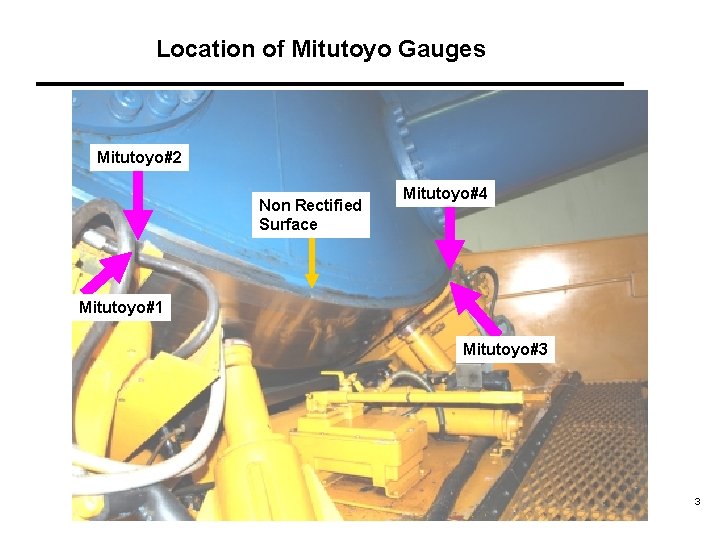
Mitutoyo Gauges Setup • Gauges #1 and #3 are on clean oil bearing rectified surface, #2 and #4 are on a clean non-rectified surface. • Collects TCS info data, and Gauge data every 5 sec. • This data represents motions during a week of normal telescope use. • Gauges were mounted on Oil Bearing structure, using magnetic bases, gauges have roller points. • All gauges were initially set to zero with oil bearing not active. • Polarity convention: POSITIVE = GAUGE Retracting (Pushing) NEGATIVE = GAUGE Extending (Pulling) 2
Location of Mitutoyo Gauges Mitutoyo#2 Non Rectified Surface Mitutoyo#4 Mitutoyo#1 Mitutoyo#3 3
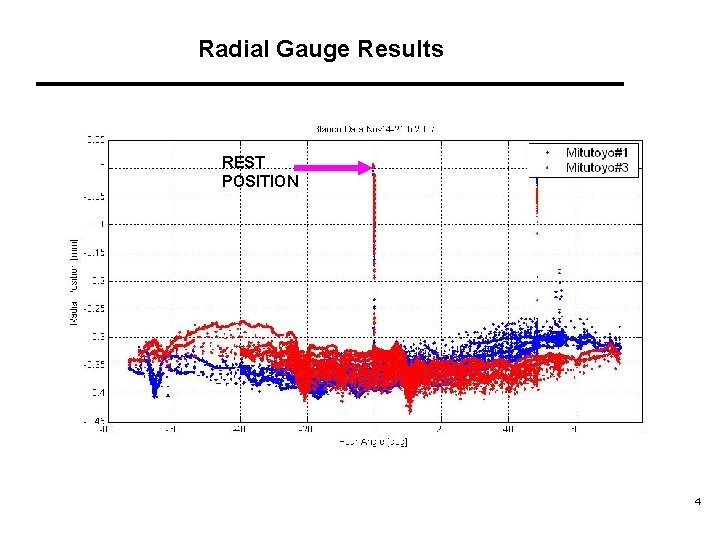
Radial Gauge Results REST POSITION 4
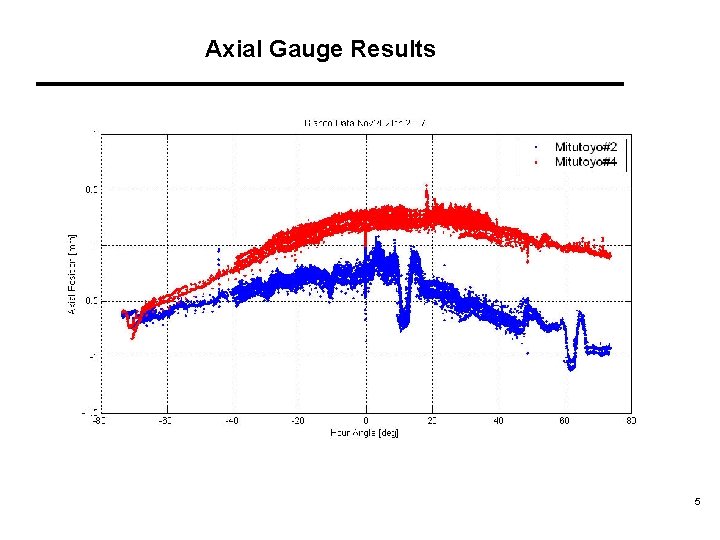
Axial Gauge Results 5
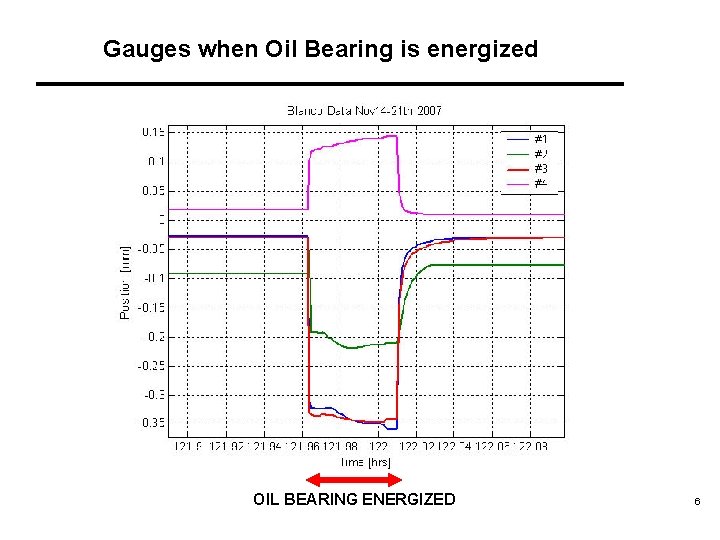
Gauges when Oil Bearing is energized OIL BEARING ENERGIZED 6
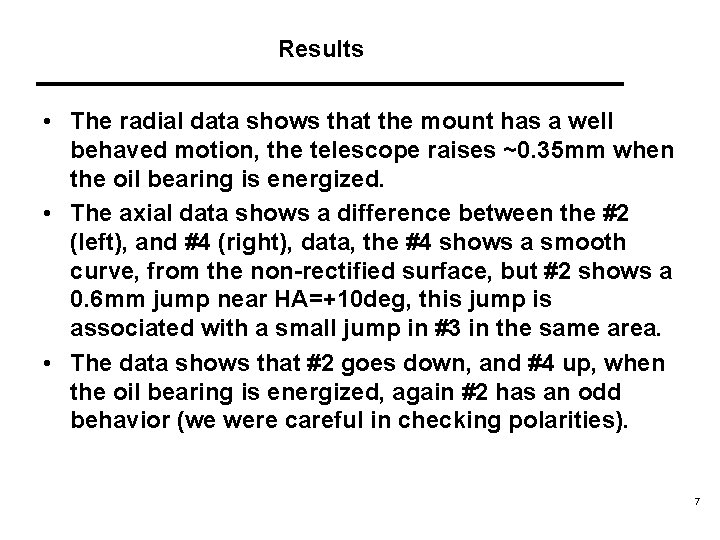
Results • The radial data shows that the mount has a well behaved motion, the telescope raises ~0. 35 mm when the oil bearing is energized. • The axial data shows a difference between the #2 (left), and #4 (right), data, the #4 shows a smooth curve, from the non-rectified surface, but #2 shows a 0. 6 mm jump near HA=+10 deg, this jump is associated with a small jump in #3 in the same area. • The data shows that #2 goes down, and #4 up, when the oil bearing is energized, again #2 has an odd behavior (we were careful in checking polarities). 7
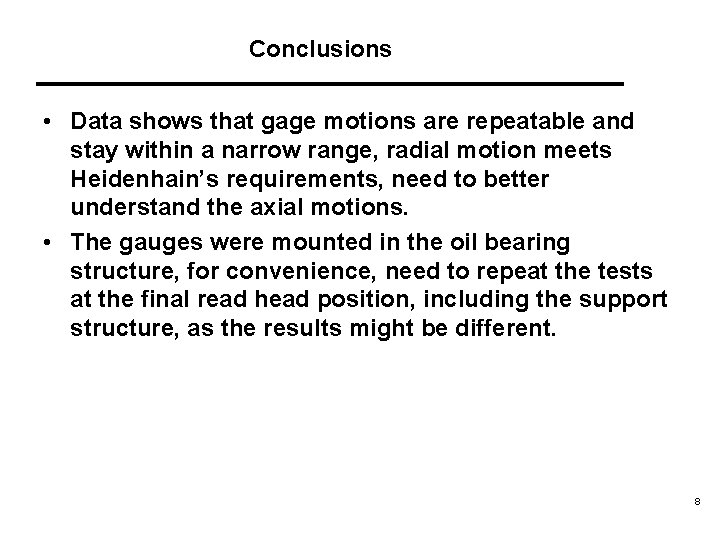
Conclusions • Data shows that gage motions are repeatable and stay within a narrow range, radial motion meets Heidenhain’s requirements, need to better understand the axial motions. • The gauges were mounted in the oil bearing structure, for convenience, need to repeat the tests at the final read head position, including the support structure, as the results might be different. 8