
Mitral Valve To Clip or Not to Clip
- Slides: 26
“Mitral Valve: To Clip or Not to Clip” Muhammad Raza, MD, FACC, FSCAI, RPVI. Interventional cardiologist Director, Cardiac Cath Lab, Crozer Chester Medical Center, Upland, PA
Disclosure § Consultant and Proctor – Medtronic § Consultant – Abbott Vascular
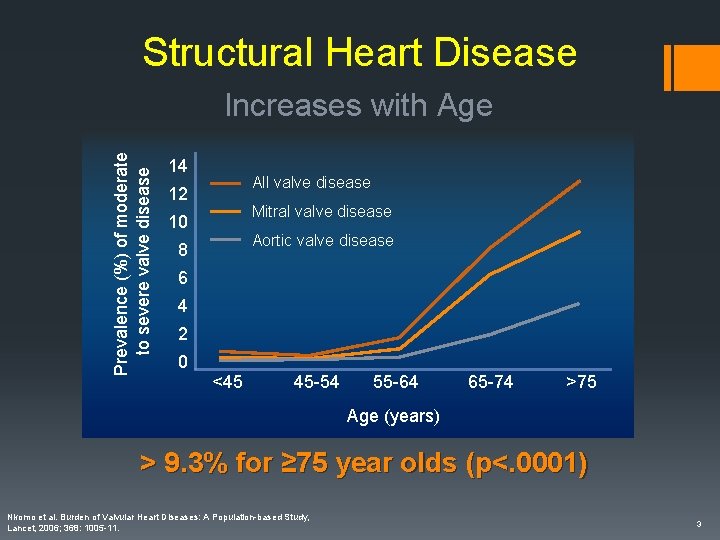
Structural Heart Disease Prevalence (%) of moderate to severe valve disease Increases with Age 14 All valve disease 12 Mitral valve disease 10 Aortic valve disease 8 6 4 2 0 <45 45 -54 55 -64 65 -74 >75 Age (years) > 9. 3% for ≥ 75 year olds (p<. 0001) Nkomo et al. Burden of Valvular Heart Diseases: A Population-based Study, Lancet, 2006; 368: 1005 -11. 3
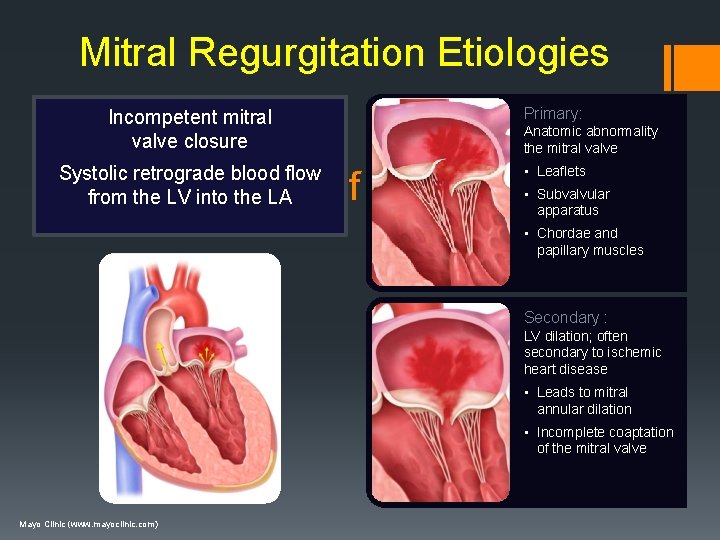
Mitral Regurgitation Etiologies Incompetent mitral valve closure Primary: Systolic retrograde blood flow from the LV into the LA • Leaflets Anatomic abnormality the mitral valve Classification of MR – 2 Types • Subvalvular apparatus • Chordae and papillary muscles Secondary : LV dilation; often secondary to ischemic heart disease • Leads to mitral annular dilation • Incomplete coaptation of the mitral valve Mayo Clinic (www. mayoclinic. com)
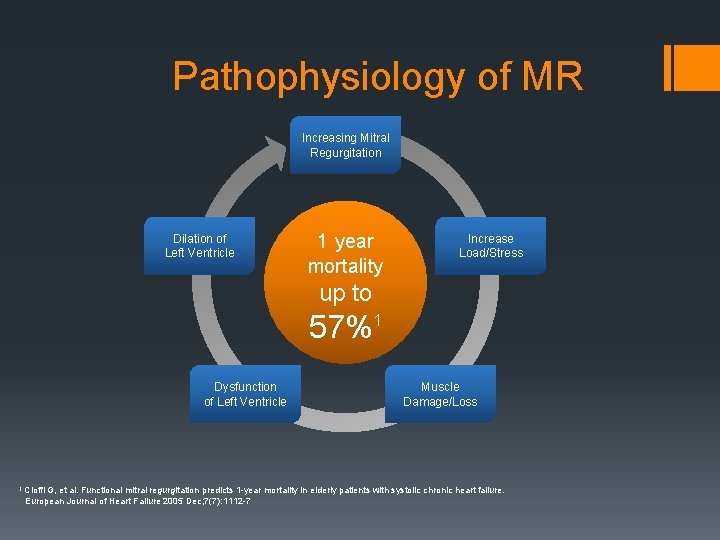
Pathophysiology of MR Increasing Mitral Regurgitation Dilation of Left Ventricle 1 year mortality Increase Load/Stress up to 57%1 Dysfunction of Left Ventricle 1 Cioffi Muscle Damage/Loss G, et al. Functional mitral regurgitation predicts 1 -year mortality in elderly patients with systolic chronic heart failure. European Journal of Heart Failure 2005 Dec; 7(7): 1112 -7
MITRAL REGURGITATION Untreated severe MR is associated with increased morbidity and mortality What about therapy?
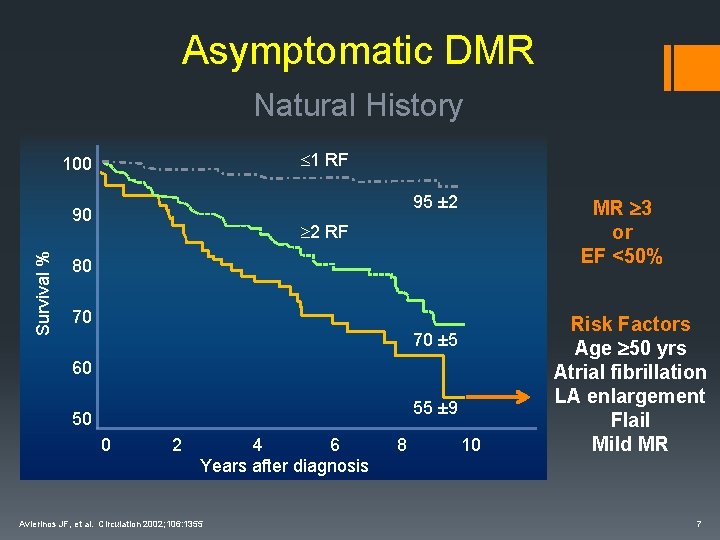
Asymptomatic DMR Natural History 1 RF 100 95 ± 2 Survival % 90 MR 3 or EF <50% 2 RF 80 70 70 ± 5 60 55 ± 9 50 0 2 4 6 Years after diagnosis Avierinos JF, et al. Circulation 2002; 106: 1355 8 10 Risk Factors Age 50 yrs Atrial fibrillation LA enlargement Flail Mild MR 7
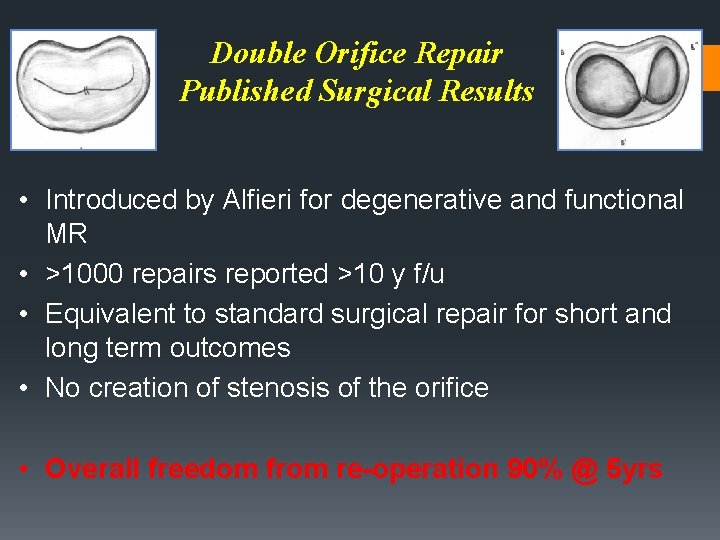
Double Orifice Repair Published Surgical Results • Introduced by Alfieri for degenerative and functional MR • >1000 repairs reported >10 y f/u • Equivalent to standard surgical repair for short and long term outcomes • No creation of stenosis of the orifice • Overall freedom from re-operation 90% @ 5 yrs
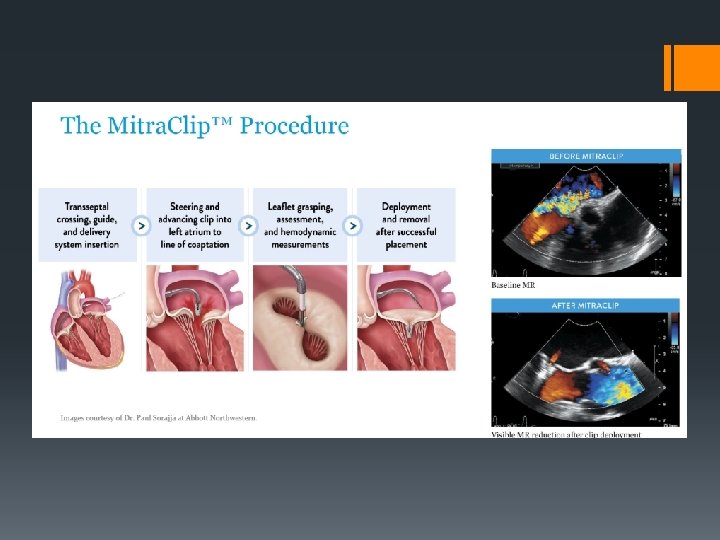
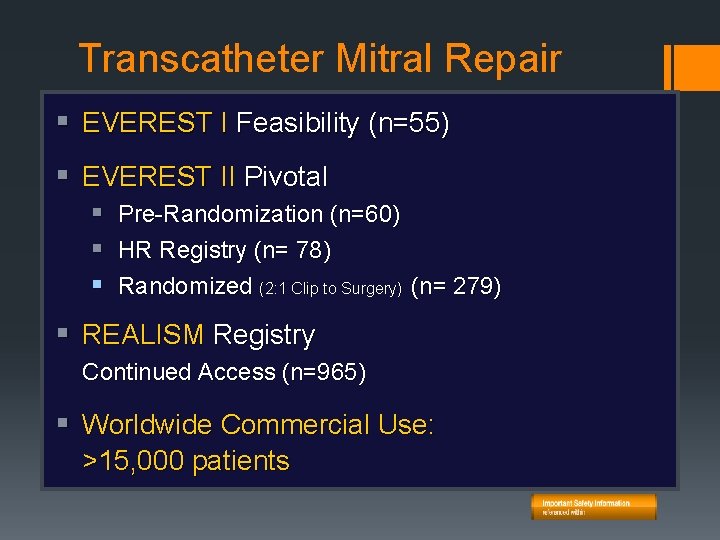
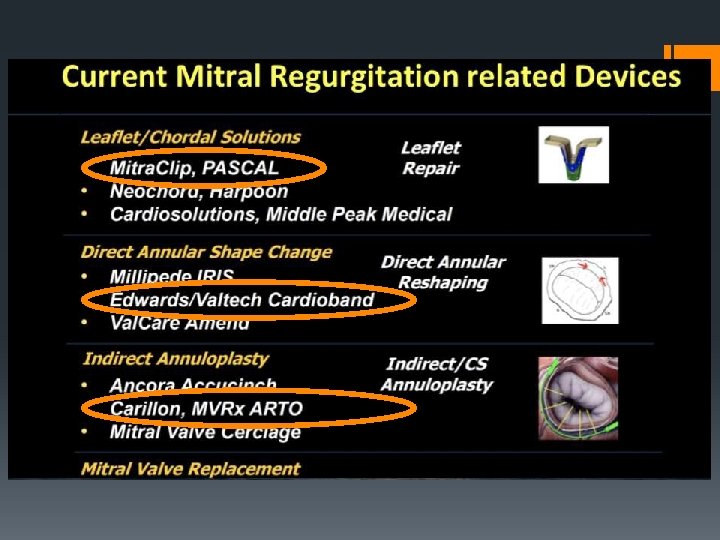
Transcatheter Mitral Repair § EVEREST I Feasibility (n=55) § Mitra. Clip® EVEREST II Pivotal Experience § Pre-Randomization (n=60) § HR Registry (n= 78) § Randomized (2: 1 Clip to Surgery) (n= 279) § REALISM Registry Continued Access (n=965) § Worldwide Commercial Use: >15, 000 patients
Transcatheter Mitral Repair ACC/AHA Guidelines – Primary MR May be considered for prohibitive risk patients with primary MR and severe symptoms despite GDMT (class IIb)
See Important Safety Information Within. © 2019 Abbott. All rights reserved. AP 2947499 -US Rev A
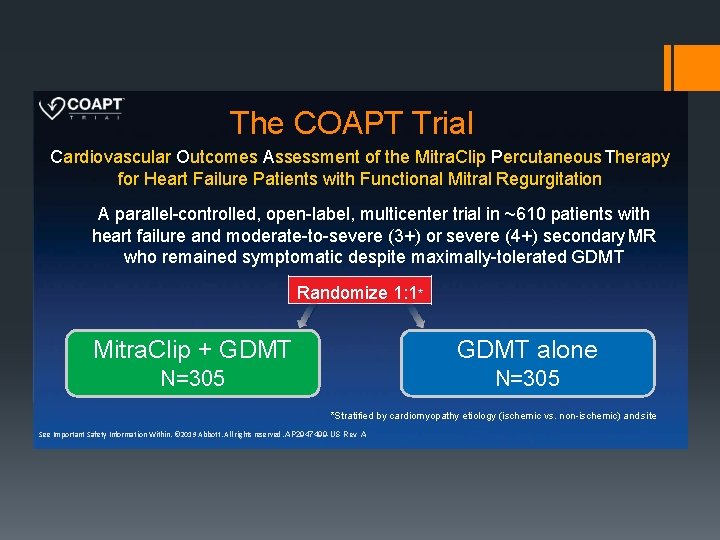
The COAPT Trial Cardiovascular Outcomes Assessment of the Mitra. Clip Percutaneous Therapy for Heart Failure Patients with Functional Mitral Regurgitation A parallel-controlled, open-label, multicenter trial in ~610 patients with heart failure and moderate-to-severe (3+) or severe (4+) secondary MR who remained symptomatic despite maximally-tolerated GDMT Randomize 1: 1* Mitra. Clip + GDMT alone N=305 *Stratified by cardiomyopathy etiology (ischemic vs. non-ischemic) and site See Important Safety Information Within. © 2019 Abbott. All rights reserved. AP 2947499 -US Rev A
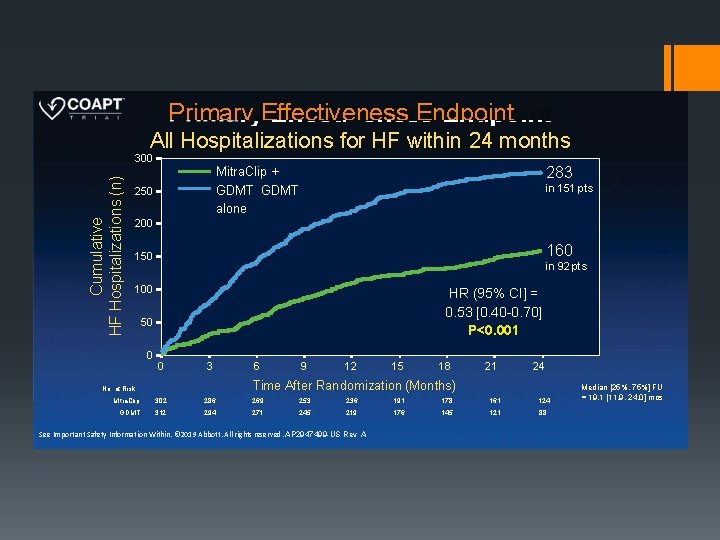
Primary Effectiveness Endpoint All Hospitalizations for HF within 24 months Cumulative HF Hospitalizations (n) 300 283 Mitra. Clip + GDMT alone 250 in 151 pts 200 160 150 in 92 pts 100 HR (95% CI] = 0. 53 [0. 40 -0. 70] P<0. 001 50 0 0 3 6 Mitra. Clip 302 286 269 253 236 191 178 161 124 GDMT 312 294 271 245 219 176 145 121 88 9 12 15 18 21 24 Time After Randomization (Months) No. at Risk: See Important Safety Information Within. © 2019 Abbott. All rights reserved. AP 2947499 -US Rev A Median [25%, 75%] FU = 19. 1 [11. 9, 24. 0] mos
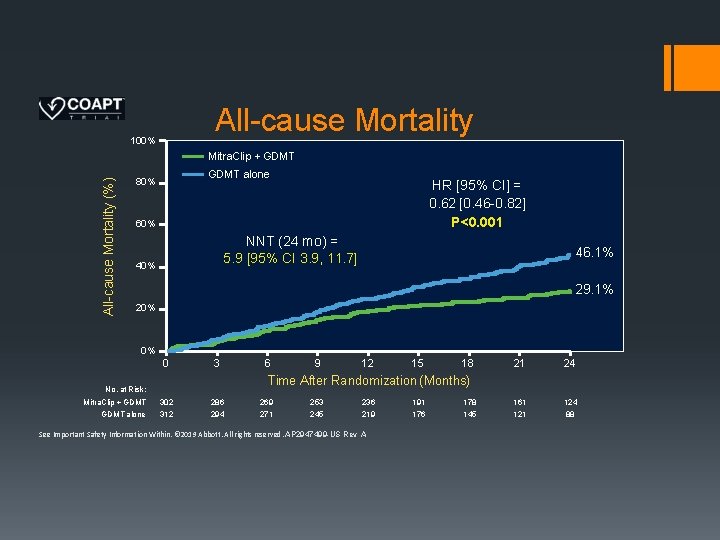
All-cause Mortality 100% All-cause Mortality (%) Mitra. Clip + GDMT alone 80% HR [95% CI] = 0. 62 [0. 46 -0. 82] P<0. 001 60% NNT (24 mo) = 5. 9 [95% CI 3. 9, 11. 7] 40% 46. 1% 29. 1% 20% 0% 0 3 9 12 15 18 21 24 161 124 88 Time After Randomization (Months) No. at Risk: Mitra. Clip + GDMT alone 6 302 312 286 294 269 271 253 245 236 219 See Important Safety Information Within. © 2019 Abbott. All rights reserved. AP 2947499 -US Rev A 191 176 178 145
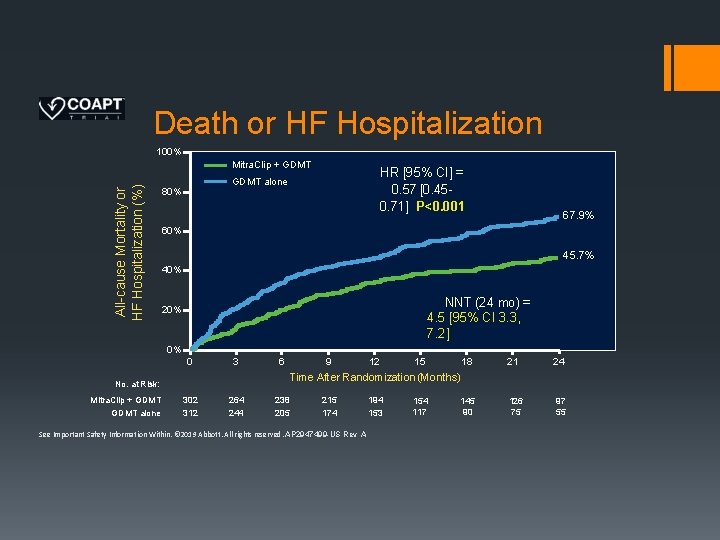
Death or HF Hospitalization 100% All-cause Mortality or HF Hospitalization (%) Mitra. Clip + GDMT HR [95% CI] = 0. 57 [0. 450. 71] P<0. 001 GDMT alone 80% 67. 9% 60% 45. 7% 40% NNT (24 mo) = 4. 5 [95% CI 3. 3, 7. 2] 20% 0% 0 3 6 12 18 21 24 145 90 126 75 97 55 15 Time After Randomization (Months) No. at Risk: Mitra. Clip + GDMT alone 9 302 312 264 244 238 205 215 174 See Important Safety Information Within. © 2019 Abbott. All rights reserved. AP 2947499 -US Rev A 194 153 154 117
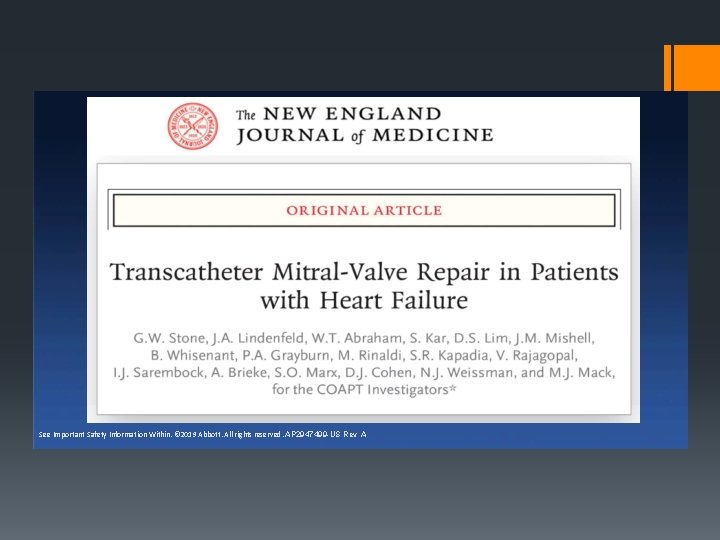
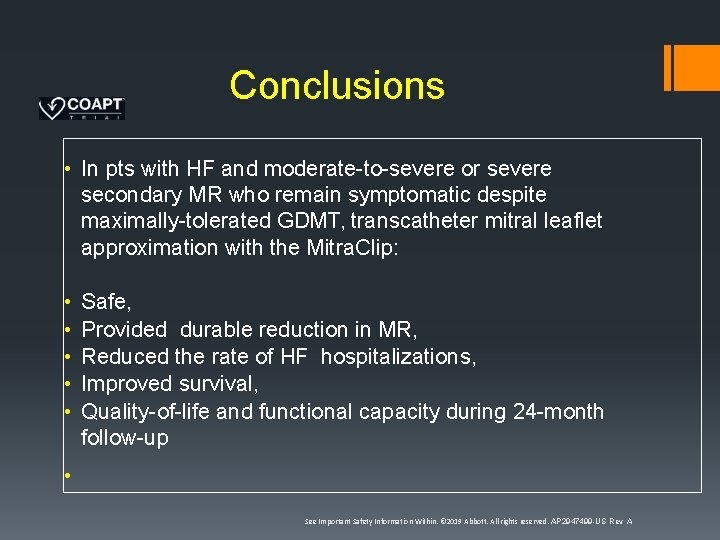
Conclusions • In pts with HF and moderate-to-severe or severe secondary MR who remain symptomatic despite maximally-tolerated GDMT, transcatheter mitral leaflet approximation with the Mitra. Clip: • • • Safe, Provided durable reduction in MR, Reduced the rate of HF hospitalizations, Improved survival, Quality-of-life and functional capacity during 24 -month follow-up • See Important Safety Information Within. © 2019 Abbott. All rights reserved. AP 2947499 -US Rev A
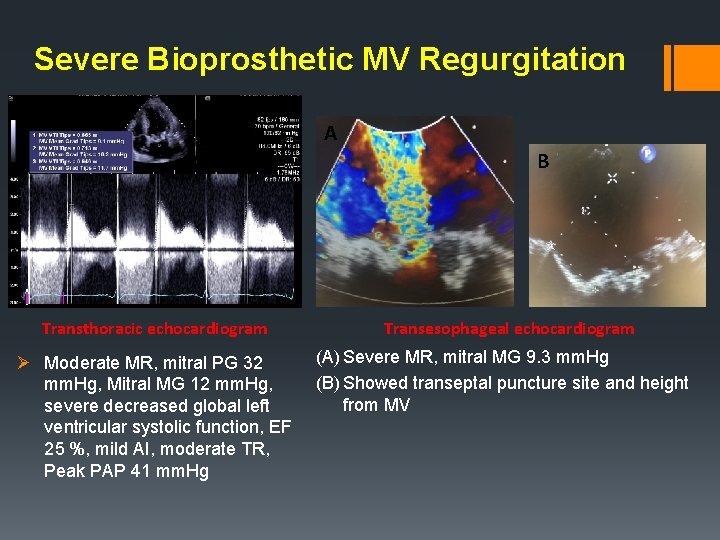
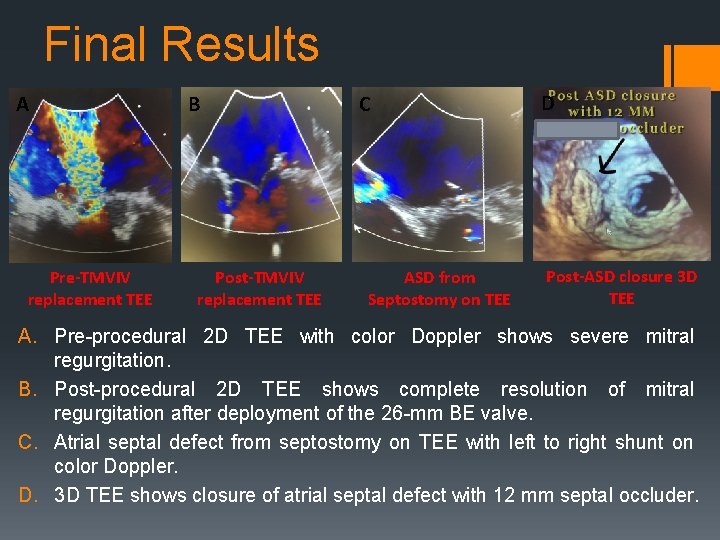
Severe Bioprosthetic MV Regurgitation A B Transthoracic echocardiogram Ø Moderate MR, mitral PG 32 mm. Hg, Mitral MG 12 mm. Hg, severe decreased global left ventricular systolic function, EF 25 %, mild AI, moderate TR, Peak PAP 41 mm. Hg Transesophageal echocardiogram (A) Severe MR, mitral MG 9. 3 mm. Hg (B) Showed transeptal puncture site and height from MV
Final Results A Pre-TMVIV replacement TEE B Post-TMVIV replacement TEE C ASD from Septostomy on TEE D Post-ASD closure 3 D TEE A. Pre-procedural 2 D TEE with color Doppler shows severe mitral regurgitation. B. Post-procedural 2 D TEE shows complete resolution of mitral regurgitation after deployment of the 26 -mm BE valve. C. Atrial septal defect from septostomy on TEE with left to right shunt on color Doppler. D. 3 D TEE shows closure of atrial septal defect with 12 mm septal occluder.
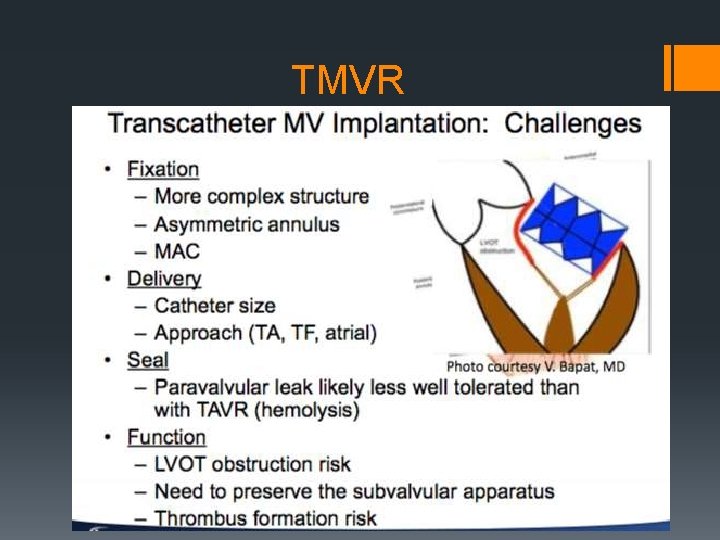
TMVR
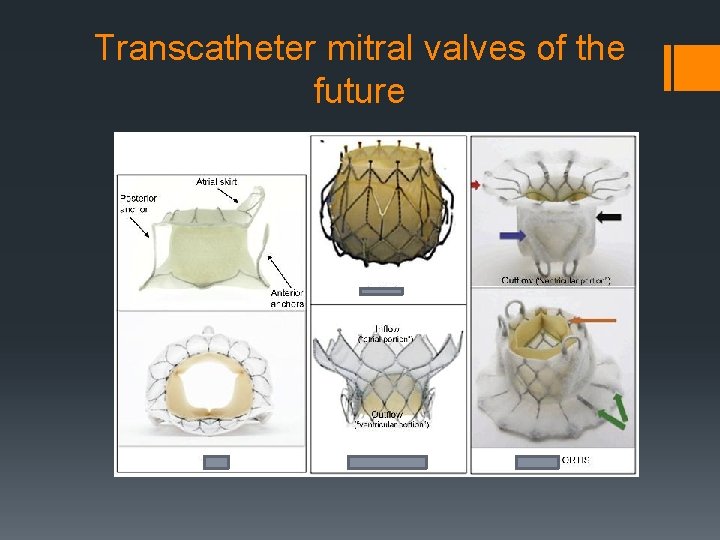
Transcatheter mitral valves of the future
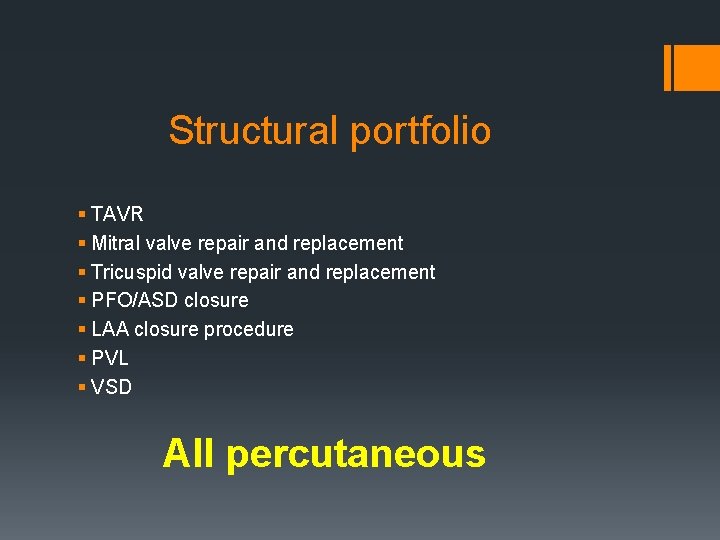
Structural portfolio § TAVR § Mitral valve repair and replacement § Tricuspid valve repair and replacement § PFO/ASD closure § LAA closure procedure § PVL § VSD All percutaneous
Thank you