
Mitosis What is Mitosis Division of the nucleus
- Slides: 20
Mitosis
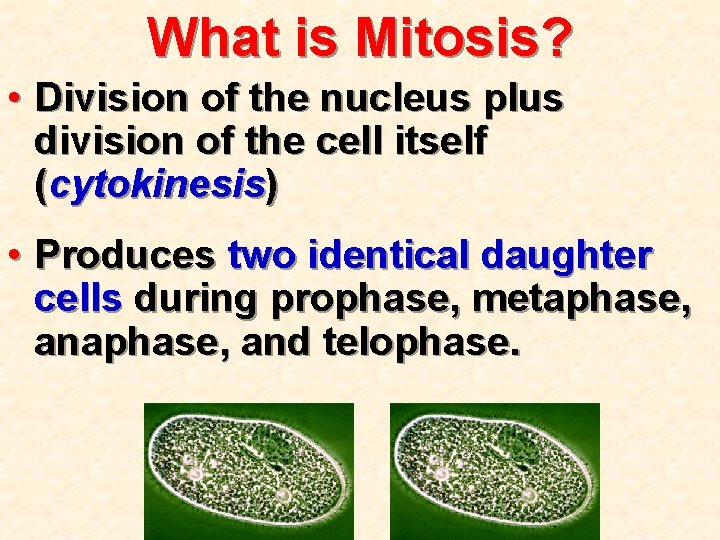
What is Mitosis? • Division of the nucleus plus division of the cell itself (cytokinesis) • Produces two identical daughter cells during prophase, metaphase, and telophase.
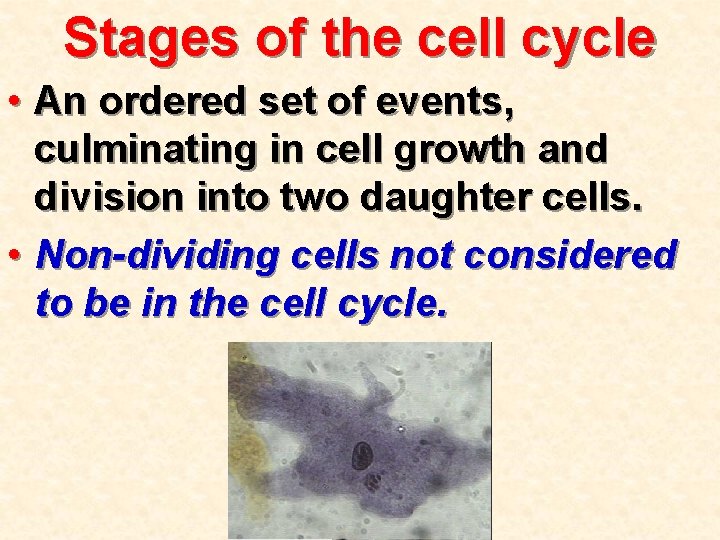
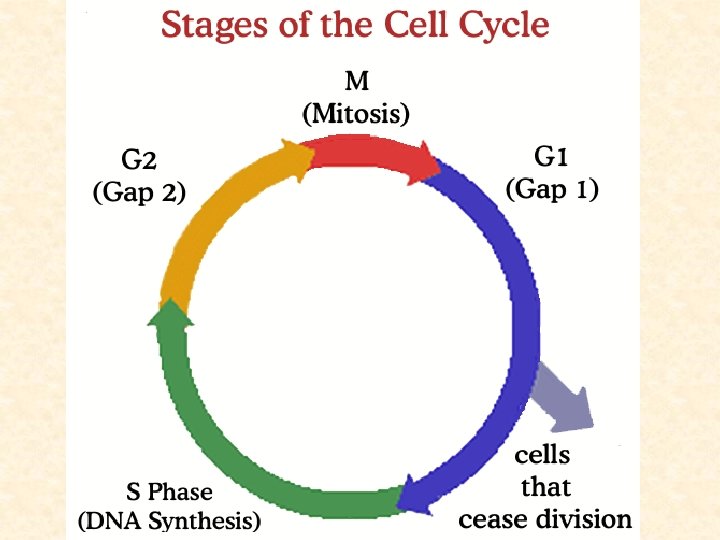
Stages of the cell cycle • An ordered set of events, culminating in cell growth and division into two daughter cells. • Non-dividing cells not considered to be in the cell cycle.
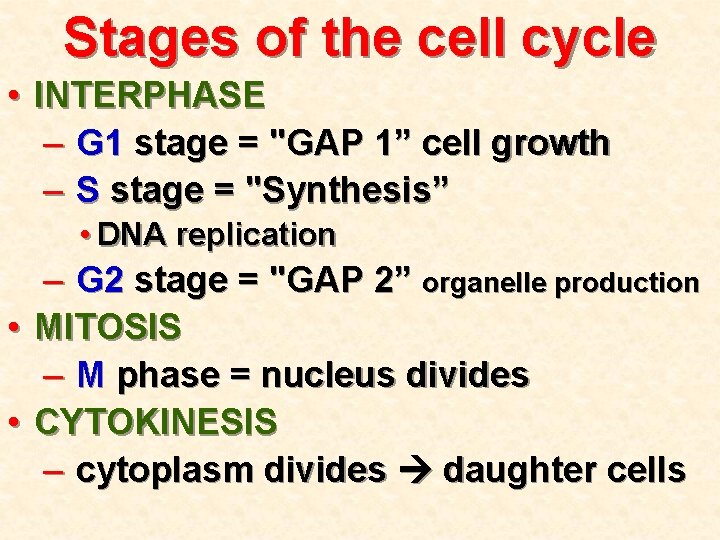
Stages of the cell cycle • INTERPHASE – G 1 stage = "GAP 1” cell growth – S stage = "Synthesis” • DNA replication – G 2 stage = "GAP 2” organelle production • MITOSIS – M phase = nucleus divides • CYTOKINESIS – cytoplasm divides daughter cells
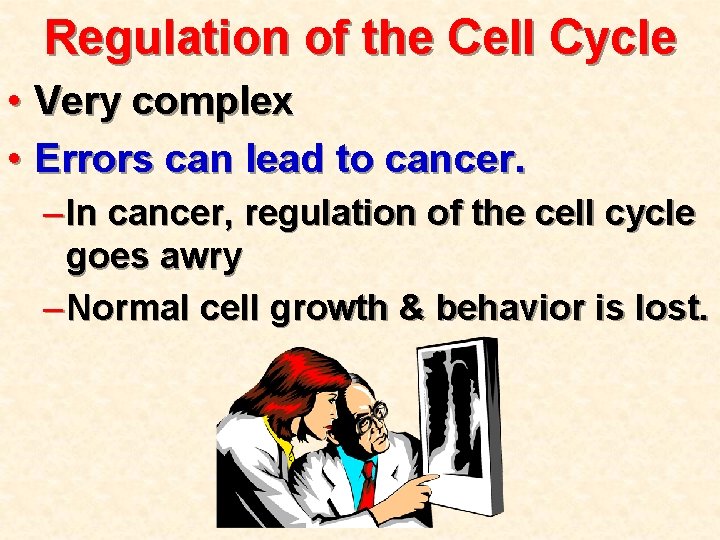
Regulation of the Cell Cycle • Very complex • Errors can lead to cancer. – In cancer, regulation of the cell cycle goes awry – Normal cell growth & behavior is lost.
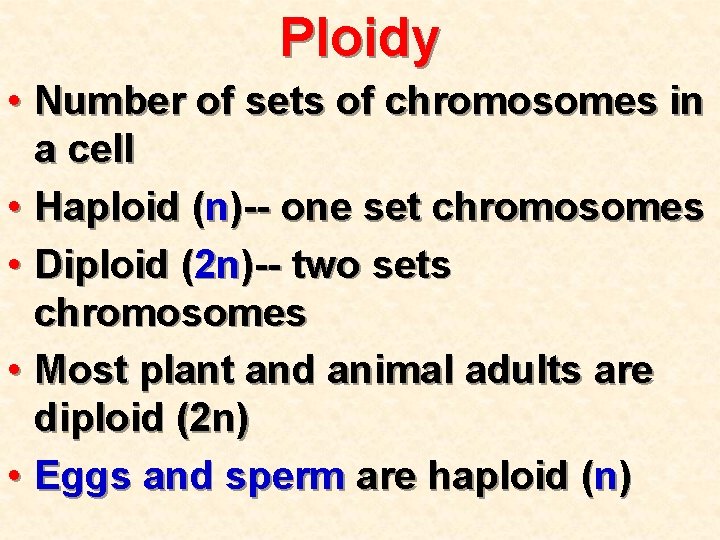
Ploidy • Number of sets of chromosomes in a cell • Haploid (n)-- one set chromosomes • Diploid (2 n)-- two sets chromosomes • Most plant and animal adults are diploid (2 n) • Eggs and sperm are haploid (n)
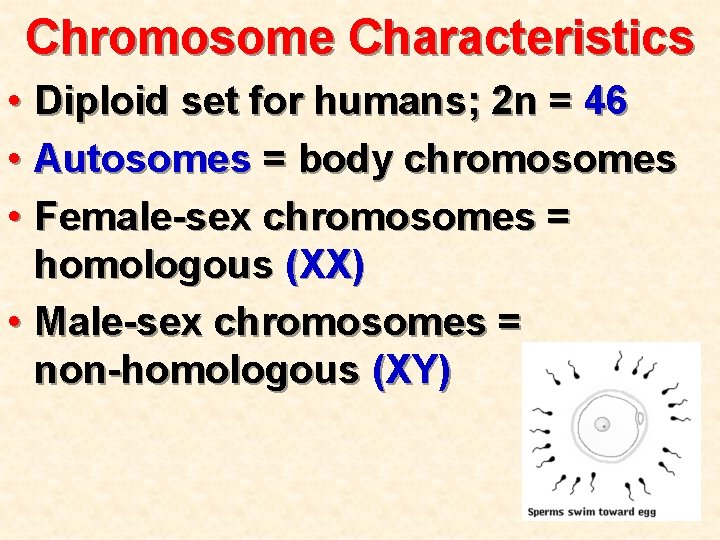
Chromosome Characteristics • Diploid set for humans; 2 n = 46 • Autosomes = body chromosomes • Female-sex chromosomes = homologous (XX) • Male-sex chromosomes = non-homologous (XY)
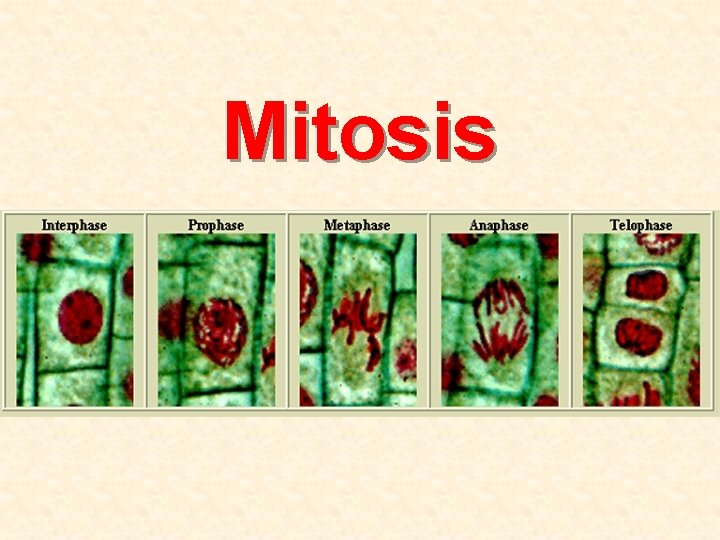
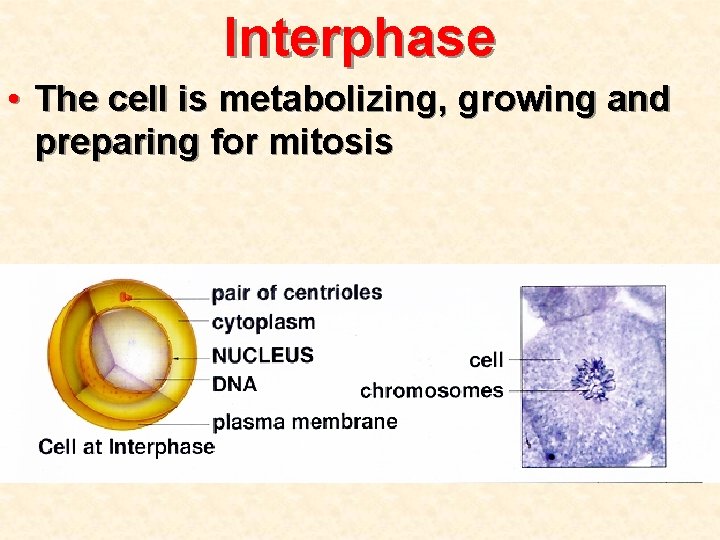
Interphase • The cell is metabolizing, growing and preparing for mitosis
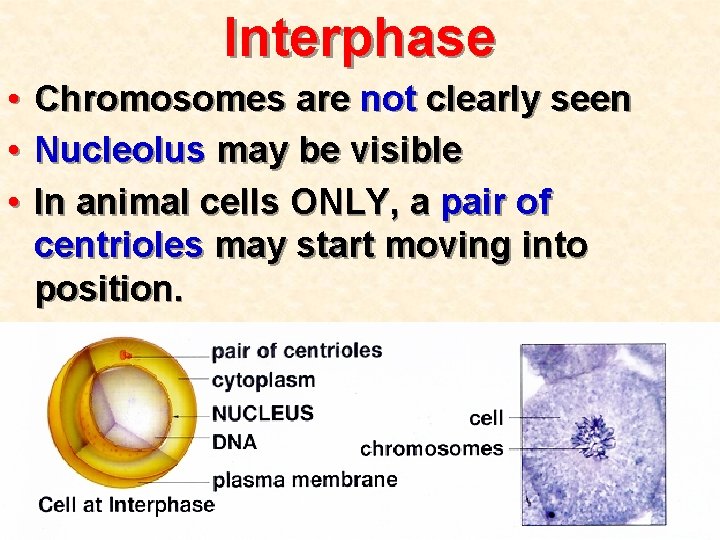
Interphase • • • Chromosomes are not clearly seen Nucleolus may be visible In animal cells ONLY, a pair of centrioles may start moving into position.
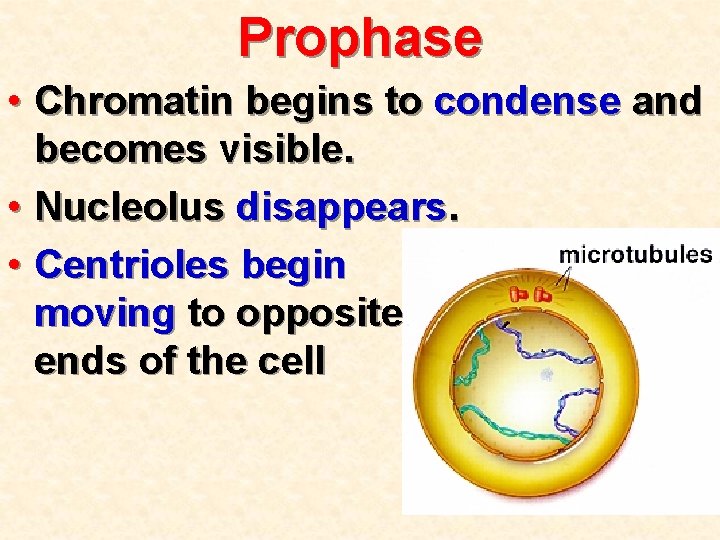
Prophase • Chromatin begins to condense and becomes visible. • Nucleolus disappears. • Centrioles begin moving to opposite ends of the cell
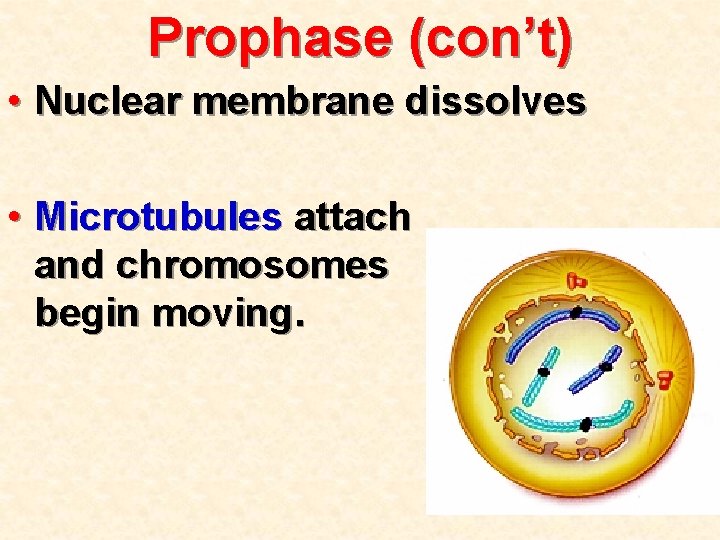
Prophase (con’t) • Nuclear membrane dissolves • Microtubules attach and chromosomes begin moving.
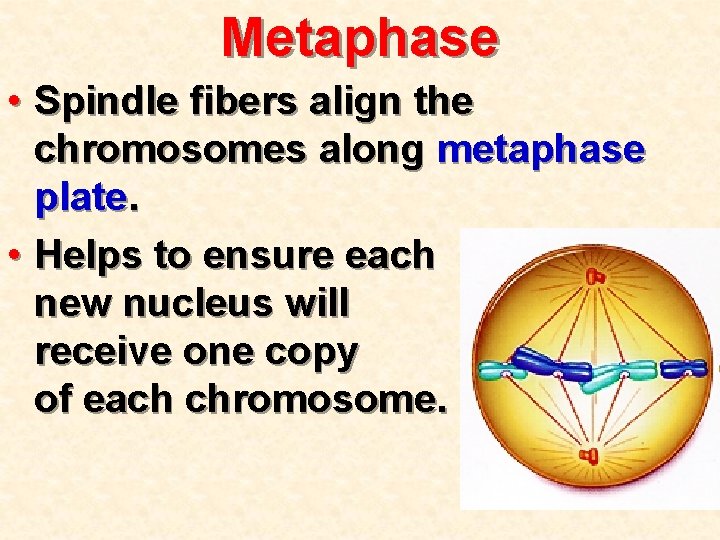
Metaphase • Spindle fibers align the chromosomes along metaphase plate. • Helps to ensure each new nucleus will receive one copy of each chromosome.
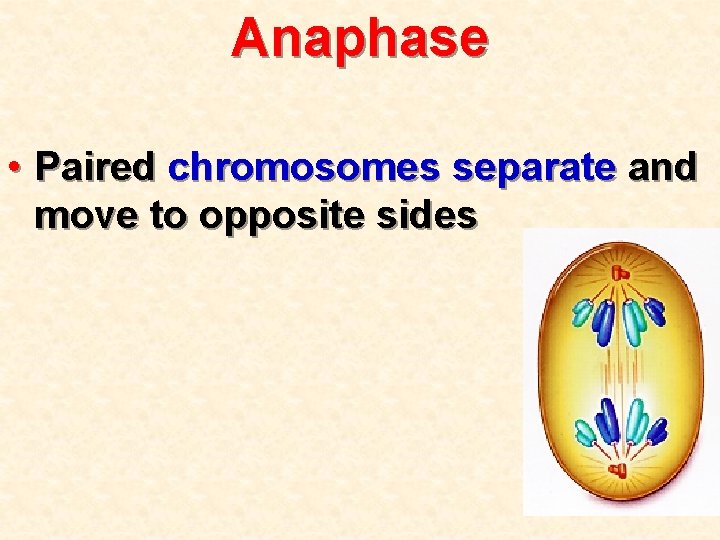
Anaphase • Paired chromosomes separate and move to opposite sides
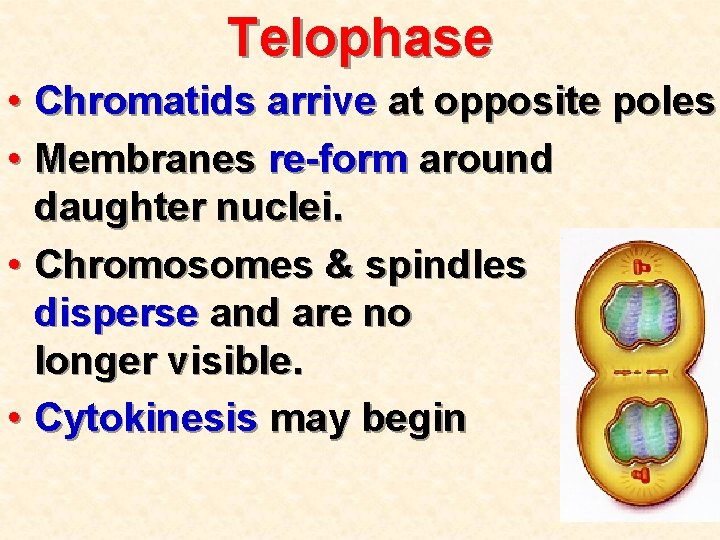
Telophase • Chromatids arrive at opposite poles • Membranes re-form around daughter nuclei. • Chromosomes & spindles disperse and are no longer visible. • Cytokinesis may begin
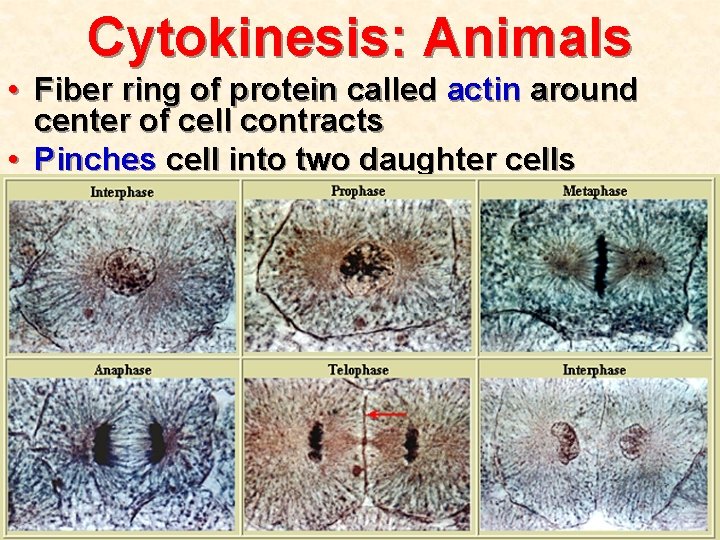
Cytokinesis: Animals • Fiber ring of protein called actin around center of cell contracts • Pinches cell into two daughter cells
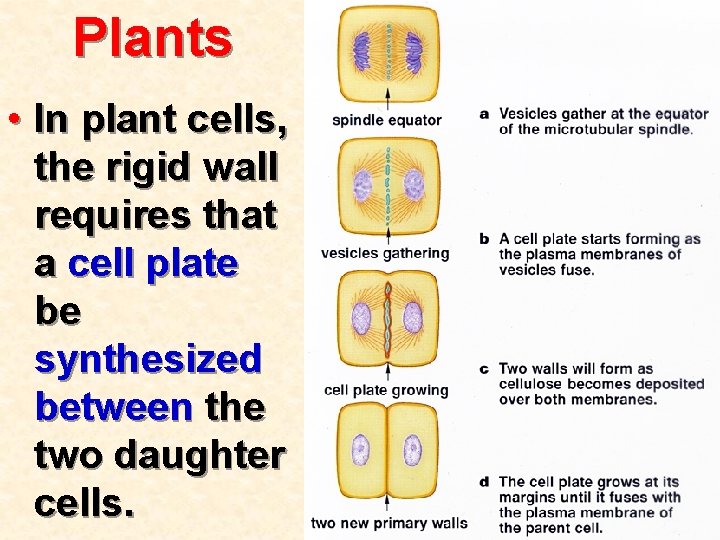
Plants • In plant cells, the rigid wall requires that a cell plate be synthesized between the two daughter cells.
Asexual Reproduction • Uses only mitosis • Cells duplicate to form 2 exact copies (clones) of each other • Most primitive form of reproduction –NO GENETIC VARIATION • Used by higher organisms when conditions are not favorable for sexual reproduction
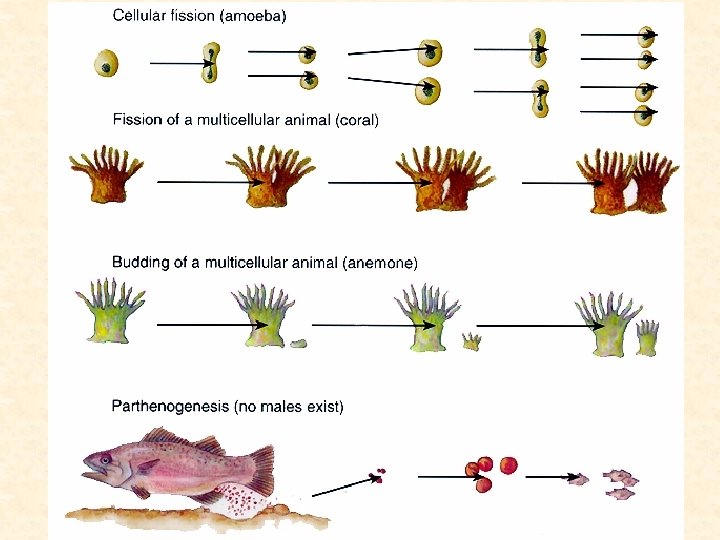
Types of Asexual Reprod. • Binary fission • Budding • Fragmentation • Regeneration • Spore formation • Parthenogenesis