
Mitosis the Cell Cycle Fall 2009 Cell Growth
- Slides: 18
Mitosis & the Cell Cycle Fall 2009
Cell Growth & Development Are cells of organisms the same size? Do your cells get bigger as you grow, or do you just produce more cells? n When talking about Cell Size…… Smaller is Better! n The larger a cell becomes, the more demands the cell places on its DNA, and the harder it is to supply with nutrients. n
Cell Division Before a cell becomes to large, a growing cell will divide. n Cell division is the process by which a Single cell divides into 2 Daughter cells. n Cell Division = the series of events that cells go through as they grow and divide. n
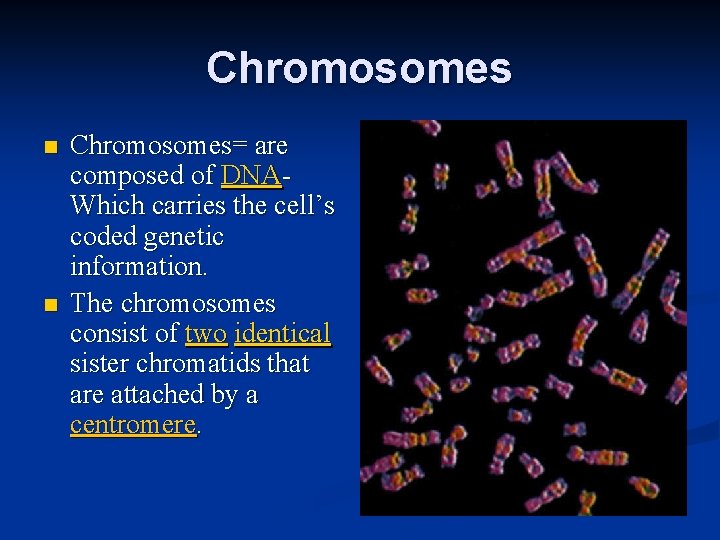
Chromosomes n n Chromosomes= are composed of DNAWhich carries the cell’s coded genetic information. The chromosomes consist of two identical sister chromatids that are attached by a centromere.
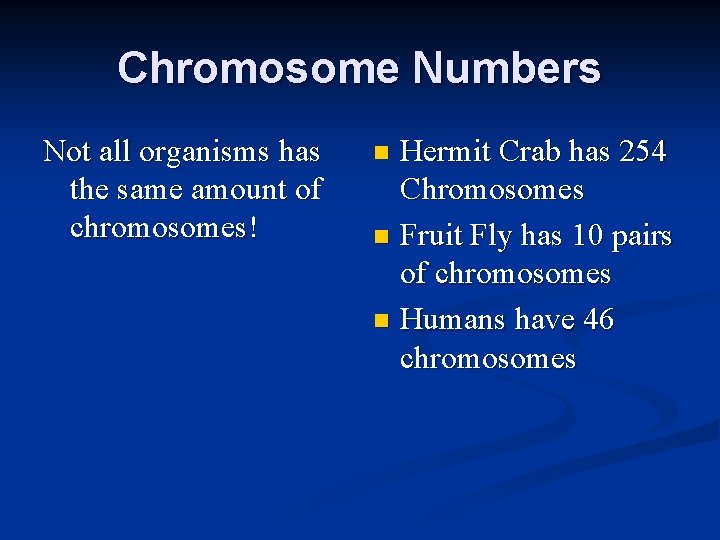
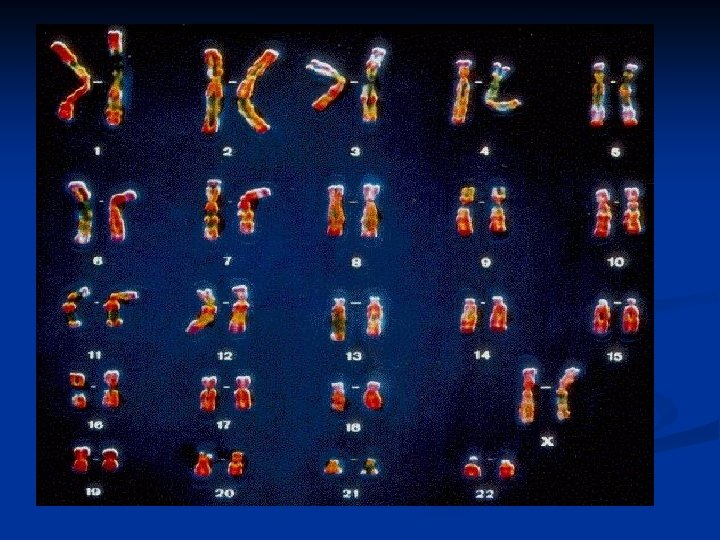
Chromosome Numbers Not all organisms has the same amount of chromosomes! Hermit Crab has 254 Chromosomes n Fruit Fly has 10 pairs of chromosomes n Humans have 46 chromosomes n
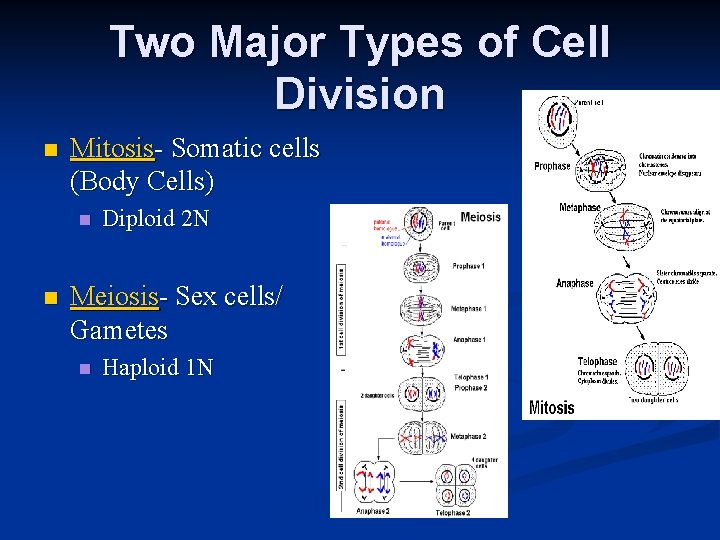
Two Major Types of Cell Division n Mitosis- Somatic cells (Body Cells) n n Diploid 2 N Meiosis- Sex cells/ Gametes n Haploid 1 N
Mitosis is the process by which the genetic information is replicated and distributed to daughter cells. n 2 diploid(2 N) daughter cells are produced from 1 diploid (2 N) parent cell. n The Daughter cells are genetically identical to the parent cell. n There are 4 major stages to mitosis, PMAT. Mitosis does NOT include interphase. n
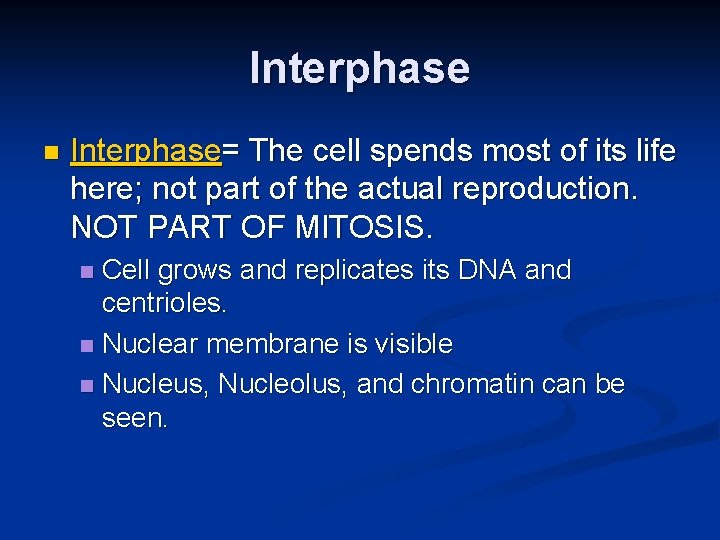
Interphase n Interphase= The cell spends most of its life here; not part of the actual reproduction. NOT PART OF MITOSIS. Cell grows and replicates its DNA and centrioles. n Nuclear membrane is visible n Nucleus, Nucleolus, and chromatin can be seen. n
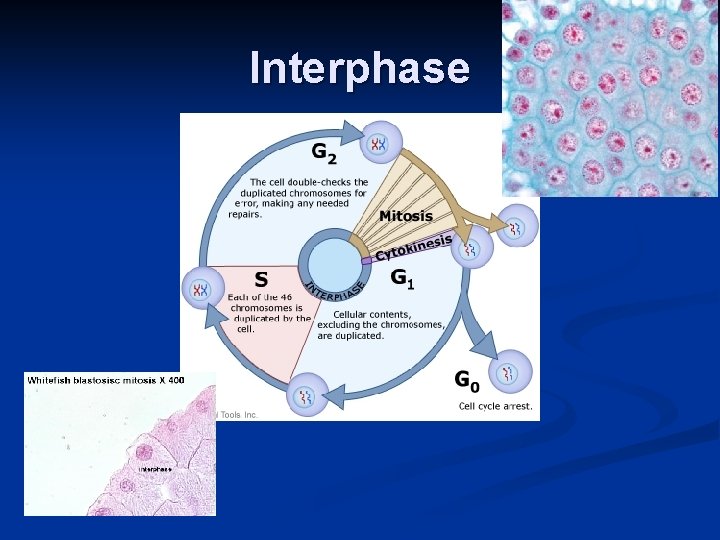
Interphase
G 1, S, and G 2 Phase G 1 = Cell Grows and Continues with Cellular Functions n S = Synthesize new DNA and Proteins n G 2 = Preparation for Division, Produces Organelles needed for division. n
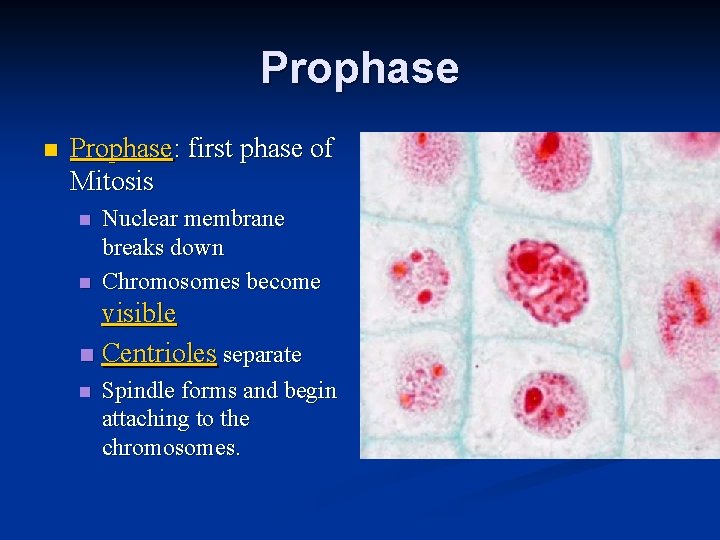
Prophase n Prophase: first phase of Mitosis n n Nuclear membrane breaks down Chromosomes become visible n Centrioles separate n Spindle forms and begin attaching to the chromosomes.
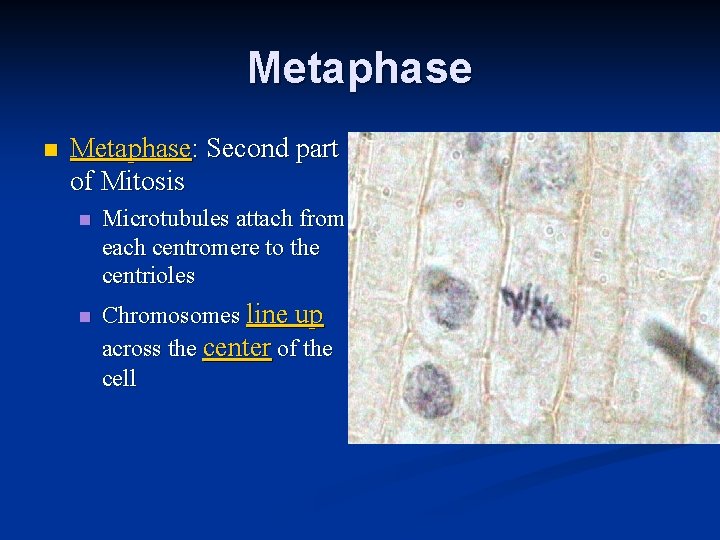
Metaphase n Metaphase: Second part of Mitosis n n Microtubules attach from each centromere to the centrioles Chromosomes line up across the center of the cell
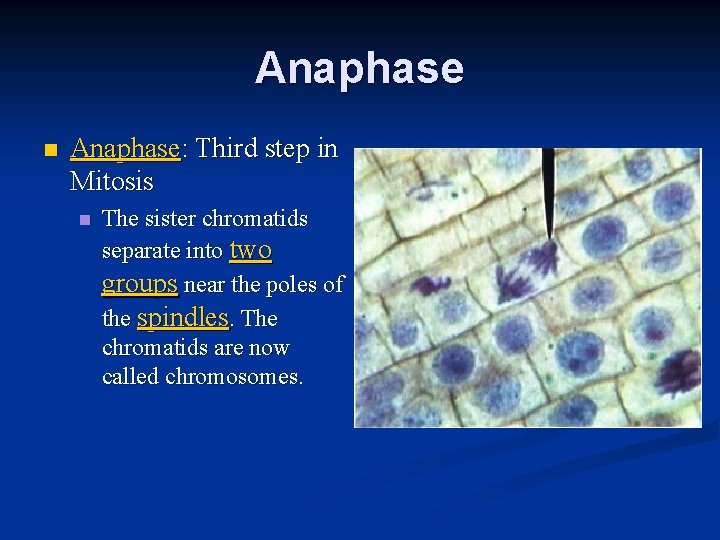
Anaphase n Anaphase: Third step in Mitosis n The sister chromatids separate into two groups near the poles of the spindles. The chromatids are now called chromosomes.
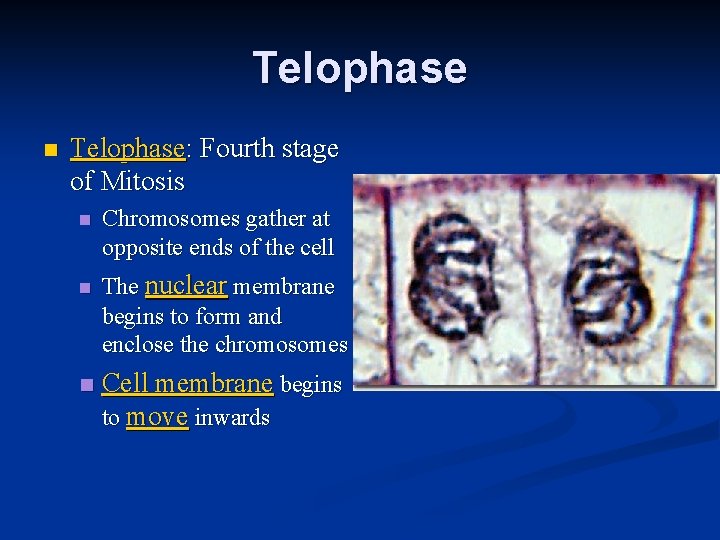
Telophase n Telophase: Fourth stage of Mitosis n n n Chromosomes gather at opposite ends of the cell The nuclear membrane begins to form and enclose the chromosomes Cell membrane begins to move inwards
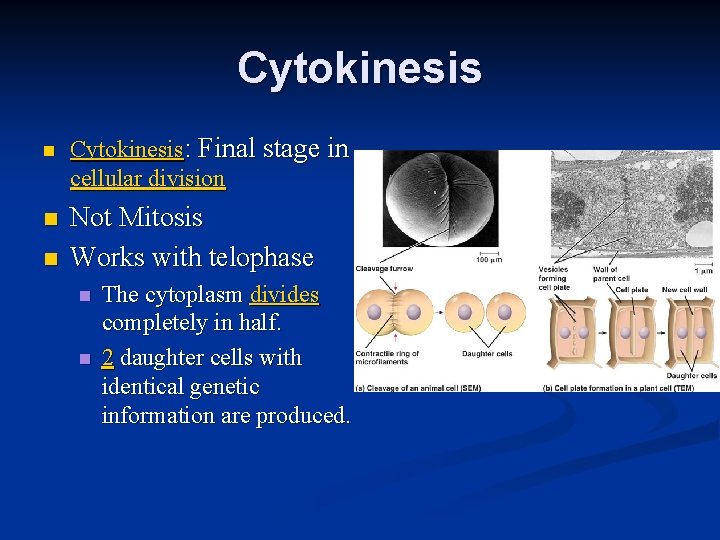
Cytokinesis n n n Cytokinesis: Final stage in cellular division Not Mitosis Works with telophase n n The cytoplasm divides completely in half. 2 daughter cells with identical genetic information are produced.
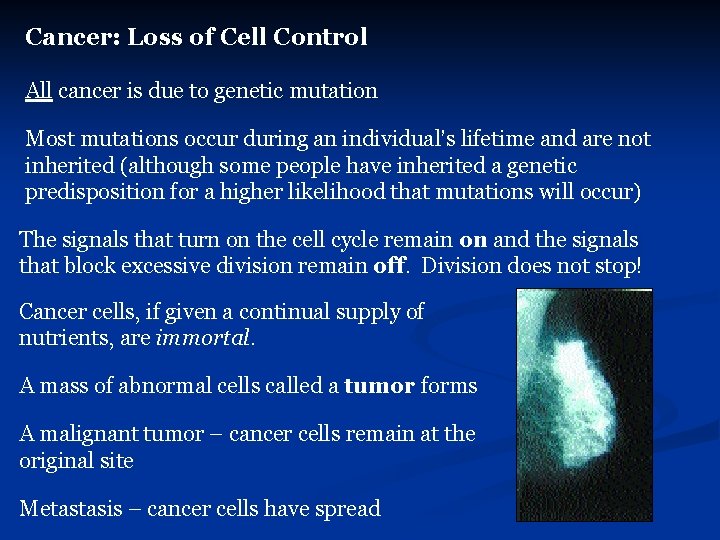
Cancer: Loss of Cell Control All cancer is due to genetic mutation Most mutations occur during an individual’s lifetime and are not inherited (although some people have inherited a genetic predisposition for a higher likelihood that mutations will occur) The signals that turn on the cell cycle remain on and the signals that block excessive division remain off. Division does not stop! Cancer cells, if given a continual supply of nutrients, are immortal. A mass of abnormal cells called a tumor forms A malignant tumor – cancer cells remain at the original site Metastasis – cancer cells have spread
Treatment 1. High-energy radiation that damages DNA in cancer cells Cancer cells have lost the ability to repair damage! 2. Chemotheraphy – toxins that interfere with cell division are administered