
Mitosis Notes Mitosis is Asexual Reproduction Produces genetically
- Slides: 25
Mitosis Notes
Mitosis is Asexual Reproduction • Produces genetically identical cells to the parent cell. • Done by somatic (body) cells in humans
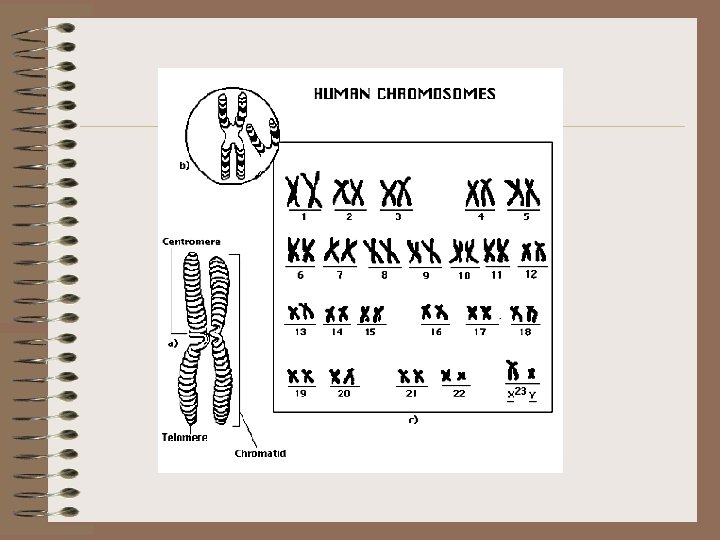
Somatic cells… • …Are diploid or 2 n • Have two of each type of chromosome • Humans have 23 pairs or 46 total chromosomes
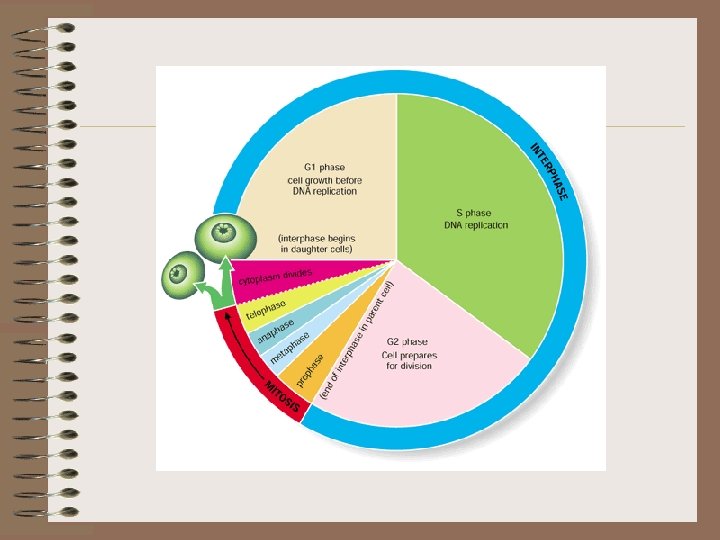
Cell Cycle • Series of events that cells go through as they grow and divide. 4 Phases: G 1, S, G 2, and M
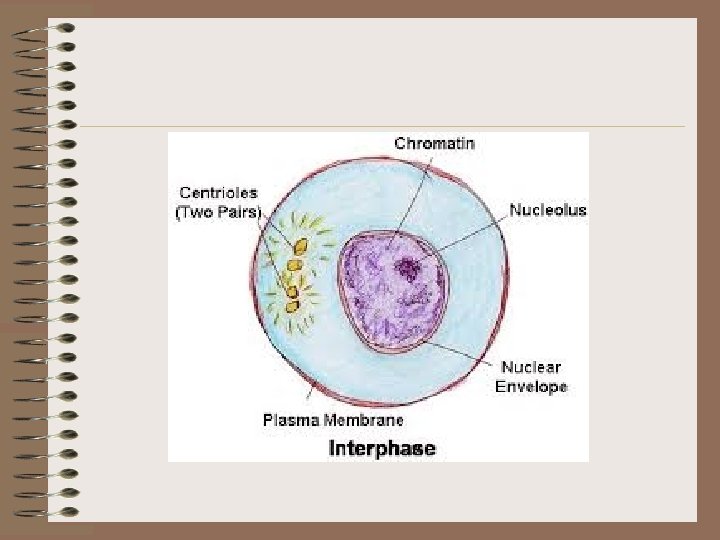
Interphase… • …consists of G 1, S, and G 2 • Cell Division = M Phase = Mitosis and Cytokinesis • Mitosis = Prophase, Metaphase, Anaphase, Telophase
*Interphase • G 1 = Cell growth • S = DNA Replication • G 2 = Preparation for Mitosis • (more organelles produced)
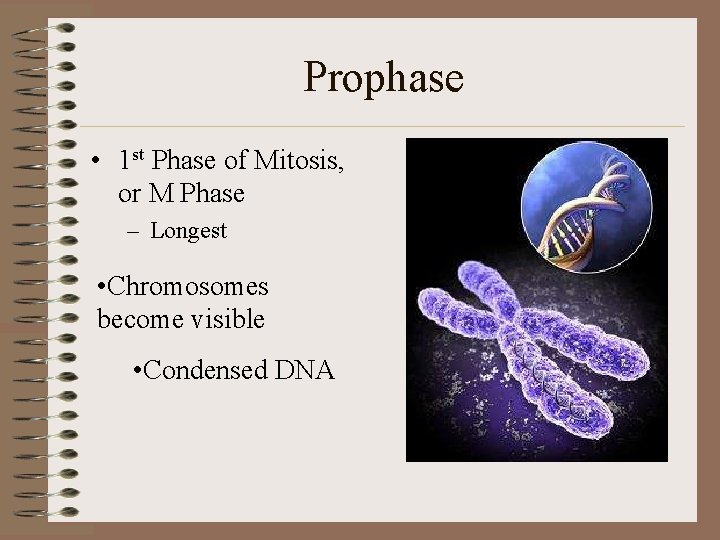
Prophase • 1 st Phase of Mitosis, or M Phase – Longest • Chromosomes become visible • Condensed DNA
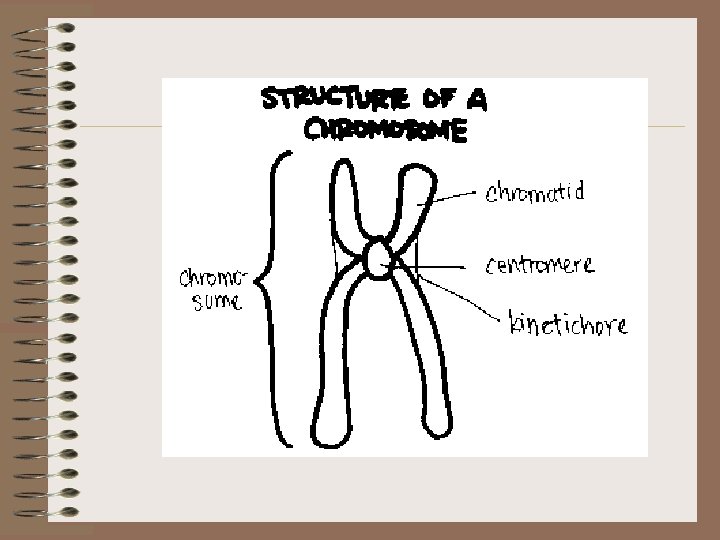
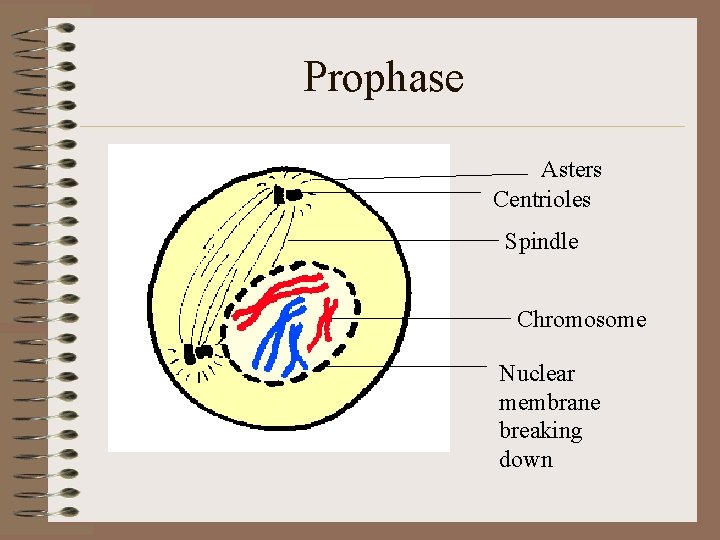
Prophase (cont. ) • Centrioles (in animals) move to the poles • Aster Microtubules form around centrioles • Spindle Microtubules Form • Attach to the centromere and help to move the chromosomes
Prophase (cont) • Nuclear Membrane breaks down • Nucleolus disappears • Chromosomes moving towards the equator
Prophase Asters Centrioles Spindle Chromosome Nuclear membrane breaking down
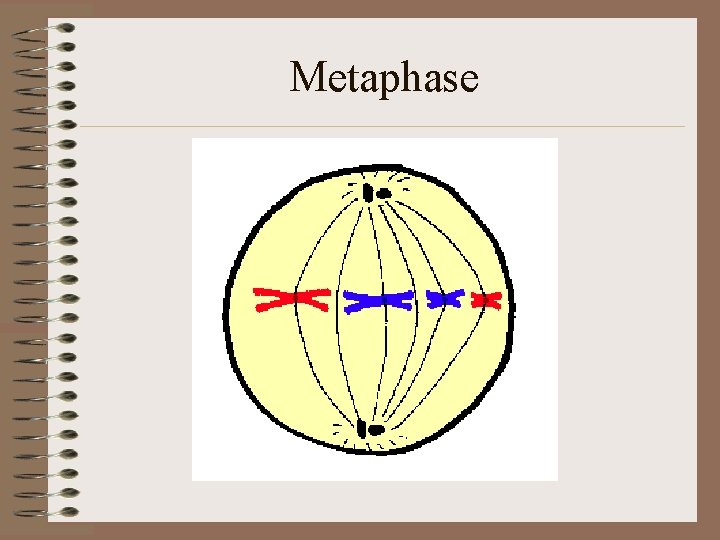
Metaphase • 2 nd Phase of Mitosis • Chromosomes line up in the middle of the cell
Metaphase
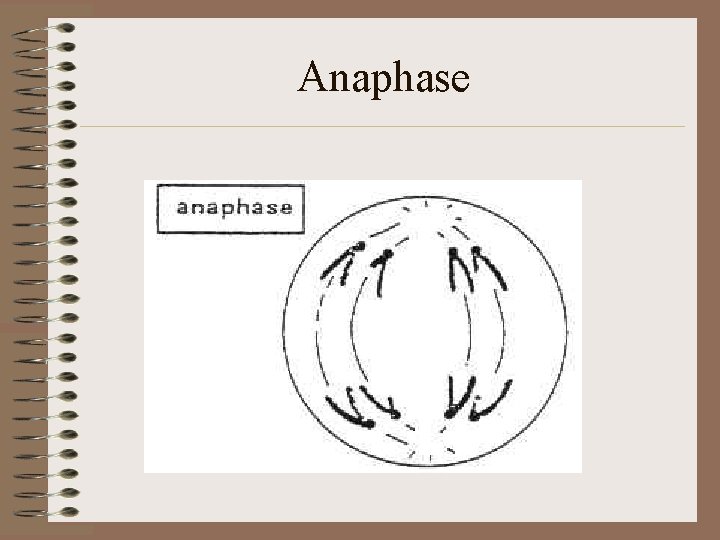
Anaphase • 3 rd Phase of Mitosis • Centromeres Split • Sister chromatids now become individual chromosomes • Chromosomes move to the poles
Anaphase
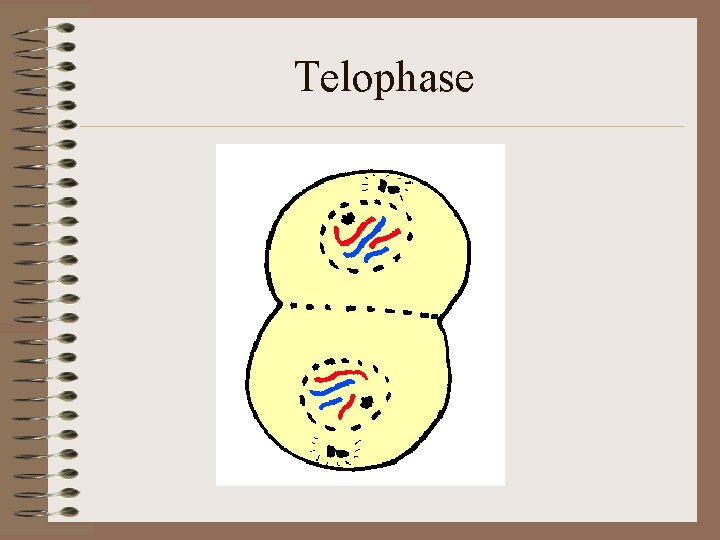
Telophase • 4 th Phase of Mitosis • Chromosomes begin to unwind and become chromatin again • Nuclear Membrane and Nucleolus reforms • Spindles and Asters break apart
Telophase
• Mitosis or division of the nucleus is complete • Cytokinesis has to occur to divide the cell or cytoplasm • Usually occurs during Telophase
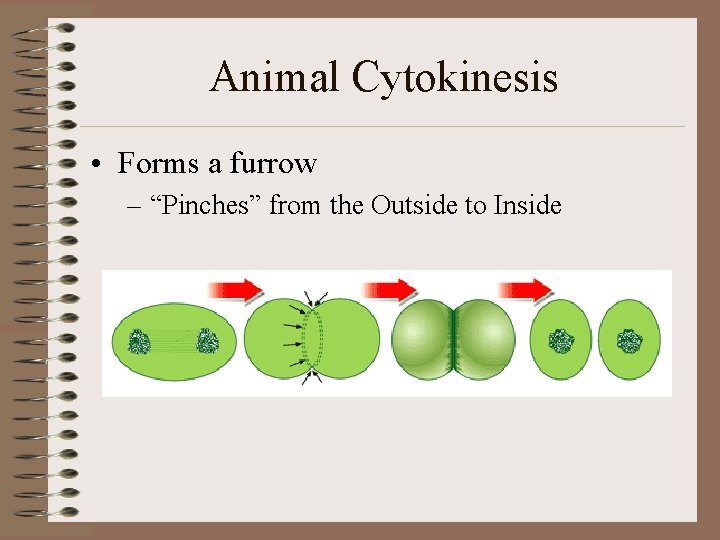
Animal Cytokinesis • Forms a furrow – “Pinches” from the Outside to Inside
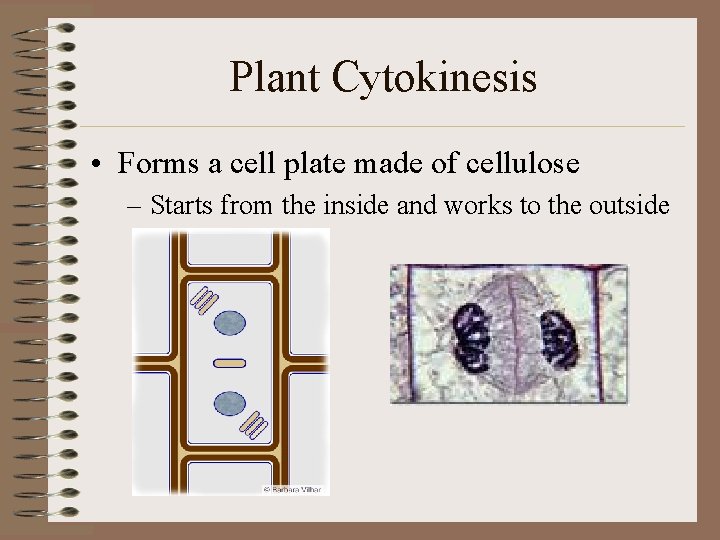
Plant Cytokinesis • Forms a cell plate made of cellulose – Starts from the inside and works to the outside
Product • 2 Genetically Identical Daughter Cells • If not identical: 1. Cell will not function properly 2. Cell can die
Importance of Mitosis 1. Growth 2. Healing 3. Regeneration