
Mitosis is a type of cell division that

- Slides: 5
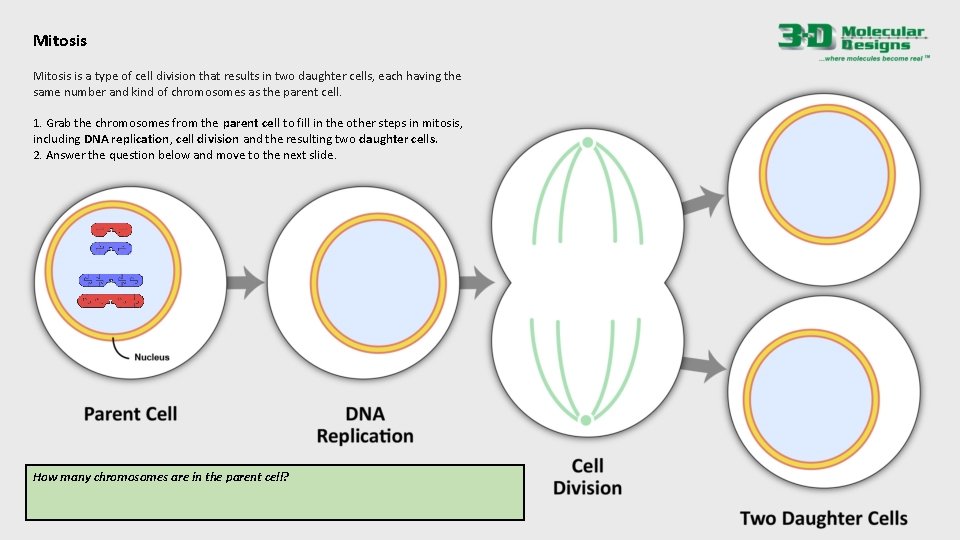
Mitosis is a type of cell division that results in two daughter cells, each having the same number and kind of chromosomes as the parent cell. 1. Grab the chromosomes from the parent cell to fill in the other steps in mitosis, including DNA replication, cell division and the resulting two daughter cells. 2. Answer the question below and move to the next slide. How many chromosomes are in the parent cell?
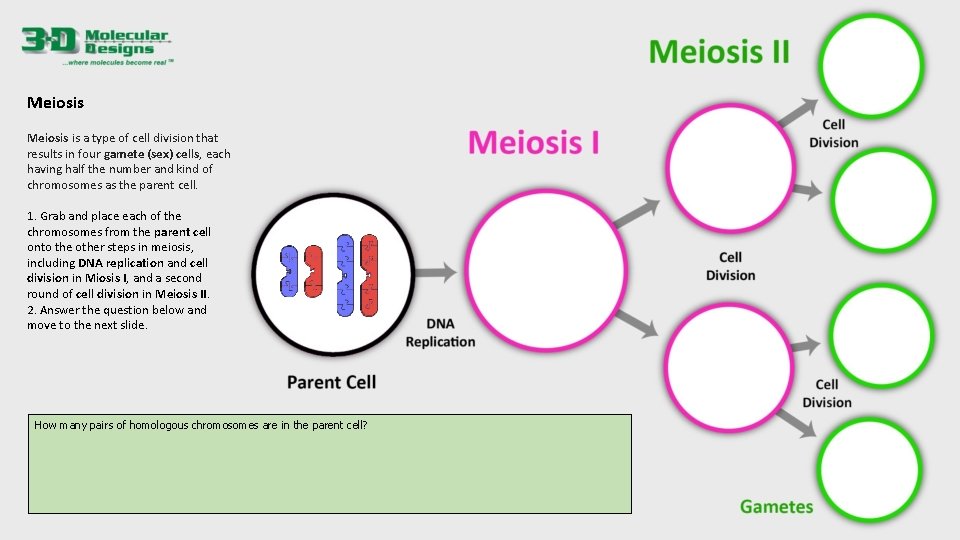
Meiosis is a type of cell division that results in four gamete (sex) cells, each having half the number and kind of chromosomes as the parent cell. 1. Grab and place each of the chromosomes from the parent cell onto the other steps in meiosis, including DNA replication and cell division in Miosis I, and a second round of cell division in Meiosis II. 2. Answer the question below and move to the next slide. How many pairs of homologous chromosomes are in the parent cell?
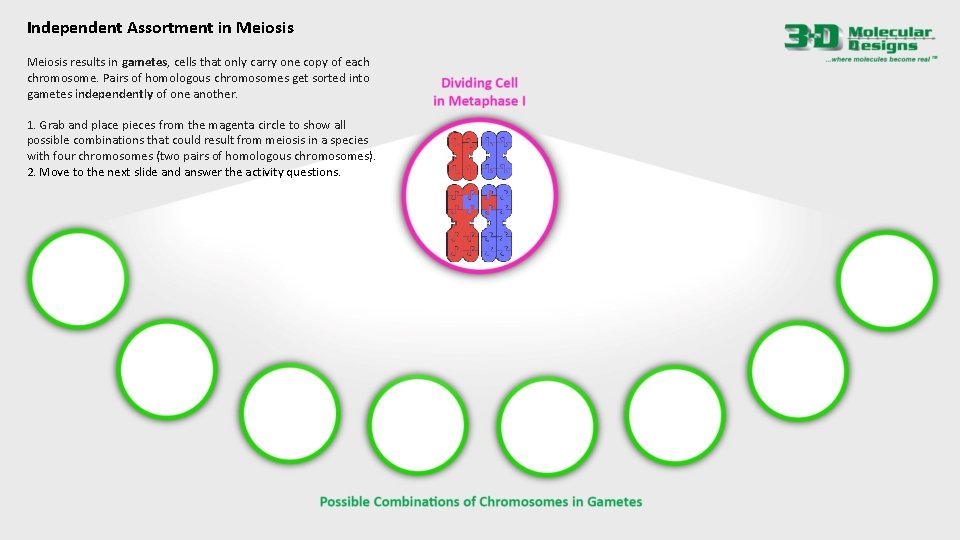
Independent Assortment in Meiosis results in gametes, cells that only carry one copy of each chromosome. Pairs of homologous chromosomes get sorted into gametes independently of one another. 1. Grab and place pieces from the magenta circle to show all possible combinations that could result from meiosis in a species with four chromosomes (two pairs of homologous chromosomes). 2. Move to the next slide and answer the activity questions.
Activity Questions A koala somatic cell has a diploid (2 n) number of 16. How many chromosomes would be in each gamete (sex cell)? If a cell had a diploid (2 n) number of 6, how many possible combinations of gametes could result from meiosis?