
Mitosis Cell DivisionDuplication Stages of the Cell Cycle

- Slides: 17
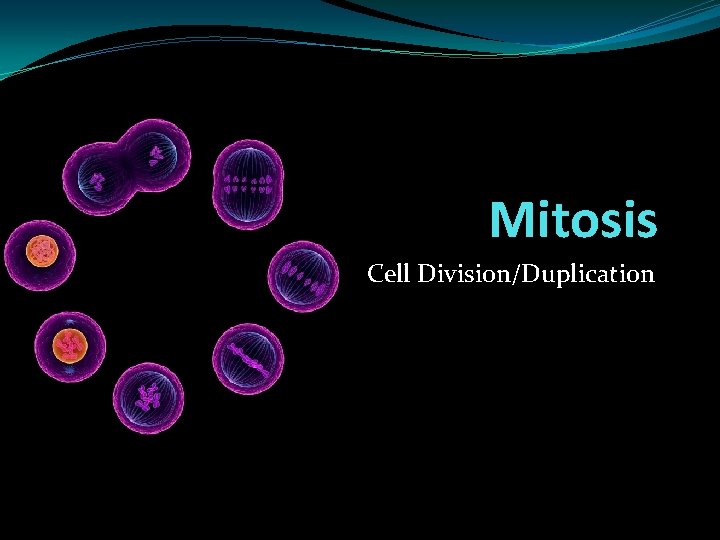
Mitosis Cell Division/Duplication
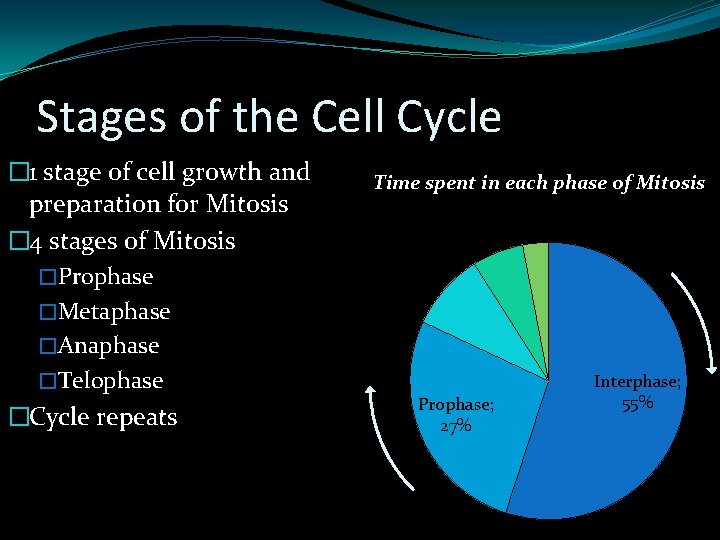
Stages of the Cell Cycle � 1 stage of cell growth and preparation for Mitosis � 4 stages of Mitosis �Prophase �Metaphase �Anaphase �Telophase �Cycle repeats Time spent in each phase of Mitosis Anaphase; 6% Metaphase; 9% Prophase; 27% Telophase; 3% Interphase; 55%
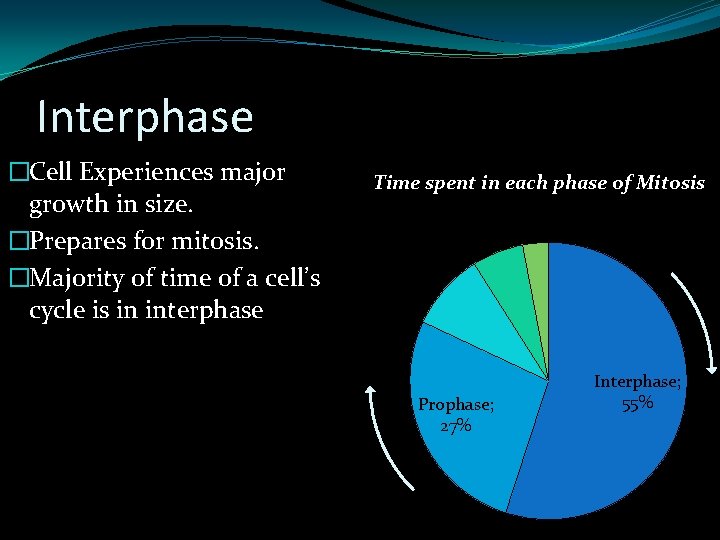
Interphase �Cell Experiences major growth in size. �Prepares for mitosis. �Majority of time of a cell’s cycle is in interphase Time spent in each phase of Mitosis Anaphase; 6% Metaphase; 9% Prophase; 27% Telophase; 3% Interphase; 55%
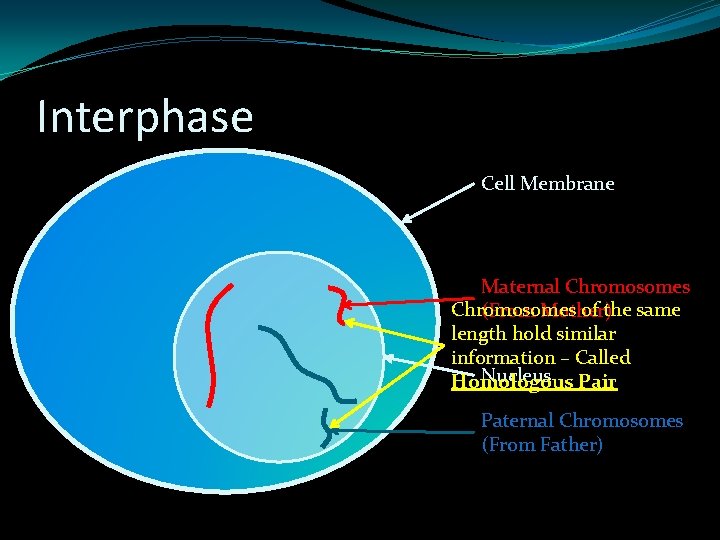
Interphase Cell Membrane Maternal Chromosomes of the same (From Mother) length hold similar information – Called Nucleus Pair Homologous Paternal Chromosomes (From Father)
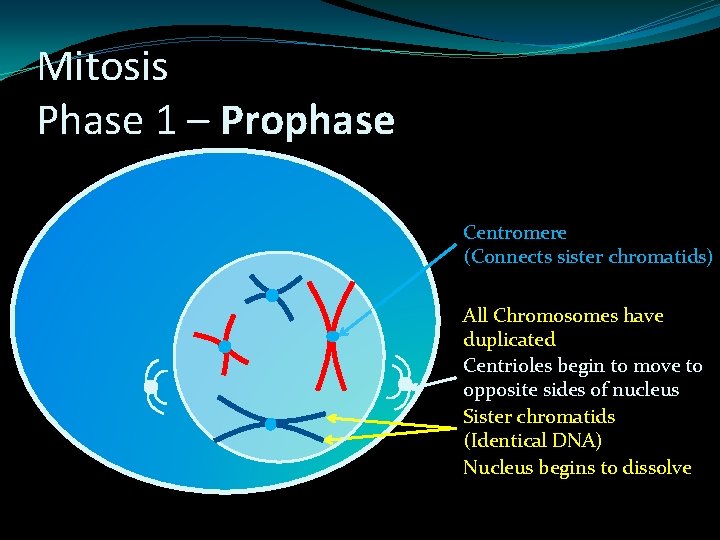
Mitosis Phase 1 – Prophase Centromere (Connects sister chromatids) All Chromosomes have duplicated Centrioles begin to move to opposite sides of nucleus Sister chromatids (Identical DNA) Nucleus begins to dissolve
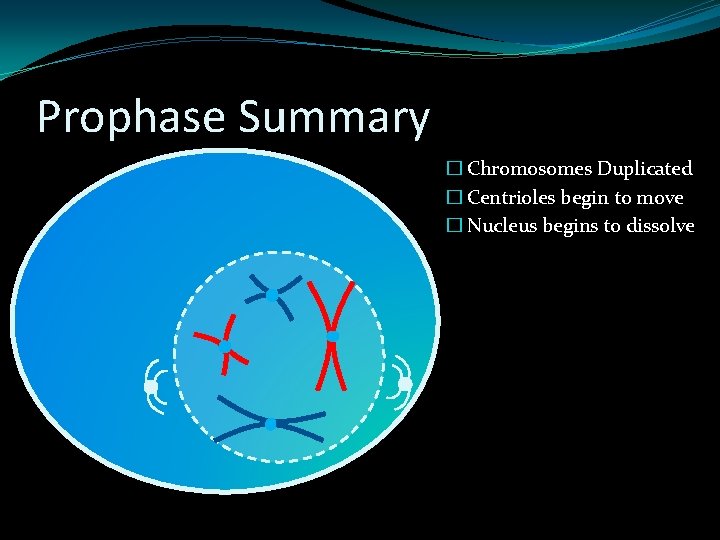
Prophase Summary � Chromosomes Duplicated � Centrioles begin to move � Nucleus begins to dissolve
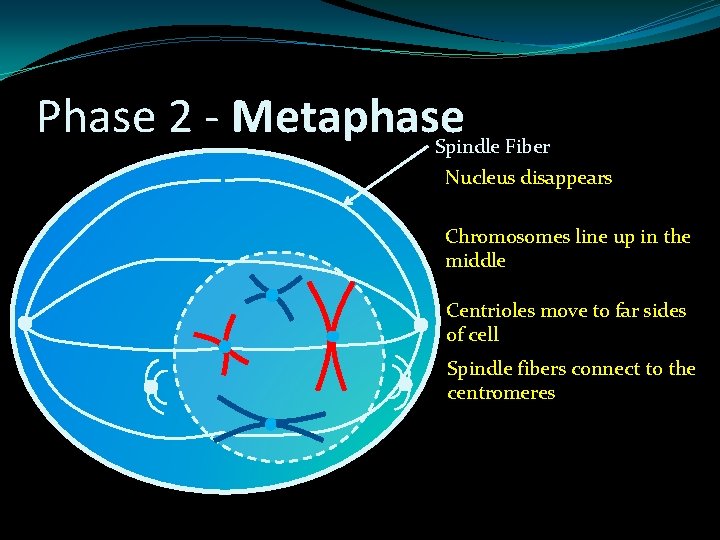
Phase 2 - Metaphase Spindle Fiber Nucleus disappears Chromosomes line up in the middle Centrioles move to far sides of cell Spindle fibers connect to the centromeres
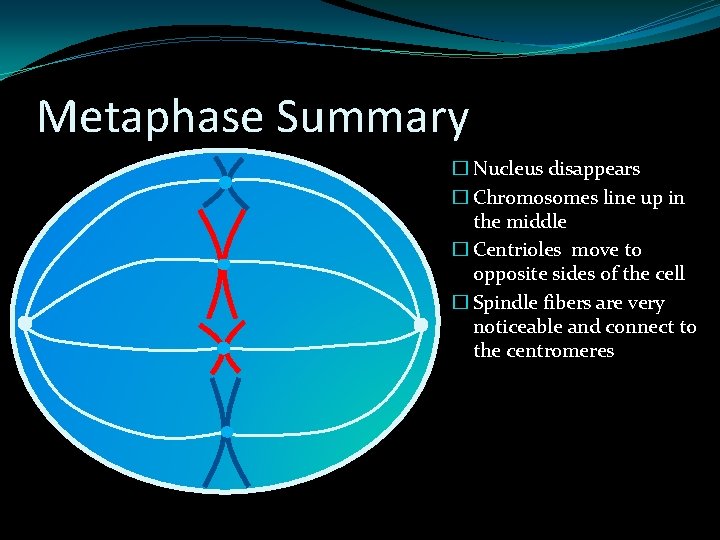
Metaphase Summary � Nucleus disappears � Chromosomes line up in the middle � Centrioles move to opposite sides of the cell � Spindle fibers are very noticeable and connect to the centromeres
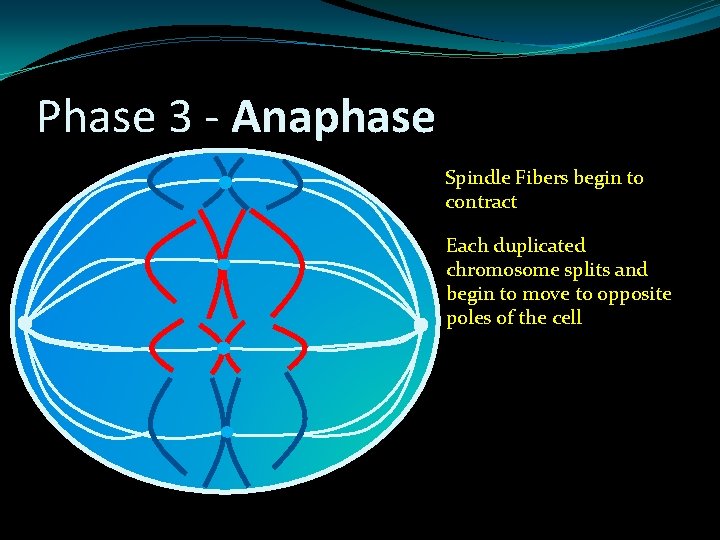
Phase 3 - Anaphase Spindle Fibers begin to contract Each duplicated chromosome splits and begin to move to opposite poles of the cell
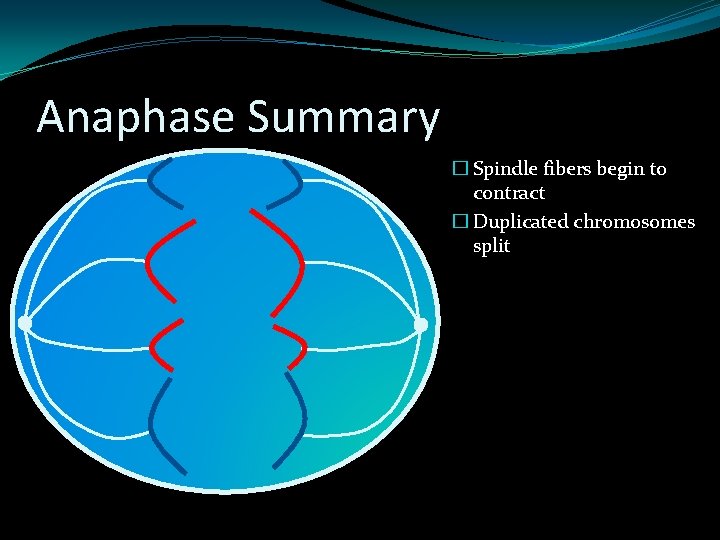
Anaphase Summary � Spindle fibers begin to contract � Duplicated chromosomes split
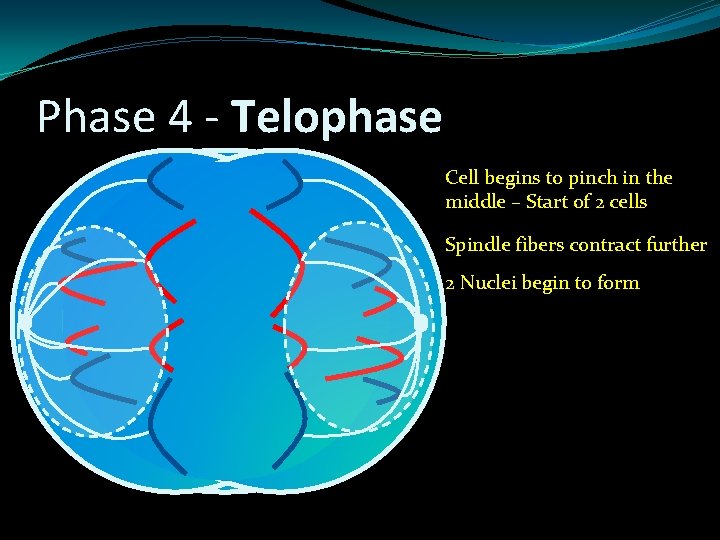
Phase 4 - Telophase Cell begins to pinch in the middle – Start of 2 cells Spindle fibers contract further 2 Nuclei begin to form
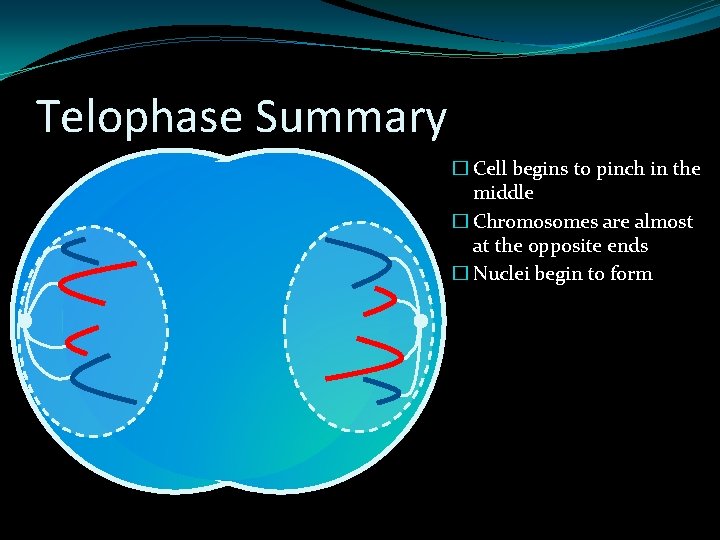
Telophase Summary � Cell begins to pinch in the middle � Chromosomes are almost at the opposite ends � Nuclei begin to form
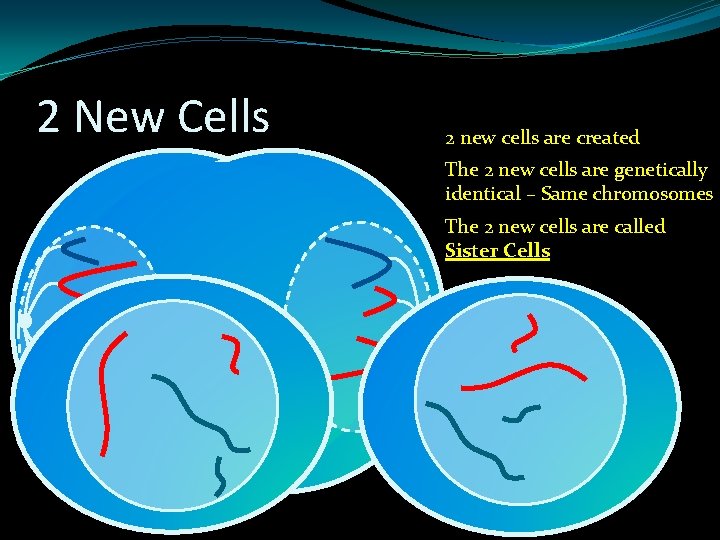
2 New Cells 2 new cells are created The 2 new cells are genetically identical – Same chromosomes The 2 new cells are called Sister Cells
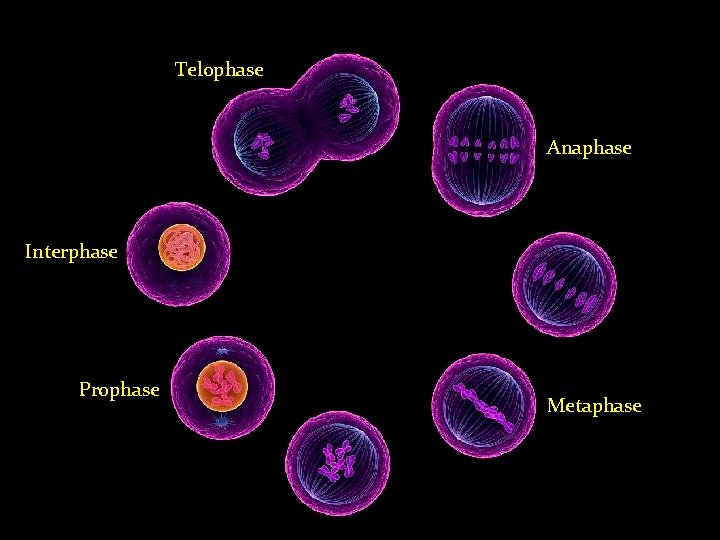
Telophase Anaphase Interphase Prophase Metaphase
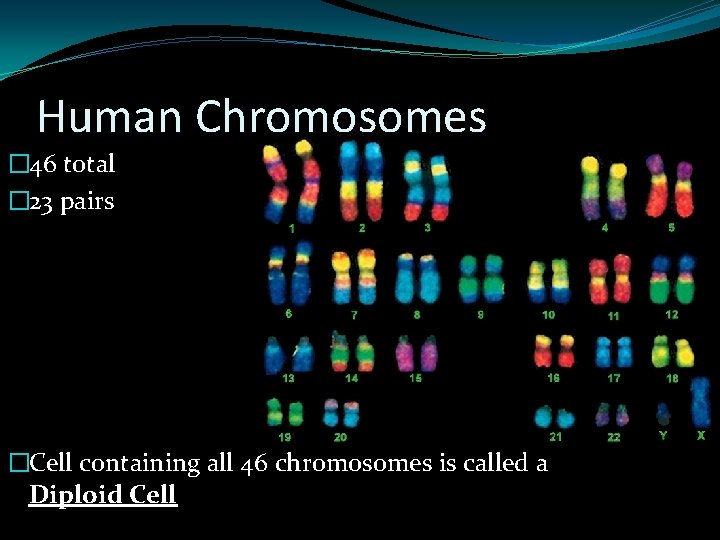
Human Chromosomes � 46 total � 23 pairs �Cell containing all 46 chromosomes is called a Diploid Cell
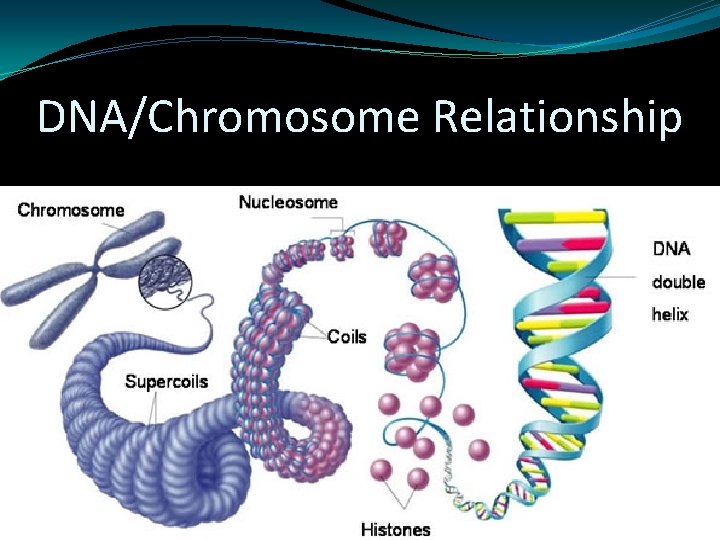
DNA/Chromosome Relationship