
Mitosis Cell Division The Cell Cycle Miss B
Mitosis, Cell Division & The Cell Cycle Miss B NNHS biomissb@gmail. com biologymissb @biologymissb NNHSmissb. weebly. com

Our Bodies Change Every Day How would baby North become Michelle Obama?

Baby North Michelle Obama l How do we grow taller? l How do our wounds heel? l How do we fix ourselves? l Why do we sometimes need lotion?
Out with the Old & in with the New l Do our cells simply grow larger? l Do they replace themselves? l How do they do this? l Do they use a blueprint?
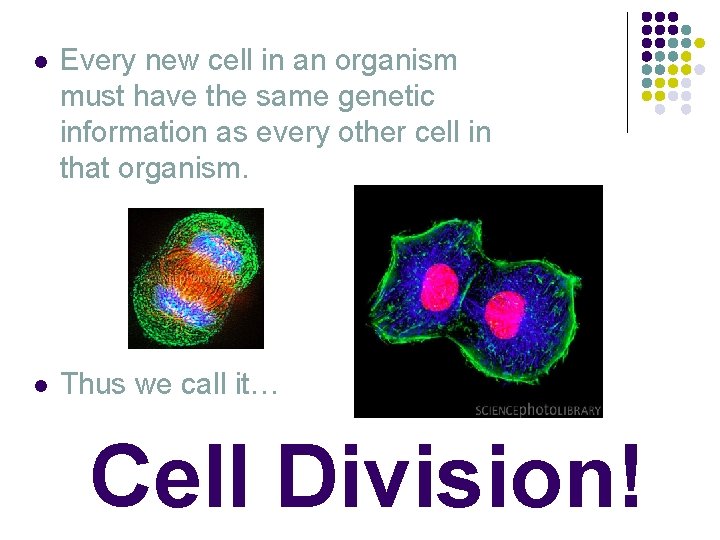
l Every new cell in an organism must have the same genetic information as every other cell in that organism. l Thus we call it… Cell Division!
Cell Division First described in 1875 as: “…a rather complicated process that seems to be necessary to distribute the substance of the mother nucleus evenly on both daughter nuclei. "
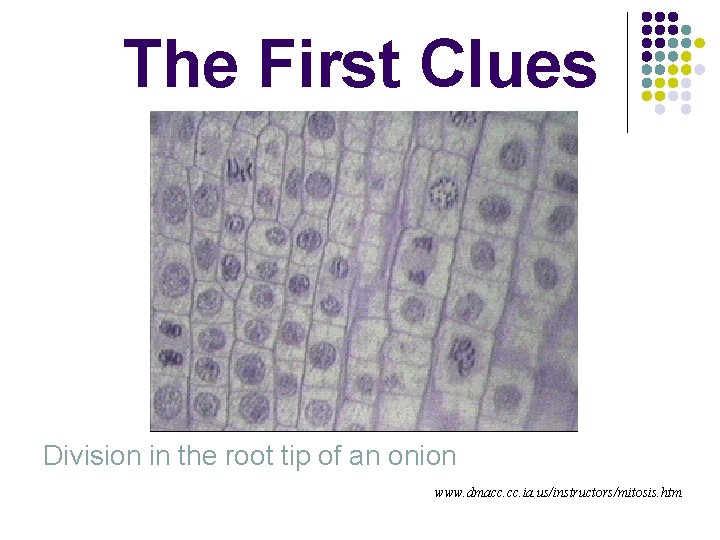
The First Clues Division in the root tip of an onion www. dmacc. ia. us/instructors/mitosis. htm
Cell Division Cont l Every cell is devised from a cell l The reproduction of cells l Allows multicellular eukaryotes to develop from a single cell l What would the division of a prokaryotic cell result in?
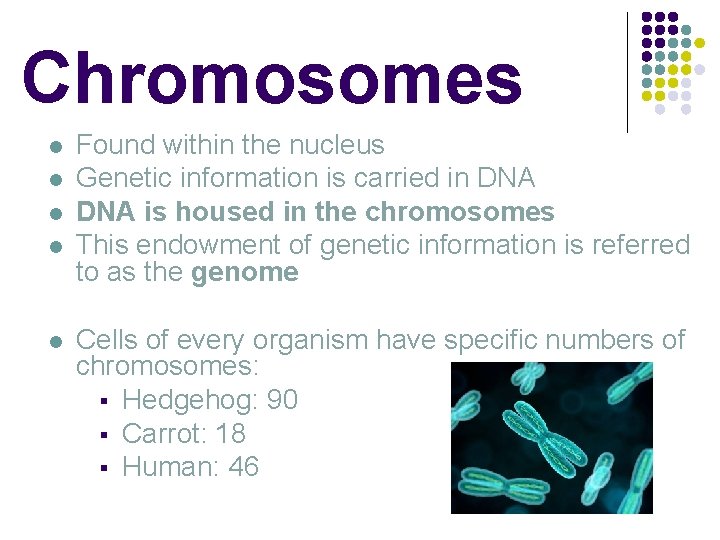
Chromosomes l l l Found within the nucleus Genetic information is carried in DNA is housed in the chromosomes This endowment of genetic information is referred to as the genome Cells of every organism have specific numbers of chromosomes: § Hedgehog: 90 § Carrot: 18 § Human: 46
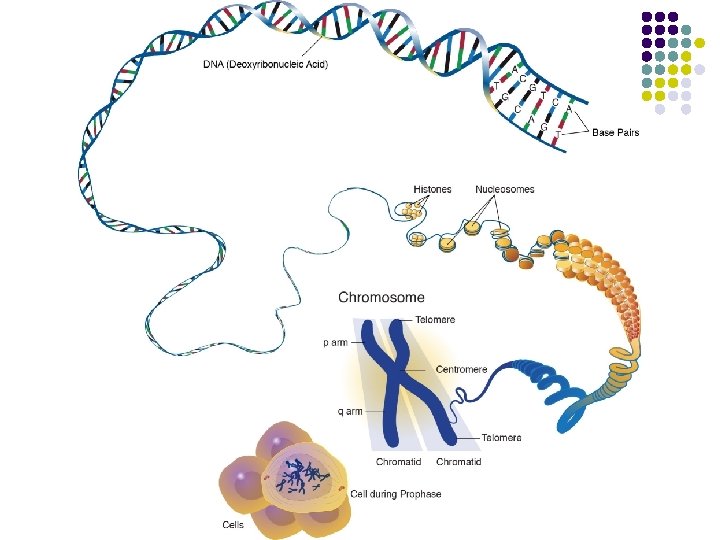
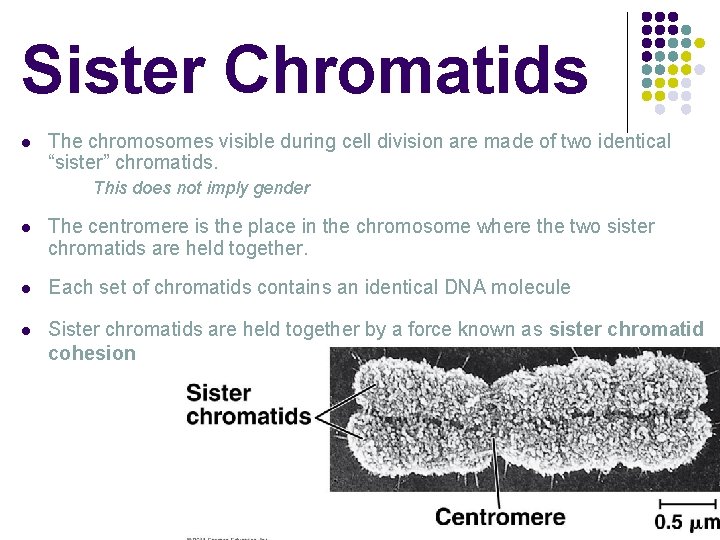
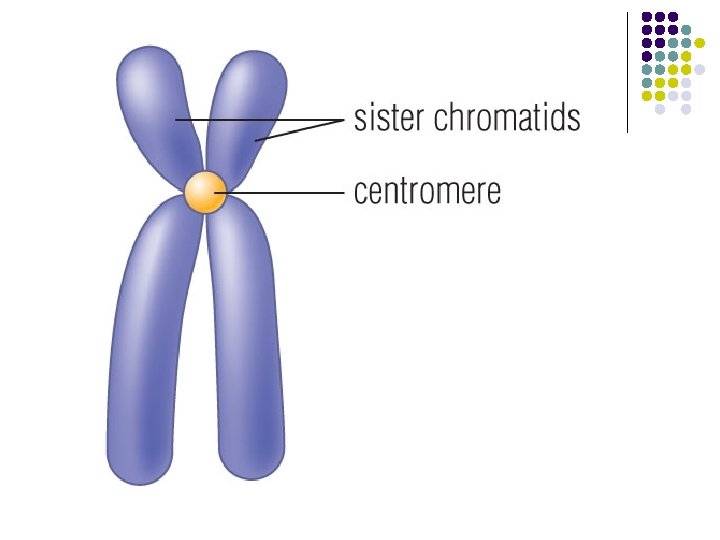
Sister Chromatids l The chromosomes visible during cell division are made of two identical “sister” chromatids. This does not imply gender l The centromere is the place in the chromosome where the two sister chromatids are held together. l Each set of chromatids contains an identical DNA molecule l Sister chromatids are held together by a force known as sister chromatid cohesion
Chromatid vs Chromatin for clarification l Chromatids are the two identical pieces that make up a chromosome. These are replicated during cell division. l Chromatin is the combination of DNA and proteins found within chromosomes
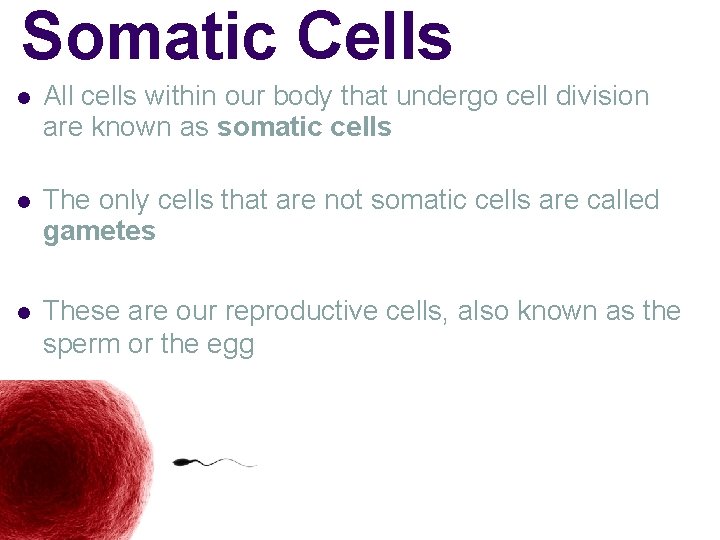
Somatic Cells l All cells within our body that undergo cell division are known as somatic cells l The only cells that are not somatic cells are called gametes l These are our reproductive cells, also known as the sperm or the egg
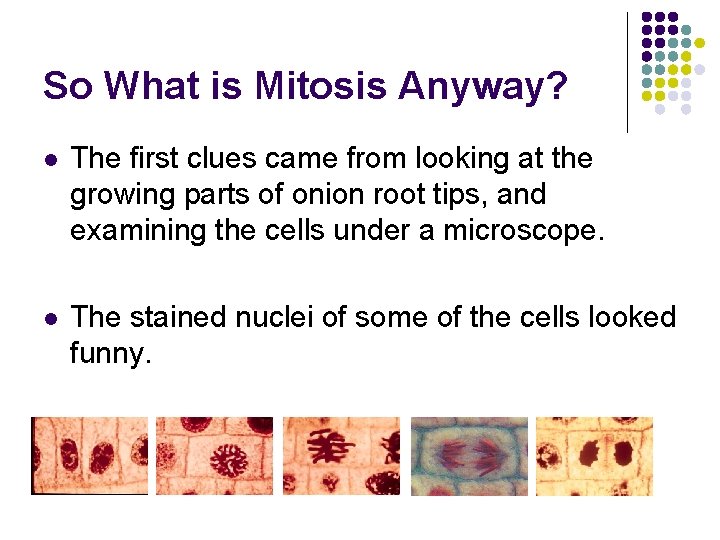
So What is Mitosis Anyway? l The first clues came from looking at the growing parts of onion root tips, and examining the cells under a microscope. l The stained nuclei of some of the cells looked funny.
- Slides: 15