
Mitosis Cell Cycle Series of events that cells
- Slides: 32
Mitosis
Cell Cycle � Series of events that cells go through as they grow and divide. ◦ Unicellular Organisms – results in the creation of another individual of that species ◦ Multicellular Organisms – make new cells separate from the parent cell ◦ * Does NOT result in creation of a new organism
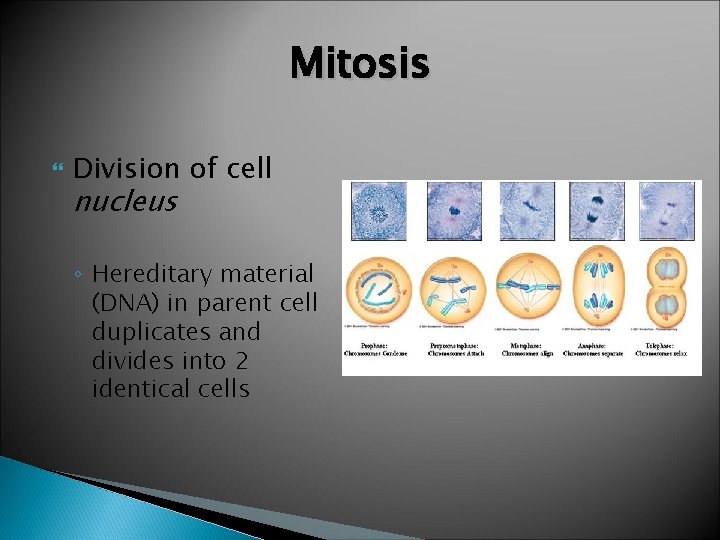
Mitosis Division of cell nucleus ◦ Hereditary material (DNA) in parent cell duplicates and divides into 2 identical cells
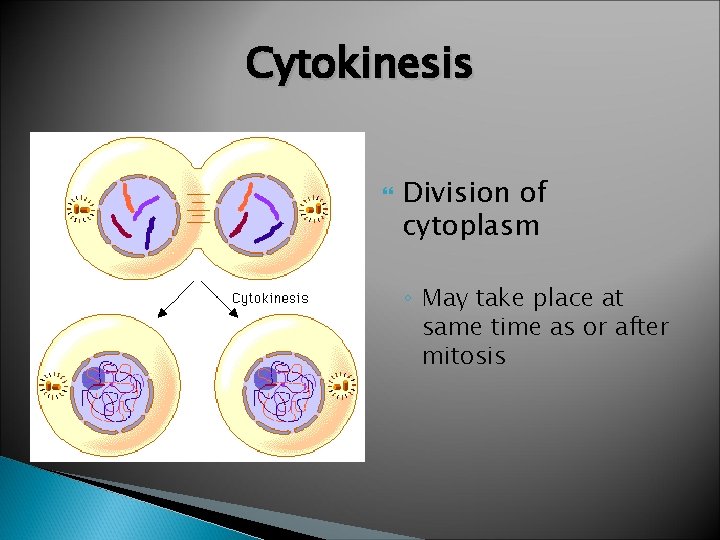
Cytokinesis Division of cytoplasm ◦ May take place at same time as or after mitosis
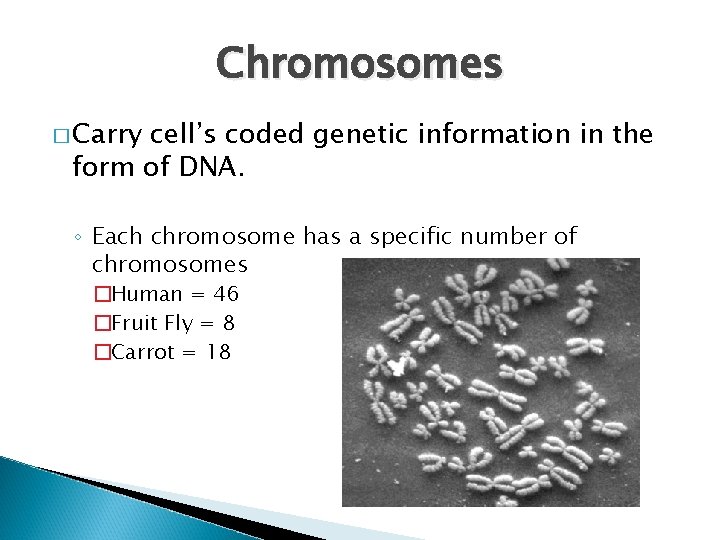
Chromosomes � Carry cell’s coded genetic information in the form of DNA. ◦ Each chromosome has a specific number of chromosomes �Human = 46 �Fruit Fly = 8 �Carrot = 18
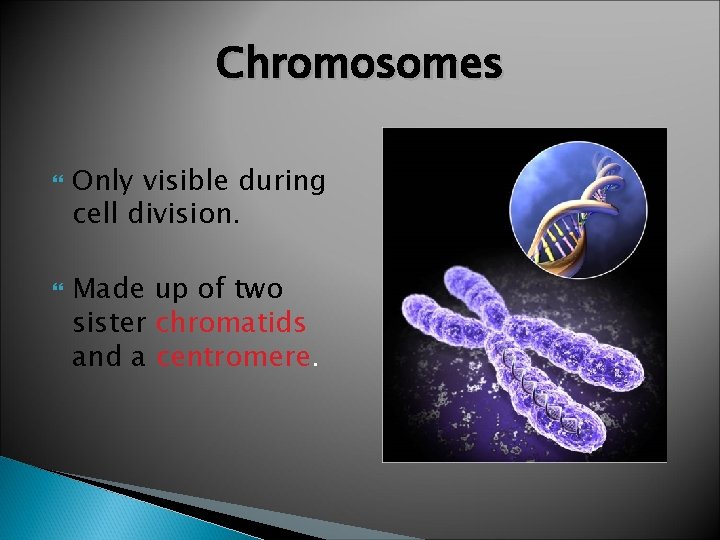
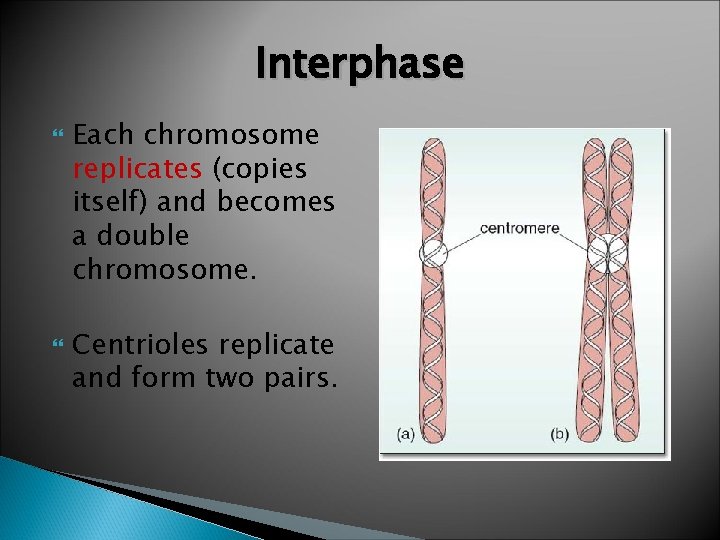
Chromosomes Only visible during cell division. Made up of two sister chromatids and a centromere.
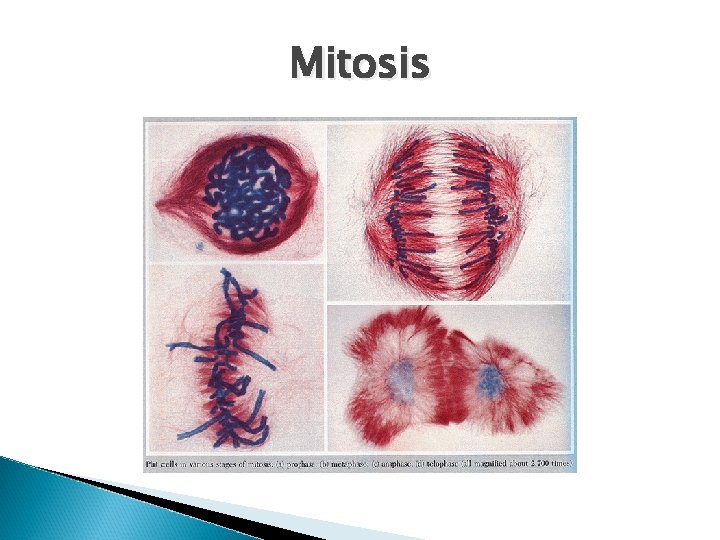
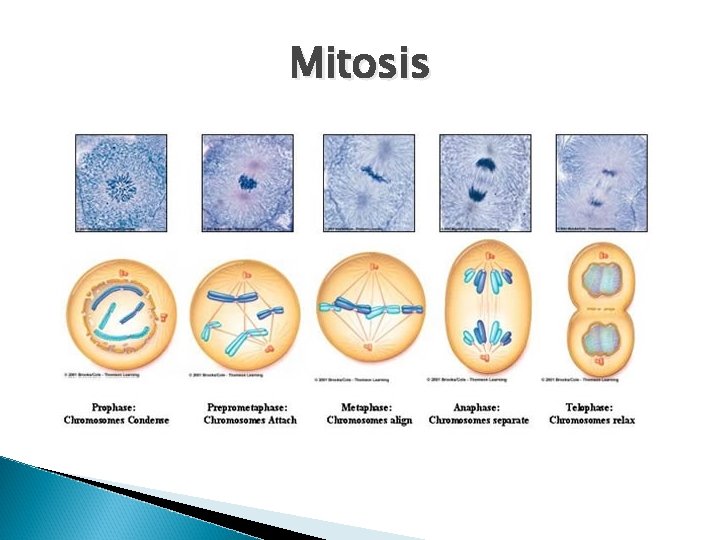
Cell Division � Process by which a cell divides into two new daughter cells Interphase Prophase Metaphase Anaphase Telophase “IPMAT”
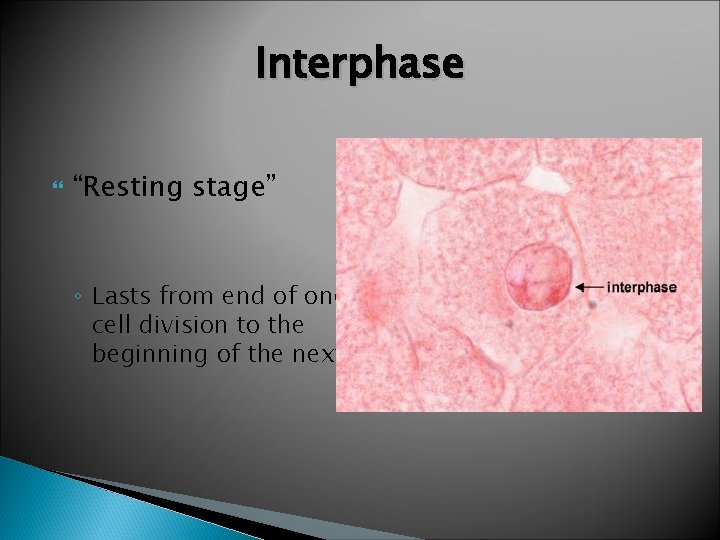
Interphase “Resting stage” ◦ Lasts from end of one cell division to the beginning of the next.
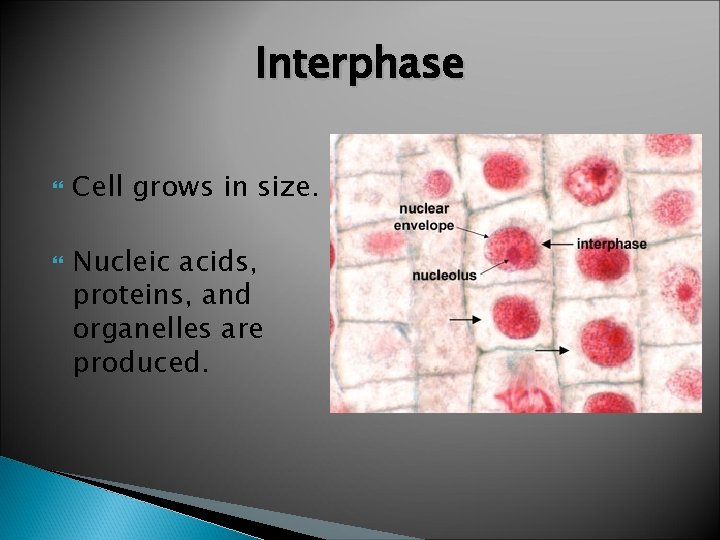
Interphase Cell grows in size. Nucleic acids, proteins, and organelles are produced.
Interphase Each chromosome replicates (copies itself) and becomes a double chromosome. Centrioles replicate and form two pairs.
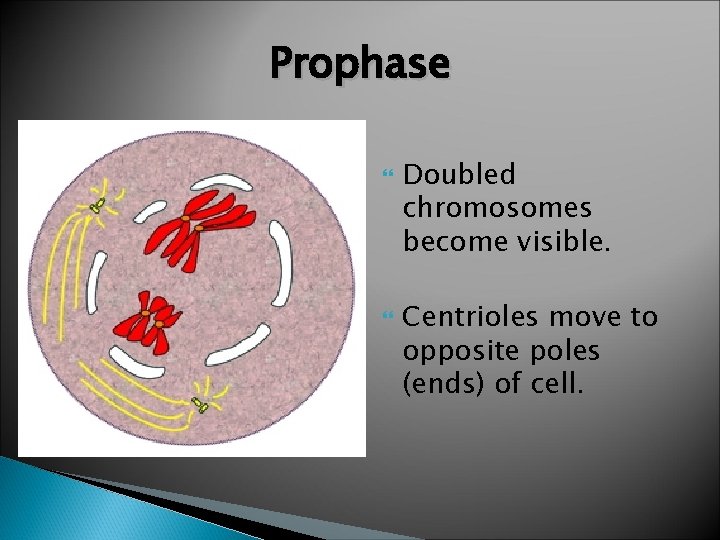
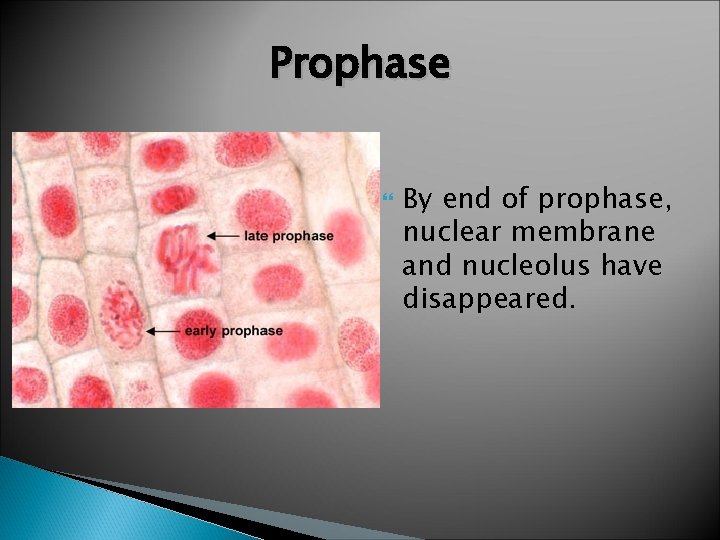
Prophase Doubled chromosomes become visible. Centrioles move to opposite poles (ends) of cell.
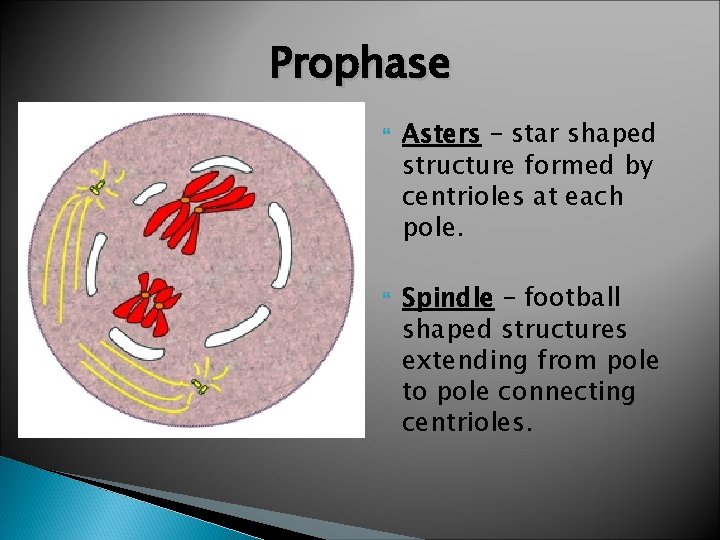
Prophase Asters – star shaped structure formed by centrioles at each pole. Spindle – football shaped structures extending from pole to pole connecting centrioles.
Prophase By end of prophase, nuclear membrane and nucleolus have disappeared.
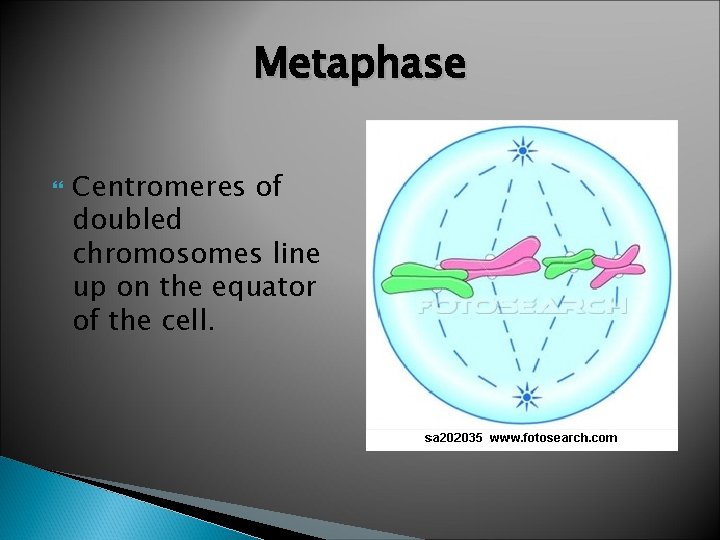
Metaphase Centromeres of doubled chromosomes line up on the equator of the cell.
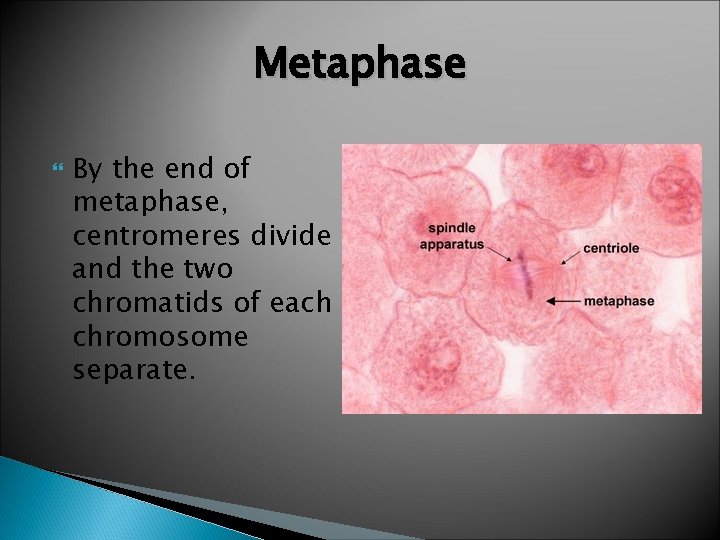
Metaphase By the end of metaphase, centromeres divide and the two chromatids of each chromosome separate.
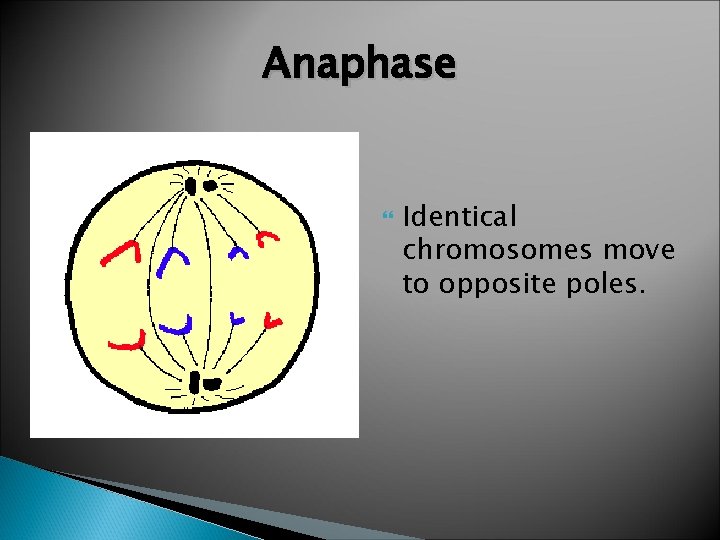
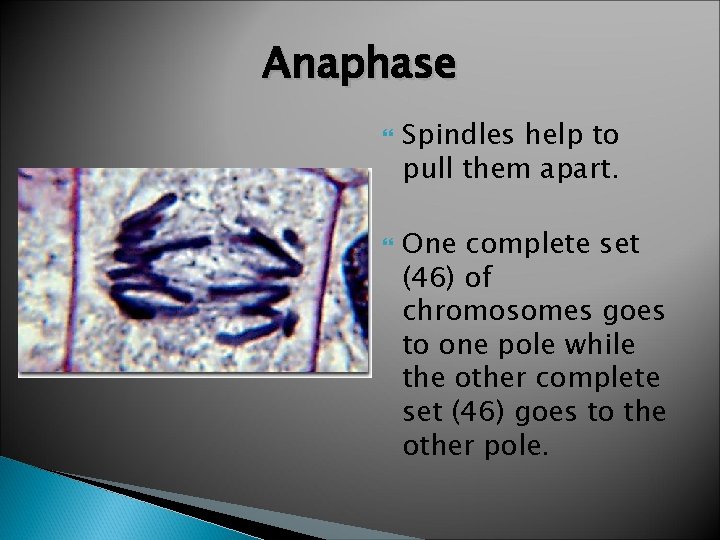
Anaphase Identical chromosomes move to opposite poles.
Anaphase Spindles help to pull them apart. One complete set (46) of chromosomes goes to one pole while the other complete set (46) goes to the other pole.
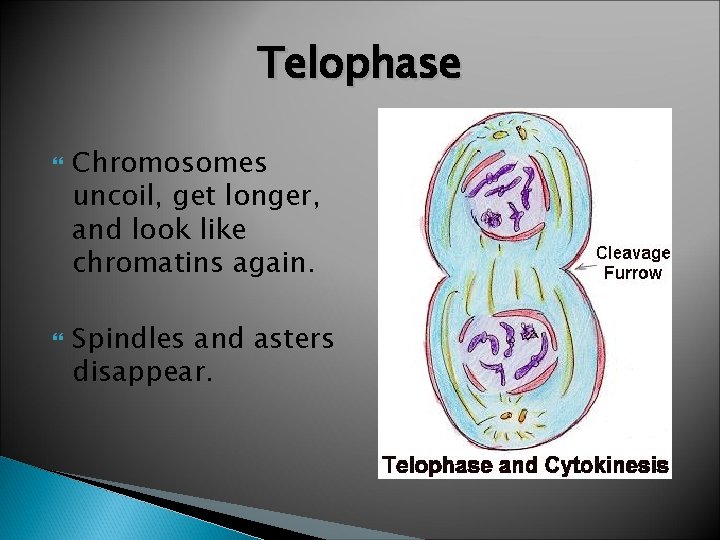
Telophase Chromosomes uncoil, get longer, and look like chromatins again. Spindles and asters disappear.
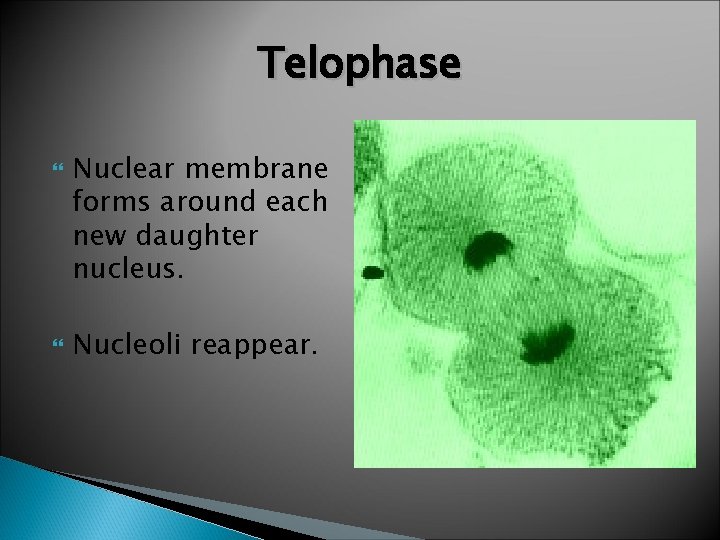
Telophase Nuclear membrane forms around each new daughter nucleus. Nucleoli reappear.
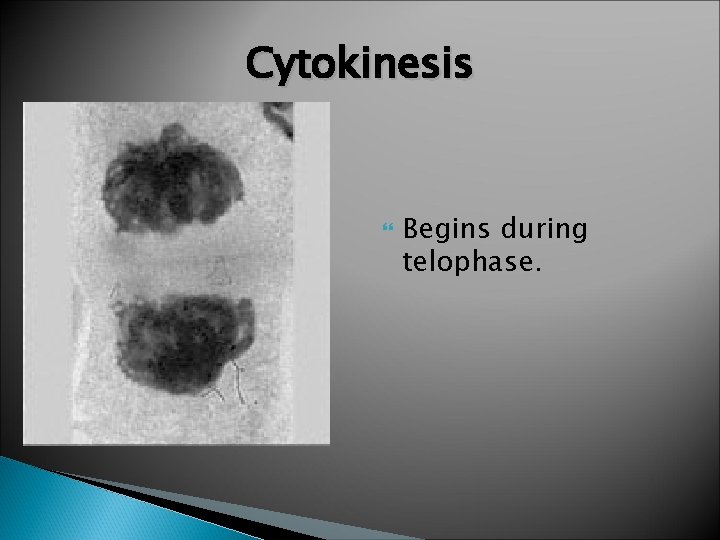
Cytokinesis Begins during telophase.
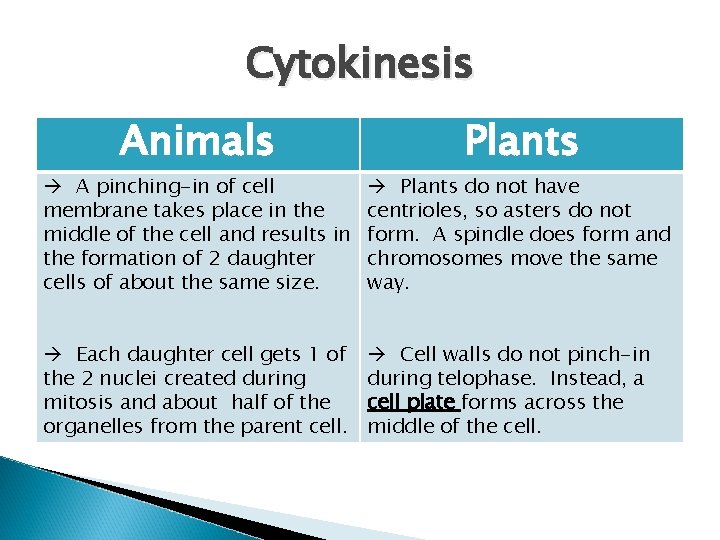
Cytokinesis Animals Plants
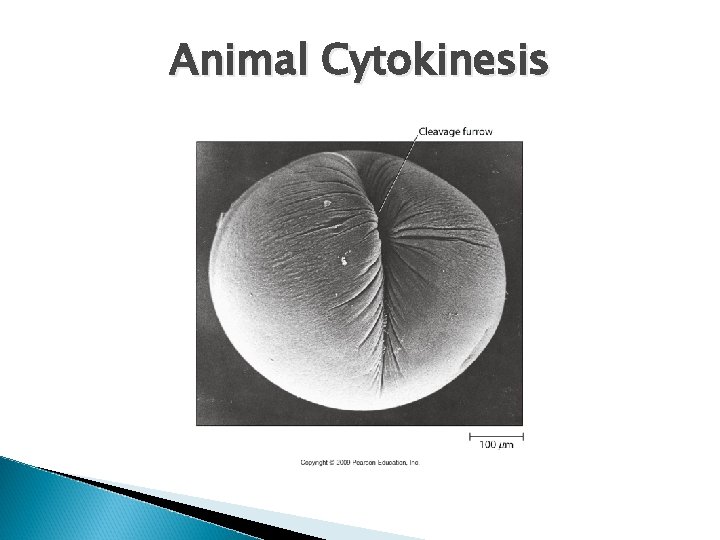
Cytokinesis Animals à A pinching-in of cell membrane takes place in the middle of the cell and results in the formation of 2 daughter cells of about the same size. Plants
Cytokinesis Animals à A pinching-in of cell membrane takes place in the middle of the cell and results in the formation of 2 daughter cells of about the same size. à Each daughter cell gets 1 of the 2 nuclei created during mitosis and about half of the organelles from the parent cell. Plants
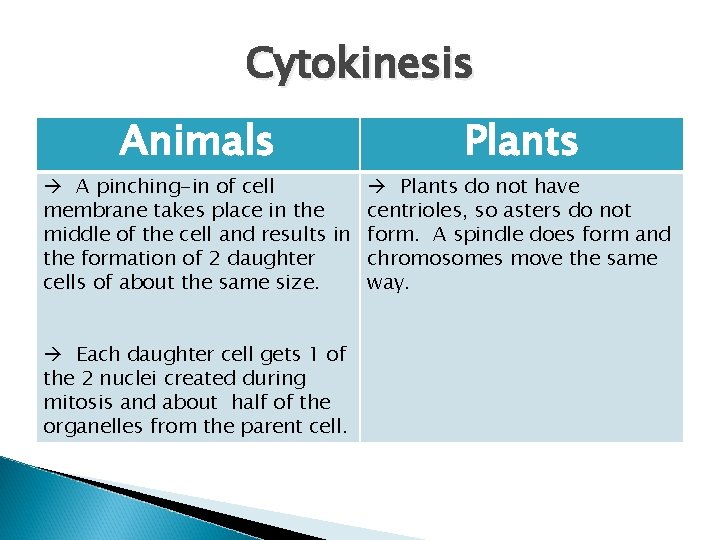
Cytokinesis Animals Plants à A pinching-in of cell à Plants do not have membrane takes place in the centrioles, so asters do not middle of the cell and results in form. A spindle does form and the formation of 2 daughter chromosomes move the same cells of about the same size. way. à Each daughter cell gets 1 of the 2 nuclei created during mitosis and about half of the organelles from the parent cell.
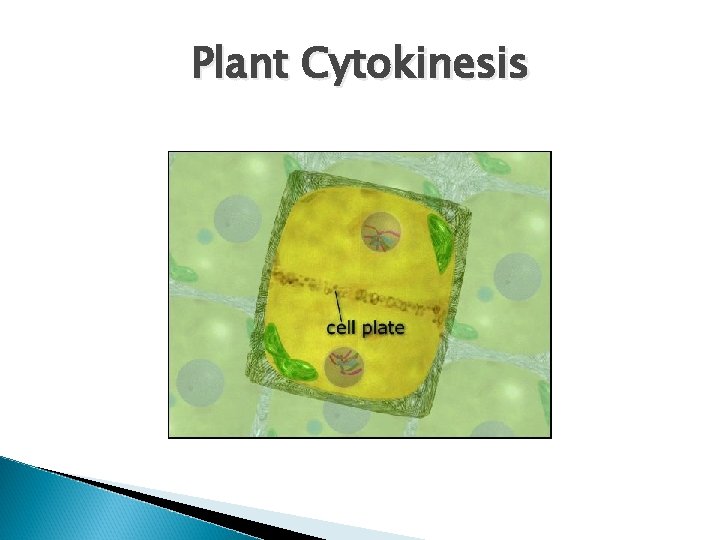
Cytokinesis Animals Plants à A pinching-in of cell à Plants do not have membrane takes place in the centrioles, so asters do not middle of the cell and results in form. A spindle does form and the formation of 2 daughter chromosomes move the same cells of about the same size. way. à Each daughter cell gets 1 of the 2 nuclei created during mitosis and about half of the organelles from the parent cell. à Cell walls do not pinch-in during telophase. Instead, a cell plate forms across the middle of the cell.
Animal Cytokinesis
Plant Cytokinesis
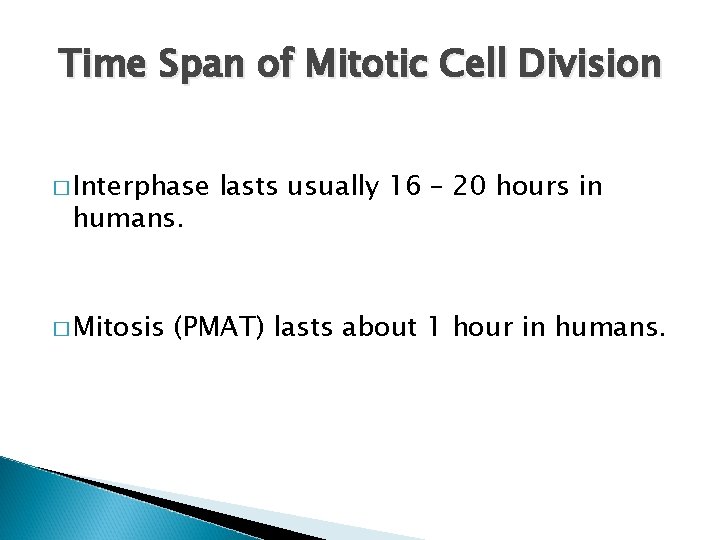
Time Span of Mitotic Cell Division � Interphase humans. � Mitosis lasts usually 16 – 20 hours in (PMAT) lasts about 1 hour in humans.
Time Span of Mitotic Cell Division � Specialized cells divide less frequently than unspecialized cells. �Developing embryo – fast �Mature embryo – slower �Bone marrow and skin cells – often and rapid �Xylem, nerve cells, muscle cells – seldom or never divide
Cyclin �A protein that regulates the timing of the cell cycle in eukaryote cells
Mitosis
Mitosis